Posts tagged ‘black and white photography’

After the shower – Looking behind you in Pembrokeshire

after-the-shower

I have just returned home from an excellent few days in North Pembrokeshire in Wales, as one of four participants on an ‘Andy Beel Black and White Photography Tour’.  You expect mixed weather when visiting Wales at any time of year and the past five days have been no exception.

I have already downloaded over 800 images and now the fun begins as I go through the frames, select those with promise and give some considered thought to how they should be processed for later inclusion on this blog.

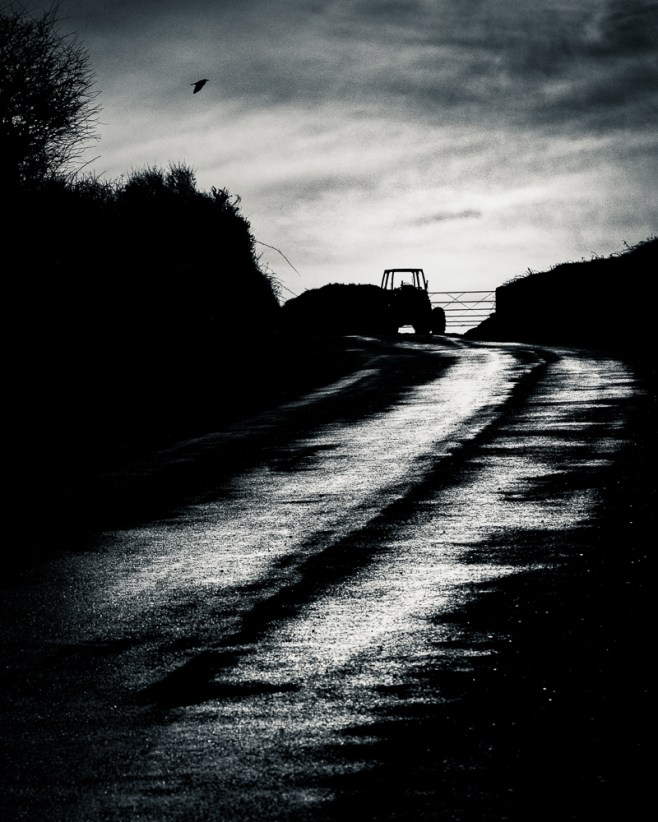
Inevitably a handful of images stay in the memory at the time of pressing the shutter, so I thought I would quickly post one such image. By way of some background it was late afternoon and I was driving the group from Abereiddy to Porthgain. A heavy but fleeting shower came down and as I looked in my rear view mirror I saw this scene. Had I not done so the opportunity would have been missed, but as it was, I pulled over and we all got out of the car and took a handful of frames. The late sun reflecting off the wet road, the tractor and the gate silhouetted against the brightening sky, and last but not least, the rook flying into the shot all go together to complete an atmospheric image so typical of this beautiful part of the country,

More images and words about the workshop will follow in time, but for the moment always remember to look behind you!

Leica M Monochrom – the good news, bad news sandwich!

clouds-over-prinsted

Clouds over Prinsted

Shortly after I acquired my Leica M Monochrom, I became aware of an issue relating to the CCD sensor; not only to this camera but also the M9 and the ME. The problem was one of corrosion on the sensor which could manifest itself at any time. Leica was quick to respond to this news when it broke a few years ago and guaranteed that for the lifetime of the camera a faulty sensor would be replaced. In fact they went further and said that even if a sensor was replaced the guarantee would apply to the new sensor as well.

This is old news really, but aware of the issue I have always been on the lookout for the problem. The good news being that I had comfort in knowing that if ever I discovered any sign of corrosion, the camera could and would be repaired at no cost. But I would of course have to suffer the inconvenience of being without the camera for several weeks as the work can only be undertaken by Leica in Germany.

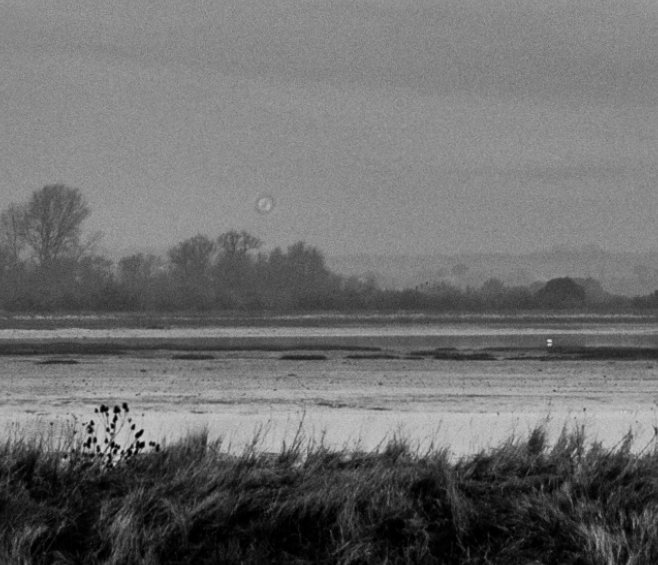
When processing the above image of ‘Clouds over Prinsted’ I was cleaning the picture for sensor spots and noticed a number of marks which were not typical of dust on the sensor. In fact they were more like ‘flying saucers’ – a dark spot with a light and dark halo. (See the screen grab below of the offending article – just above the tree line).

screen-shot-2017-02-06-at-12-18-07

The mark on the sensor which is almost certainly the sign of the corrosion issue.

Fearing the worst I did some research which only confirmed that the dreaded ‘corrosion on the sensor’ issue had finally reared its ugly head. Yes, I could clone out the marks, but assuming the  corrosion might spread the camera would have to be repaired. Bad News!

I rang the Leica Store in Mayfair in London and they said that whilst the camera could be collected by courier, if I took the camera in personally, they would provide me with a loan M Monochrom for the duration of the repair at no cost. They informed me the turn round time would be approximately six weeks. Having access to a replacement camera was Great News! I would have it for my planned trip to Pembrokeshire in Wales which comes up shortly and by the time I travel to Scotland the repair should have been carried out and my Monochrom would be back in my hands.

OLYMPUS DIGITAL CAMERA

Leica M Monochrom with 50mm Summilux and 28mm Elmarit lenses

So yesterday I caught the train up to London, swapped cameras at The Leica Store in Mayfair and took the opportunity to visit Tate Modern, specifically to see The Radical Eye exhibition. A superb collection of photographs owned by Sir Elton John. I will write about this exhibition in a future post. All I would say is that if you can get to London do go – it continues until 21st May 2017.

Exciting new challenges in the year ahead – including my first exhibition

There are many reasons why I am looking forward to this year. In early April I have been invited to present an evening talk to my local camera club; something which I have not done before. Later that same month I will be traveling to The RPS Headquarters in Bath with a panel of fifteen images for an assessment in the hope that I will be granted an Associate Distinction of the Royal Photographic Society. And finally towards the end of the year in November, I will be exhibiting my work for the first time.

All of these events come with their own set of challenges and as the year progresses I expect to share my thoughts as I plan and prepare for each one.

Perhaps the most exciting but also the most daunting of the three, is the exhibition, and fortunately I am not alone. There are a total of six photographers who have formed a group called The Image Circle. A WordPress site was published at the end of last year, so do visit that site to find our more about the group and to see the work of the other photographers.

The exhibition is to be held in the main gallery at The Oxmarket Centre of Arts in Chichester, West Sussex, starting on Tuesday 14th November and finishing on Sunday 19th November. The group will be getting together on a regular basis between now and then, as we all have to decide what work to exhibit, how it should be framed and presented, and what can be done to best promote the event as we naturally wish to attract as many visitors as possible.

Although the exhibition is still many months away, I know how quickly the time will pass, so early preparation is key. Perhaps the most important decision for me to make at this stage is what work do I wish to exhibit? Should they be images from my current portfolio or new work which has yet to be taken? Should there be a specific theme? How many pictures do I display and how should the work be framed and hung? Many questions and in my mind some of the answers are becoming a little clearer.

As I write, I have reached a decision to exhibit a new body of work which will be taken in and around Chichester Harbour. It will be my vision, a personal portrait of this rather special Area of Outstanding Natural Beauty which is close to where I live. All the photographs will be in monochrome and likely to be square format. The process of making images is already underway and a recent photograph accompanies this post.

Plenty more to consider and do in the weeks and months ahead, but 2017 is certainly a year I am looking forward to with great anticipation.

Early morning at Dell Quay

early-morning-at-dell-quay-1

Looking back through my last few posts it is evident that I have been doing more colour work recently. This has not been intentional and I am enjoying the variety, but monochrome is still my first love.

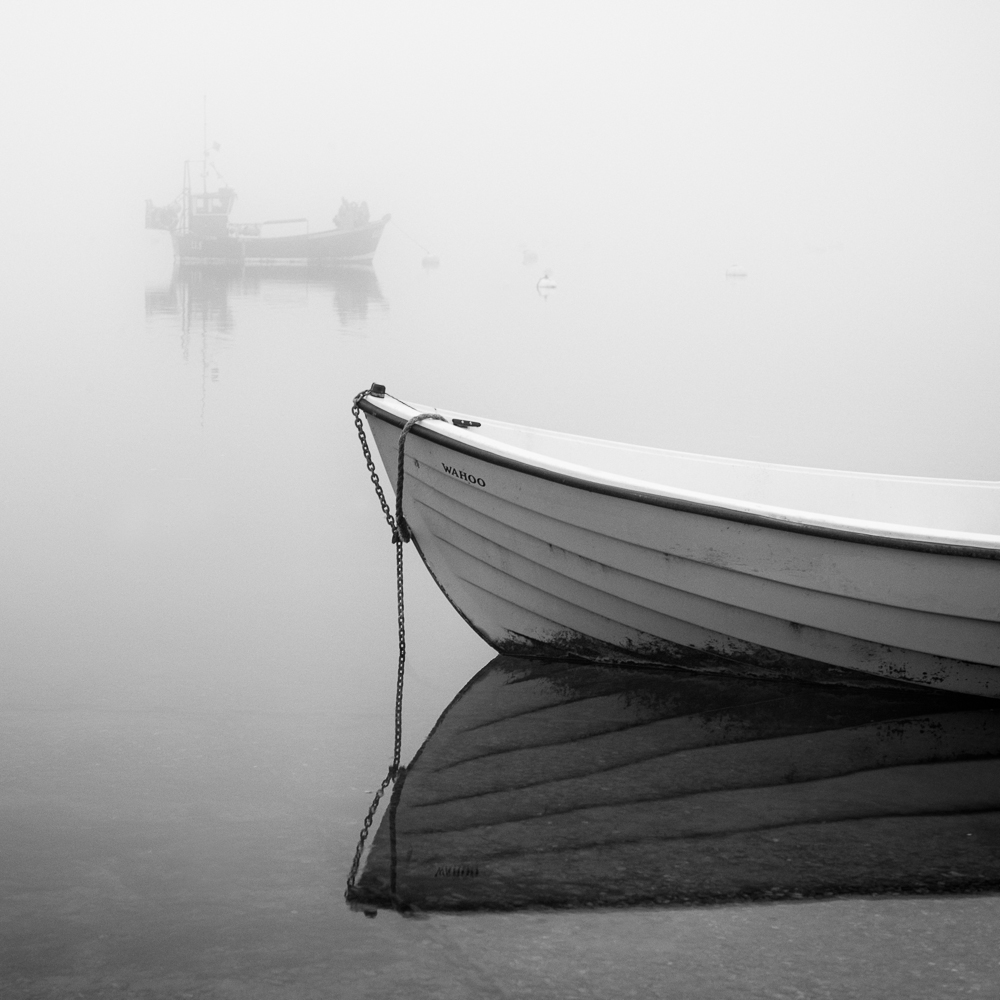
This image of Dell Quay, taken early one morning a few days ago, when the tide was very low, reminds me of why black and white photography is favoured not just by me but so many photographers. The artistic interpretation of a scene holds greater possibilities in mono than it would in colour. I enjoy the whole process of increasing or reducing contrast in certain areas of the image; thereby creating mood and atmosphere in the picture,  whilst providing a sense of depth and a focal point of interest.

Like so many images this one really needs to be viewed large as there is in fact a lot of detail in the scene. The masts in the boat yard, the three sailing boats to the right and a lone person standing on the jetty. There are also a few swans in the water and a gull flying into the frame from the right hand side. I have yet to print this photograph but I am looking forward to doing so. Do click on the image to enjoy a larger version.

Dell Quay forms part of Chichester Harbour in West Sussex. Designated an Area of Outstanding Natural Beauty, it is popular with sailors, birdwatchers, walkers and artists; in fact anyone seeking some relaxation in some truly beautiful and unspoilt surroundings.

A favourite image and a favourite camera – is that possible?

st-botolphs-hardham-1-of-1


I was asked recently if I had a favourite image which I had made? In all honesty I don’t think I do, although there are a number which I could name in a top ten. I do though remember reading that someone else when asked the same question replied – ‘The next one I am going to take.’ I rather like this response as it suggests a desire to constantly improve, believing that your next photograph will be better than the last and all those in your back catalogue. It also infers that the last image taken must be a favourite for at least it’s tangible and not a figment of the imagination – or is it? I’ll come back to this question later, as it’s relevant to the photograph in this post.

As far as a ‘favourite camera’ is concerned, well that’s easy for me to answer. It’s my Leica M Monochrom which I have been using for the last couple of years. It’s built like a tank, feels so good in the hand and the simplicity of its controls put me in complete control. It doesn’t have a multitude of programmable buttons, nor pages and pages of menus, which only serve to confuse, and nor does it come with a manual which might take the best part of a week to read, let alone understand. More importantly though the Monochrom together with the exceptional Leica lenses produces the images I am seeking to achieve with post processing and careful printing. The next incarnation of the Leica M Rangefinder must be just round the corner but I think its unlikely I will want to upgrade. The Monochrom has many idiosyncrasies, but I love it and the cost of upgrading is quite likely to be prohibitive anyway.

Given my feelings towards the Leica Monochrom, I am not that interested in the latest camera technology although to digress for a moment I was intrigued to learn about a new camera being developed by a company called Light. The camera is called the L16 and has the appearance of a large mobile phone, but instead of one lens and sensor there are 16. On pressing the shutter the camera software combines all the exposures from each of the sensors to produce one image. According to their website this can be up to 52 megapixels in size, with low noise and covering a focal range equivalent of 28mm to 150mm. The depth of field and other adjustments can be manipulated in post processing. Is this the future of camera technology, I don’t know, but nothing stays the same, so it will be interesting to see what happens when it actually hits the streets.

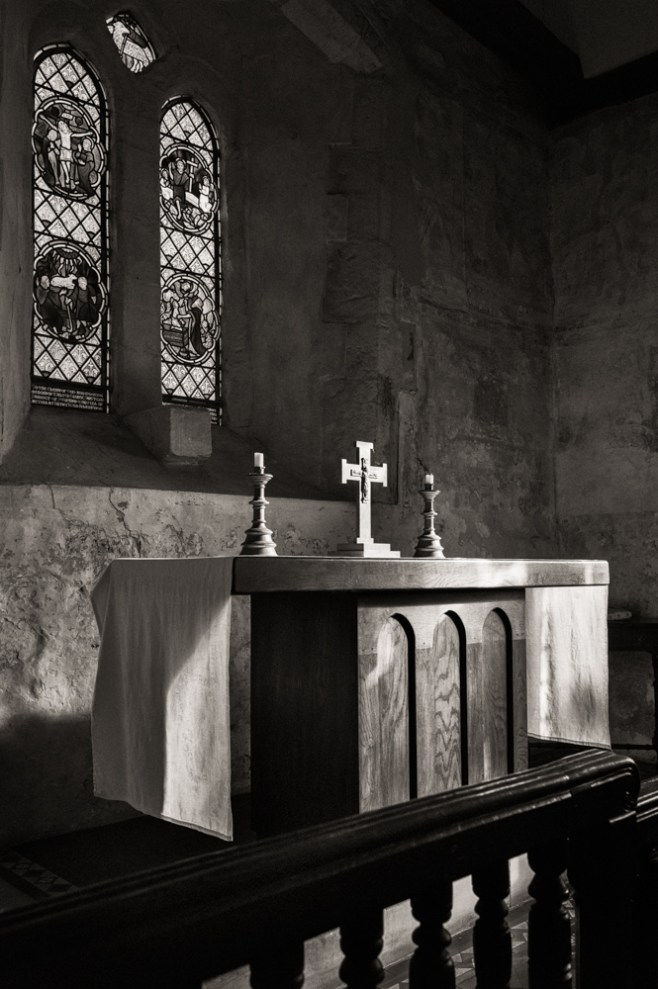
Back to the question I posed at the end of the first paragraph and indeed to the photograph in this post. It was taken a few days ago at St Botolph’s Church in Hardham, West Sussex. I had visited the church previously and noticed how the light was falling on the altar. I had taken some shots that day, only to find that my composition was not quite right, nor had I used the correct exposure settings. There were too many blown highlights. I decided to return, knowing in my mind the image I wanted to make. I knew which lens would give me the composition I wanted (28mm) and the likely exposure settings required to produce a malleable and workable file for post processing. I knew the time of day when the light would be in the right position, so I arrived at the church in plenty of time to get ready. The sun wasn’t as bright as it had been a day or two earlier but this proved to be a good thing. As it turned out I only had a couple of minutes to take the shot before the sun moved round and no longer illuminated the scene as I wanted it.

A favourite image or not, I like this photograph, as it will always remind me that it can be worth revisiting a location to take a particular shot that you have already pictured in your own mind.

Here are two more entries about St Botolph’s Church at Hardham.

Churches Project no.4 – St Botolph’s, Hardham, West Sussex

Thwarted by the flower arrangers at Hardham Church