Posts tagged ‘Photography’

Portrait of a Highland Cow – turning imagination into reality.
Highland cow

Highland cow


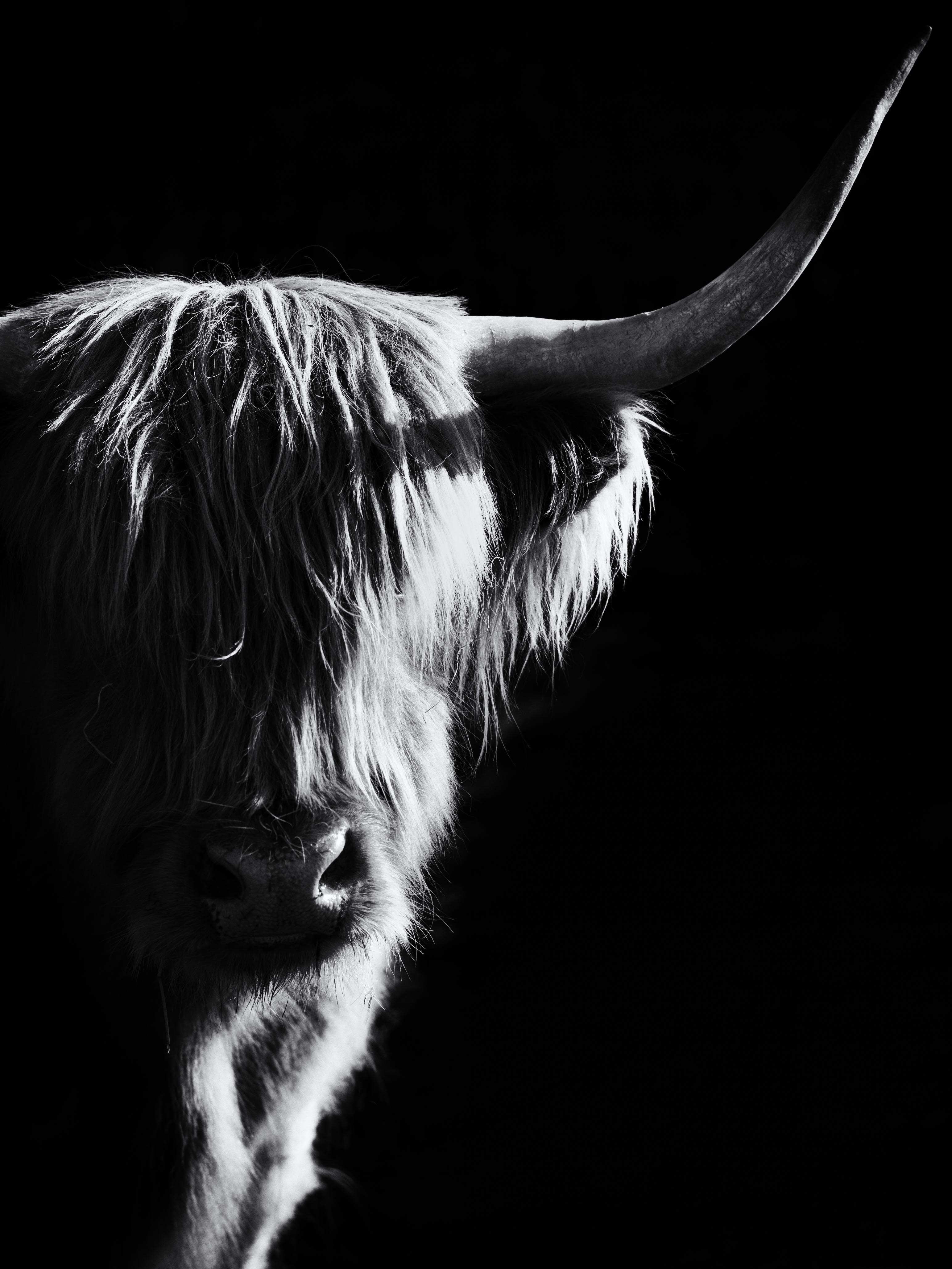
Sometimes, but certainly not always, I have a clear idea of the image I am trying to make even before I set out to take the photograph. This portrait of a Highland cow is a case in point.

From a lighting point of view I knew that I wanted the subject to be side/back lit, with bright sun to provide shadow areas and lots of contrast; although I was quite sure I would be adding more in post processing. The background also needed to be quite dark, so that the illuminated silhouette and backlit hairs of the animal would stand out. Compositionally I thought portrait would work better than a landscape, nor did I want to include the whole head or indeed both horns. As magnificent as they are one horn would be sufficient.

When it came to taking the shot, I deliberately included more in the frame so that I could crop later. I chose an aperture which would hopefully give me enough depth of field so that the nostrils, horn and hair on the top of the head were all sharp, but the neck or any visible part of the body were out of focus.

In many ways deciding what I wanted from the shot was easier than taking it! Animals move, they don’t pose for the photographer, The lighting was critical so the cow had to be facing the right way and just at the point when you are about to release the shutter, their head turns away and you have to be patient for the next opportunity. I took a number of shots which were out of focus, poorly composed or the background too confusing.  There was a fence between me and the small herd of cattle, so I was restricted in my movement, but I felt more comfortable than being in the field with them! Finally I thought I had captured something which I could work on and you have now seen the end result.

These wonderful creatures are full of character. You sort of know that they can see you even though their long hair prevents you from seeing their eyes. They know you are there, wondering why you want to point this black object in their faces. However their initial curiosity does bring them nearer to you, before they decide that grazing on grass and straw is more interesting than a photographer who wants to turn his imagination into reality.

This image was taken with a Leica M Monochrom and 90mm Summarit f2.4 lens at f4, 1/2500 and ISO 320.

Do click on the image to view a larger version, particularly if you want to see the level of detail which has been captured.
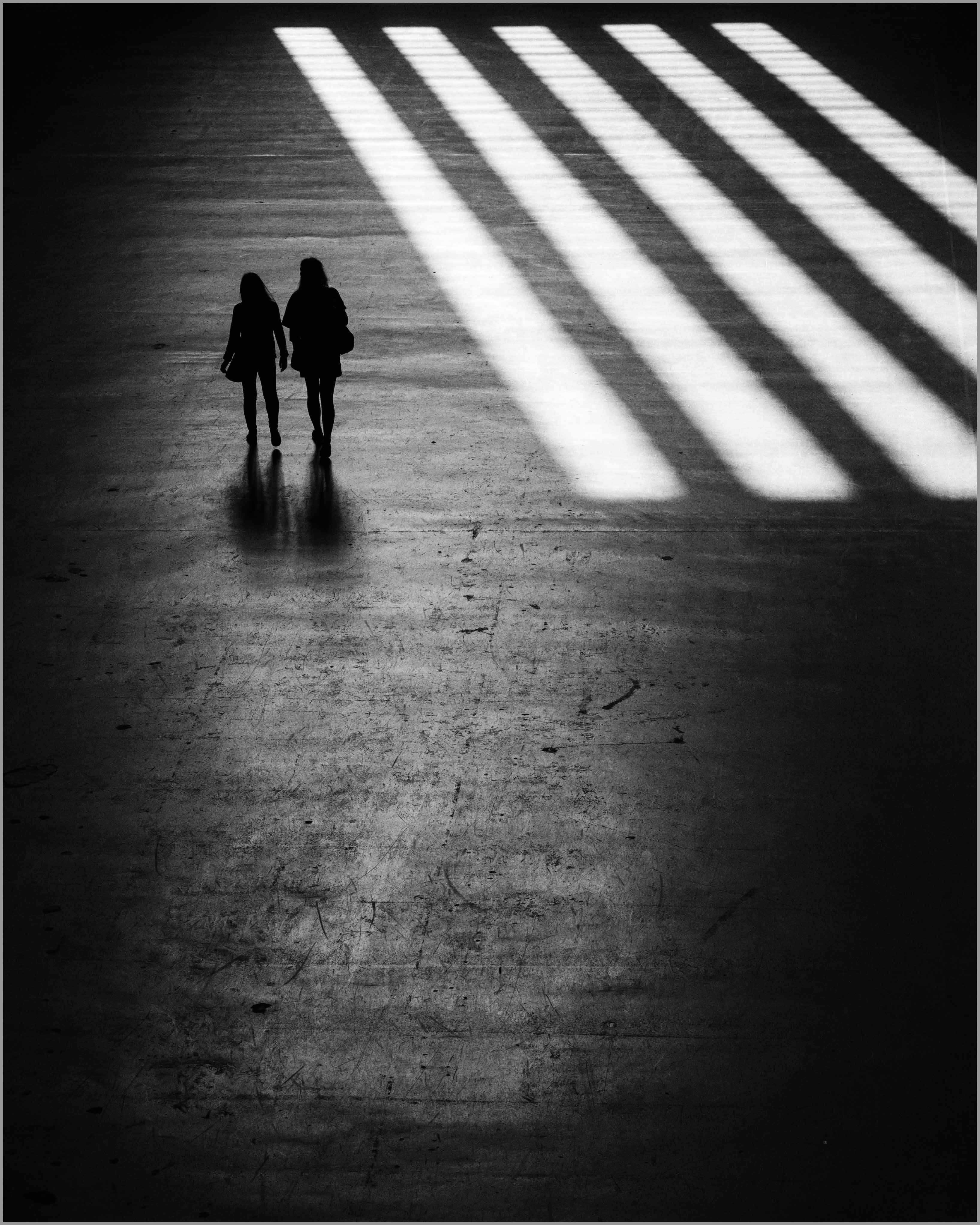
People, light and shadows – inside the Turbine Hall of Tate Modern

Light worker

Light worker


Occasionally I travel to London for a business meeting. It doesn’t happen very often but when it does, I like to make the most of the day and if time permits take a few shots before the train journey back home.

Earlier this week I found myself in the City, so I decided to visit Tate Modern. Not for the artworks but for the Turbine Hall, a truly massive space, which previously housed electricity generators and is now used as a social space for art installations. I had been inspired to do so by fellow blogger Andy Hooker of LensScaper when he wrote about his visit to this very same place.

Although I had been to Tate Modern before it was never with the intention of taking photographs. You may say I am strange but on this occassion I was more interested in the building itself, its architecture, the people it attracts, than I was in the works of art on display. The light to me was as wonderful as the varied art this gallery has on show.

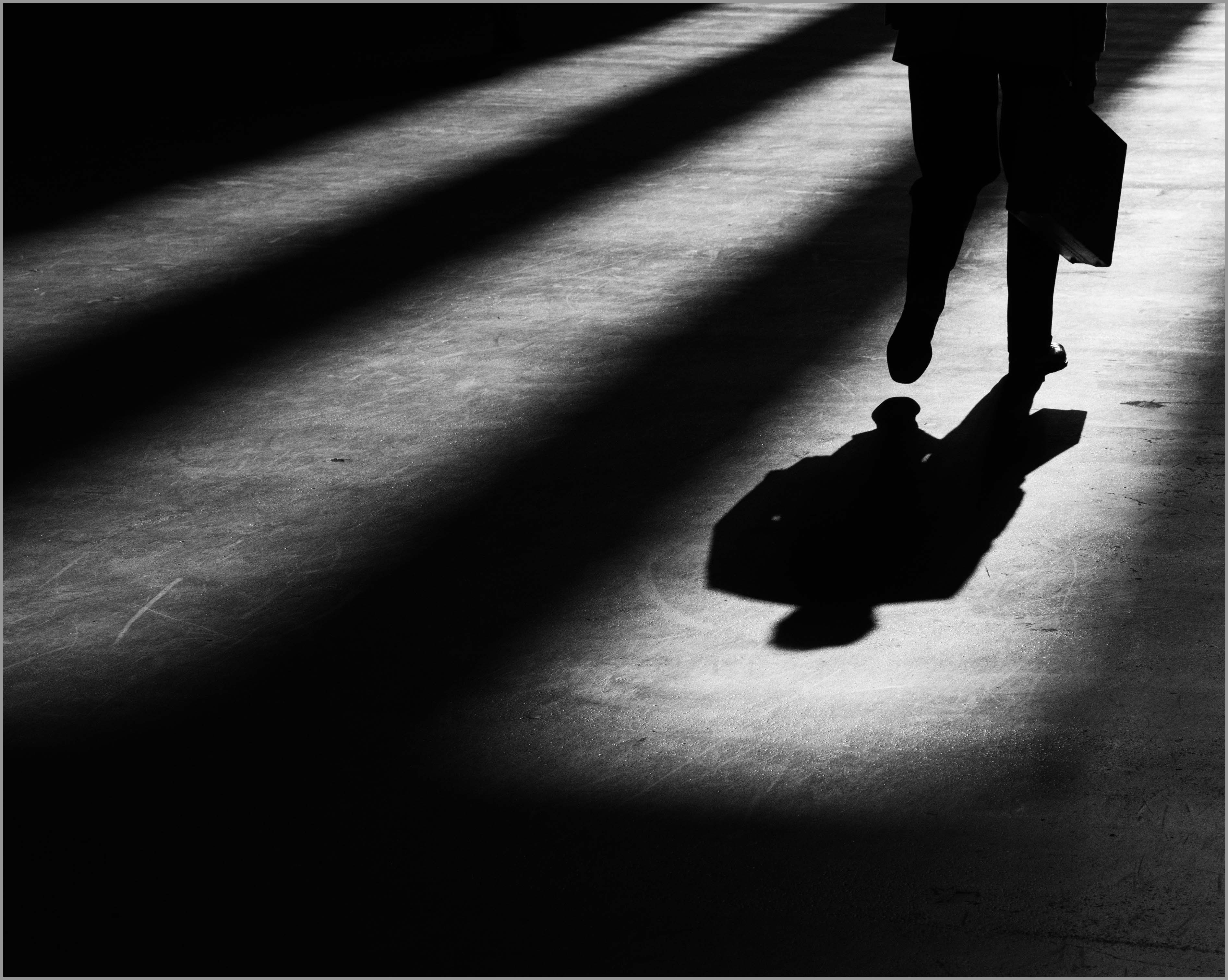
By the time the business of the day was over, it was quite late when I arrived, but I was very fortunate with the light. The sun had moved round to the west and its light was pouring in through large vertical windows casting long stripes of light on the heavily textured concrete floor. As visitors moved towards the exit it was interesting to see how perhaps sub consciously they would walk along the ‘light stripes’ as if they were being guided to the door.

I enjoyed watching and waiting as visitors and city workers moved around, just hoping that I would be in the right position to take the shot that I could picture in my minds eye.


Light follower

Light follower


Light stripes

Light stripes


Light crossing

Light crossing


I hope you enjoy these images and in the days to come I will be posting a further entry which will include more pictures of the Turbine Hall itself.

All the images in this post were taken with the Leica M Monochrom using a Leica 90mm f2.4 Summarit lens, processed in Lightroom and Silver Efex Pro. Do click on any of the photos to view a larger version.

I have written before on the subject of Museums and Art Galleries in London. Here are just two posts which you might like to read.

Rich photo opportunities in London’s museums and galleries.

The Natural History Museum – without any nature!


‘Paid’ work – a new gallery page

'Paid' work screen grab


I have just added a new gallery page to this site. Although it is titled ‘Paid’ work, and whilst it was my first ever commission, I am not a professional photographer so after covering my material expenses I asked for a donation to be made to a worthwhile cause. The work was commissioned by Vail Williams, a firm of Commercial Property Consultants in Portsmouth and the ten images are now displayed in their offices at 1000 Lakeside in North Harbour. They requested photographs of both ‘Old’ and ‘New’ Portsmouth as well as more abstract work of the office building itself.

To see the images which were all taken in the early part of 2014 please click here.

…..or to read more about the background to this work click on the links below.

My first commission – agreeing the brief.

My first commission – taking the photographs.

My first commission – processing and selection.

My first commission – the finished result.


The River Arun at South Stoke – one of my favourite locations

River Arun at South Stoke

River Arun at South Stoke

The River Arun has its source in St Leonard’s Forest to the east of Horsham and flows down through the towns of Pulborough and Arundel, finally reaching the sea at Littlehampton. Its course cuts through the South Downs, creating the Arun Valley. This shot was taken at South Stoke which has to be one of my favourite locations in West Sussex.  It has featured before on my blog and I am sure will do so again in the future.

Here are some links to other entries with images taken in and around this lovely location –

Using ‘blur’ down by the River Arun

Churches in the landscape – South Stoke

A week on and it’s back to South Stoke

Cow portraits taken near South Stoke


In loving memory of a Churchyard – St Thomas a’ Becket, Warblington

L1002347-Edit-2

From an early age I have always been fascinated by churches and churchyards with their gravestones and crosses.  I guess this interest was instilled in me by my parents when I was a small child. My father would want to stop and visit every church we came across, particularly when we were on holiday visiting a new area. If there was time he would want to do a quick pencil drawing of the church in a sketchbook, something which he always carried with him. He would note down the colours and when he returned home he would get out his brushes and water colours to paint the scene he had sketched, but also the one he remembered in his mind’s eye.

I am no different except I paint with light, using black and white photographs instead of some paper, pencil and paints.  I will capture the scene and then in post processing apply the appropriate treatment to the image. It’s a creative but arguably selfish process, as first and foremost I want the result to please me but I always hope it may give some pleasure to the viewer as well, but primarily it’s my interpretation of a visit to a particular location.


L1002382-Edit


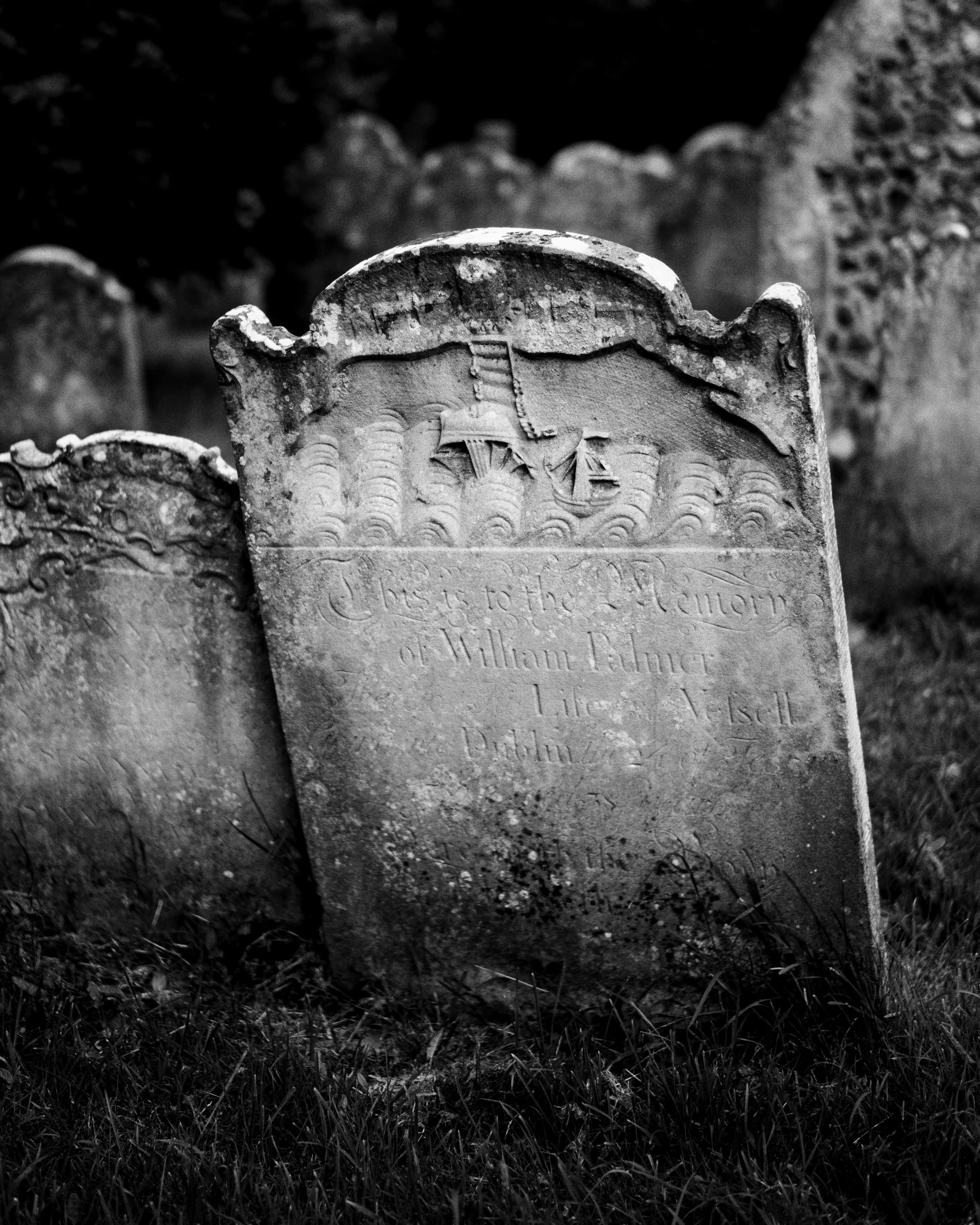
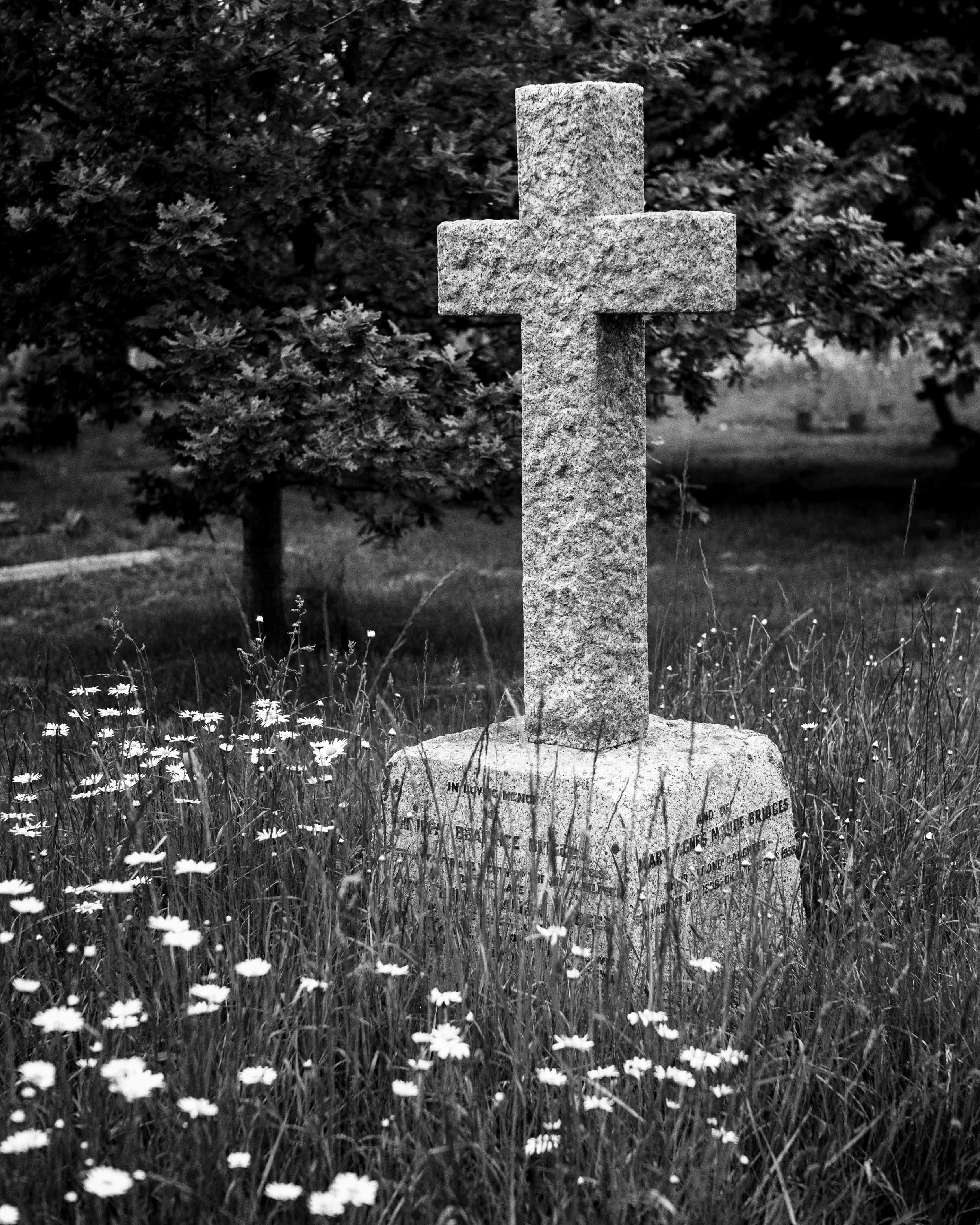
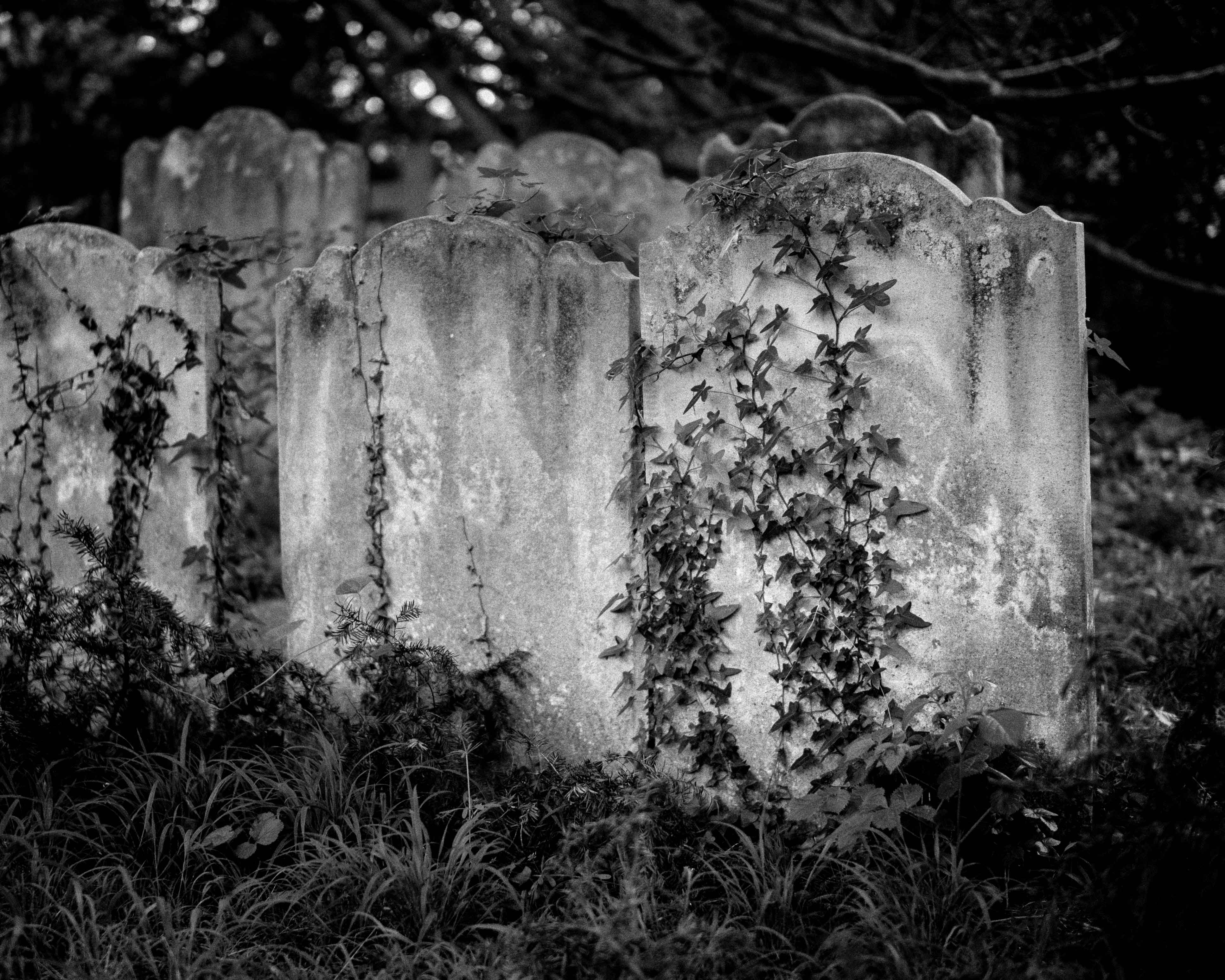
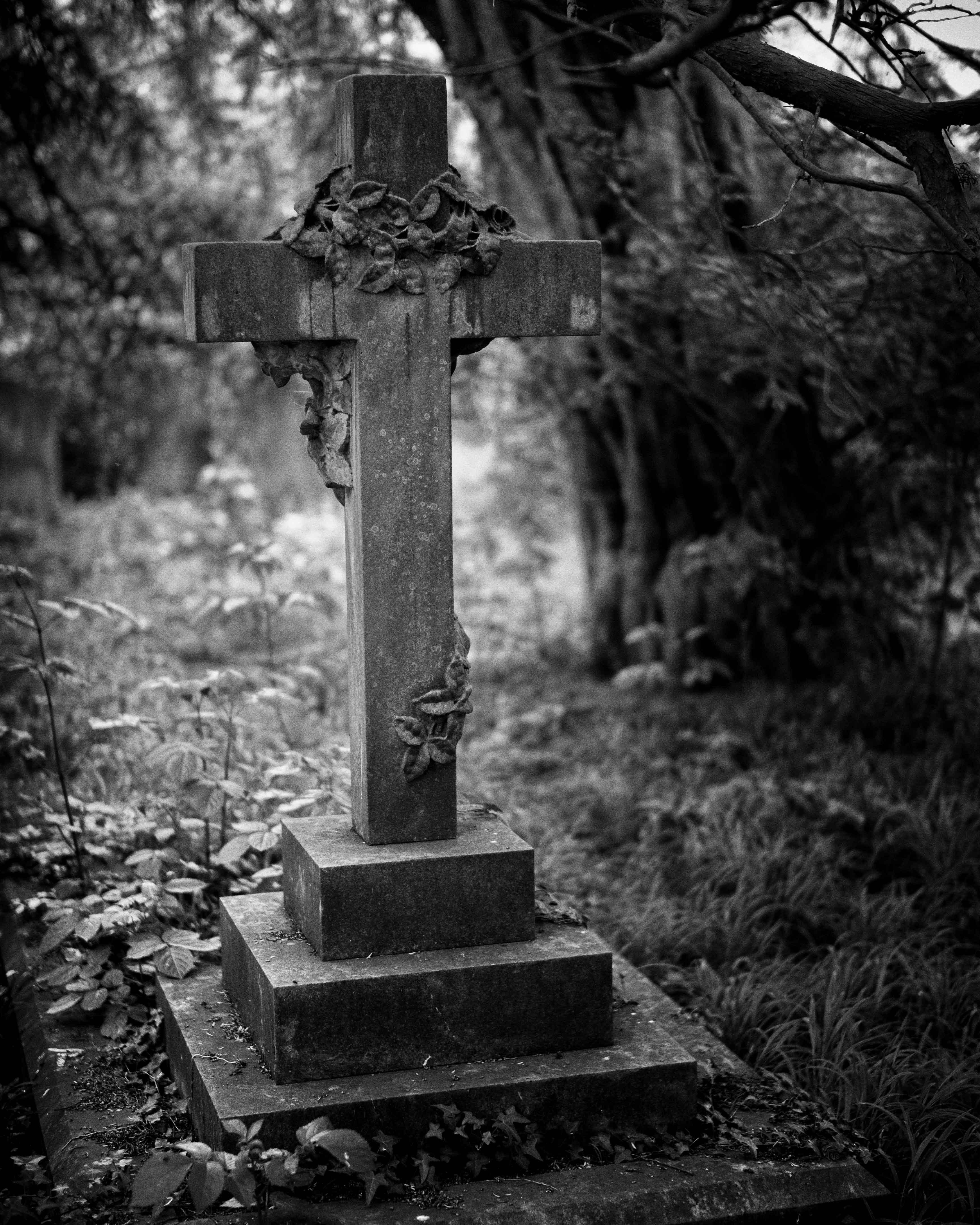
The subject of this entry is the churchyard  of St Thomas a’Beckett Church in Warblington, which dates back to Saxon times. It is situated in the Parish of Emsworth on the borders of West Sussex and Hamsphire, within just a few minutes walk of the sea,. As you might imagine the area is popular with walkers and those visiting this lovely church. The churchyard is about an acre in size and there is a much larger adjoining cemetery, so there is plenty to explore. Inevitably many of the inscriptions on the headstones have been worn away, now covered by lichen or ivy. Apparently the oldest memorial dates back to 1707. One of the most striking is the gravestone of William Palmer (above) which depicts the sinking of his ship, mast first, in Dublin Harbour in 1759.


L1002362-Edit


L1002407-Edit


I fully accept the subject of this entry will not be to everyones liking, but as I have already said these are fascinating places. They are a reminder of lives lost and the lives those people used to live many generations ago. Walk along the pathways and between the headstones and your mind starts to wander as you try and imagine what life must have been like for the people of Warblington in days gone by.

There are eight more images in this post ……… so do continue scrolling down.


L1002395-Edit


L1002403-Edit


L1002358-Edit


L1002392-Edit


L1002393-Edit


L1002398-Edit


L1002428-Edit


L1002361-Edit


All the photographs in this entry where taken with a Leica M Monochrom and 50mm Summilux lens, often shot wide open at f1.4 to give a very narrow depth of field. They were all processed in Lightroom and then imported into Silver Efex for some final treatment.

Please click on any of the images to view a larger version.