Posts from the ‘Photography’ category

After the shower – Looking behind you in Pembrokeshire
after-the-shower

I have just returned home from an excellent few days in North Pembrokeshire in Wales, as one of four participants on an ‘Andy Beel Black and White Photography Tour’.  You expect mixed weather when visiting Wales at any time of year and the past five days have been no exception.

I have already downloaded over 800 images and now the fun begins as I go through the frames, select those with promise and give some considered thought to how they should be processed for later inclusion on this blog.

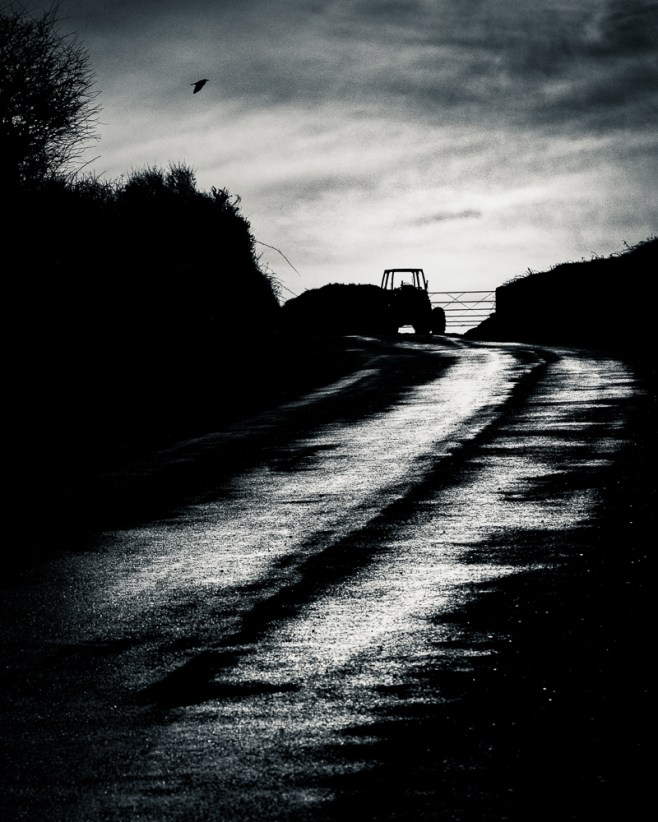
Inevitably a handful of images stay in the memory at the time of pressing the shutter, so I thought I would quickly post one such image. By way of some background it was late afternoon and I was driving the group from Abereiddy to Porthgain. A heavy but fleeting shower came down and as I looked in my rear view mirror I saw this scene. Had I not done so the opportunity would have been missed, but as it was, I pulled over and we all got out of the car and took a handful of frames. The late sun reflecting off the wet road, the tractor and the gate silhouetted against the brightening sky, and last but not least, the rook flying into the shot all go together to complete an atmospheric image so typical of this beautiful part of the country,

More images and words about the workshop will follow in time, but for the moment always remember to look behind you!

Leica M Monochrom – the good news, bad news sandwich!

clouds-over-prinsted

Clouds over Prinsted

Shortly after I acquired my Leica M Monochrom, I became aware of an issue relating to the CCD sensor; not only to this camera but also the M9 and the ME. The problem was one of corrosion on the sensor which could manifest itself at any time. Leica was quick to respond to this news when it broke a few years ago and guaranteed that for the lifetime of the camera a faulty sensor would be replaced. In fact they went further and said that even if a sensor was replaced the guarantee would apply to the new sensor as well.

This is old news really, but aware of the issue I have always been on the lookout for the problem. The good news being that I had comfort in knowing that if ever I discovered any sign of corrosion, the camera could and would be repaired at no cost. But I would of course have to suffer the inconvenience of being without the camera for several weeks as the work can only be undertaken by Leica in Germany.

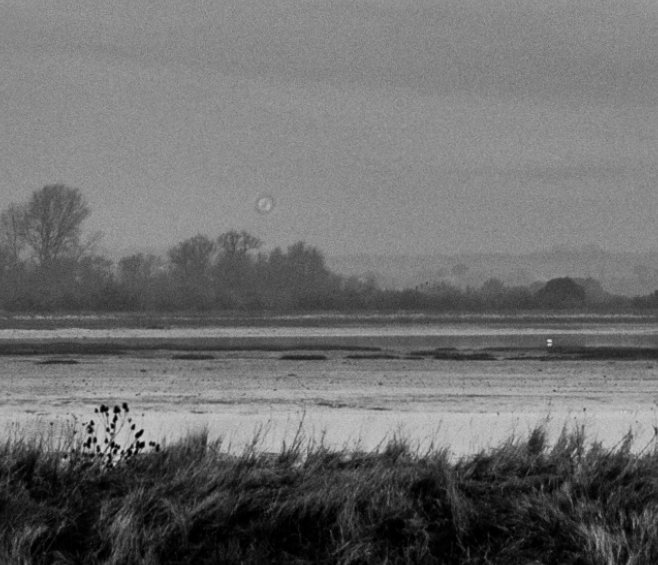
When processing the above image of ‘Clouds over Prinsted’ I was cleaning the picture for sensor spots and noticed a number of marks which were not typical of dust on the sensor. In fact they were more like ‘flying saucers’ – a dark spot with a light and dark halo. (See the screen grab below of the offending article – just above the tree line).

screen-shot-2017-02-06-at-12-18-07

The mark on the sensor which is almost certainly the sign of the corrosion issue.

Fearing the worst I did some research which only confirmed that the dreaded ‘corrosion on the sensor’ issue had finally reared its ugly head. Yes, I could clone out the marks, but assuming the  corrosion might spread the camera would have to be repaired. Bad News!

I rang the Leica Store in Mayfair in London and they said that whilst the camera could be collected by courier, if I took the camera in personally, they would provide me with a loan M Monochrom for the duration of the repair at no cost. They informed me the turn round time would be approximately six weeks. Having access to a replacement camera was Great News! I would have it for my planned trip to Pembrokeshire in Wales which comes up shortly and by the time I travel to Scotland the repair should have been carried out and my Monochrom would be back in my hands.

OLYMPUS DIGITAL CAMERA

Leica M Monochrom with 50mm Summilux and 28mm Elmarit lenses

So yesterday I caught the train up to London, swapped cameras at The Leica Store in Mayfair and took the opportunity to visit Tate Modern, specifically to see The Radical Eye exhibition. A superb collection of photographs owned by Sir Elton John. I will write about this exhibition in a future post. All I would say is that if you can get to London do go – it continues until 21st May 2017.

In flight – Chichester Harbour

in-flight

Waiting for the vital missing ingredient to appear in a scene is part of the joy of photography, but it can also be very frustrating. This picture is a case in point. Driving home this weekend I spotted the attractive light and cloud formations  over Chichester Harbour, near Bosham. As time was on my side, I quickly collected my camera and returned to a parking place near the water which I know well. Fifteen minutes later I was in the right position to take the shot but there was something missing. Various sea birds flew overhead and I soon realised that the water and sky on their own were not sufficient to make the shot. It needed a bird in flight correctly positioned in the frame to complete the scene. The gull ‘In flight’ was the missing ingredient.

I waited patiently and took numerous shots. In some the bird was too far away, or the placement of its wings just wasn’t quite right. In other frames the bird was too high or too low, or flying towards the edge and not towards the centre of the picture. Patience was finally rewarded and I got the picture I wanted.

This month has been quite productive. I have been out taking images virtually every day. This is certainly another frame which will be added to the short list ahead of my exhibition on Chichester Harbour later in the year.

Split toning a black and white image

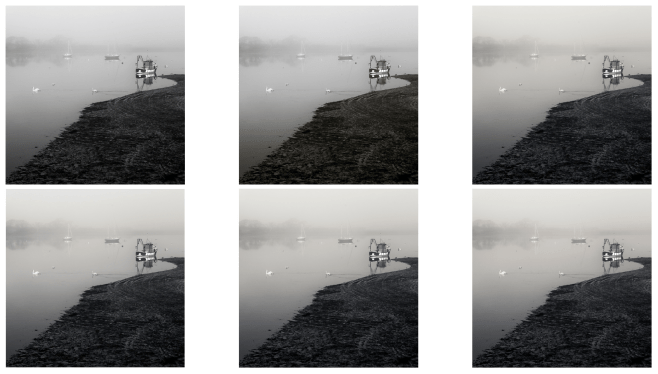
When developing a negative film and printing in the darkroom, a split tone would often be applied to a black and white photograph at the printing stage. In doing so a photographer  could change its appearance to artistically enhance the feel and emotion in the image. I have never worked in the darkroom but speaking to those that have, there is a great deal of skill, patience, expense, not to mention trial and error involved to achieve the results envisaged by the photographer.  To produce a body of printed work  is even more challenging,  as this must require real dedication and a consistent approach to how a series of pictures are printed.

screen-shot-2017-01-26-at-12-21-47

Six versions of the same image – read on to see larger versions of each one

I greatly admire those photographers who still work in a darkroom and one day I may go on a workshop to learn more about it. For now though I am happy to try and apply these darkroom techniques in a digital world where the likes of Lightroom and Photoshop make the process so much easier.

Read more

Exhibition – my parameters

Although The Image Circle exhibition does not take place until November, preparing a portfolio of images ready for curation at a later date has to begin now. In fact it started some weeks ago when I decided my theme would concentrate on the landscape and environment of Chichester Harbour. Now, whenever I am out walking in the area, my camera is with me. I am very fortunate, as this is an almost daily occurrence, otherwise our dog complains!

Whilst I have never exhibited my work before, I felt it was important to establish some parameters at an early stage, in order to focus my intentions and concentrate the mind. Over the last week or two these guidelines have become well established and are as follows –

  • All photographs will be taken in the clearly defined area of Chichester Harbour.
  • All the images will be taken using just one camera with one prime lens – the Leica M Monochrom and 50mm f1.4 Summilux lens.
  • I envisage the vast majority will be hand held, as this is my preferred way of working, although I will not rule out using a tripod in certain situations.
  • I doubt that I will be using filters, although shooting wide open in bright conditions, it is obligatory to use a 3 stop neutral density filter to manage the light reaching the sensor and exposing correctly.
  • All the images made will be cropped to square format and be in black white. (I have no choice, it’s a black and white only camera!). I have already established a workflow for processing as I need to present a coherent set of printed images.
  • I have yet to make a final decision but they will almost certainly be toned in Lightroom.
  • The photographs will be printed on Canson Platine Fibre Rag. A 310 GSM archival paper. Without question it’s my favourite paper for this type of work.
  • The size of print, mounting and framing considerations are still in the melting pot but I will write about this in a later post, once my thoughts have come together.

So what are my intentions? Chichester Harbour is a beautiful and intriguing place, with a great deal of variety for image making. By walking the many footpaths that cover the area, a more intimate knowledge of the landscape becomes possible. I see the same locations at different times of the day; the weather and the light is constantly changing and in the months ahead Winter will turn to Spring, followed by Summer and Autumn, all of which will give me plenty of opportunity to capture the area as I see it. It will be my personal view of Chichester Harbour; an intimate portrait of a place I know well but will get to know even better as I explore locations which are less familiar.

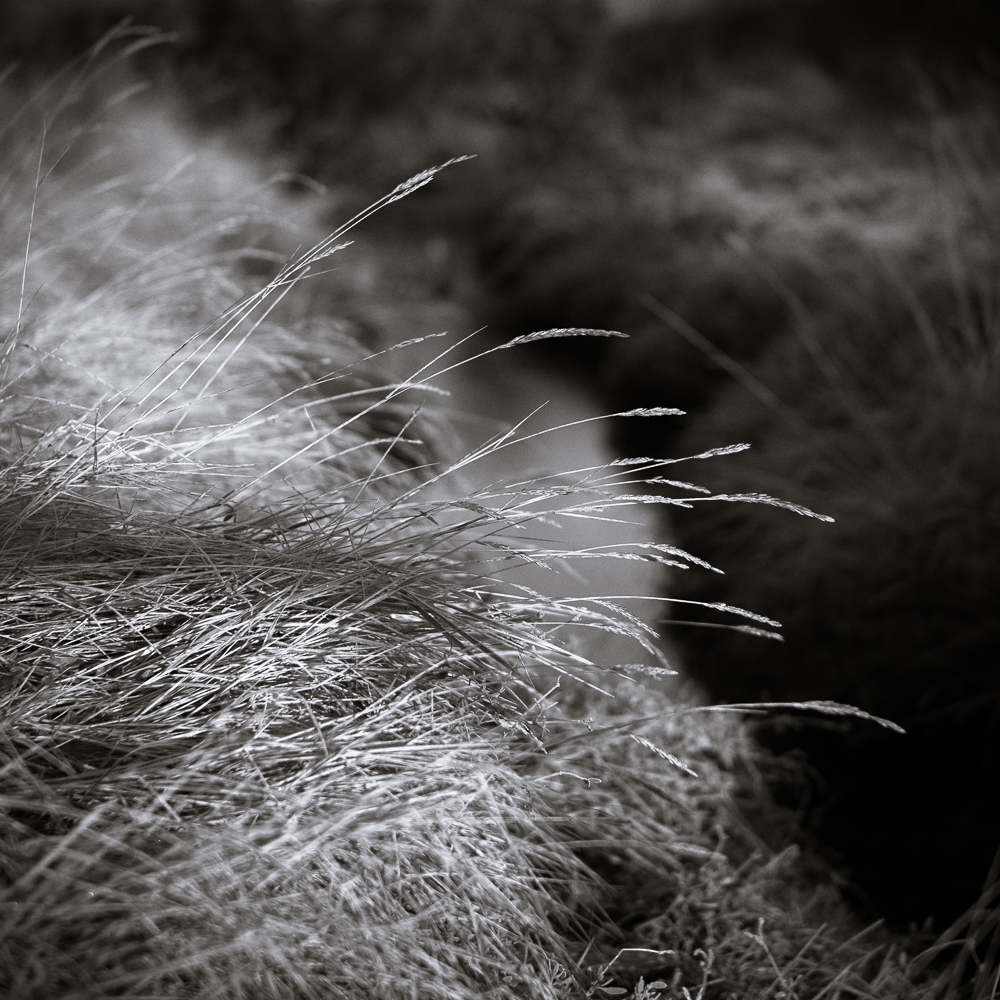
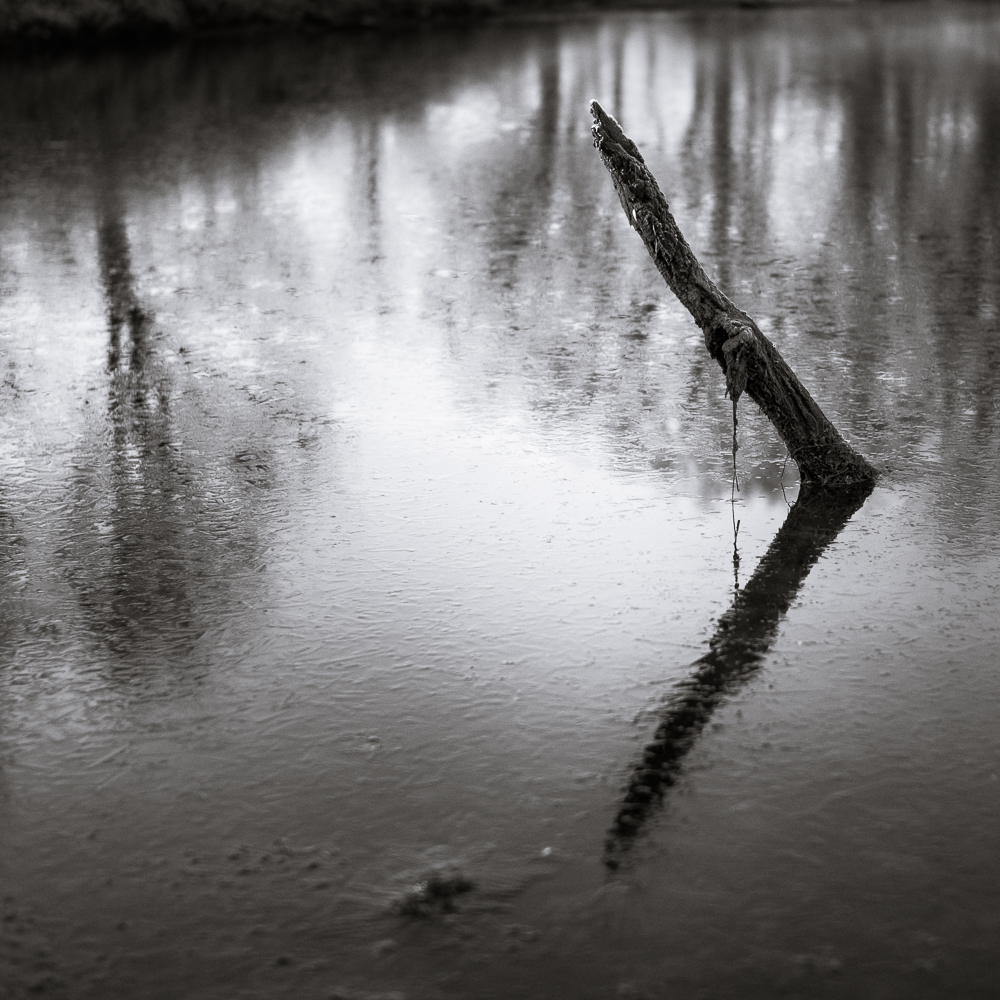
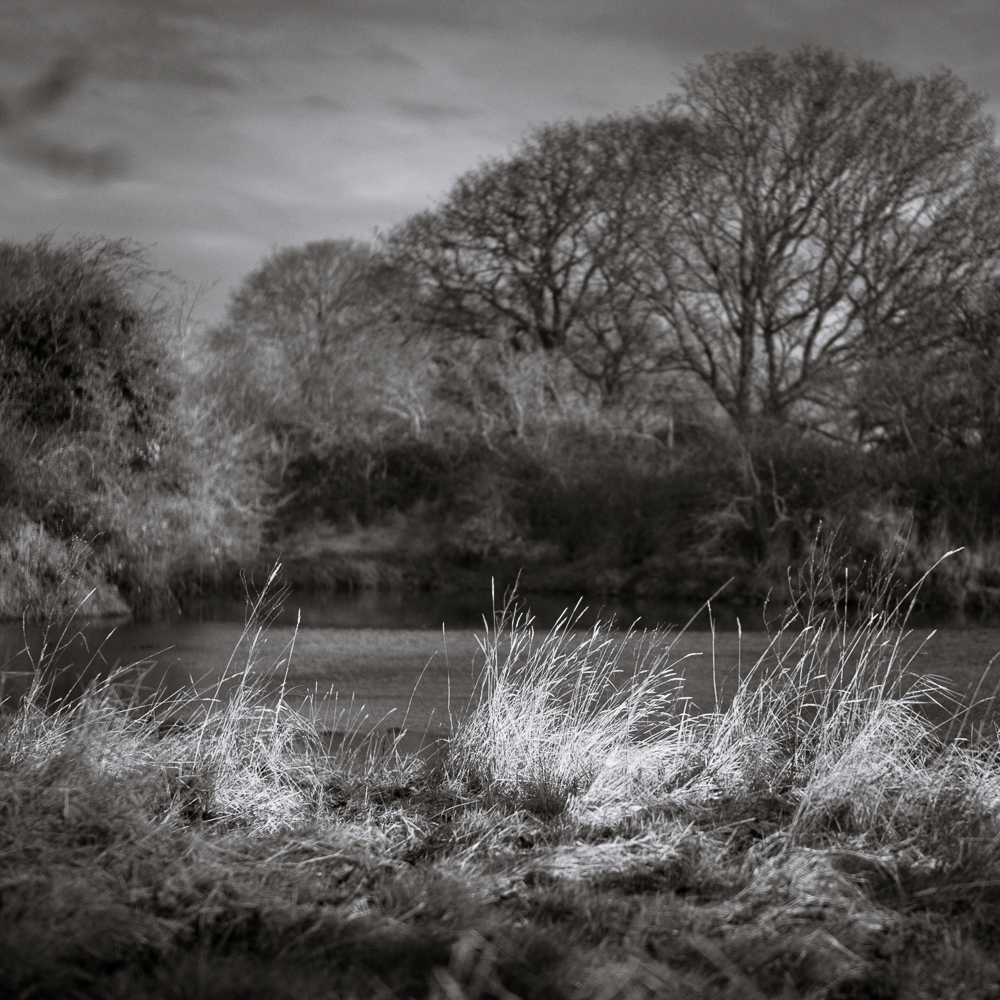
The images which form part of this post were all taken very recently in and around one specific location – a small pond on the western side of Fishbourne Creek. One or more may or may not be included in the exhibition, but these and the many others I have made in recent weeks will start to make up a body of work from which a final selection can be made. Curation is a topic in its own right and I will doubtless be writing about this in the future.


l1002161-edit

l1002194-edit

l1002203-edit

l1002040-edit

l1002235-edit

To see the work of my fellow exhibitors, do visit and follow our website – 

www.theimagecircle.com