Posts from the ‘Photography’ category

Whitesands Bay – The magical Golden Hour

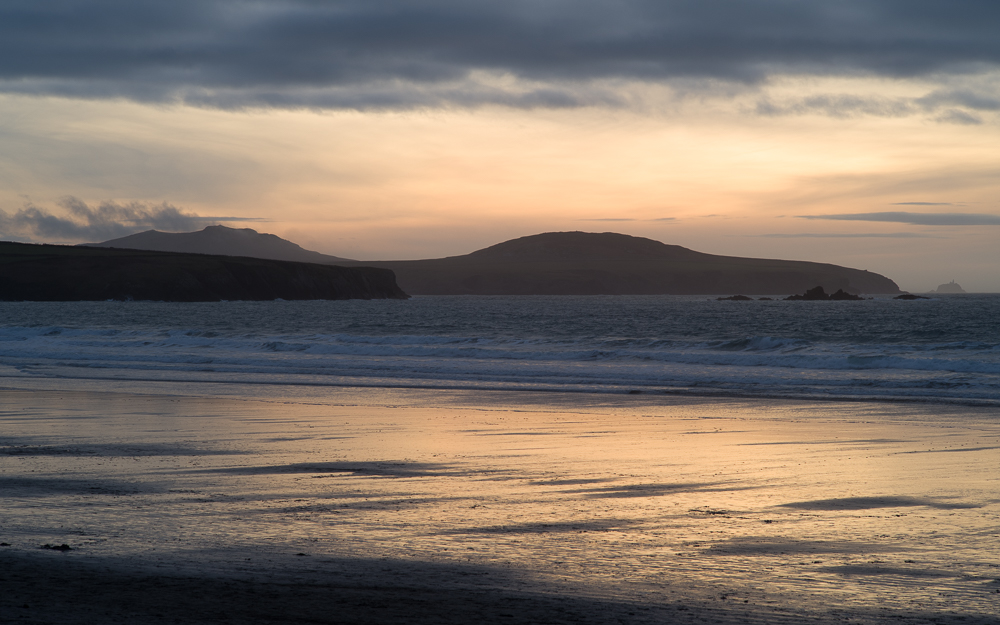
17.09.47 – The Golden Hour begins


In the past couple of months I have been making more use of my Instagram account (@arfrost) and on it my profile reads – ‘A monochrome photographer with occasional colour lapses’. I think this sums up my approach to photography rather well, and this post is just that, a lapse into colour.

For many landscape photographers the ‘Golden Hour’ at the beginning or at the end of the day is one of the most popular times to be out with a camera. This set of images demonstrates rather well the reason why it can be a magical experience. The colour of the light is constantly changing and arguably the longer you wait, the greater the reward is likely to be.
 

17.24.03 Showing Potential


All of these images were taken from more or less the same position, looking out over Whitesands Bay in Pembrokeshire back in February this year. The first frame was taken at 17.10hrs and the last at just before 18.00hrs, a difference of just 50 minutes.


17.44.46 Jogger at dusk


17.54.10 Forty five minutes after the first frame


17.58.11 The Magical Golden Hour


As well as the glorious colour palettes the inclusion of people and in some cases their dogs as well, adds human interest to three of the five images, which appeals to me.

If you happen to find yourself in a wonderful location when the day is drawing to a close, and assuming you have the time to sit or stand and just wait; then there is no greater pleasure than to enjoy the ‘Golden Hour’. Whether you have a camera with you or not, the experience is hard to beat.
 

How many elements + which aspect ratio = different results

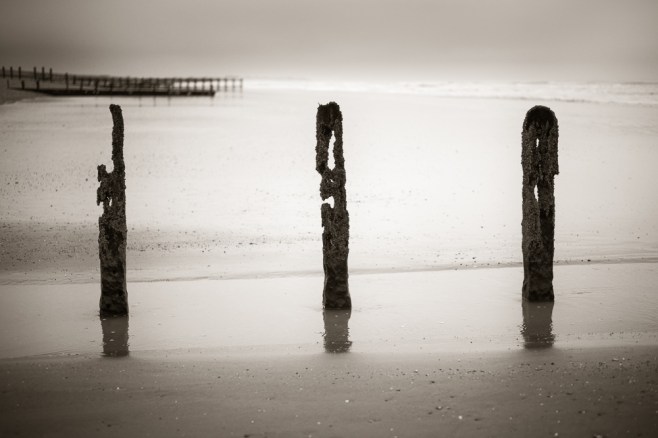
The three images which make up this entry are essentially the same subject but in terms of their composition are all quite different. Through this post I want to illustrate the decisions we have to make each time we make a photograph and what we can learn from the process.

Groynes

The first image above, uses a classical 3:2 aspect ratio….the same as any 35mm film or full frame sensor. The composition is balanced with three groynes, with the one in the centre arguably being the most visually interesting. The distant and out of focus groynes on the horizons provide both context to the location but also depth. I think it’s important to have retained separation between the left hand groyne and those in the distance.

Groynes-2

The second image shares the same elements but is further simplified as only two groynes are included in the frame. The distant groynes are a more important third element in this picture, creating a triangle with the groynes. There is added space between them and the much shorter groyne on the left hand side, which gives a more open feel to the shot. The aspect ratio is now 5:4, the equivalent of a medium or large format film camera.

Groynes-3

And finally the third image. The single groyne fills more of the frame and is clearly the main focal point. The distant groynes are less intrusive but still play a key role in providing context and depth. The 1:1 or square aspect ratio, is one I particular like and lends itself well to this more minimalist composition. This aspect ratio mimics the 6:6 medium format ratio found in the classic Hassleblad 500 series of cameras.

So do I have a preference as to which image I enjoy the most? The first picture is too busy for my liking. Increasingly I find myself drawn to simpler compositions. The second image has a little more tension as the three elements form a triangle and I like the fact that one of the groynes is much shorter than the other which adds visual interest and feeling of openness. The third image is simpler still, but might be even stronger if the distant groynes were not in the frame.

It doesn’t really matter which image you or I prefer, although I would welcome your comments. What I wanted to demonstrate is how a relatively simple subject can be treated in different ways. What do you include and what is better left out? Your choice of aspect ratio and how this can impact on the end result. How simple or complicated do you want the composition to be?

For all these reasons it makes sense to me to truly explore or work a location and subject. Look around, consider the visual relationships between all the elements in the frame and at the same time think about a variety of aspect ratios and how these may improve the final image.

The Chapter House – making amends for a missed opportunity

Chapter House-8

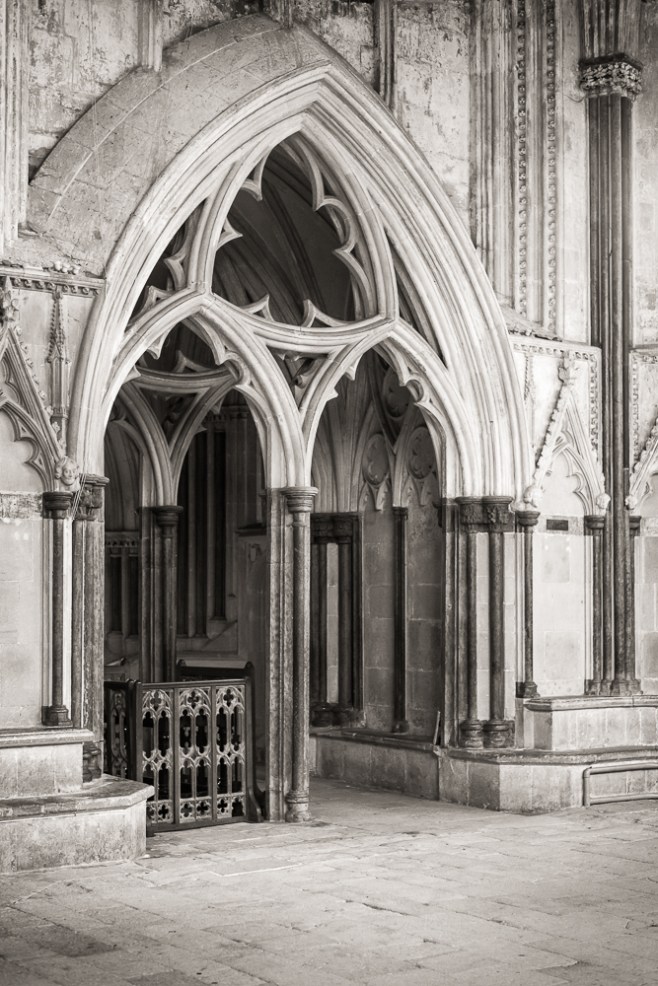
Doorway to The Chapter House

The last time I visited Wells Cathedral back in 2015 I did not go and see, let alone photograph, The Chapter House. Why, I cannot tell you, as it is arguably one of the finest features of this glorious building and one not to be missed, but somehow I did!

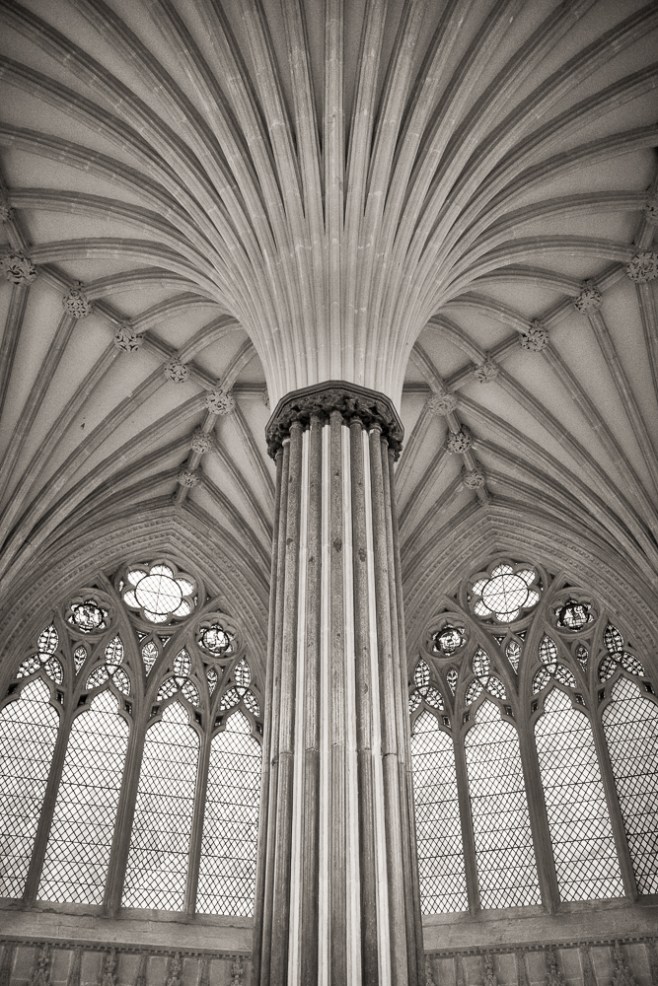
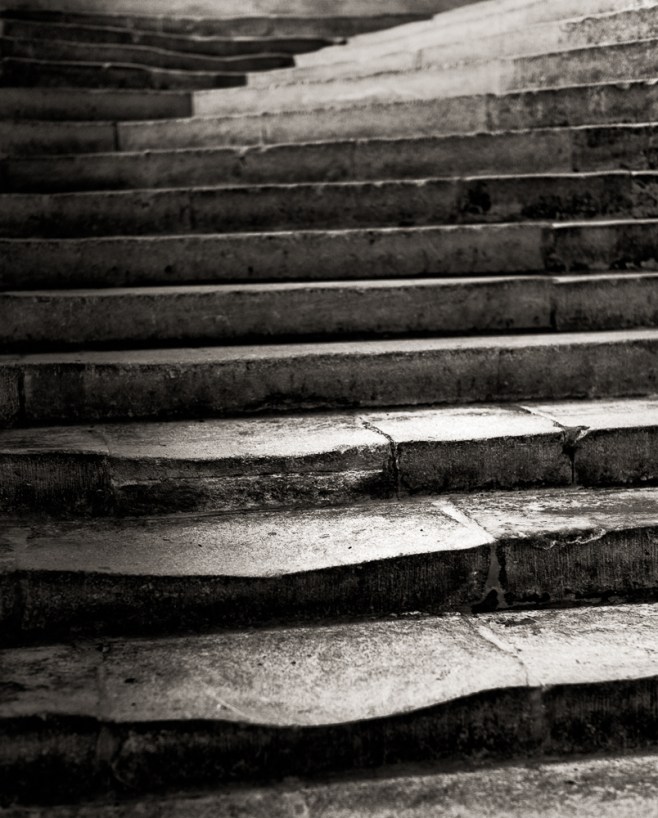
Earlier this week I made amends and as well as photographing other parts of the cathedral I spent quite some time in The Chapter House, walking up and down the famous staircase, which is often referred to as the ‘Sea of Steps’. As you might imagine this is a very well photographed subject so trying to make an ‘original’ image is nigh on impossible. Nevertheless its beauty, its proportions and its truly majestic architecture are quite breathtaking. I hope you enjoy this collection of images.

Chapter House-9

The ‘Sea of Steps’ staircase leading to The Chapter House

Chapter House-3

The Chapter House vestibule

Chapter House-7

The central column and roof inside The Chapter House

Chapter House-4

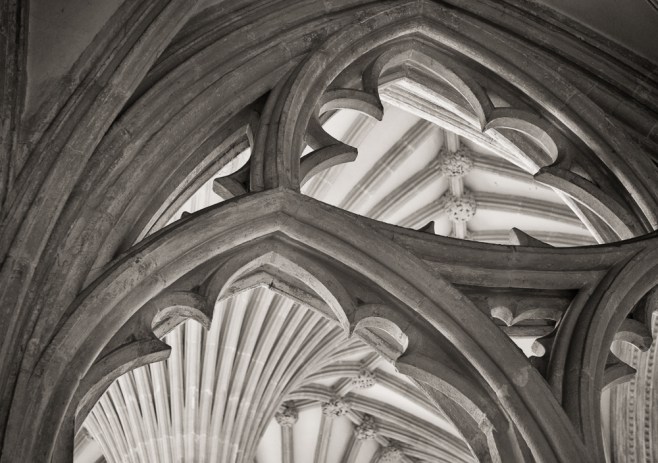
Another view of the Chapter House ceiling

Chapter House-5

Looking up – taken from the vestibule

Chapter House-2

‘Study’ inside The Chapter House

Chapter House-1

A more abstract view of the ‘Sea of Steps’

I have copied this extract from the Cathedral’s website about the history of The Chapter House –

‘The Wells Chapter House is the only octagonal chapter house to be built as a first storey on top of an undercroft, which was the ‘strong room’ of the cathedral. A crypt would not have been practical because of underground water. The undercroft itself, with its rugged supporting pillars, was certainly constructed by 1266, just after the completion of the West Front but work, first on the staircase (1265-1280) and then on the Chapter House itself(1286-1306), proceeded slowly.’

For my other posts about Wells Cathedral do click on the links below.

A quote by St Francis of Assisi reminded me of Wells Cathedral

A Monochrome Masterclass and a visit to Wells

As always do click on an image to view a larger version

Another entry with more images of Wells Cathedral will follow soon.


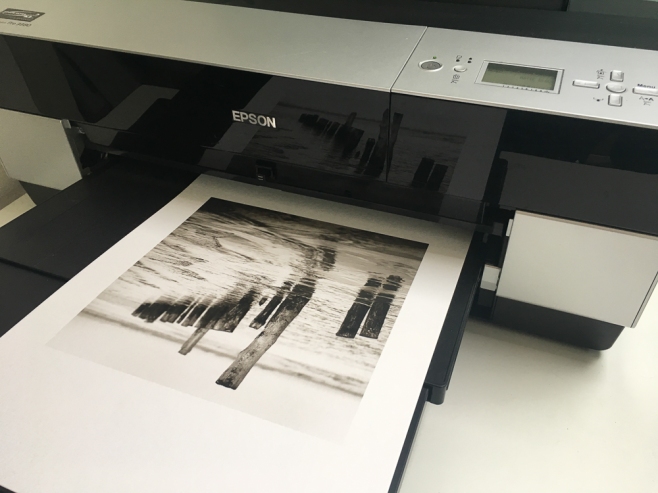
The future of photography and in particular the print – discuss.

IMG_2690

This could be an exam question or even a topic for a university thesis, or more simply a discussion between a group of photographers over a drink in the pub one evening.

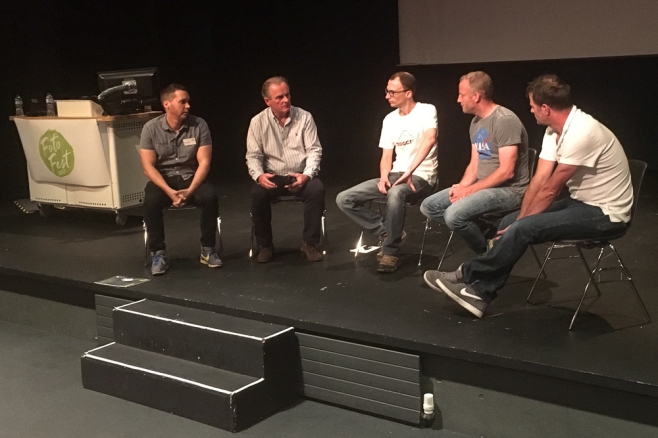
On Sunday I attended Foto Fest 2017 at Bath University, an event hosted by Fotospeed – a company providing a wide variety of photographic papers, some of which I use for my own images. There were four excellent professional photographers talking about their work (Martin Hartley, Paul Sanders, Ben Hall and Colin Prior) all of which were truly inspiring.

At the end of the afternoon Sam Gregory of Togcast hosted a question and answer session with the four speakers giving their views on various topics. The subject of this entry was one of the topics raised by Sam. There wasn’t time to do the question justice, let alone involve the audience. I am also aware it’s a hotly debated subject in photography circles. As no one can really predict the future, I thought I would pitch in with my own personal view. It’s probably an opinion shared by others but I hope you will read on.

IMG_2700

Read more

Exhibition layout – now it’s getting serious

In about 11 weeks time, The Image Circle group exhibition will be opening The Oxmarket doors to the public. On the 14th November to be precise. Between now and then the six members of the group will be making their final selection as to what to display, organise matting and framing, choosing titles and of course promoting the event. It would be a pity to go to all this work if no one turns up!

Chichester Harbour Project-63

Harbour Reflections, Prinsted

I can only speak for myself but as I will be presenting a body of work on Chichester Harbour, as opposed to a selection of individual images or smaller collections of photographs, the overall layout of the panel is of particular importance to me.

Read more