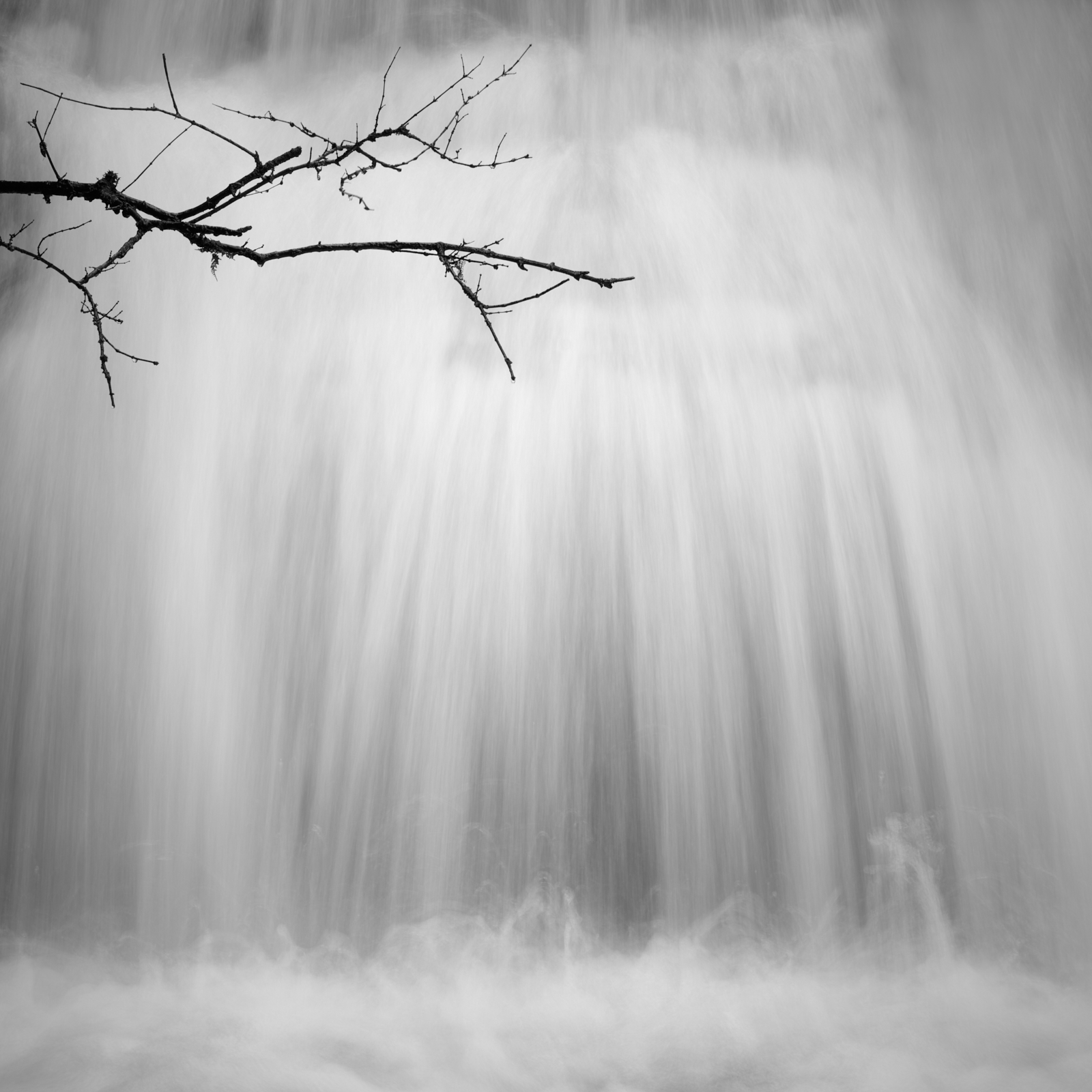
Although this above image is quite a simple one and minimalist in its nature, it does capture the power and movement of the water, which is in stark contrast to the stillness of the overhanging branch. It could be a metaphor for life; the frail looking branch, remaining strong and resolute, appearing to resist the forces of nature which might sweep it away.
Waterfalls are a popular subject for photographers although I can’t claim I’ve enjoyed much success in the past. Either the conditions haven’t been quite right, access has been challenging or I simply haven’t devoted sufficient time to the composition, selecting the best shutter speed etc.
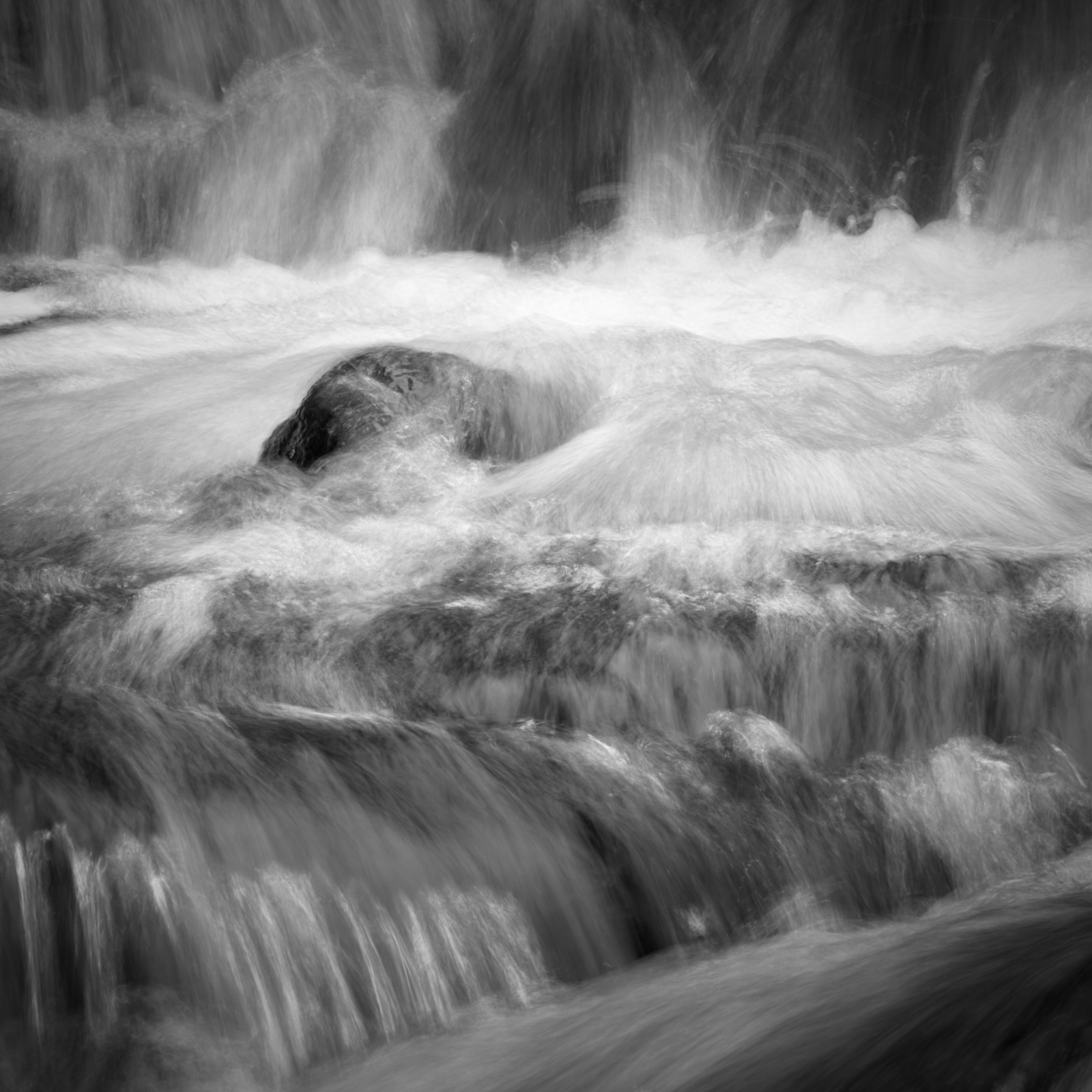
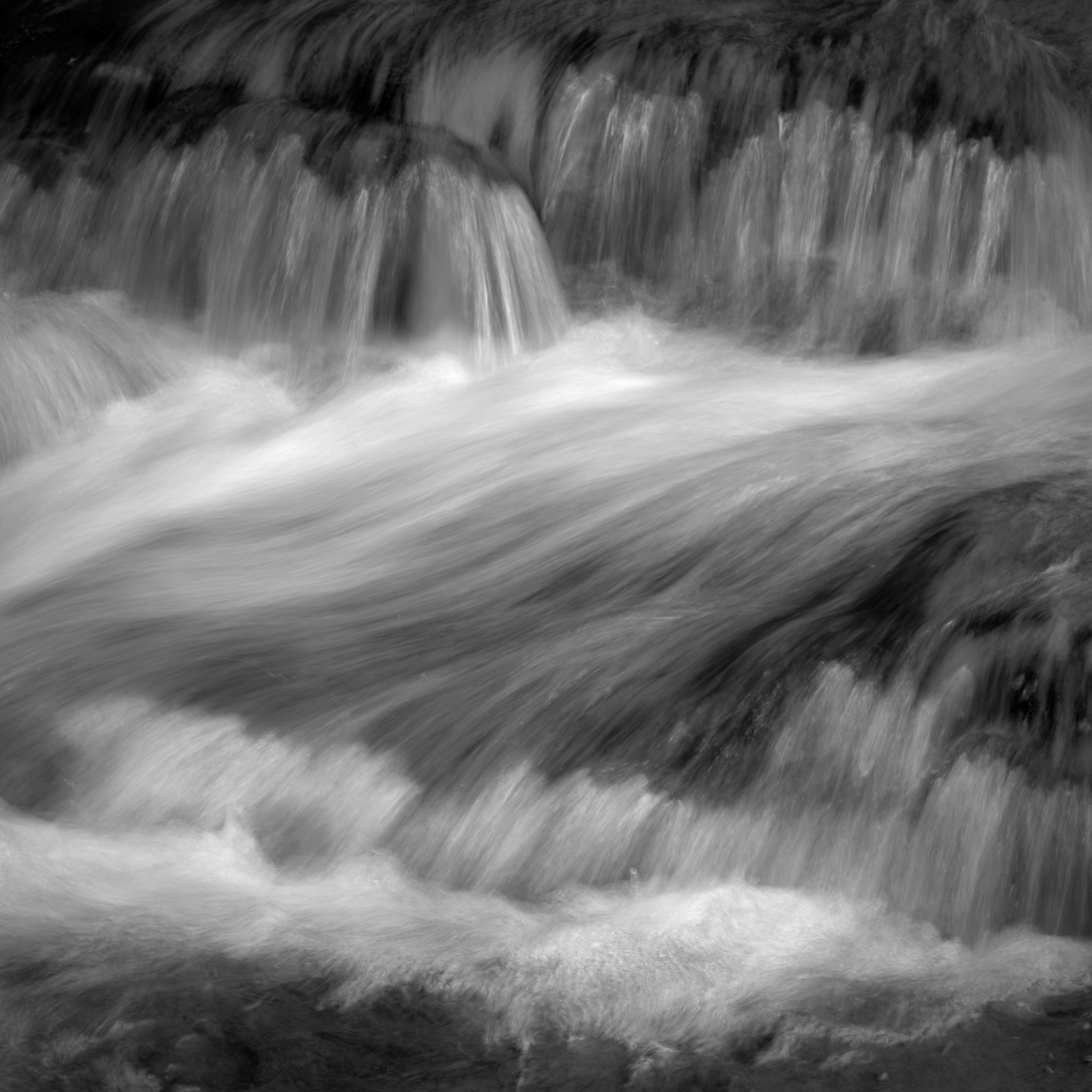
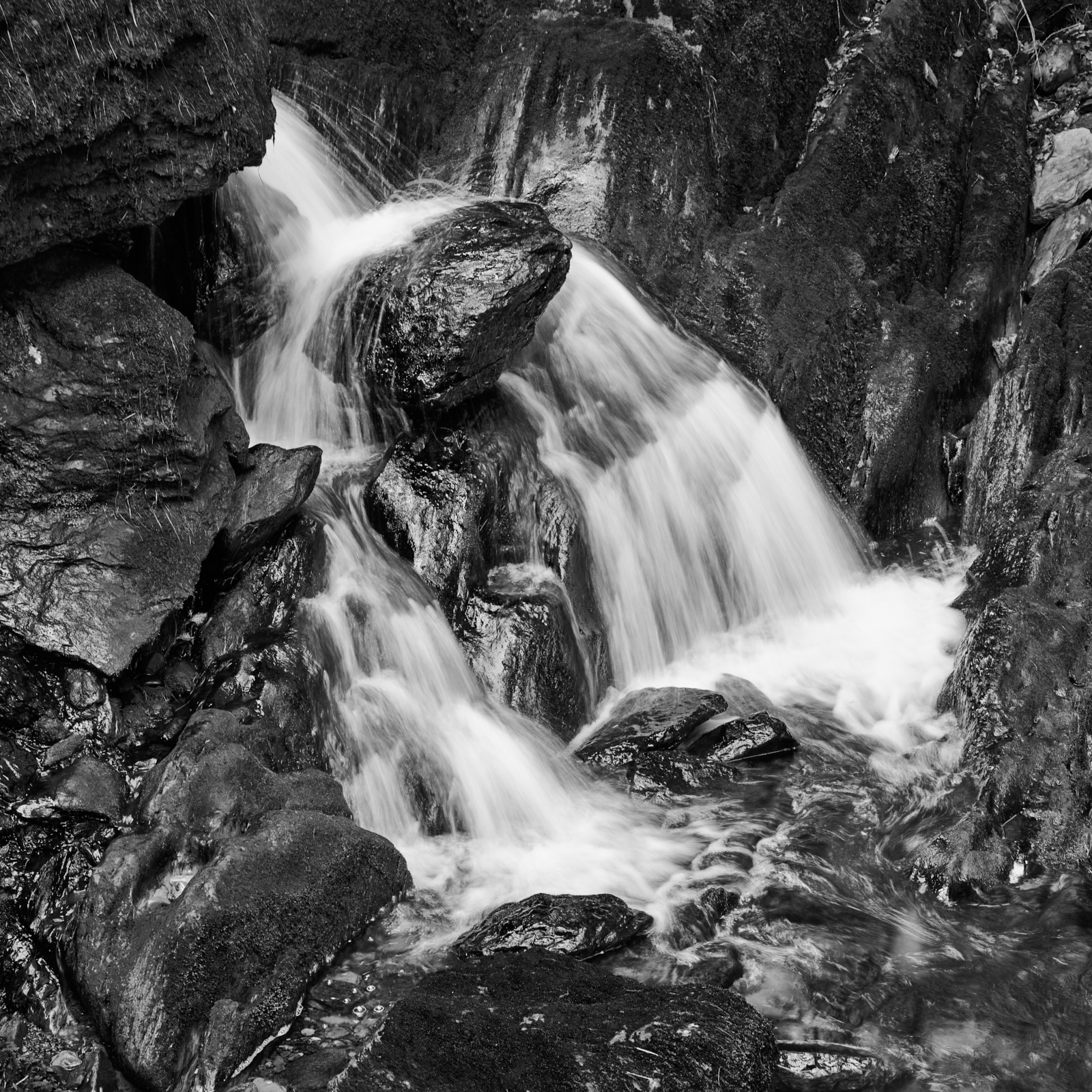
For the first time I feel I have done justice to the subject with these four images.
Finding a pleasing composition wasn’t always easy. I felt a single rock provided a good focal point for my eye to rest on, whilst the swirling and fast moving water engulfed the one static element in the image.
Sometimes I didn’t feel a focal point was necessary. The more abstract nature of the above photograph I think works because of the pleasing pattern and shape created by the way the water is flowing in different directions.
And lastly a more traditional image of a different waterfall of a large rock splitting the flow of water. The surrounding wet rocks serve as a frame. They add texture and form to the photograph which I think works well in monochrome.
I have just returned home following a two week holiday in County Kerry, Ireland, the location for this set of images. It’s the first time my wife and I have visited the Emerald Isle. It was something of a gamble as we have endured a very wet winter in the UK and the weather was forecast to remain unsettled for the duration of our stay.
Undeterred, the conditions were promising from a photographic standpoint. Dark moody skies, dramatic light, skeletal winter trees and streams and rivers in spate.
I plan to share further images depicting the varied landscape of County Kerry in the very near future.
There is a familiar saying which states – “Appreciate the journey, not the destination.” I have been giving some thought to this phrase recently and in particular how it might relate to photography.
The journey could be a very short one. A photo taken on a smartphone and instantly shared on Instagram or some other form of social media, might take no more than a few seconds from capture to publication. The image itself could be a very good one but has the photographic ‘journey’ been one of pleasure and satisfaction? I somehow doubt it and I suspect the endorphin rush is more likely to come from the number of likes attained from followers, who may only have observed the image for a second or two before scrolling and liking the next upload. It’s not exactly life enhancing is it?
I have been a serious hobbyist photographer for over 15 years, almost exclusively making images in black and white. The end result, i.e. the finished image or destination, is of course important to me but increasingly it’s the process or the journey which gives me the most enjoyment and satisfaction.
To maximise the pleasure of the journey it’s essential to slow down and give more consideration to the subject being photographed and the method of capture. The American photographer Minor White once said;
“When you approach something to photograph it, first be still with yourself until the object of your attention affirms your presence. Then don’t leave until you have captured its essence”.
If this is true, and I believe it is, a quick snap posted on social media doesn’t qualify does it? In other words, the time taken, and the consideration and deliberation given, all need to be part of the process. The camera might even stay in the bag until the composition has been visualised and the story behind the image has been thought about. The journey can then continue as the camera and chosen lens are positioned and set. Quite recently I have started using a tripod which definitely slows me down. I always considered a tripod to be a hindrance and now I think in certain situations it’s a valuable tool which helps to enhance the journey.
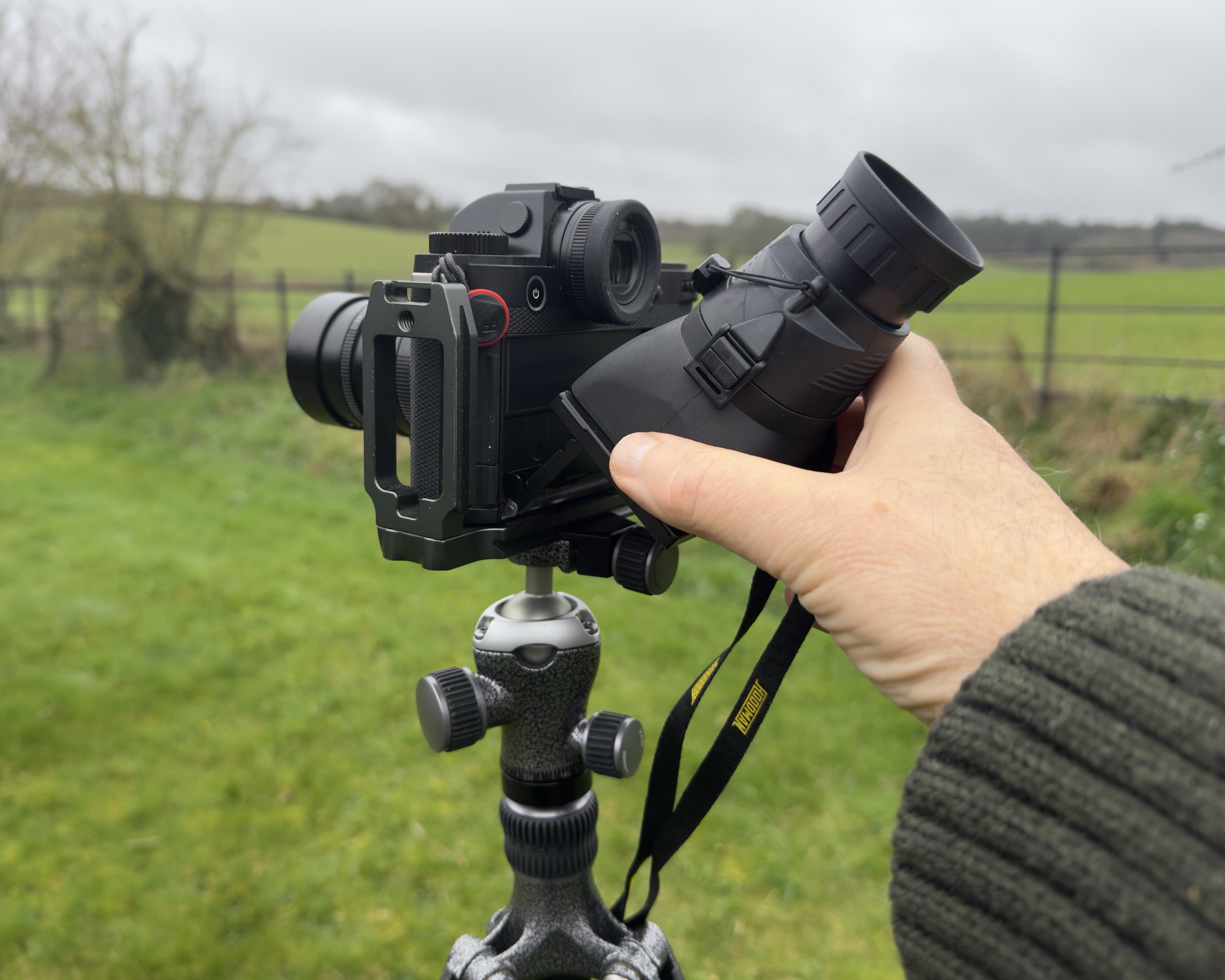
The other piece of equipment I bought recently is a Hoodman Hoodloupe. It’s quite a simple thing, well made and designed to shield the light and all unwanted reflections. You can look at the LCD in bright conditions to check focus and composition. It has glass optics and a diopter giving a very clear view although the image can be a little less well defined around the edges and in the corners. The very action of reviewing an image in playback mode using this loupe has, like the tripod, slowed me down. I have to say the whole process is more immersive and enjoyable as a result.
Using this methodmight mean that I take several minutes capturing a single frame. It could even be as long as 5 or 10 minutes from seeing to final capture. Longer of course if I have to wait for the right light. With digital I instantly know whether or not the result is any good as I can review the image on the LCD screen. I could turn this function off but why would I? I might wish to retake the photograph having made minor adjustments to the settings on the camera or the composition.
However I am now asking myself a question which might have serious implications – Would I enjoy the process even more if it took considerably longer? And I am talking days not minutes or hours. You can probably guess where this is heading.
I have always been inclined to shoot fully manual. Selecting all my settings and focussing manually is my preferred way of working. I feel more in control. I’m not a fan of ‘auto this’ and ‘auto that’. In this sense I am quite analogue in my approach. I still work digitally though and have never used film, apart from in the 70’s and 80’s, when digital cameras didn’t exist of course.
So what if I acquired a film camera, possibly medium format and one prime lens to get me started? The cost of film and developing would have to be taken into account. I would probably need a light meter to help me get the correct exposure. The waiting game of a week or more would kick in before I would get to see the first glimpse of the results from a photo shoot. No more reviewing the results on the back of the camera immediately after the shutter is pressed. Even with the negatives in my hand they would need to be scanned as I would have no intention of printing my work in a darkroom using noxious chemicals etc. I would scan them myself, but it’s another step, another delay before the final image or print can be seen. However isn’t that the whole point of this discussion which is to enjoy the journey and not just the destination. After all patience is a virtue.
Would in fact a mediocre image made using film still give me as much pleasure as a showstopper made digitally because the immersive analogue journey could be so satisfying, challenging and enjoyable? There are downsides aplenty of course but I will never know if I don’t give it a try.
As yet I don’t have all the answers but in the meantime anything which slows me down and enhances the image making process is in my view a very positive thing.
Lastly I am reminded of an interview with Michael Kenna (a photographer I hugely admire) when in 2016 he was asked what he did when taking very long exposures.
In his reply he said –
I’m often asked what I do during long exposures, which can go on up to 12 hours. Apart from the obvious answer – sleep – I return the question: “Why do we need to do anything?”
It reminds me of that lovely saying, “Don’t just do something – sit there.” It is a rare luxury to have the time to appreciate the present, to watch the stars trace through the sky as our planet moves, to witness a full moon slowly rising or setting…
Doing nothing, just observing nature and the passage of time sums things up rather nicely. It’s all part of learning to appreciate the journey and not the destination.
(All the photos in this post were captured in the past week using a tripod and reviewing the images with the Hoodman Loupe. The journey definitely gave me time to ponder and ask myself where my photography might take me in the future ……. to be continued!)
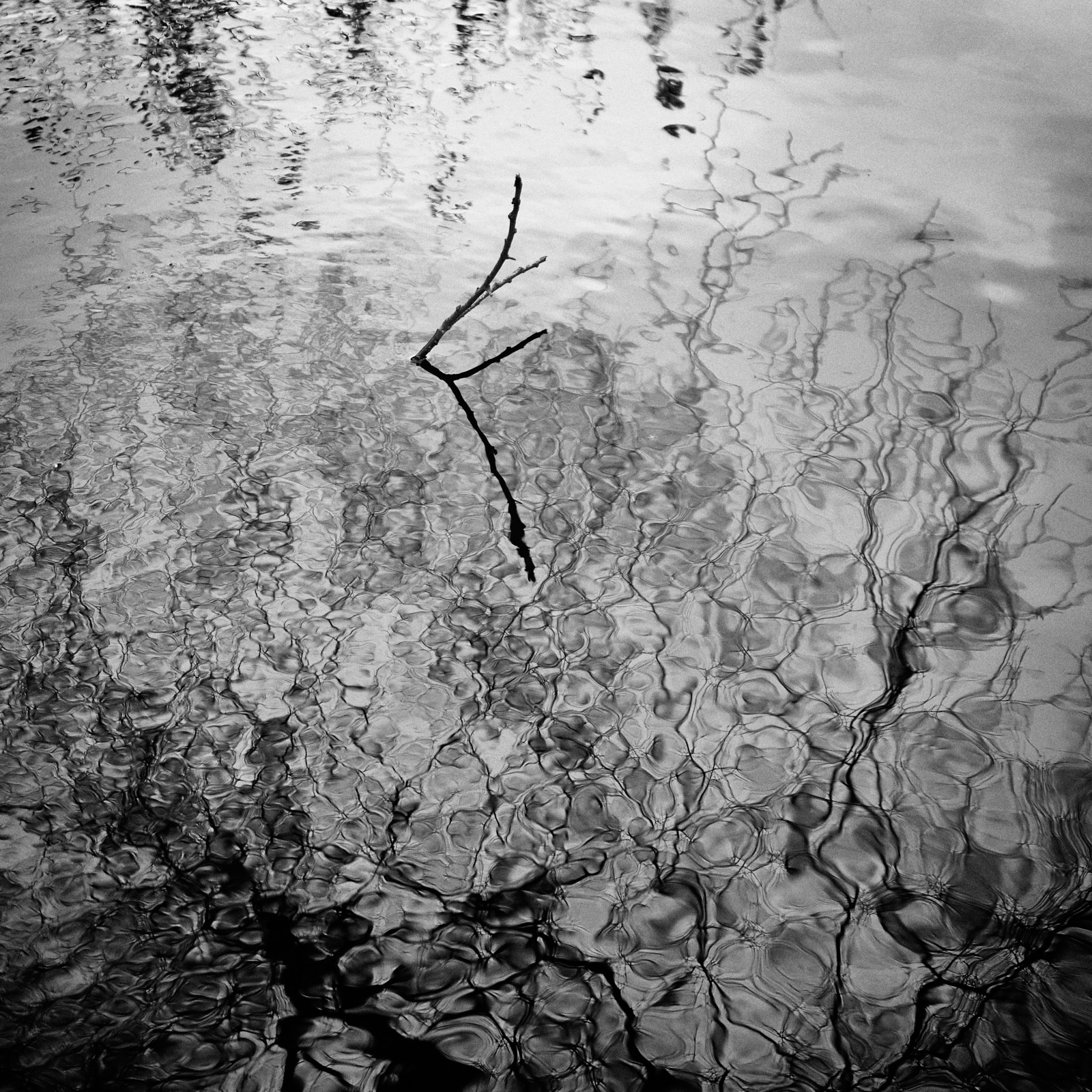
Crouching down with my camera and staring into the rather murky water of a small pond….a man approached me and asked me what was I photographing? He could have simply asked what on earth I was doing. Instead, he chose to be more tactful and polite with his questioning. Had I been in his shoes I may well have posed the same question. After all there was nothing obvious to be seen, let alone photograph…or was there?
And that’s the great thing about being a photographer. The eye is honed to see something which others may not notice. And the more you look and observe the more you see.
In this case I had been drawn to the stillness of a small twig which appeared to be rising out of the water. The reflections of the surrounding trees were being moved by a gentle breeze. The combination of stillness and movement appealed to me.
What I guess wouldn’t have been seen by the passerby was how these reflections would be frozen and captured by the use of a fast shutter. I focused on the twig and used a wide aperture intending to isolate the main subject.
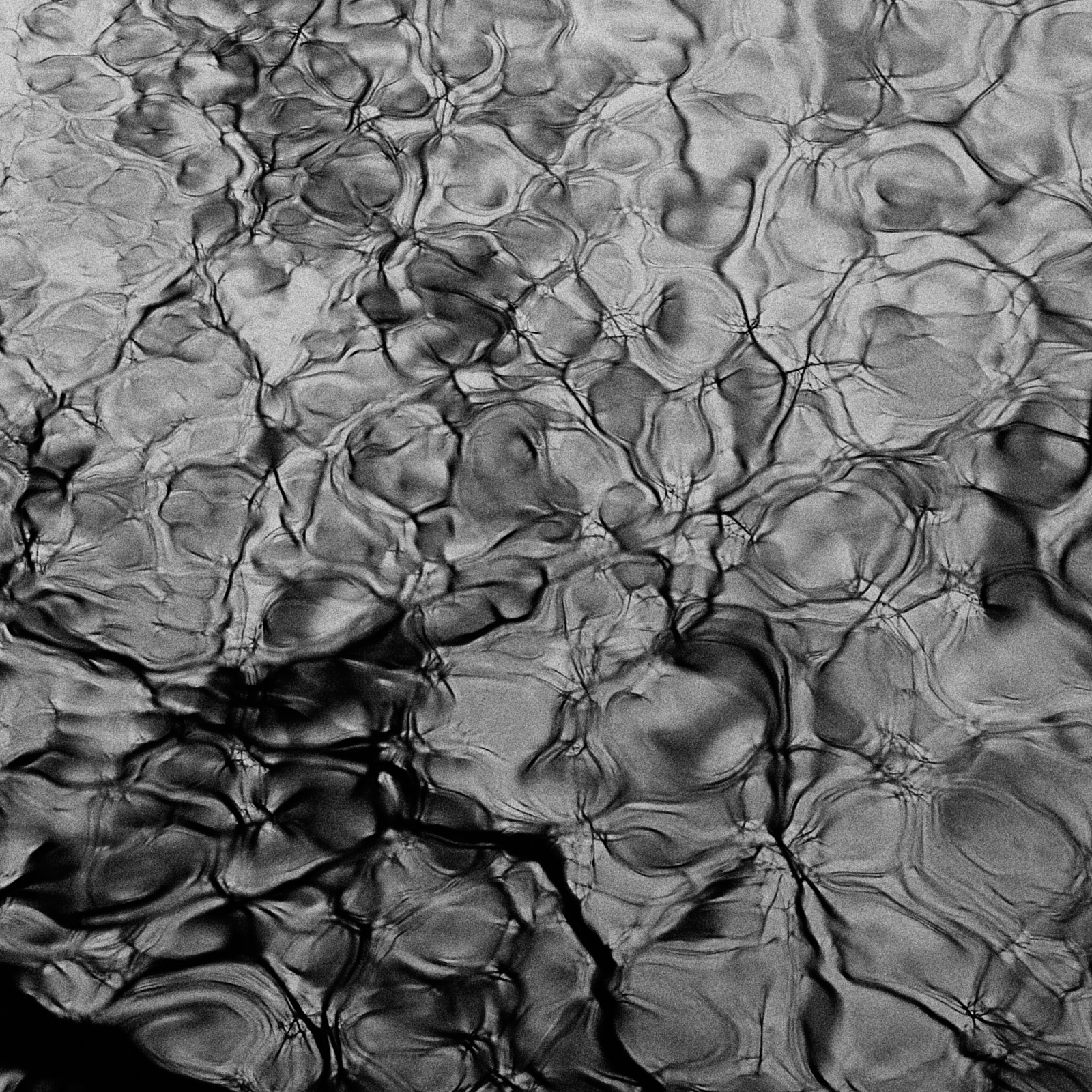
If you are viewing this image on a small screen, you may find it difficult to appreciate the abstract quality of the reflections. So I have included a crop of one part of the picture.
Of course the answer to the question ‘what are you photographing?’ is in the eye of the photographer and is only concluded when the image has been captured and processed. At this moment the photographer’s vision comes together and makes sense – hopefully!
There is something about this photograph which really appeals to me. It’s something out of nothing, being both simple and complex in its makeup. To my eyes it’s the hidden beauty of nature which is very special. All too easily missed, but once seen, never forgotten.
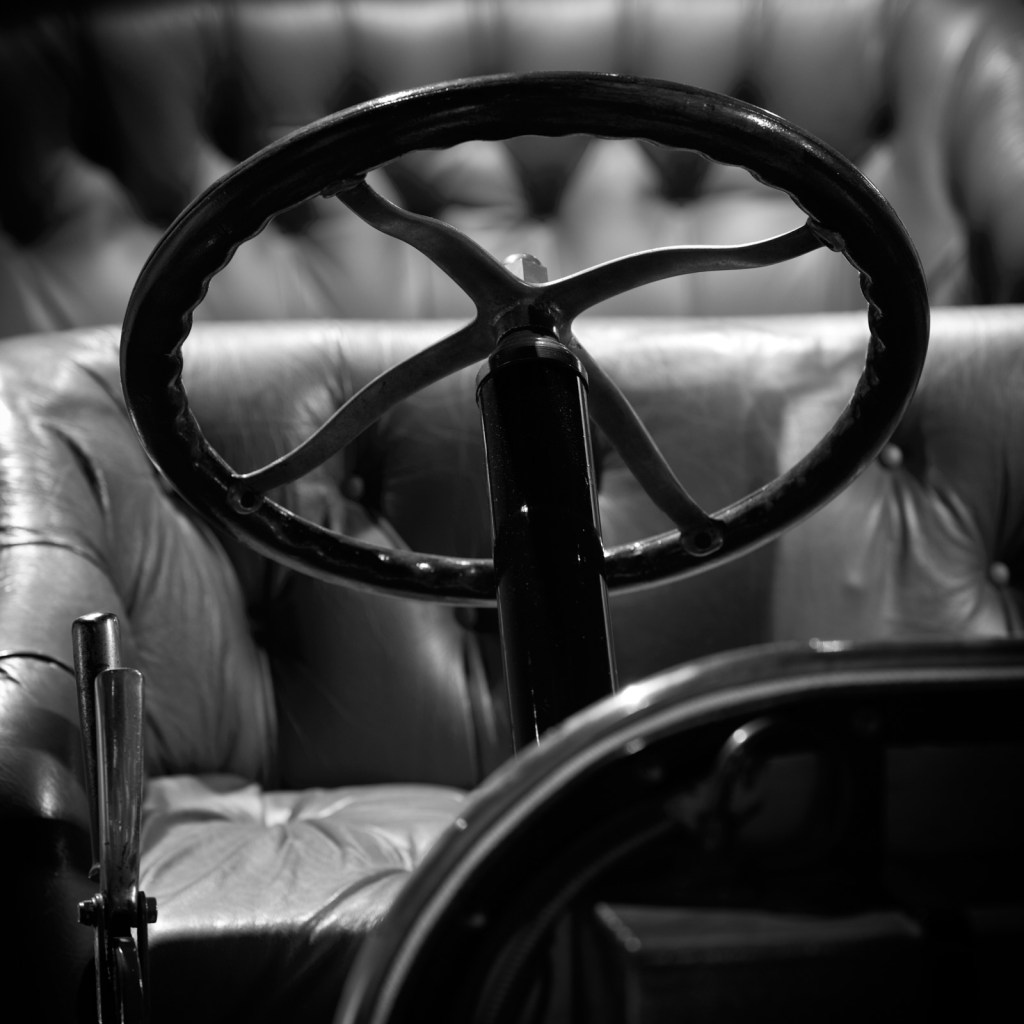
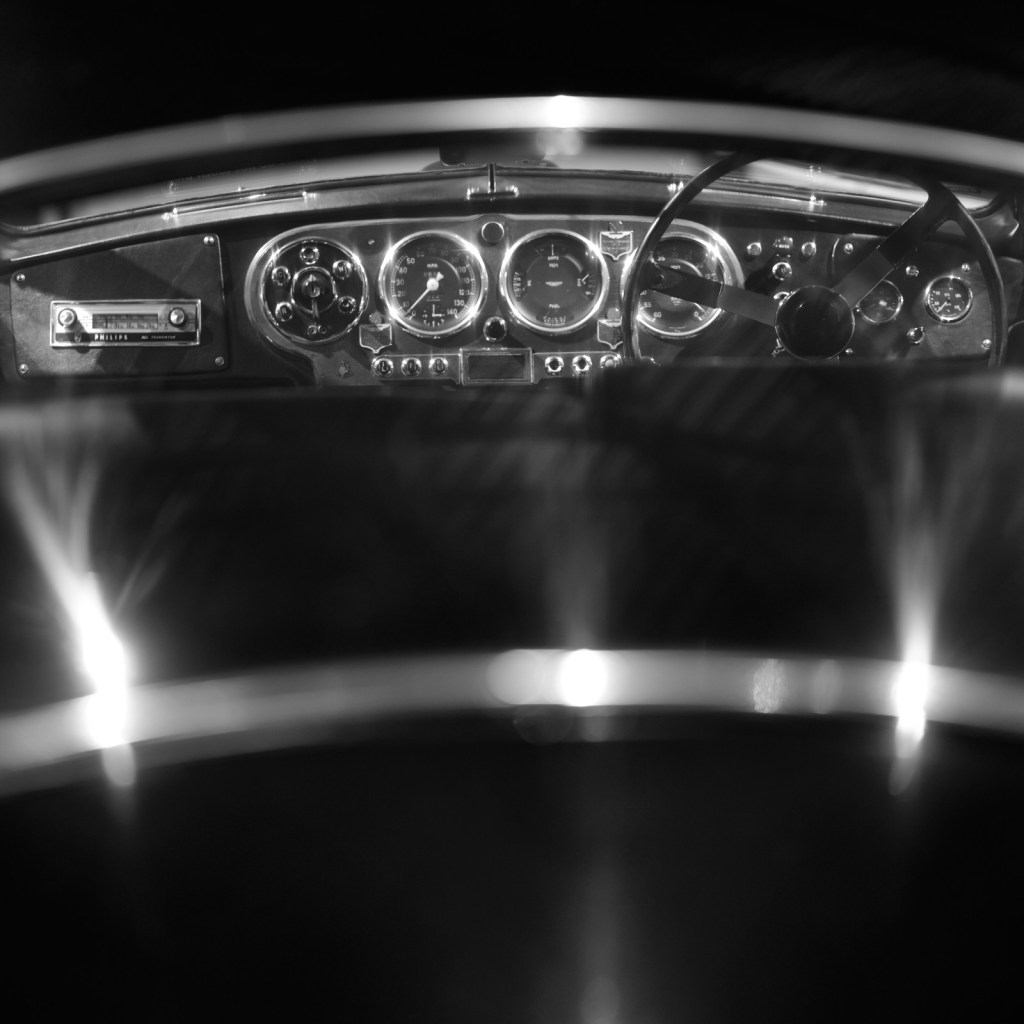
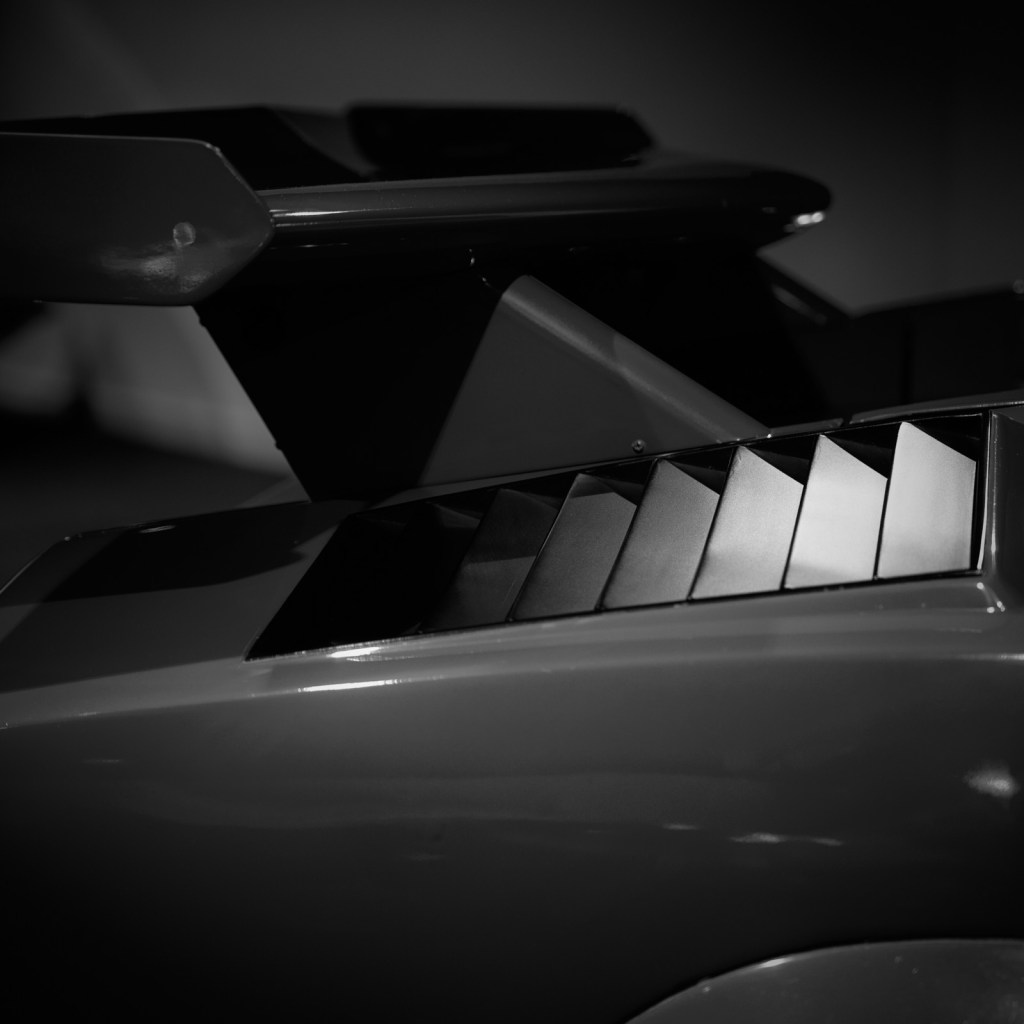
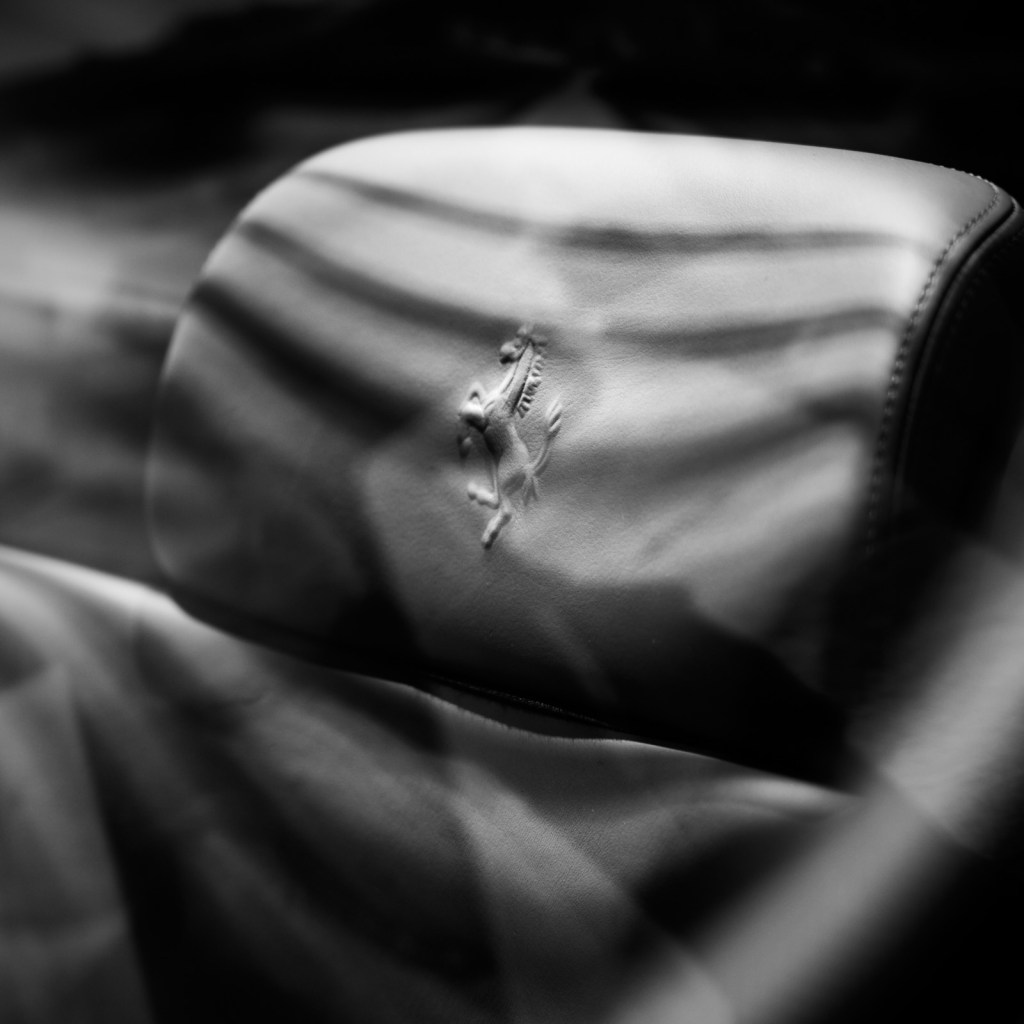
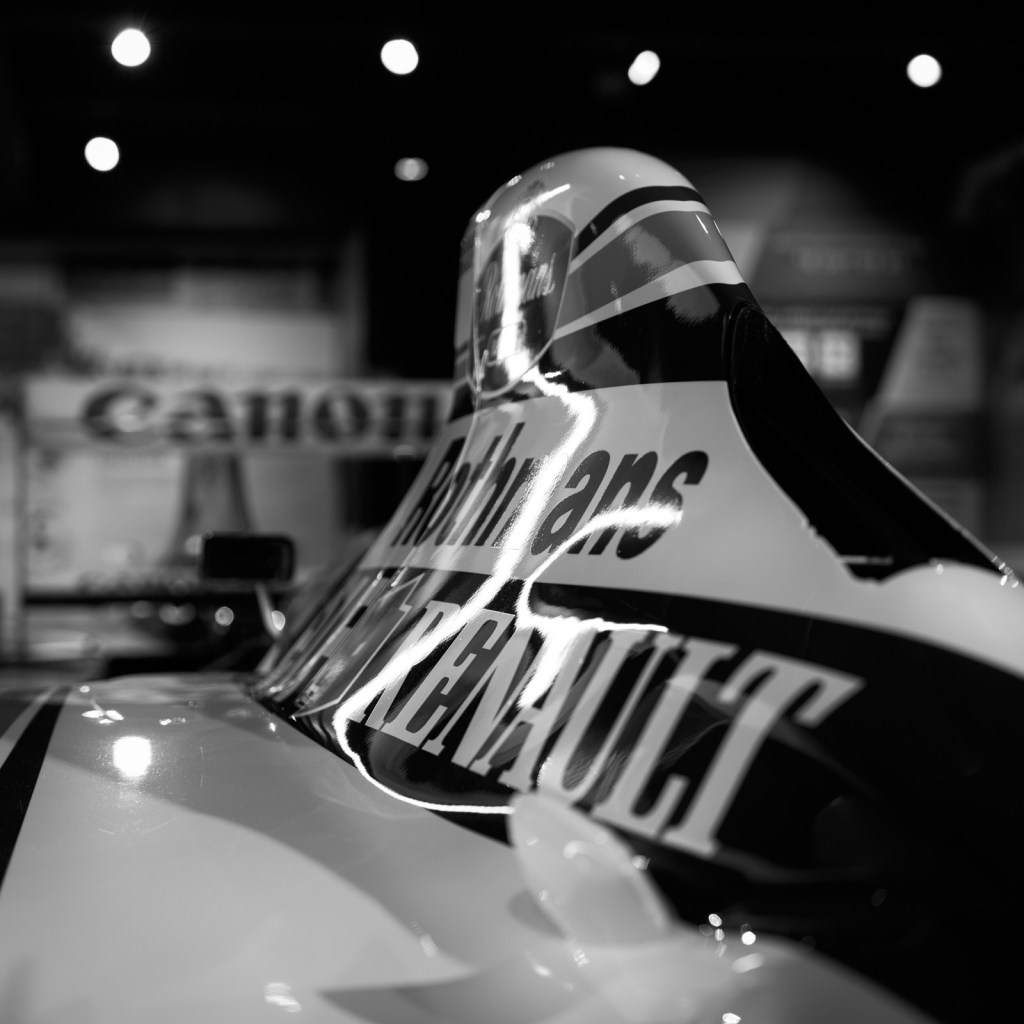
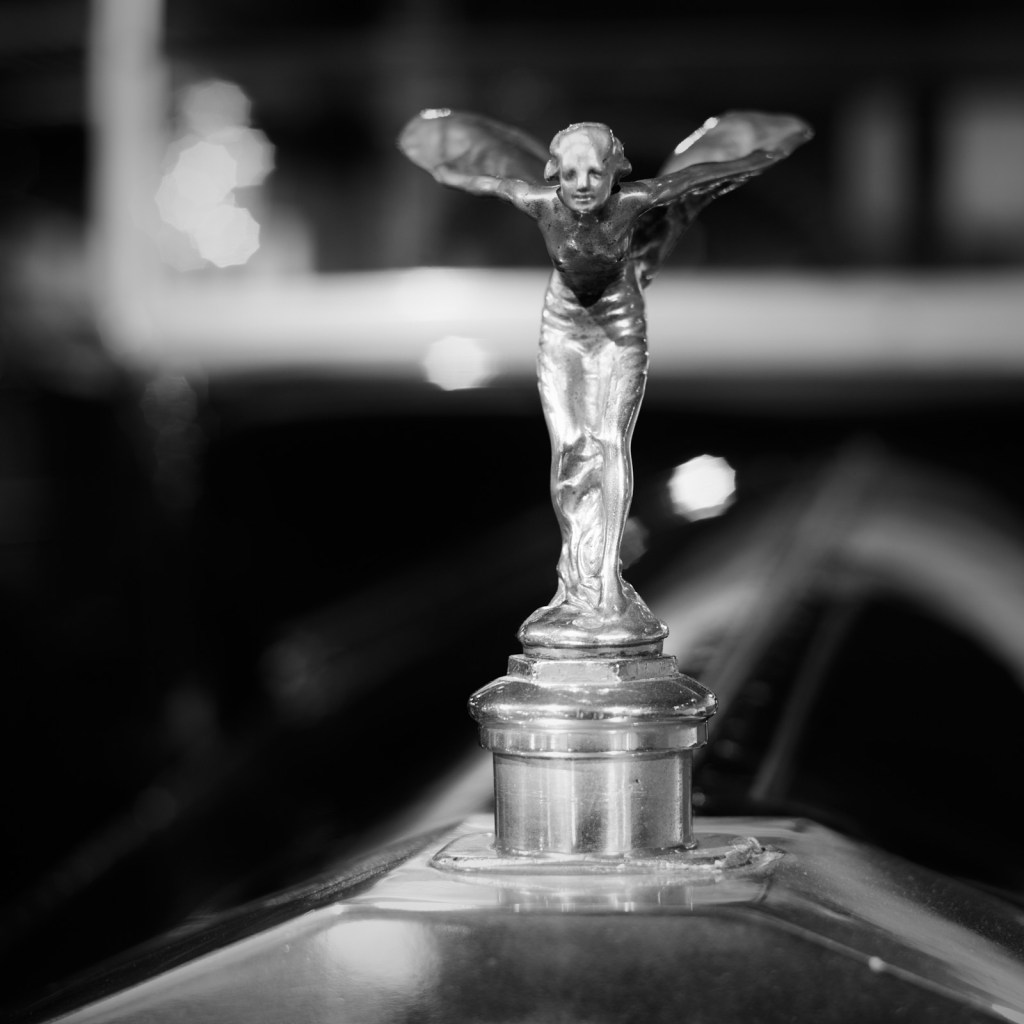
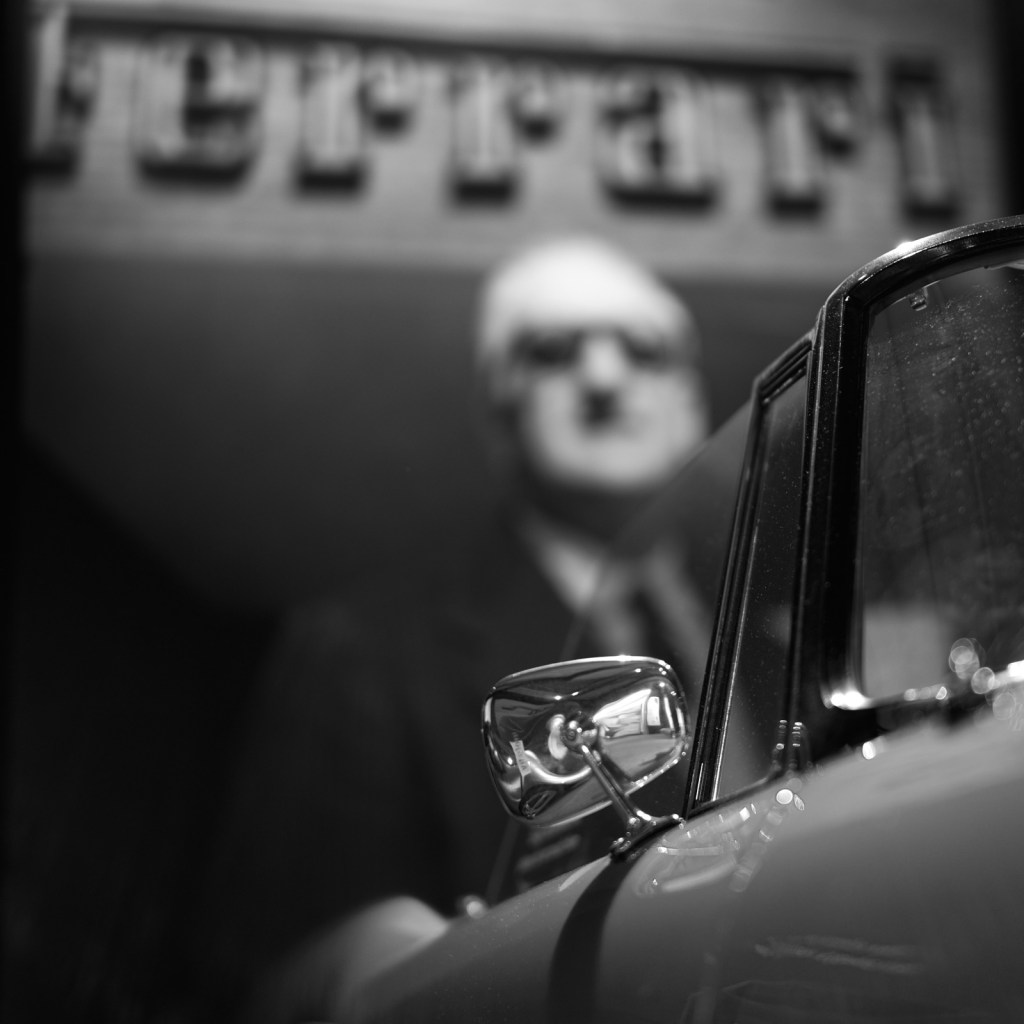
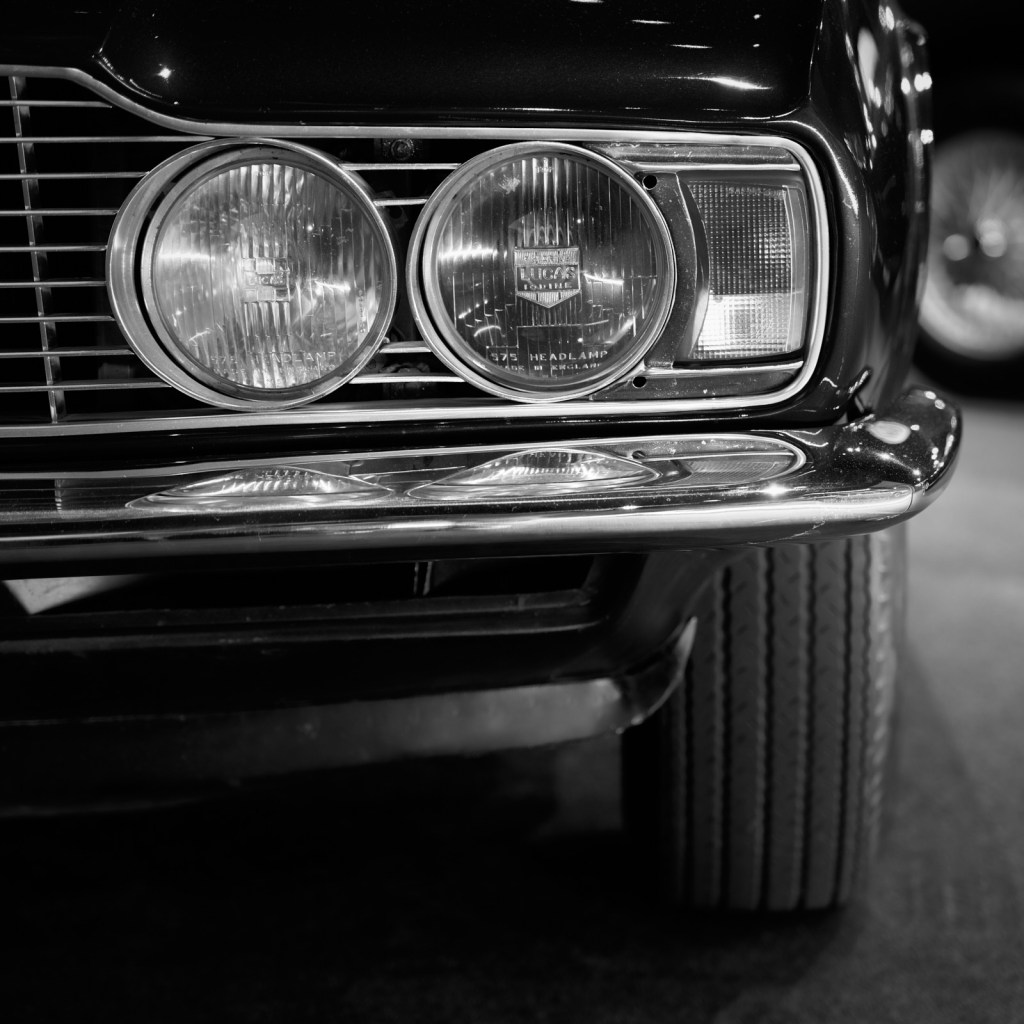
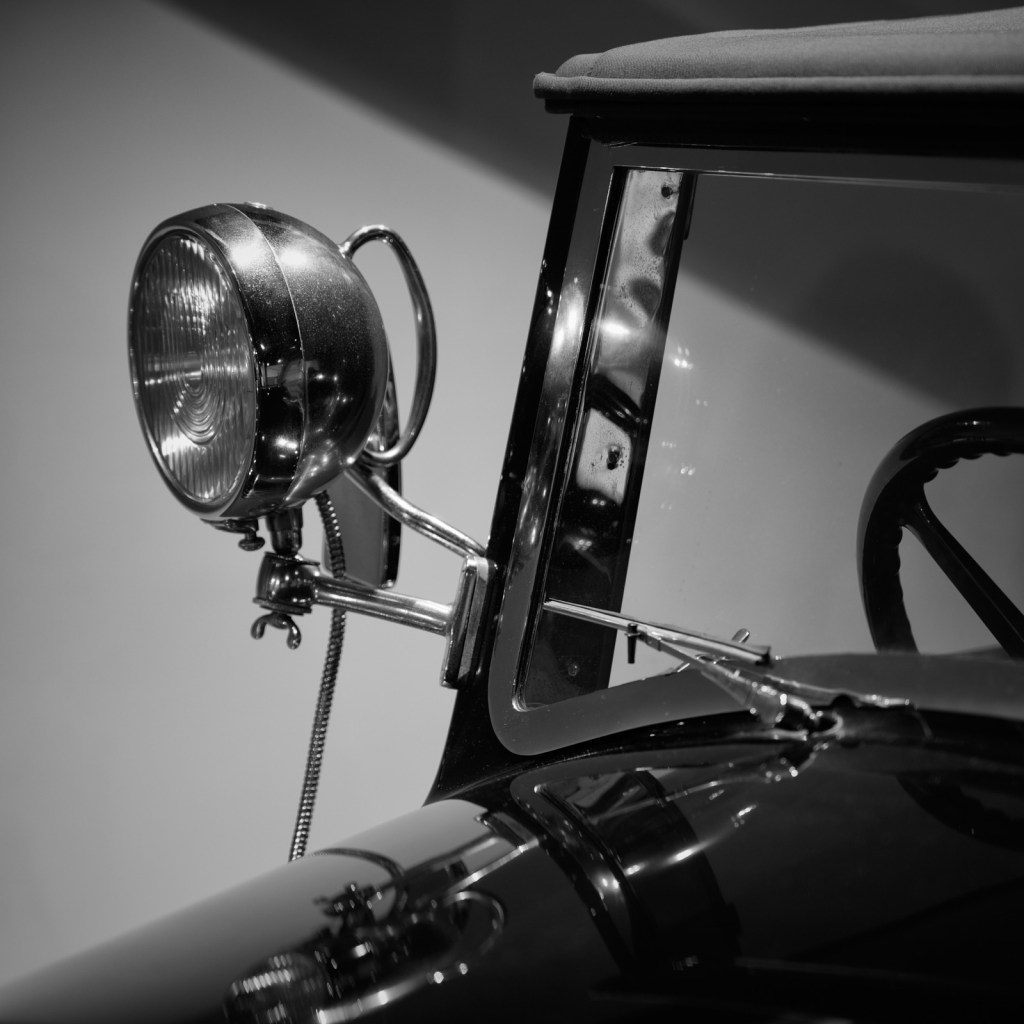
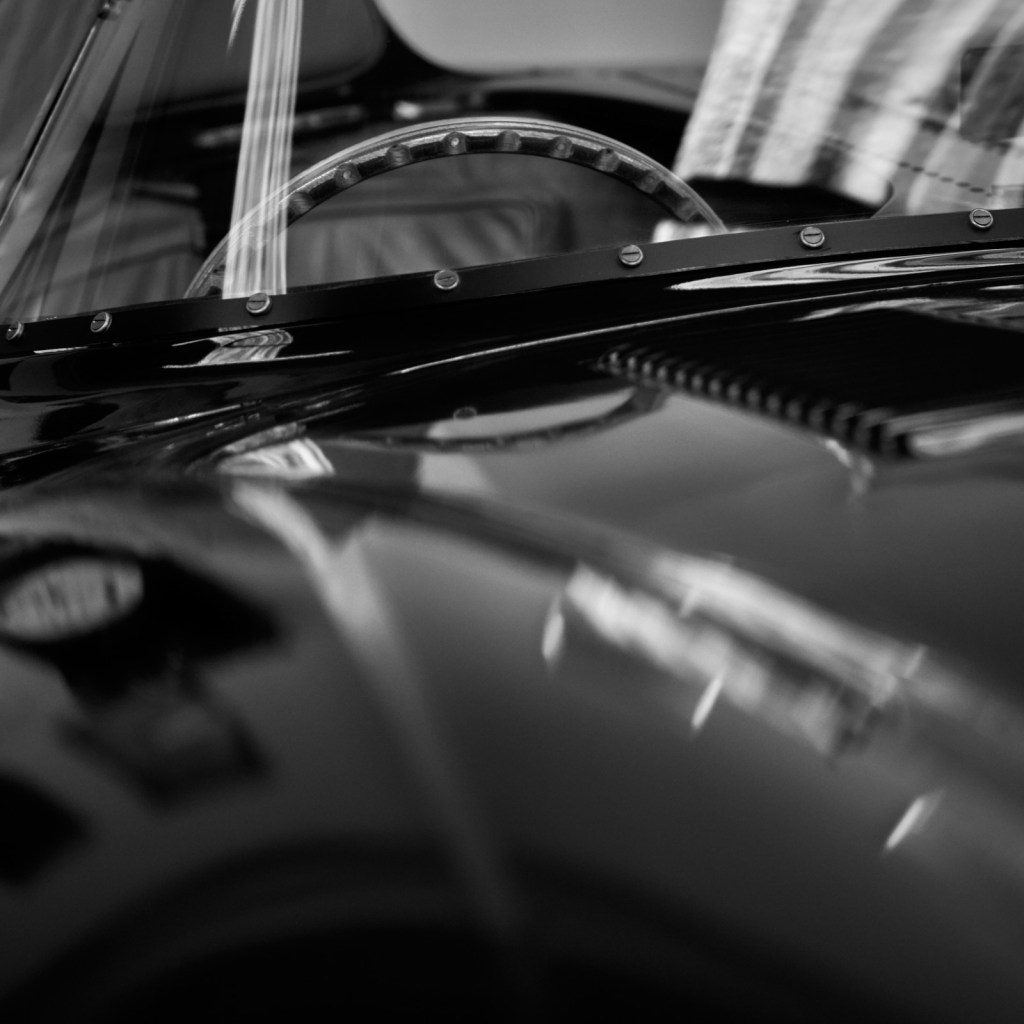
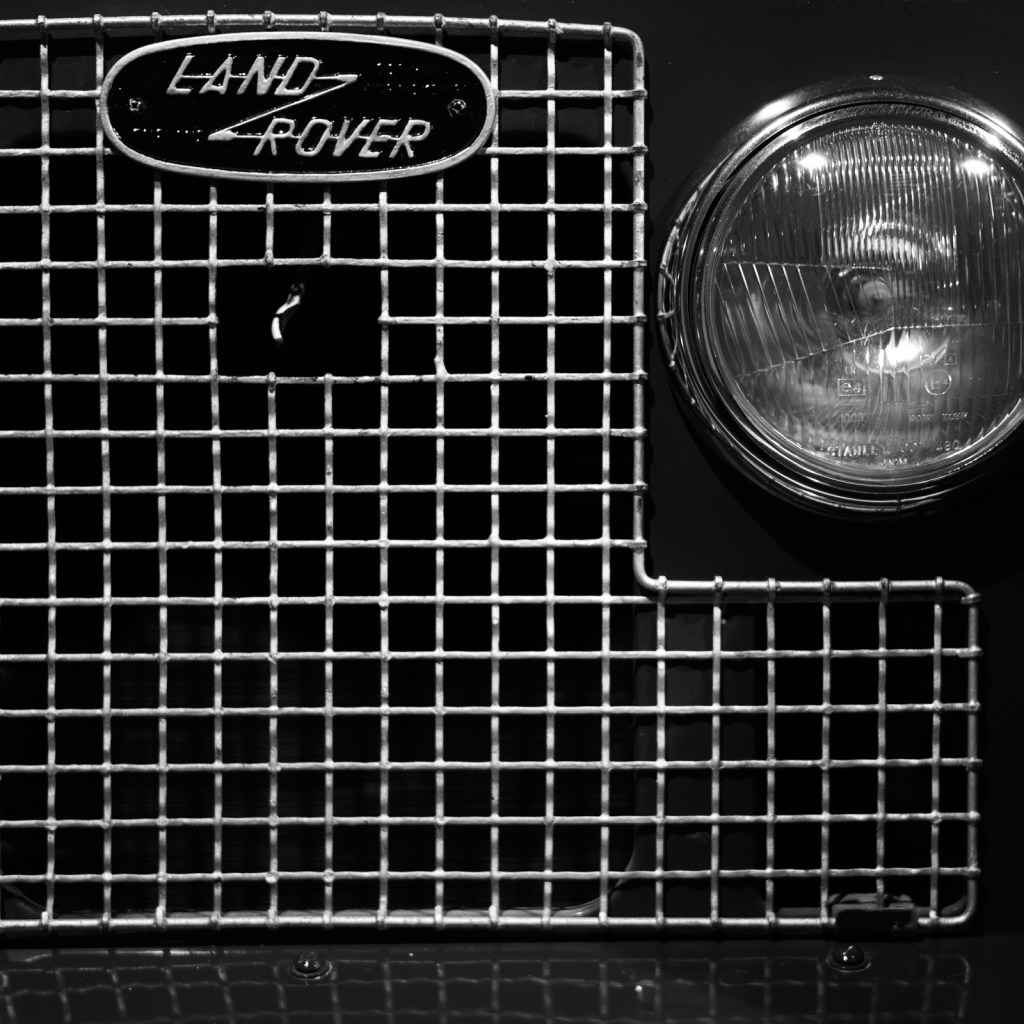
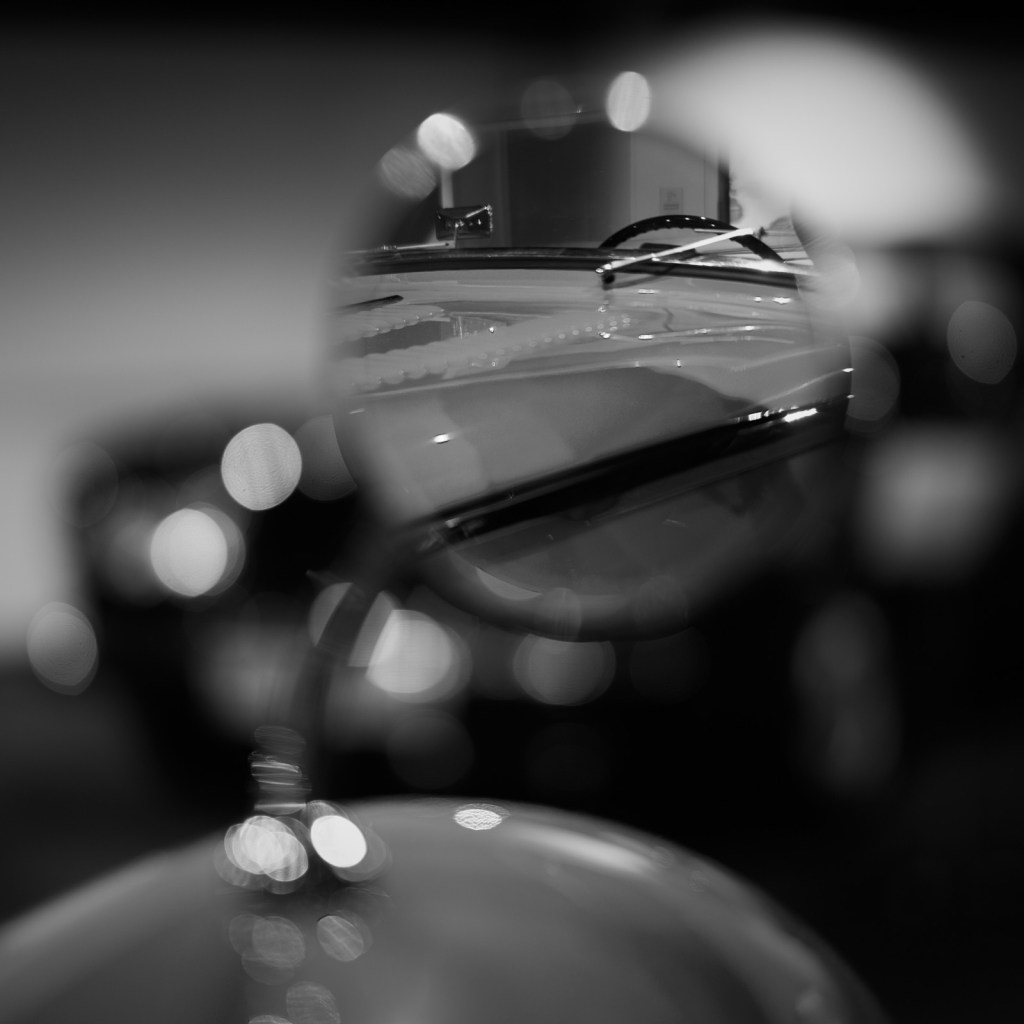
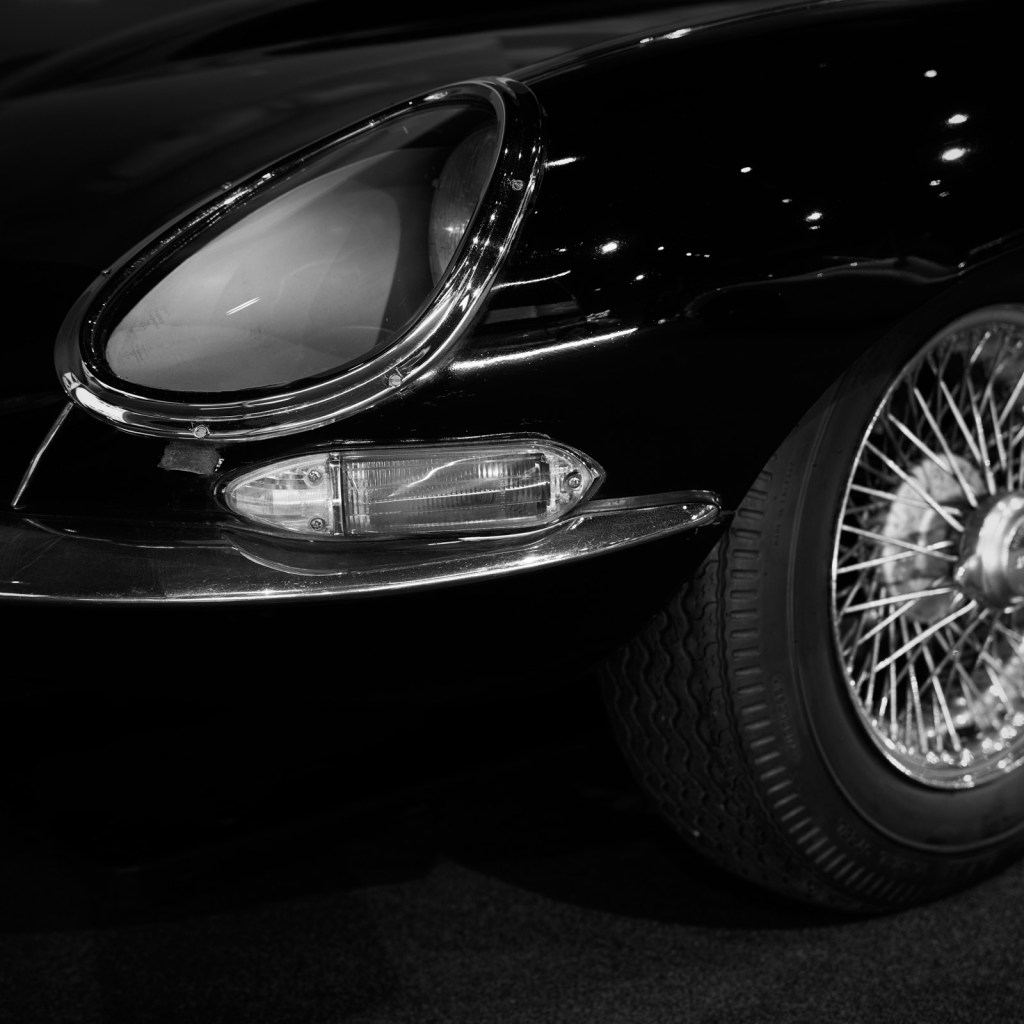
When photographing any subject it’s all too easy to fall into the trap of framing the picture to capture the whole thing. Nothing is omitted and a ‘bumper to bumper’ picture of a car can in truth be nothing more than a record shot. From a purely visual point of view the composition ends up being far too busy. Add a distracting background can only add to the confusion. This is particularly true in a museum where the four wheeled exhibits are displayed in close proximity to one another. There is little or no separation and the resultant photograph is almost invariably a disappointment. In a phrase it lacks viewer engagement.
Abstraction and knowing what to leave out, can I believe make for a much more interesting and pleasing image.
I recently made a second visit to the Haynes Motor Museum in Somerset, England. My photographic intentions were very clear.
I set out with the specific aim of making photographs which told a story and would in my view capture the essence of both the place and the wide range of cars on display. I wanted to make positive use of the artificial lighting. To work with what could be distracting sources of light and reflections. To embrace out of focus areas, to enhance the image, and adding a further layer of interest whenever possible.
I thoroughly enjoyed combining two of my passions in life – motor cars and photography. There are a huge variety of cars at the museum spanning all eras. With my camera and a selection of lenses I experimented with various settings in the hope of making some interesting black and white compositions.
You can be the judge of whether or not my approach was successful.
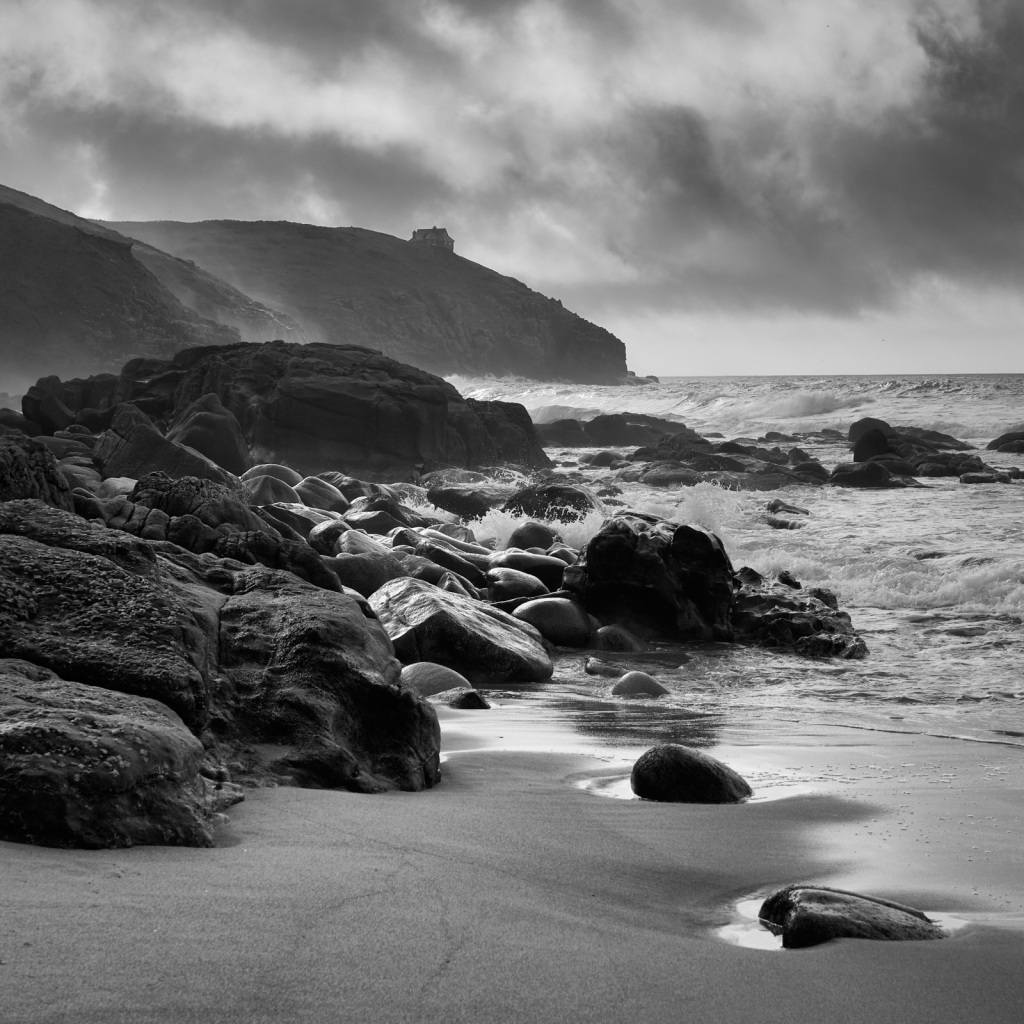
It’s many years since I last visited the far west tip of Cornwall, in fact it would have been long before my interest in photography was ignited, so a return to this area back in March was long overdue. Well known for its spectacular coastline, delightful and picturesque fishing villages, all enhanced of course by the wonderful light, which has been the draw of so many artists. It’s a special but very popular location.
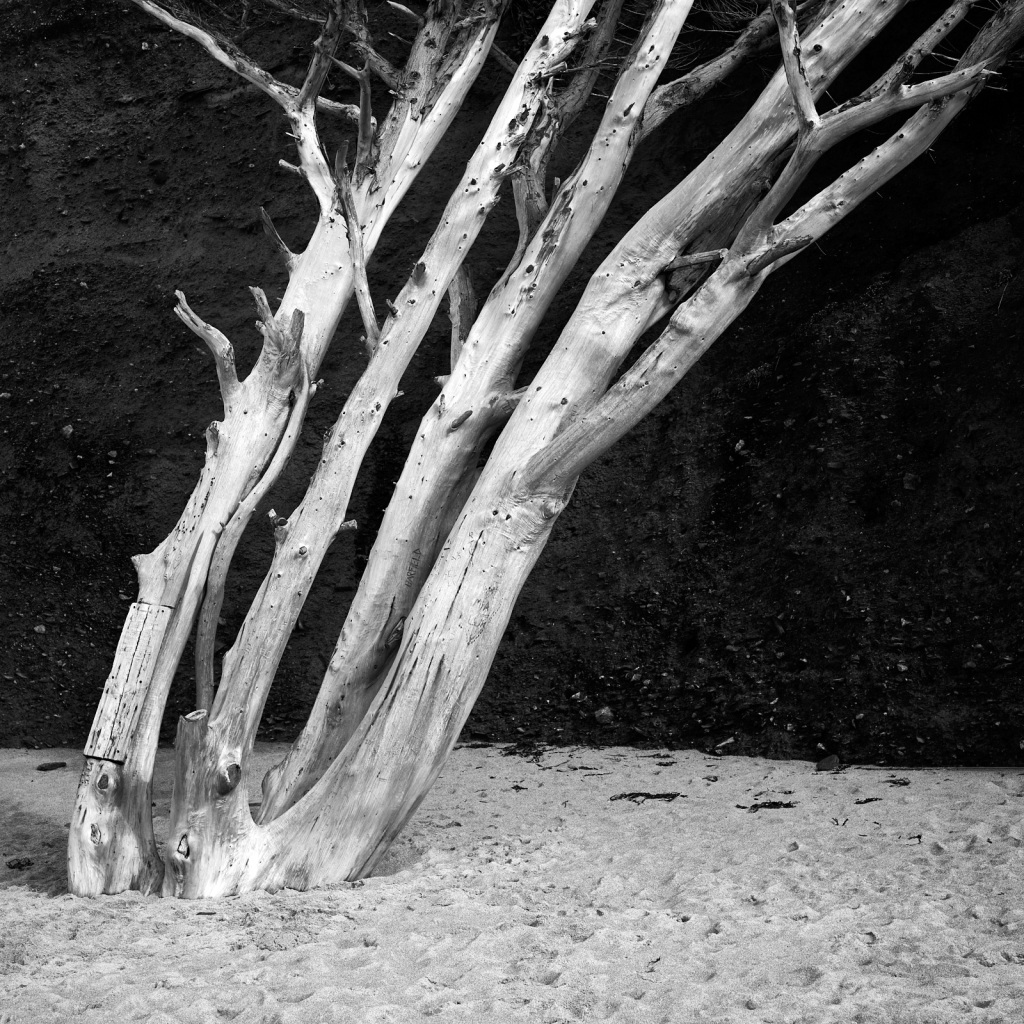
The remains of a dead tree at Praa Sands
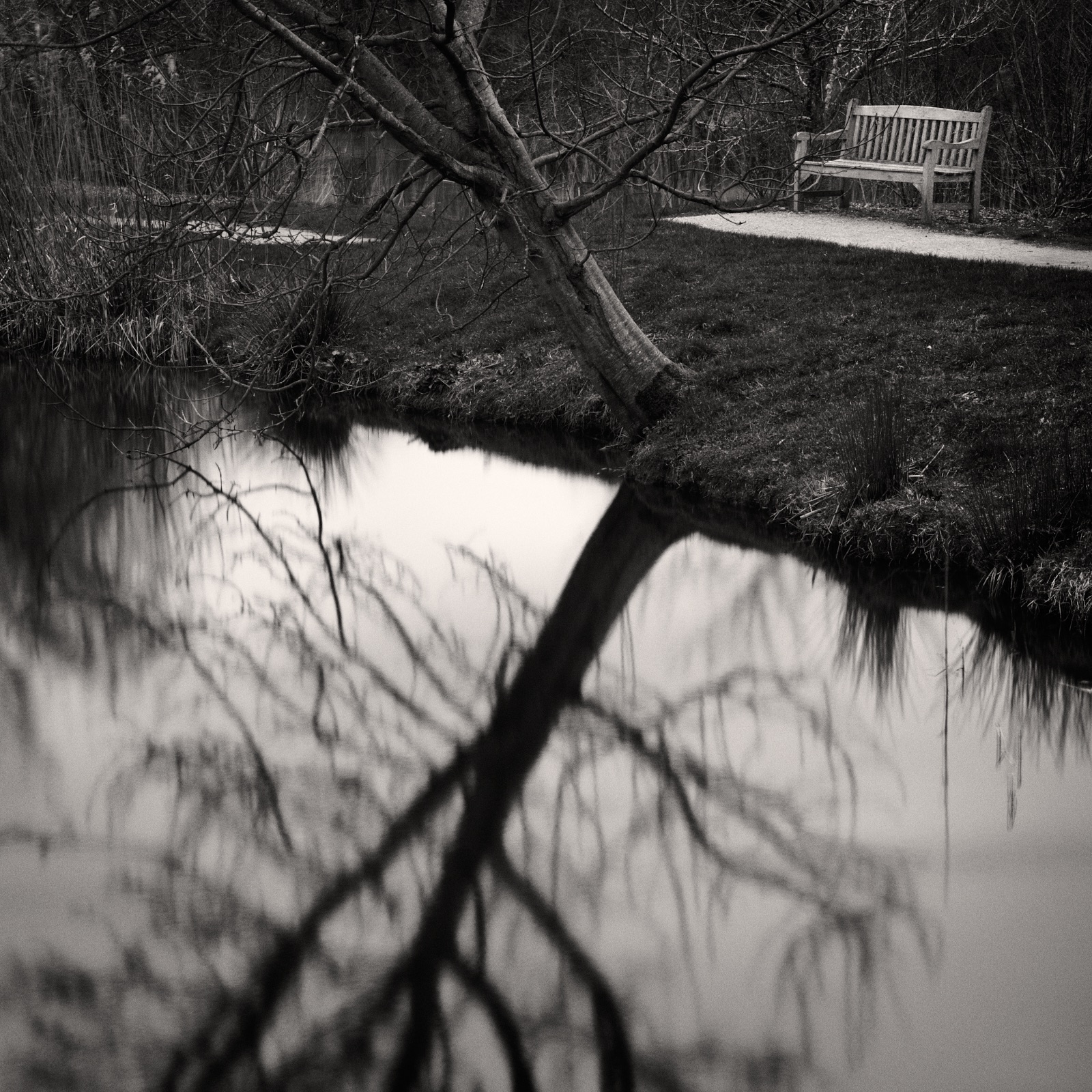
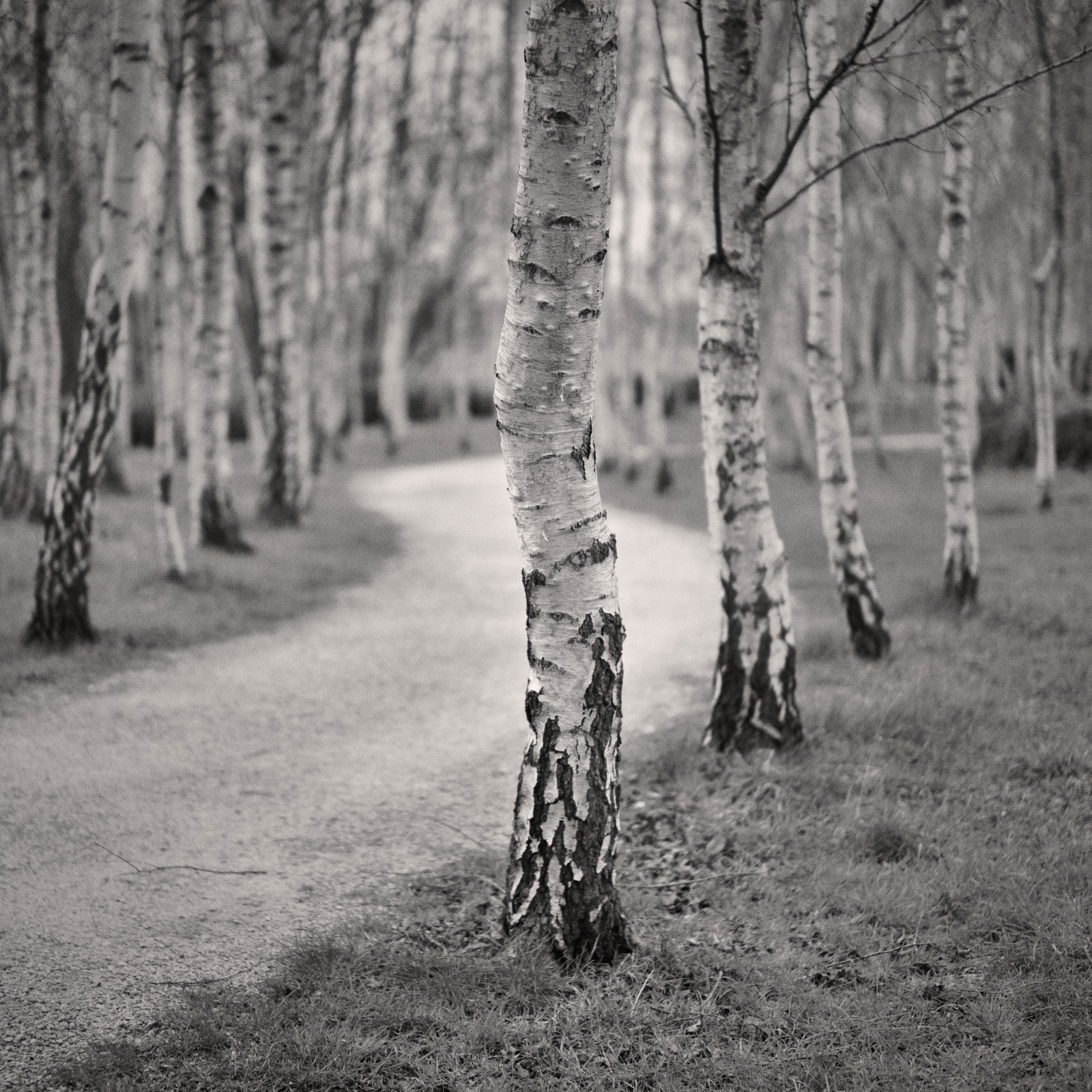
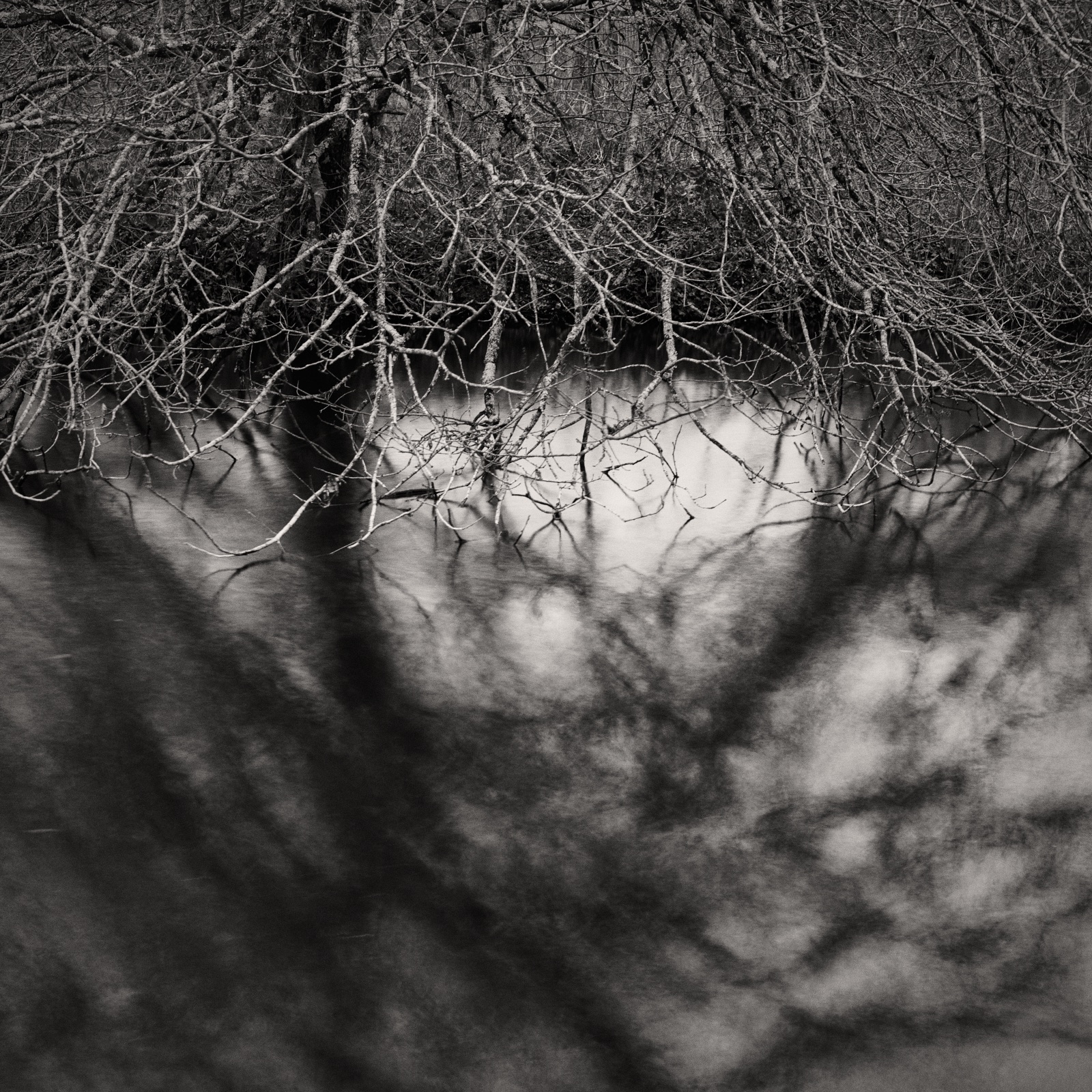
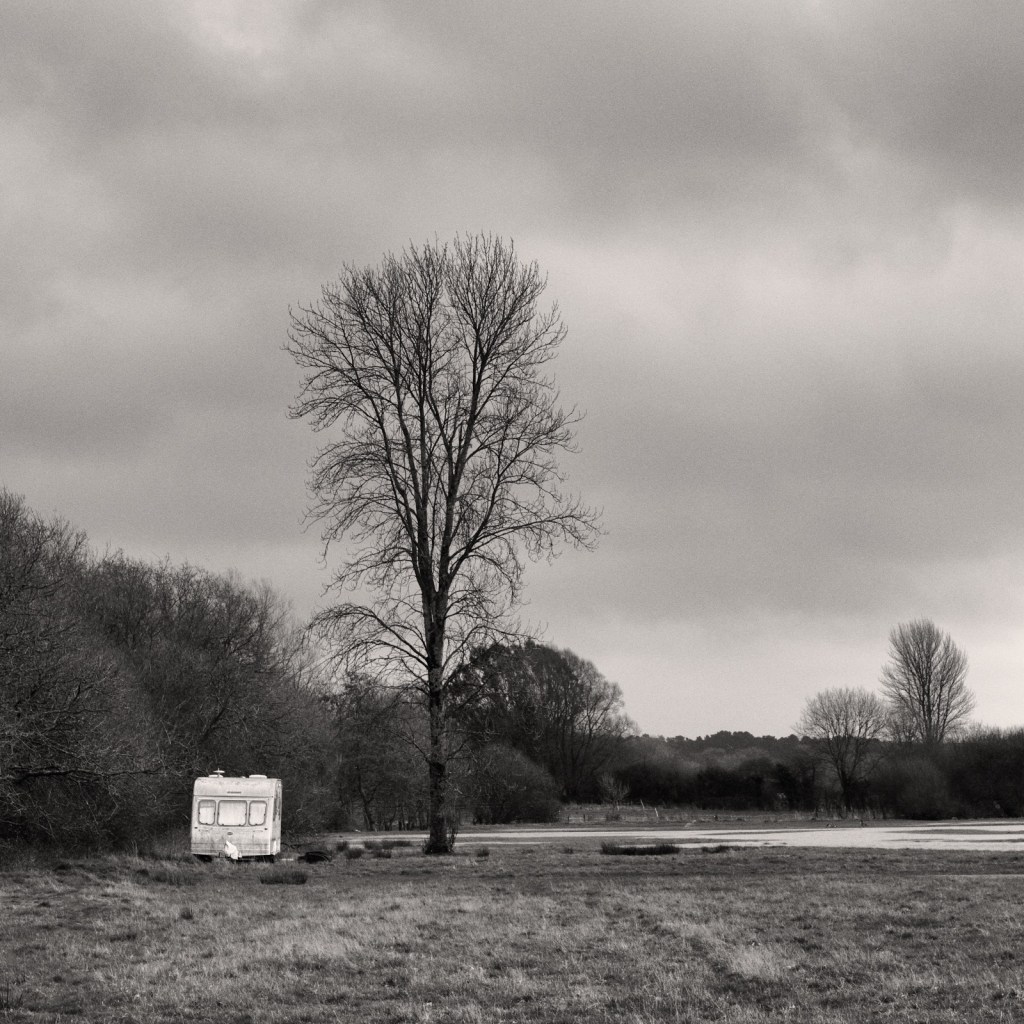
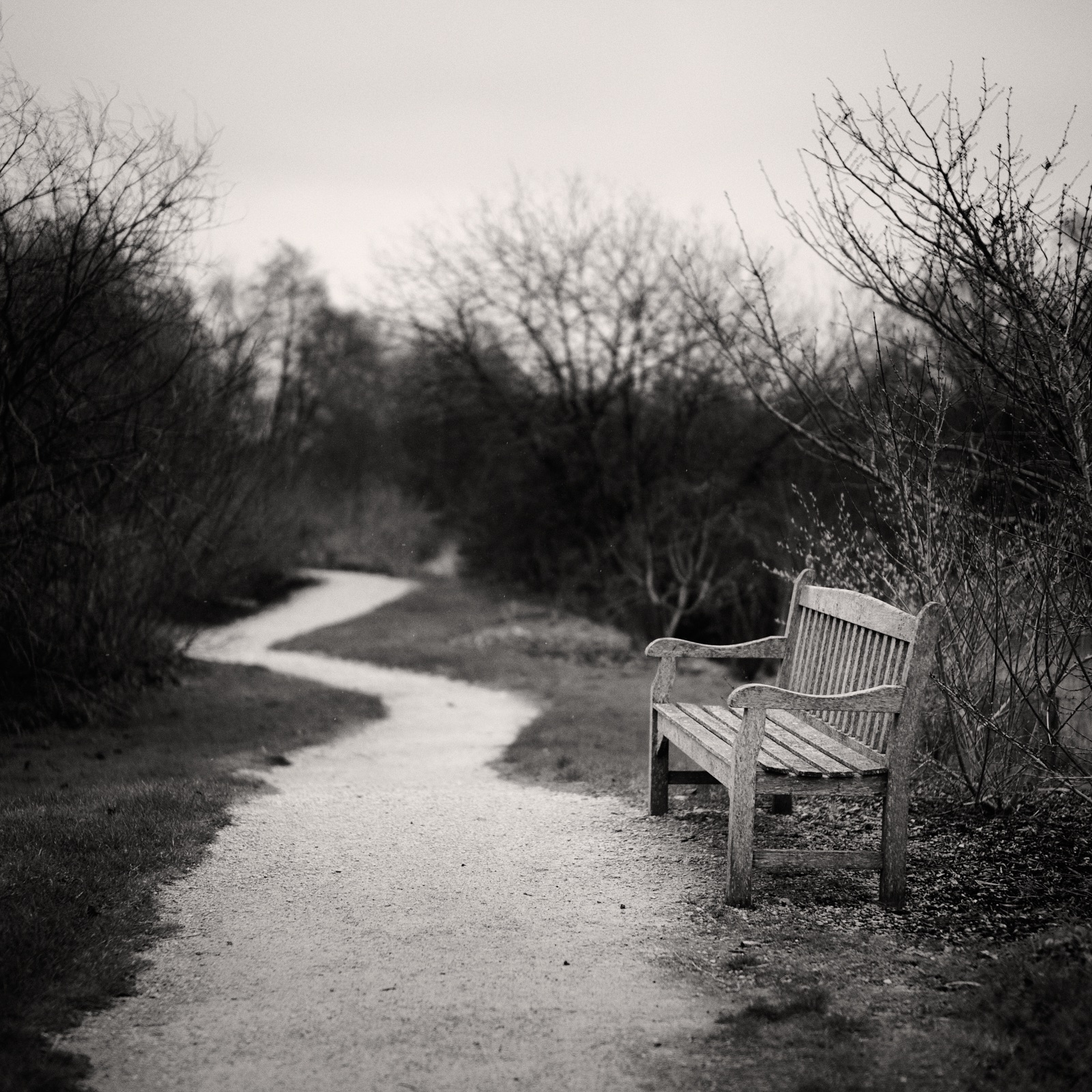
If asked to choose my preferred aspect ratio, I would have to say 1:1, or a square crop, so for this entry, I have selected a number of square images, which I think work well as compositions.
 alan frost photography