Posts tagged ‘Landscape’

Summer crops – fields of beauty


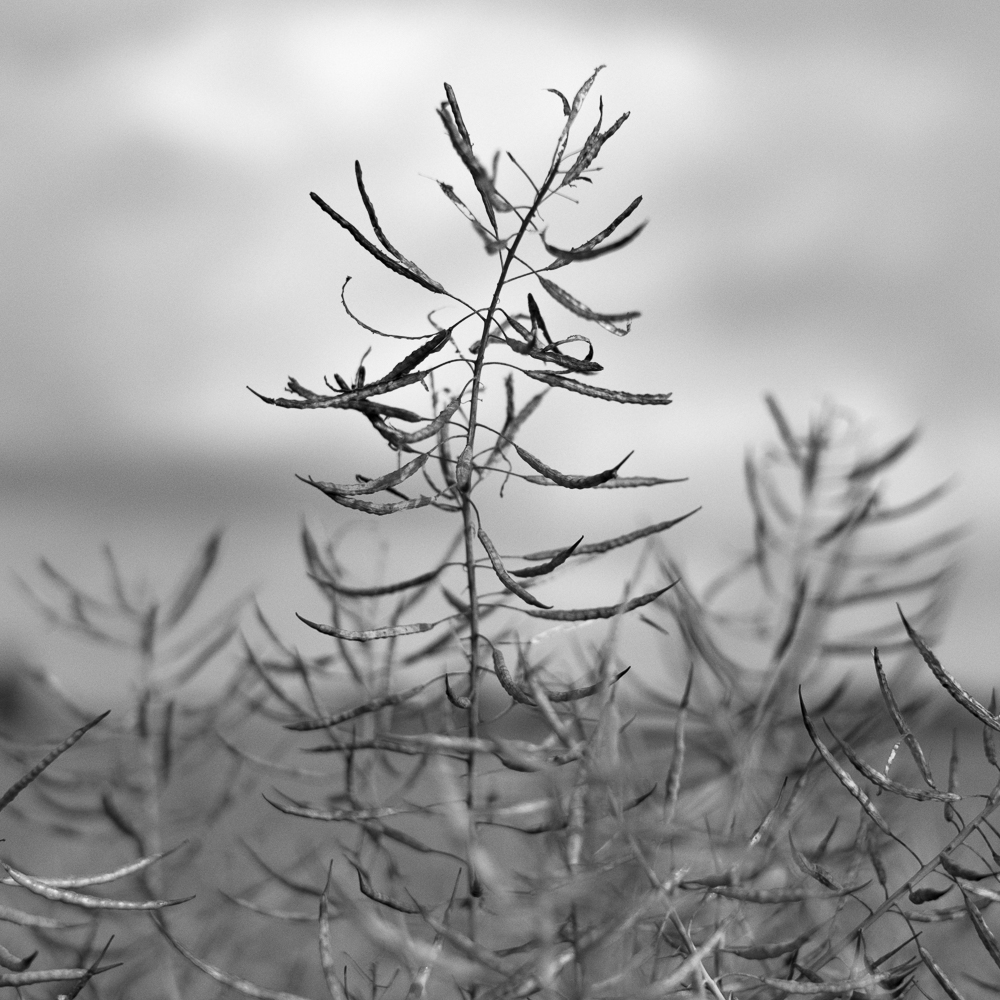
The countryside close to where I live is transformed at this time of year into what I can only describe as ‘fields of beauty’. A wonderful variety of crops which seem to be maturing earlier this year than I can ever remember. The beauty is visual, from both near and far as these photographs depict, but also beauty in the fact that in such a relatively short period of time a bare field can become a harvest full of goodness. Wheat, barley, oats and oil seed rape are all on show; the paths are overgrown and the pollen levels rise; it’s summer and who wouldn’t want to be outside to appreciate the crops on our farmland.


Inspired by the Master photographer, John Blakemore – and my 300th post!

20170426-L1020338-Edit

Woodland on Ulva

I am a keen collector of books about photography and naturally the vast majority are by authors whose work I greatly admire. I find both the written word and the images can be inspiring, often providing little pearls of wisdom which might just help my own photography.  One such person is John Blakemore, a true master of the craft of black and white photography. Born in 1936 in Coventry, England he has been practicing his art since 1956, and in that time has built a portfolio of work which of its type is unlikely to be surpassed. Much of this work has now been archived at the Library of Birmingham.

He is probably best known for his landscapes and still life photographs. He is widely acknowledged as one of the finest monochrome printers, using the zone system to make some truly beautiful images – his use and control of tonality in a black and white photograph is quite superb.

I only have one of his books, titled – ‘John Blakemore’s Black and White Photography Workshop’. Whilst much of what he has to write relates directly to the traditional darkroom, his thoughts on tonality and printing can equally be applied to the digital darkroom as well. The book contains many of his best known photographs and if like me, you wish to improve your knowledge of black and white photography, this book is well worth adding to your collection.

So how did this book inspire me? How could his approach be applied to my own work?

One area where I have always struggled is trying to photograph woodland. From a composition point of view I find the subject matter very challenging. You could say I find it hard to see the ‘wood from the trees’, an old cliche perhaps but in my case a very true one. Even when the composition looks right I haven’t known how to process the image in a way which I find pleasing.

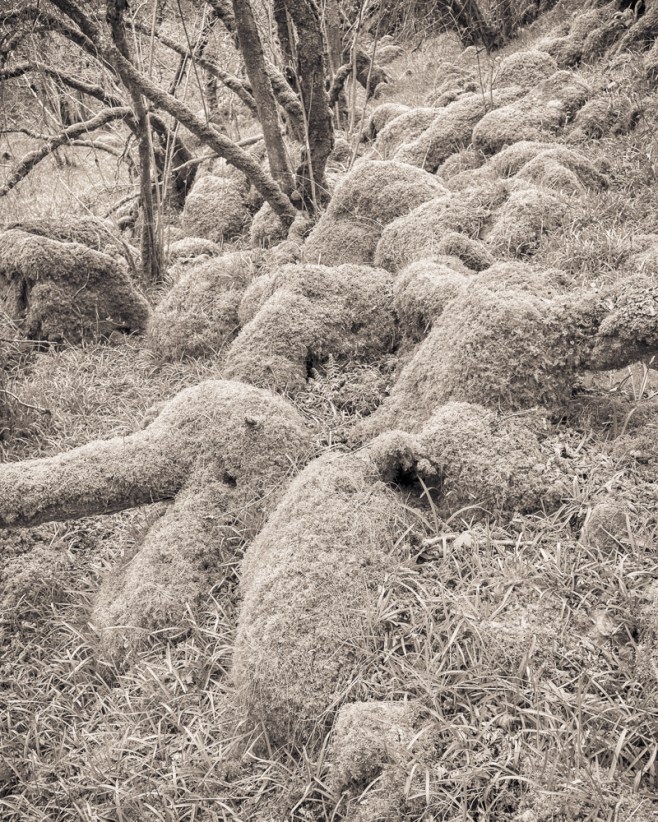
Recently I started reading through John Blakemore’s book and I came across a number of woodland landscapes which I very much liked. I enjoyed their treatment and this encouraged and inspired me. Having studied these images more closely I selected a few frames taken on my recent trip to Scotland to see whether or not I could emulate the ‘look’ of his work and process my pictures in a similar fashion.
 

20170426-L1020341-Edit

Boulders of Moss, Ulva


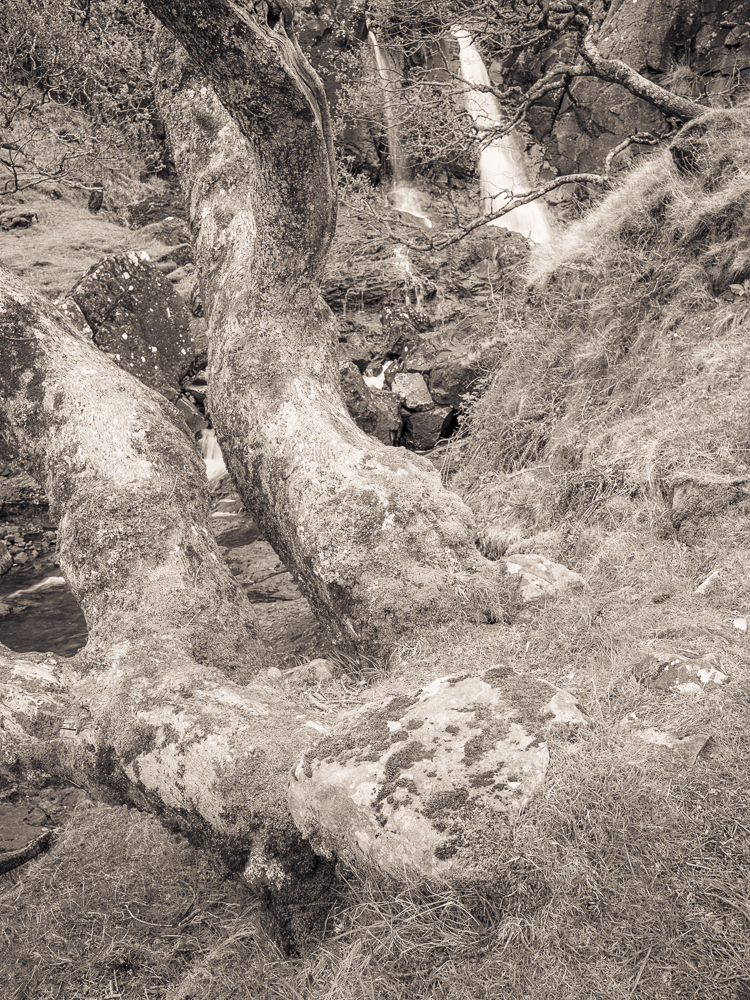
The tone curve in these four photographs is very different to the outcome from my normal processing methods and as a consequence this set of images work for me. Whilst there is a full range of tones, the mid-tones dominate each picture. Strong darker tones are my usual style, resulting in an image which has far more contrast. The images in this post are much softer and more restful to the eye. As a result I believe the viewers attention is held for longer so that the composition, the texture and form is more readily appreciated. A high contrast image can be quite punchy and dramatic but the eye can quickly tire when looking at an image of this type. These are far more subtle images and an approach I can see myself using again in the future. I will also be interested to see how they print on various types of paper.


20170429-L1020664-Edit

Eas Fors Waterfall, Isle of Mull


20170507-L1030047-Edit

Tree by a stream, Wester Ross


Your feedback and comments are very welcome and as this is my 300th entry, it’s an opportune time for me to thank all my followers who read, like and comment on my work. It’s very much appreciated and it’s one of the reasons I will continue sharing my images and thoughts in the future.

Lastly my thanks to John Blakemore for his inspiring approach to this art form.

As always these images are best viewed large, so do click on any one of the photographs and it will open in a new window.
Llynnau Mymbyr, Snowdonia – another one from the archives

20151028-L1004252-Edit

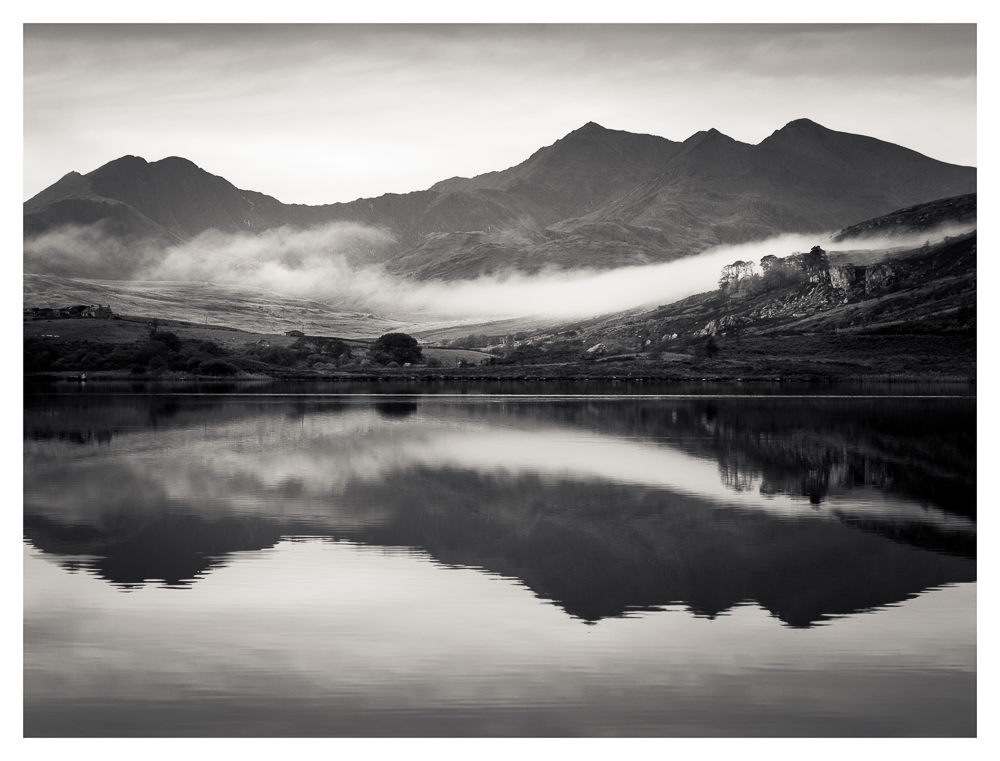
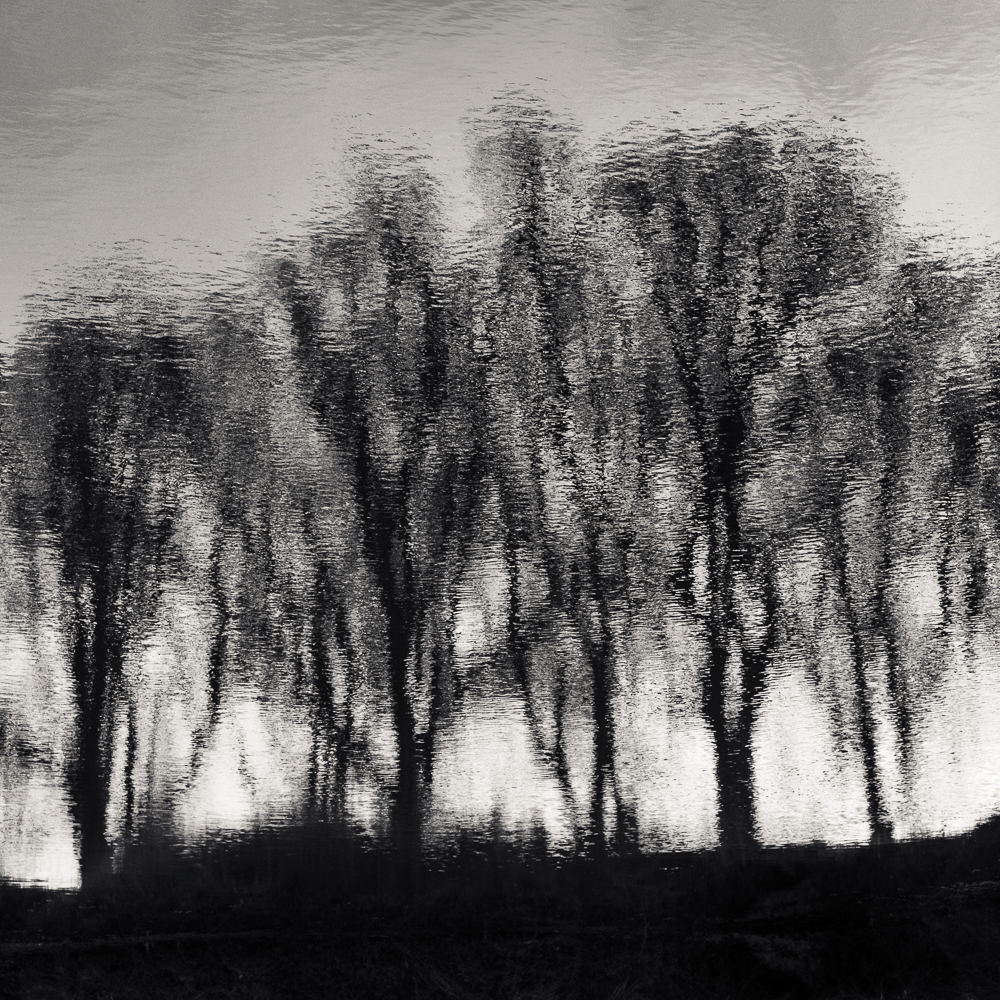
A few days ago I posted an image taken back in 2015 during a trip to Snowdonia in Wales, which I had not processed or shared before. Whilst searching the Snowdonia folder in Lightroom I also came across this picture. This shot of the Snowdon Horseshoe was taken looking down a lake called Llynnau Mymbyr. The obvious appeal to this image is the early morning mist hanging in wait for the sun to rise and its reflection in the calm waters of the lake. I clearly remember this scene and can recall that within a few minutes the mist had been burnt away and the very reason for taking the photograph in the first place had disappeared.

Pembrokeshire – A ‘letterbox’ view

L1000301-Edit

As I write this post the sun is shining and Summer is almost here but these four images depict a very different time of year. They were all taken on the same day back in February. Some may say a typical late winters day in Wales, when nobody in their right mind would be out with their camera. Mist, drizzle and poor visibility. However these conditions can be ideal for the monochrome photographer.

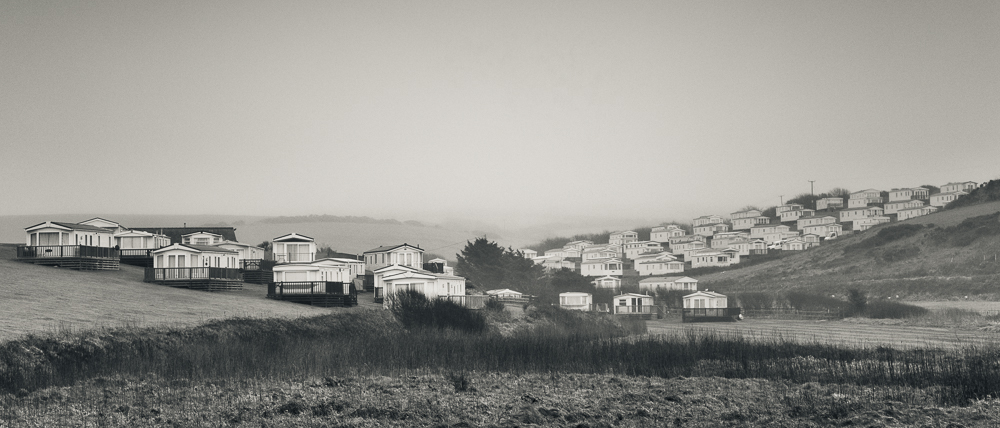
In all cases the native 3 x 2 crop of the 35mm sensor included too much sky, and with little or no interest in this part of the picture I have cropped each image to what might be described as a ‘letterbox’. The aspect ratio is about 3 x 1, but what really matters is whether or not the crop works compositionally, and I believe it does. Photography is often about what you choose to exclude from the frame to strengthen a picture, not just about what is included already.

In the first shot taken at Newgale Sands, I focused on the foreshore which has softened the figures, the sea and distant rocks. This has helped to emphasize the misty conditions. The couple and their dog are an essential part of the image. The provide scale and as they are the only people on the beach they serve to reinforce the fact that the weather was so poor keeping most sensible people indoors, but for dog walkers and photographers!

L1000306-Edit

After taking the first shot I looked behind me only to find a swathe of mobile homes which overlook this section of coastline. Very quiet at this time of year, and only coming to life when the weather improves and the holiday makers return.

L1000338

Moving further along the coast I stopped at Little Haven. Conditions remained the same and this time I wanted to capture the tidal movement of the sea. Resting the camera on a wall I used a ND filter to give me  a slow shutter speed, about 1.6 seconds. Several exposures where necessary to give me the look of the movement in the sea water I was after.

L1000365

Finally a shot of what I assume is a farmhouse taken at Marloes. A typical dwelling in this part of the world but what appealed to me was the telegraph poles and how they could be used to create what I think is a pleasing composition.

Each picture looks better larger, so do click on an image to view a larger version which will open in a new window.


Leica M Monochrom – the good news, bad news sandwich!

clouds-over-prinsted

Clouds over Prinsted

Shortly after I acquired my Leica M Monochrom, I became aware of an issue relating to the CCD sensor; not only to this camera but also the M9 and the ME. The problem was one of corrosion on the sensor which could manifest itself at any time. Leica was quick to respond to this news when it broke a few years ago and guaranteed that for the lifetime of the camera a faulty sensor would be replaced. In fact they went further and said that even if a sensor was replaced the guarantee would apply to the new sensor as well.

This is old news really, but aware of the issue I have always been on the lookout for the problem. The good news being that I had comfort in knowing that if ever I discovered any sign of corrosion, the camera could and would be repaired at no cost. But I would of course have to suffer the inconvenience of being without the camera for several weeks as the work can only be undertaken by Leica in Germany.

When processing the above image of ‘Clouds over Prinsted’ I was cleaning the picture for sensor spots and noticed a number of marks which were not typical of dust on the sensor. In fact they were more like ‘flying saucers’ – a dark spot with a light and dark halo. (See the screen grab below of the offending article – just above the tree line).

screen-shot-2017-02-06-at-12-18-07

The mark on the sensor which is almost certainly the sign of the corrosion issue.

Fearing the worst I did some research which only confirmed that the dreaded ‘corrosion on the sensor’ issue had finally reared its ugly head. Yes, I could clone out the marks, but assuming the  corrosion might spread the camera would have to be repaired. Bad News!

I rang the Leica Store in Mayfair in London and they said that whilst the camera could be collected by courier, if I took the camera in personally, they would provide me with a loan M Monochrom for the duration of the repair at no cost. They informed me the turn round time would be approximately six weeks. Having access to a replacement camera was Great News! I would have it for my planned trip to Pembrokeshire in Wales which comes up shortly and by the time I travel to Scotland the repair should have been carried out and my Monochrom would be back in my hands.

OLYMPUS DIGITAL CAMERA

Leica M Monochrom with 50mm Summilux and 28mm Elmarit lenses

So yesterday I caught the train up to London, swapped cameras at The Leica Store in Mayfair and took the opportunity to visit Tate Modern, specifically to see The Radical Eye exhibition. A superb collection of photographs owned by Sir Elton John. I will write about this exhibition in a future post. All I would say is that if you can get to London do go – it continues until 21st May 2017.