After dark in Chichester
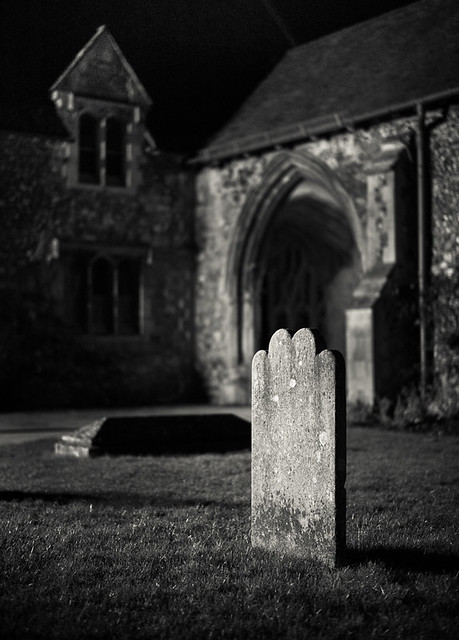
Gravestone
In the grounds of Chichester Cathedral
1/180 sec.
There is one particular advantage to the short days of winter, it gets dark very early. Obvious I know, but when I decided a few days ago to take some shots after dark, I was able to do so at a civilised hour, in fact shortly after I had finished work. I very rarely take photographs after the sun has disappeared below the horizon, so I took my Leica M Monochrom to work and on the way home stopped in the centre of the City of Chichester to see what I could find. I limited myself to an area very close to the the Cathedral, as I only had an hour to spare.
I set the ISO to 6400, and the 50mm Summilux lens to f1.4, its widest aperture opening. These settings gave me fairly fast shutter speeds, which allowed me to comfortably hand hold the camera without having to resort to using a tripod. Just as well really as I didn’t have one with me and even if I had, I wouldn’t have wanted to use it. This exercise was more for fun. It was a test to see how the Monochrom worked in very low levels of light, even though I did make use of the artificial light sources available, including the flood lights which illuminate the Cathedral.
This exercise has made me think what might be possible shooting after dark. The joy of being free from a tripod is quite liberating and having looked at the exif data I could easily have used a lower ISO setting. Nevertheless the grain or noise at ISO 6400 does not in my opinion degrade the quality of the image, but on reflection ISO 3200 might have been more appropriate.
All the photographs were processed in Lightroom, and to finish I applied a tone to give the the images a little more warmth.
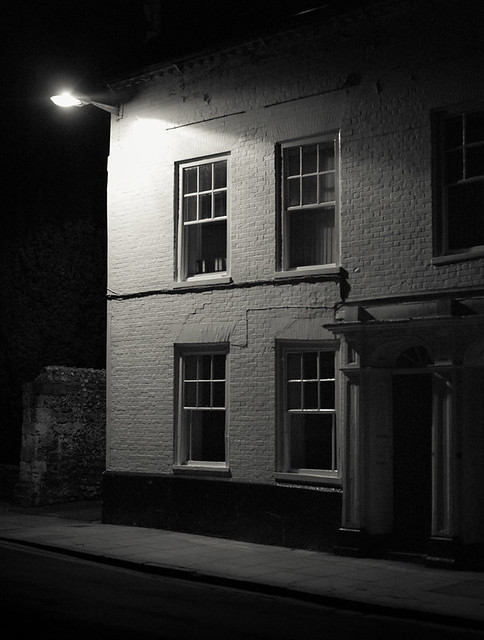
West Street, Chichester
1/1000 sec

The young couple
1/90 sec
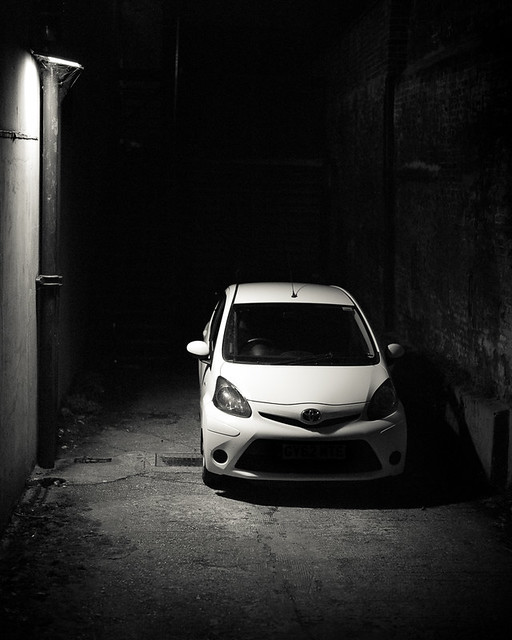
Alley car
1/500 sec

Old glass window
1/250 sec
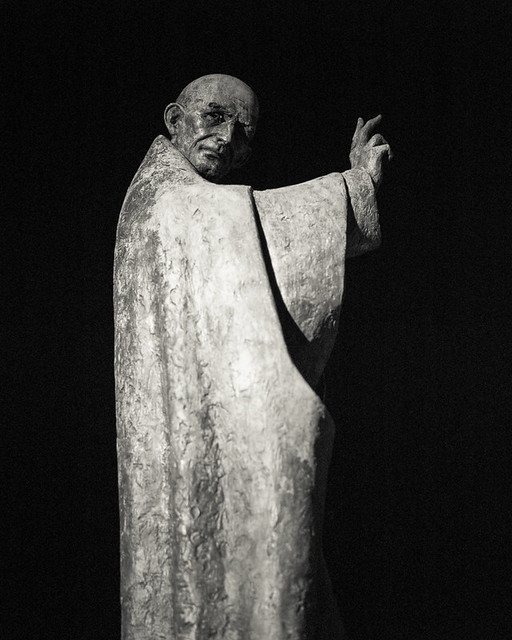
St Richard
1/750 sec
 alan frost photography