Posts tagged ‘black and white photography’

Churches – an exciting new photographic project

St Nectan, Stoke in the Parish of Hartland in Devon

St Nectan, Hartland in Devon

For quite some time I have been considering undertaking a photographic project but have lacked inspiration – until now.

Some months ago I read two very good books; one called ‘On being a photographer’ by David Hurn in conversation with Bill Jay; and another entitled ‘The Essence of Photography’ by Bruce Barnbaum, both of which I can highly recommend. Each publication talked about the benefits to be derived from working on a project, whether small or large, and irrespective of the time it might take to complete.

In ‘On being a photographer’ the author writes – “The subject matter you select must; a) fire your enthusiasm and curiosity at least for the length of time it will take to produce a meaningful body of work; b) lend itself to images, as opposed to words and; c) remain continuously accessible so that you can return time and again to the same topic whenever you wish or have the time.

From the same book it reads – “The more the shooting, the greater the enthusiasm and knowledge for your subject. The greater your knowledge, the more you want to do it justice and this increases the scope and depth of the pictures. So the process feeds on itself”.

Committed to the idea that I would like to start a project, but not knowing what it might be, I was recently inspired by a famous book called ‘Betjemans Best British Churches’ to visit and photograph a number of churches listed during a recent holiday in Devon. I soon realised that I would often photograph these buildings and their locations whenever the opportunity arose, but I had never thought of it as a project.

The penny has finally dropped and whilst this work will not be at the expense of making images of other subjects, it will give me a sense of direction and purpose. There are about 2,500 churches in the guide so I will not be short of material. Some are close to home so easy to visit in a day; others I can research and look forward to visiting as travel and holidays permit. Interiors are just as important as the exterior, so I am not entirely dependent on the weather. Landscapes are my other great love, so visiting a church will take me to new areas as well.

Inspired, excited and full of enthusiasm I have created a new section on this site, not surprisingly called Churches Project . Do read  the introduction and by way of a start I am pleased to show a photograph of one of the churches I visited in Devon in this post.

The Church of St Nectan is in the hamlet of Stoke in the Parish of Hartland. It is often referred to as the Cathedral of North Devon. I like the fact that the tower, which was built as a landmark for mariners, is partially obscured by low cloud and the way the cluster of daisies in the foreground appears to be replicated by the lichen on the gravestones.


Highland cattle – “O ye’ll take the high road, and I’ll take the low road……..”

Highland portrait

Highland portrait


A few days ago I posted a single image of a highland cow, backlit against a dark background which gave me a ‘low key’ image. I was fortunate to be able to return to the same location a day or two later, but this time the  weather and lighting could not have been more different.

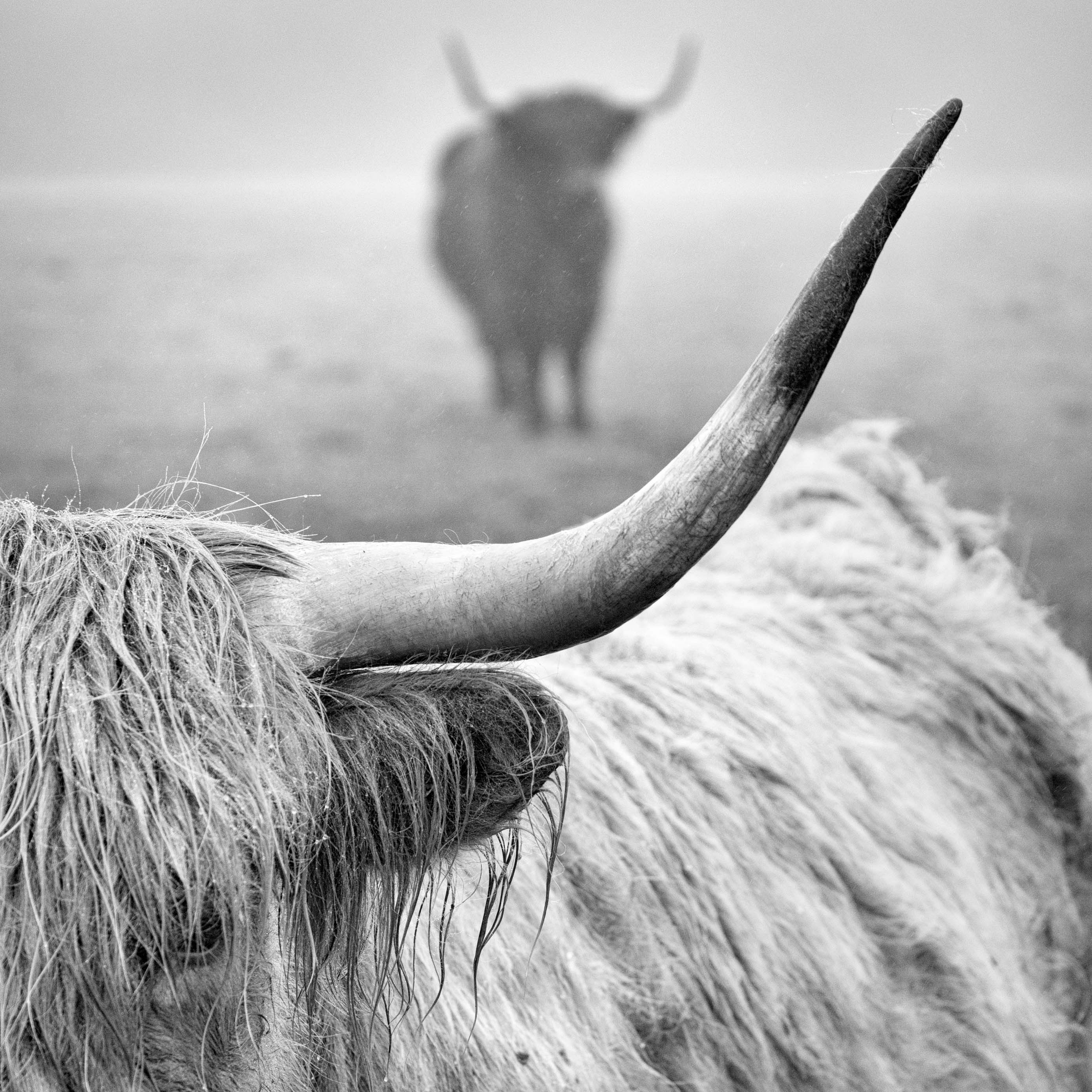
Low cloud, drizzle and soft light combined to blank out any distractions, and to all intents and purposes gave me the equivalent of a white studio back cloth with minimal background detail. As a consequence and using different processing the same cattle have now been made into a set of ‘high key’ photographs.


Highland horn

Highland horn


Highland call

Highland call


Highland stand

Highland stand


Arguably the ‘high key’ portraits are less dramatic than the ‘low key’ shot, but in my view they both have their merits. If nothing else this exercise only serves to demonstrate how the same subject can be photographed in the same location but in different weather and light to produce entirely contrasting results.

The ‘low key’ portrait can be seen by clicking in the thumbnail below.

Highland cow

Highland cow

These two alternative approaches and the subject matter reminded me of the lyrics in the song – The Bonnie Banks o’ Loch Lomond.  –  “O ye’ll take the high road, and I’ll take the low road……..”

Do you have a preference? If so please comment, as I would very much welcome your views.

Personally ‘I’ll take the low road…….”!

A ‘dank’ Devon walk with a camera.

20150617-L1002707-Edit-2-Edit


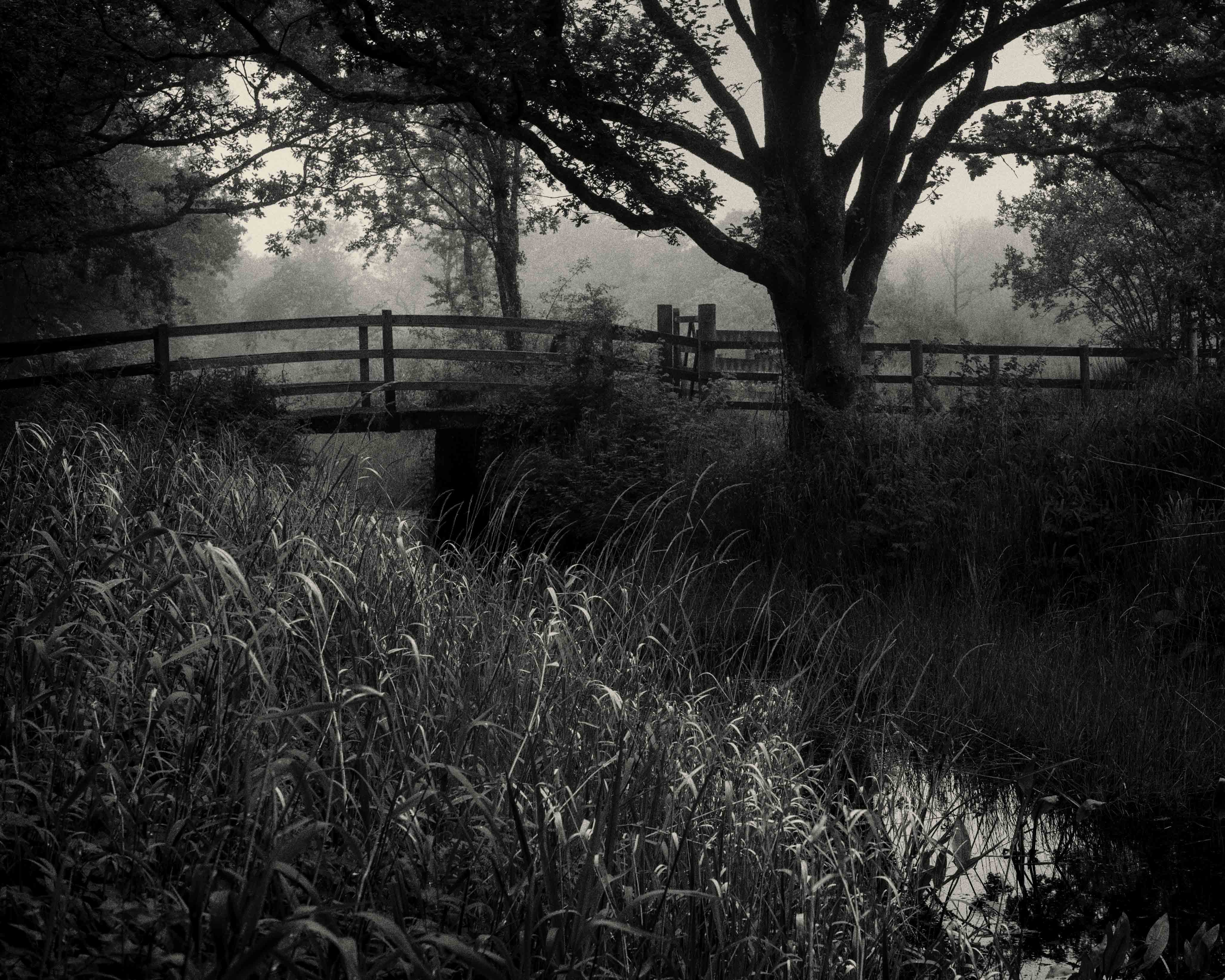
There are times when I enjoy taking photographs in the mist and the rain, when visibility and the light is poor, but the mood and atmosphere can be rather special. These three photographs were all taken in Devon countryside whilst out on a walk with our dog. The low cloud and mist didn’t lift all day, but apart from some early rain, it was just a damp and rather dank sort of day. Nevertheless I found a few locations where the camera came out to capture what I saw and felt as I walked along narrow footpaths and country lanes.

In all three images I have added some grain or noise, as well a slight tone, which I think enhances the overall look of the photograph.


20150617-L1002717-Edit


20150617-L1002700-Edit-2-Edit-Edit-Edit

Please click on any image to see a larger version.

Thanks as always for looking.

Portrait of a Highland Cow – turning imagination into reality.

Highland cow

Highland cow


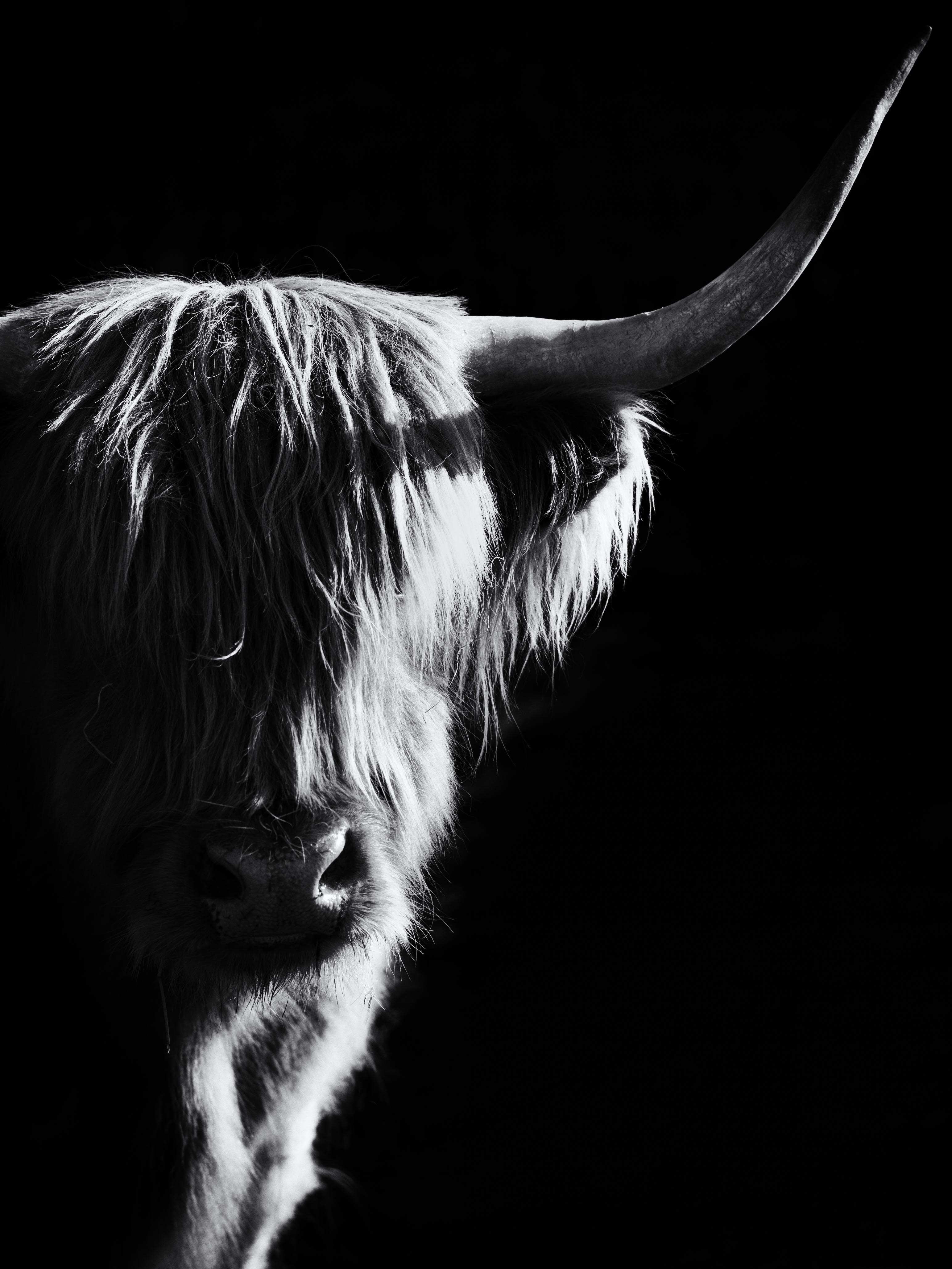
Sometimes, but certainly not always, I have a clear idea of the image I am trying to make even before I set out to take the photograph. This portrait of a Highland cow is a case in point.

From a lighting point of view I knew that I wanted the subject to be side/back lit, with bright sun to provide shadow areas and lots of contrast; although I was quite sure I would be adding more in post processing. The background also needed to be quite dark, so that the illuminated silhouette and backlit hairs of the animal would stand out. Compositionally I thought portrait would work better than a landscape, nor did I want to include the whole head or indeed both horns. As magnificent as they are one horn would be sufficient.

When it came to taking the shot, I deliberately included more in the frame so that I could crop later. I chose an aperture which would hopefully give me enough depth of field so that the nostrils, horn and hair on the top of the head were all sharp, but the neck or any visible part of the body were out of focus.

In many ways deciding what I wanted from the shot was easier than taking it! Animals move, they don’t pose for the photographer, The lighting was critical so the cow had to be facing the right way and just at the point when you are about to release the shutter, their head turns away and you have to be patient for the next opportunity. I took a number of shots which were out of focus, poorly composed or the background too confusing.  There was a fence between me and the small herd of cattle, so I was restricted in my movement, but I felt more comfortable than being in the field with them! Finally I thought I had captured something which I could work on and you have now seen the end result.

These wonderful creatures are full of character. You sort of know that they can see you even though their long hair prevents you from seeing their eyes. They know you are there, wondering why you want to point this black object in their faces. However their initial curiosity does bring them nearer to you, before they decide that grazing on grass and straw is more interesting than a photographer who wants to turn his imagination into reality.

This image was taken with a Leica M Monochrom and 90mm Summarit f2.4 lens at f4, 1/2500 and ISO 320.

Do click on the image to view a larger version, particularly if you want to see the level of detail which has been captured.

Light, shadows and illusions – inside The Turbine Hall of Tate Modern

L1002515-Edit


A couple of days ago I posted an entry depicting the people, light and their shadows inside this same venue. You can read my words and see the images here.

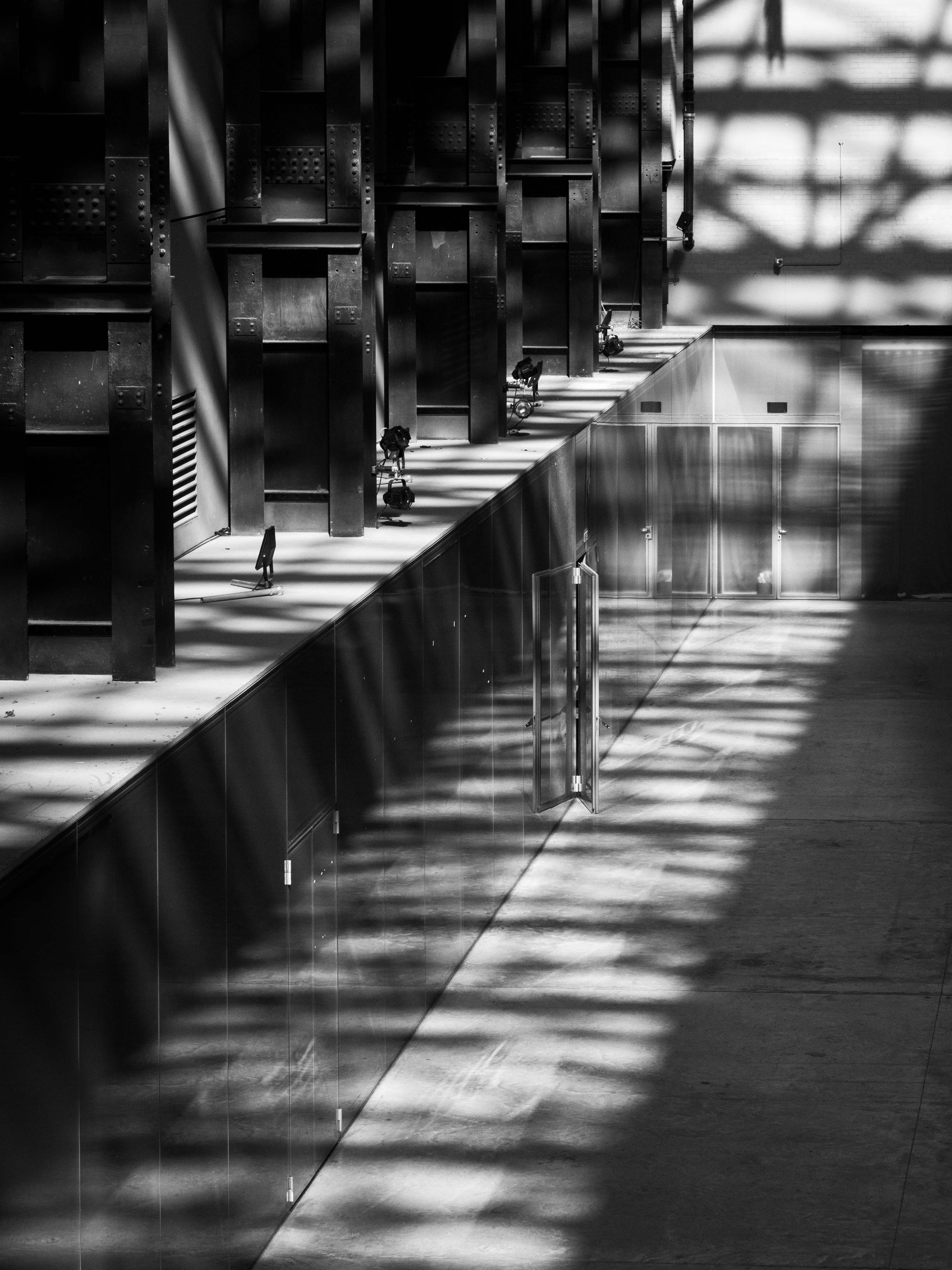
When I first arrived at Tate Modern I was fascinated by the way the afternoon sun came through the vast roof light above me and the tall vertical windows in the west wall. Together they created many interesting shadows and patterns of light on the building’s structure, the textured concrete floor and in some cases the reflective surfaces enclosing the Turbine Hall. For your information this hall is 152m long and 35m high; it’s huge.

I liked the view at the head of this post, but I did wonder what it would be like if taken at ground level. The next shot is looking into the same corner of the hall, but has a more abstract feel to it.


L1002549-Edit


It was then that I noticed the light and shadows falling on the floor being mirrored in the the ‘polished’ wall surface. Would a slightly different view point and a more abstract composition give me an image which truly bought all these elements together and what would be the result?

Here is the final image in this short series of three. You may wish to click on the picture to see a larger version.


L1002548-Edit-Edit


It has a rather surreal look about it. There appears to be a layer of ‘floating light’, hanging above the floor. It’s an optical illusion of course but the way the light and shadows are being mirrored produces this effect and for me this is the most visually interesting of the three.

Here are two other photographs taken inside the Turbine Hall.


L1002487-Edit


Here again I like the way the people behind the glass are distorted whilst the light makes interesting patterns, adding further interest to the overall composition.

Finally here is a shot looking towards the tall vertical windows. Taken through glass the reflection of the hand rail is distorted and a small figure stands alone in the bottom left hand corner. A point of interest but also necessary to give scale to the image.


L1002521-Edit


I only spent an hour or so wandering around, but I am inspired to go back. Arrive early and leave late – Watching, observing and waiting for the light to change direction and intensity during the course of the day. Waiting for a suitable person or a group of people to be in the optimum place, moving in the right direction to enhance the composition. When all these ingredients come together I will press the shutter, and who knows what the results may be. I can’t wait to return!

All the images in this post were taken with the Leica M Monochrom using a Leica 90mm f2.4 Summarit lens, processed in Lightroom and Silver Efex Pro. Do click on any of the photos to view a larger version.