Posts tagged ‘black and white photography’

Churches Project No.23 – Inglesham, an ancient wonder

As I entered through the south door of this 13th Century church I felt as if I had been transported back in time. Ancient, peaceful, unspoilt and lacking any discernible recent restoration, the church of St John the Baptist at Inglesham in Wiltshire is an exquisite wonder.

Inglesham-9

In the south wall the carving is thought to date back to Saxon times. It depicts Madonna with the hand of God pointing down to her child.

Inglesham-5

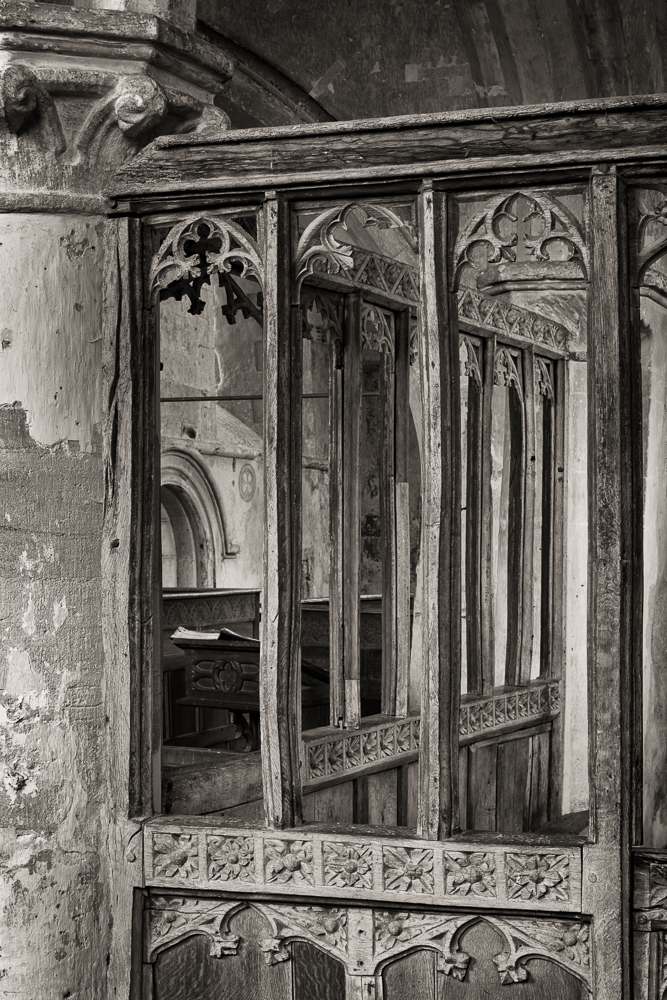
To the right of the main door and lining the south and north aisles are carved timber screens dating from the 15th or early 16th century.
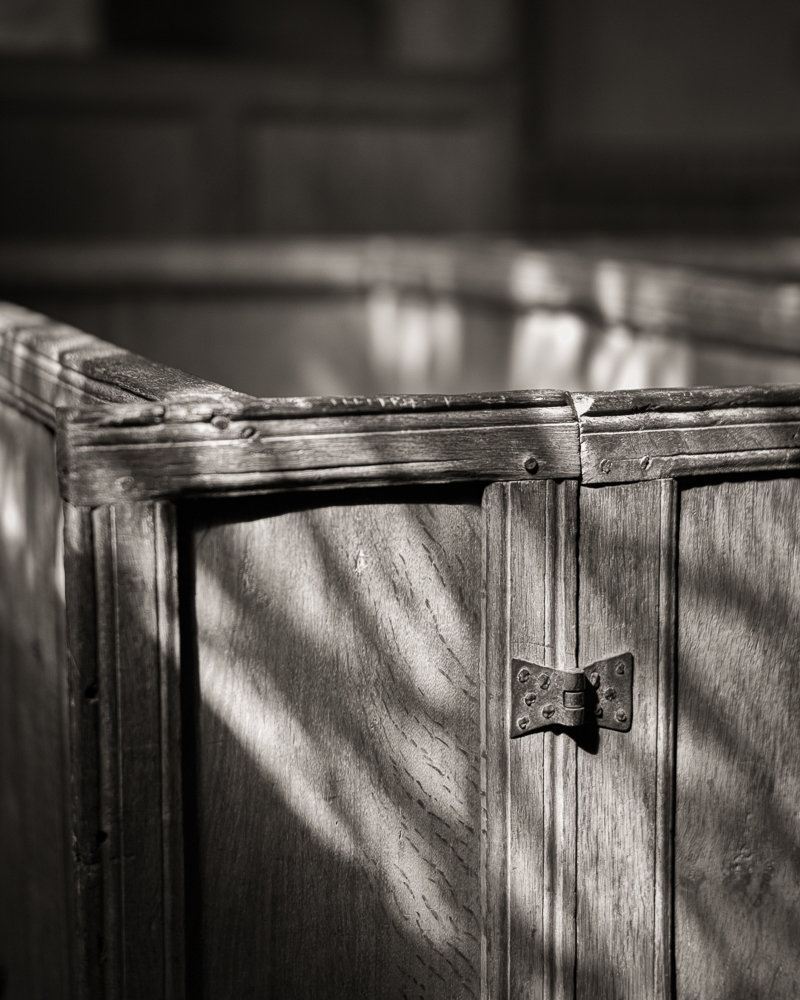
To the left of the entrance is the 15th century font which was originally painted. Between 1589 and 1840 the parish registry records over 500 baptisms.

The box pews are from the 17th and 18th century. It was traditional for farming families to occupy their own box pew for services.

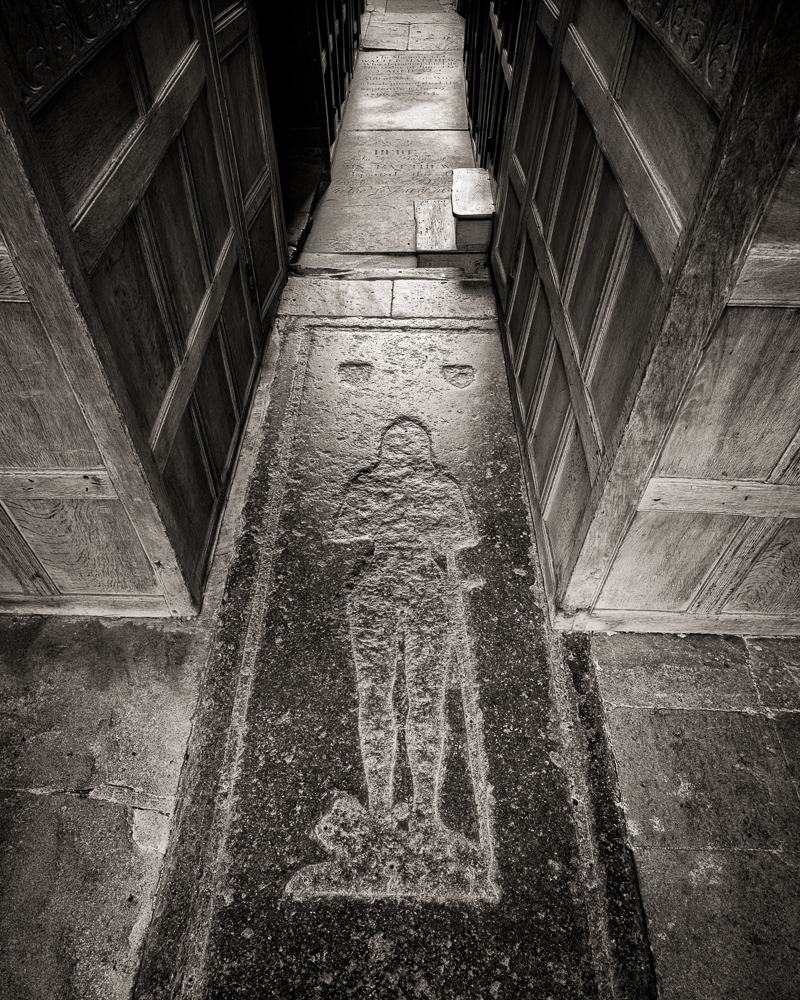
The nave appears to date from the early 13th century. The floor is formed of uneven slabs. At the end of the nave where it joins the chancel there is a huge stone with the indentation of an unknown knight.
Turn round, face East and you are greeted with the splendid sacristy, arguably the finest feature of the church. The painted walls and inscription which are 7 layers thick in places are an absolute delight.
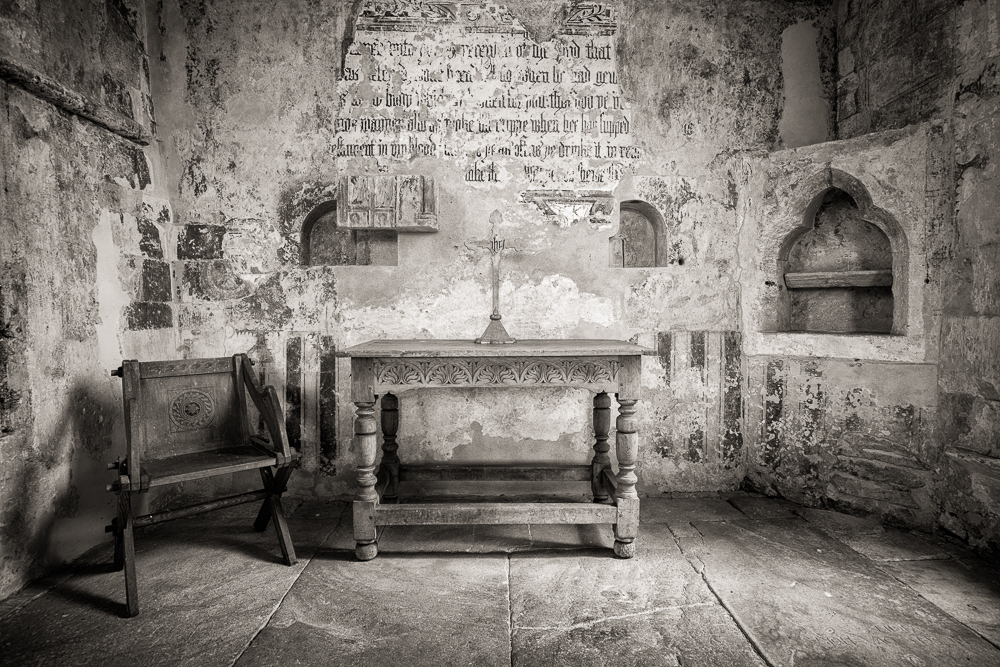
For a colour version of the above photograph please click here and read my previous post.
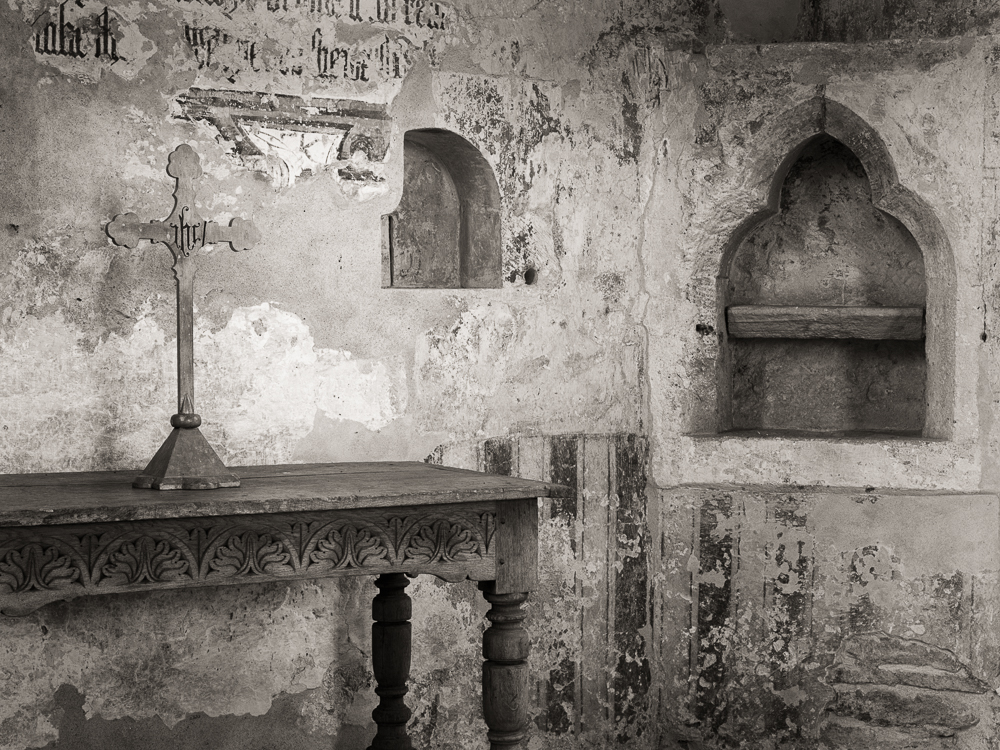
As you walk around this medieval building, historic details reveal themselves. For example this round metal holder which after the reformation would have held an hour glass to regulate the length of a sermon. Sermons often lasted 2 or 3 hours in the late 16th and 17th century, so the preacher would ask for ‘one more turn’ of the glass! If the sermon went on for 3 or even 4 hours then it entailed ‘turn after turn’ which may be based on the principle that ‘one good turn deserves another’.

When making images my aim is always to capture the true essence and special atmosphere of the place. I rejoice in the fact that it remains open daily to the public and has been maintained by the Churches Conservation Trust since 1979. In fact we have to thank William Morris, the designer, novelist and conservation campaigner who in 1887 recognised the importance of this church. He successfully raised sufficient funds so that works could be undertaken ensuring that the building did not fall into ruin. This very act secured its survival to the present day.

Although it’s the interior that holds the greatest appeal the exterior of the church is well worth photographing too.

With the exception of a few notices and leaflets about the Churches Conservation Trust, St John the Baptist Church is a timeless joy and long may it stay that way. I spent about 4 hours looking around and taking photographs. During my visit 3 small groups of other people came through the door, but they didn’t spend more than 15 minutes inside. A pity, as I doubt they could have truly absorbed and fully appreciated the special atmosphere in such a short period of time. I considered myself fortunate as I virtually had the place to myself. Tranquility, sanctuary and ancient history all rolled together into a delightful experience and most rewarding afternoon.

Basic ingredients – another still life.

L1010646-Edit

A few weeks ago I made my first still life image. Whilst I prefer outdoor photography I am really enjoying using things which I can find around the home, arranging them to form a pleasing composition, lighting them in a sympathetic way and then processing the picture mainly in Silver Efex Pro.

These basic ingredients can be found in almost any house. A loaf of bread, an apple, a slice of cheese and a drinking vessel, in this case an old wine goblet. Do we take these things for granted? We probably do. Perhaps this image reminds us that there is a simple beauty in all things, even the most basic of food ingredients.

Other ‘Still Life’ entries can be found by clicking on the links below.

Learning from Still-Life

Three vessels and a tulip

More ‘Still Life’ – further experimentation for the fun of it!

Three Norfolk Churches – a place to return

Happisburgh Church

Happisburgh Church

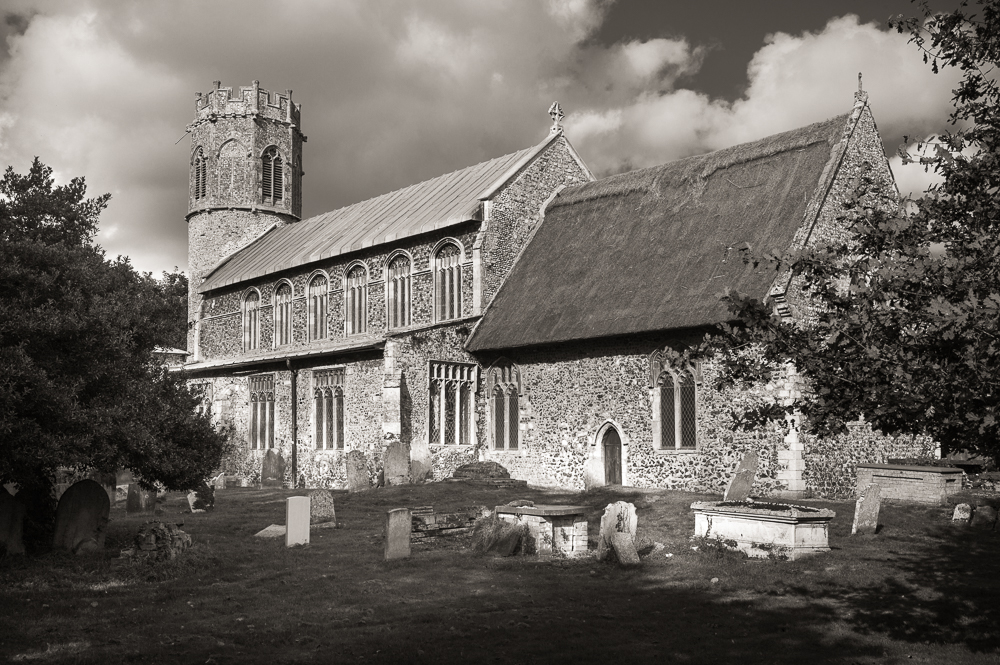
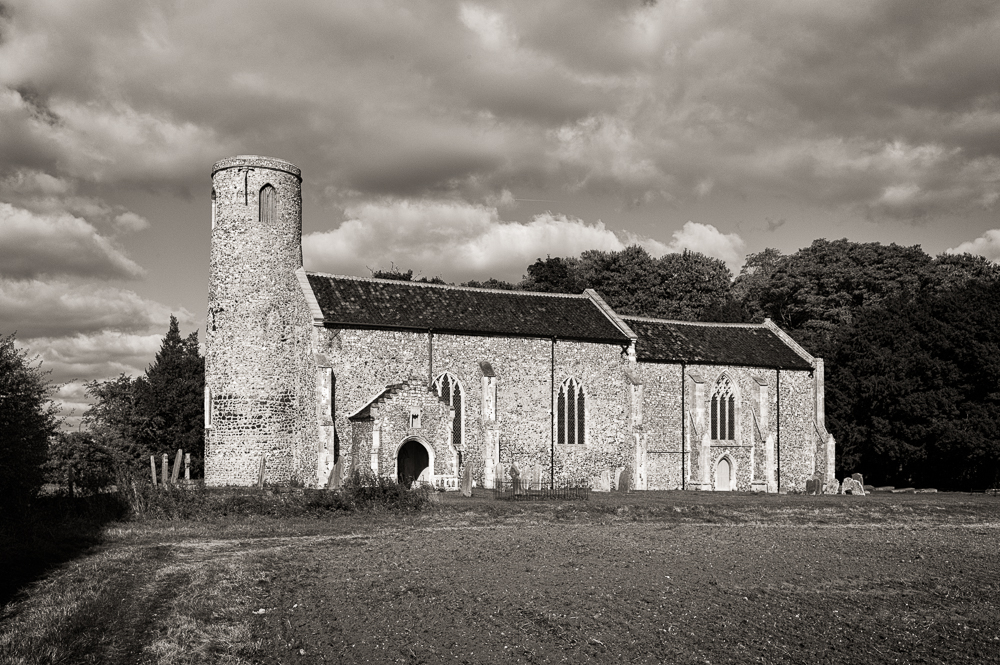
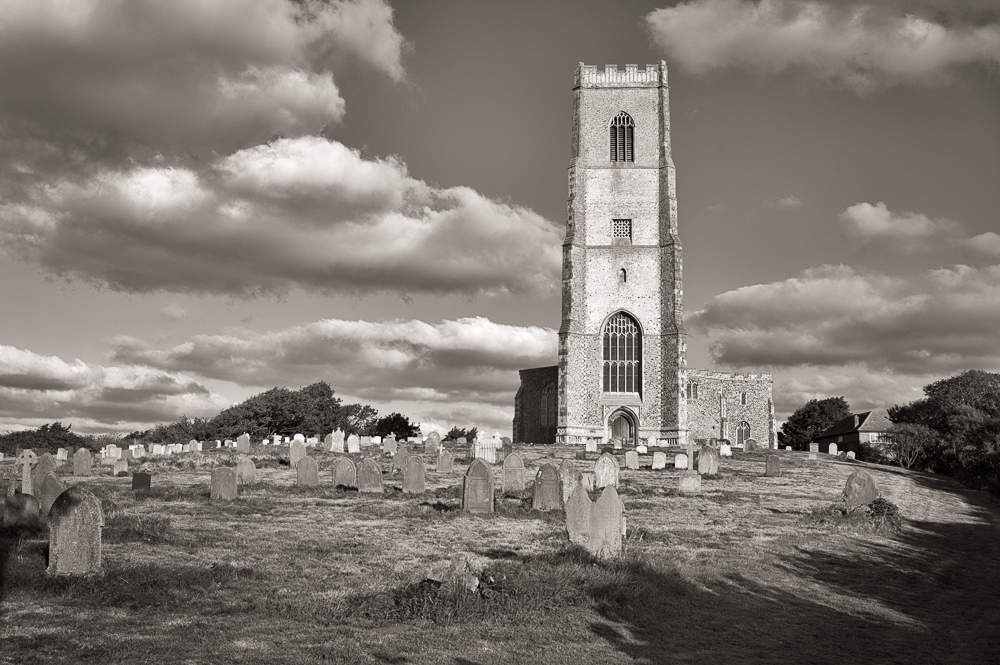
The county of Norfolk has many attractions not least the sheer number and variety of churches to visit. These three examples were captured whilst on holiday a couple of years ago but only now have I processed them to my liking. I sometimes think a trip to Norfolk specifically to photograph churches would be a great thing to do. I will add it to my ever growing list of places to take my camera!


Potter Heigham Church

Potter Heigham Church


Beeston St Lawrence Church

Beeston St Lawrence Church


Do click on an image to view a larger version which will open in a new window.

Dungeness – A fascinating and desolate place.

Dungeness-16

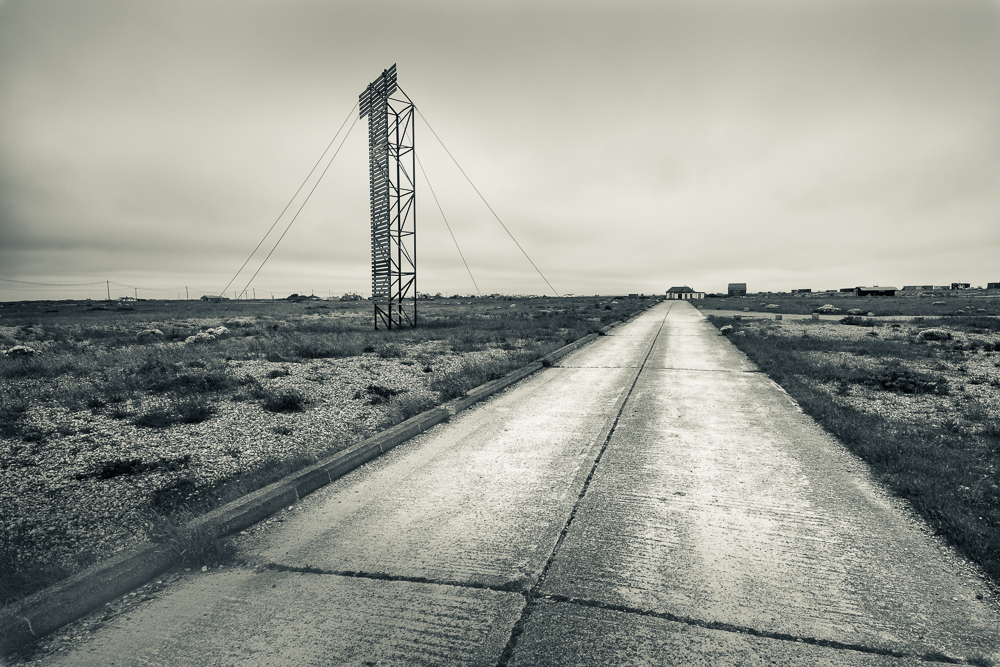
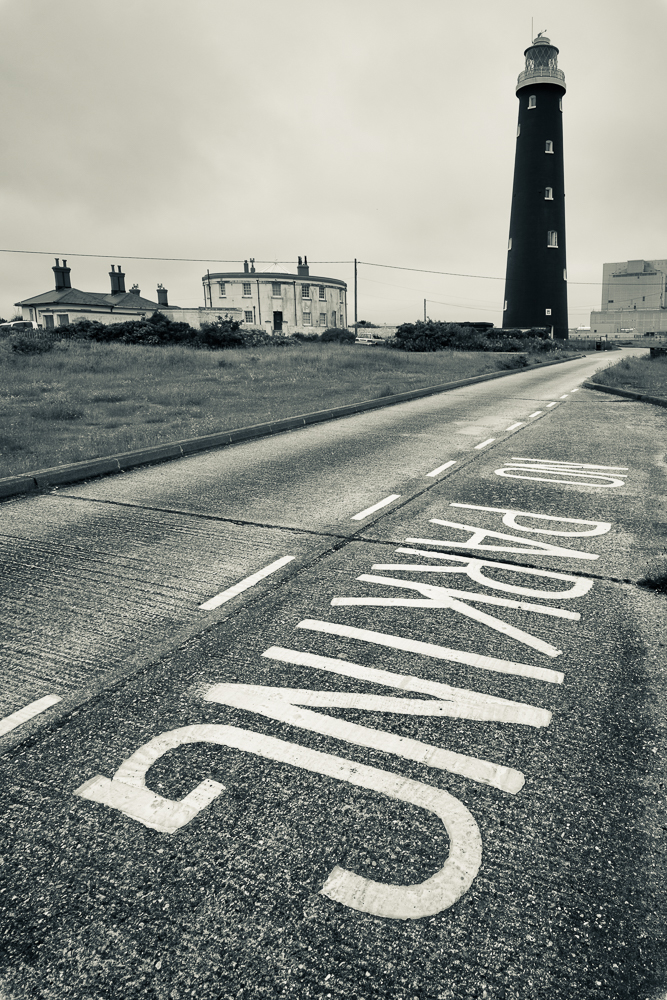
For quite some time now I have wanted to visit Dungeness on the southern tip of the Kent coast. I had heard about and seen many an image of the headland which is one of the largest areas of shingle in Europe. It is an extraordinary and fascinating place, quite unlike anything I have visited before.

In recognition of its diverse ecology  it is designated a National Nature reserve (NNR), a Special Protection Area (SPA), a Special Area of Conservation (SAC) and part of the Site of Special Scientific Interest (SSSI) which also includes Romney Marsh and Rye Bay.

Dungeness-18

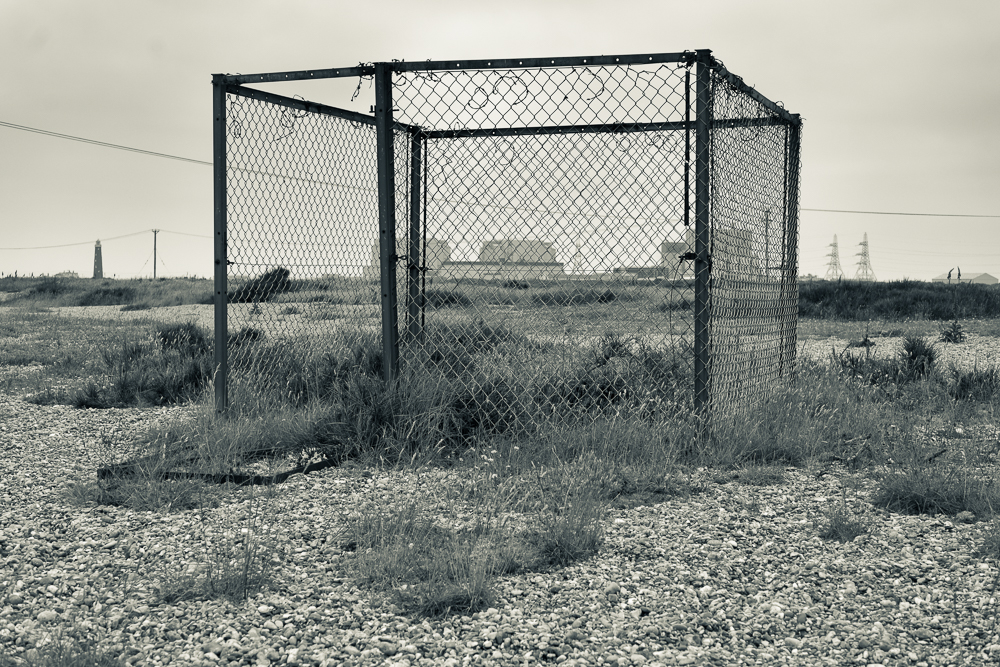
It is also the site of two Nuclear Power Stations. The first was commissioned in 1965, and the other became operational in 1983. The former ceased production in 2006 and the second is estimated to be de-commissioned by 2028. They are massive buildings, dominate the area, and are ever present if not in the eye then certainly in the mind.

Dungeness-7

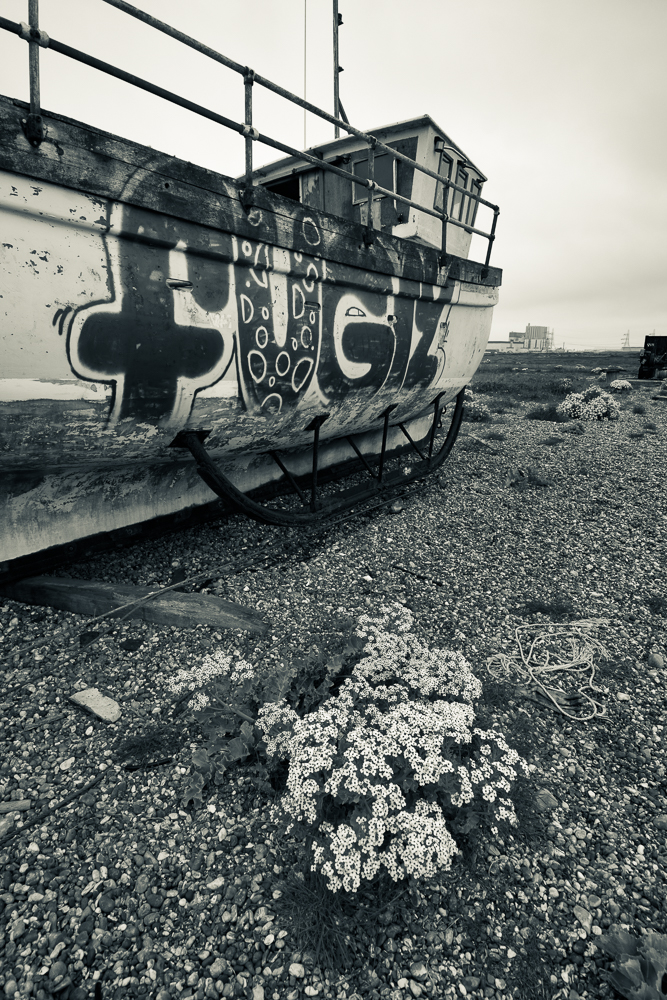
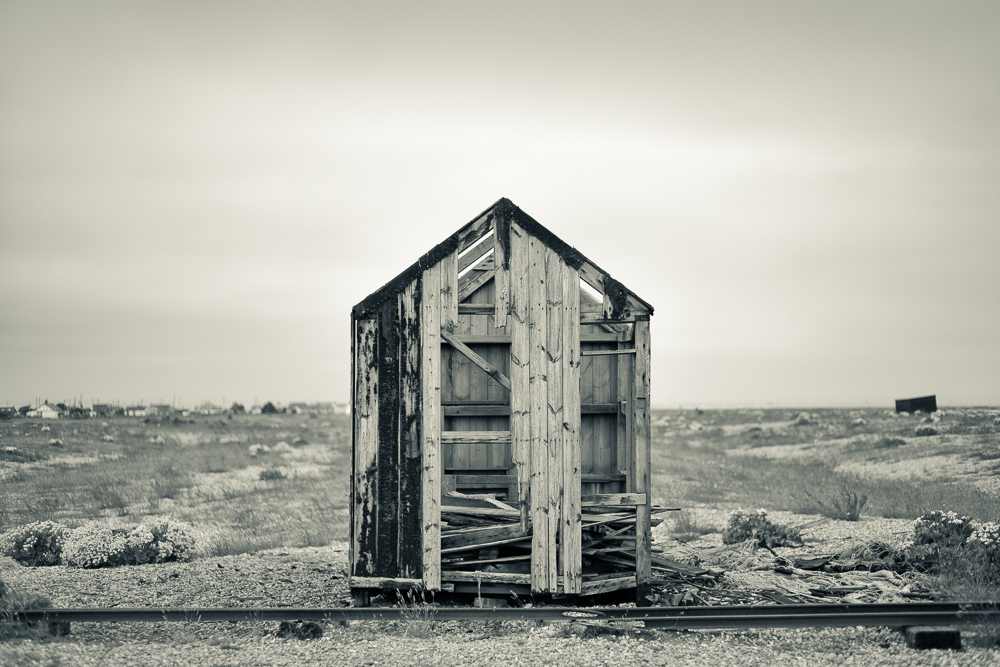
Fisherman have lived in the area for a long time. Their homes are often converted railway carriages and their boats and huts stand on the shingle although many are well past their prime.

Dungeness-2

Dungeness-3

Dungeness-6

There is clear evidence the character of Dungennes is changing, as incomers given the opportunity buy one of the dilapidated buildings, which is then replaced with a much more modern/contemporary structure. Whilst there are strict planning regulations these new properties are in many cases second homes or holiday lets. I doubt this is considered to be progress by the locals as it impacts on the affordability of these homes and it will in time undoubtedly change the character of the location.

Dungeness-13

Dungeness-14

My wife and I spent the best part of a day exploring the area, but I left thinking there was more we hadn’t seen. Photographically it offers numerous opportunities and having taken my time to process a selection of images I hope I have captured something of the true essence of the place. In many respects these pictures are more documentary in their style and I have enjoyed this approach to this collection.

Dungeness-9

Dungeness-12

Although the place gives the impression of  abandonment and desolation there is activity including the Fish Hut and a steam railway for the visitors. Should I make a return visit, and I think I will, I would like to try and record some more of these activities as they too have a story to tell.

Dungeness-8

Dungeness-15

Dungeness-10

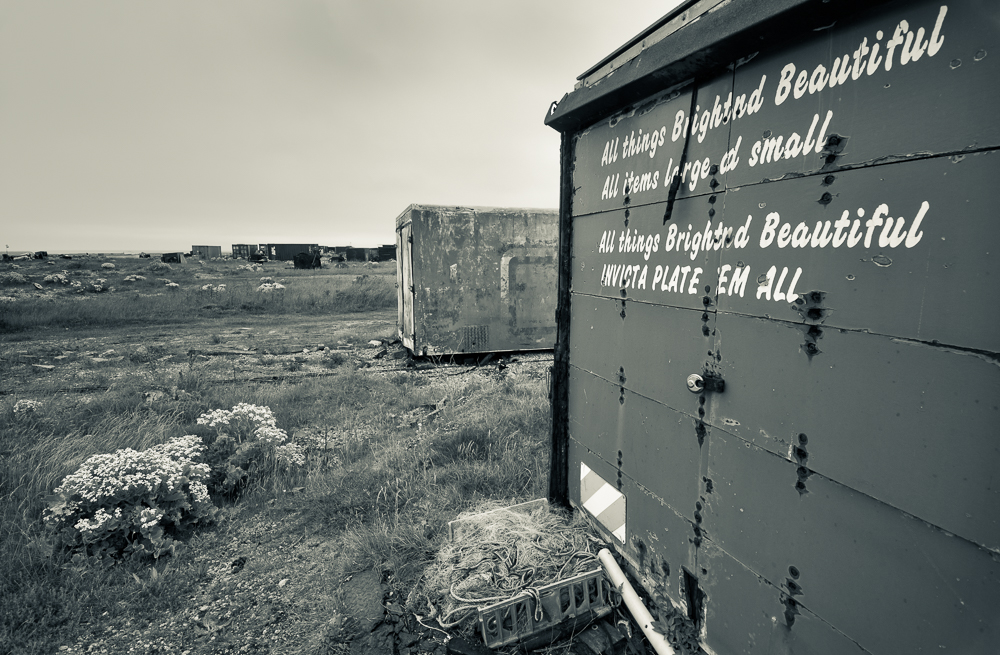
Dungeness is a fascinating place and I have finished with a photograph of some wording I found on the side of one of the many containers apparently abandoned on the shingle. Make of it what you will!!

If you have enjoyed these images there are more to be seen in a new gallery page – ‘Dungeness’ which can viewed by clicking here.

As always if you want to view an enlarged version do click on the image.

The Coastguards – Escaping the classic view

The Coastguards

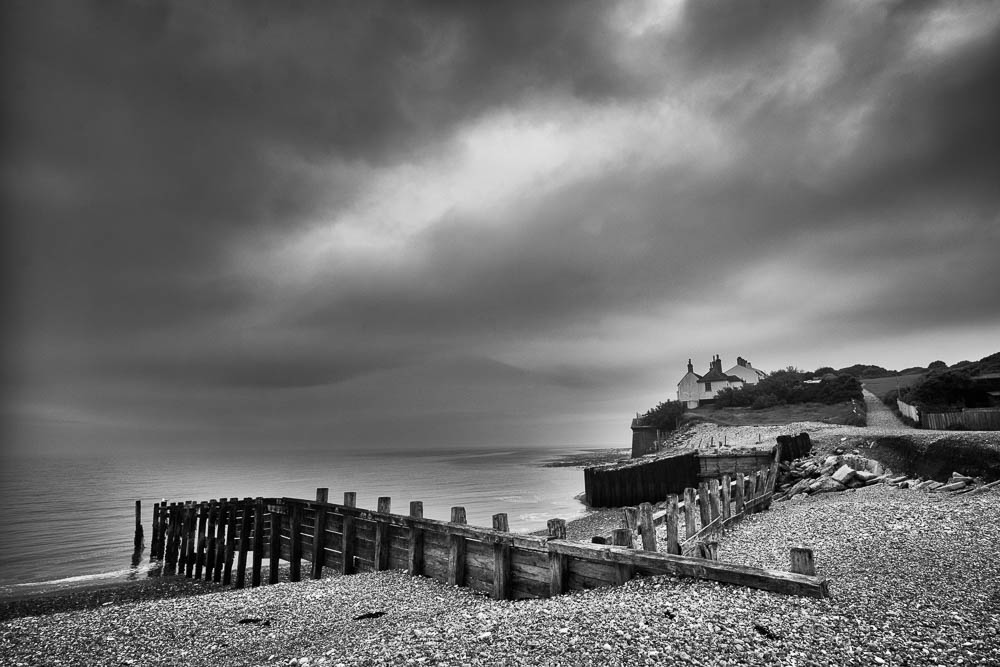
This image was captured at Cuckmere Haven in East Sussex  earlier this week. The approach is from Seaford Head Nature Reserve. It’s an extremely well known spot, not only for tourists but also for photographers who wish to add the ‘classic view’ to their collection. By ‘classic view’ I mean the one which is taken from the top of the footpath on the right of this picture. Looking east, the coastguard cottages are in the foreground whilst the majestic view of the cliffs of The Seven Sisters and Beachy Head fill the background. It is a wonderful view but metaphorically speaking there are thousands of tripod holes in the prime spot. Just Google – Coastguard Cottages Seaford – and you will see what I mean.

On my Instagram feed, a fellow Worpress Blogger, Lensscaper by Andy Hooker, rightly pointed out in a comment that the view isn’t as good as it used to be. The brambles are quite overgrown and the view of the cottages is quite obscured.

This didn’t matter to me  as the point of this post is to look for alternative viewpoints and not to follow in the footsteps (or tripod holes) of all the people that have gone before me. The ‘classic view’ might be the one to appear on the picture postcard or a tin of biscuits made for the tourist, but I prefer to explore a popular location and look for an image which is not often seen by the majority.

In case you were wondering I did take the ‘classic view’ about a year ago and here it is. Even then  I still made the focal point an elderly gentleman with his walking stick. I was still resisting a shot of  just the view itself. You can read this post here.

chabce-to-reminisce

I would argue that even in the most popular locations there are new shots to be found if you take the trouble to look around and not be tempted to repeat the obvious.