Posts from the ‘monochrome’ category

Cwmorthin slate quarry in Snowdonia – the lower section

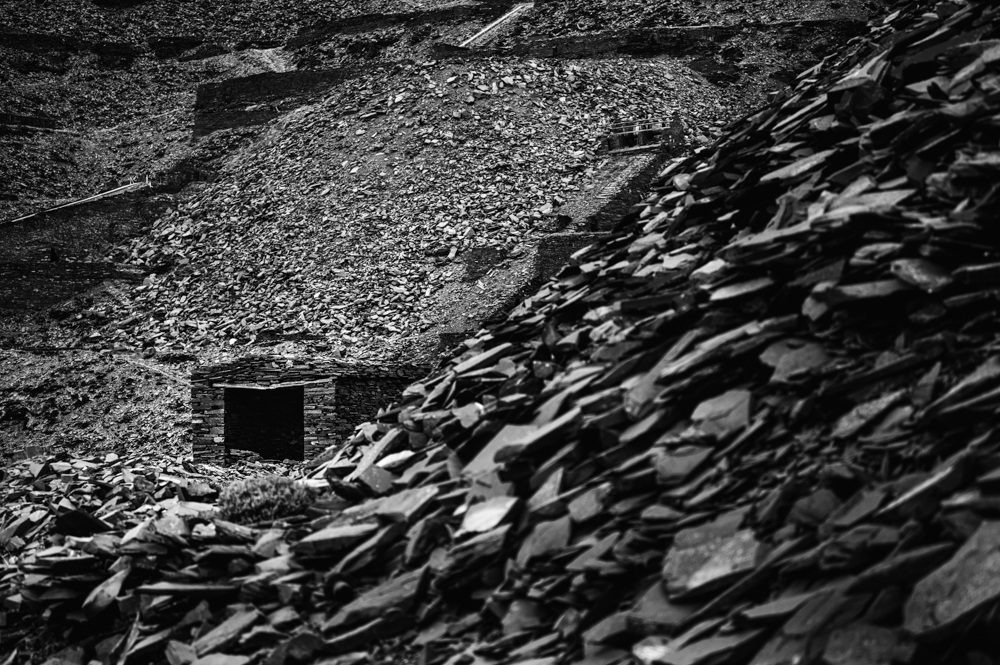
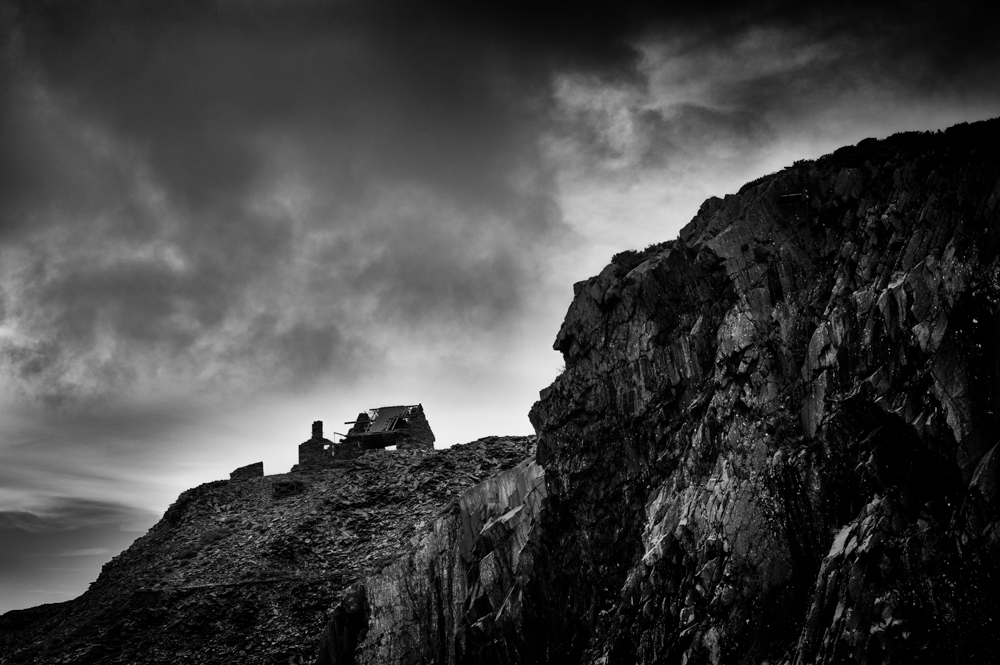
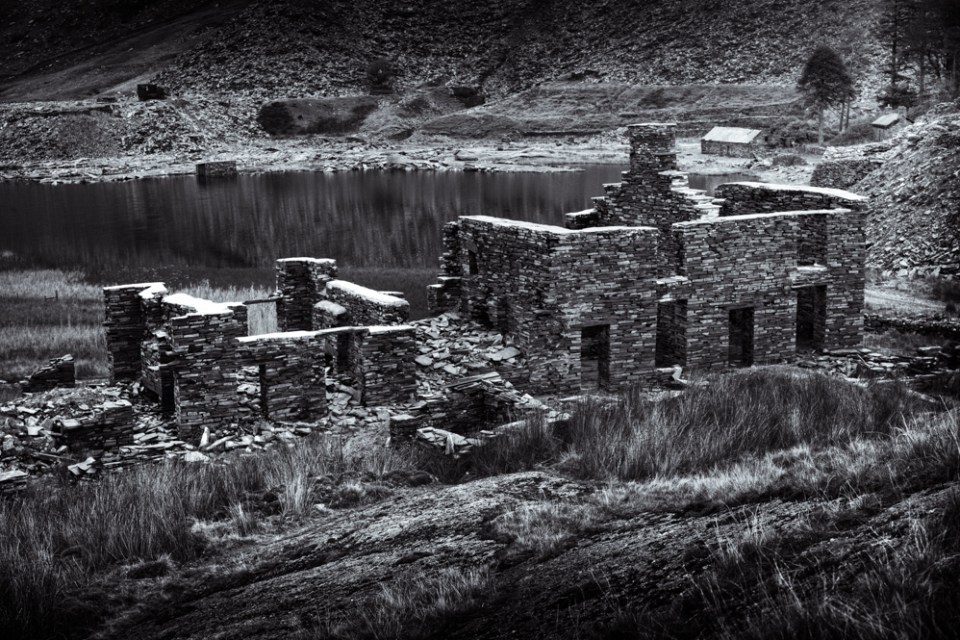
Cwmorthin Quarry – a bleak and now lonely place – previously a place of great activity, endeavour and danger, as miners went about their difficult and very physical work in many miles of dark, wet tunnels below the surface. As I sit at my desk in a warm, well lit room, with a hot cup of tea for sustenance, typing these words on a Mac keyboard, I find it very hard to imagine what life would have really been like for the people who lived and toiled here many decades ago.


20151031-L1000073-Edit


Cwmorthin is a substantial Victorian-era slate mine above the village of Tanygrisau, close to the town of Blaenau Ffestiniog in North Wales. Having left my car in a small car park, I together with a few other photographers walked up a fairly steep incline until we reached Llyn Cwmorthin, a lake overlooked by some derelict buildings which at one time were the barracks for the mine workers. Work on the mine first began in the early 1800’s, with heavy underground development starting around 1860. Some access to the mines is still possible but I for one was very happy to stay above ground, take in the atmosphere, and try and reflect my feelings for this harsh environment through my photography.

Although mine workings largely came to an end in 1970, some small scale mining still took place in the 80’s and 90’s eventually ceasing altogether in 1997. Flooding in mines was always a problem, so large pumps were used to remove water from the many miles of tunnels on a number of floors. Wall and roof failures were a constant hazard for the mineworkers and it’s of no surprise that numerous chambers have collapsed preventing access to large parts of the mine.

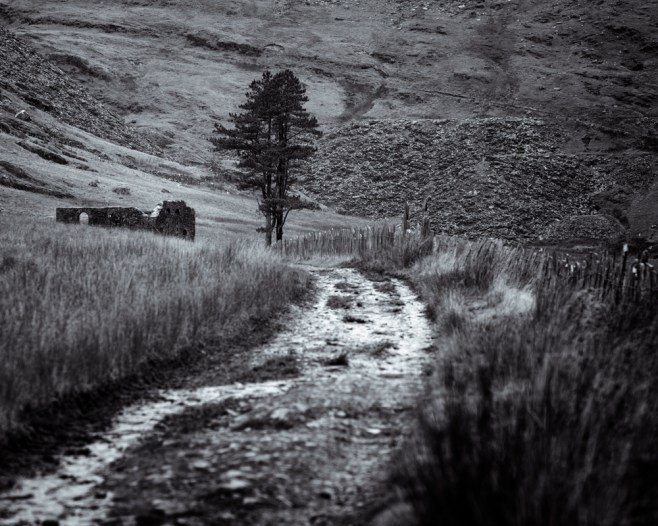
The photographs in this entry were taken either by the lake or along a wet and stoney footpath, lined by a slate fence, which took us past a chapel with only a pair of conifers for company. Sadly the roof had been removed from the chapel in fear I guess that it might collapse and be a danger to visitors. Later we climbed a long and fairly steep path to the upper section of Cwmorthin Quarry and this will feature in a future entry.

 

20151031-   L1000207


20151031-L1000175-Edit


20151031-L1000210


20151031-L1000081-Edit


Churches Project no. 7 – St Swithin, Launcells, Cornwall

20150621-L1002873-Edit


It’s been a little while since I posted an entry relating to my Churches Project. This is partly because I have spent a lot of my spare time recently processing and then posting images which were taken in Snowdonia. But it’s mainly down to the fact that I just haven’t found the time to visit and photograph any new churches!

This church is St Swithin in Launcells, Cornwall. It is an unspoilt country church dating back to the 15th Century, set in a wooded valley just inland from the coastal town of Bude and only a few miles from the Devon border.

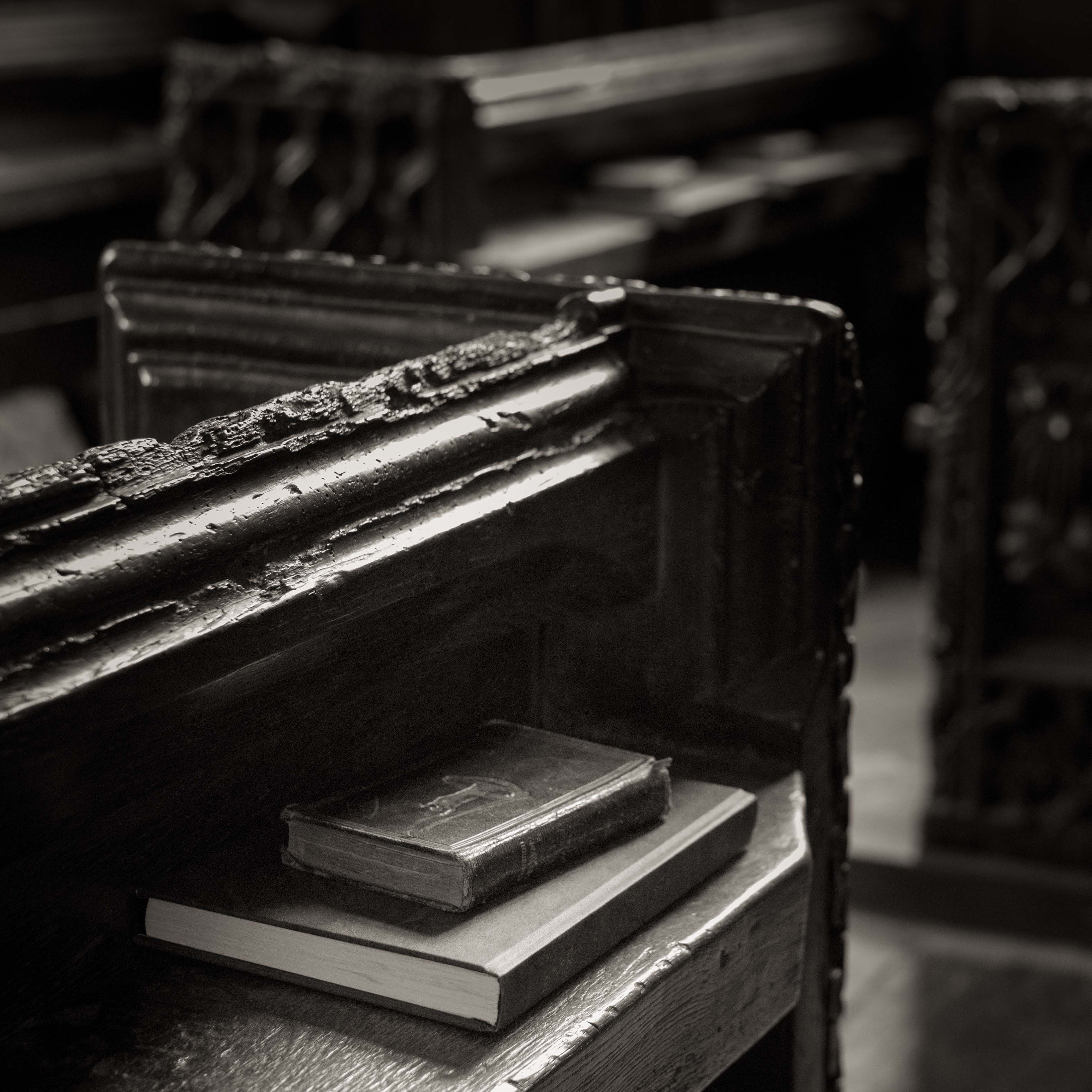
Sometimes when I visit a church for the first time a particular feature strikes me above all others and this was certainly the case when I visited St Swithin. As I set foot through the main door my eye was instantly drawn to all the Tudor pews and their quite remarkable carved bench ends. The first and last pews are also carved on the front and back respectively, whilst the other rows are all decorated at each end. They are all different and depict a variety of biblical stories. I didn’t have the time, but many an hour could be spent trying to interpret each set of carvings. Sir John Betjeman described them as being the ‘finest bench ends in Cornwall’ and who I am I to argue with that.


20150621-L1002883


20150621-L1002903


20150621-L1002886


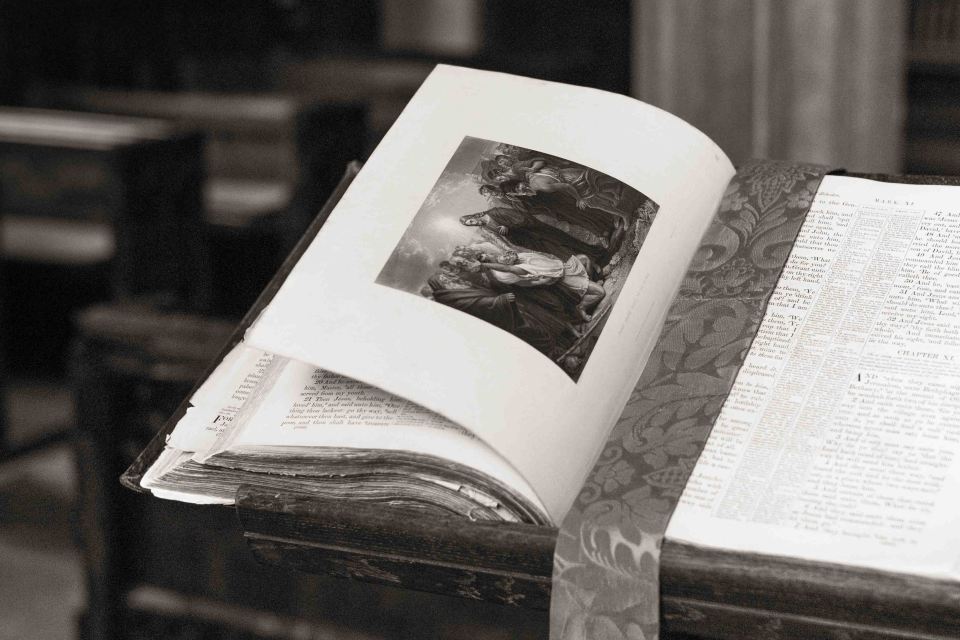
The other fine feature was the old and well used Bible which perhaps unusually was illustrated with some fine drawings. The good book was open at the Gospel of Mark and the picture shows Christ ‘giving sight to the blind’.


20150621-L1002907


Oh how wonderful it is to have vision, not to look in to the future but to be blessed with sight – to see and appreciate things in the present moment. To be able to witness and admire at the first hand the fine craftsmanship of those people, who back in the 15th and 16th Centuries used their skills to create something which some 500 years later can still be enjoyed today.

Dinorwic slate quarry – a harsh and inhospitable place.

This is a foreboding place. A harsh environment, full of drama and atmosphere. Now redundant but not forgotten. Dinorwic Slate Quarry in Llanberis covers a vast area with the mountains of Snowdon as its backdrop. Closed in 1969 after 170 years of slate extraction, it was once the second largest slate quarry in the world. It was a dangerous, dirty, unhealthy place to work and whilst the workers were skilled, they were also poorly paid.

On my recent visit the rain kept away, but the wind blew and I could only stop and try to imagine what conditions must have been like for those that toiled in such an inhospitable climate, day after day, week after week, year after year.


Whilst Dinorwic Slate Quarry is hardly a place of ‘picture postcard’ beauty, it does have a beauty all of its own, which I like. It’s a place with history, it has a story to tell and what’s important to me is that my photographs have something to say about the location and are not just ‘record’ shots.

Taking the shot is just one step along the path to the finished result. The making of the image is in the processing. It’s only at this stage that I can start to make some creative decisions as to how I would like the picture to be seen by the viewer. Does the image convey any emotion? Does this series of images help tell a story, so that words are hardly necessary? I would like to think the answer is ‘yes’ to both these questions, but I would be interested to hear your thoughts on this as well.

To see more detail in any of the photographs, do click on an image to see a larger version in a new window.

Thanks as always for stopping by and looking at my blog.


My new camera – an iPhone 6S – a useful photographer’s sketchbook

Most photographers will be familiar with the saying – ‘The best camera is the one you have with you’. I can’t disagree with this adage but just how good are smartphones as a true photographic tool? Let me say rather swiftly that this is not intended to be a review of my recent upgrade from the iPhone5 to the iPhone 6S, but merely a selection of images and a few opinions of my own about the value of taking images with a mobile phone. I hope you will find my thoughts interesting.


IMG_1280


The iPhone 6S now boasts a 12mp sensor, so it’s no wonder that the use of smartphones have stolen a huge number of sales from the compact camera market in recent years. (Click on this link to a page on Flickr which only confirms what most of us already know about the use of camera-phones). However I am all too aware that more megapixels doesn’t necessarily equal better quality pictures. The biggest factor is always going to be the person taking the shot, not the equipment being used, but that’s a topic for another day!

The four images in this post were all taken in the past few weeks whilst out and about walking our dog. I have never found it easy to multi task and keep one eye on the subject being photographed and the other eye on the dog, just in case he gets bored and runs off out of sight. So a quick shot is really all the time I have. The pictures have been imported into Lightroom from the iPhone 6S and then converted to black and white. Some limited post processing has been used to enhance each image if only to prove to myself what is possible with the jpeg files.


IMG_1183


So what are my thoughts? Well the results are pretty remarkable all things considered. The iPhone 6S has coped well with some high contrast conditions and to a certain extent the files are flexible in post processing. There isn’t much detail in the shadows but it’s unquestionably a better performer than the iPhone 5. They are certainly good enough for posting on the web which is where the vast majority of images now end up. What I would say is that the quality deteriorates significantly when zooming in, so it’s arguably better to take a ‘full size’ image and then crop in post. Would I want to make an A4 or even an A3 size print? – I haven’t tried, it would be an interesting exercise but I doubt I would be happy with quality, however I might be pleasantly surprised.


IMG_1200


I enjoy taking pictures on my phone but for now it will never replace any of the cameras I take so much pleasure in using. For me the camera-phone is the equivalent of an artist’s sketchbook. Something which is very portable and convenient to have with me at all times. Something I can use to make a visual record of a particular location. Something to inspire me and to think about when considering a return visit. A photographer’s sketchbook – most definitely yes, and a very good one at that. A replacement for my cameras with interchangeable lenses and the ability to shoot in RAW – no way, but still worth having with me at all times – if only to make the odd phone call!


Mist and missing Capel Curig – Happy New Year!

20151103-L1000868


This will be my last post of 2015 and hopefully it’s a fitting end to what has been a thoroughly enjoyable year of black and white photography.

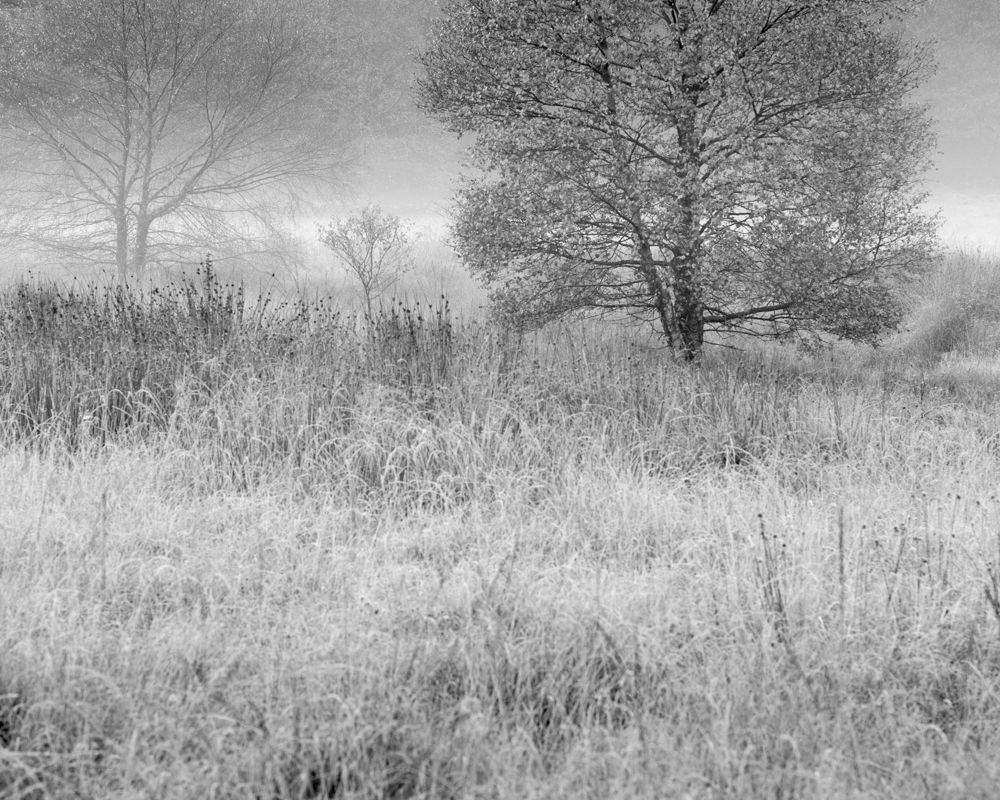
The five images in this entry were all taken on the last morning of my stay in Capel Curig, Snowdonia in Wales at the beginning of November. Although the mist was very atmospheric, (isn’t it always) I had been hoping for some early morning sun to break through. Although this didn’t materialise, I am still happy with the results of an hour spent in a field immediately opposite where I had been staying, for what proved to be a great introduction to this part of Snowdonia. I don’t have any New Year resolutions but I do know that I want to return to this beautiful part of the UK in the not too distant future.

Until then may I take this opportunity to thank everyone who has visited my blog, and liked or made comments about some of the entries. I am always very grateful for the feedback, it’s much appreciated.

Have a very happy New Year and may 2016 bring you peace and good health; and if you are a photographer like me, I hope you will be inspired to take some fine images in the year ahead.


20151103-L1000843


20151103-L1000833


20151103-L1000860


20151103-L1000815


To fully appreciate each image do click on the picture to see an enlarged version which will open in a new window.