 |
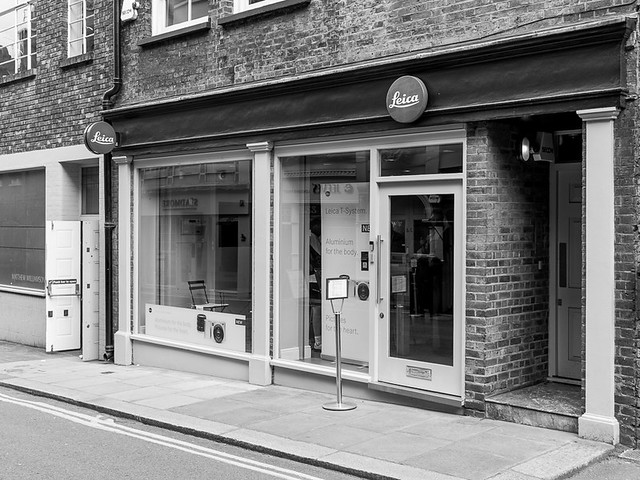
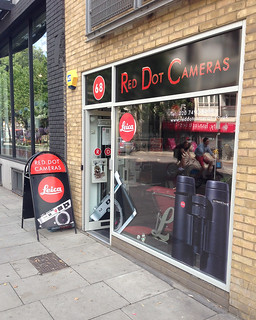
The Leica Akademie in Mayfair London
Taken using the Leica M with 35mm Summicron @ f5.7 1/250th sec ISO 320 and
converted to mono in Lightroom with minor crop and adjustments for exposure |
In my last entry I wrote briefly about the 100 years of Leica and mentioned that I would be attending a workshop at the Leica Akademie in Mayfair in London to ‘Test Drive’ the Leica M and hopefully the Monochrom as well. The use of the term ‘test drive’ could imply a pending purchase and I knew I ran the risk that temptation might take over and all logical thought disappear. After all, I already have an excellent camera system and lenses, so why would I want to invest in something else? Well the Leica M System is something very special and I told myself that this was an opportunity for me to try a rangefinder camera for the very first time and see whether or not I enjoyed the experience. With luck I would get to use both the M and the Monochrom. I would then be able to compare the functionality, handling, and the results from both cameras. Most importantly it would make up my mind once and for all whether or not the Leica M system was for me and provide the future direction for my photography.
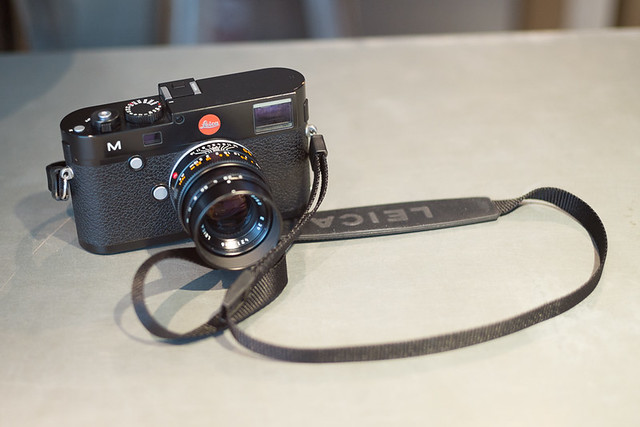 |
The Leica M
Taken with the Leica M and 50mm Summicron lens @f3.4 1/125th sec ISO 1600Crop, some sharpening but no exposure corrections |
Looking back I guess this ‘dream’ all started a couple of years ago when Leica announced the Monochrom, a camera based on the M9 but with a sensor that only recorded luminance and not colour. In other words it only records images in black and white. It was around this same time that my love of black and white photography was just beginning and as a consequence I have been intrigued by the ‘Monochrom’ ever since.
Even those with a limited interest in photography and cameras will know that Leica is a premium brand and so the very idea that one day I might own a Leica and say a lens or two, still seems a very distant one. Not only that, but could I really ever justify spending even more on a Monochrom over and above the already expensive M? Given the fact that well over 90% of my work is in black and white, and hence the appeal of the Monochrom, would the improved functionality and larger sensor of the Leica M be a winning combination?
So last weekend I headed off to London and spent time on the train reading a number of reviews about both cameras including an in depth write up of the Monochrom by Thorsten Overgaard and another three part review by Ming Thien. By the time I had reached Victoria station I had almost convinced myself I would prefer the Monochrom, but would this feeling change later on once I had tried both cameras and compared the results?
 |
Robin Sinha of the Leica Akademie demonstrating the Leica M
Taken with the Leica M and 50mm Summicron lens @ f3.4 1/60th sec ISO 1600
Minor crop and removed colour saturation to convert to mono. No other adjustments. |
The afternoon was hosted by Robin Sinha who works at the Akademie in Mayfair and is a very fine photographer in his own right. Click through to his website here. I, together with three other aspiring Leica owners were shown the M, its simple controls and the basic settings to get us started. We inserted our own SD card and having proven our identity, were sent out onto the streets of London to take some of our own shots with the Leica M and in my case a 35mm f2 Summicron lens. We had about an hour to enjoy the rangefinder experience but after half an hour I returned to the Akadamie to switch cameras and pick up the Monochrom, again with the 35mm Summicron lens.
Everything I had been told or had read about the Leica Rangefinder experience proved to be true and within a matter of minutes of taking my first shot with the M, I had formed my first impressions. The camera is a beautifully crafted piece of equipment, a joy to hold and so very different to anything I had used before and yet I instantly felt at home. I also felt less conspicuous taking photographs. Why I don’t know but it definitely felt different to shooting with my Olympus EM1 or a large DSLR. Potentially this was bad news as temptation might raise its head and the bank balance would swiftly be depleted!
In essence the camera’s controls are simple yet tactile. The manual focus ring moves very smoothly, yet has just the right amount of resistance not to move once set. The shutter on the M is precise and quiet, lock the exposure with a half press. I could hear the shutter being released, but I doubt those around me knew a photograph had been captured. Although I found the optical viewfinder and rangefinder focusing relatively easy there were times when it was somewhat awkward and I soon realised it would take quite a bit of practice to focus accurately, particularly if using a lens wide open and so reducing the depth of field. I also found it more difficult to hold and use the camera in portrait mode, but again I am sure this would feel more comfortable with practice. Wearing glasses probably didn’t help either but really this was no different to using my current camera. I soon likened the Leica M to a finely tuned sports car. Choose your settings wisely, handle correctly and with care and they would both yield great results, but practice, followed by more practice would be a necessary requirement.
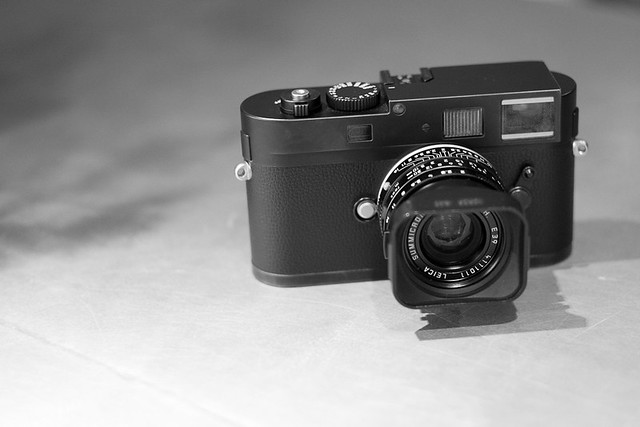 |
The Leica Monochrom and 35mm Summicron lens
Taken with the Leica M and 50mm Summicron lens, straight from camera using
black and white jpeg setting. f2.8 1/125th sec ISO 1600 |
And now to the Monochrom. It was slightly lighter than the M but no less substantial. The shutter release felt different and Robin had set it to ‘discreet’ mode and I now wish it had been left in ‘standard’ mode. The screen on the back of the camera was also smaller in size than the M and the resolution much poorer as well. When reviewing images, the M is far superior, to the point where I could not tell if I had focused correctly on the Monochrom even when I zoomed into a small part of the image. This wasn’t very reassuring and didn’t give me the same level of confidence when using this camera. The M wins hands down in this respect. Robin had also told us that the battery life was much improved on the M and that it also has a faster processor. It has to be remembered that the Monochrom is based on the M9, a camera which is now four plus years old. Leica and technology have moved on. The Monochrom is starting to show its age, but like a good antique it will always have its own unique character, despite its shortcomings.
A couple of street photographs
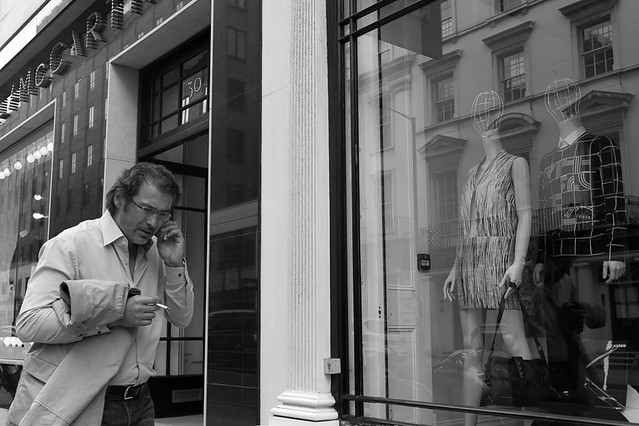 |
Being observed
Taken ‘shooting from the hip’ with the Leica Monochrom and 35mm Summicron
@ f9.5 1/180th sec ISO 400
Crop and minor adjustments in Lightroom |
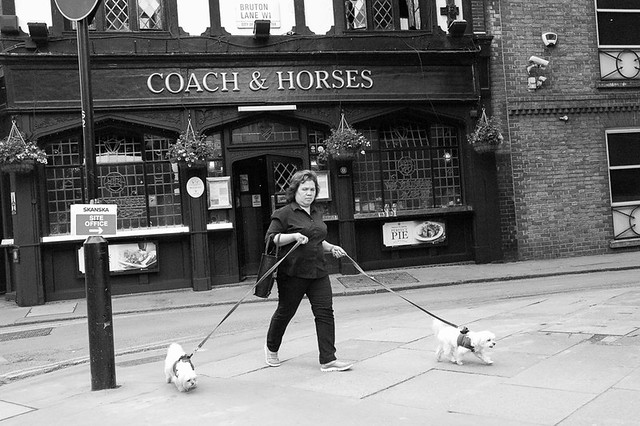 |
Lady & Dogs
Taken with the Leica Monochrom and 35mm Summicron lens @ 10,000 ISO and f8 1/1500th sec
Whilst their is grain/noise, this image even on a large screen is perfectly usable despite the
high ISO – in fact it has a rather unique character. |
The time flew by and although I took a good number of images I could easily have carried on for much longer. At this point I swiftly reminded myself that this was a complimentary workshop and I was very fortunate to have some freedom with both cameras, and not just hold and look at them admiringly in a shop, which tells you absolutely nothing about how they might perform in the real world.
Comparing colour and mono conversion from the Leica M
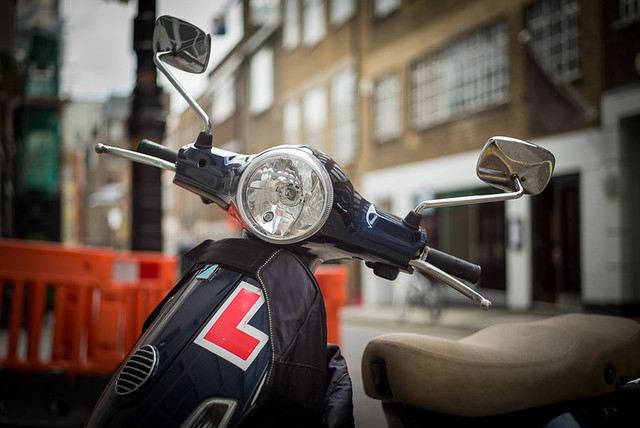 |
Taken using the Leica M and 50mm Summicron lens @f2.8 1/250th sec ISO 320
Minor adjustments for exposure in Lightroom |
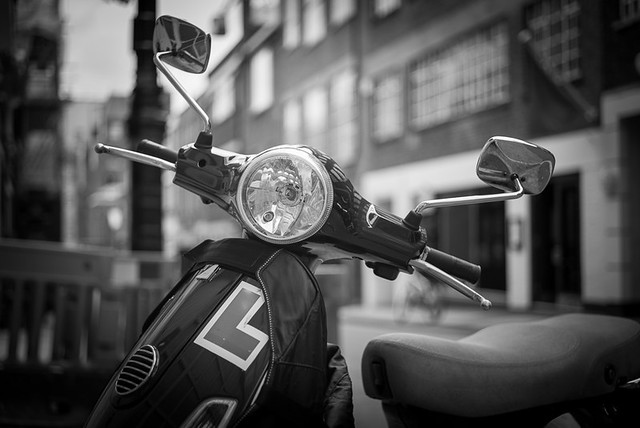 |
Same RAW file converted to black and white in Lightroom
The distracting ‘red’ elements in the colour image are lost in the mono version which is
probably why I prefer to work in black and white. |
Back at The Akademie we downloaded a few shots and looked at them in Lightroom, but given limited time it was almost impossible to compare the results of the two cameras and for that pleasure I would have to wait until I returned home. At this stage I rather expected the sales pitch to start, but I was delighted when it didn’t happen. Robin clearly respected the fact that this would be a major expense for any one of us and time would be needed to make the correct buying decision, not just which camera to buy (if at all) but also which lens or lenses. We said our goodbyes and I am very grateful to the Leica Store in Mayfair and of course to Robin Sinha for his advice, time, expertise and knowledge, not to mention of course the opportunity to shoot with such wonderful equipment. Whether I choose to buy a Leica or not, I will always remember the experience and if nothing else I have a number of images which will remind me of the day!
Detail in the shadows
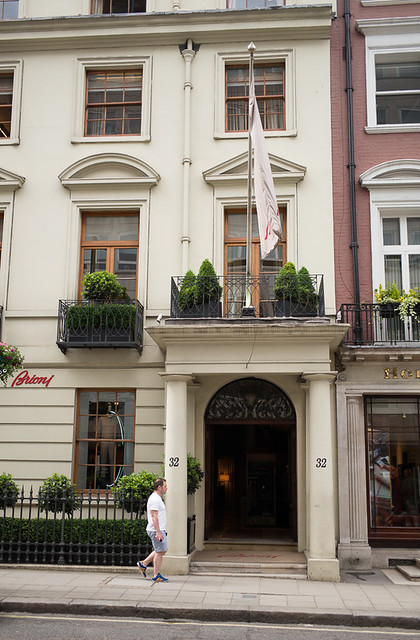 |
| Taken with the Leica M and 35mm Summicron @F2 1/1000th sec ISO 200 |
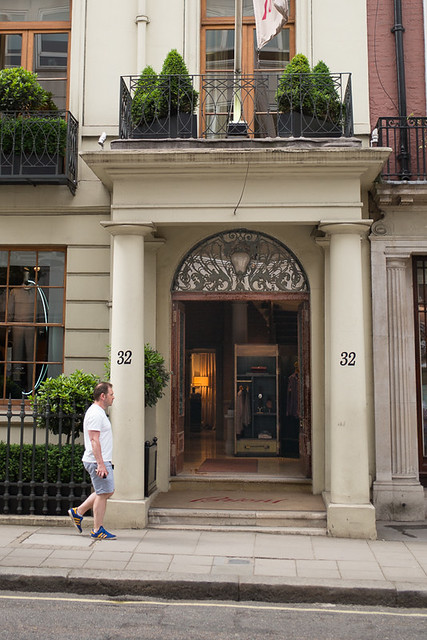 |
| A straight crop in Lightroom from the image above with a mask and exposure adjustment in the doorway to bring back all the detail in the shadow areas. |
I have included some of the shots taken during the afternoon together with some data and brief comments. This information together with a closer study of other images will help make up my mind. There is no question that both cameras produce wonderfully detailed images, although the Monochrom in my humble opinion just has the edge. It also has the ability to take shots at ISO 10,000 in extreme circumstances. Whilst a little noisy at 10,000 the grain is more film like and can be reduced in post processing. This extra latitude could be useful in low light situations. In comparison I would say the maximum usable ISO on the M is between 1600 and 3200.
Remarkable resolution from the Leica Monochrom
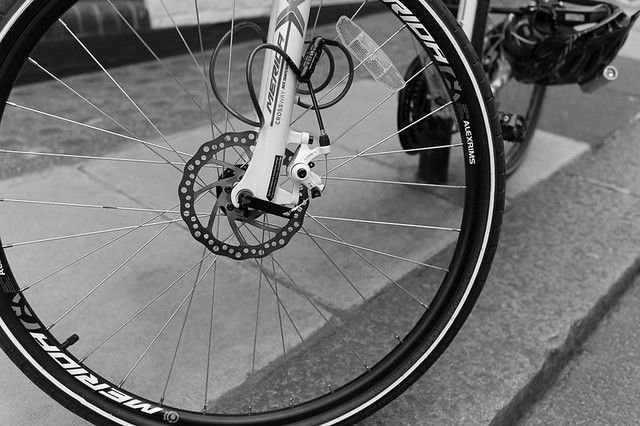 |
Taken with the Leica Monochrom and 35mm Summicron lens @ f4.8 1/750th sec ISO 320
The RAW file straight from the camera with no adjustments |
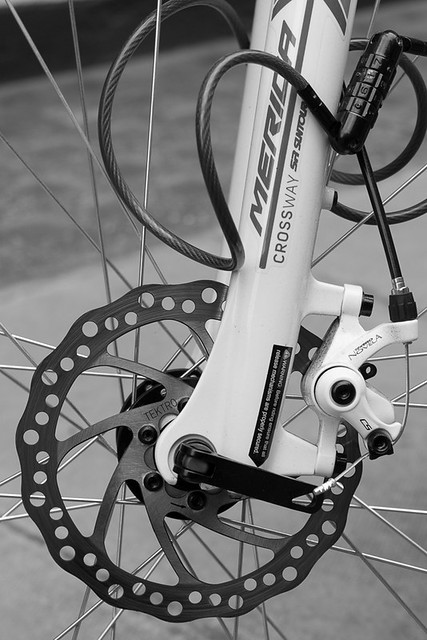 |
| A 100% crop of the above image. the detail is astonishing. |
Comparison between colour and mono conversion from the Leica M and
straight black and white from the Leica Monochrom
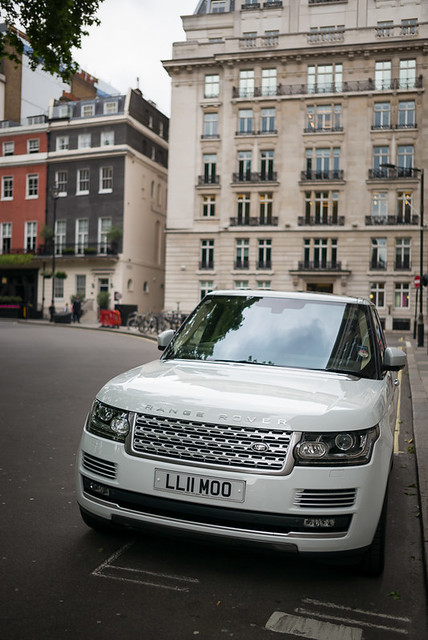 |
Taken with the Leica M and 35mm Summicron lens @ f2.4 1/1500th sec ISO 200
Minor adjustments for exposure and colour correction in Lightroom |
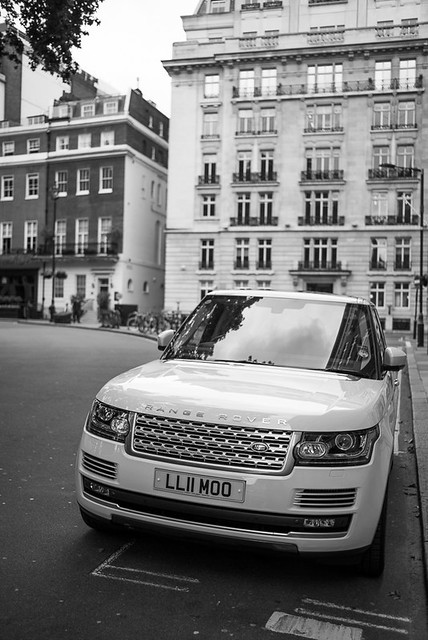 |
| As above but straight conversion to black and white in Lightoom |
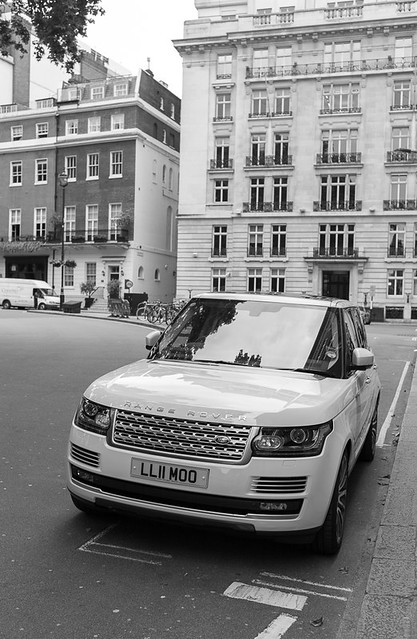 |
The same Range Rover but this time taken with the Leica Monochrom and 35mm Summicron @ f4 which explains why there is more detail in the background.
Minor adjustments in Lightoom to bring back some shadow detail. |
In conclusion the M is the better all round camera, The functionality is better, live view is useful and it just feels more modern without losing the simplicity of a Leica Rangefinder. It also takes colour photographs but so does the camera I use at the moment! The Monochrom has more than its fair share of quirks but it also produces the very finest black and white digital images. In this respect alone the M comes close and probably close enough from my point of view. I now realise that to master a Leica Rangefinder and in particular the Monochrom would be hugely rewarding. With either camera a large print would show every small detail and whilst the end result matters, it’s also terribly important to enjoy the journey along the way as well. Photography for me is a hobby, and most of all it should be fun. If I do buy a Leica then my head tells me to go for the M, but my heart leads me to the Monochrom!
A fellow photographer once said to me that in order to get the best possible results from your equipment you should ‘love’ your camera, and perhaps there lies the answer. I will finish with that thought but I am sure to return to this topic in the near future.
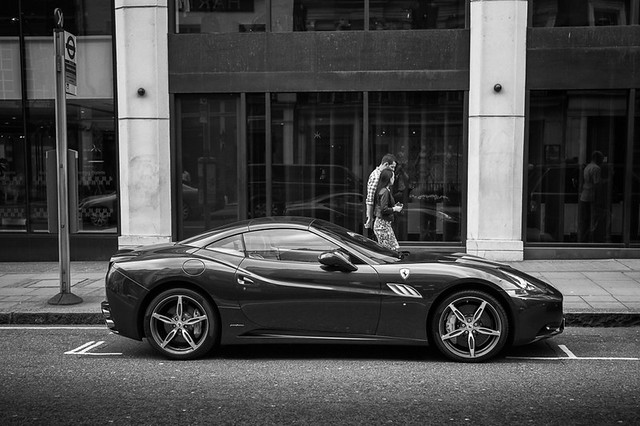 |
Ferrari California
Taken with the Leica Monochrom and 35 Summicron lens @f2.8 1/3000th sec ISO 2500
A crop in Lightroom and some adjustments in Silver Efex Pro2
I couldn’t resist capturing this thoroughbred sports car
with a truly thoroughbred camera – The Leica Monochrom |

 alan frost photography