Posts tagged ‘Wales’

The appeal of ‘light on dark’ in Snowdonia
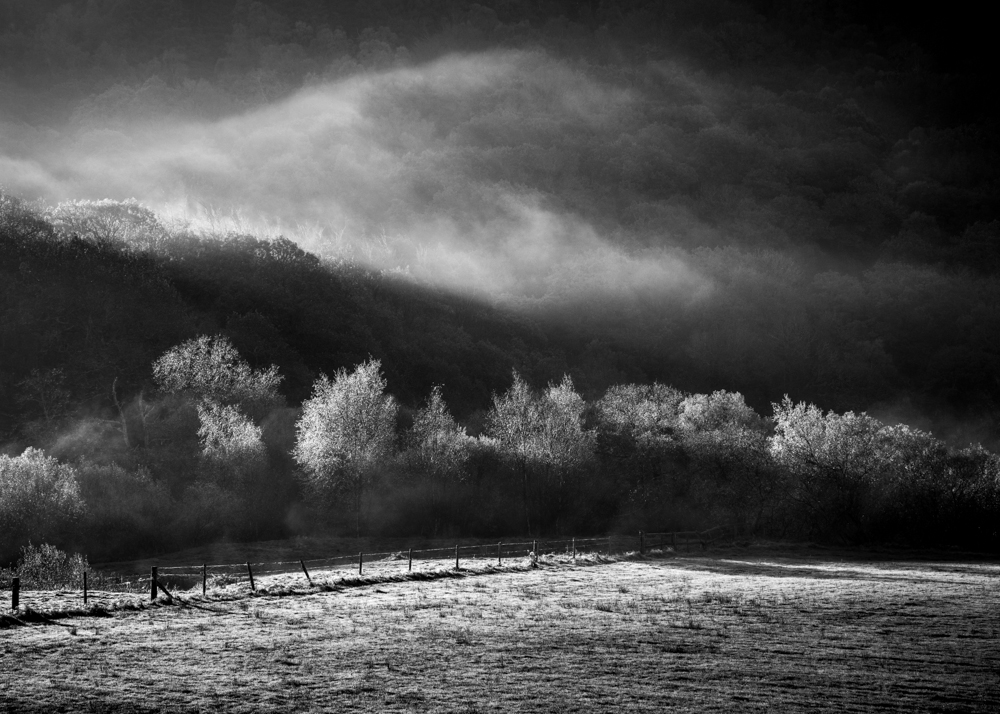
Burning mist

Burning mist


What makes a good black and white photograph? There are of course many answers to this question, so for this post I want to concentrate on one particular aspect and that is the use of a light subject set against a dark background. Put another way it is the natural contrast between two key elements of a composition. Finding suitable subjects in the landscape is not necessarily that easy and may require side lighting or even back lighting to give the desired effect. I have chosen four images for this post all taken on my recent trip to Snowdonia.

Blessed on a number of days with lovely sunshine, the chances of capturing a ‘light on dark’ image were improved as the bright light increased the amount of contrast. Exposing in such conditions can be a challenge, as it’s vital not to blow the highlights but I still wanted some shadow detail which I could bring out later in post processing. There are though occasions when I don’t want any shadow detail and the blacks can be deep, dark and even mysterious as they provide no information to the viewer whatsoever. This technique may not always be appropriate for a landscape image but even so, the contrast between light and dark can be enhanced when required from a purely artistic point of view.

The first image at the top of this post was taken as the last of the early morning mist was being burnt off by the strengthening sunshine which was still low in the sky. The light is coming from about 10 o’clock (from where I am standing and pointing the camera), but had the sun been behind me this shot would not have worked. It totally relies upon the light coming from a certain direction to illuminate the autumn leaves on the tress, so they stand proud of their darker background. Do click on the image to view a larger version as you will see there is still detail in the back drop of trees which are shrouded in mist.


Llyn Dias

Llyn Dias reflections


In the second image the light is coming from the left. Like the first shot it was taken fairly early in the morning. The sun lights up the fence and the trees, which like the first image stand out against the dark background. The water in the foreground is reflective adding another dimension to the picture.
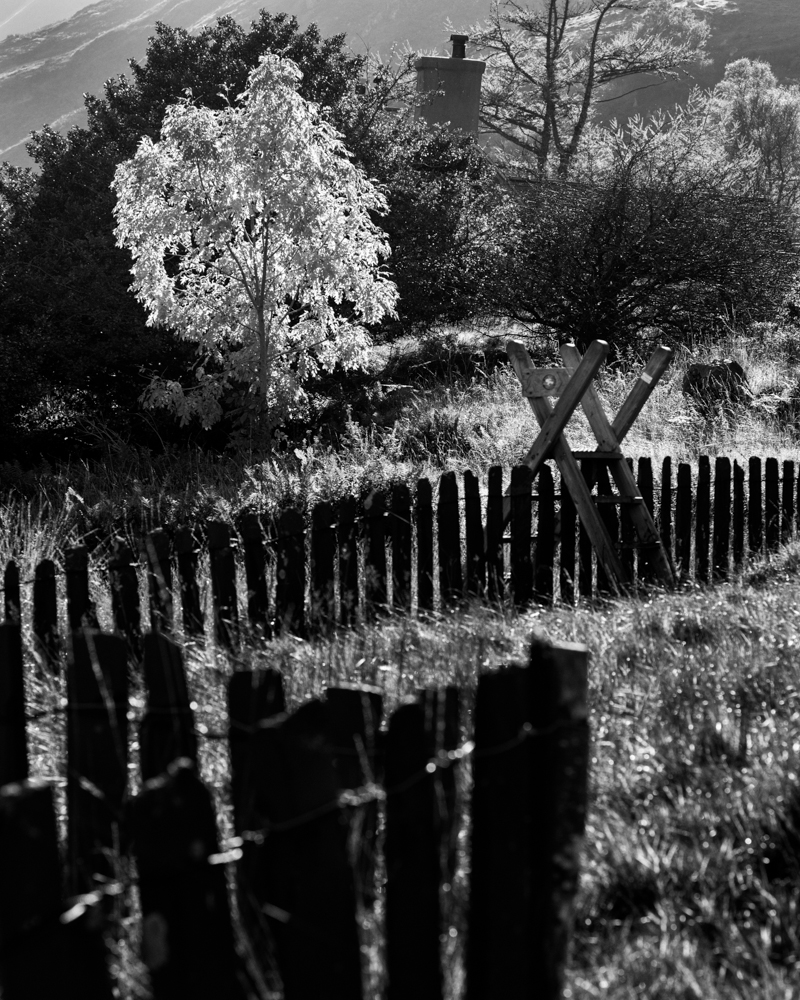
 

Tree of light, Nant Ffrancon

Tree of light, Nant Ffrancon


The third image, above, is I think a very good example of ‘light on dark’ and why this type of shot makes a good monochrome photograph. Here I have focused on the tree in the top left of the frame. The yellow leaves catching the bright sunlight, creating virtually a silhouette of light against the darker tree behind it. The wire and slate fence leads your eye into the picture but being out of focus and dark does not detract from the brightness of the tree. This time the light was coming from about 2 o’clock. Personally I like the chimney, it just adds another point of interest but is still secondary to the main event.

Lastly I had to include a picture a sheep. How could I visit Wales and not have a sheep shot? Not literally of course, just photographically speaking! It’s not the greatest image taken on my trip but it does once again illustrate that the natural contrast between the subject and the background works in black and white. In colour this picture really wouldn’t be very pleasing to look at. What is critical to this shot is the detail which has been retained in the highlights in the sheep’s coat. A minimal depth of field has also been used to blur the background.
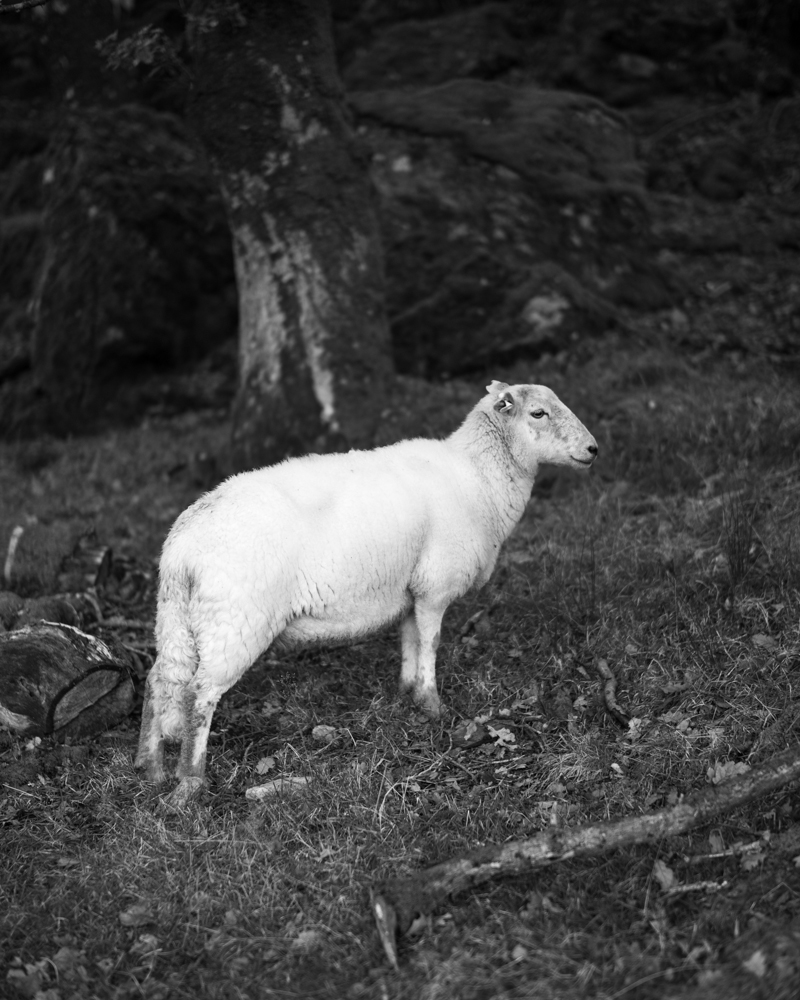
 

Welsh sheep

Welsh sheep


As mentioned earlier, all of these images are worth viewing ‘large’, so do click on each one to see the photograph in a new window.


Creative use of depth of field in Snowdonia

Sunlit fern

Sunlit fern


It was not until the summer of last year that I finally decided to go full frame, and purchased a second hand Leica Monochrom. I had previously used APS-C (Nikon) and Micro 4/3rds (Olympus) cameras. One of the principal reasons for my decision was the potential to use minimal depth of field more creatively in my work. The combination of a full frame (35mm) sensor, coupled with a large aperture, has given me photographic opportunities which were simply not possible before.

However just blurring the background doesn’t necessarily giving a pleasing result. The out of focus areas are still important to the overall appearance of the image. Blurred shapes, tones and arrears of light of shade still influence how the image is viewed, even though the eye may initially be drawn to the main subject of the picture which is in sharp focus.

The main photograph I have included in this entry is I think a good example of what I am trying to say. Taken on my recent trip to Snowdonia, the bright early morning sun was shining on small area of bracken in a wooded glade, whilst a path in the middle ground weaved its way down to the waters edge of Llyn Dinas.  I tried to visualise how the background elements of the image would be rendered when out of focus and whether or not the shapes of the trees would enhance the overall composition. You can of course try and visualise what the image might look like if everything had been in focus. I didn’t take a shot with a small aperture opening so I cannot make this comparison. My feeling is that there would be too much going on. The foreground and background would be fighting for attention. By using a narrow depth of field I have been able to isolate the sunlit fern which is the principle point of interest. The blurred background informs the viewer about the setting, complimenting the main subject and enhancing the overall appearance, but in my opinion it is no longer a distraction.

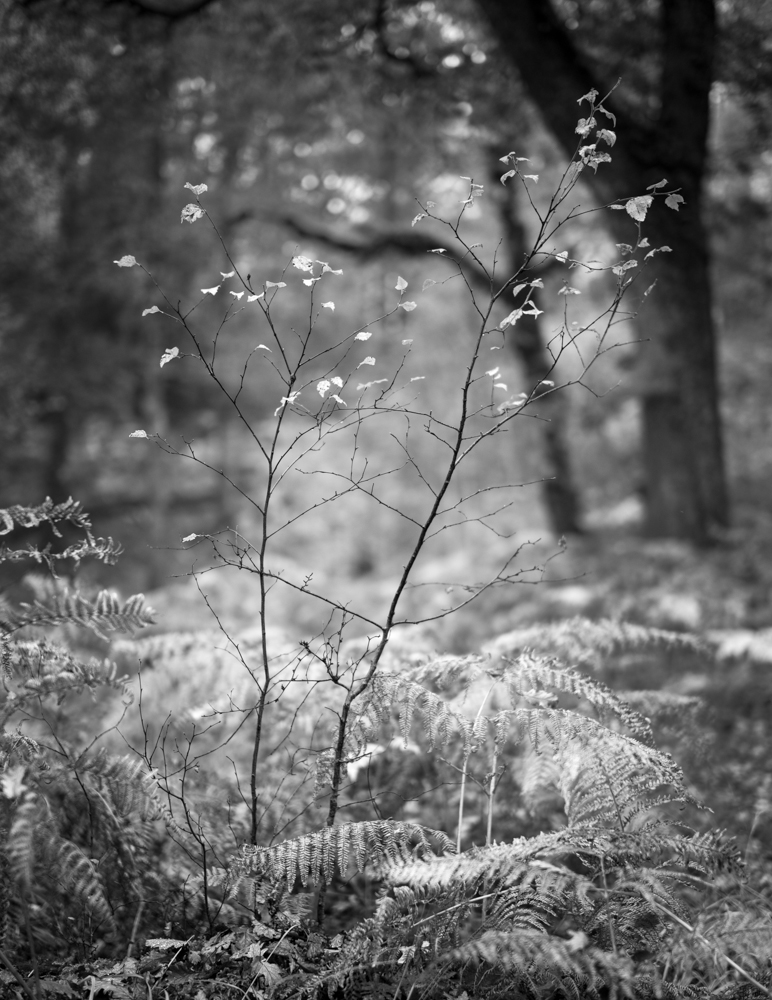
Here is another example – This image was taken in the woods near Capel Curig.


Autumn saplings

Autumn saplings


I am not saying there isn’t a place for landscape images which are very sharp from front to back. I take a good many myself, but increasingly I prefer to shoot wide open (50mm at f1.4) and by doing so I add another dimension to the composition, which until last year was not possible.

Click on either image to view a larger version which will open in a new window. By doing so I think you will appreciate the photograph just that little bit more.

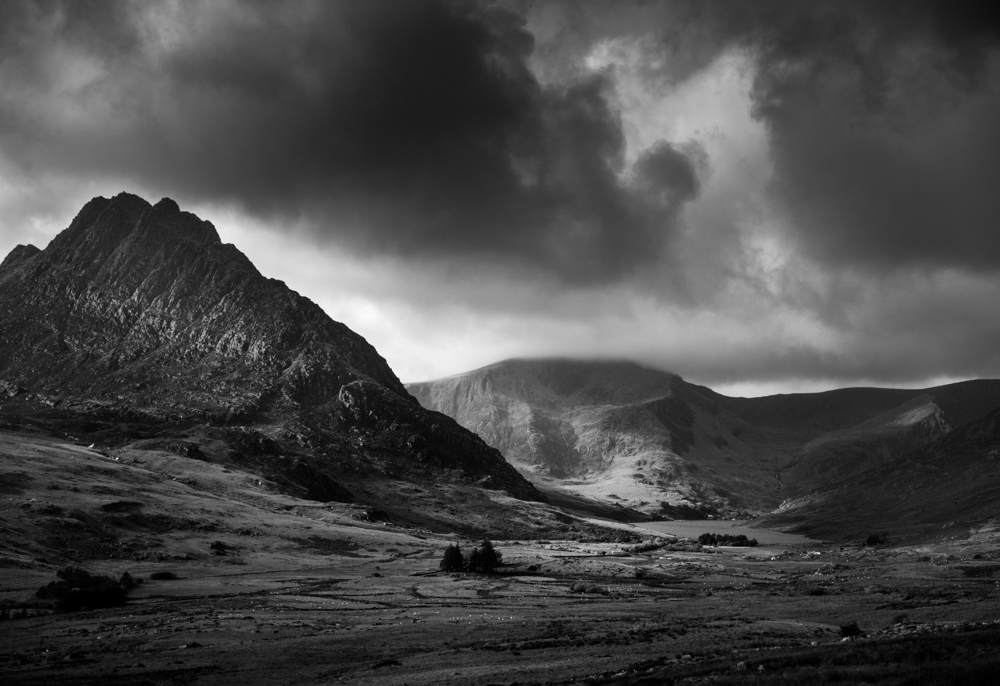
Tryfan – a majestic mountain in Snowdonia

Tryfan

Tryfan

Never having been to Snowdonia in Wales before, my mind conjured up an image of what I might expect to see. Mountains certainly, deep valleys, yes of course, brooding clouds and light casting its spell on the landscape; well hopefully all of these combined in one picture.

With this imaginary view in my mind, I was delighted to make this photograph of what must be one of the most majestic mountains in Snowdonia, apart perhaps from Snowdon itself. Tryfan is just over 3,000 feet high and its dramatic profile leads the eye down towards Llyn Ogwen, a lake which lies at the foot of this rocky peak.

From a vantage point on the northern side of the valley I waited for the morning light to break through the clouds, illuminating the lake and the valley in the distance – and the view I had visualised became a reality.

At the mountain’s peak there are two monoliths, which from the valley floor given the appearance of two people who have reached the summit. They are called ‘Adam and Eve’ and are only 1.2 metres apart. For those brave enough to step from one rock to the other, it is said that you gain the ‘Freedom of Tryfan’.

I’m no climber so I am just happy to admire ‘Adam and Eve’ and Tryfan from a distance!

To view a larger version click on the image.

Snowdonia – It’s all about the light

Llyn Dinas

Llyn Dinas

I have just returned home from Snowdonia in Wales, having been on an excellent, inspiring and very enjoyable workshop lead by Andy Beel FRPS and David Mills FRPS, together with three other participants.

The workshop was called – ‘It’s all about the light’ and it couldn’t have been a more apt description. We we were incredibly fortunate with the weather. Apart from some overnight rain we were out and about all week, stayed dry, and towards the end of the week it was quite simply wall to wall sunshine; not a cloud in the sky and very mild given the time of the year. This did mean that occassionally we had to work in high contrast conditions, which is not always ideal for photography, but my philosophy is that you make the best of what you are given, and who could complain when you are surrounded by such a truly beautiful landscape.

Selection and post processing of the best images now begins, but this may run for many weeks and probably months, given that I only have a limited amount of time to sit in front of a computer screen. As we discussed on the workshop it can be a good thing to give this time, and come back to the images later when you may see things differently. That’s not usually my style but with so many images to consider, it may have to be this way out of necessity and not out of choice.

For the time being here is one image taken by the shore of Llyn Dinas.

Do click on the image to view a larger version.

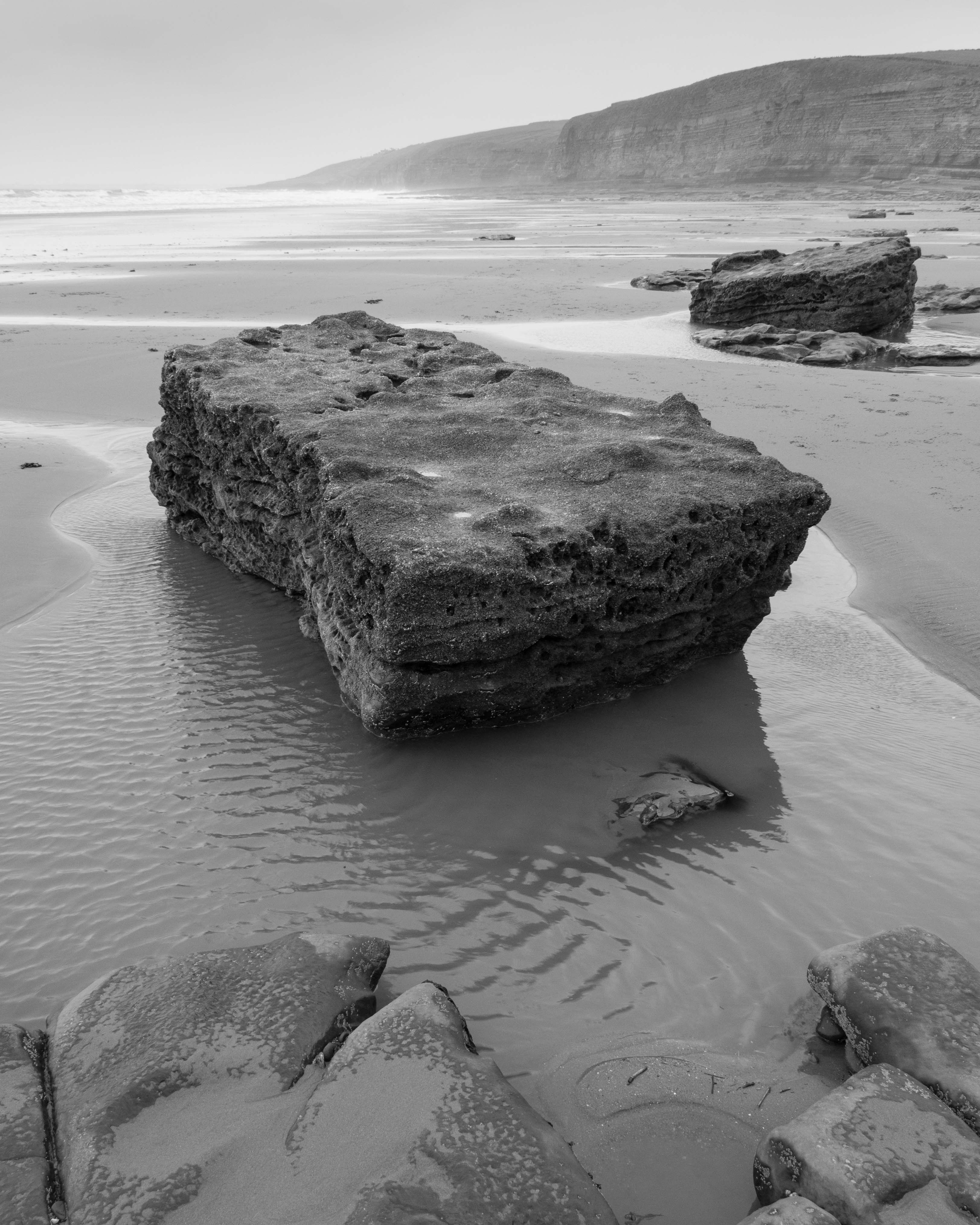
Dunraven Bay – a brief visit


Dunraven Bay is situated on the south coast of Wales in the Vale of Glamorgan. The bay itself faces west and is also known as Southerndown beach after the nearby village.

I visited this lovely coastline on a cold and windswept afternoon at the end of March. I was fortunate to find the tide was out, revealing the sands and rocks which make this such an interesting place to photograph. With the weather as it was there were only a few people around, just a handful of walkers and their dogs to leave their foot and paw prints in the sand.

I tried to imagine what it would be like mid summer, in warm temperatures and blue skies. The car park would be full, families would be enjoying the lovely beach, children rock pooling and building sand castles. The surf would also attract windsurfers and others who enjoy their water sports. For me though, I enjoyed the isolation, free to wander and explore, and take shots of anything which took me eye. Rarely did I have to wait for people to move out of the frame.

I hope you enjoy the selection of images shown below. To view a larger version click on the image and it will open in a new window.