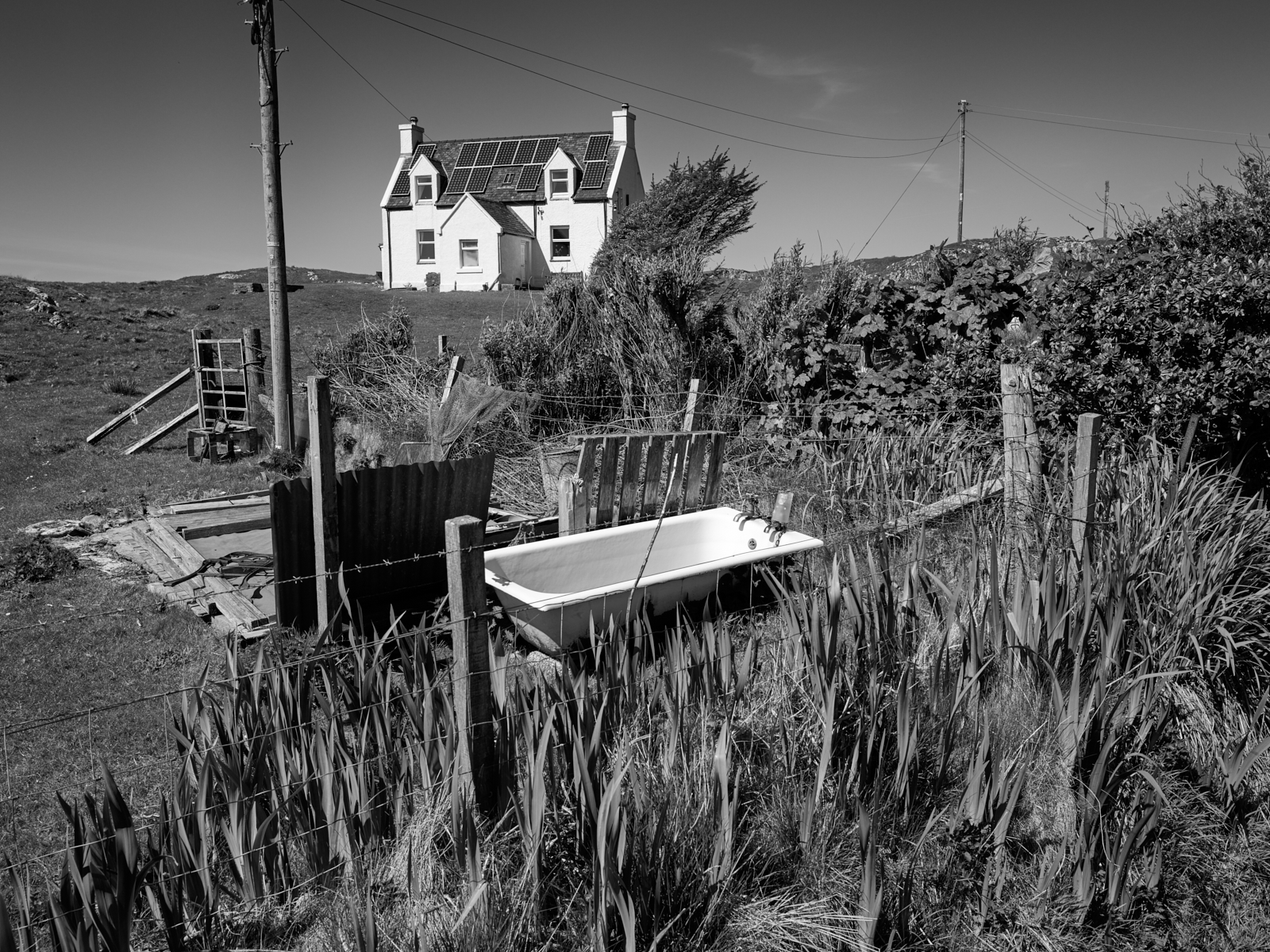
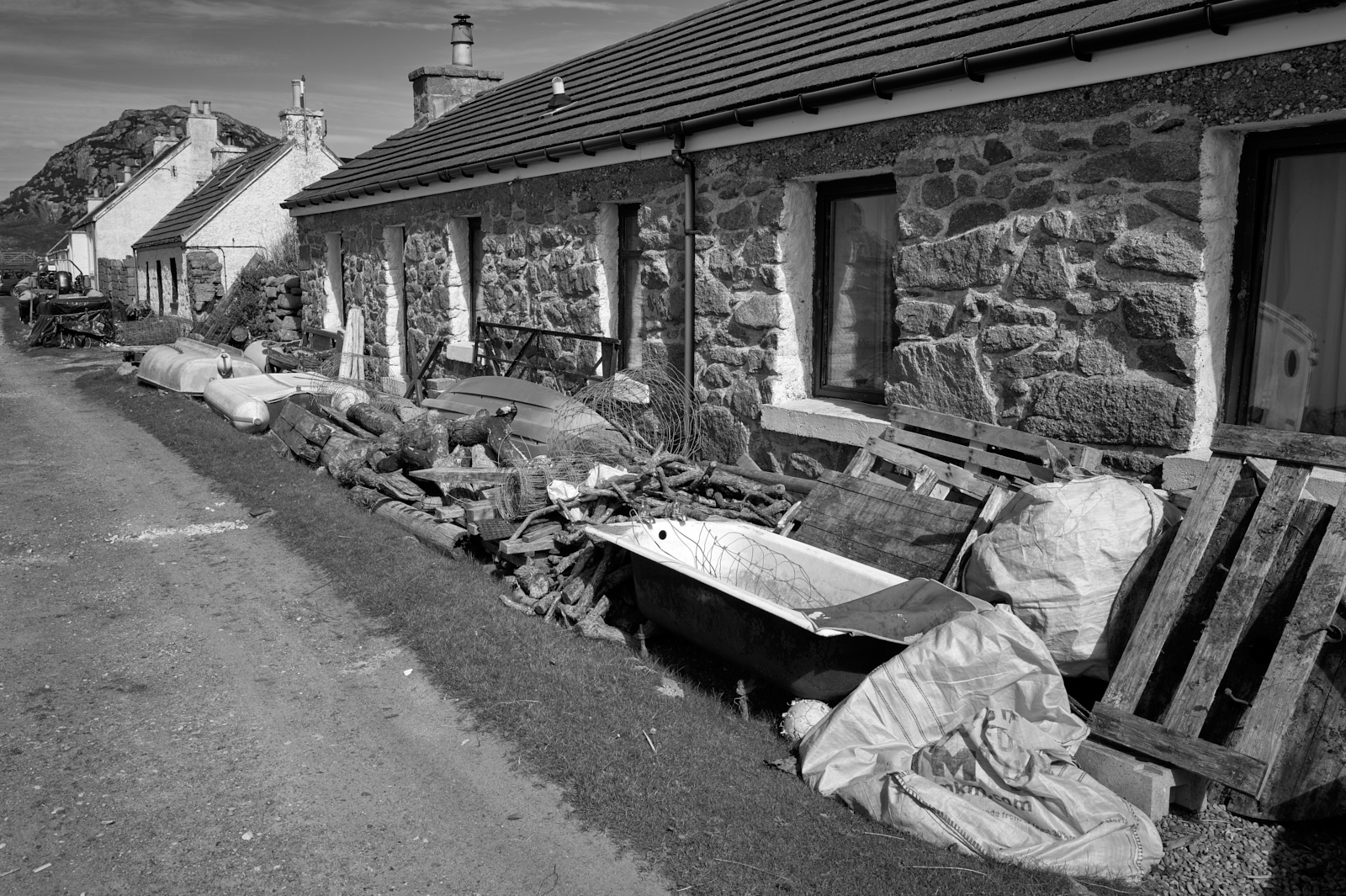
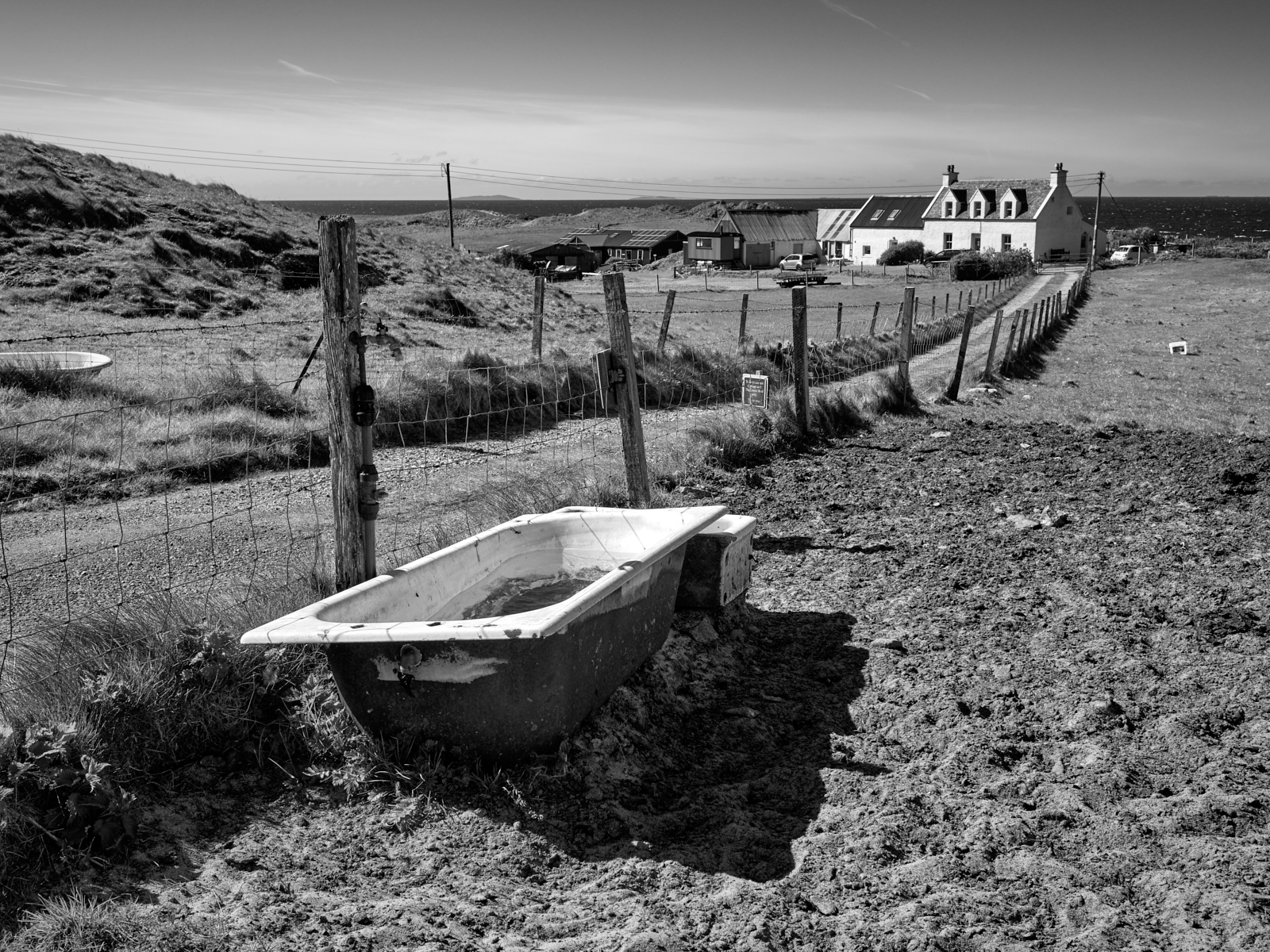
By way of something different I couldn’t help but notice the number of old baths dumped on land or outside a property. I guess some are repurposed, cattle troughs for example, but there is probably another explanation. From Fionnphort at the western tip of the Ross of Mull it’s a four hour round trip to the nearest recycling centre just outside the town of Tobermory in the north east corner of the isle!
Here are links to Parts One and Two in this series.
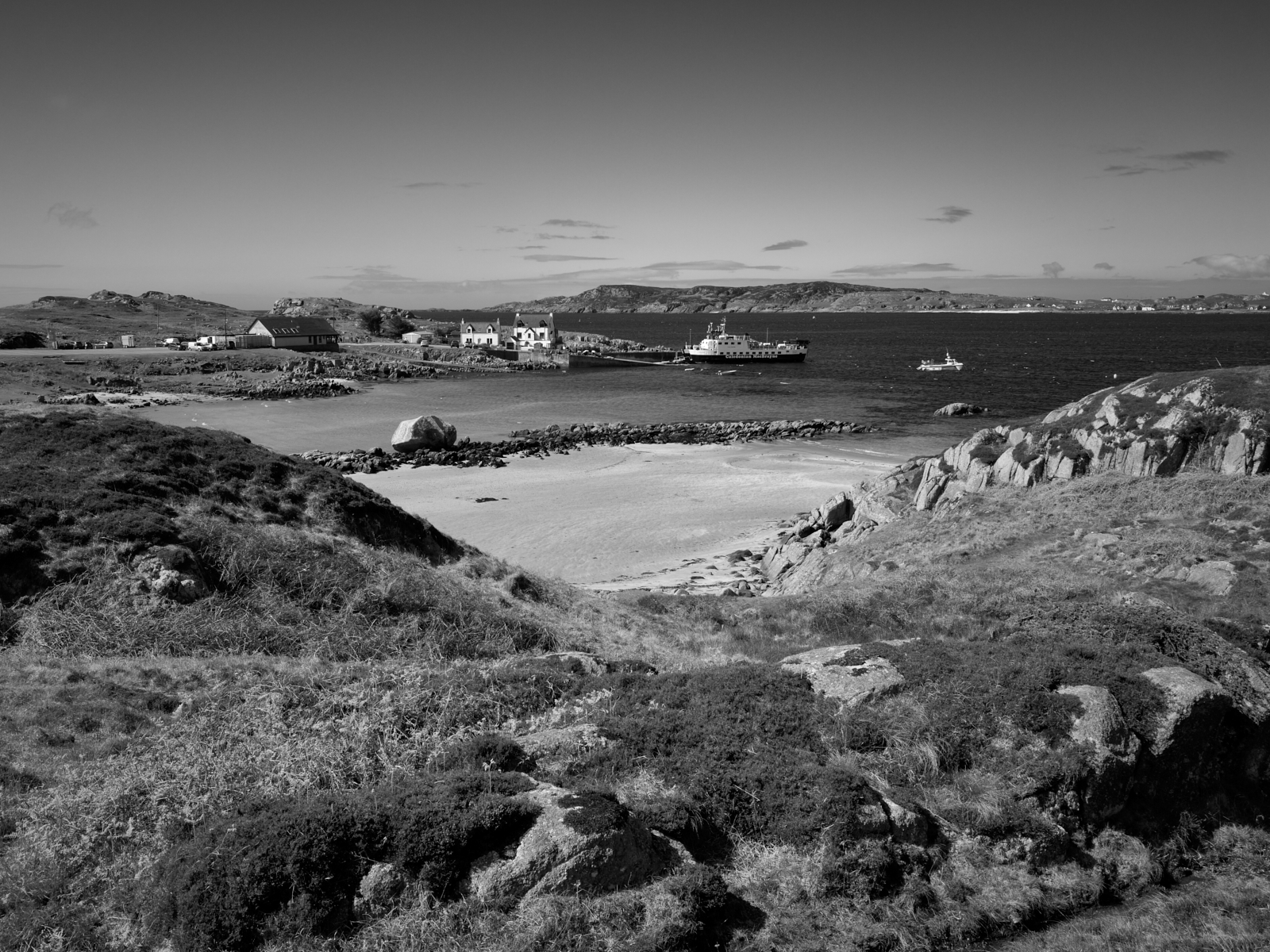
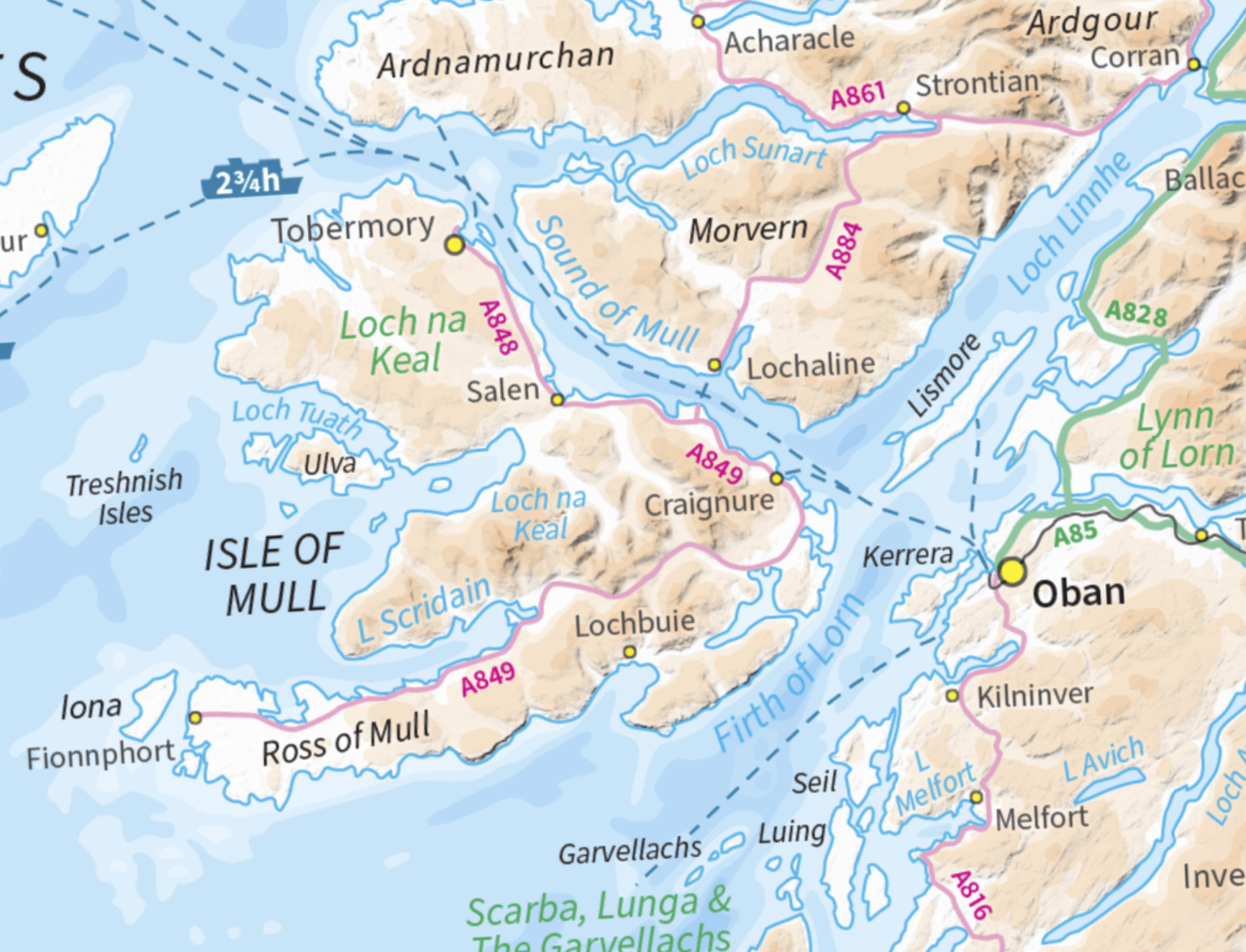
The ferry crossing at Fionnphort at the end of the Ross of Mull
For many centuries The Isle of Iona has been a cherished destination for pilgrims wishing to visit the Benedictine Abbey and experience for themselves the beauty, peace and spiritual nature of the Isle. It was on this isle that St Columba and his disciples first landed in 563AD, having rowed from Ireland in a currach, a small boat with a wooden or wicker frame covered in tarred animal hides. There is much speculation as to why the Irish Saint, then known by his Irish name as Colm Cille, meaning “Dove of the Church”, made what would have been this tortuous journey. But in doing so he spread the word of Christianity in Scotland and further afield.
The Isle of Mull with Iona at the western tip ofthe Ross of Mull
Even today using modern means of transport it requires a fair amount of effort to reach Iona. From Oban on the Scottish mainland a ferry crossing of about an hour docks at Craignure on the Isle of Mull. An hour and a quarter long drive along the A849, albeit a mainly single track road leads to Fionnphort. From there another ferry crosses the Sound of Iona in ten minutes. These ferry crossings are very weather dependent, so once you arrive on the island the feeling of isolation on Iona is tangible. Keep in mind it is only 3 miles long a 1.5 miles wide. When Samuel Johnson and James Boswell famously toured the Western Isles and the Hebrides in 1773, they reached Mull via the Isle of Coll. A significant and challenging adventure given the journey on land would have been horse and carriage.
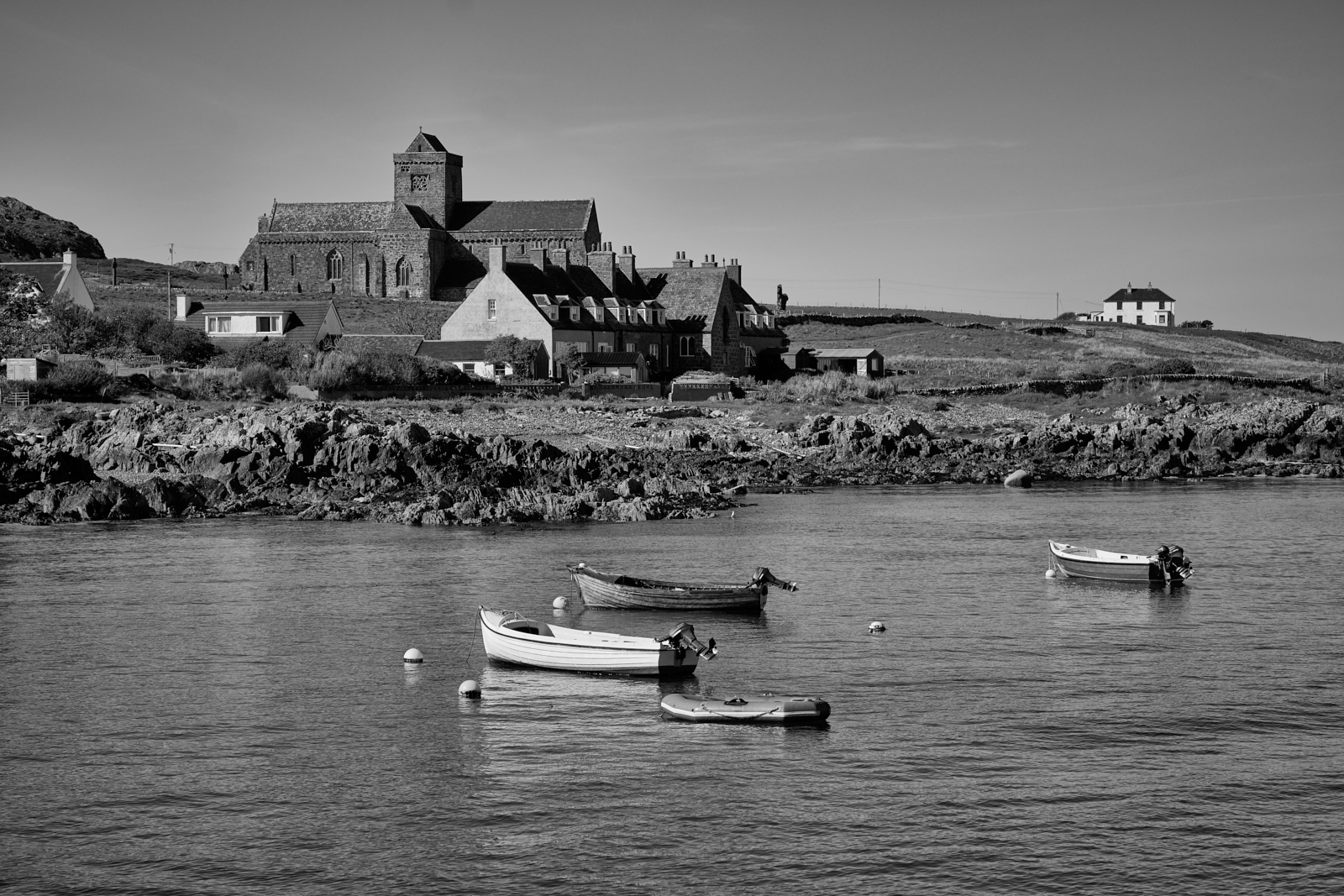
A much photographed view of the Abbey from the Sound of Iona
Earlier this year my wife and I had the good fortune to return to this very special and beautiful place; The Isle of Iona forms part of the Inner Hebrides in Scotland and lies at the western most tip of the Isle of Mull. We stayed in a small property in Fionnphort and overlooked the Sound of Iona. From our accommodation for the week we could see the small ferry port and observe the regular sailing of the Caledonian MacBrayne ferry as it made the 10 minute crossing. We were blessed with lovely weather although that did have the effect of increasing the number of visitors.
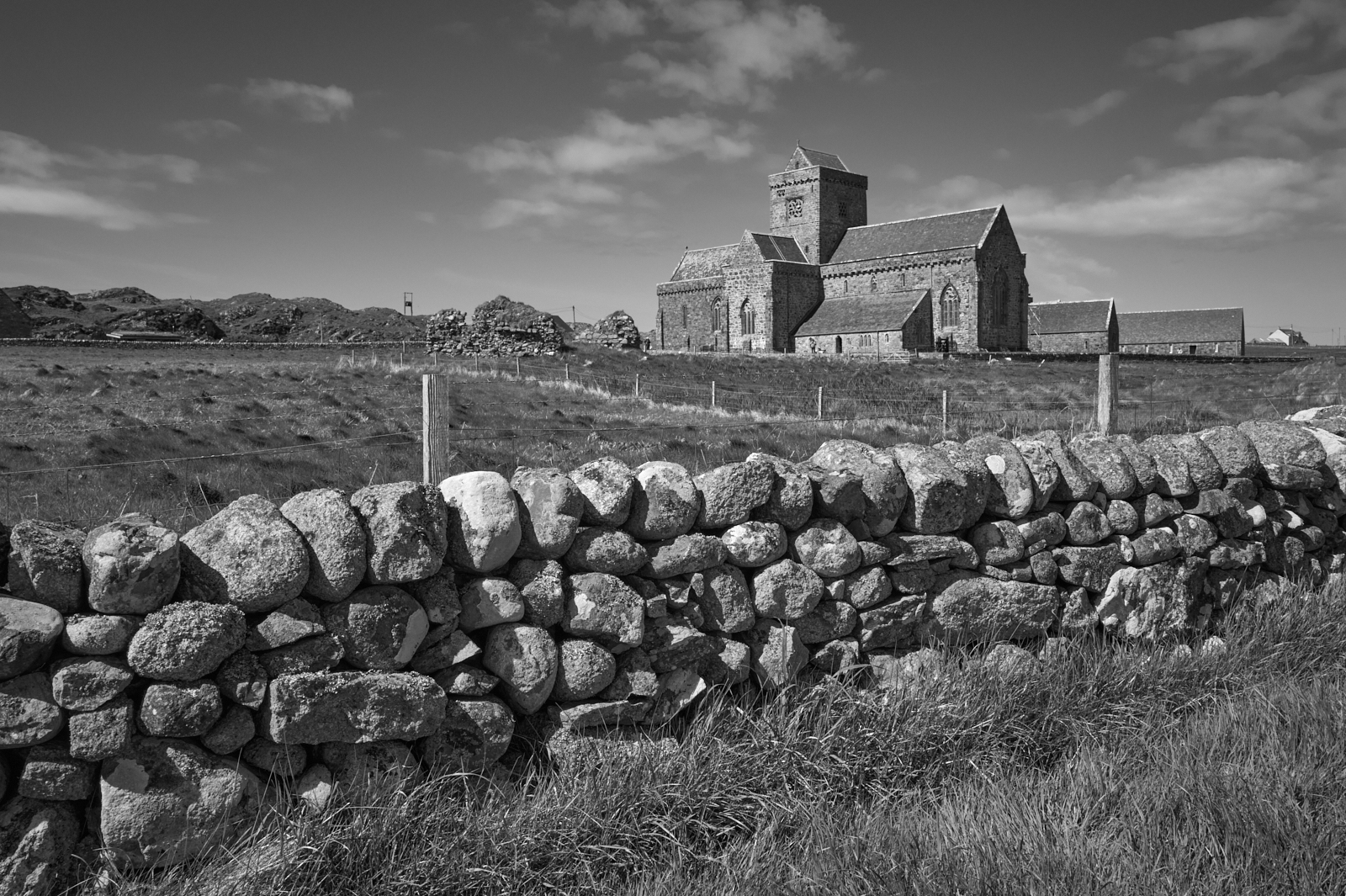
Iona Abbey
As you might imagine there is considerable history attached to the Island and in particular to the Abbey. Too much in fact for me to describe in any detail here, suffice to say that the Sacred Isle became the hub for early Christianity as missionaries spread the word across northern Britain. The original celtic monastery founded by St Columba no longer exists and the current Abbey dates from the 13th Century, although monastic life ended in 1560 with the protestant reformation and the building was left derelict. Restoration only took place in the early part of the 20th Century before final completion in 1965.
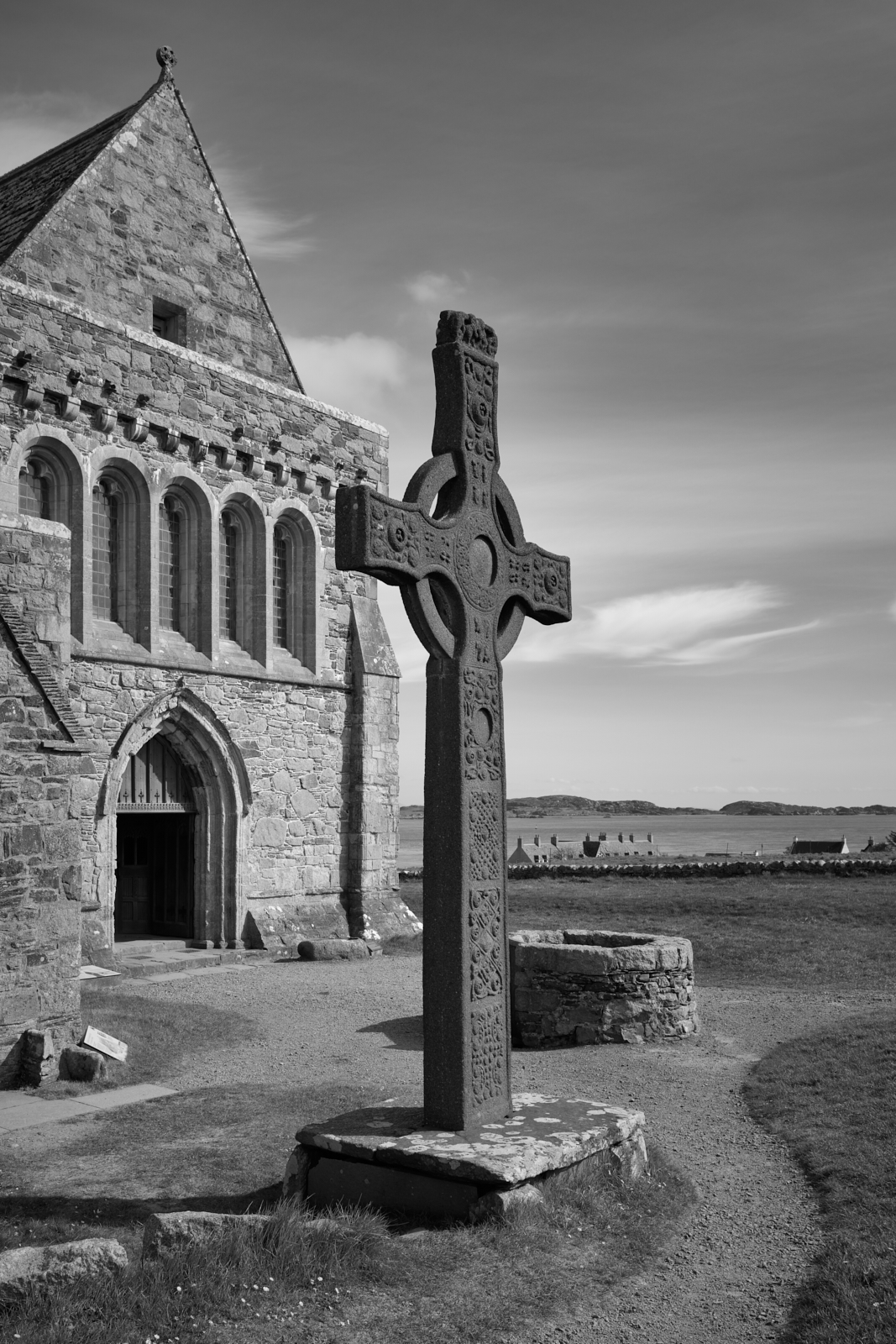
A replica of the 8th Century St John’s Cross – what remains of the original cross can be seen in the Abbey Museum
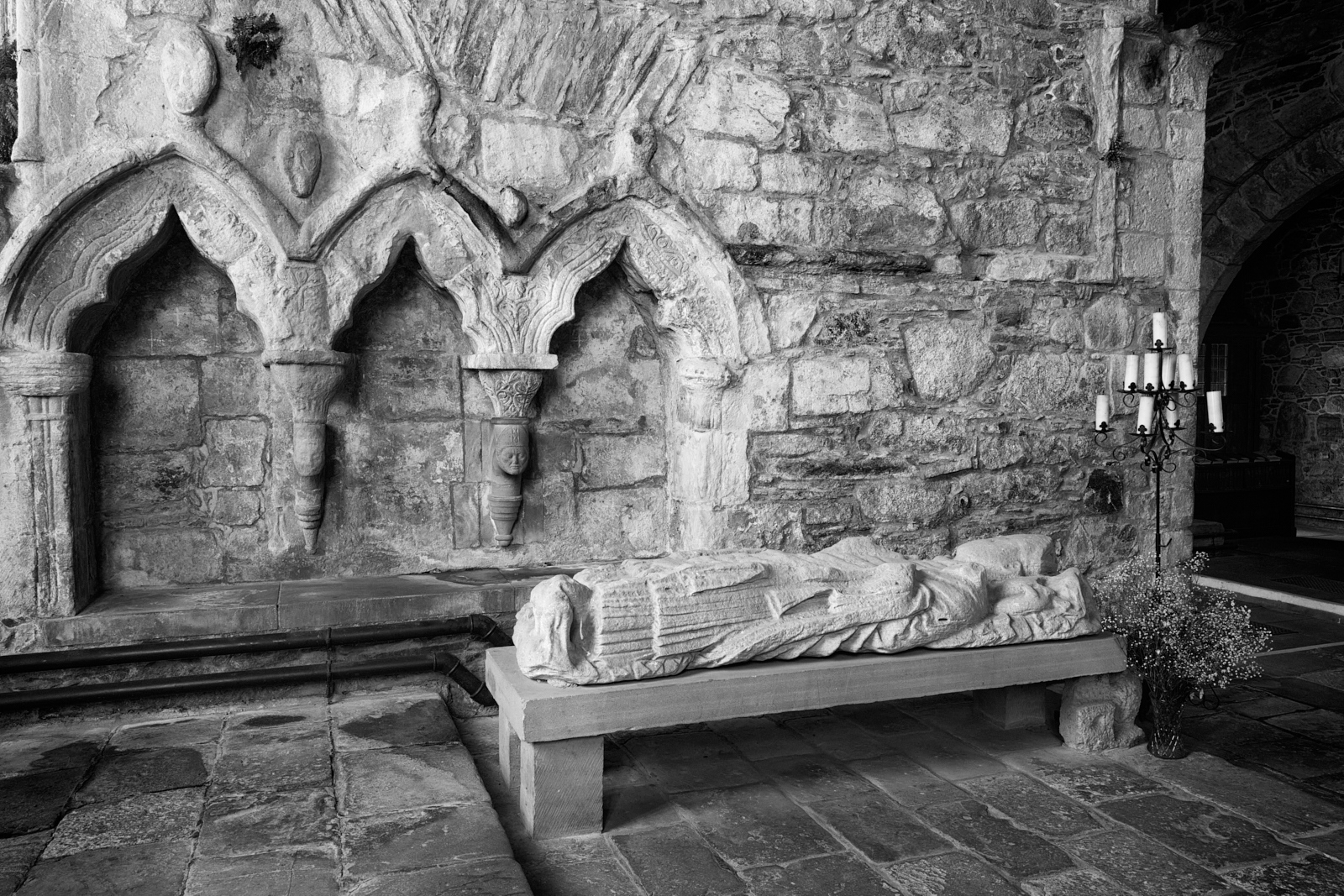
Medieval stonework in the Chancel
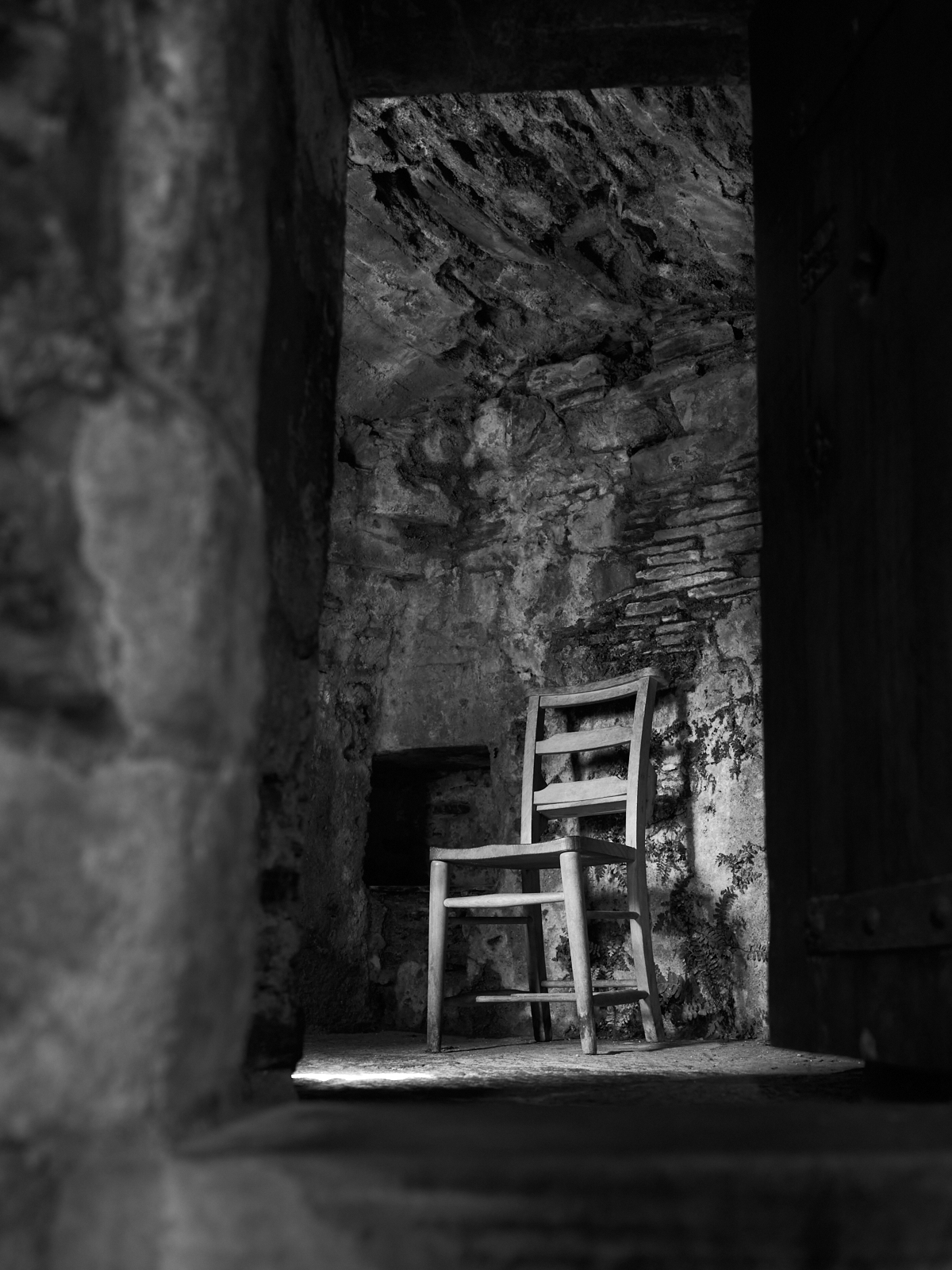
Interior detail – notice the ferns growing out of the wall
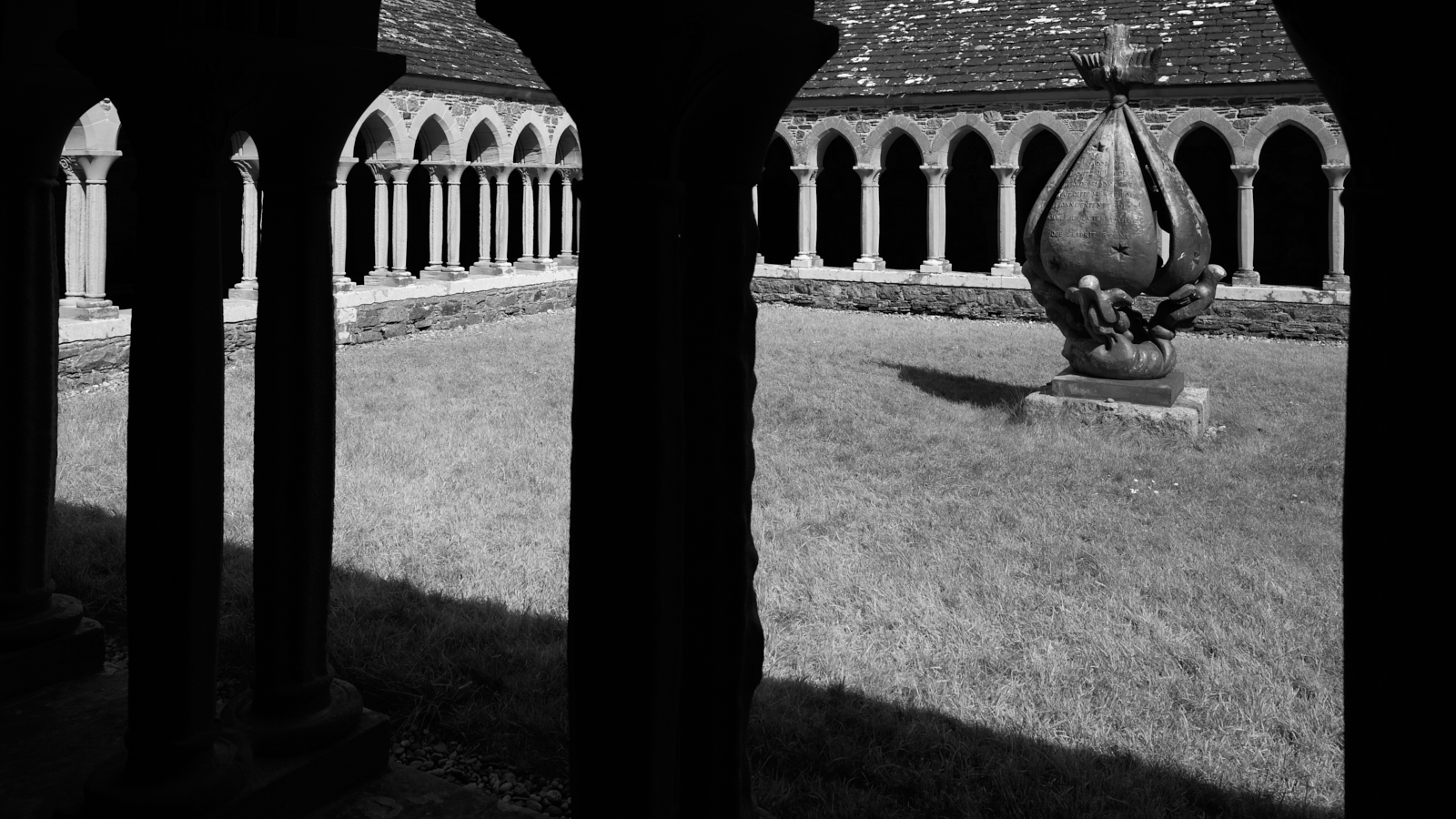
The Abbey Cloisters
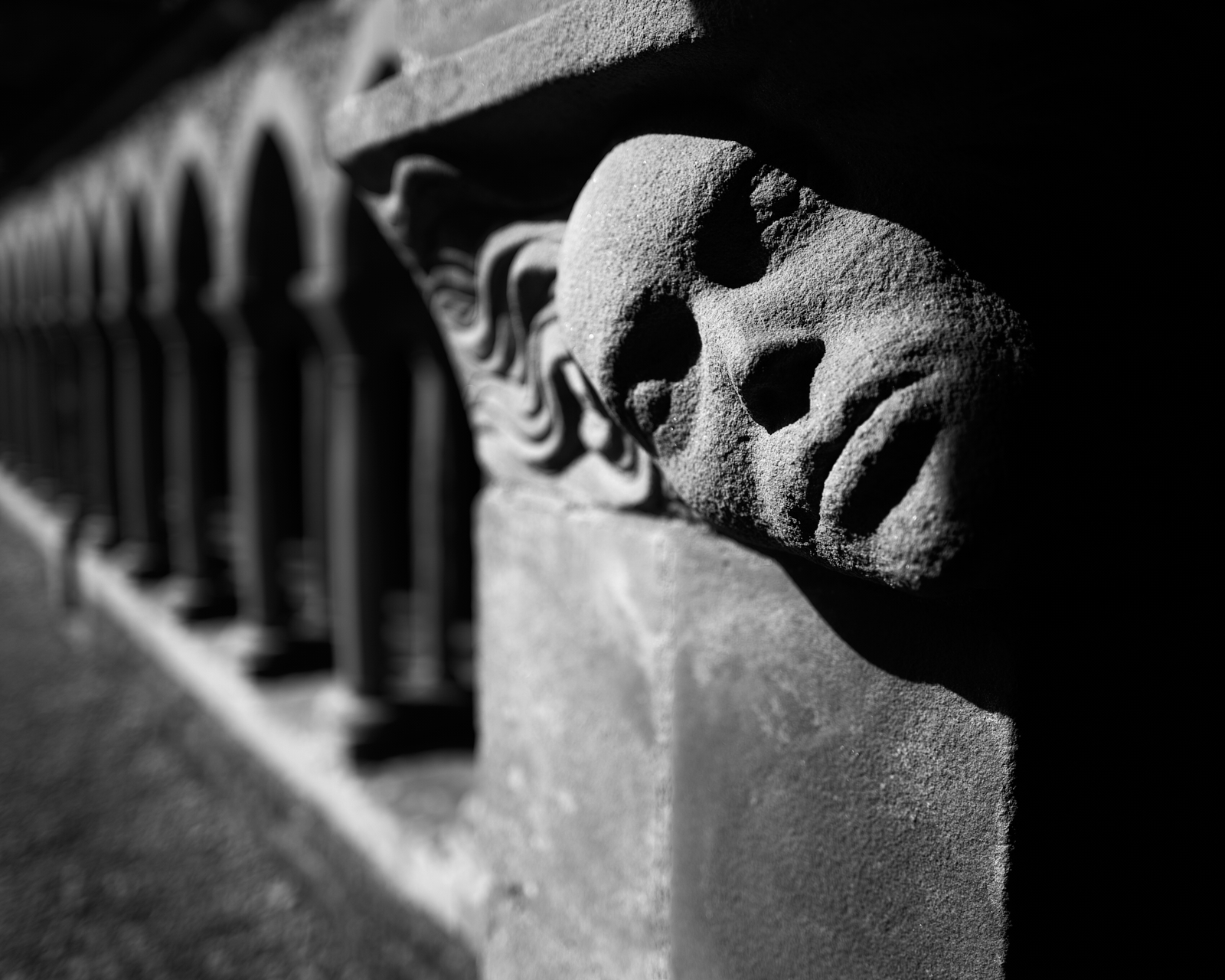
Detail of one of the many stone carvings in the Cloisters – Alpha and Omega
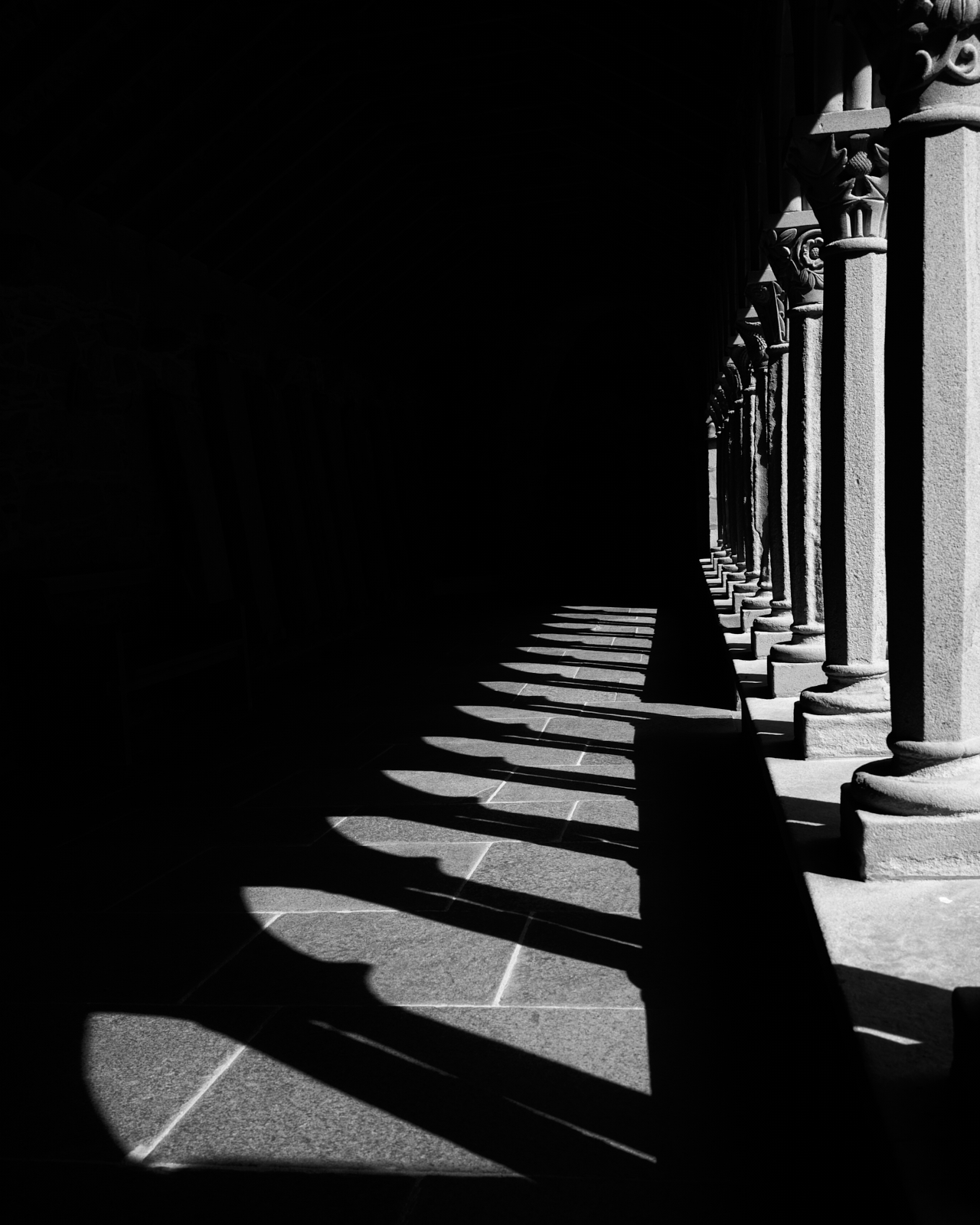
Light and darkness in the Cloisters
During the Dark Ages Iona was the subject of many raids by the Vikings, mainly in the 9th Century and the graveyard of St Oran’s Chapel was used as the final resting place for many local clan chieftains and ‘Kings of the Isles’. During this period the island also became a leading artistic and scholarly centre, known for its carved stone crosses and illuminated manuscripts which included the famous Book of Kells.
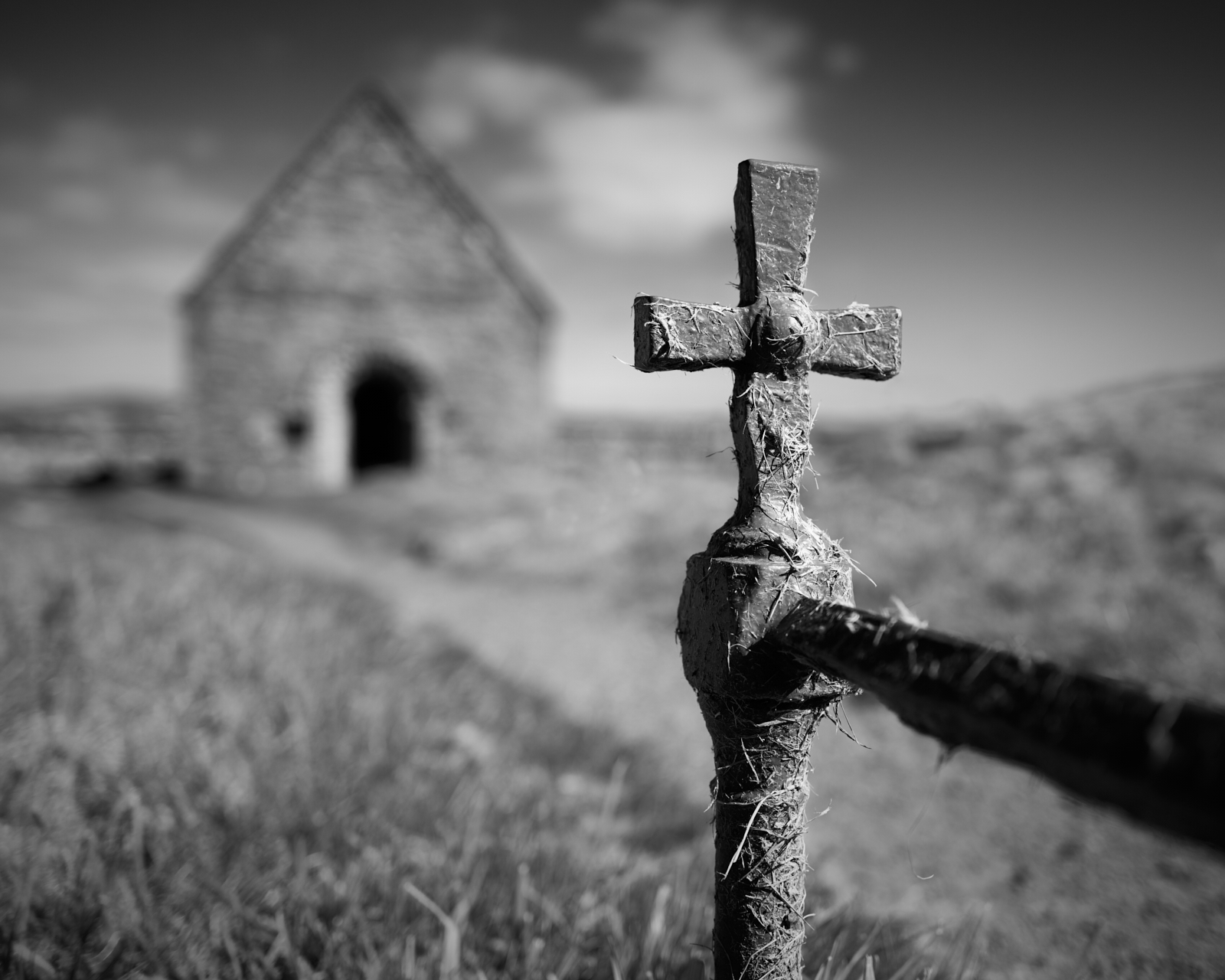
St Oran’s Chapel
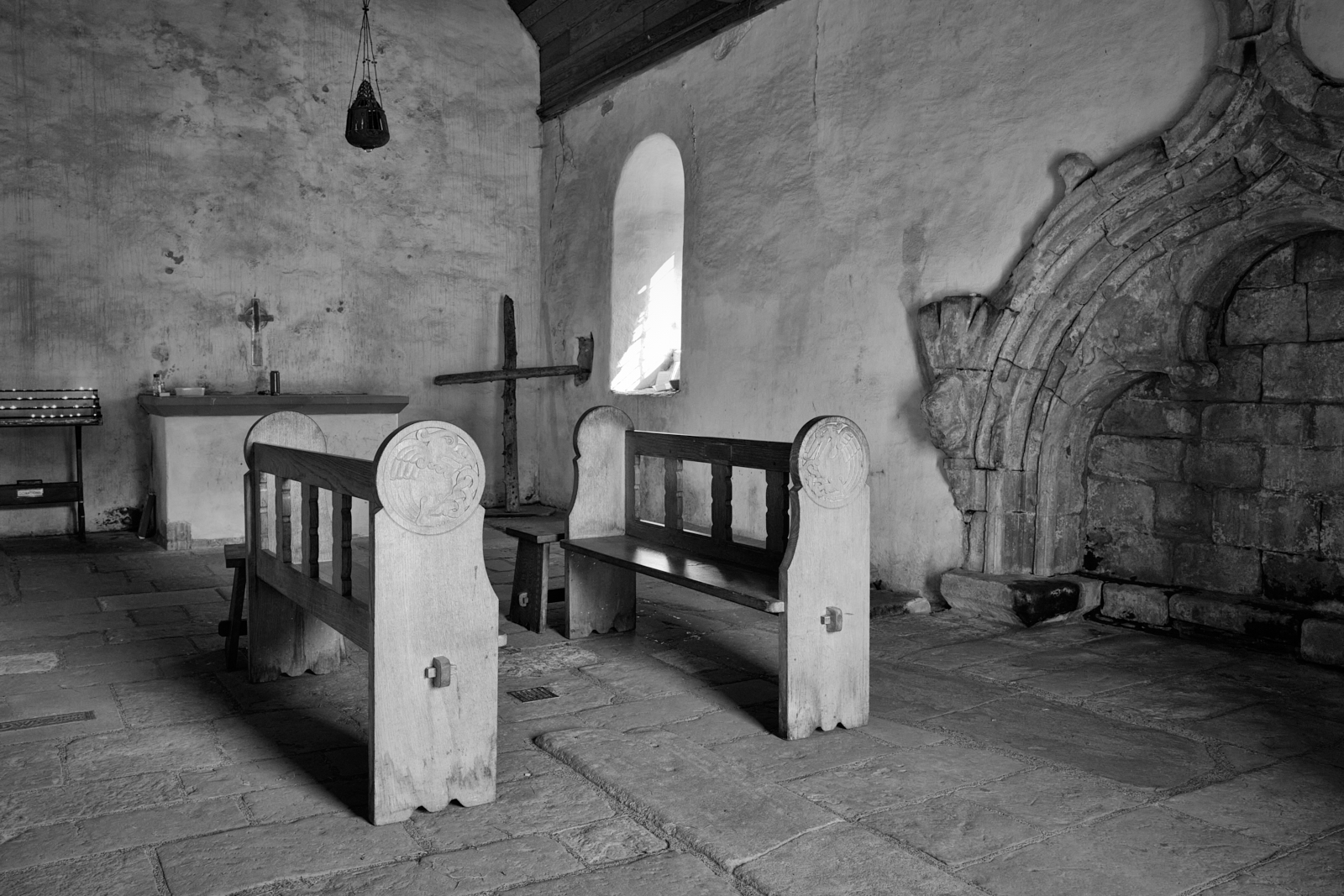
The interior of St Oran’s Chapel
This is Part One of three posts about the Isles of Mull and Iona.
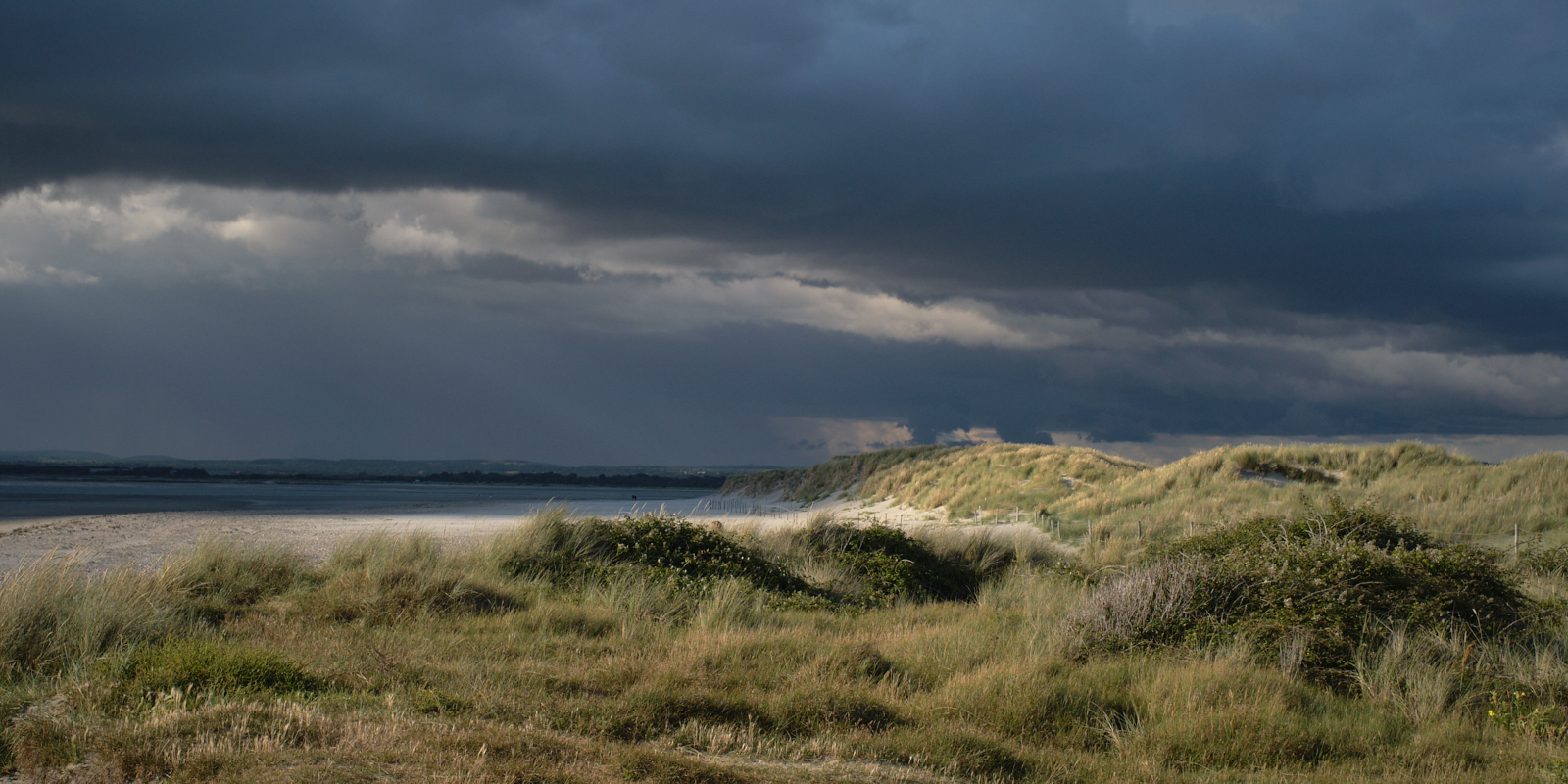
Storm approaching the dunes at East Head, West Sussex
Here on the south coast of England we have experienced a very dry and hot summer. Several months have passed with no rain whatsoever. The ground is bone dry, grass has turned to straw and I fear that some of the plants in our garden will not have survived the drought.
From a photographic point of view summer is never a good time of year for me. The sun is too high in the sky, the contrast is too great and clear blue skies maybe great for a day at the beach but there is no mood and atmosphere to capture. Plus, and being somewhat selfish, there are too many people at the places I wish to photograph.
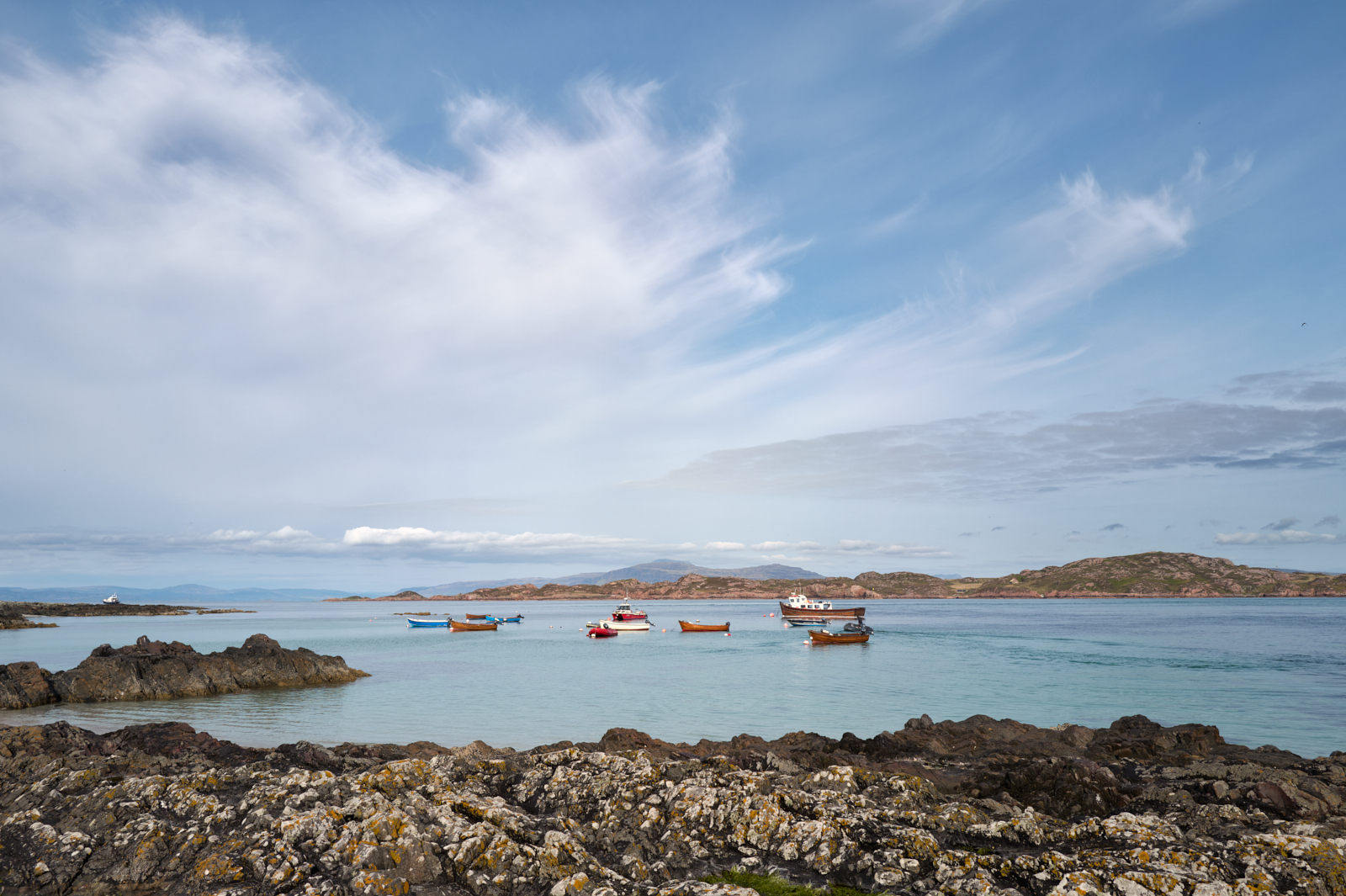
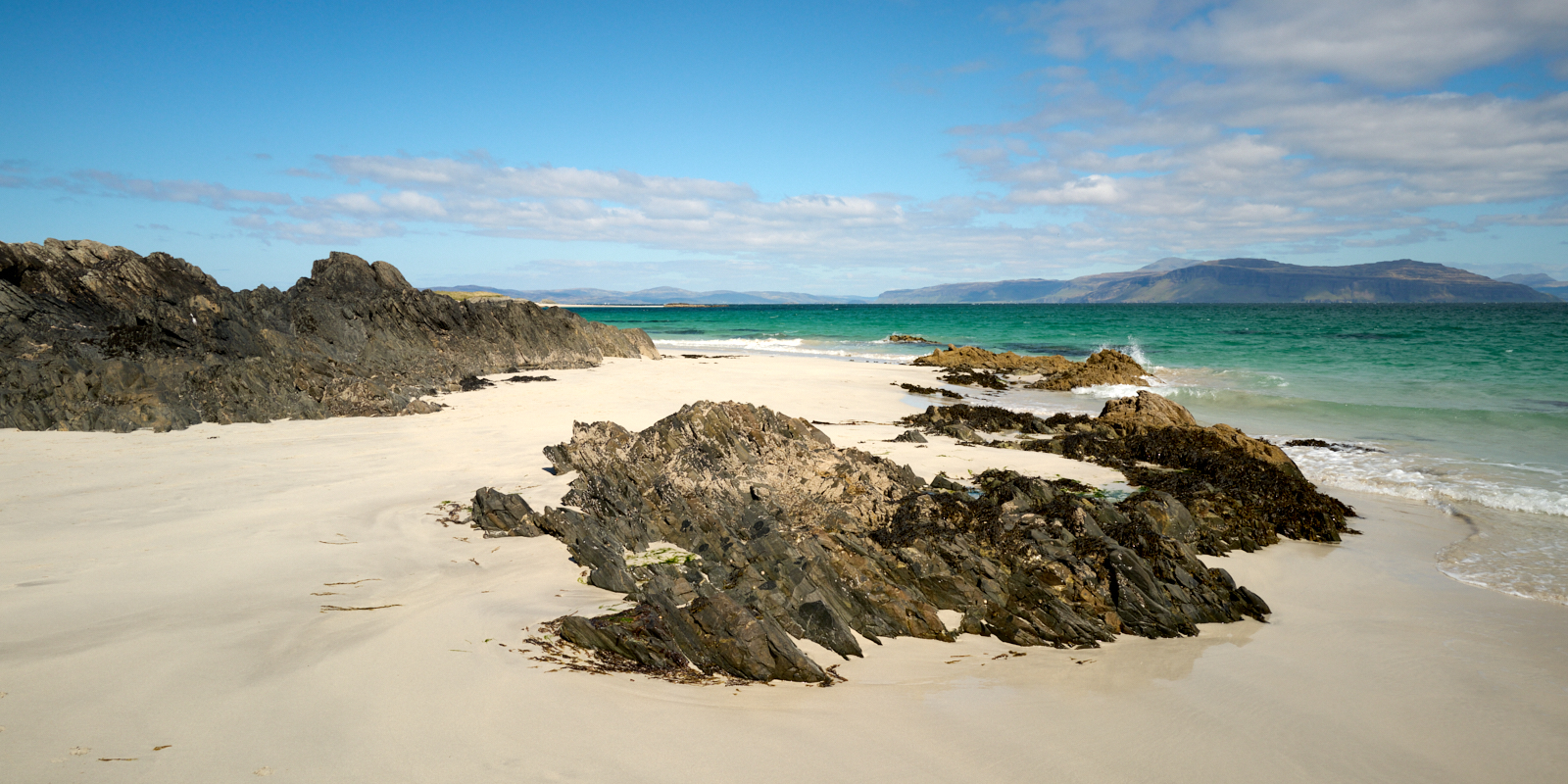
The Sound of Iona, Scotland
So apart from the occasional shoot, I have spent the last few weeks and months giving more time to reflect and think about my photography. Devising plans for when the weather changes, the days become shorter and the light is more favourable. One area of specific consideration has been whether or not I should make more images in colour.
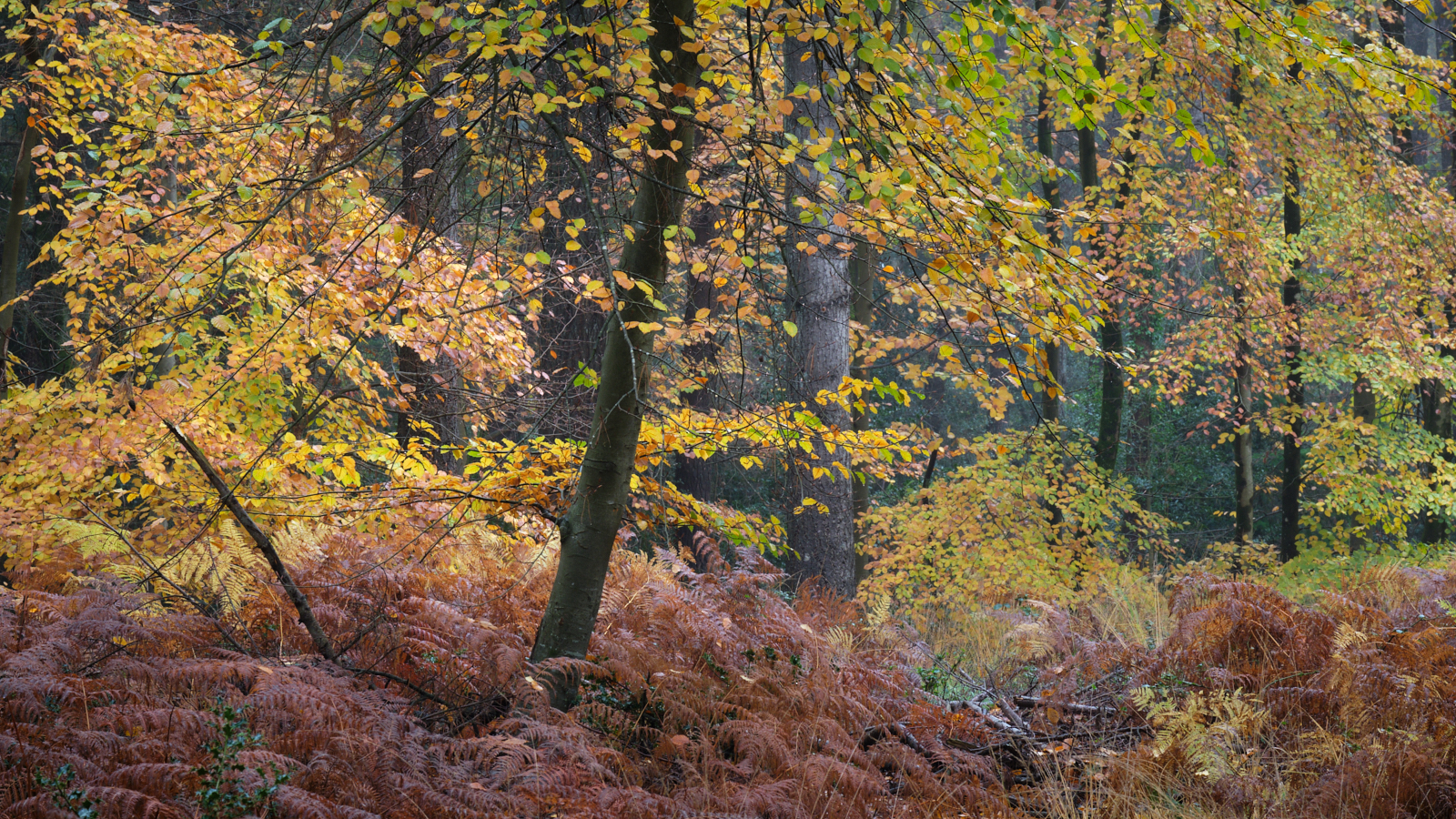
Autumn woodland, Dorset
Ever since 2012 virtually all my work has been in black and white. You only need to look through past entries or any of my galleries (apart from one) to see that black and white is ostensibly what I do. However I make images for my own pleasure. There are no rules which inhibit me from doing anything I like, and that includes switching to colour if I so wish, even if I naturally default to monochrome.
Lifeguard Station, Boscombe, Dorset
As I haven’t been out with my camera I have been trawling through my back catalogue of thousands of images and selecting a few which I have now processed in colour. Some have been captured this year others have lain idle on the hard drive for many years. I have to say that I have thoroughly enjoyed spending my time in this way. I have come across many images which I had largely forgotten. Seeing them afresh as well as opening my eyes to colour has been quite liberating.
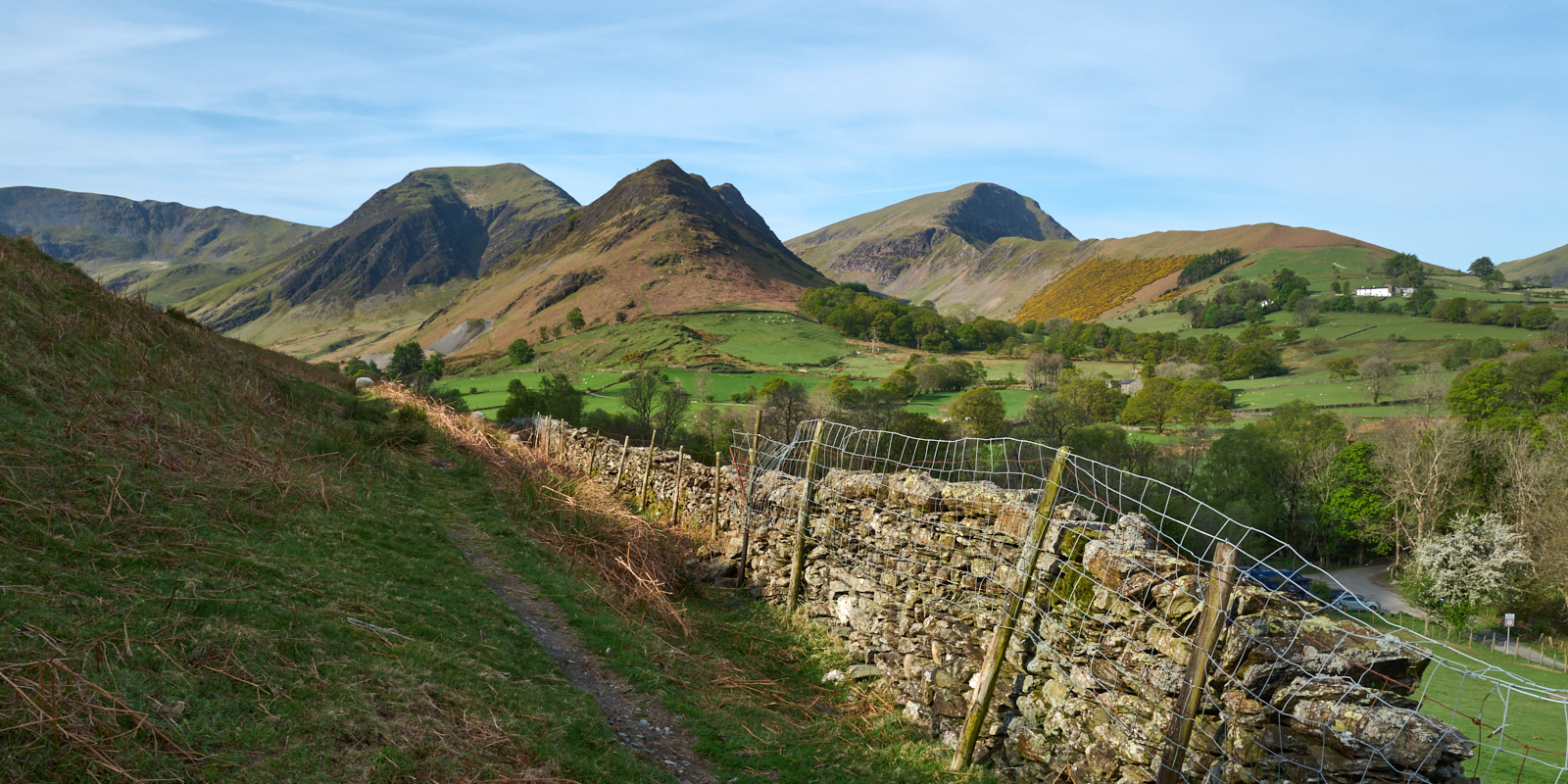
Newlands Valley, Lake District
There is no question in my mind that monochrome and colour are two very different photographic disciplines. Over time my photographic eye has learnt to see the world in black and white, helped of course by being able to preview the image on the rear screen or in the EVF. Photographs that work in mono do not always make a good colour image and vice versa. Perhaps this goes without saying but it does make me think that a fundamental decision needs to be made before the shutter is released. The decision is one of intent – is the end result going to be in black and white or colour? And how might this choice impact on the composition, exposure and any other factors which could be relevant and improve the final outcome.
Portland Harbour, Dorset
In editing this selection of images I have very quickly come to realise there are a whole new set of processing skills I need to learn and hone to make pleasing colour photographs. Well, images that I am happy with anyway. Of course I understand the fundamentals of colour editing but I need to practice much more and develop a better understanding of the tools which are available to me and which I wouldn’t have used previously to make a black and white picture. I fully recognise the workflow is not the same and I will need to make adjustments accordingly. To be frank I am looking forward to the challenge.
Late afternoon, Fishbourne Meadows, West Sussex
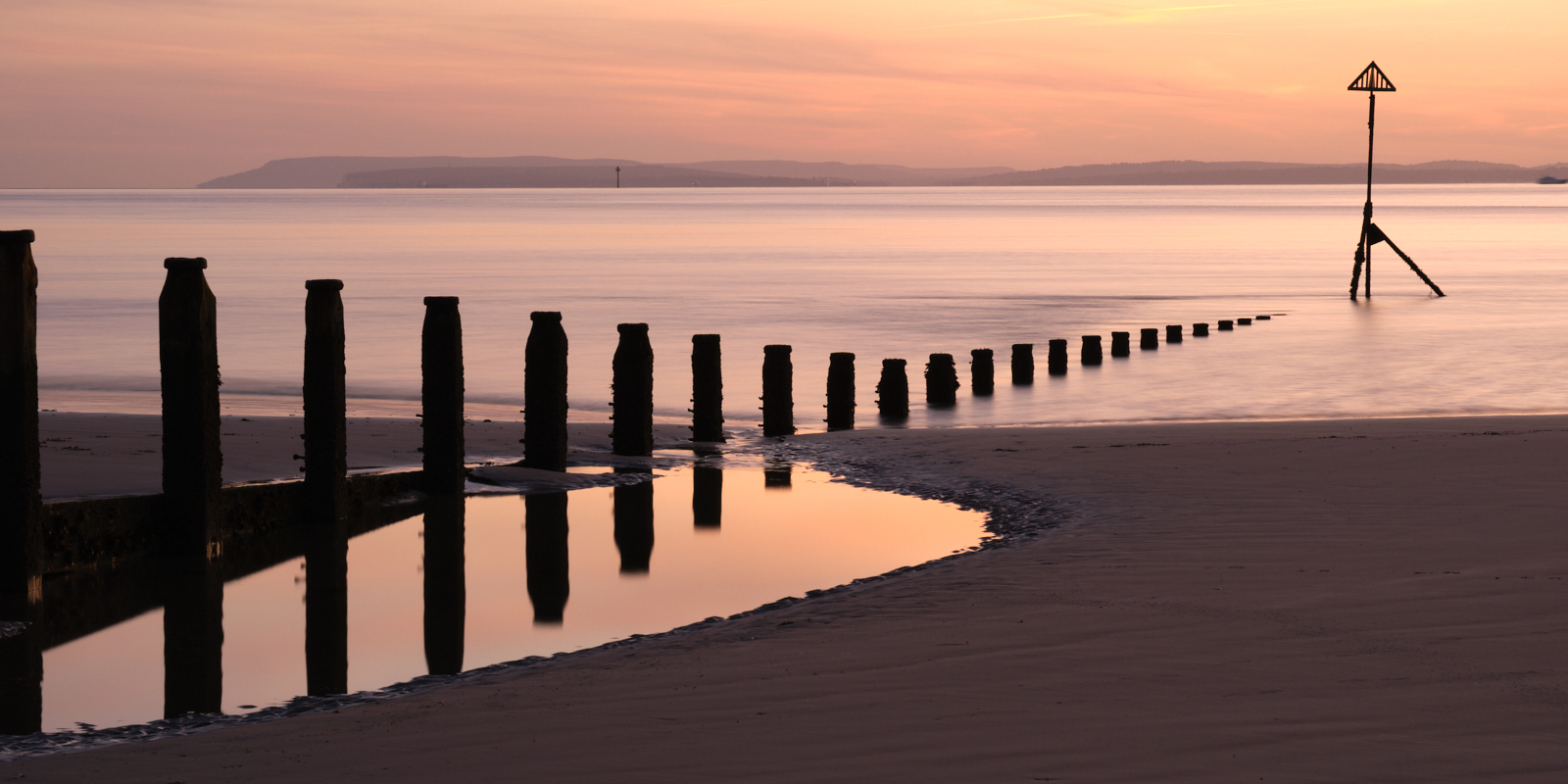
In editing these images I have noticed two things in particular. Firstly my choice of crop or aspect ratio. Originally these were all captured on a full frame or APSC camera with a 3×2 aspect ratio but in many cases I have cropped the image to 16×9 or even 3×1. I don’t think this has anything to do with the fact that they are colour files necessarily, but I really like how this ‘letterbox’ approach changes the overall feel and impact of the image. Fortunately the large sensors offered by most if not all camera manufacturers today provides plenty of latitude when cropping without degrading the image too much.
Sunset at West Wittering, West Sussex
Secondly colour balance or colour temperature has a big affect on the feel of the photograph. Should it be cool or warm? Any noticeable colour cast could of course render the picture unrealistic but there are creative choices to be made. I always shoot in RAW so adjusting the white balance is quite straightforward, although I did find myself revisiting this aspect of the editing process as I wasn’t always happy with my first or even my second attempt!
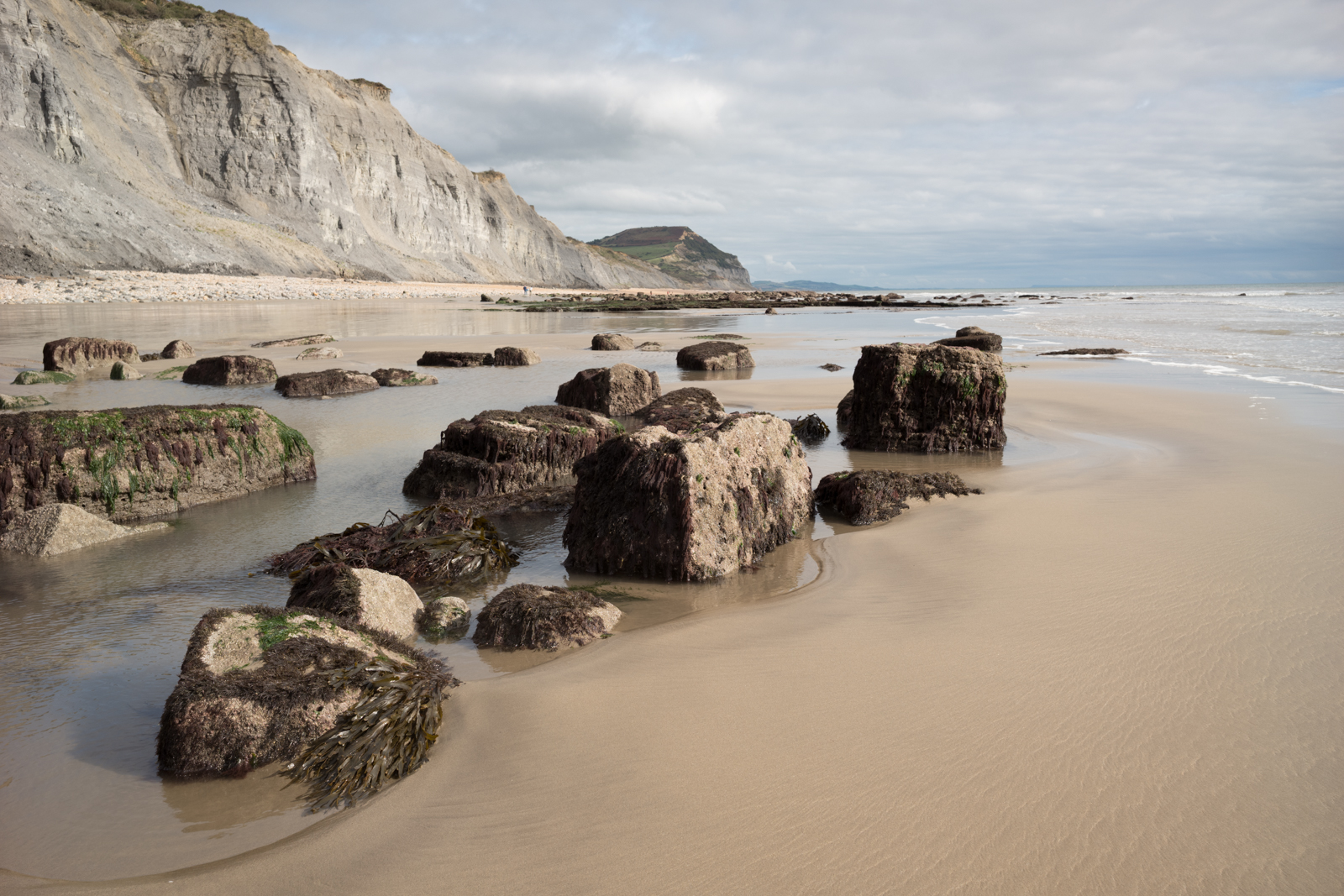
Charmouth Beach, Dorset
Being creative with colour as opposed to black and white is not the same. Black and white is far more flexible in this respect. The lack of colour means a mono image is instantly an abstraction of what we normally see as we go about our daily lives. If you applied the edits in a mono conversion to the same colour file, the result would probably be horrendous so as I said earlier the two disciplines are very different.
Marker Post, West Wittering, West Sussex
Looking forward it is my intention to make many more images in colour although I don’t think I will ever lose my love for black and white. How could I after so many years? But there is a place for both styles of imagery and as the old saying goes – ‘variety is the spice of life’.
Projects, whether they be small or large, short or long term, never fail to encourage me to go out with my camera. Excuse the pun but they give me a focus, a sense of direction and a purpose to make new work.
I try not to think too hard about what the subject might be for a new project; I simply wait for an idea to inspire me. Sometimes that flash of inspiration will fade very quickly and be dismissed. At other times the initial excitement takes hold and I can see how the project might develop. I start to research the idea and ask myself a variety of questions. How practical is it? Is there sufficient material to work with? Do I have the equipment required? Do I stick to black and white or is colour an option? What is the purpose and does the project have an end objective?
Moreton
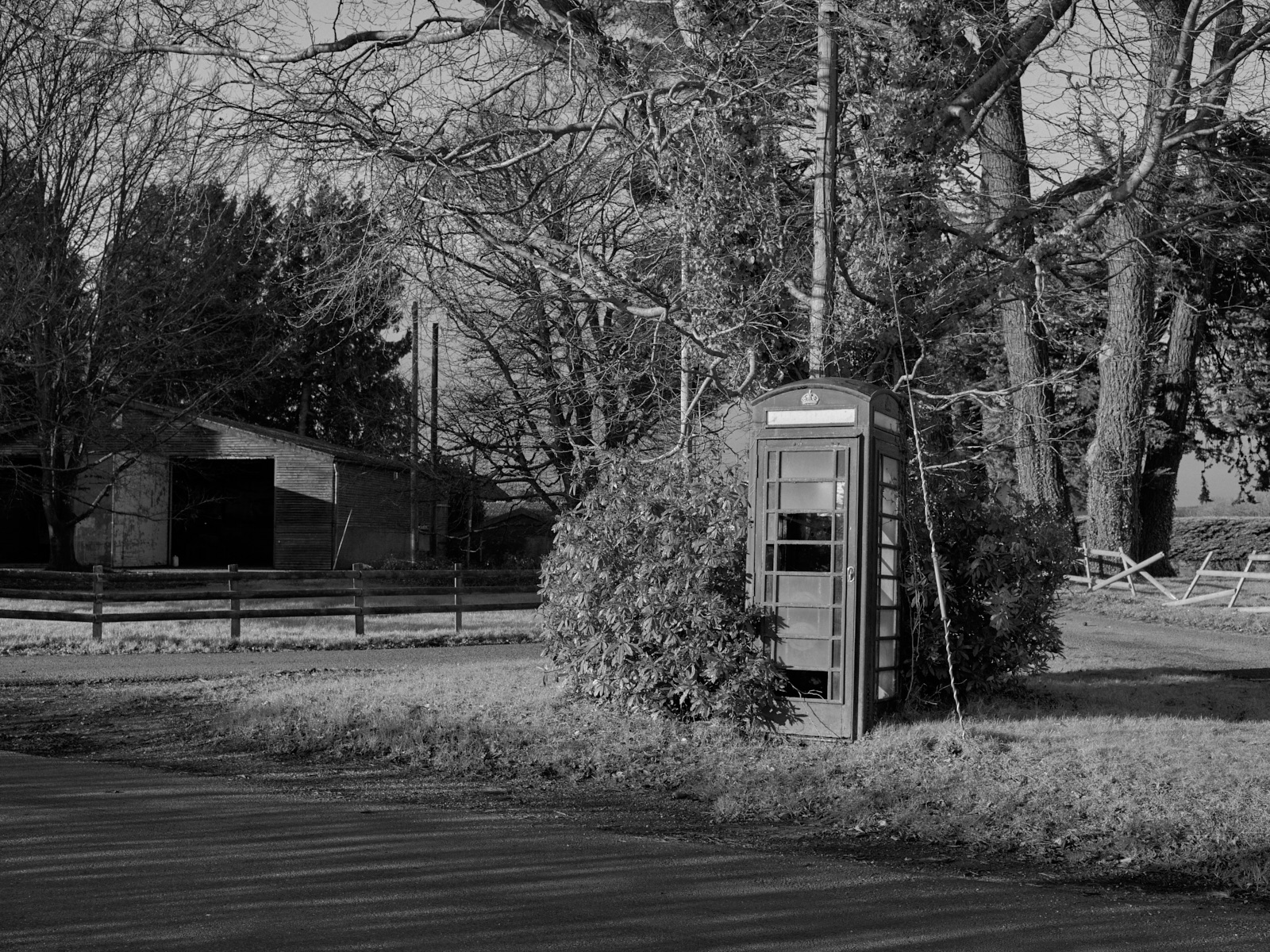
In the past few days I have latched on to the idea of photographing and documenting ‘Telephone Boxes’. We have one near where we live, although it has been repurposed, which is also true of many others. I have no idea how many still have working telephones, and in any case that number must surely be in decline. The historical aspect appeals to me and their current usage only adds to thestory. Whilst still a common site, their original purpose and heyday has passed. However their passing and reinvention is I believe worth recording.
Repurposing
Woodsford
Given this thought process has only just began I don’t have all the answers yet, and in a couple of weeks time I might have dropped the concept altogether. Conversely my enthusiasm may grow. I will know soon enough. Right now I think this project has legs and I am excited.
Affpuddle
Given this ‘flash of inspiration’ and in my desire to get started, I went out to make a few images of boxes close to our home.
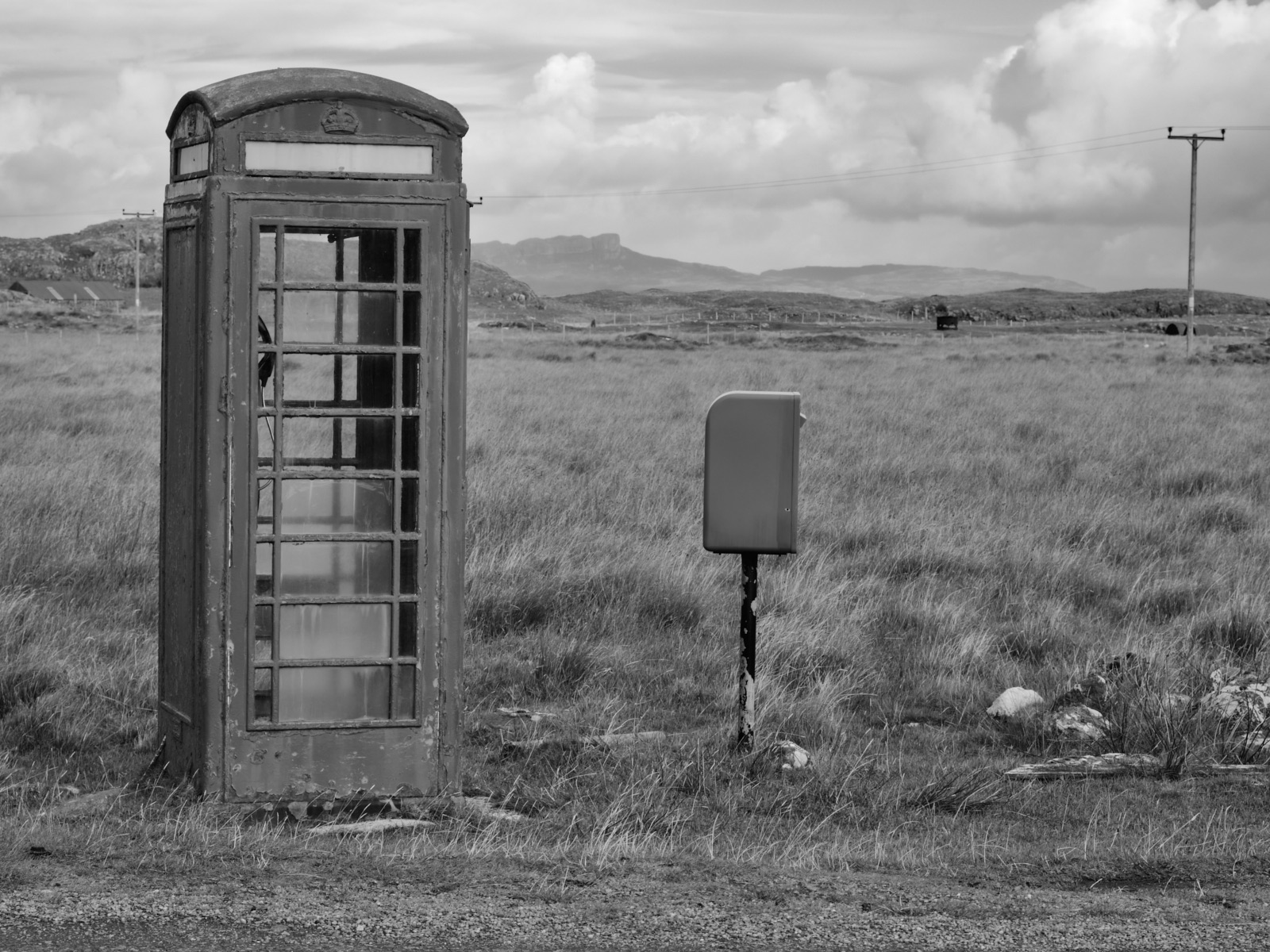
Having done so I was reminded of a photograph I made a couple of years ago of a telephone box on the Ardnamurchan peninsular in Scotland. In fact this particular box is the most westerly box on the British mainland. Perhaps the idea for this project was conceived back in 2022? It’s just taken rather a long time to come to fruition!
Ardnamurchan, Scotland
I would like to finish by thanking and making reference to a documentary photographer, Kyle McDougall, who has a truly excellent YouTube channel. I have been following his channel for some time and I enjoy his work, very much like his style of presentation and I learn a lot from him in the process. By sheer coincidence his latest video (link below) refers to the topic of photographic projects. His thoughts and suggestions resonated with me and what he had to say reinforced the very ideas which have been going through my own mind these past few days.
I was very saddened to hear that the wonderful and well renowned artist and printmaker Norman Ackroyd had passed away at the age of 86 on the 16th September 2024. His beautiful and atmospheric aquatint etchings are in art collections around the world.
I first discovered his works of art many years ago and had the good fortune to both meet him and listen to a talk he gave on printmaking at Pallant House Gallery in Chichester back in January 2019. It was a most inspiring evening as he spoke about not only his approach to his art, but also the many places he loves and had visited around the shores of Great Britain and Ireland. In particular he told the audience about the west coast of Scotland, including some of the most remote islands including St Kilda, the Treshnish Isles, and Muckle Flugga, which is often named as the most northern tip of the British Isles on Shetland in Scotland, to name but a few.
Some years before that evening I had purchased a very fine book of his work titled ‘A Line in the Water’. The book also included some evocative poems by Douglas Dunn OBE. On the inside of the dust jacket it reads and I quote –
‘In his almost obsessive exploration of the farthest reaches of the British Isles, Norman Ackroyd captures the meeting of land and sea in atmospheric aquatint. His work and Dunn’s complement each other in a memorable fusion of word and image that attests to the power of the place and reflects the extraordinary diversity of Britain’s littoral margins.’
On meeting him after the talk he very kindly agreed to sign this book for me. It was an evening I shall never forget and a book I will never part with.
I love Ackroyd’s work. His unequaled technique and the places he depicts are everything I could ask from a landscape artist. He has inspired me in my own photographic work and whilst I doubt I will ever visit the far flung places he has been to, I feel that through his art he has taken me there emotionally and for that I shall always be grateful.
There have been many fine obituaries in the press over the past couple of weeks, so I do not intend to repeat what you can read online but I have included some videos below which you may care to watch.
The first two are from the series – ‘What do artists do all day?’ which were first broadcast in 2013. The third video is a talk when in the space of several minutes he recites the names of the places he has etched and painted in over four decades. Inspirational.
And finally I have included one of my own photographs looking east down Loch Sunart in Scotland, captured when sailing on the ferry from Tobermory on the Isle of Mull to Kilchoan on the Ardnamurchan peninsular in October 2022.
Thank you Norman Ackroyd and may you Rest in Peace.








 alan frost photography