Posts tagged ‘nature’

Landscape photographs or holiday snaps? ….. images from County Kerry, Ireland
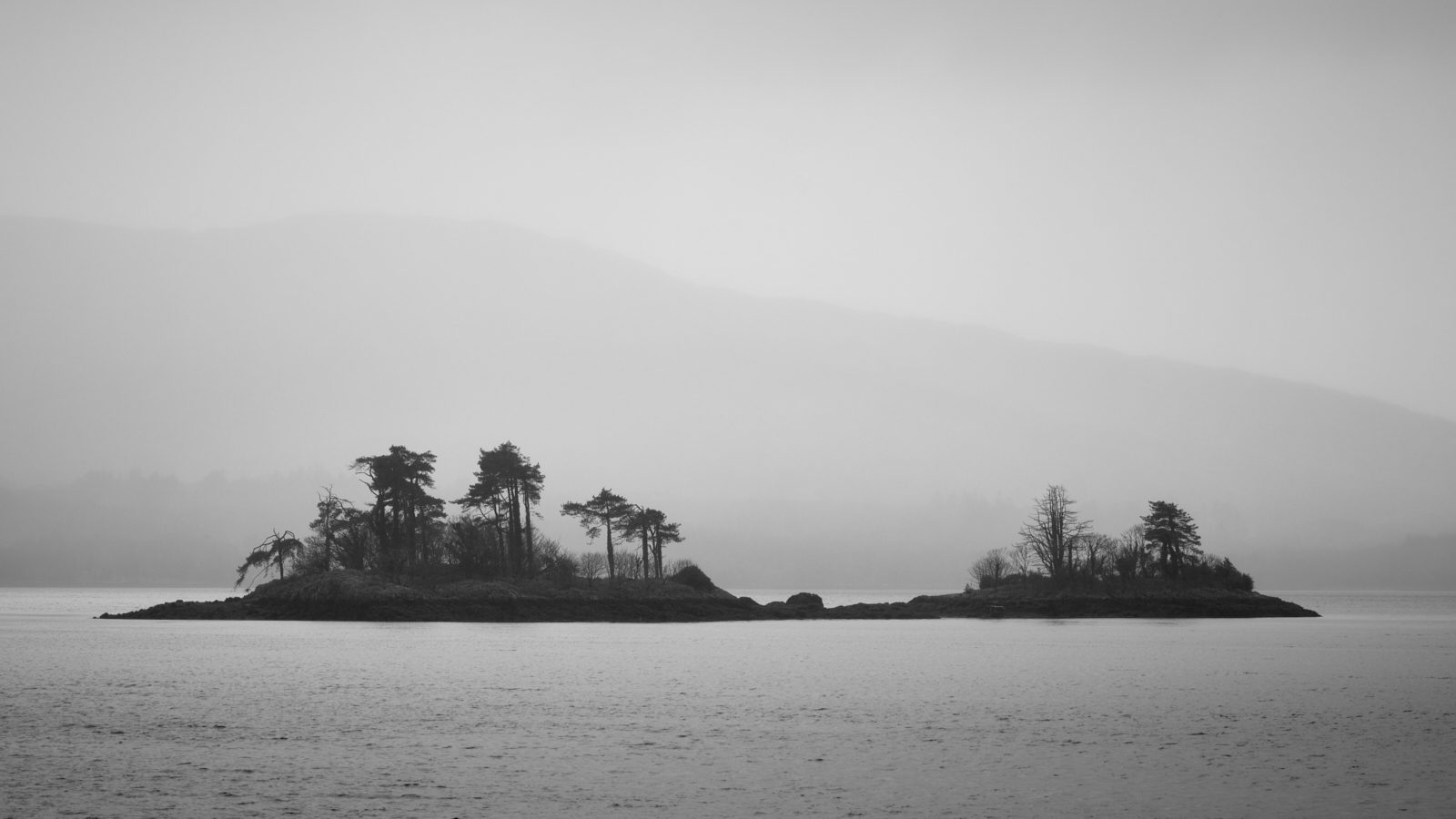
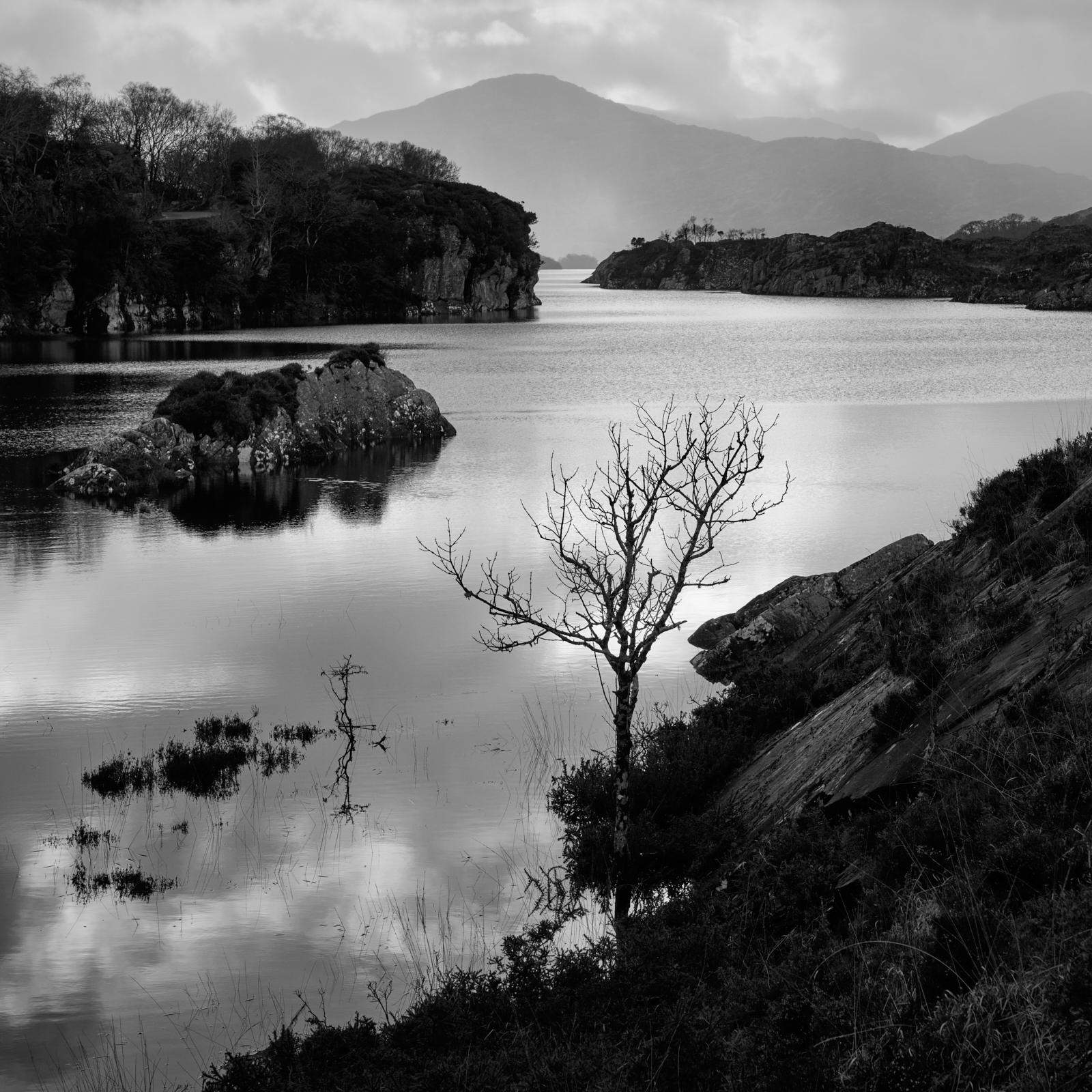
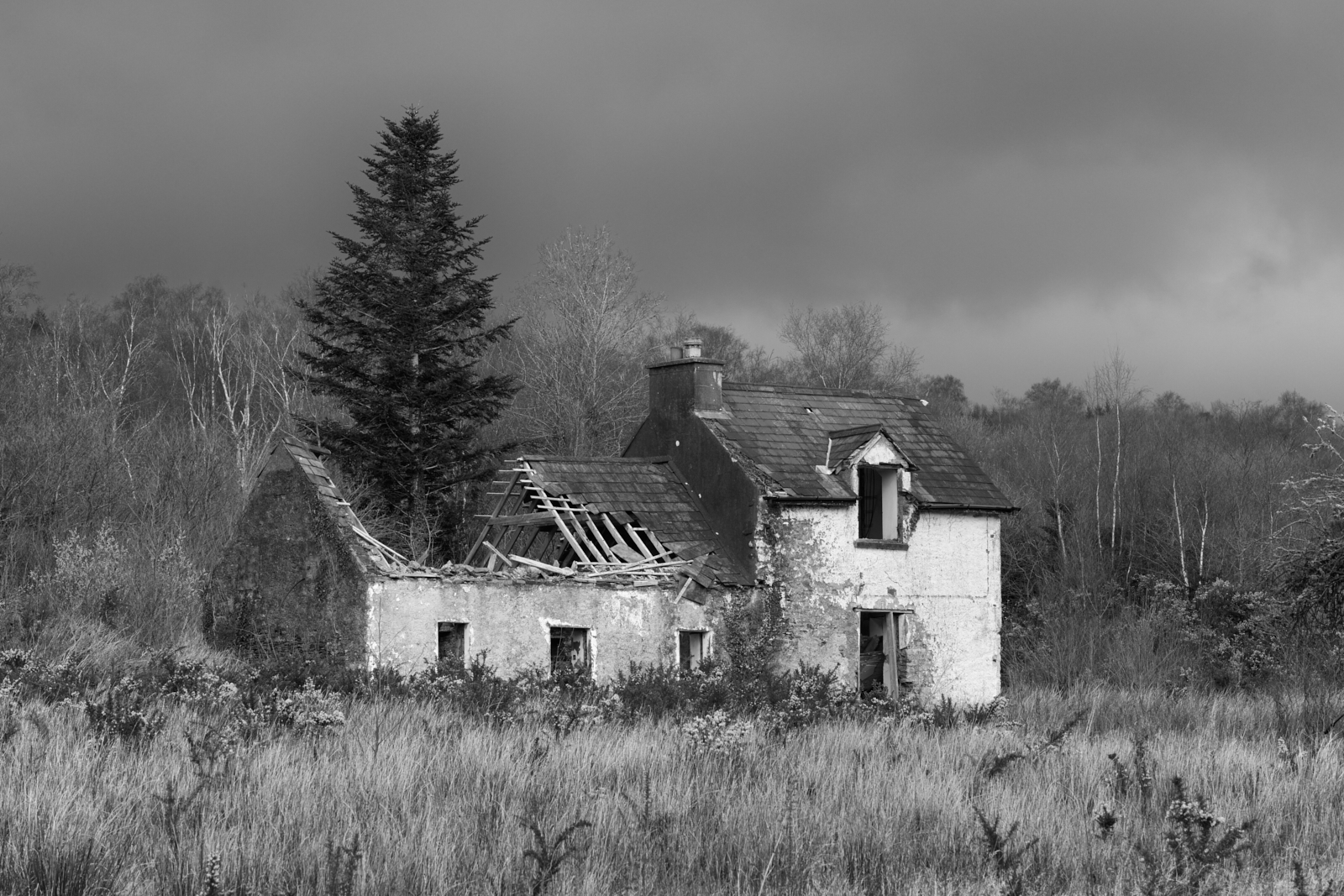
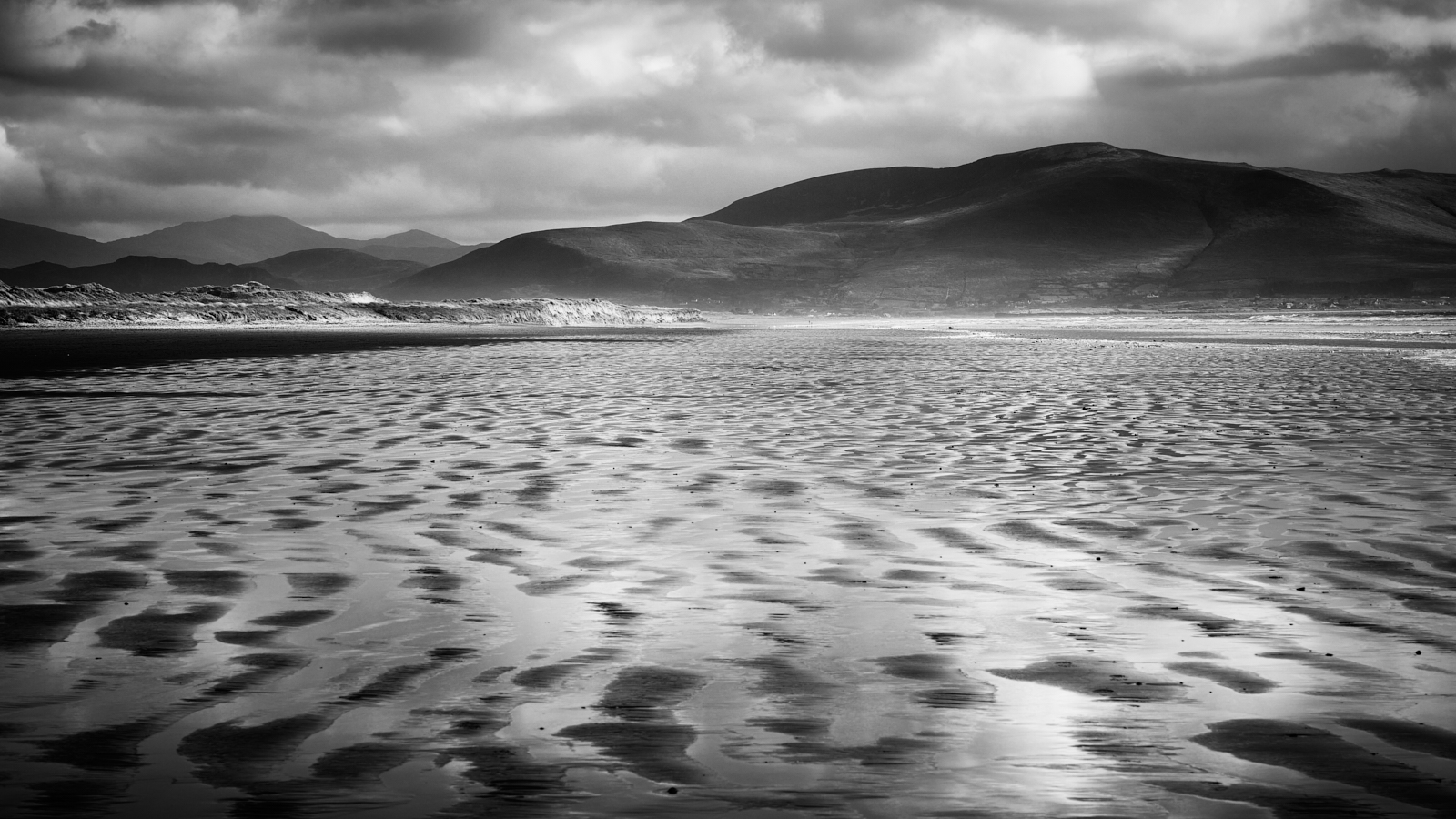
My wife and I have recently returned from a two week holiday in County Kerry which lies in the South Western corner of Ireland. A beautiful part of the world offering many photographic opportunities.

Having downloaded the files I have started the enjoyable process of selecting what I consider to be the most promising and pleasing images and editing them in my usual style. Inevitably this part of the workflow brings back happy memories of places visited and associated experiences. It is of course one of the reasons we take photographs. We want to preserve these memories for the future.
Back in the day all those of a certain age (me included!) will probably recall getting together so that either a slide show or the handing round of prints could take place after a family holiday. There would be very little culling , meaning all the photographs would be shared however good or bad. The quality would be variable. Over and under exposed pictures combined with a mix of reasonable but sometimes very poor compositions. Every photograph would be vocally described – where and when it was taken and what the weather was like, even though this would often be clearly evident from the photo itself! Sad to say but it could turn in to a ‘yawn fest’ yet it was part of the post holiday ritual which had to be undertaken and endured.
Whilst sitting at my computer selecting and processing some images a question entered my mind –

“When is an image a landscape photograph and no longer just a holiday snap?”

Time and technological progress has of course changed how we record our holidays. For many years now we have lived in a digital age with increasingly sophisticated cameras built-in to our smartphones. Almost everyone has the ability to use filters and intuitive processing software to produce a decent image. It is then shared not just to friends and family, but to the world and his wife via social media.
As I share with you the photographs I took on my recent trip to Ireland I am asking myself…… “Is this just today’s equivalent of the slide show projected onto a screen in a darkened room to family and friends? Are these pictures merely holiday snaps or is there something which sets them apart? No longer just a record shot but something visually appealing and possibly of interest to a wider audience”.

And if so, what distinguishes an ordinary picture taken on holiday from a landscape photograph which just happens to have been made whilst travelling away from home?
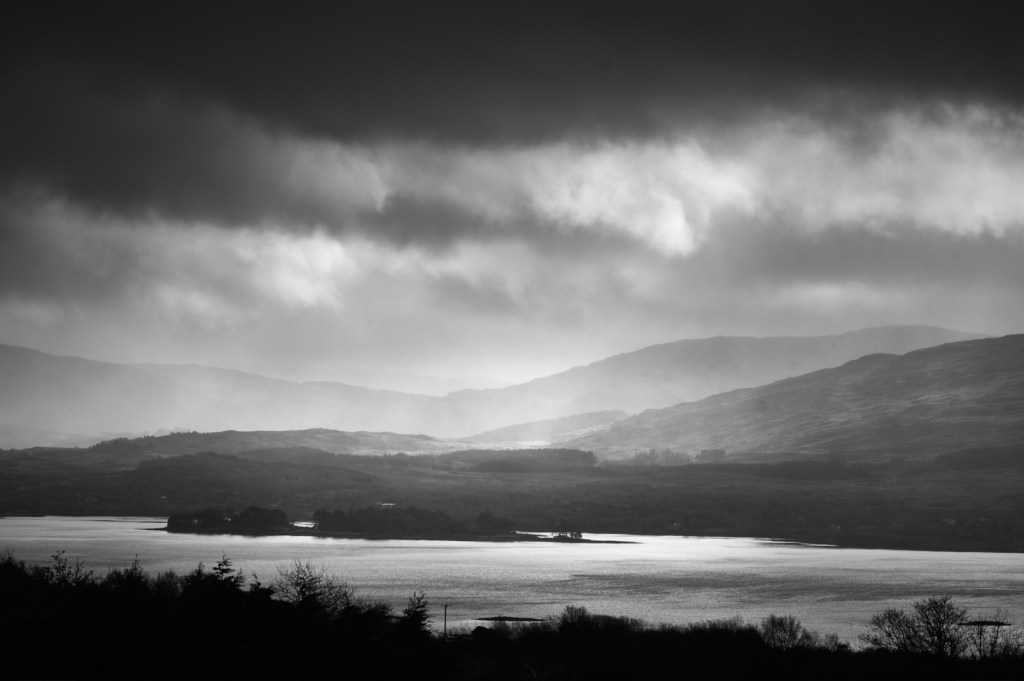
These are my thoughts which may or may not coincide with your own ideas.

1. I think every image should be viewed as an individual photograph, irrespective of whether or not it was taken on holiday and regardless of the camera or equipment used. An expensive state of the art camera doesn’t necessarily make a fine image. In other words a picture has to be worthy of standing on its own two feet.
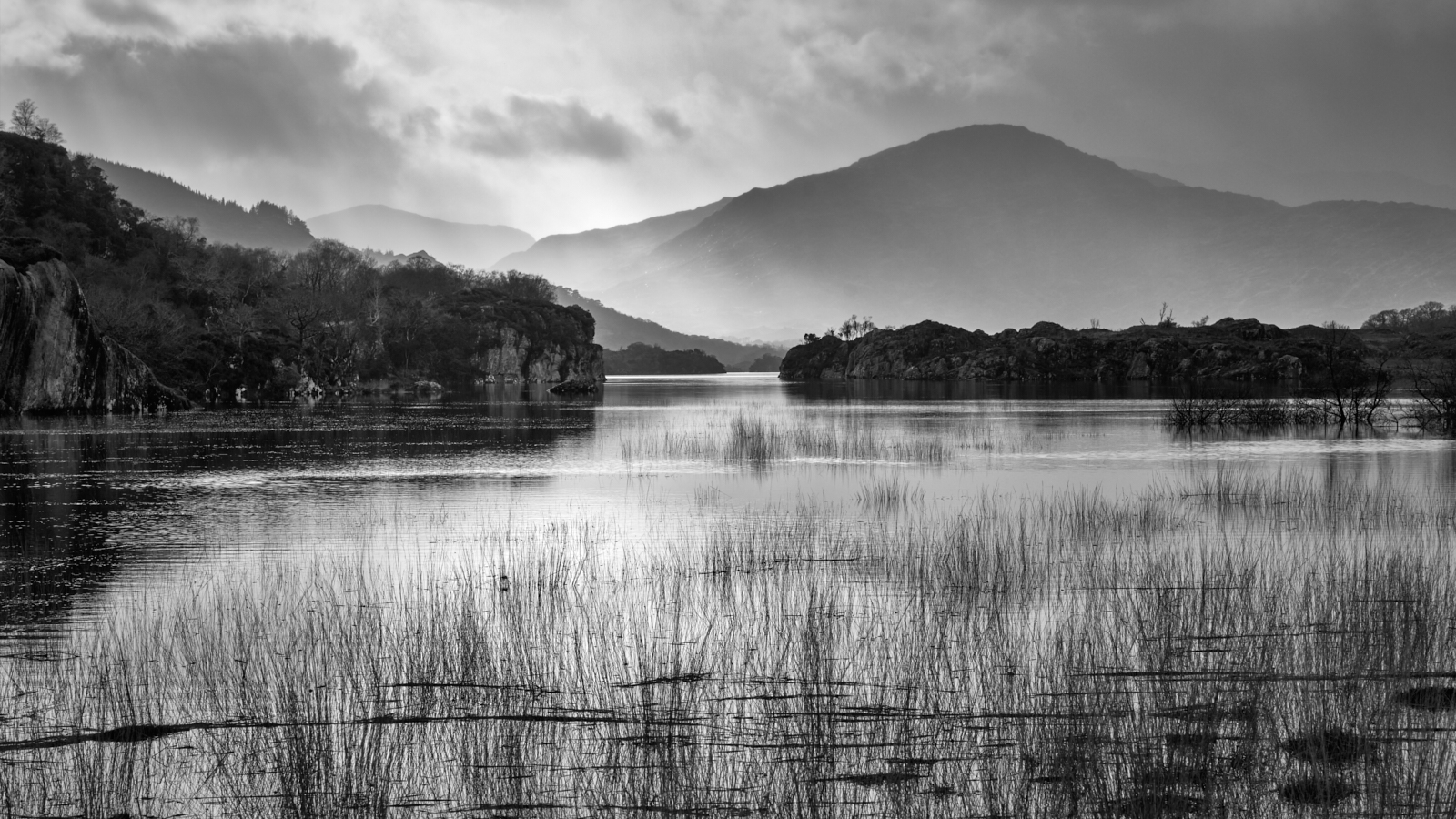
2. The photograph must have something which causes the viewer to stop, look and appreciate the landscape for what it represents. Perhaps there is some form of narrative or an element of mystery which intrigues the viewer. It shouldn’t be seen as a record shot. Plus I would suggest that the image should clearly demonstrate photographic intent.
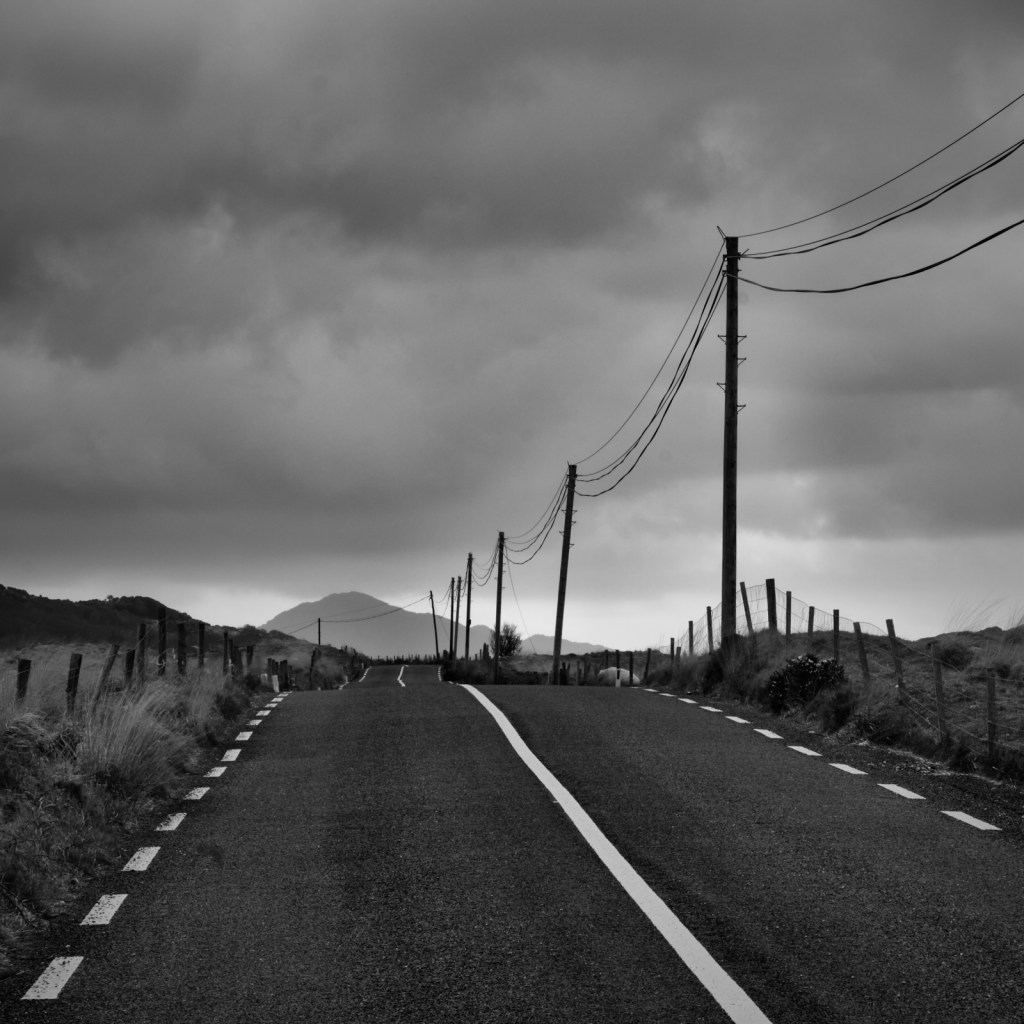
3. Perhaps the prime distinction is that the photograph is one which an individual may wish to have printed, framed and displayed on a wall in their home. This would be regardless of whether or not they had visited that particular location for themselves. I very much doubt a holiday snap would warrant this treatment by a complete stranger.
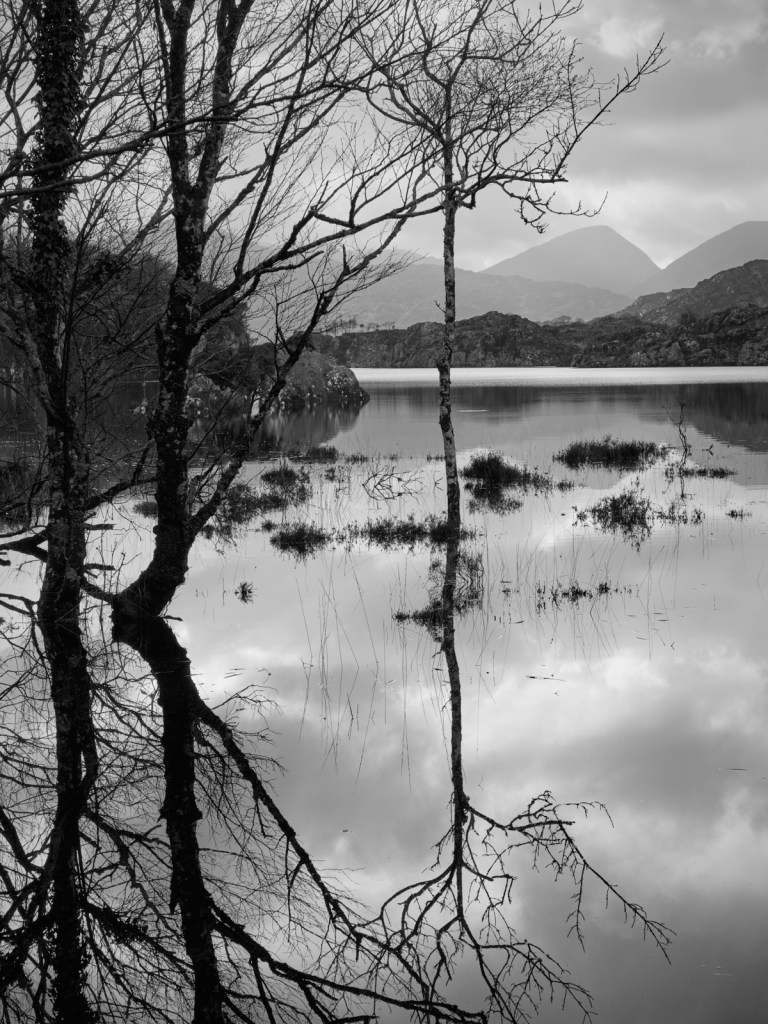
4. And lastly if it’s a collection of images then the quality and presentation should be harmonious, consistent and of a certain standard. Arguably it should possess some photographic expertise and not be classified as a ‘point and shoot’ picture.
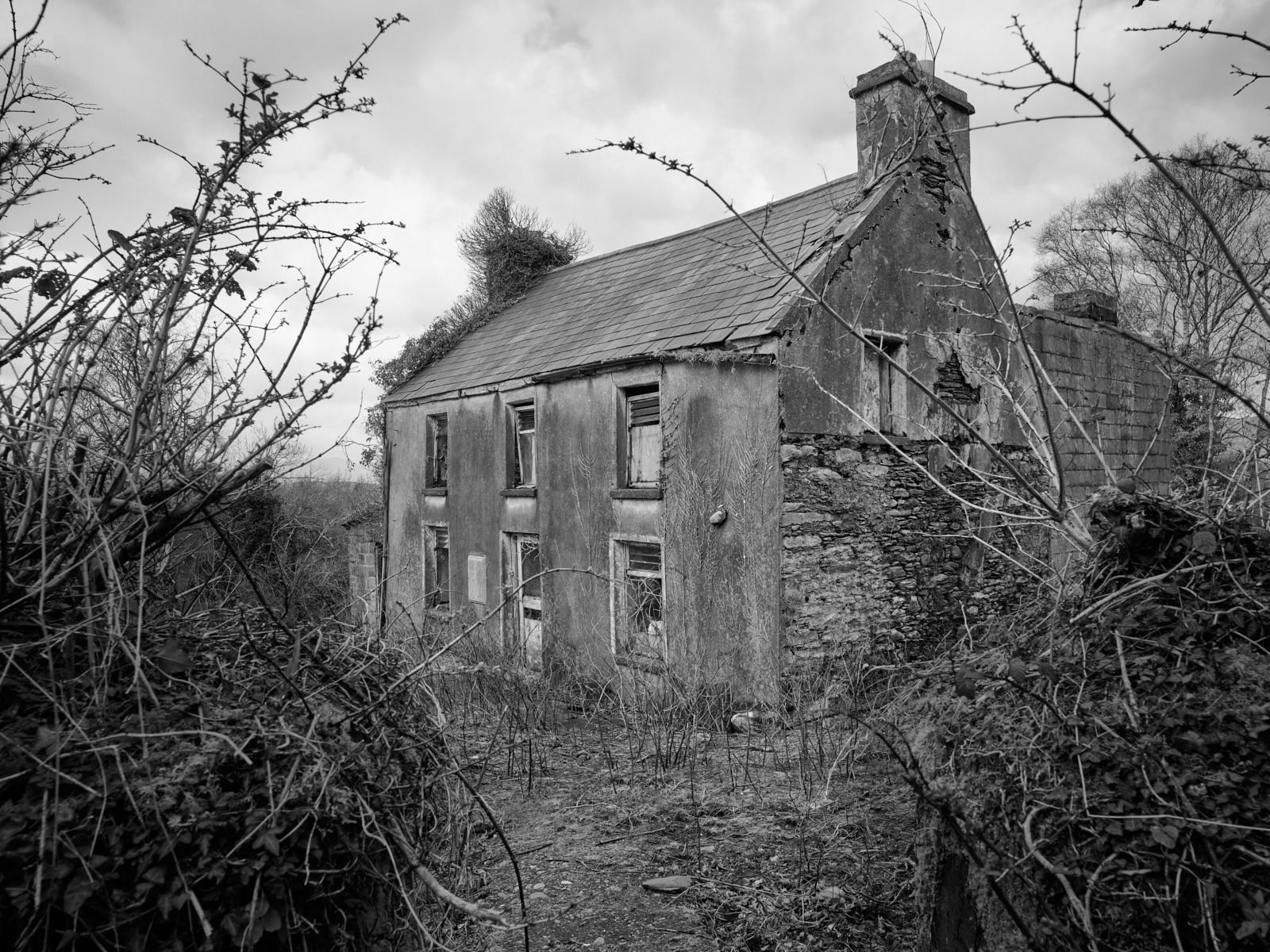
Hopefully you won’t consider these photographs to be merely holiday snaps, but images which can be appreciated for what they are. I would be disappointed to think they might be thought of as today’s equivalent of the family slide show of yesteryear.

If you have any thoughts on the difference between a landscape photograph and a holiday snap do comment below – I would be interested in your thoughts.
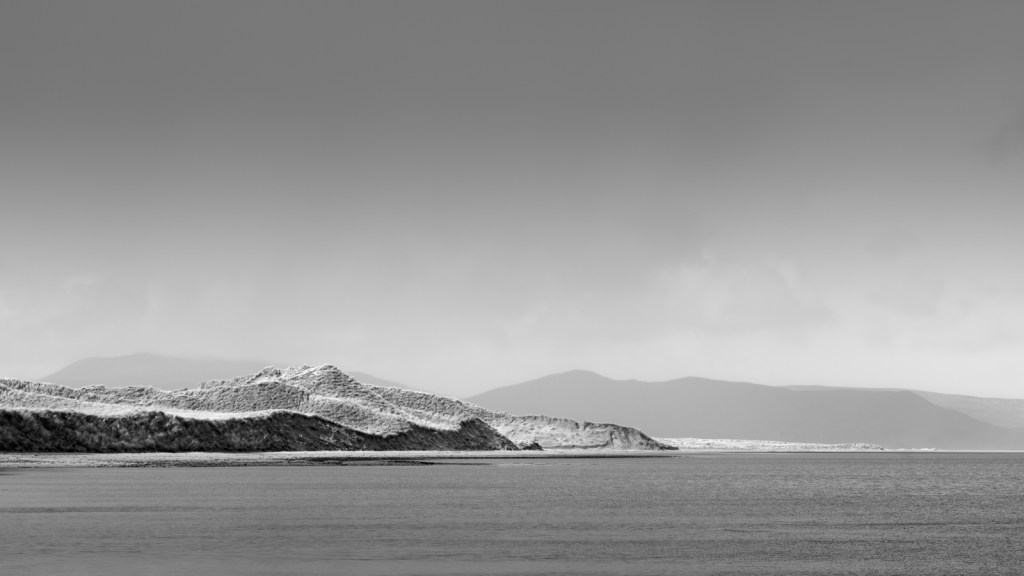
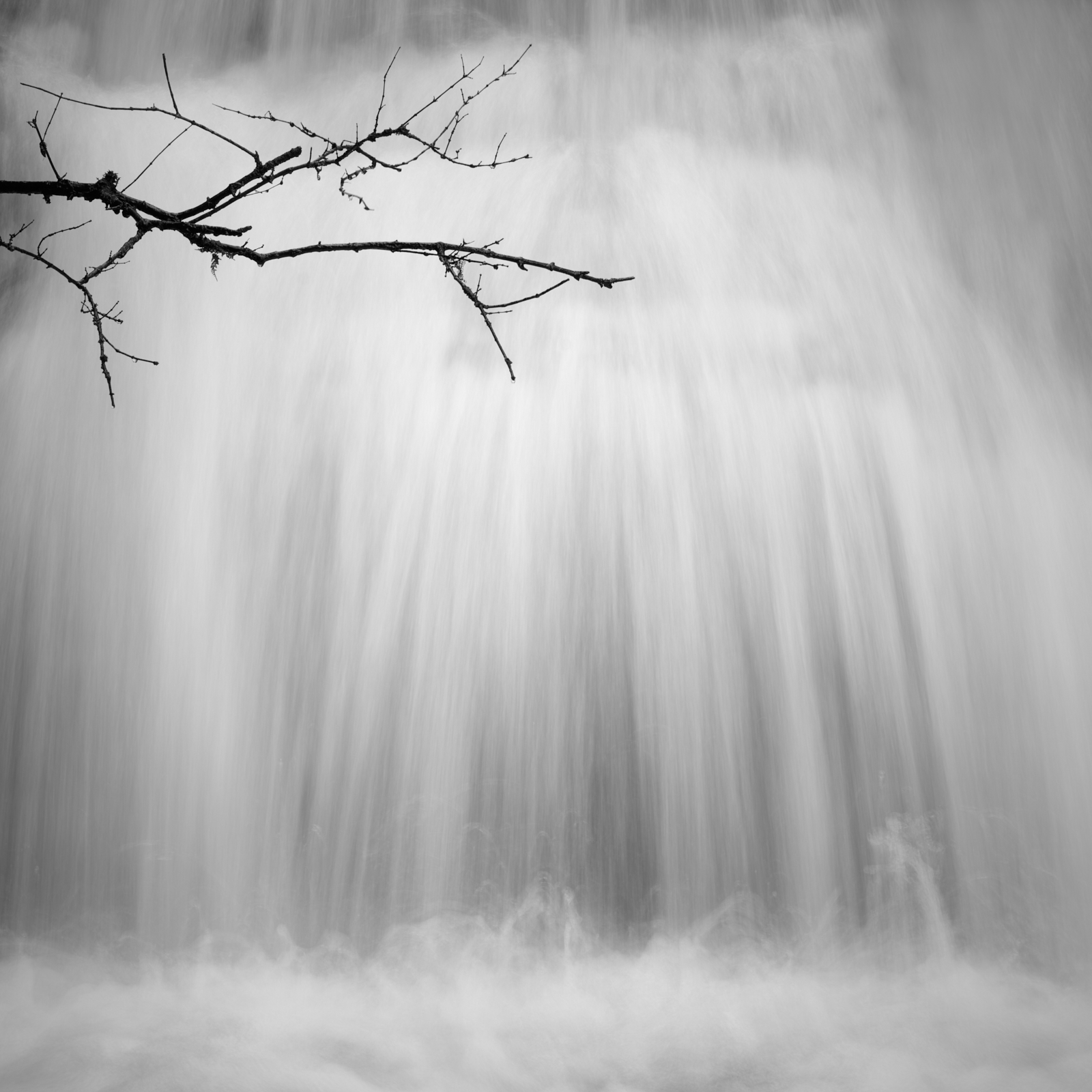
When the rain falls and the water flows in County Kerry, Ireland

Although this above image is quite a simple one and minimalist in its nature, it does capture the power and movement of the water, which is in stark contrast to the stillness of the overhanging branch. It could be a metaphor for life; the frail looking branch, remaining strong and resolute, appearing to resist the forces of nature which might sweep it away.

Waterfalls are a popular subject for photographers although I can’t claim I’ve enjoyed much success in the past. Either the conditions haven’t been quite right, access has been challenging or I simply haven’t devoted sufficient time to the composition, selecting the best shutter speed etc.

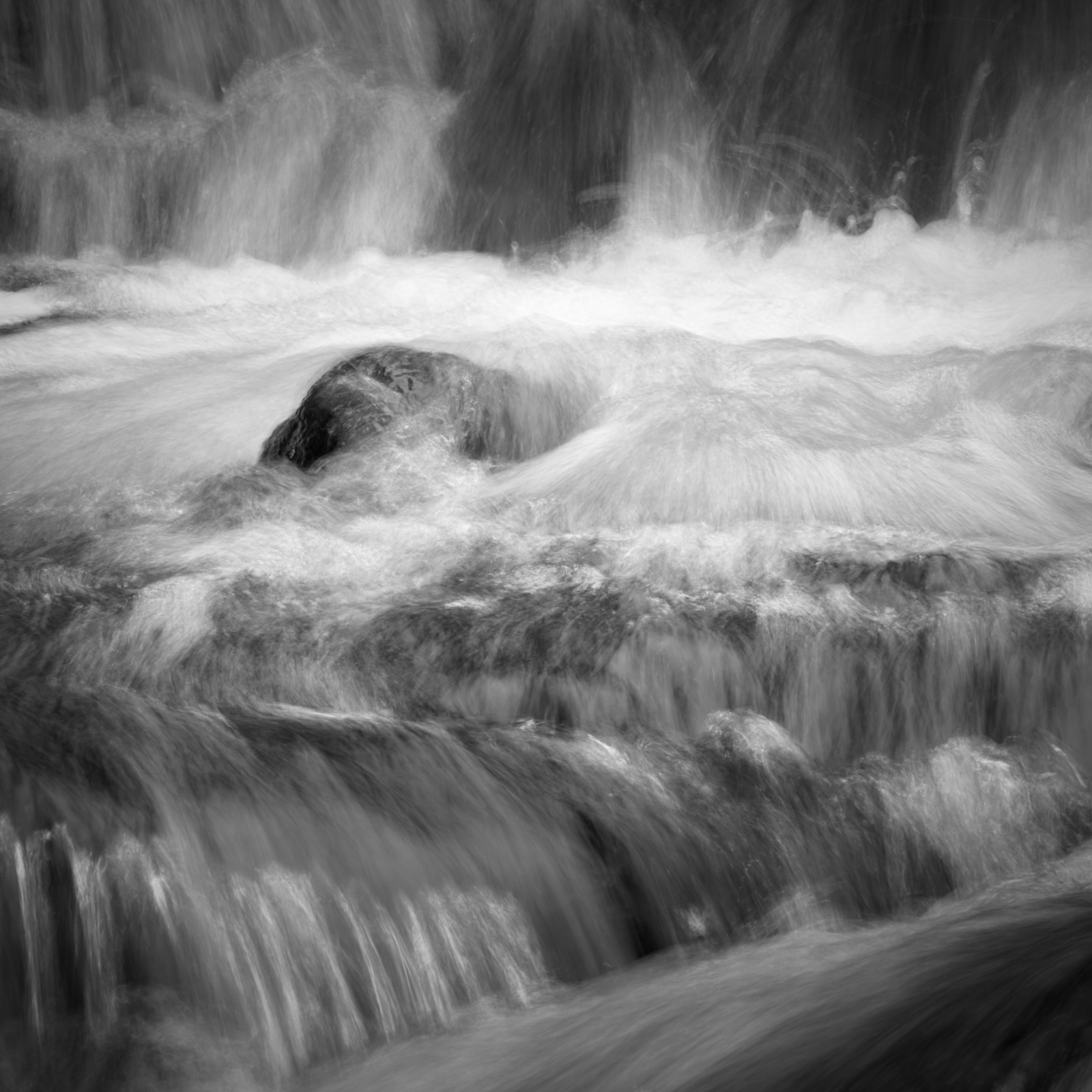
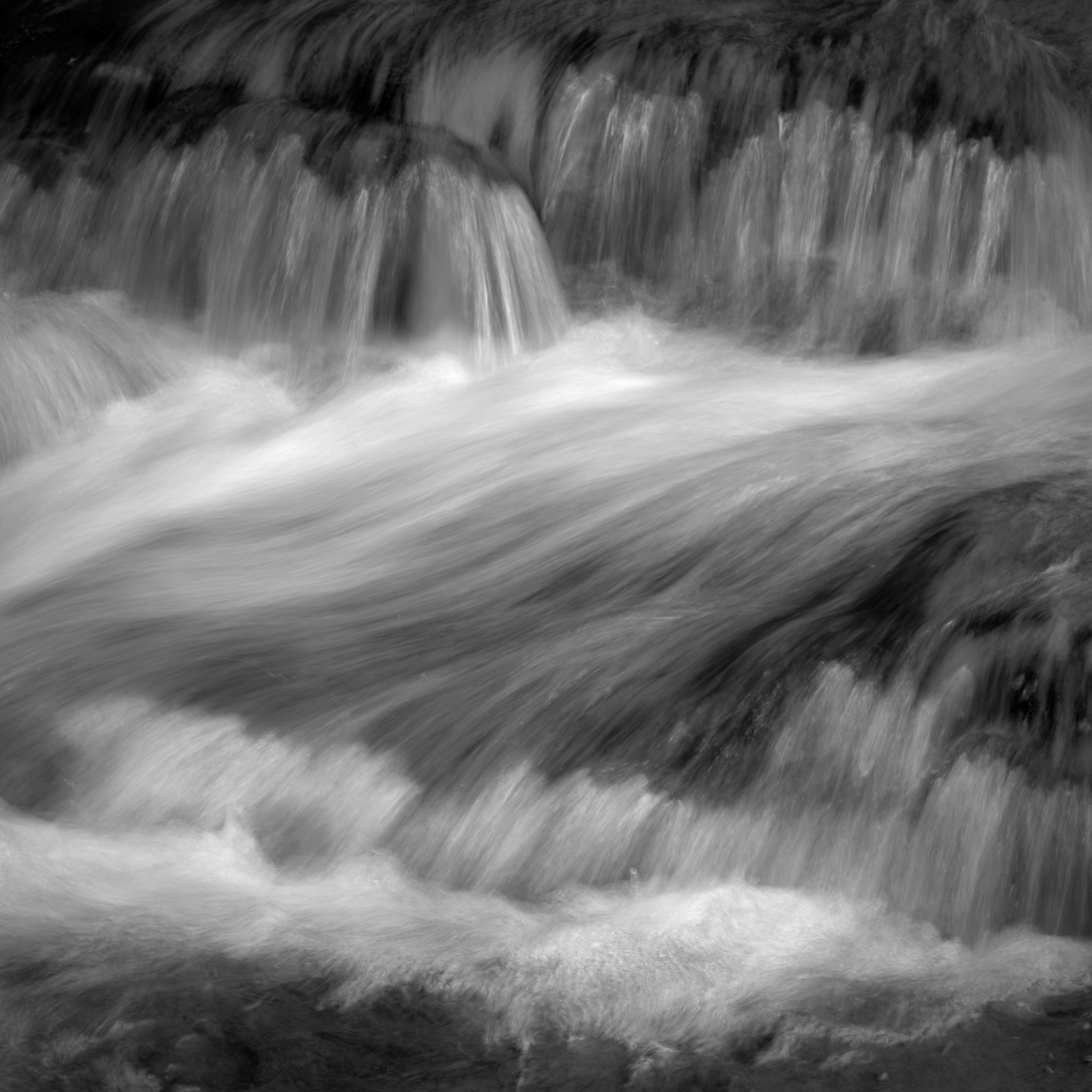
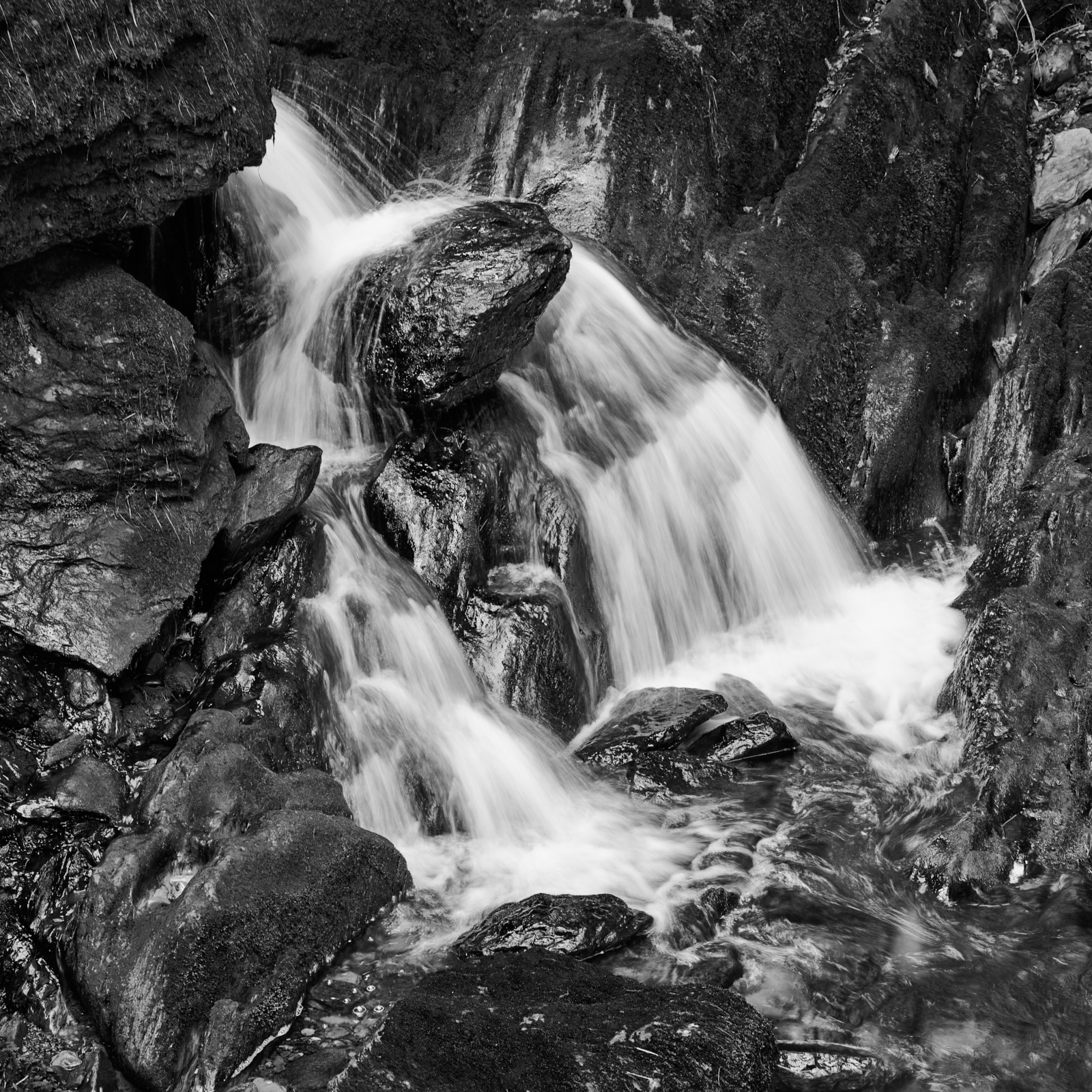
For the first time I feel I have done justice to the subject with these four images.

Finding a pleasing composition wasn’t always easy. I felt a single rock provided a good focal point for my eye to rest on, whilst the swirling and fast moving water engulfed the one static element in the image.

Sometimes I didn’t feel a focal point was necessary. The more abstract nature of the above photograph I think works because of the pleasing pattern and shape created by the way the water is flowing in different directions.

And lastly a more traditional image of a different waterfall of a large rock splitting the flow of water. The surrounding wet rocks serve as a frame. They add texture and form to the photograph which I think works well in monochrome.

I have just returned home following a two week holiday in County Kerry, Ireland, the location for this set of images. It’s the first time my wife and I have visited the Emerald Isle. It was something of a gamble as we have endured a very wet winter in the UK and the weather was forecast to remain unsettled for the duration of our stay.

Undeterred, the conditions were promising from a photographic standpoint. Dark moody skies, dramatic light, skeletal winter trees and streams and rivers in spate.

I plan to share further images depicting the varied landscape of County Kerry in the very near future.

“What are you photographing?”….. the stranger asked inquisitively.

Crouching down with my camera and staring into the rather murky water of a small pond….a man approached me and asked me what was I photographing? He could have simply asked what on earth I was doing. Instead, he chose to be more tactful and polite with his questioning. Had I been in his shoes I may well have posed the same question. After all there was nothing obvious to be seen, let alone photograph…or was there?

And that’s the great thing about being a photographer. The eye is honed to see something which others may not notice. And the more you look and observe the more you see.

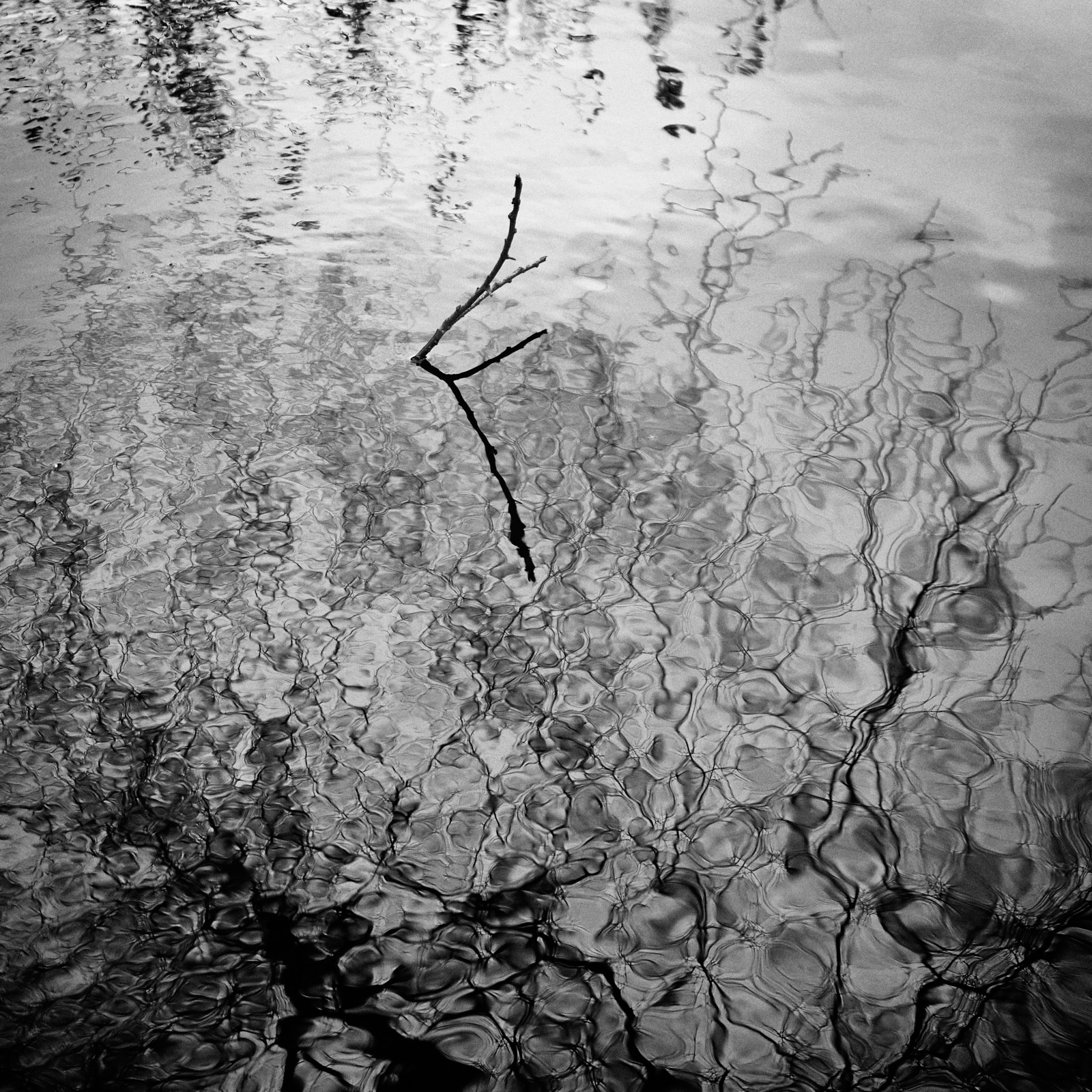
In this case I had been drawn to the stillness of a small twig which appeared to be rising out of the water. The reflections of the surrounding trees were being moved by a gentle breeze. The combination of stillness and movement appealed to me.

What I guess wouldn’t have been seen by the passerby was how these reflections would be frozen and captured by the use of a fast shutter. I focused on the twig and used a wide aperture intending to isolate the main subject.

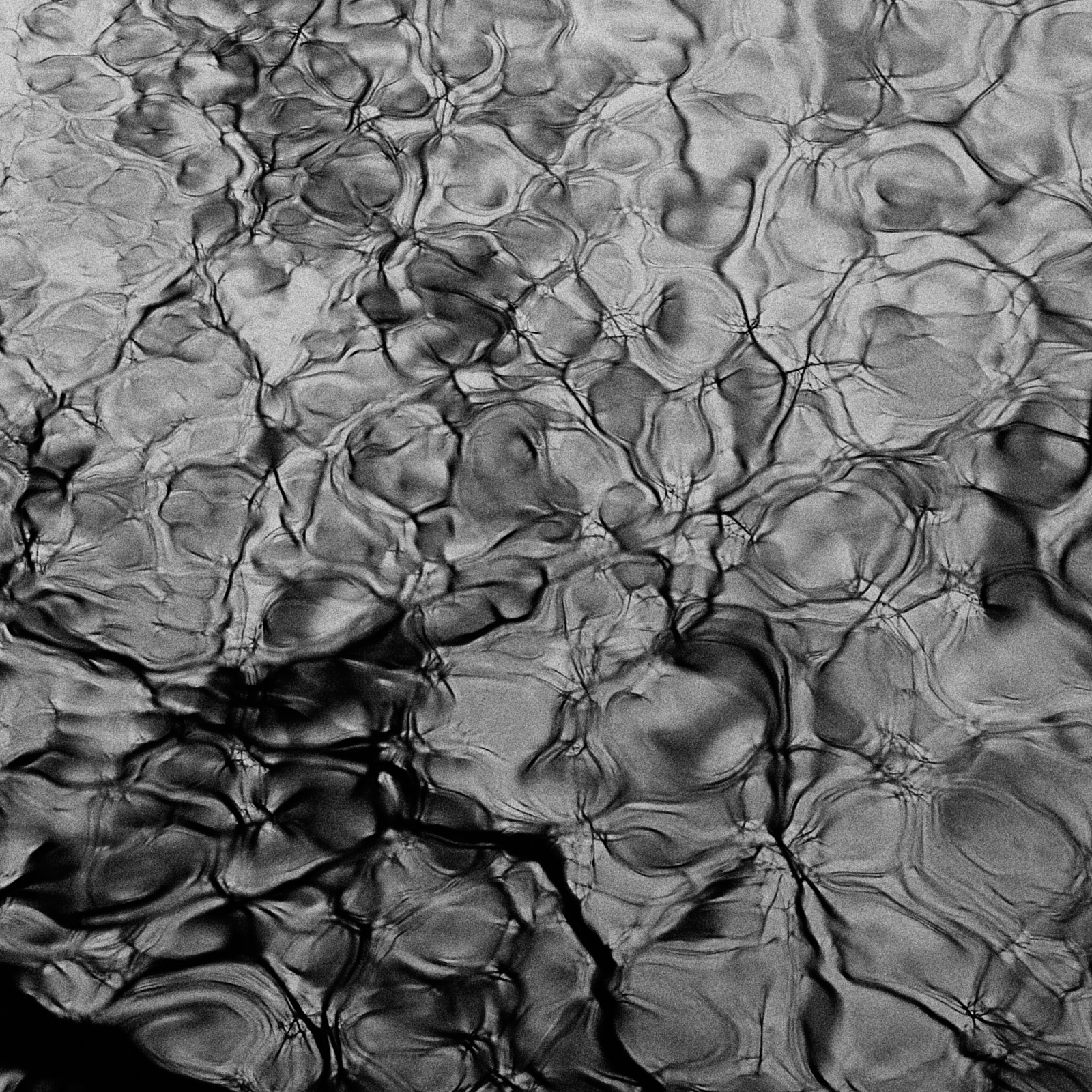
If you are viewing this image on a small screen, you may find it difficult to appreciate the abstract quality of the reflections. So I have included a crop of one part of the picture.

Of course the answer to the question ‘what are you photographing?’ is in the eye of the photographer and is only concluded when the image has been captured and processed. At this moment the photographer’s vision comes together and makes sense – hopefully!

There is something about this photograph which really appeals to me. It’s something out of nothing, being both simple and complex in its makeup. To my eyes it’s the hidden beauty of nature which is very special. All too easily missed, but once seen, never forgotten.

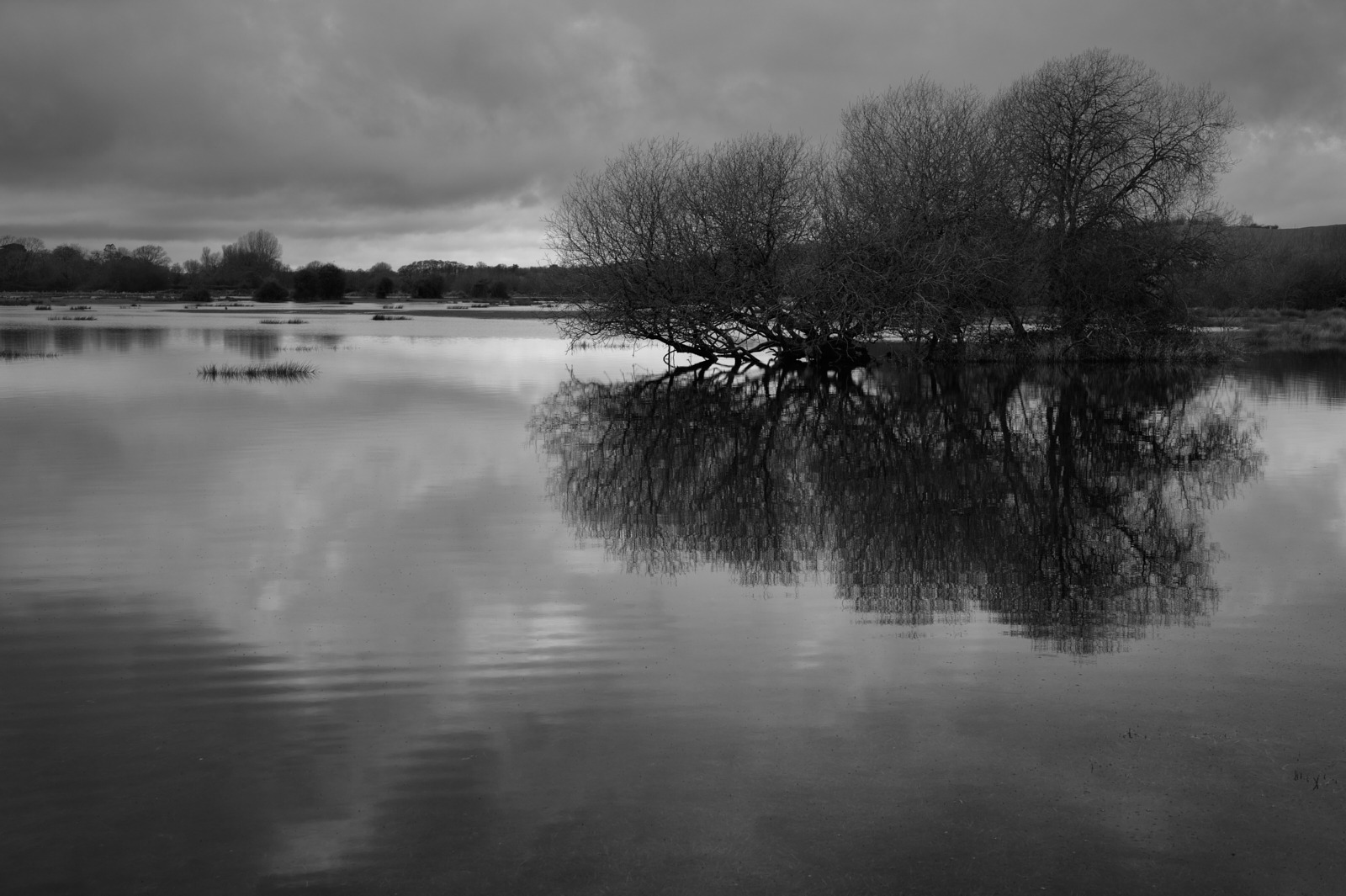
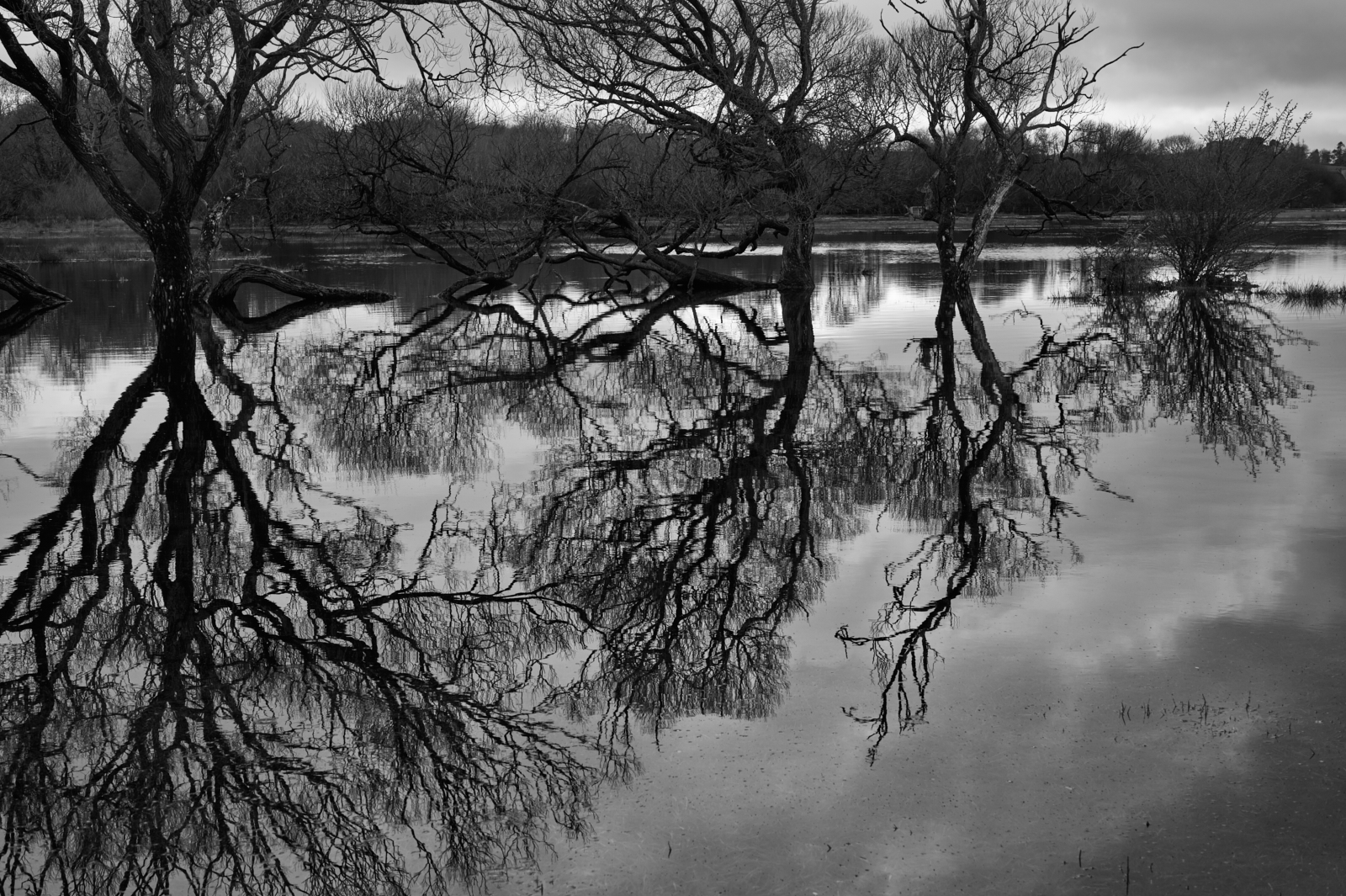
Flooded Meadows ….. from the other side, with a tripod to slow me down

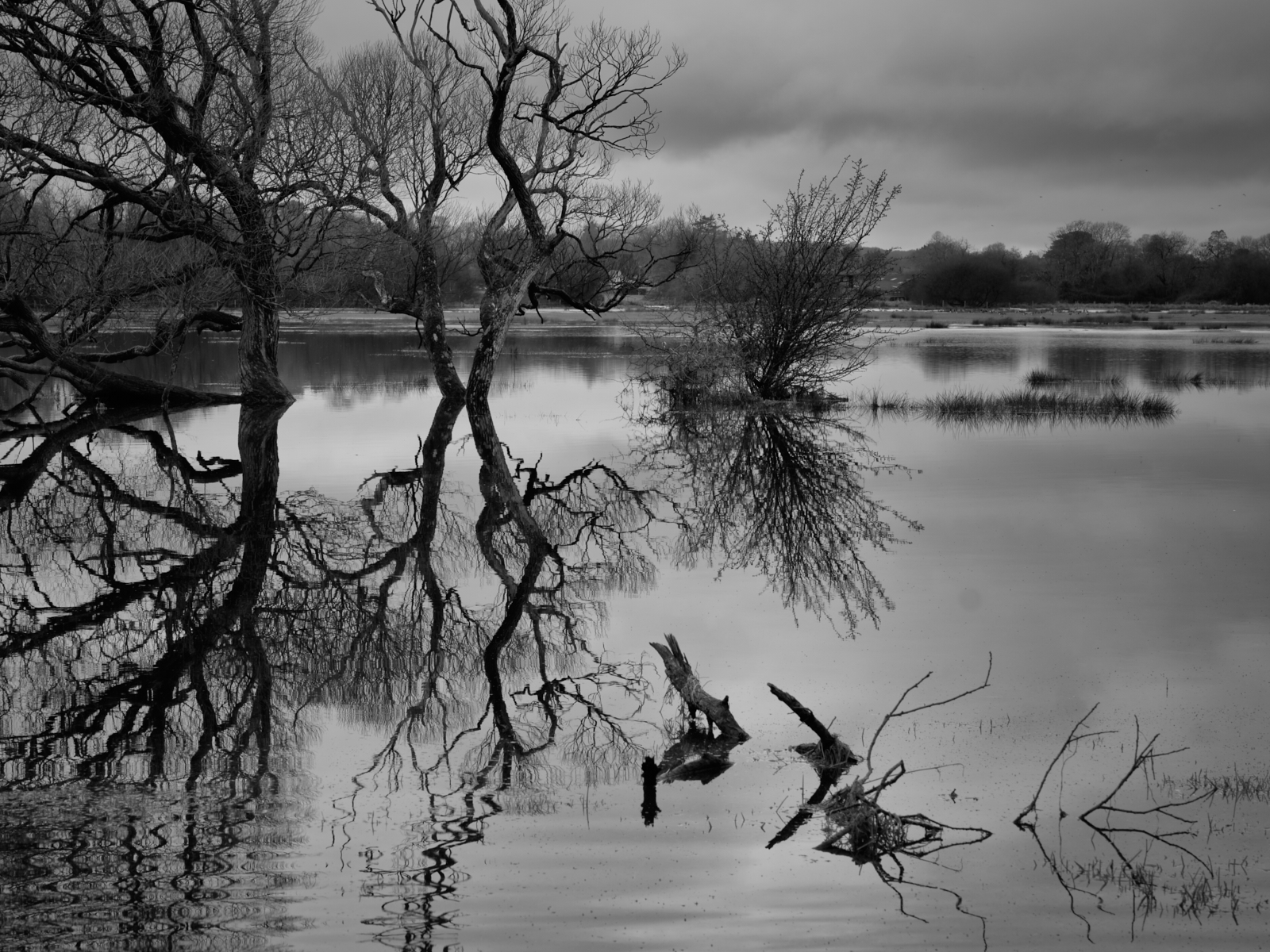
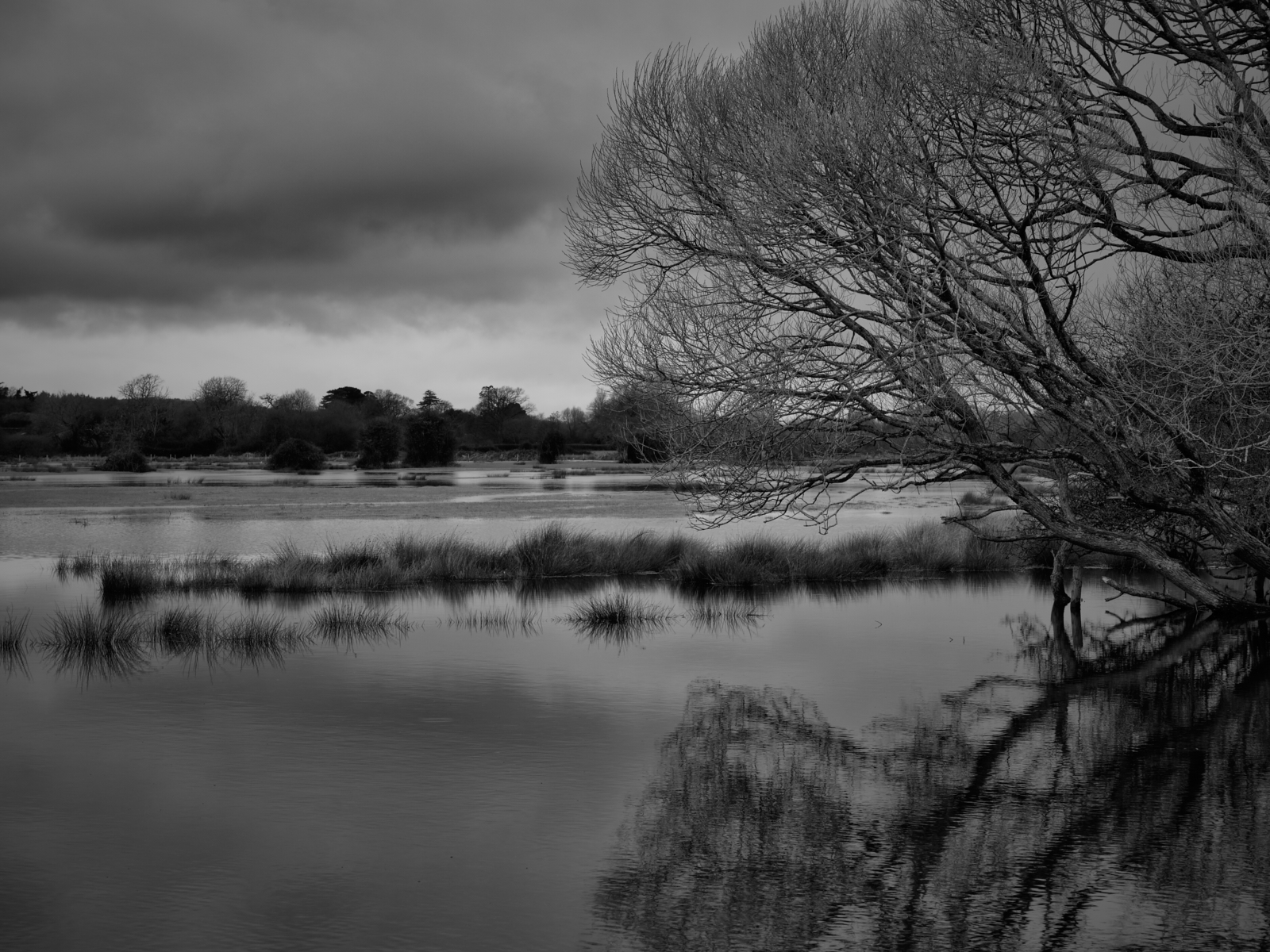
A few days ago I posted a set of images of the flooded water meadows close to where I live. You can read that post and see the images here.

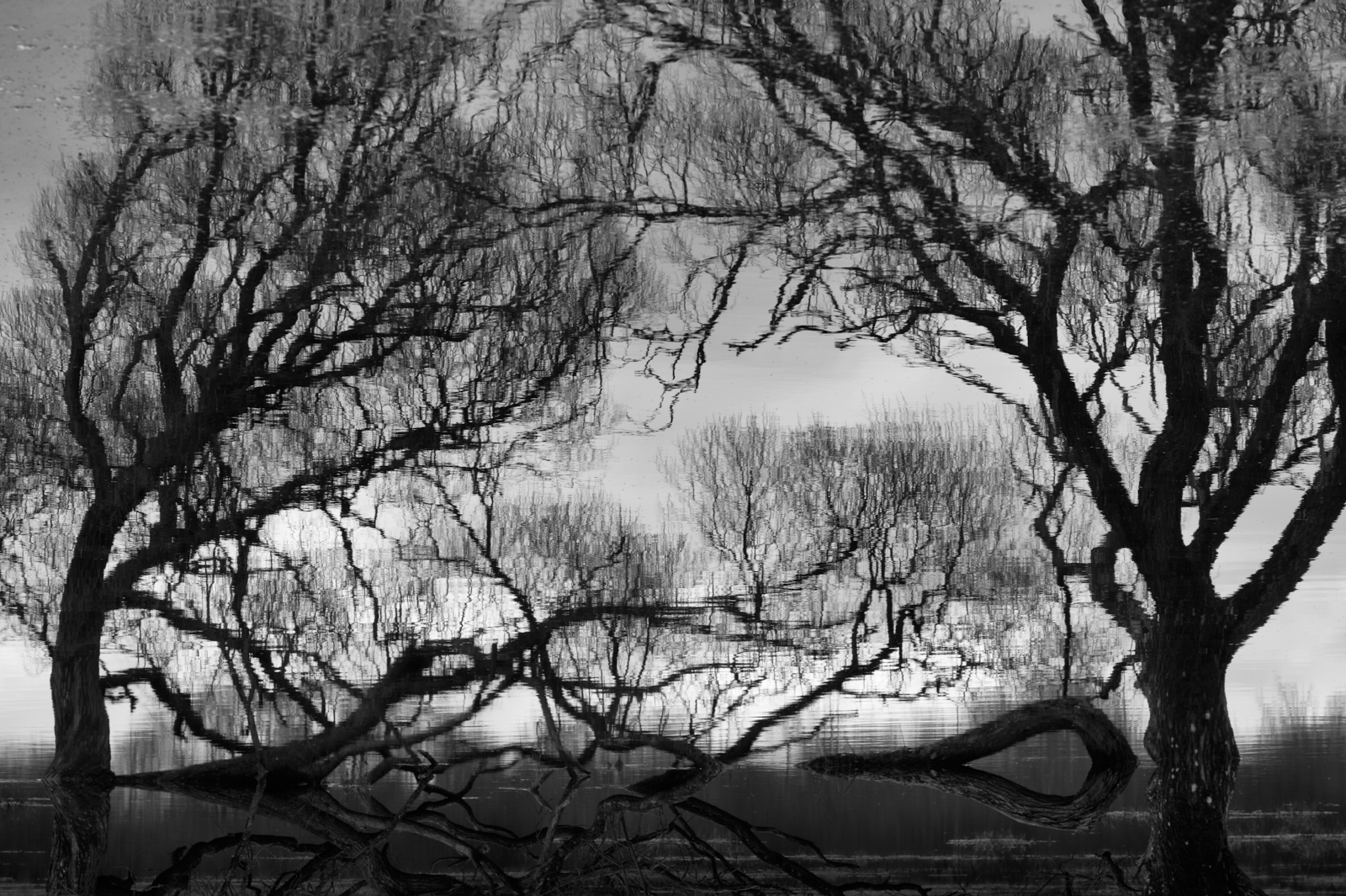
I knew there was the possibility of some different views if I accessed the meadows from the other side of the river. In particular I wanted to capture some trees which I thought would be ideal subjects providing I could pick a still day to make the most of their reflections.

When conditions were favourable I selected what camera gear I would need and put on my wellies. I took a tripod, not because I would be taking any long exposures but to slow me down. I tend to work quite quickly and the one advantage of a tripod is that I take greater care over the composition and the camera’s settings. I find the process of being in the field more immersive as a consequence.

The water levels have receded but any more rain will only fall on saturated ground, so I fully expect these scenes will persist for some time to come. I may travel a little further afield to find other areas where I know local rivers have burst their banks. I have not known flooding on this scale before so I want to make the most of these conditions while I can.

Chiaroscuro – the light and the dark ….. inspired by Ansel Adams

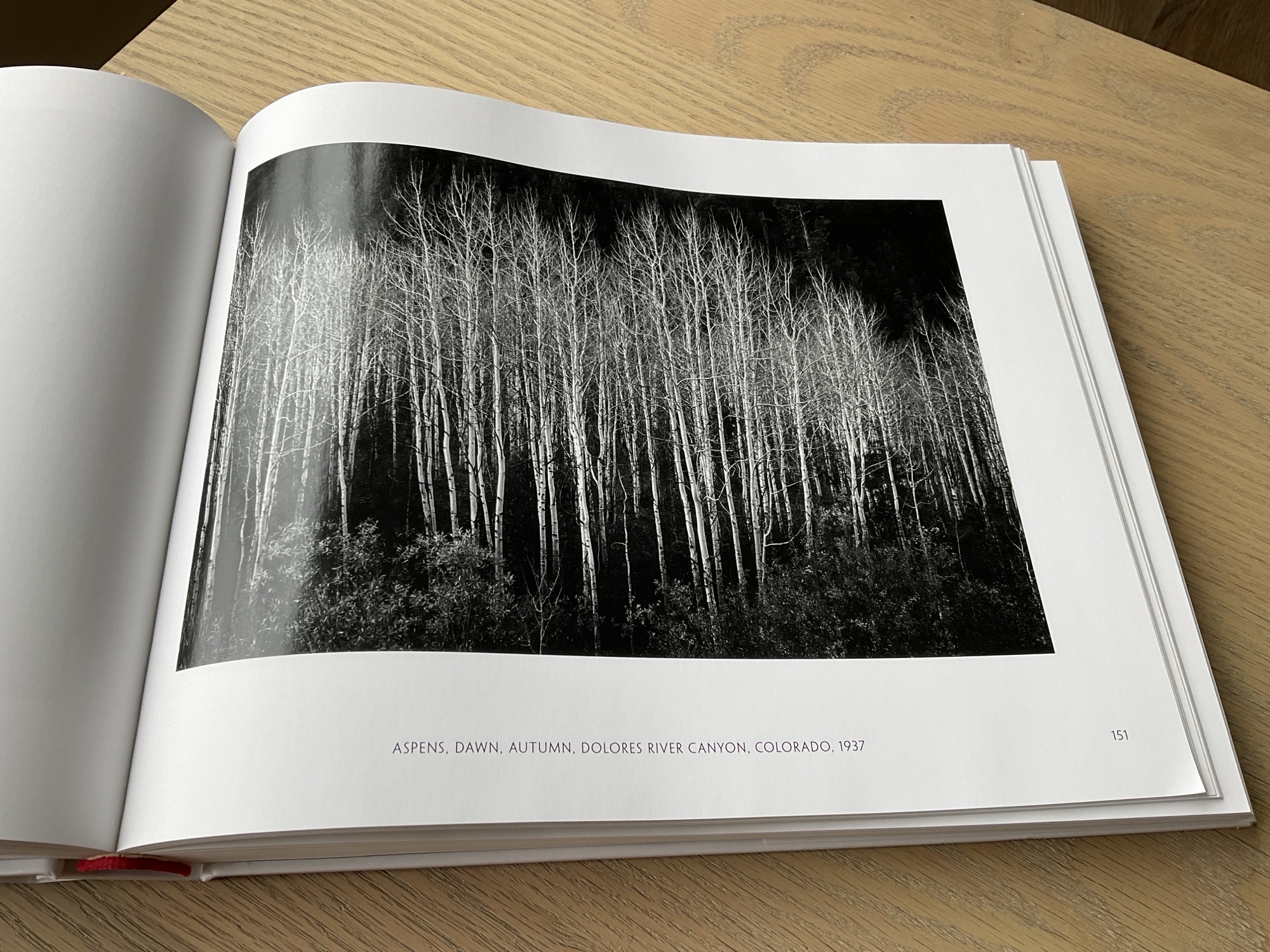
I would think that most photographers have been inspired by the work of Ansel Adams. I know I have. Ansel Adams was a great exponent of chiaroscuro. The art of using strong contrast in a picture where light subjects are set against a dark background or conversely dark subjects are set against a light background. When used creatively it can work so well in monochrome photography. As well as adding depth to an image, it can be used in a very impactful and dramatic way.

Over the years I think I have learned to see in black and white. To understand how a scene or particular subject will translate to monochrome. To seek out compositions which when processed make an interesting and pleasing image. I am helped of course by the camera having a black and white preview but I need to spot the potential image first, long before I reach for the shutter button.

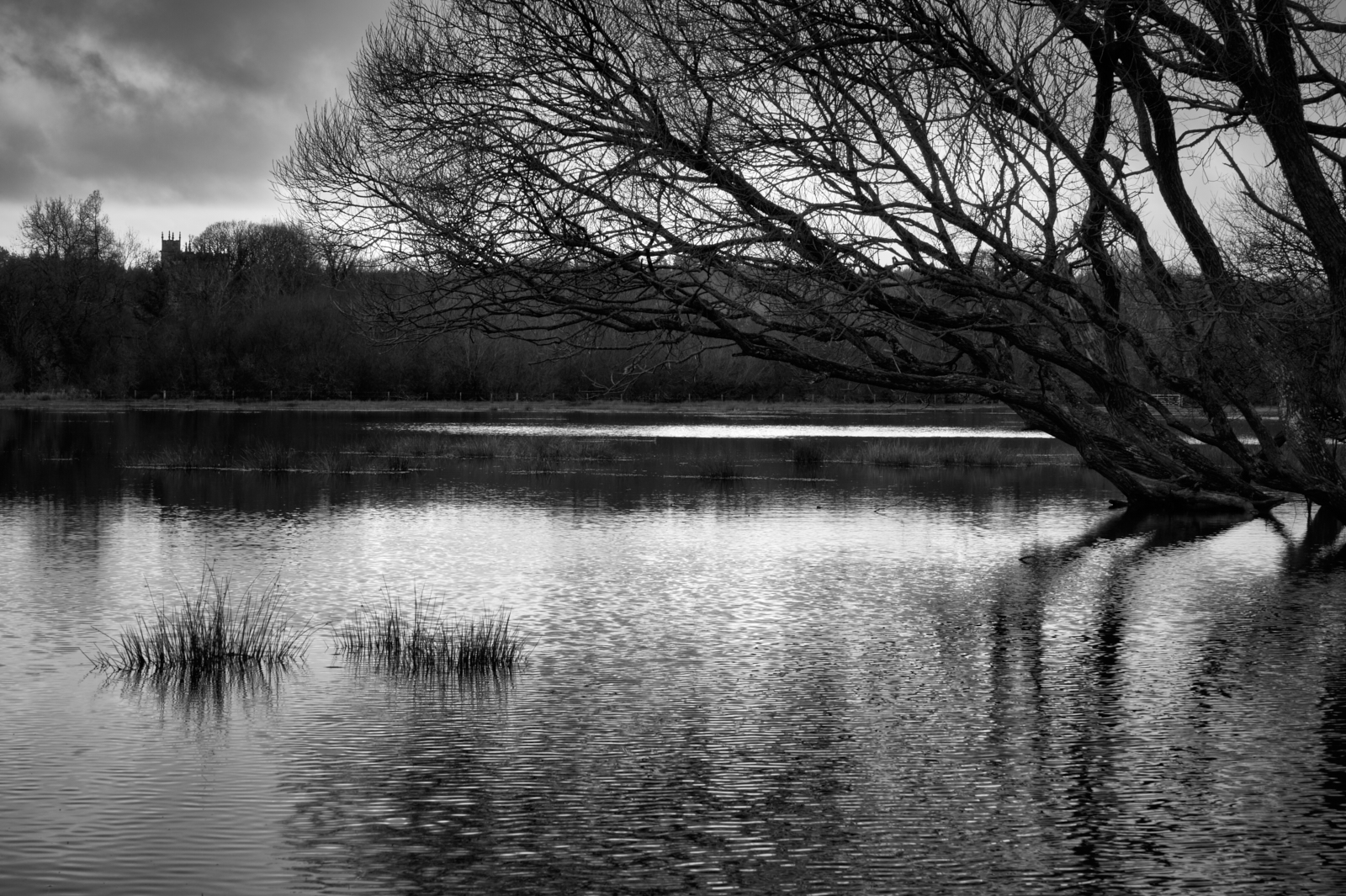
It’s not very often that I only post a single photograph, let alone provide an explanation as to why I enjoy the result. On this occasion I considered this picture of a dead tree in its skeletal form worthy of doing so. My reasoning – well for me it’s a good example of why I love black and white photography.

The horizon line virtually splits the image in half. Light adjoins dark. The uppermost branches stand out against the bright clouds. I have used the dark areas in the sky to prevent the eye wandering outside the frame. The lower part of the tree is bathed in light, enhancing their shape, texture and form. They contrast so well with the dark background of nearby trees and hills in the distance. I like the inclusion of a building, just to the left of the trunk. This adds scale and depth to the image without it being a distraction to the main subject.

At the time of taking, I ask myself how can I process the image to best effect. Will I need to darken parts of the sky and in the case of this image, where do I place the branches of the tree to make the most pleasing composition. I would like to think the answers to all these questions have resulted in an image which you can enjoy.

I have many photography books which I probably don’t look at as often as I should. One of these books is ‘Ansel Adams – 400 Photographs’. A truly wonderful collection of his work spanning many decades. His use of light and dark, form and texture, all of which he brings together to enhance the composition. Every page is a lesson in the art of great photography and includes many examples of how chiaroscuro is used to excellent effect. A book for every photographer’s shelf.