Posts tagged ‘monochrome’

Portrait of a Highland Cow – turning imagination into reality.
Highland cow

Highland cow


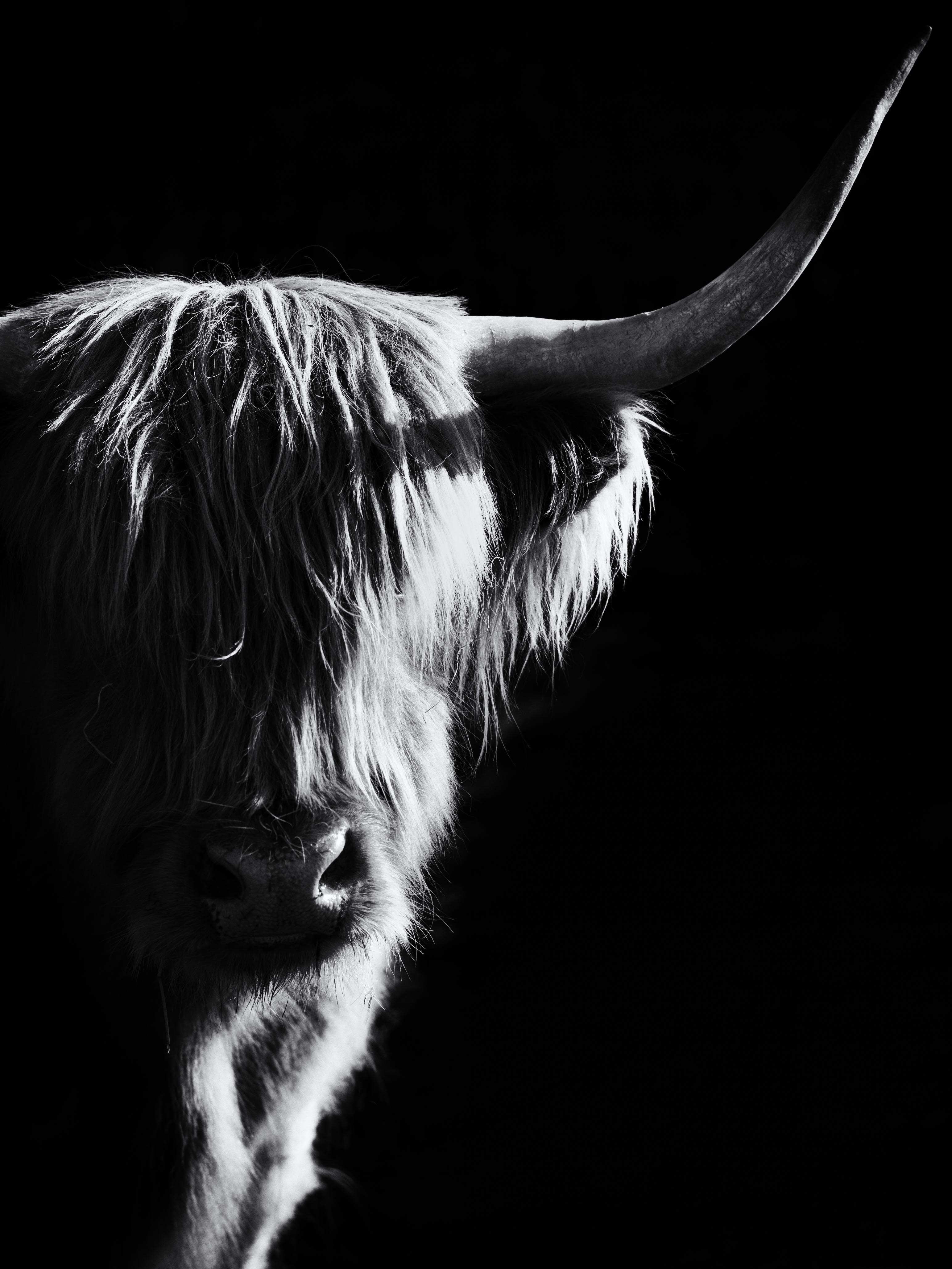
Sometimes, but certainly not always, I have a clear idea of the image I am trying to make even before I set out to take the photograph. This portrait of a Highland cow is a case in point.

From a lighting point of view I knew that I wanted the subject to be side/back lit, with bright sun to provide shadow areas and lots of contrast; although I was quite sure I would be adding more in post processing. The background also needed to be quite dark, so that the illuminated silhouette and backlit hairs of the animal would stand out. Compositionally I thought portrait would work better than a landscape, nor did I want to include the whole head or indeed both horns. As magnificent as they are one horn would be sufficient.

When it came to taking the shot, I deliberately included more in the frame so that I could crop later. I chose an aperture which would hopefully give me enough depth of field so that the nostrils, horn and hair on the top of the head were all sharp, but the neck or any visible part of the body were out of focus.

In many ways deciding what I wanted from the shot was easier than taking it! Animals move, they don’t pose for the photographer, The lighting was critical so the cow had to be facing the right way and just at the point when you are about to release the shutter, their head turns away and you have to be patient for the next opportunity. I took a number of shots which were out of focus, poorly composed or the background too confusing.  There was a fence between me and the small herd of cattle, so I was restricted in my movement, but I felt more comfortable than being in the field with them! Finally I thought I had captured something which I could work on and you have now seen the end result.

These wonderful creatures are full of character. You sort of know that they can see you even though their long hair prevents you from seeing their eyes. They know you are there, wondering why you want to point this black object in their faces. However their initial curiosity does bring them nearer to you, before they decide that grazing on grass and straw is more interesting than a photographer who wants to turn his imagination into reality.

This image was taken with a Leica M Monochrom and 90mm Summarit f2.4 lens at f4, 1/2500 and ISO 320.

Do click on the image to view a larger version, particularly if you want to see the level of detail which has been captured.

The Bishop’s Cathedral – worth throwing the camera bag in the car!

The Bishop's Cathedral

The Bishop’s Cathedral

I have to admit that I don’t always have a camera with me, assuming of course I exclude my iPhone from that statement. Just occasionally as I get ready for another days work, I will throw (not literally) a camera bag into my car, believing that I may find a little time to take a few photographs on my way home and before the dinner is burnt! Sometimes this is because I specifically want to try something out which has come into my mind. I guess these thought processes inspire me to make that little extra effort to take some shots.

This sequence of events happened earlier this week. I wanted to use my 28mm f.2.8 lens as it isn’t attached to the camera that often. My default choice of lens is the 50mm f1.4 Summilux. It was a lovely bright evening with some light cloud cover. Bright enough for some shadows but not so bright to give me exposure problems. I headed for the city of Chichester and specifically Bishop’s Palace Gardens, which offers fine views of the Cathedral.

I found a position which I thought would give me a good composition. Held in the vertical position the viewfinder of the Leica Monochrom is not that easy to use. I wear glasses and the frame lines for the 28mm are in the extreme corners, so I have to move my eye or the camera around to compose the shot. I have to say there is a little guesswork involved and I try and allow a margin for error so I can crop later if I wish to. A quick look at the screen on the back of the camera tells me whether or not I need to have another go!

The other slight issue that evening was the sky. It looked a little bland but I could see some blue patches so I attached an orange filter to darken these areas and add interest to the sky. Yes an orange filter on a digital camera – something that only works with the Monochrom.  Its sensor only records luminance and not colour, so a colour filter works in exactly the same way as it would with black and white film. I like to get as much right in camera as I can and not rely on heavy post processing. Having to think about what I want the finished result to look like before pressing the shutter, is I believe a healthy discipline and will improve your photography.

I am pleased with the final result. The lighting on the cathedral and gardens could not have been better. The 28mm is only moderately wide so does not distort the view. The use of the orange filter provided more detail and interest in the sky which is an important part of the overall composition. I cropped the image from the native 3 x 2, to 5 x 4. I prefer this aspect ratio, it is more balanced to me. Its an image that I will almost certainly print, maybe quite large but that’s for another day.

Thanks for looking and I hope you enjoy this photograph as much as I enjoyed making it.

Do click on the picture for a larger view.


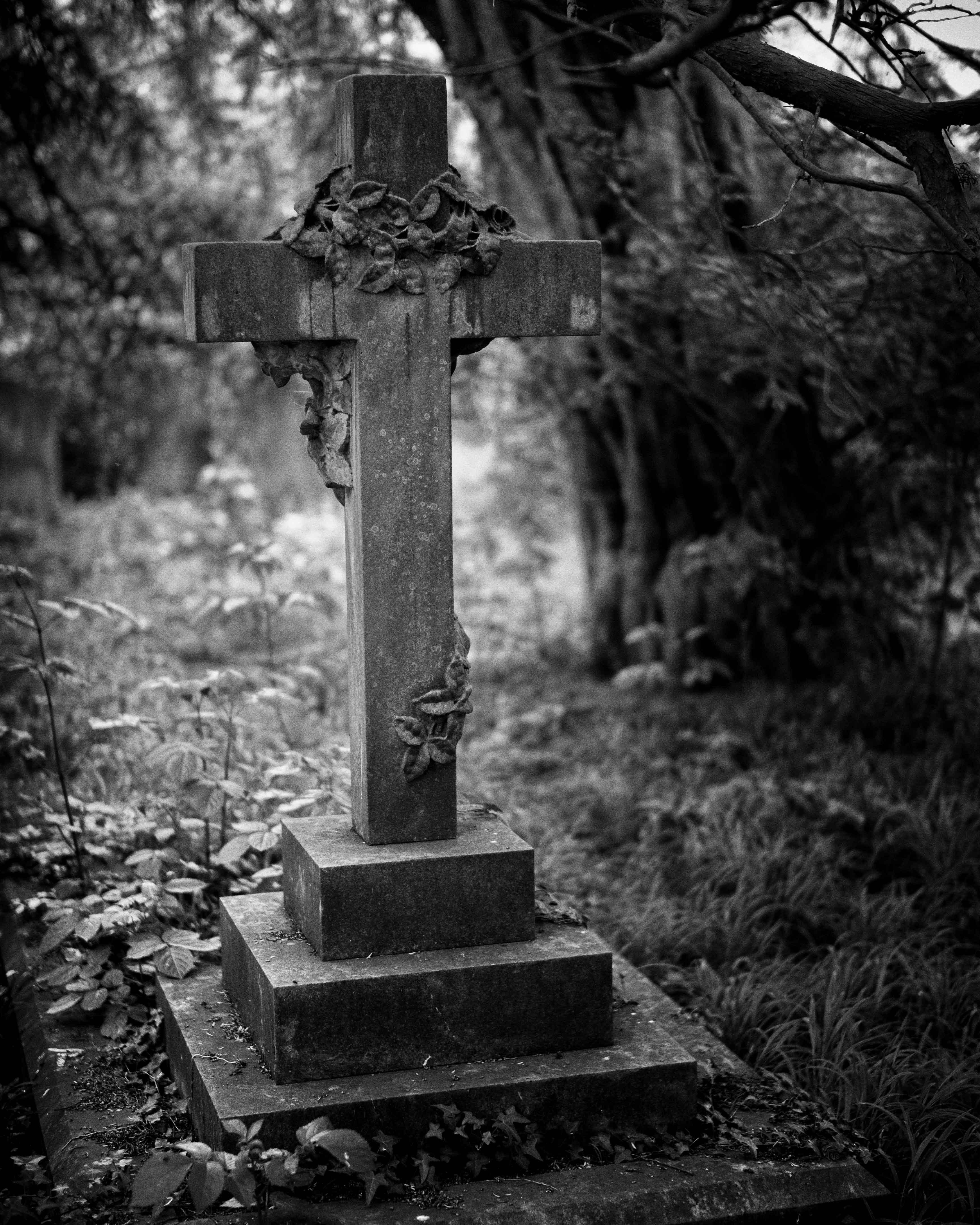
In loving memory of a Churchyard – St Thomas a’ Becket, Warblington

L1002347-Edit-2

From an early age I have always been fascinated by churches and churchyards with their gravestones and crosses.  I guess this interest was instilled in me by my parents when I was a small child. My father would want to stop and visit every church we came across, particularly when we were on holiday visiting a new area. If there was time he would want to do a quick pencil drawing of the church in a sketchbook, something which he always carried with him. He would note down the colours and when he returned home he would get out his brushes and water colours to paint the scene he had sketched, but also the one he remembered in his mind’s eye.

I am no different except I paint with light, using black and white photographs instead of some paper, pencil and paints.  I will capture the scene and then in post processing apply the appropriate treatment to the image. It’s a creative but arguably selfish process, as first and foremost I want the result to please me but I always hope it may give some pleasure to the viewer as well, but primarily it’s my interpretation of a visit to a particular location.


L1002382-Edit


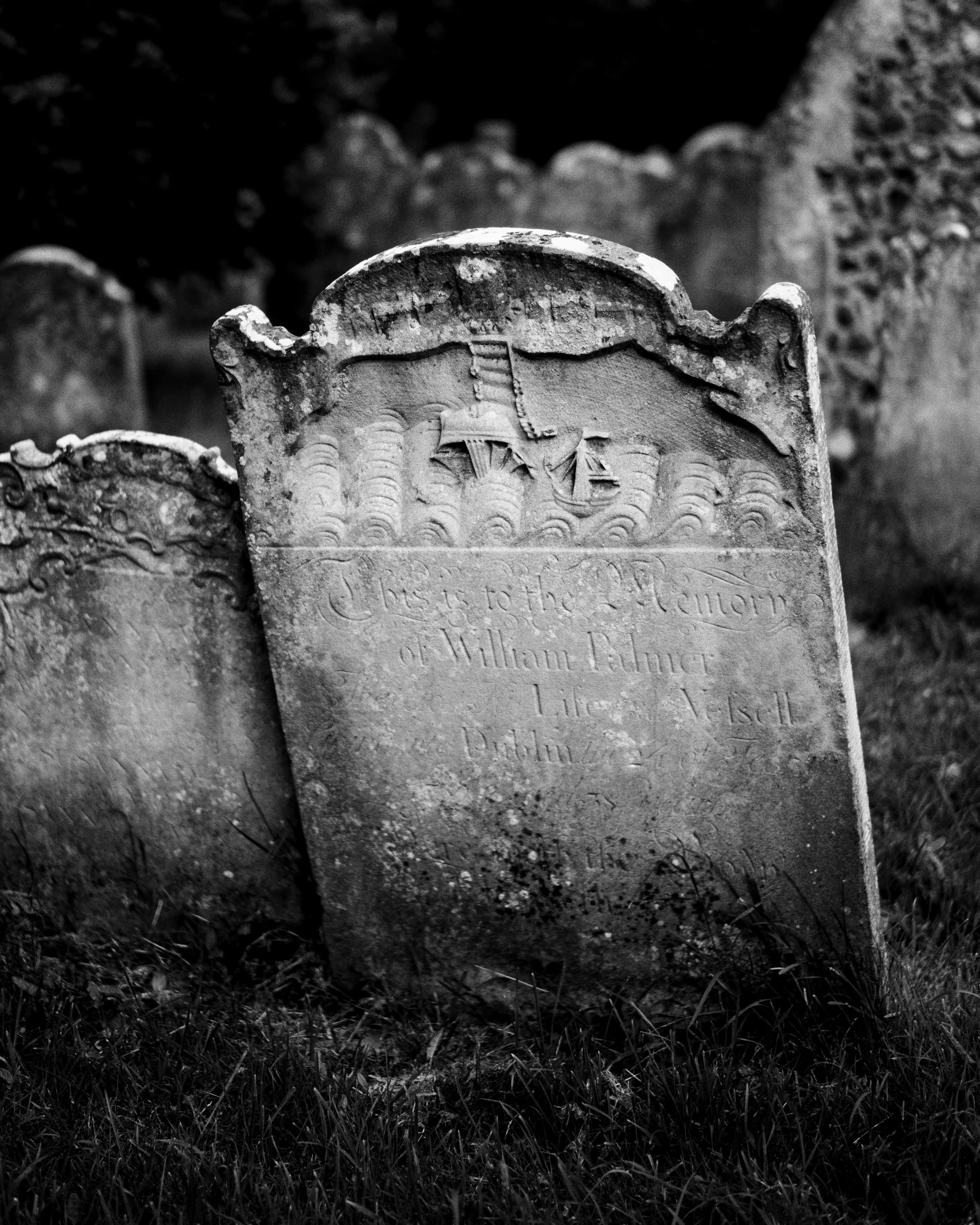
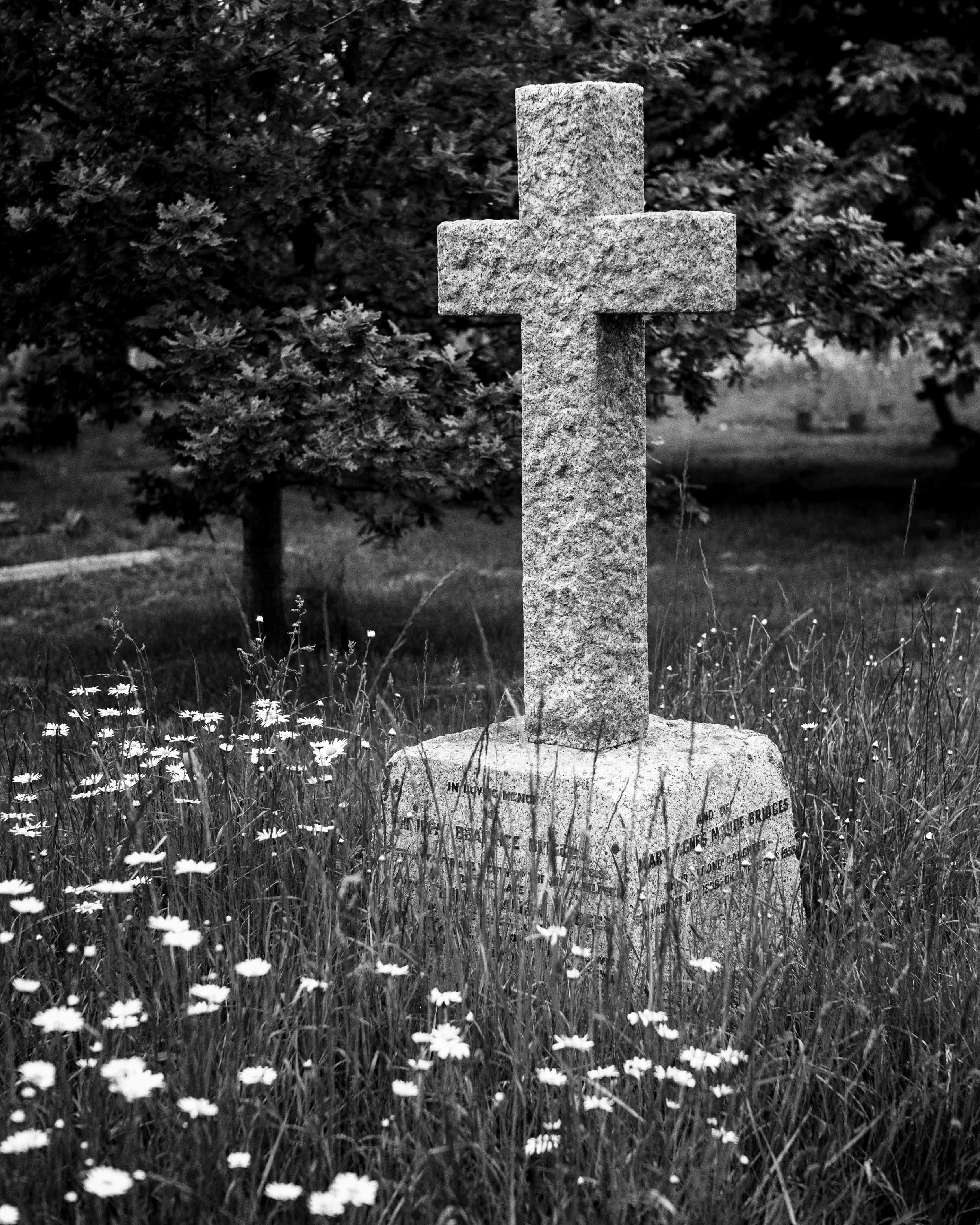
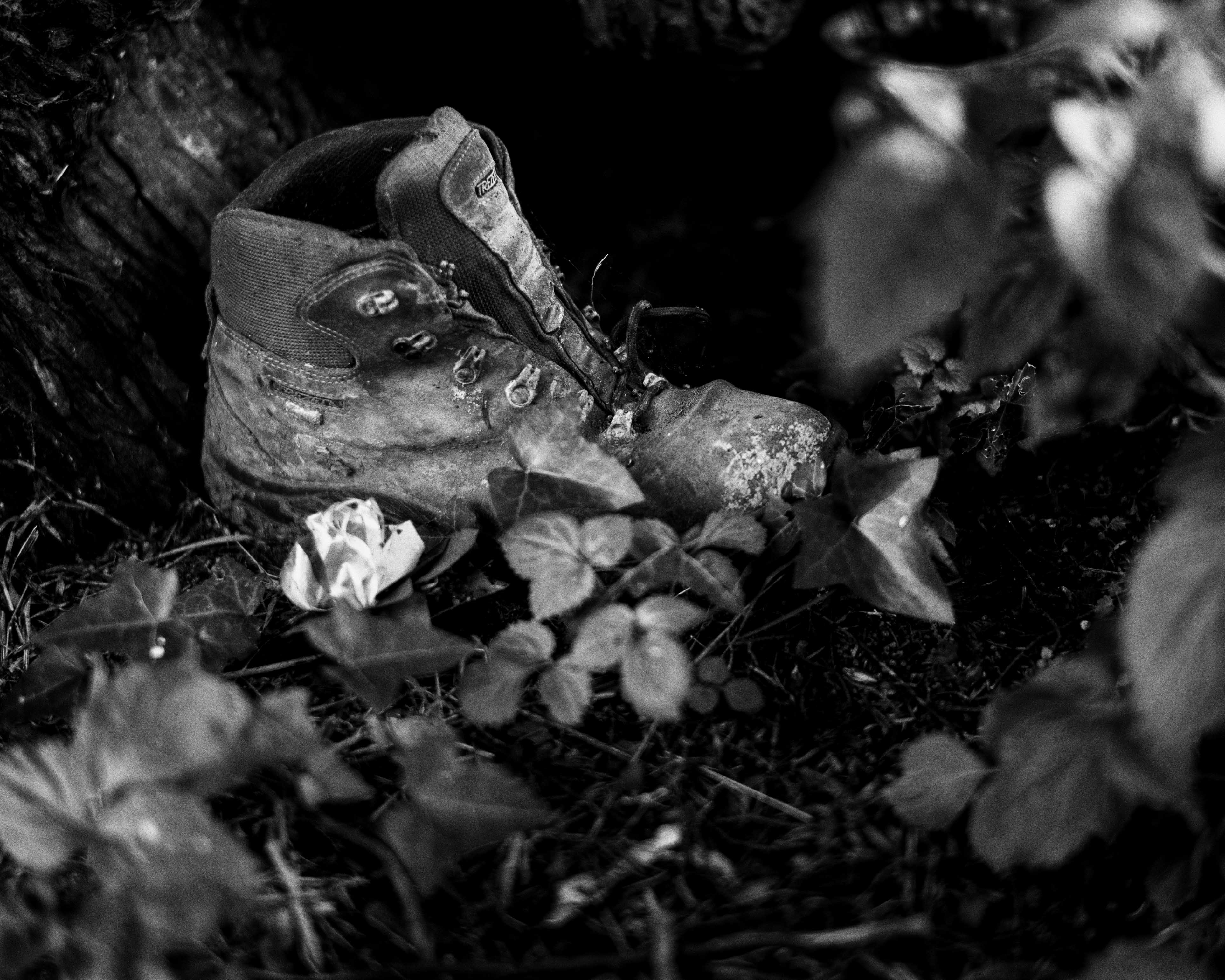
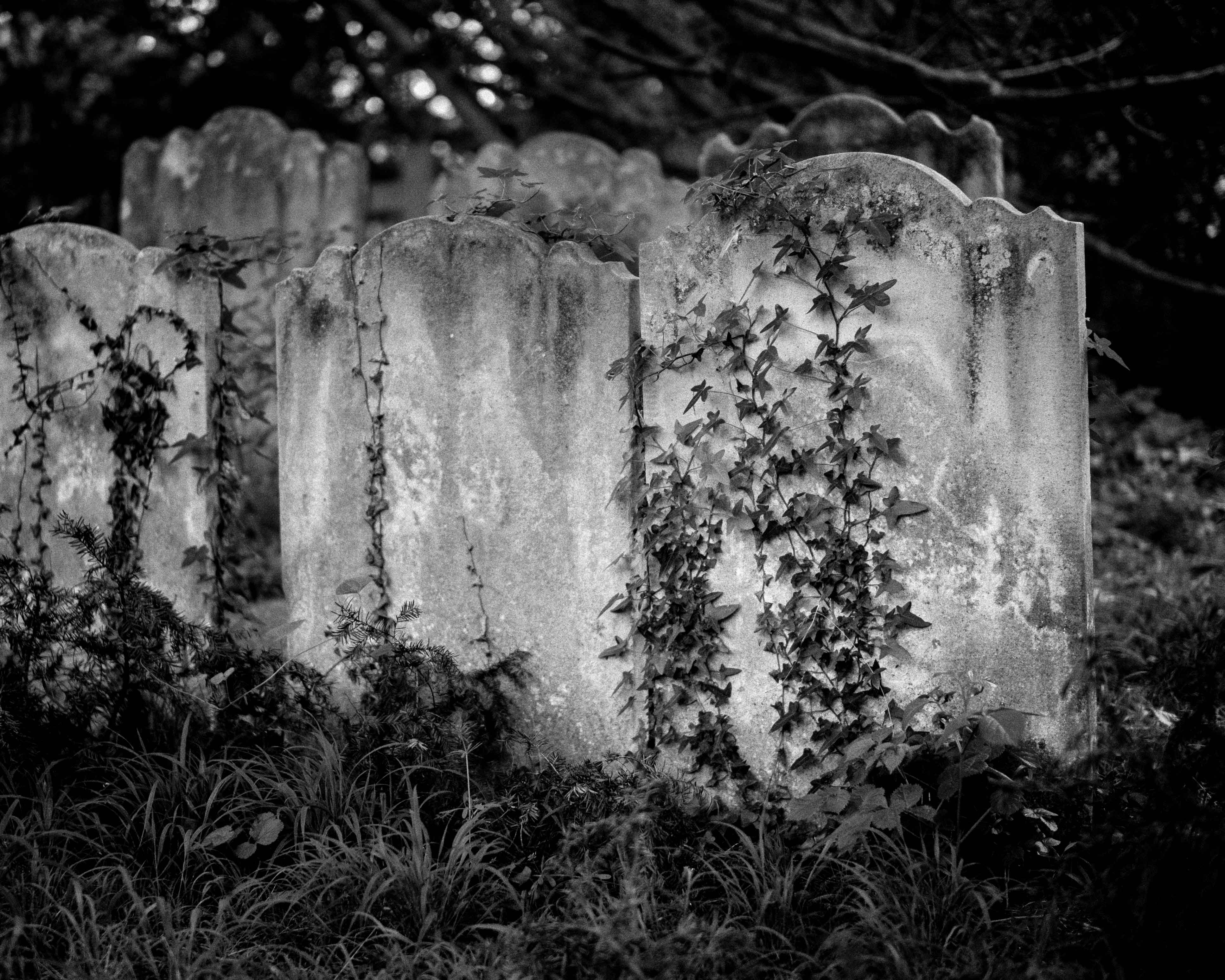
The subject of this entry is the churchyard  of St Thomas a’Beckett Church in Warblington, which dates back to Saxon times. It is situated in the Parish of Emsworth on the borders of West Sussex and Hamsphire, within just a few minutes walk of the sea,. As you might imagine the area is popular with walkers and those visiting this lovely church. The churchyard is about an acre in size and there is a much larger adjoining cemetery, so there is plenty to explore. Inevitably many of the inscriptions on the headstones have been worn away, now covered by lichen or ivy. Apparently the oldest memorial dates back to 1707. One of the most striking is the gravestone of William Palmer (above) which depicts the sinking of his ship, mast first, in Dublin Harbour in 1759.


L1002362-Edit


L1002407-Edit


I fully accept the subject of this entry will not be to everyones liking, but as I have already said these are fascinating places. They are a reminder of lives lost and the lives those people used to live many generations ago. Walk along the pathways and between the headstones and your mind starts to wander as you try and imagine what life must have been like for the people of Warblington in days gone by.

There are eight more images in this post ……… so do continue scrolling down.


L1002395-Edit


L1002403-Edit


L1002358-Edit


L1002392-Edit


L1002393-Edit


L1002398-Edit


L1002428-Edit


L1002361-Edit


All the photographs in this entry where taken with a Leica M Monochrom and 50mm Summilux lens, often shot wide open at f1.4 to give a very narrow depth of field. They were all processed in Lightroom and then imported into Silver Efex for some final treatment.

Please click on any of the images to view a larger version.

Pastimes on the coast – people in photographs

Wave watchers

Wave watchers

People don’t normally feature in my photographs. I normally wait for them to move out of shot before pressing the shutter. Just occasionally they will enhance a photograph by adding an extra element or storyline to an image which I like.

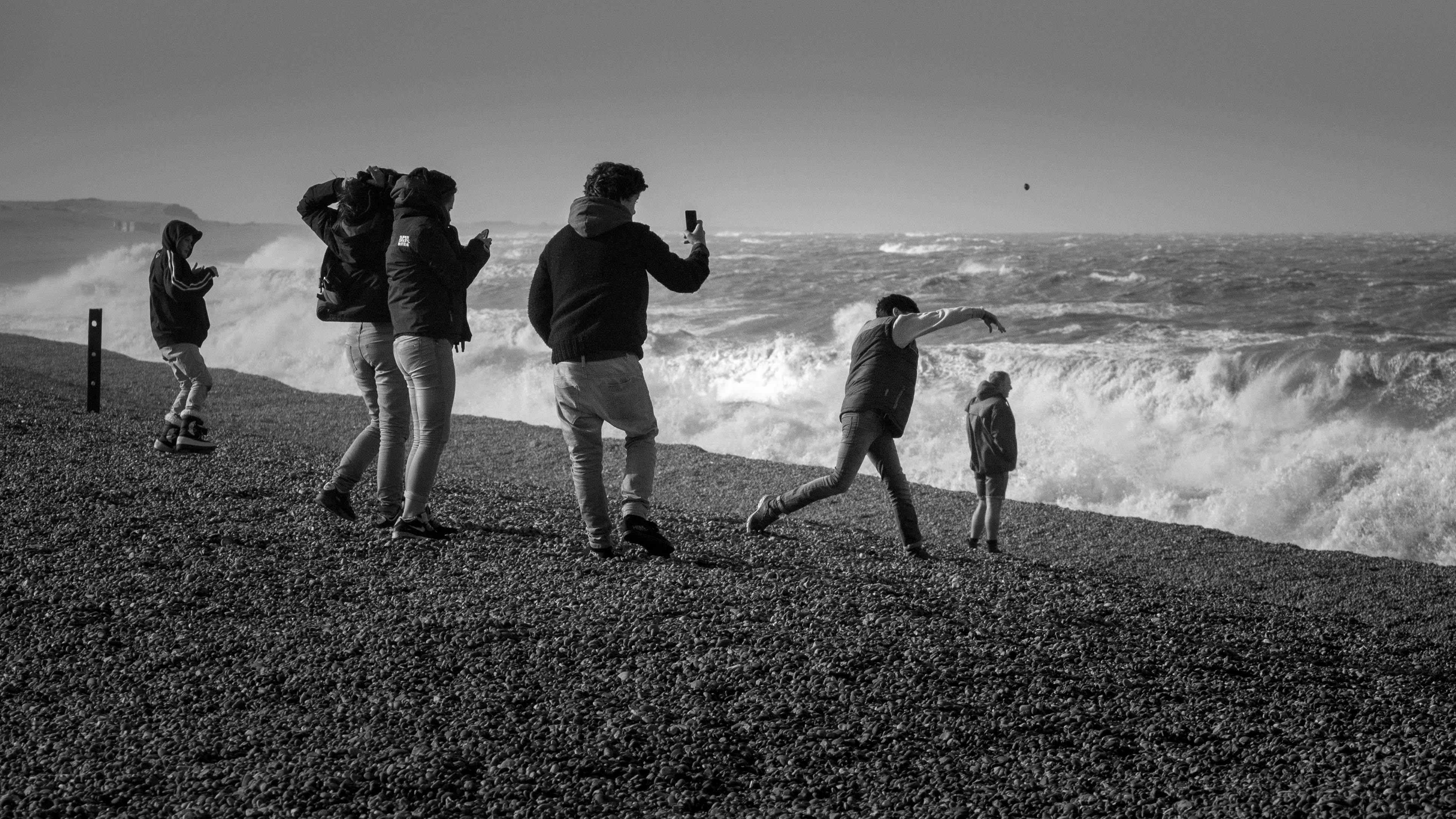
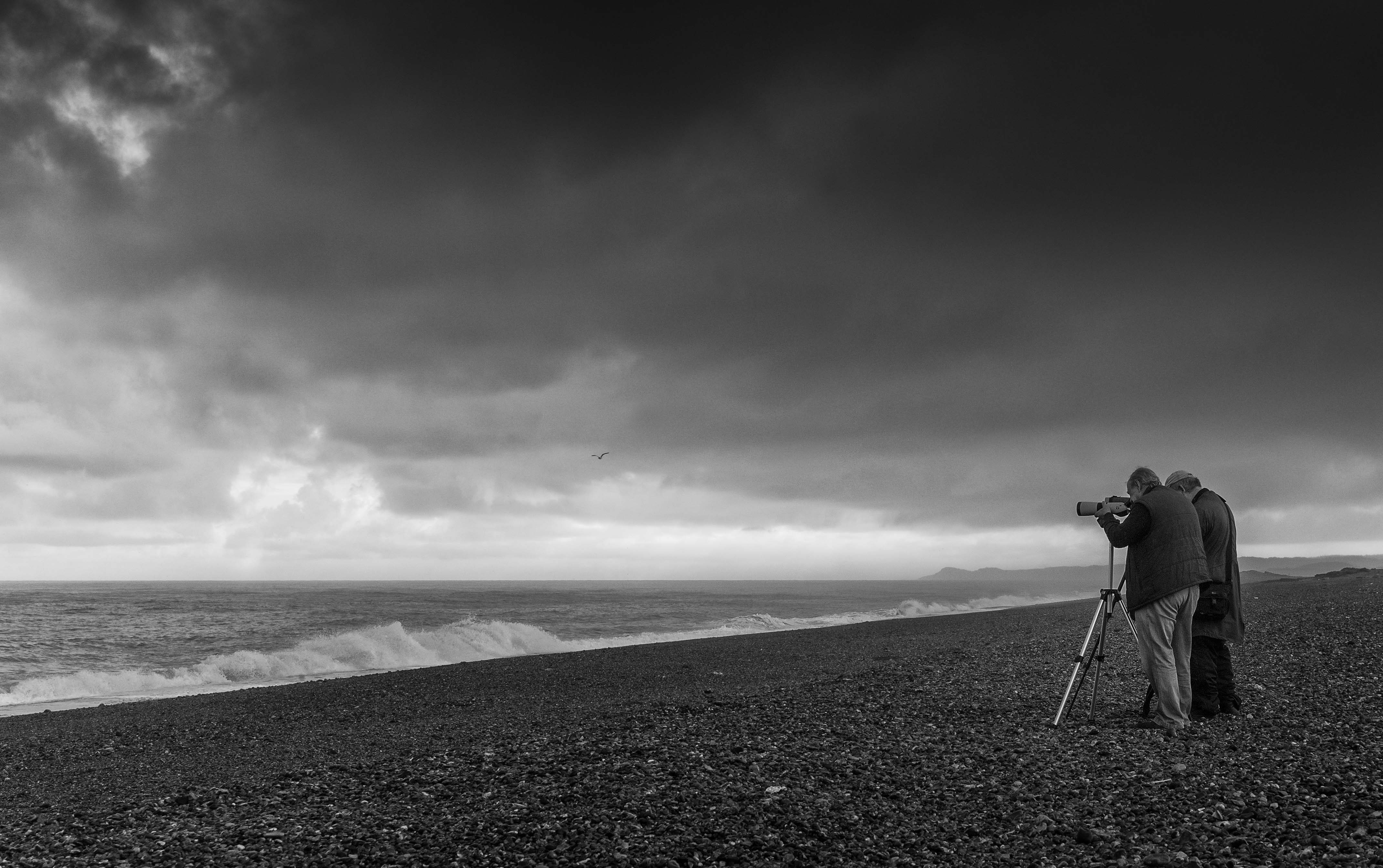
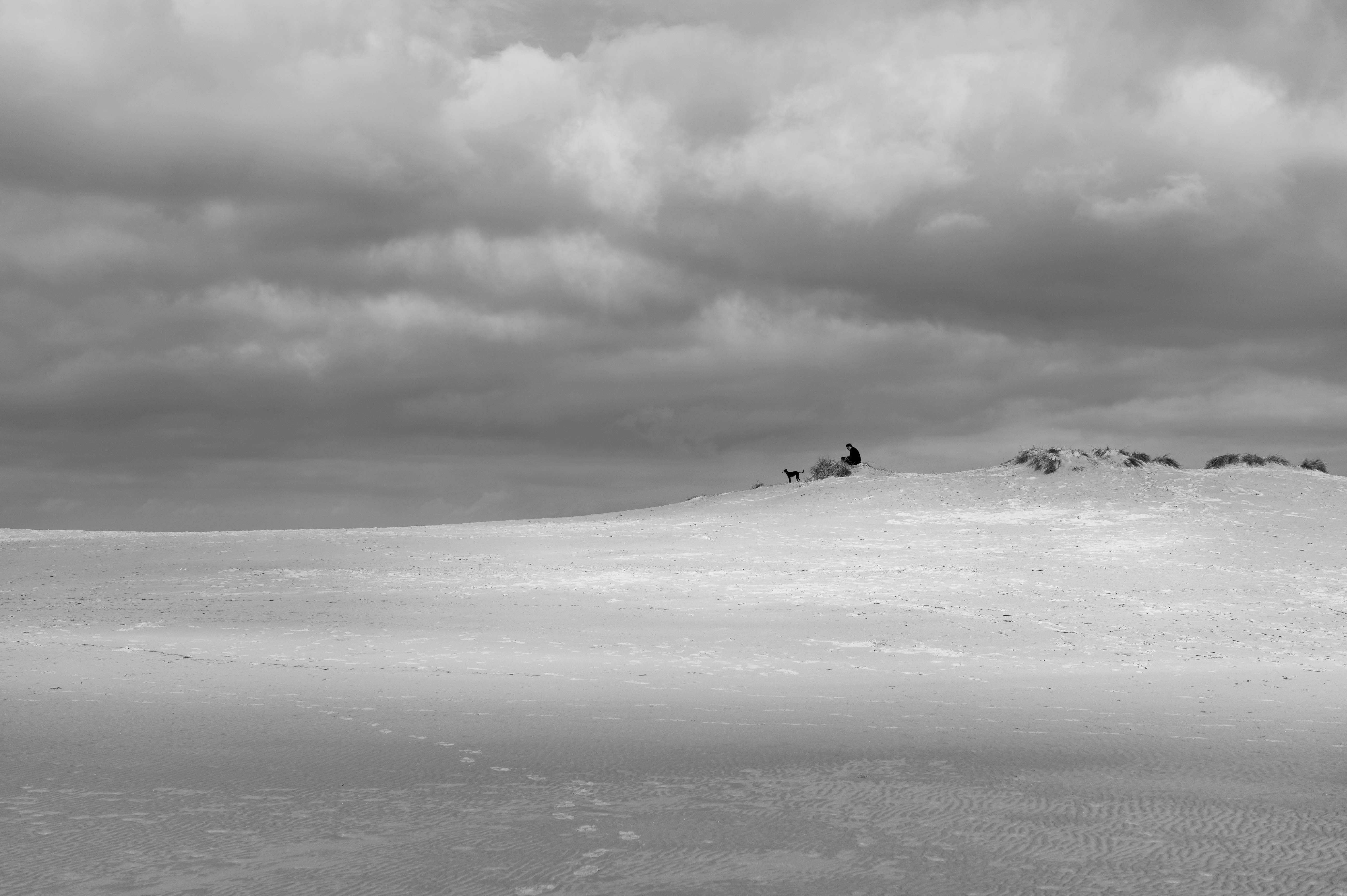
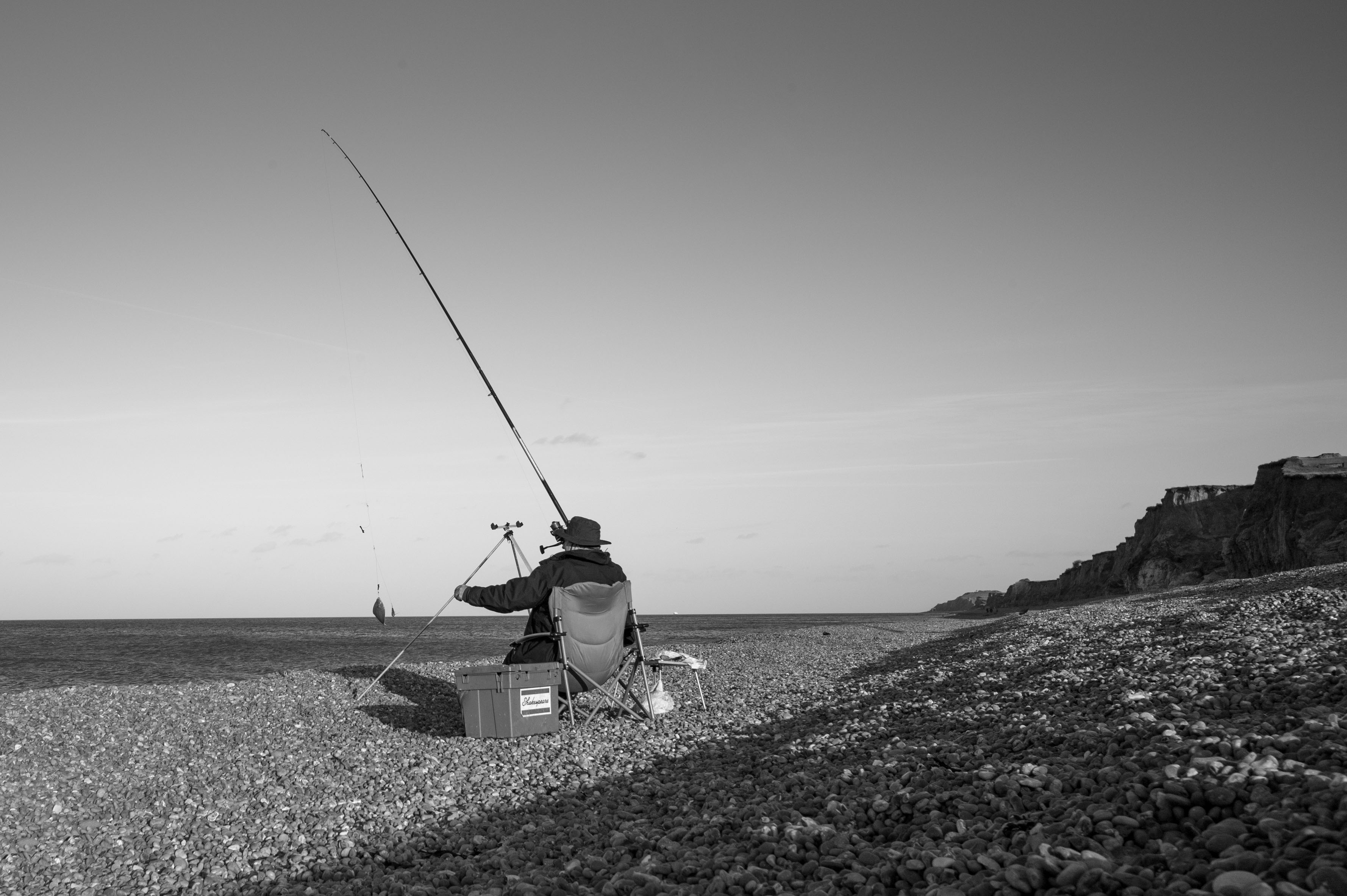
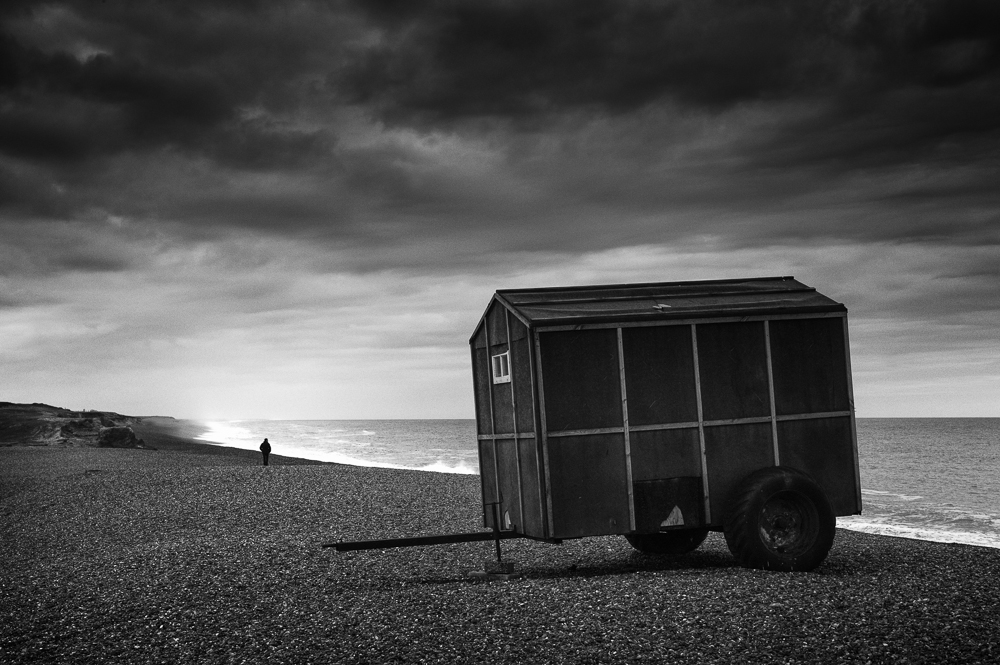
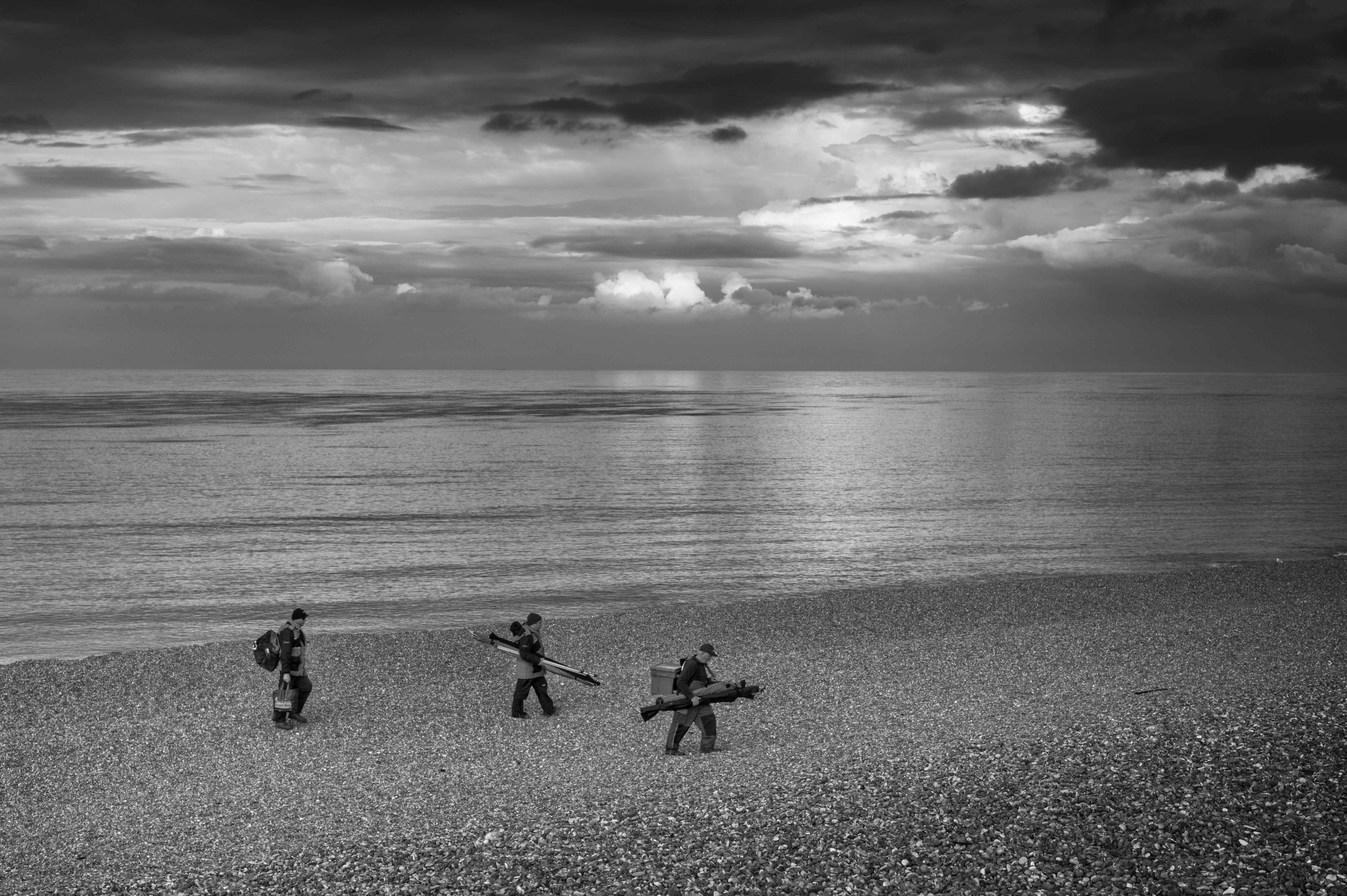
This short series of just six pictures all taken on the North Norfolk coast last year, illustrate what I am trying to say. Imagine taking the people out of each shot and what would you be left with? In each case a pleasing but hardly noteworthy image of the foreshore, the sea and in some cases a good sky. However the inclusion of a person or people to the shot, tells the viewer something else about the location. It documents how we interact with a particular location, in this case the enjoyment of our coastline, the sea and the large open skies.

Irrespective of the weather we might walk along the foreshore collecting our thoughts, listening to the sounds made by the shingles beneath our feet; or look out through a telescope to the far horizon, waiting to sight an elusive migratory bird flying in from others shores; or casting a line and just sitting patiently for a fish to take a bite; or throwing stones into the waves as the winds and high tide combine, all captured on a friend’s smartphone; or just sitting and watching from a sand dune with no one else around other than our trusted four legged companion……and at the end of the day, as the sun starts to set, walking back home only to return another day.

Is it any wonder we find pleasure and a certain peace with the coast, as we combine our hobbies with a dramatic and beautiful location.

There is of course someone else enjoying their hobby in these photographs……and that’s me!

Bird watchers

Bird watchers

One man and his dog

One man and his dog

The catch

The catch

Alone on the shore

Alone on the shore

End of the day

End of the day

To see a larger version, please click on an image. You may need to do this on a couple of the pictures to appreciate some of the detail.

Shutter, window and steps – a simple picture?

Shutter, window and steps

Shutter, window and steps

There is something about this image which appeals to me. It’s a fairly straightforward and simple composition, made up of three principal components. There is light coming through the window on the left, balanced by the dark shadow area on the right. The contrast of light and shade is separated by the window shutter which is worn with peeling paintwork needing attention. The wooden steps have a lovely grain to them but it is unclear from the photograph where they lead. Up to another floor possibly or just a high level cupboard?  To climb the steps you would need to close the shutter, cutting out the light – why was it designed this way? Through the window the out of focus detail hints at a garden beyond with a line of trees on the horizon. Bright spots on the glass suggest it might be raining. A simple image perhaps, but on closer observation plenty to hold the viewers attention, at least that’s what I believe.

It reminds me of the saying by Ansel Adams – ‘There are always two people in every picture: the photographer and the viewer’. If both are happy then I guess that’s what makes a successful photograph.

This photograph was taken with a Leica M Monochrom and 50mm F1.4 Summilux lens – @f2.4 1/2000th sec ISO 3200

Do click on the image for a larger view.