Posts tagged ‘Leica Monochrom’

Churches Project no.16 – A return to North Stoke, West Sussex

North Stoke-9


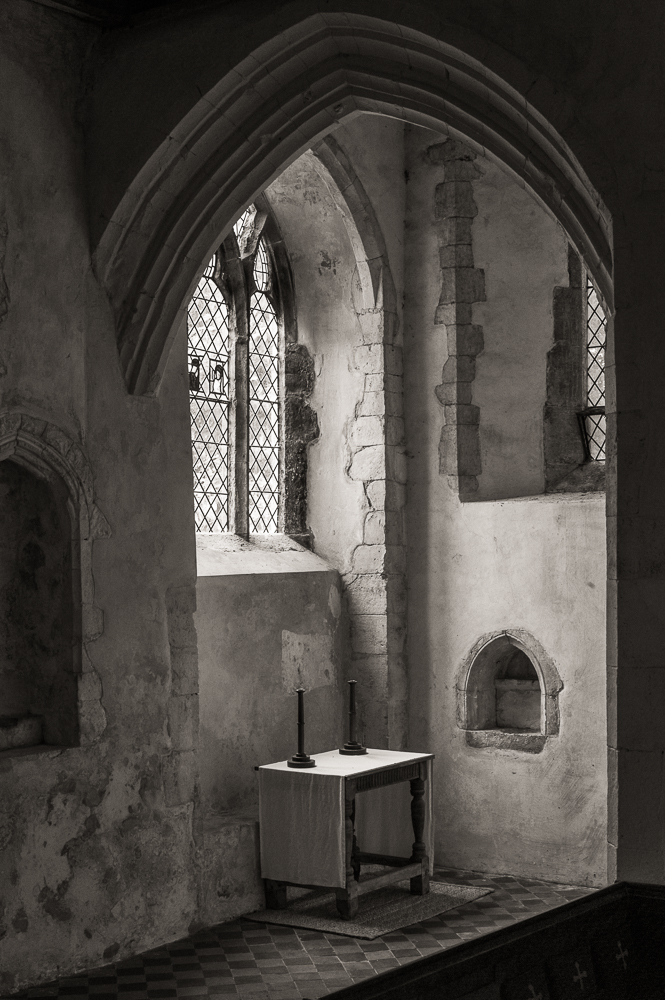
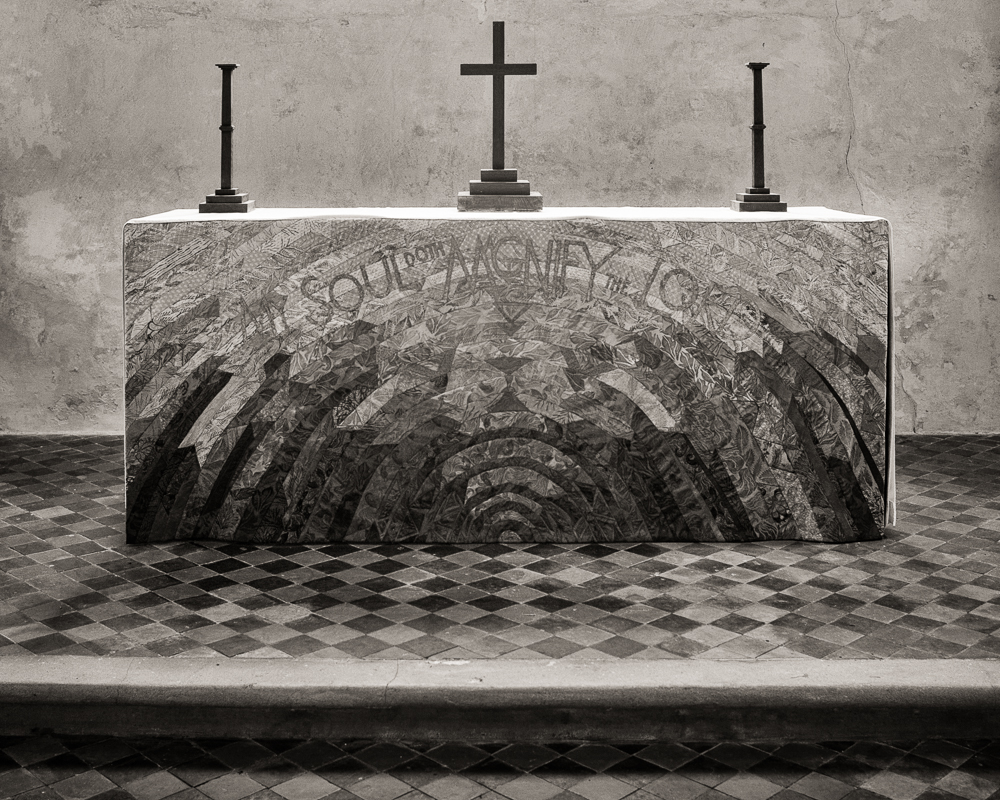
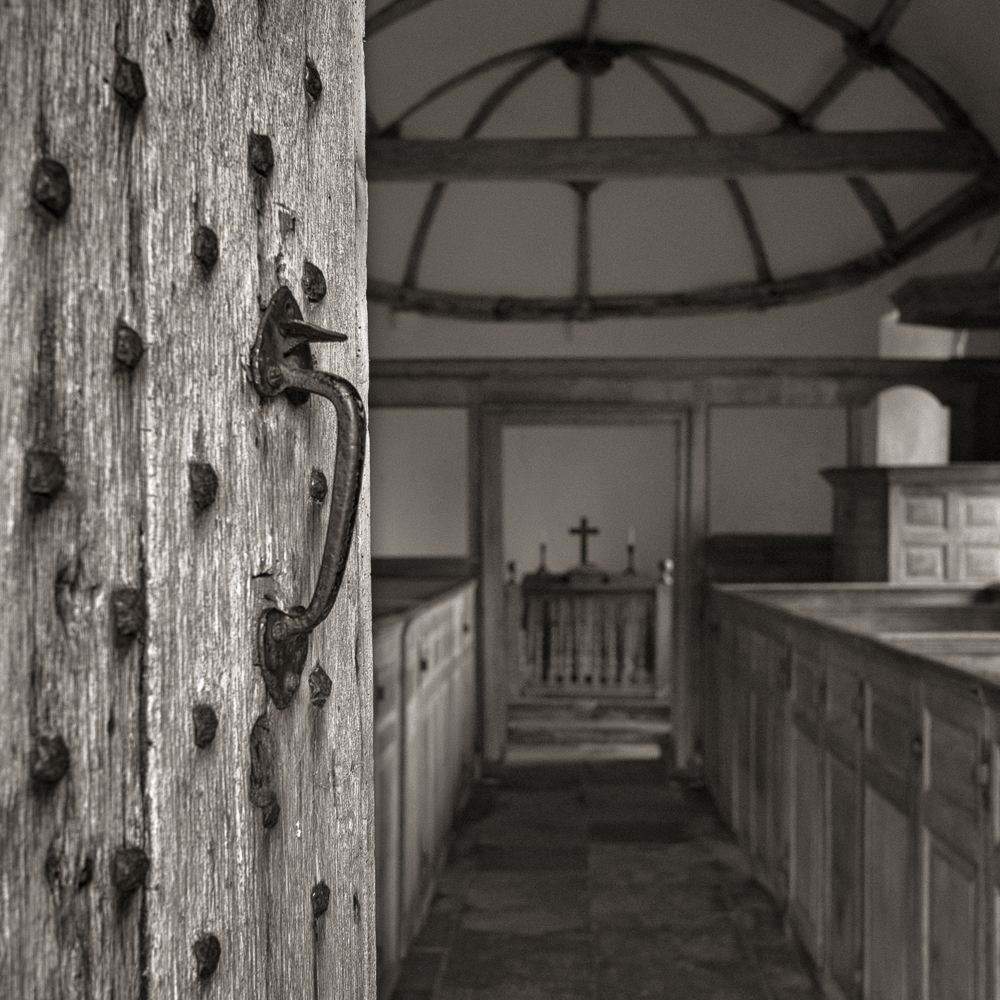
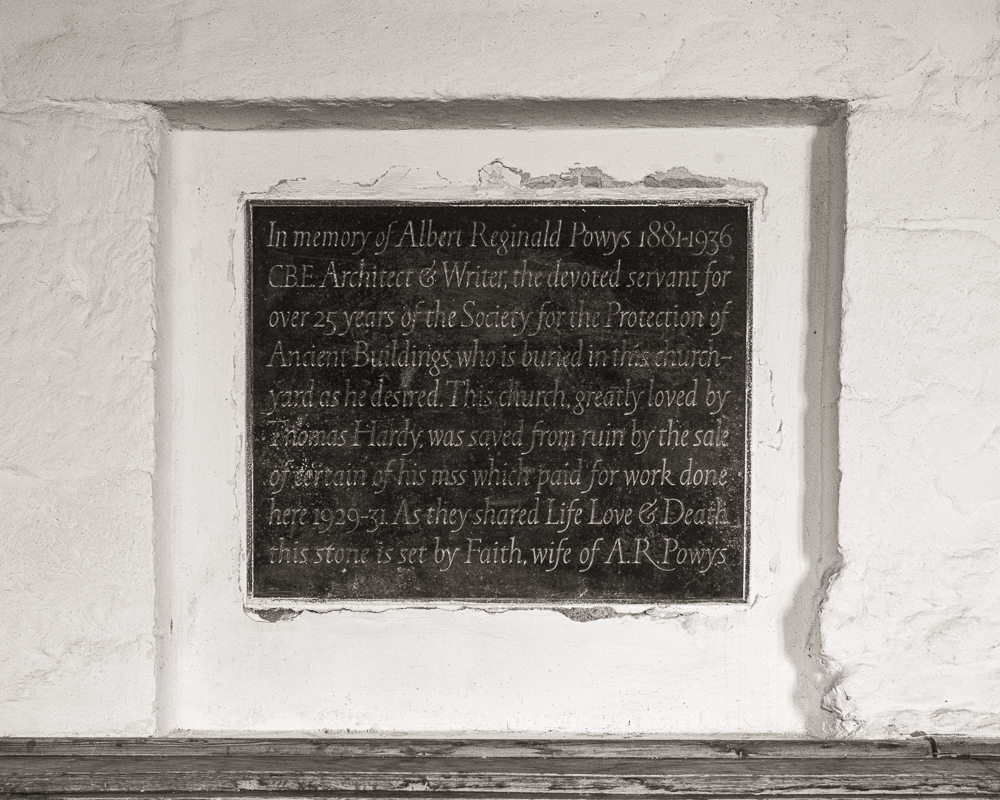
There is something to be said for returning to a location or indeed a church which I have previously visited. The benefit of familiarity and the knowledge of the images taken before, help me to see things with a fresh pair of eyes, to explore new angles and find fresh compositions. The light can of course be different even in the interior of a church building, so a return visit can hopefully yield some new images.

This was certainly the case when I went back to St Mary the Virgin in North Stoke last week. It’s a particular favourite of mine so whether or not I was able to make some more images didn’t really matter, as I was more than happy to be in this historic and rather timeless place of peace and solitude. I hope the four images in this post help to convey this feeling.

Cared for by The Churches Conservation Trust, the church is no longer used for regular worship but is still consecrated.

If you would like to read the original entry about North Stoke Church and see more photographs then please click here.


North Stoke-10


North Stoke-11


North Stoke-8


As always do click on any of the images to view a larger version which will open in a new window.

Churches Project no. 15 – St Andrew, Winterborne Tomson, Dorset

Winterborne Tomson Church-2


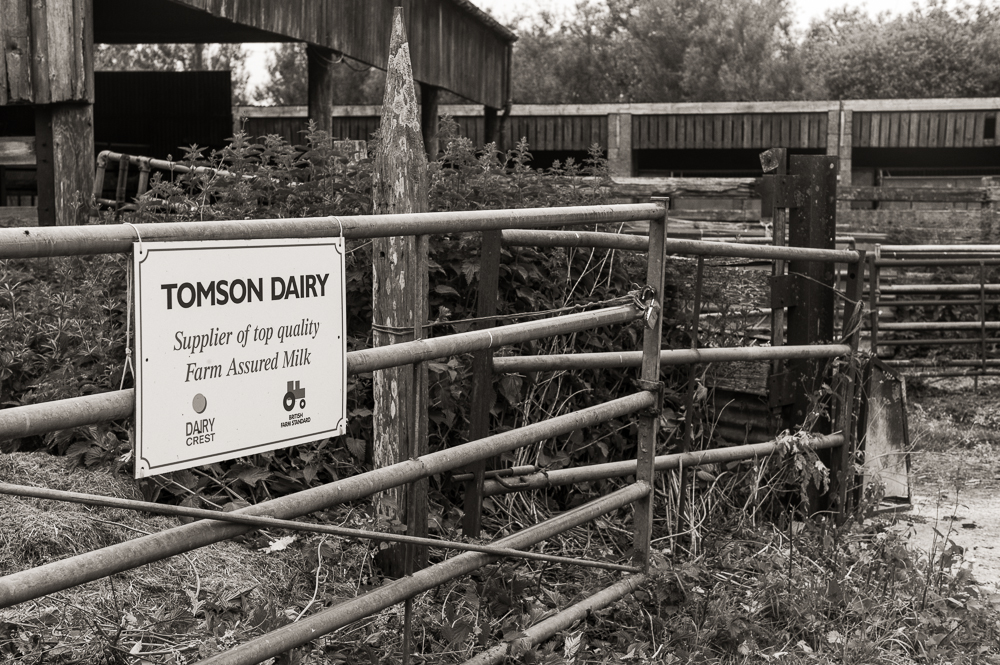
For such a small and simple church, there is so much to admire and enjoy here. For starters the very location of St Andrew in the tiny hamlet of Winterborne Tomson is a delight. Rural and unspoilt, the church backs onto a dairy farm and I like the way the farm building behind the church echoes the shape of the church itself. There is a manor house on the other side of the narrow road which leads down to the church plus a thatched cottage for neighbours.


Winterborne Tomson Church-3


Winterborne Tomson Church-4


It’s not until you enter through the west door that the simple beauty of this church reveals itself. Built of flint and stone in the 12th Century, this single cell church has a most unusual apsidal east end with a plastered wagon roof of slender beams and decorative bosses. All the bleached oak furnishings which include box pews, the pulpit and sounding board above, the screen and altar rail, have turned silver grey over the years. They date from the 18th Century and were provided by William Wake, the Archbishop of Canterbury from 1716 to 1737. He would worship in this church when staying with his family who lived nearby. Apparently he loved the simplicity of the church compared to the grandeur and opulence of the cathedrals. I can empathise with his feelings and for me this place reminded me of another church in Warminghurst in West Sussex which you can read about here.


Winterborne Tomson Church-5


Winterborne Tomson Church-8


Winterborne Tomson Church-6


Winterborne Tomson Church-7


It’s hard to believe that less than 100 years ago the church was used by the local farm for pigs, fowl and other animals, but very fortunately was saved from complete ruin in 1931. Money was raised from the sale of some Thomas Hardy manuscripts by the The Society for the Protection of Ancient Buildings and this was used to pay for much needed repairs. The work was overseen by the architect A R Powys, who was Secretary to the Society. On his death he was buried in the churchyard and a plaque can be seen inside the church, commemorating his work. Given its history it’s perhaps no surprise that this church is now cared for by the Churches Conservation Trust, and whilst still consecrated, is only used on a handful of occasions during the year.


Winterborne Tomson Church-10


Winterborne Tomson Church-1


Lastly and to put this church in the context of its setting I have included an image taken just yards form the church itself.


Winterborne Tomson Church-9


Dorset is providing a rich source of lovely churches, so I will certainly be back there in the future so that I can add to my ‘Churches Project’ collection.

Do click on any of the images to view a larger version in a new window.

Protection – Sand dunes at East Head

Protection

Protection

I seem to have spent a fair amount of time down at East Head in West Wittering recently. The sand dunes and large areas of beach when combined with ‘big’ skies  provide me with so many scenes to photograph. The low light at the end the day is a great time to be there; more so, if a weather front is just passing through. In this image the last rays of sunlight are illuminating the old and rickety dunes fence, one of the last of its type at East Head. There are now more metal posts and wires which are far less attractive from a photographer’s point of view.

These sand fences are put in place to protect the dunes from erosion by reducing wind speed across the sand surface and encourage foredune deposition. They also help to control public access, but for me they quite simply provide some excellent foreground interest in a photograph which is always going to be enhanced by a dramatic sky.

I read a quote by Ansel Adams the other day which read. “Sometimes I do get to places just when God is ready to have somebody click the shutter”. I think this might just have been one of those occassions.

Do click on the image itself to view a larger version.


“Sharpness is a bourgeois concept” – Henri Cartier-Bresson


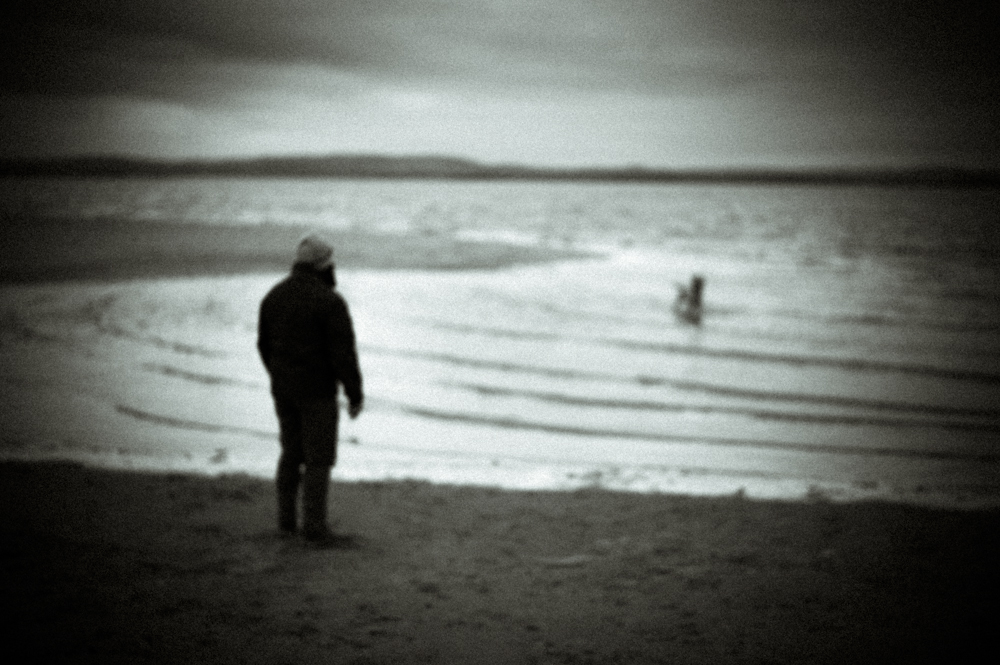
There are many quotes attributed to Henri Cartier-Bresson, one of them being that – “Sharpness is a bourgeois concept”. With this image I have taken his saying quite literally. To an extreme in fact because there is absolutely nothing sharp or in focus anywhere in the frame. As a consequence this picture is sure to divide opinion.

When I took the shot I quite deliberatly adjusted the focus ring to give me an out of focus image. It was also shot with a wide aperture opening to minimise the depth of field, further ensuring a blurred image. The light was reasonably good and with a maximum shutter speed on my camera of 1/4000th of a second, I had to use a 3 stop ND filter to avoid blown highlights. In processing I added grain, a vignette and split toned the image.

Ignoring the complete lack of any sharpness the viewer can still discern a man, virtually a silhouette, standing on the beach watching his dog standing in the water. The ripples of the sea along the foreshore and the distant land mass on the horizon provide a sense of depth, and the placement of the man and his dog on the intersection of the thirds gives balance to the overall composition. There is also a triangle which is formed from the man’s head, out to the dog and back to the man’s feet.

I know this is what might be described as a ‘marmite’ shot – you either love it or hate it. Or perhaps you simply can’t understand why the photographer couldn’t at the very least focus his camera properly!

So does this image appeal to the viewer or is it quickly rejected for being technically poor because nothing is sharp, even though that was my intention at the outset? Does this very soft image portray a mood or feeling which would be non existent if the image had been sharp from front to back? There are so many questions and in my view there are no right or wrong answers. It’s my creative vision of a simple scene – one man and his dog, alone on the shoreline…..and the rest is down to your interpretation and imagination.

As always your comments and thoughts on this post would be most welcome.


An eye for detail – just one reason why I love the Leica Monochrom

I have now been using a Leica M Monochrom for eighteen months or so and there are many reasons why I have grown to love this camera. It was a fairly steep learning curve switching to a camera which has no colour sensor – each pixel only records luminance resulting in a black and white file with any number of shades of grey in between.

The fact it is rangefinder with its split frame manual focusing mechanism was an added hurdle for me to get over. Initially it was difficult enough to focus a still subject let alone a moving one, as is the case here. Even more challenging when using the 50mm Summilux f1.4 nearly wide open. The depth of field is so narrow I would be the first to say that a little bit of lady luck is required to get the main subject of the picture in sharp focus. When it happens though, you can jump for joy because the level of detail captured is quite extraordinary.

I very much doubt this image would win any prizes and I have used it simply to illustrate a particular point; and that is quite simply the level of detail or resolution captured by this camera.

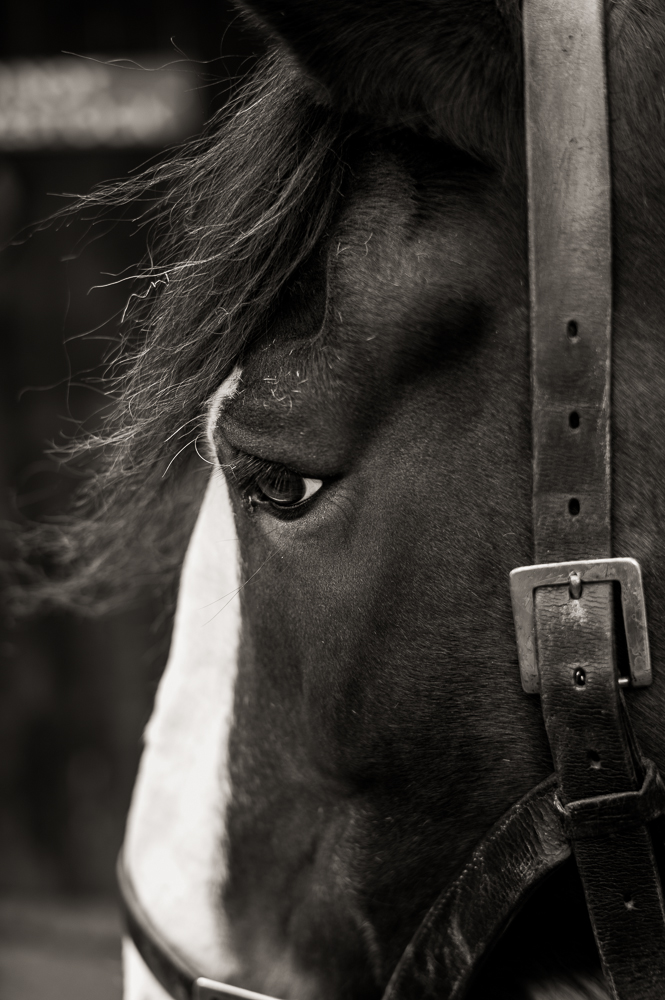
For reference the final image (at the bottom of this post) is a fairly mild square crop of the original RAW file which has been processed in Lightroom 5. There are some adjustments but principally the addition of contrast, clarity and a tone for effect, but no sharpening. I repeat no sharpening.

The original image is shown below with just the processing applied and no crop.


Un-cropped image


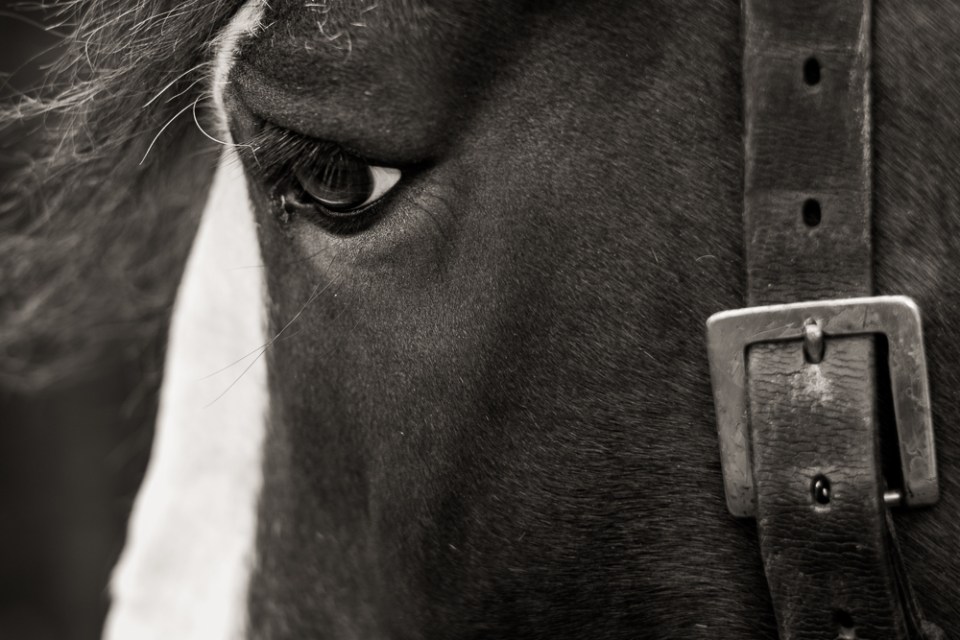
Next is a much more detailed crop. You can now see the exceptional level of detail captured by the Leica Monochrom.
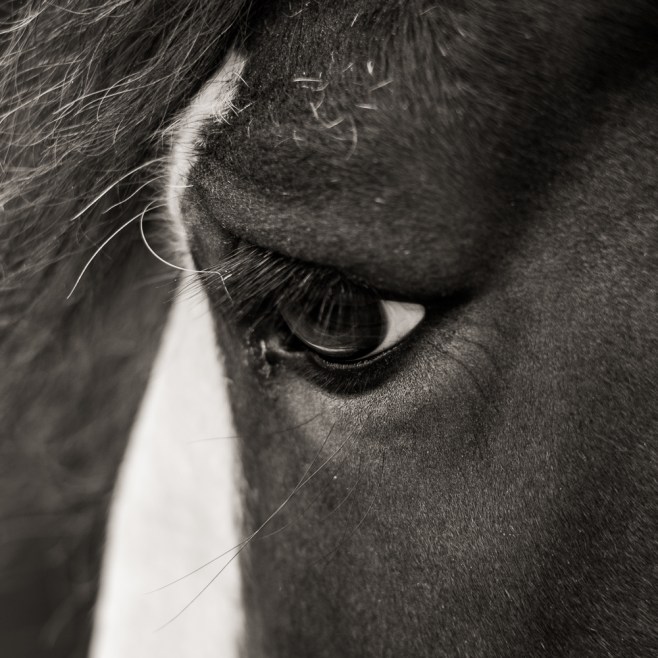
 

A tight crop


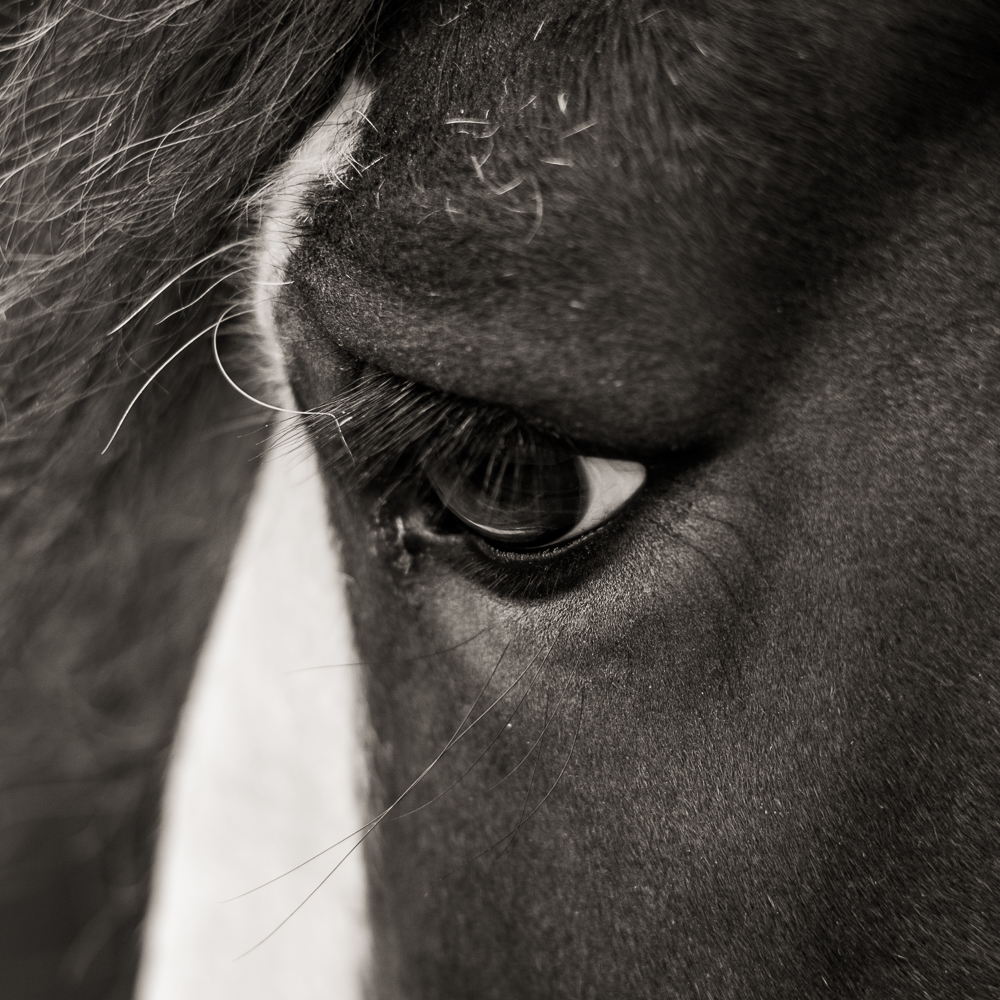
If you are yet to be impressed, below is an even tighter crop. The number of eyelashes can almost be counted and if you look closely veins are visible in the eye itself. If nothing else this image confirms my good fortune when I focused on the eye.


An even tighter crop


And by way of a reminder the final image which is how I imagined the picture might look when I pressed the shutter. I knew I wanted the eye to be at the centre of the viewers attention, but the photograph also needed to include part of the leather harness to add context and another element of interest. The harness also confirms you are looking at the horse’s head in profile and not straight on.
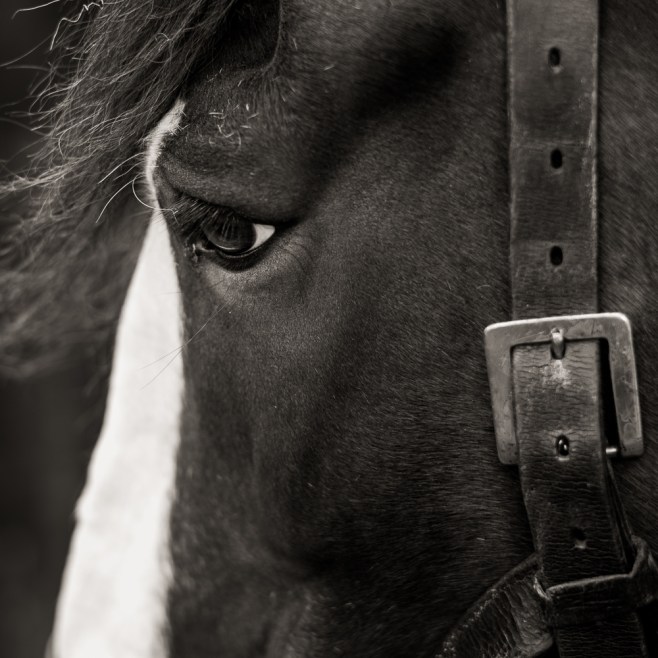
 

The finished photograph


As I said at the outset there are many reasons why I love this camera. It can be a frustrating and quirky tool at times, but get to know its ways, and I defy any photographer not to be impressed by the quality of file it can deliver when coupled with an equally exceptional fast Leica lens. It has a purity and a simplicity to its operation which places the photographer in complete control. You need to consider every step, every setting but the rewards are more than worthwhile.

I would strongly urge you to click on each image to view a larger version. This post is all about ‘detail’ and it’s only by looking at a bigger version that you will truly appreciate the output of the Leica Monochrom.