Posts tagged ‘Leica M Monochrom’

Churches Project no. 2 – St Materiana, Tintagel, Cornwall

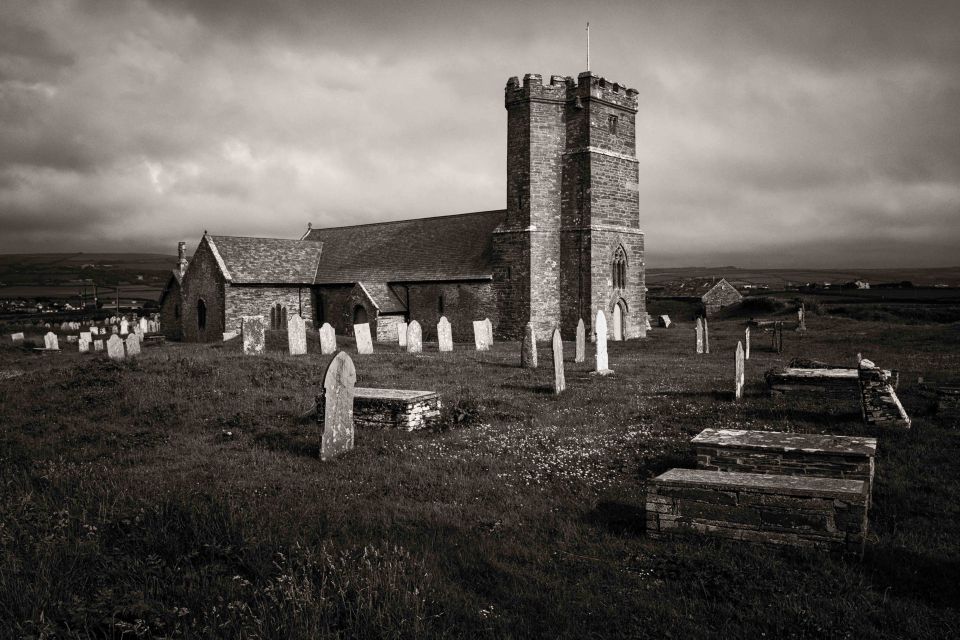
I approached the church from Tintagel Castle along cliff tops with spectacular views out towards the Atlantic. The village of Tintagel is clearly visible in the background.

When I first arrived at St Materiana, I was greeted by a notice in the graveyard – ‘Beware Adders’. Needless to say I trod very carefully as I walked around trying to find the best position to photograph the exterior of the building.


The parish church of Tintagel is in the Anglican Diocese of Truro and county of Cornwall England. The Church was built between 1080 and 1150 and stands in an exposed position on Glebe Cliff overlooking the sea. St Materiana has been identified with St Madryn, a princess of Gwent, who, according to tradition, evangelised this area in about 500 AD. It is likely that the Church was built on the site of an oratory served in celtic days by the monks of Minster and later replaced by a Saxon style building. It appears to have been built on the site of intensive early Christian burial during the 5th to 7th centuries and the church today still retains an air of early Christianity.


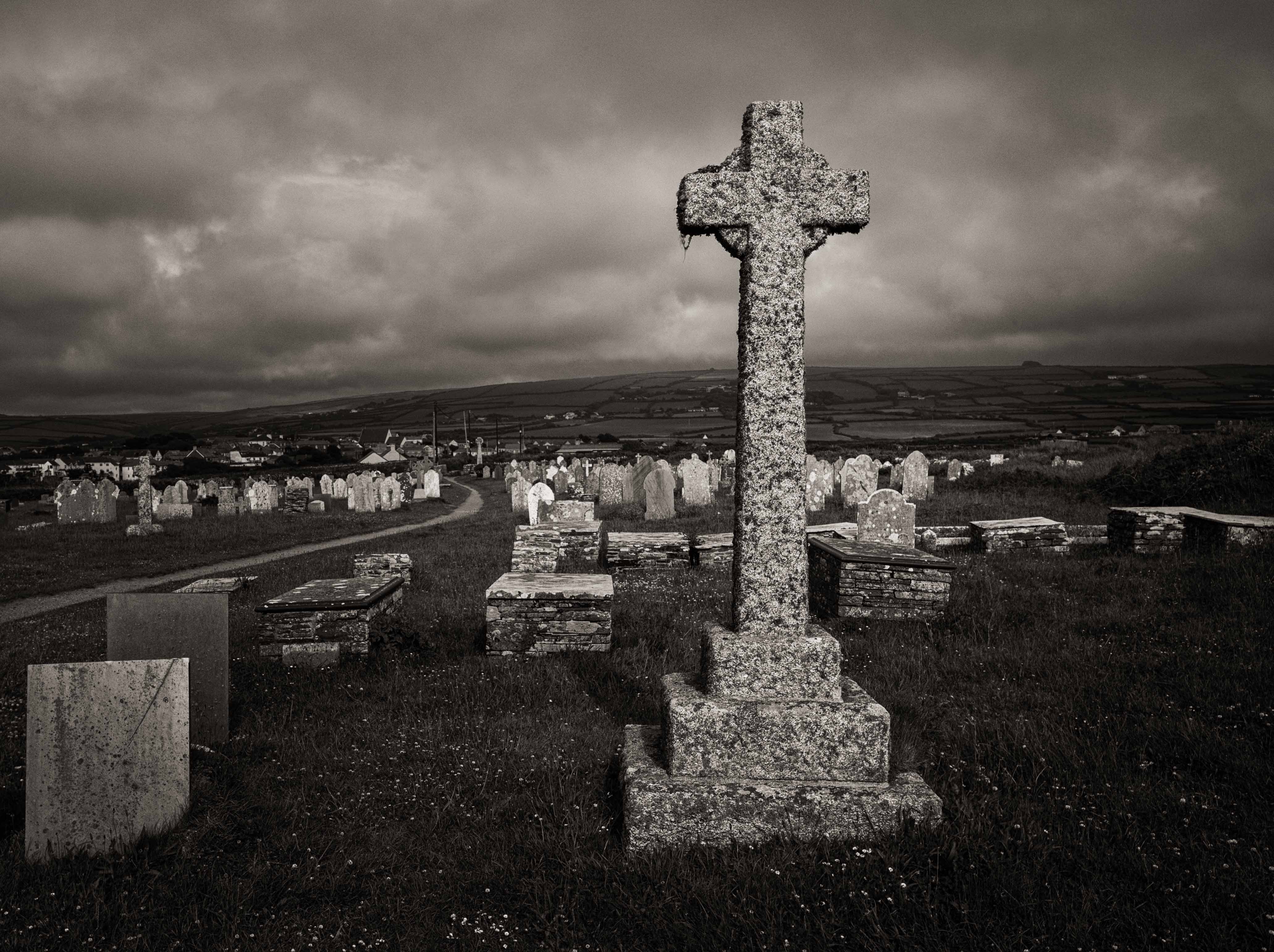
The very large graveyard slopes away from the church, back towards the nearby village.


Click on any of the images to view a larger version.

To view a larger version of the featured image click on the thumbnail below.

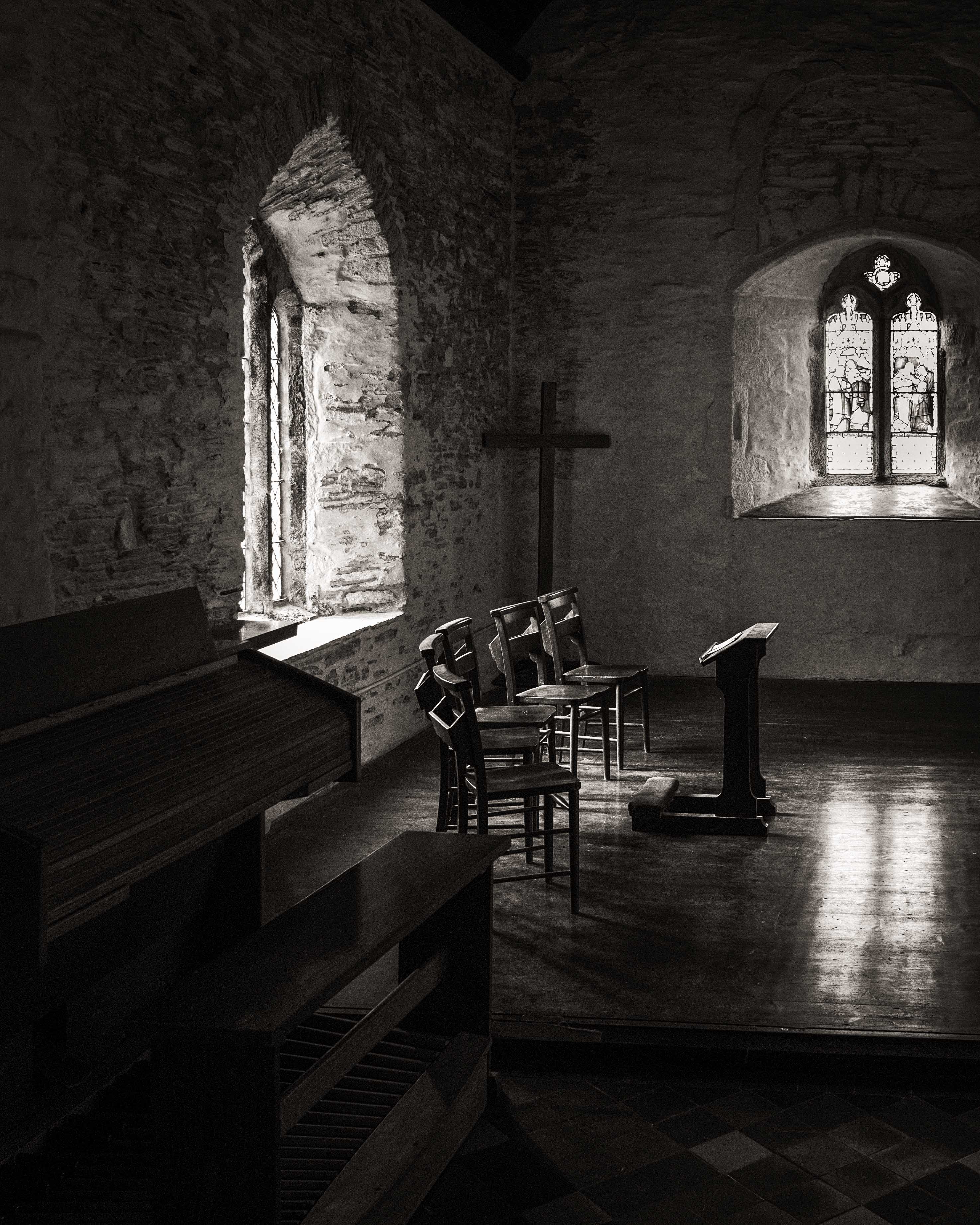
The Nave

Churches Project no. 1 – St Andrew, Sutcombe, Devon

This is the very first entry of my new ‘Churches Project’ and the honour goes to The Church of St Andrew, Sutcombe in Devon. It has Norman origins but is principally a 15th Century granite structure which was restored in 1876. It forms part of a small and quite remote village about 5.5 miles north of the town of Holsworthy.

For me the church interior offers greater appeal than its exterior. As you enter the south facing entrance porch, look up and you will see the medieval wagon roof; the age and character of the building becomes immediately apparent.


Porch roof

Porch roof


Inside the church itself, one of the first things you notice are the superbly carved bench ends dating back to the early 16th Century, many of which depict heraldic devices of local families. These complement the rood screen which separates the nave and the chancel and can be seen in the first image at the top of this post. Is it any wonder St Andrew’s has a Grade II* listing.


Carved bench end

Carved bench end


In contrast to the carved bench ends, there are a collection of more modern pew chairs with a cross back, which from a photographic point of view are just as appealing.


Pew chair

Pew chair


This is certainly true when some rays of sunshine highlight one of the chairs hidden in the rear corner of the church which has a broken rear leg and woodworm is also evident.


Broken chair

Broken chair


The exterior shot of the church was captured using a 28mm lens. I could only just get far enough away to include all of the building which has made me think a wider angle, perhaps a 21mm would be useful  in the future.


Church of St Andrew, Sutcombe

Church of St Andrew, Sutcombe


To see a larger version of the featured image click on the thumbnail below, or click on any of the images and they will open in a new window.

The Nave

The Nave

More information about my ‘Churches Project’ can be found here.

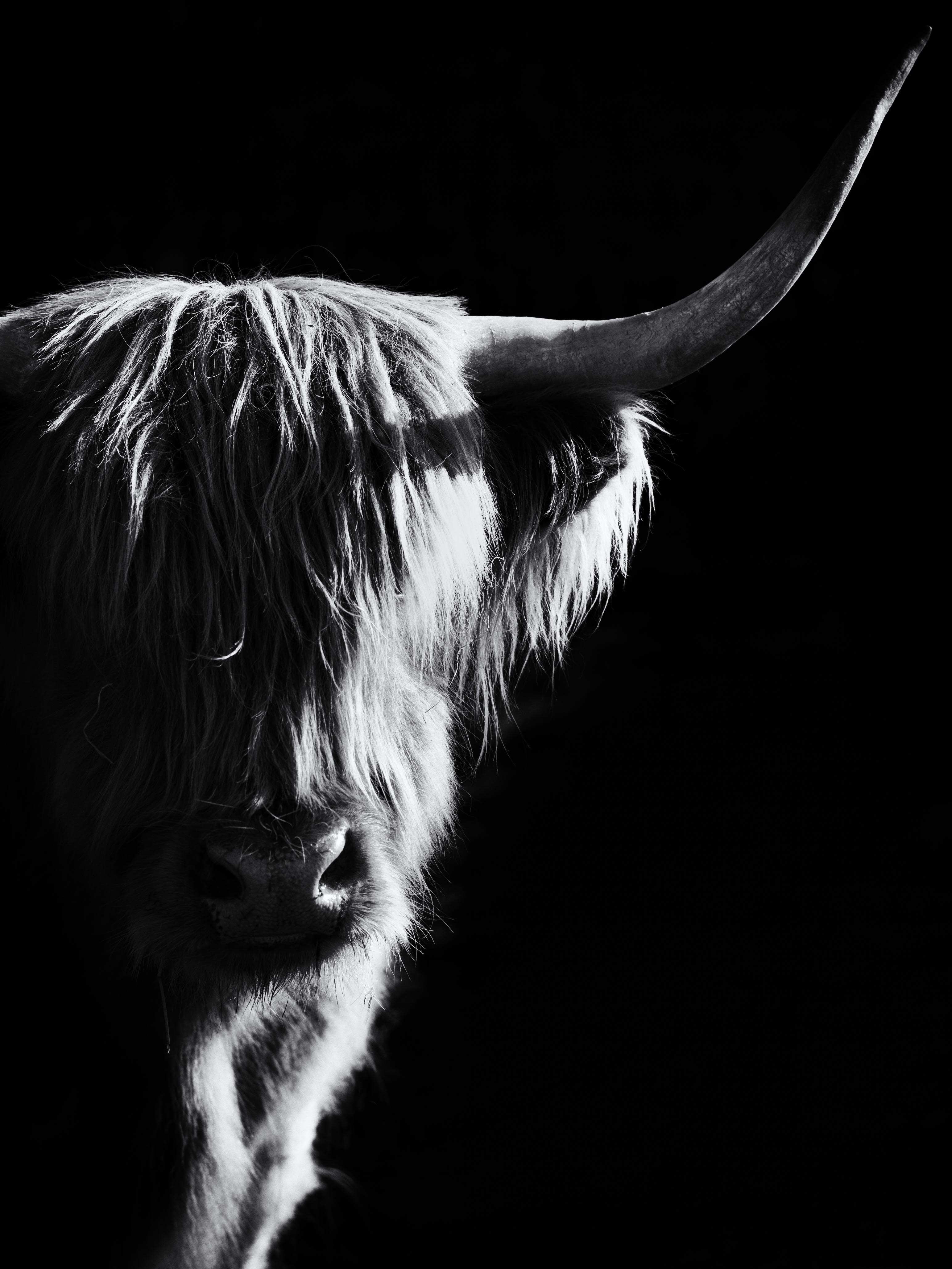
Portrait of a Highland Cow – turning imagination into reality.

Highland cow

Highland cow


Sometimes, but certainly not always, I have a clear idea of the image I am trying to make even before I set out to take the photograph. This portrait of a Highland cow is a case in point.

From a lighting point of view I knew that I wanted the subject to be side/back lit, with bright sun to provide shadow areas and lots of contrast; although I was quite sure I would be adding more in post processing. The background also needed to be quite dark, so that the illuminated silhouette and backlit hairs of the animal would stand out. Compositionally I thought portrait would work better than a landscape, nor did I want to include the whole head or indeed both horns. As magnificent as they are one horn would be sufficient.

When it came to taking the shot, I deliberately included more in the frame so that I could crop later. I chose an aperture which would hopefully give me enough depth of field so that the nostrils, horn and hair on the top of the head were all sharp, but the neck or any visible part of the body were out of focus.

In many ways deciding what I wanted from the shot was easier than taking it! Animals move, they don’t pose for the photographer, The lighting was critical so the cow had to be facing the right way and just at the point when you are about to release the shutter, their head turns away and you have to be patient for the next opportunity. I took a number of shots which were out of focus, poorly composed or the background too confusing.  There was a fence between me and the small herd of cattle, so I was restricted in my movement, but I felt more comfortable than being in the field with them! Finally I thought I had captured something which I could work on and you have now seen the end result.

These wonderful creatures are full of character. You sort of know that they can see you even though their long hair prevents you from seeing their eyes. They know you are there, wondering why you want to point this black object in their faces. However their initial curiosity does bring them nearer to you, before they decide that grazing on grass and straw is more interesting than a photographer who wants to turn his imagination into reality.

This image was taken with a Leica M Monochrom and 90mm Summarit f2.4 lens at f4, 1/2500 and ISO 320.

Do click on the image to view a larger version, particularly if you want to see the level of detail which has been captured.

The Bishop’s Cathedral – worth throwing the camera bag in the car!

The Bishop's Cathedral

The Bishop’s Cathedral

I have to admit that I don’t always have a camera with me, assuming of course I exclude my iPhone from that statement. Just occasionally as I get ready for another days work, I will throw (not literally) a camera bag into my car, believing that I may find a little time to take a few photographs on my way home and before the dinner is burnt! Sometimes this is because I specifically want to try something out which has come into my mind. I guess these thought processes inspire me to make that little extra effort to take some shots.

This sequence of events happened earlier this week. I wanted to use my 28mm f.2.8 lens as it isn’t attached to the camera that often. My default choice of lens is the 50mm f1.4 Summilux. It was a lovely bright evening with some light cloud cover. Bright enough for some shadows but not so bright to give me exposure problems. I headed for the city of Chichester and specifically Bishop’s Palace Gardens, which offers fine views of the Cathedral.

I found a position which I thought would give me a good composition. Held in the vertical position the viewfinder of the Leica Monochrom is not that easy to use. I wear glasses and the frame lines for the 28mm are in the extreme corners, so I have to move my eye or the camera around to compose the shot. I have to say there is a little guesswork involved and I try and allow a margin for error so I can crop later if I wish to. A quick look at the screen on the back of the camera tells me whether or not I need to have another go!

The other slight issue that evening was the sky. It looked a little bland but I could see some blue patches so I attached an orange filter to darken these areas and add interest to the sky. Yes an orange filter on a digital camera – something that only works with the Monochrom.  Its sensor only records luminance and not colour, so a colour filter works in exactly the same way as it would with black and white film. I like to get as much right in camera as I can and not rely on heavy post processing. Having to think about what I want the finished result to look like before pressing the shutter, is I believe a healthy discipline and will improve your photography.

I am pleased with the final result. The lighting on the cathedral and gardens could not have been better. The 28mm is only moderately wide so does not distort the view. The use of the orange filter provided more detail and interest in the sky which is an important part of the overall composition. I cropped the image from the native 3 x 2, to 5 x 4. I prefer this aspect ratio, it is more balanced to me. Its an image that I will almost certainly print, maybe quite large but that’s for another day.

Thanks for looking and I hope you enjoy this photograph as much as I enjoyed making it.

Do click on the picture for a larger view.


The River Arun at South Stoke – one of my favourite locations

River Arun at South Stoke

River Arun at South Stoke

The River Arun has its source in St Leonard’s Forest to the east of Horsham and flows down through the towns of Pulborough and Arundel, finally reaching the sea at Littlehampton. Its course cuts through the South Downs, creating the Arun Valley. This shot was taken at South Stoke which has to be one of my favourite locations in West Sussex.  It has featured before on my blog and I am sure will do so again in the future.

Here are some links to other entries with images taken in and around this lovely location –

Using ‘blur’ down by the River Arun

Churches in the landscape – South Stoke

A week on and it’s back to South Stoke

Cow portraits taken near South Stoke