Posts tagged ‘Leica M Monochrom’

Barn roof – just when I thought I had finished.

The Barn

Barn Roof

Earlier this week I made a point of going out to take some more images for my Churches Project. I was moderately pleased with my afternoon’s work, had packed away all my gear and was making my way back to the car. I had parked in front of an open barn and as I walked from the church towards my car I noticed the afternoon light glinting on the rear of the barn and in particular the long corrugated roof which nearly reached the ground. The rivets all pointed towards a small group of ivy clad trees with countryside beyond, all of which I rather liked.

I couldn’t resist reaching for my camera just one last time. Whether I have a camera with me or not, my eyes are constantly observing what is around me, looking for the light, interesting shapes and compositions. Even when on first impression the subject itself may not be that appealing, (in this case the corrugated roof of an old farm building), the direction of the light and other elements which make up the picture may be enough to warrant getting my camera out of it’s bag. So I took one last shot before heading home and I am glad I did.

Land sailor at East Head

Land sailor


In my last post ‘Low tide at East Head’ I included a variety coastal images – I guess they were the ones I anticipated I might be taking before I left home and set off for the coast. What I didn’t envisage capturing was this shot of a land sailor backlit by the late afternoon sun. The sand flats at East Head provide large areas of beach ideal for this exhilarating sport. There wasn’t much wind, just enough to move the craft from east to west along the shoreline and back again. I had to take a number of shots to make sure that I had the sail  in line with setting sun, throwing the sailor into silhouette.

Do click on the image to view a larger and therefore more detailed version. This will open in a new window.

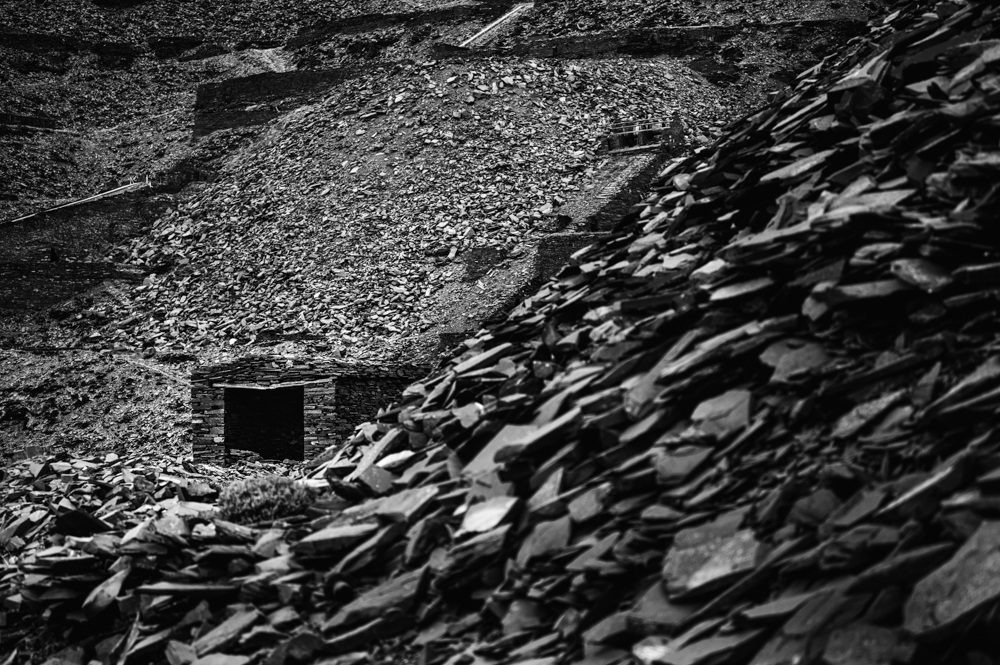
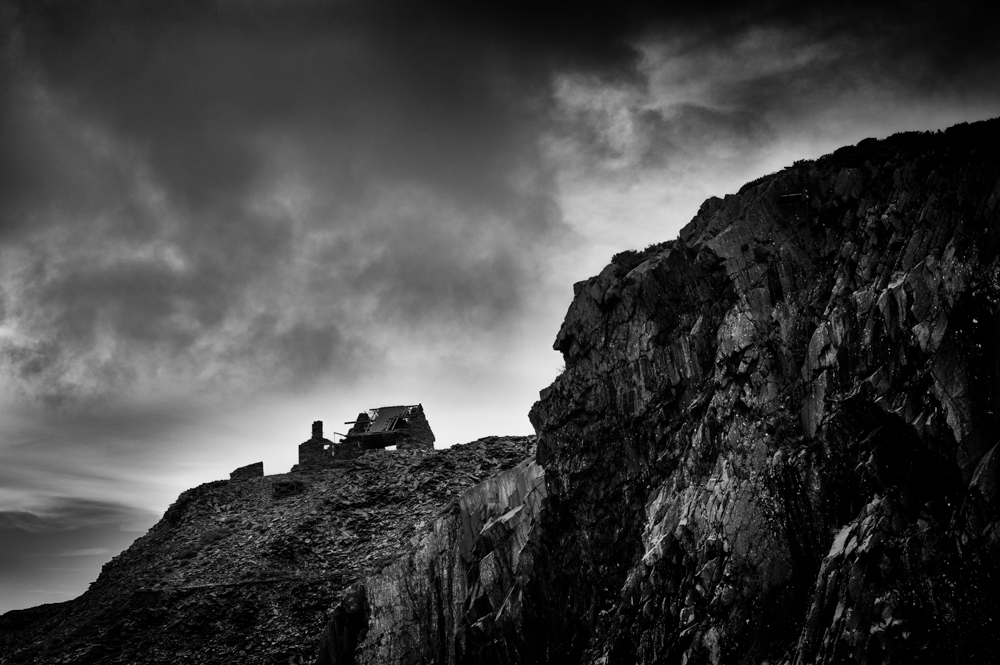
Dinorwic slate quarry – a harsh and inhospitable place.

This is a foreboding place. A harsh environment, full of drama and atmosphere. Now redundant but not forgotten. Dinorwic Slate Quarry in Llanberis covers a vast area with the mountains of Snowdon as its backdrop. Closed in 1969 after 170 years of slate extraction, it was once the second largest slate quarry in the world. It was a dangerous, dirty, unhealthy place to work and whilst the workers were skilled, they were also poorly paid.

On my recent visit the rain kept away, but the wind blew and I could only stop and try to imagine what conditions must have been like for those that toiled in such an inhospitable climate, day after day, week after week, year after year.


Whilst Dinorwic Slate Quarry is hardly a place of ‘picture postcard’ beauty, it does have a beauty all of its own, which I like. It’s a place with history, it has a story to tell and what’s important to me is that my photographs have something to say about the location and are not just ‘record’ shots.

Taking the shot is just one step along the path to the finished result. The making of the image is in the processing. It’s only at this stage that I can start to make some creative decisions as to how I would like the picture to be seen by the viewer. Does the image convey any emotion? Does this series of images help tell a story, so that words are hardly necessary? I would like to think the answer is ‘yes’ to both these questions, but I would be interested to hear your thoughts on this as well.

To see more detail in any of the photographs, do click on an image to see a larger version in a new window.

Thanks as always for stopping by and looking at my blog.


Creative use of depth of field in Snowdonia

Sunlit fern

Sunlit fern


It was not until the summer of last year that I finally decided to go full frame, and purchased a second hand Leica Monochrom. I had previously used APS-C (Nikon) and Micro 4/3rds (Olympus) cameras. One of the principal reasons for my decision was the potential to use minimal depth of field more creatively in my work. The combination of a full frame (35mm) sensor, coupled with a large aperture, has given me photographic opportunities which were simply not possible before.

However just blurring the background doesn’t necessarily giving a pleasing result. The out of focus areas are still important to the overall appearance of the image. Blurred shapes, tones and arrears of light of shade still influence how the image is viewed, even though the eye may initially be drawn to the main subject of the picture which is in sharp focus.

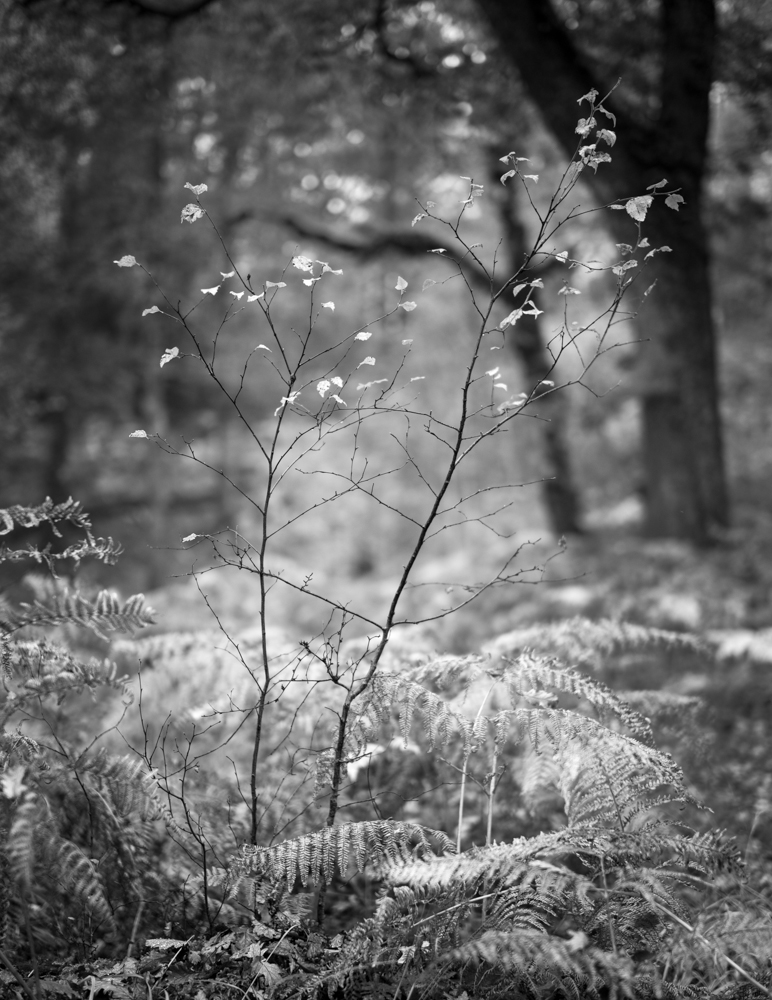
The main photograph I have included in this entry is I think a good example of what I am trying to say. Taken on my recent trip to Snowdonia, the bright early morning sun was shining on small area of bracken in a wooded glade, whilst a path in the middle ground weaved its way down to the waters edge of Llyn Dinas.  I tried to visualise how the background elements of the image would be rendered when out of focus and whether or not the shapes of the trees would enhance the overall composition. You can of course try and visualise what the image might look like if everything had been in focus. I didn’t take a shot with a small aperture opening so I cannot make this comparison. My feeling is that there would be too much going on. The foreground and background would be fighting for attention. By using a narrow depth of field I have been able to isolate the sunlit fern which is the principle point of interest. The blurred background informs the viewer about the setting, complimenting the main subject and enhancing the overall appearance, but in my opinion it is no longer a distraction.

Here is another example – This image was taken in the woods near Capel Curig.


Autumn saplings

Autumn saplings


I am not saying there isn’t a place for landscape images which are very sharp from front to back. I take a good many myself, but increasingly I prefer to shoot wide open (50mm at f1.4) and by doing so I add another dimension to the composition, which until last year was not possible.

Click on either image to view a larger version which will open in a new window. By doing so I think you will appreciate the photograph just that little bit more.

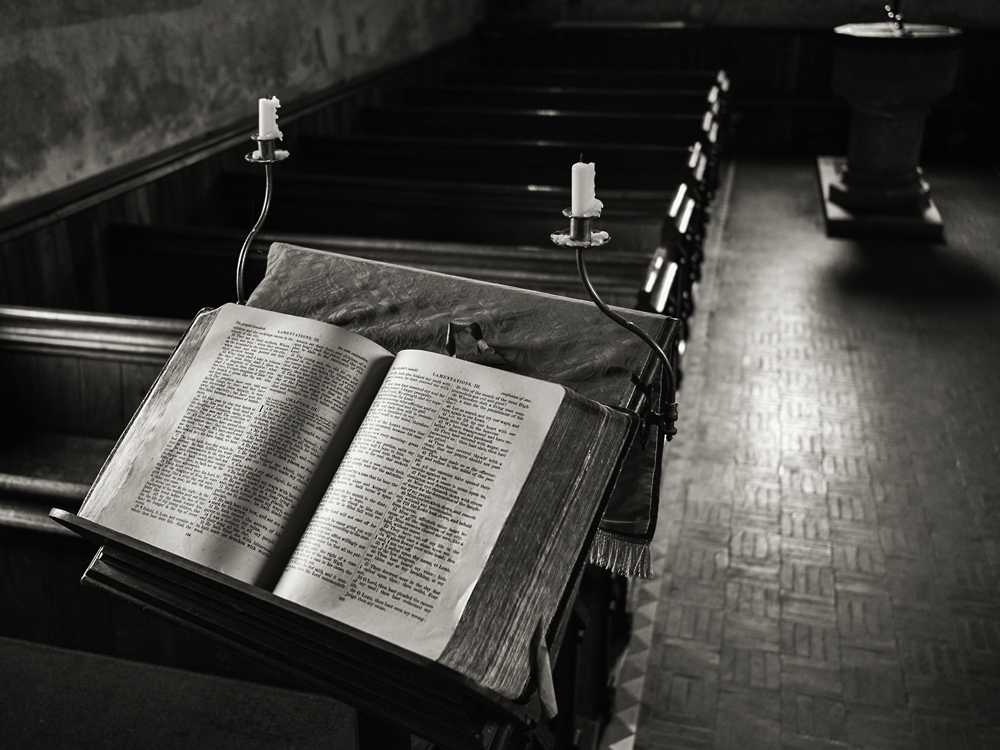
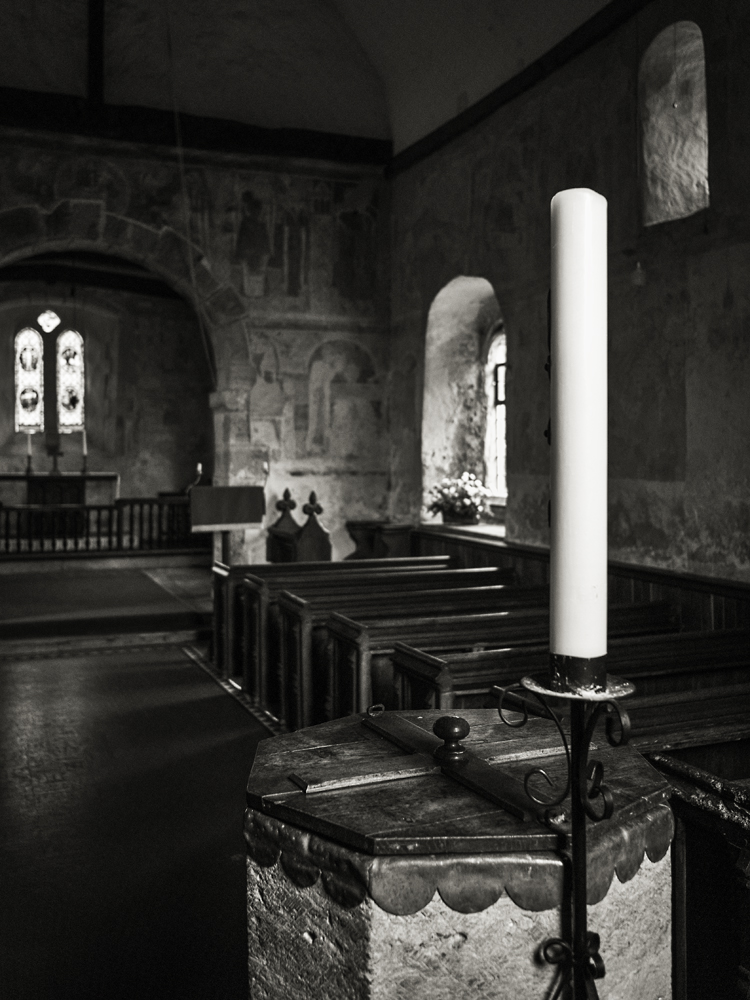
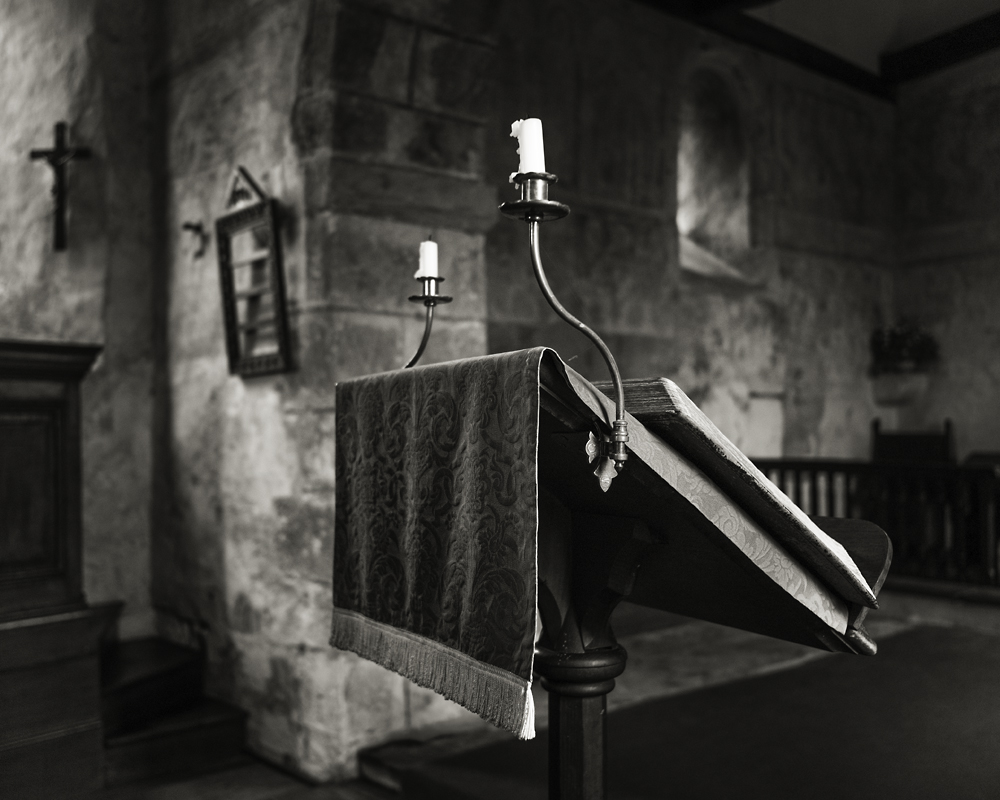
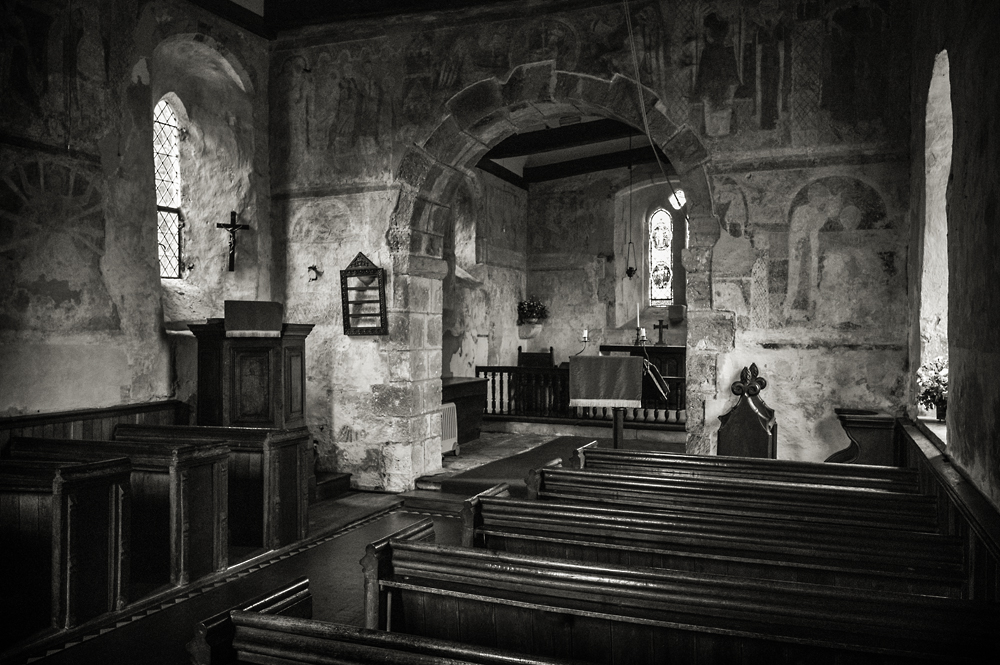
Churches Project no.4 – St Botolph’s, Hardham, West Sussex

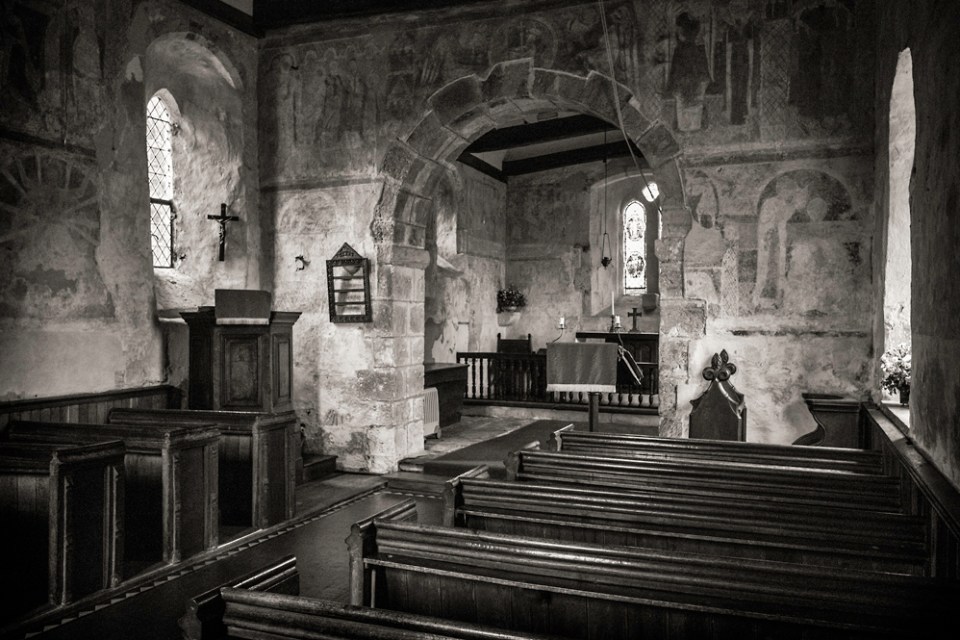
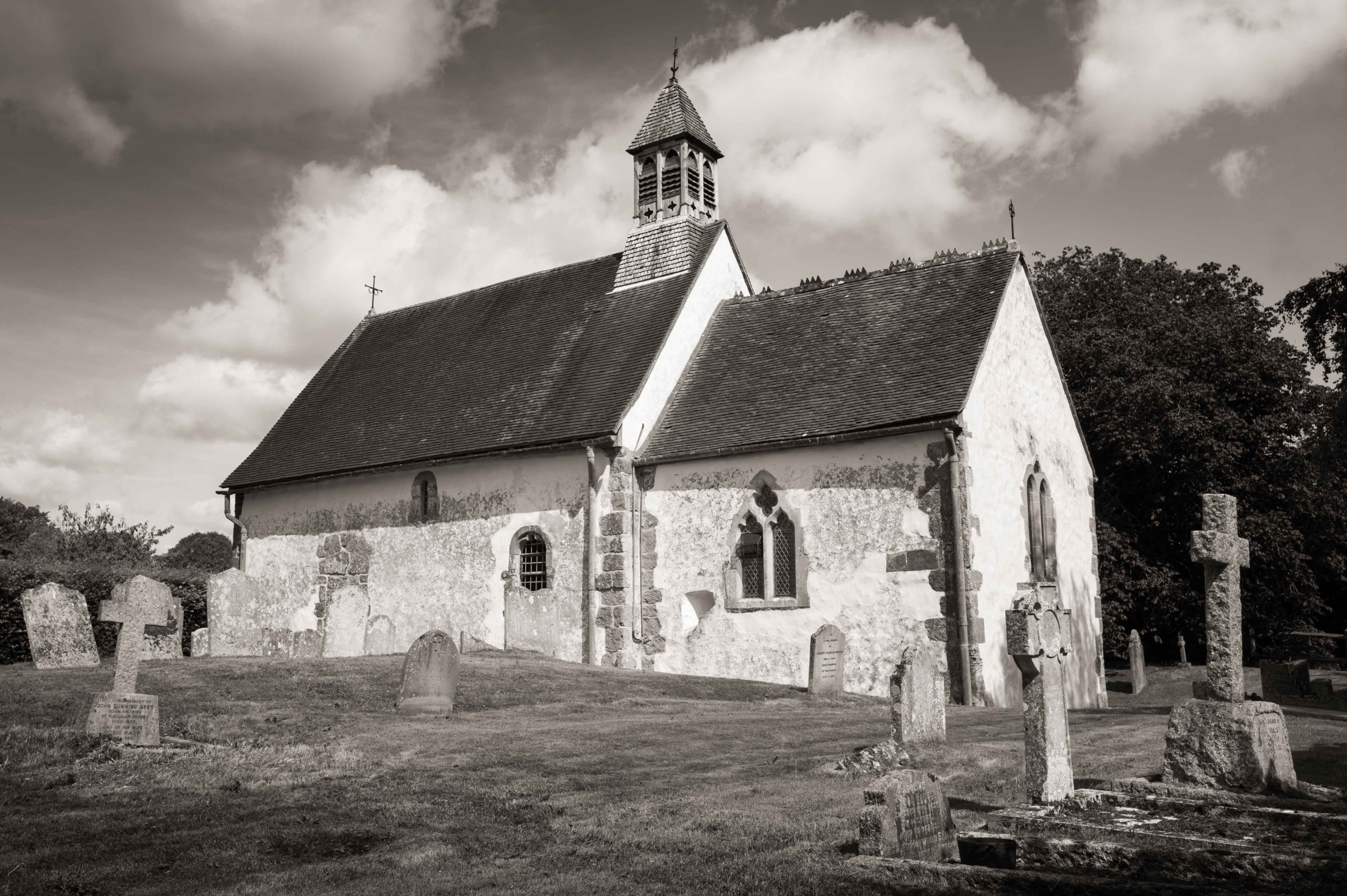
St Botolph’s Church in the hamlet of Hardham, near Pulborough, West Sussex is a true gem in the Arun Valley. As regular readers of this blog will know I visited this church a few weeks ago and I was thwarted by the flower arrangers. You can read about this earlier visit here.

I made a point of returning as I knew this 11th Century Church offered some rich photographic pickings. The church has some of the finest wall paintings in the county and they are worthy of a separate post in their own right but for this entry I wanted to capture the feeling of history in a building which can hardly of changed for many, many generations. This for me is the very essence of a beautiful church. Not grand but simple and unspoilt. Not shouting to the world, look at me in all my glory, but quietly saying I can offer you a place of quiet serenity in a very humble way. For those who would like to read more about the history of St Botolphs, do click here.

For me the images speak a thousand words, so I shall say no more and let the photographs speak for themselves.


The Pulpit

The Pulpit


Book of Lamentations, III

Book of Lamentations, III


Font and candle

Font and candle


The Bishop's chair

The Bishop’s chair


The Lectern

The Lectern


Christ of the Cross

Christ on the Cross


Hardham Church Interior

Hardham Church Interior


St Botolphs, Hardham

St Botolphs, Hardham

Do click on any of the images to view a larger version in a new window or visit the West Sussex Gallery page for other churches in the county.

For more information about my ongoing Churches Project do click here.