Posts tagged ‘Landscape’

Continuing to document the Dorset countryside … and loving the Leica Q3

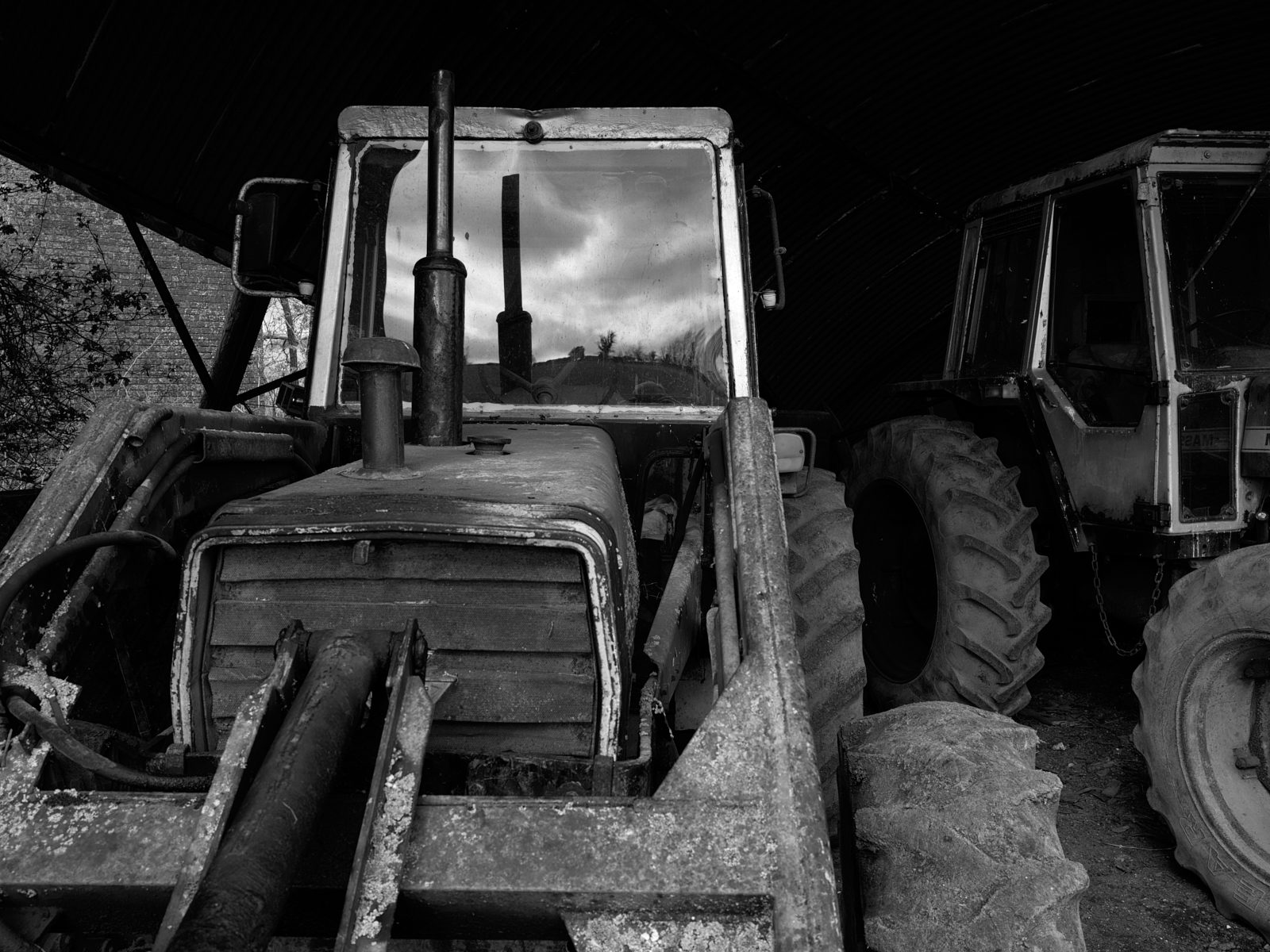
Tractor barn
Tractor Barn

It’s only been a few weeks since I purchased my Leica Q3 and in that short period of time I have already grown to love this camera. I have become familiar with its controls and settings. I am really enjoying the 28mm field of view and my eye has quickly adapted to see potential compositions using this focal length. The addition of a hand and thumb grip plus a soft release button have improved the handling and it now feels very comfortable to hold and use. The files are simply stunning and the dynamic range of the sensor is unlike anything I have used in the past.

My collection of images of the Dorset countryside near to my home continues to grow. Here are just a few photographs I have made with the Leica Q3. Seeing these images on screen is one step away from making prints, and I am increasingly inspired to do so in the near future.

Tractor
Still in use?
Cattle, Dorset
Cattle at rest
Farm buildings, Dorset
Let’s store it here
Barn, Dorset
Rusty barn
Farm buildings
Late afternoon – West Farm
Keeping the bales dry

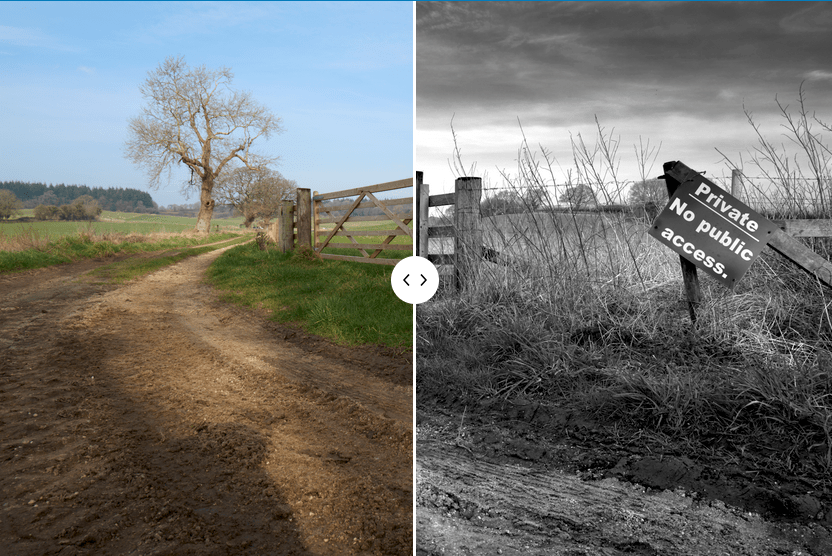
Photographic workflow – Part 3 ….. Processing in the digital darkroom ….. the before and after

In part two of this short series I wrote about my approach to image capture with a particular reference to my recent purchase of a Leica Q3. Buying a new camera is always an exciting time. I couldn’t wait to begin editing the first shots I had taken and to see for myself just how good the files are from a 60mp sensor when seen through a 28mm f1.7 Summilux fixed prime lens.

Full of eager anticipation I plugged the SD card into my laptop, downloaded the files into Capture One but was very disappointed with the results. Why you ask? Well I have to admit to a schoolboy error. Before buying the Q3 I didn’t check whether or not my version of Capture One would support the Q3 DNG RAW files. It didn’t; the RAW converter wasn’t compatible and I had no choice but to purchase and install the latest version of Capture One. Problem solved but I hadn’t allowed for this additional cost. Lesson learned I could now move on and start editing the files and I was blown away by the quality and detail. Everything I had read in various reviews was there on the screen in front of me.

Read more

Photographic workflow – Part 2 ….. Image Capture ….. and why I chose to buy a Leica Q3

Former church of Holy Trinity at Turner’s Puddle – now redundant

I am sure that anyone reading this could write their own book about image capture, I know I could, so in this second entry which follows Part One – ‘Seeking Inspiration’, I shall briefly address my way of capturing a scene. This will not cover every aspect of my way of working but is more of an overview of the key methods I adopt before releasing the shutter. It might also help explain why I recently decided to buy a Leica Q3.

Principally I will be referring to my landscape photography as other genres – church interiors for example – require a different approach which I might cover at a later date.

The River Piddle near Throop

First and foremost I consider myself to be quite a spontaneous photographer. Although I will go out specifically with the intention of making images I don’t often plan to capture a particular view or arrive at a location when the light will be at its most favourable. I would far rather wander around the countryside and respond to a scene, the light or a particular composition which appeals to me and draws my eye. Nor do I get up to be out before the dawn or stay out until well past the blue hour. I am a daytime photographer – which suits my lifestyle and the images I am trying to make. In summary I like to document the rural nature of the places close to my home.

Call me impatient but I won’t stay in one place for very long. In other words I won’t wait for the sun to move round or for clouds to shift in the sky. If the conditions aren’t right then I’ll simply move along and look forward to finding another scene to photograph. I do sometimes criticise myself for not slowing down but it’s how I am and it’s why I like to travel light. Always having a camera with me allows me to capture an image which might be missed.

For this reason I rarely use a tripod. In fact if I am out walking in the landscape it’s the last piece of equipment I will pack – I know it will not get used. I am not a lover of zoom lenses either. I much prefer using prime lenses but choosing which ones to take with me can be tricky. If I can choose only one lens then for years my default and arguably my favourite lens is the 50mm or ‘nifty fifty’, but it does have its limitations. So I then start to think do I need to pack something wider and or longer as well? The added weight plus the inconvenience of repeatedly changing lenses can be frustrating – but perhaps I am just being lazy!

Barn detail

Ever since 2012 when I purchased a second hand Leica Monochrom, I have largely remained loyal to the Leica brand albeit with a more recent foray into the world of Fujifilm with the purchase of a Fujifilm XT3 and Fujifilm X100v. As much as I liked these excellent cameras they have never replaced my love of Leica and in particular their wonderful prime lenses, which I really enjoy shooting wide open for creative effect. Until a few weeks ago my camera of choice was the Leica SL2S.

If you are interested you might like to read these two posts –

Switching from Leica to Fujifilm …… well not exactly

From Leica to Fujifilm and now back to Leica …. Why?

So why Leica and what camera settings do I use? I like to remain in complete control of the exposure and focus. It’s not that I don’t trust being on auto this or auto that, but I would rather take a little more time to adjust the shutter speed, aperture and ISO myself as well as focusing manually. I appreciate that almost any camera will allow me to do this, but the Leica SL2S makes it so easy for me. Perhaps its my familiarity with the camera controls coupled with a degree of muscle memory.

Leica SL2S and 50mm prime lens

The manual focus only prime lenses are a joy to use. They have a dedicated aperture ring and a depth of field scale on the lens. The manual focus ring is not fly by wire and a quarter turn will take the focus from infinity to the closest distance. It’s mechanical and beautifully tactile and it just works. The Leica camera menu is intuitive, straightforward and far from complicated. Sorry Fuji but I have never got my head round all your menu settings.

Private Keep Out

I mentioned earlier that I rarely ever use a tripod. Weight and inconvenience aside I like to compose a shot with complete freedom. Raising or lowering the camera at will, moving my feet to the left or right, or getting closer or further away from the subject to get the view I want. I check my settings, focus and press the shutter. I often shoot wide open so I am usually working with a high shutter speed so camera shake is never really an issue. The SL2S has in-body image stabilisation so shutter speed is rarely an issue to achieve a sharp image. If I do want to shoot in a semi-automatic mode then I will usually choose aperture priority, adjusting the speed or ISO to suit. Controlling the depth of field and the main point of focus is a priority once I have dialled in the exposure. I’ll use the digital zoom to double check my focus if necessary. I can use ‘focus peaking’ but the viewfinder is so sharp and clear I don’t find it’s required.

Filters and do I use them? I have a collection of filters, a polarizor, neutral density and graduated filters (hard and soft) all of which I will very occasionally use but I treat them rather as I do the tripod. They can get in the way of spontaneity. Once again if I slowed down and took more time over capturing each image then I think they would get more use. They definitely have their place in photography but not always in my camera bag. This is true only because modern sensors can now capture a broad dynamic range and the hybrid mechanical/electronic shutter negate the need for ND filters, even when shooting in bright conditions with a fast aperture.

As I am a monochrome worker I will always have the screen set to give me a black and white preview of the picture I am taking so that I can an idea of tones etc. I have to give credit to Fuji with all their in-built film styles, including many excellent options for monochrome, but I shoot RAW and will always process the image and never use the JPEG straight out of camera. I’ll cover this aspect of my workflow in Part three. I always use the histogram to make sure the highlights aren’t blown. The level gauge and something called perspective control are also very helpful if you have converging verticals which you want to correct during processing.

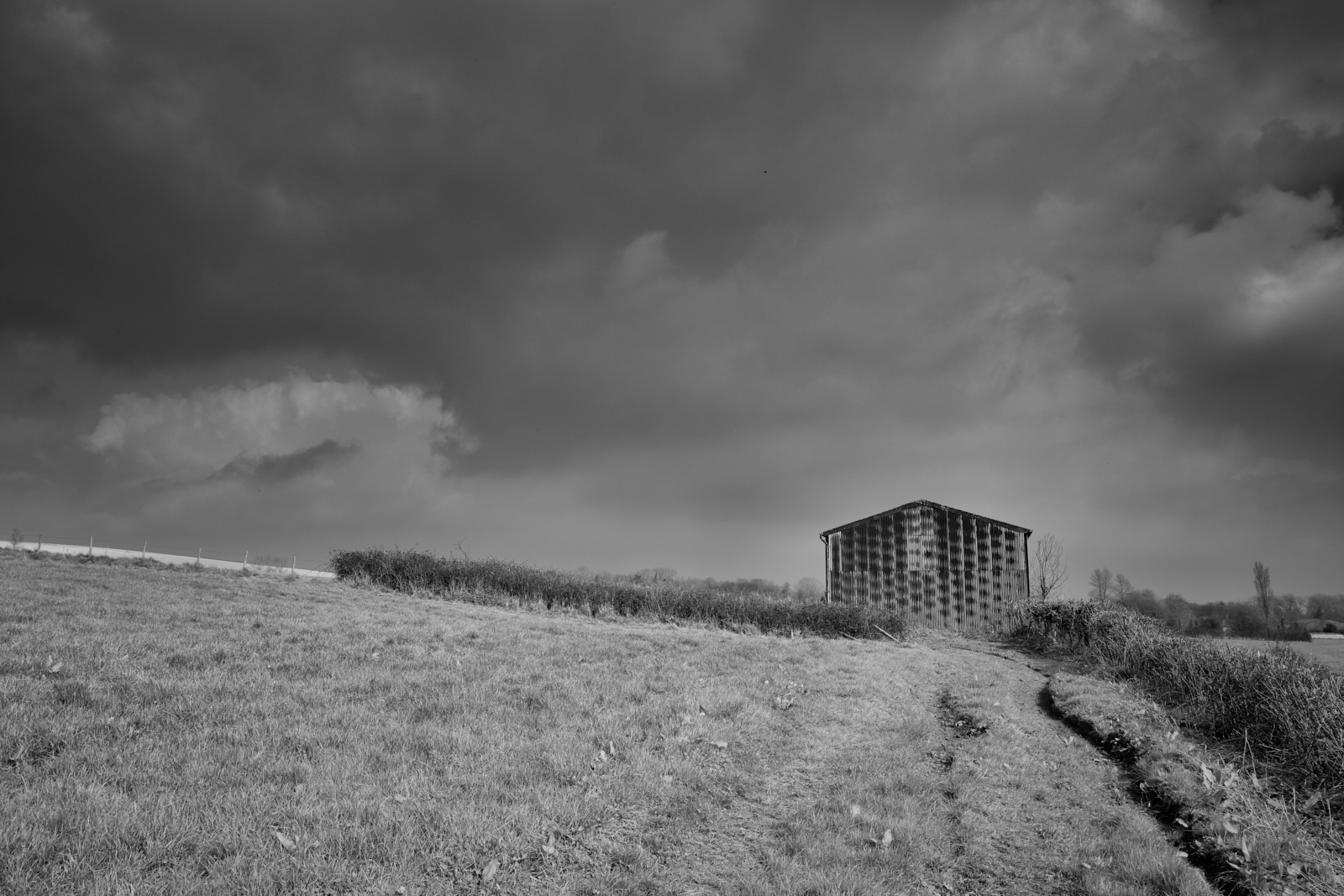
Muddy track and barn

Explaining all of the above brings me onto my recent purchase of a Leica Q3….. the version with a fixed 28mm lens, not the recently announced Q3 43, which has a fixed 43mm lens. I mentioned earlier that I had a Fuji X100v which I bought back in 2020. A highly regarded camera, but I always found the 23mm (35mm in full frame terms) to never be quite wide enough when I didn’t want to use my 50mm lens. Whilst compact and lightweight I almost found it too small to be reassuring to use. The Leica SL2S is quite a hefty beast but being quite large and very solid is to me much more comfortable to use.

So I decided I might sell my X100v and did some research into the Q3 as a replacement. I soon found a number of nearly new examples for sale at a much lower price than brand new. It’s far from being cheap to buy, as with anything made by Leica, so any saving is worthwhile. I didn’t take very long to make up my mind.

I have to say the Q3 is not really that compact, the lens is bulky, particularly when compared to the X100v which will readily fit inside a coat pocket. However it shares most if not all the things I like about the SL2S and has some other benefits which are lacking on the SL. The camera controls are very similar, the lens just feels like any other M mount prime lens. It has a maximum aperture of f1.7 which even on a 28mm lens can give me a very shallow depth of field in certain situations. It also has a macro facility which is quickly enabled by turning another ring on the lens. Like all Leica lenses the quality and sharpness is outstanding. Yes it’s larger and heavier than the X100v but to me it feels more like a scaled down version of the SL2S, so it instantly felt comfortable in the hand. Having made the switch I did add a thumb grip, soft release and I will probably add a hand grip as well, all of which I had on the Fuji.

Various images of my newly acquired Leica Q3

The menu system on the Q3 is very similar to the SL2S, so I can switch between cameras without having to think too much about what I am doing. Just like the X100v it has an articulated screen, which is something I miss on the SL. It has in-body image stabilisation, is weather proof and for the few weeks I have owned the camera it is already proving to be a delight to use.

I am greatly enjoying the challenge of using a 28mm lens as opposed to the 50mm. It’s opening up new creative compositions. Finally I should mention the 60mp sensor which is quite superb and offers the following crop modes of 35mm, 50mm, 75mm and 90mm. Even at 50mm it’s providing me with a 18.9mp file – The Leica SL2S has a 24mp sensor by way of comparison and I have never been disappointed with the images it captures. In fact I have always considered 24mp to be something of a sweet-spot. Turning the clock back my Leica M Monochrom had a 18mp sensor, so for convenience when I only want to carry one camera I feel very at ease using the crop mode on the Q3.

So in conclusion I hope this has given you an insight into my approach to image capture when I’m out in the landscape. My purchase of the Leica Q3 is a great companion for the SL2S. I can take it anywhere and given time may get more use than the SL and the ‘nifty fifty’.

All of the monochrome images in this entry were captured with the Q3, as indeed were the images in the first post in this series. They were all captured during a single walk not far from my home.

Photographic workflow – Part 1 ….. Seeking inspiration

Out and about on the Throop Loop walk close to my home.
More images from this walk feature in this post.

This is the first post in a short series in which I aim to describe my photographic workflow from the very beginnings to the final print. In this post I will write about how to find inspiration. Future posts will cover image capture, my editing process and lastly making the print.

At the start of this year I made a pledge that I would put more effort into making new work and to immerse myself into this great creative hobby which I and so many people enjoy. However if you lack inspiration or enthusiasm this has to change.

I guess we all go through periods when our desire to be creative wanes, and when this happens we need to find fresh inspiration that encourages us to pick up a camera and seek out new subjects or different ways to make photographs. If you have been making images for many years this can prove problematic. It’s all too easy to fall into a rut and think; ‘I have photographed that scene before’ or ‘I simply can’t be bothered to make the effort to go out – the weather is against me and the light isn’t right.’ All valid reasons but I believe they can be overcome by a fresh dose of inspiration.

I can only speak for myself but I find I am inspired in a number of ways.

I will often begin by going to my collection of photo books, selecting a few from the shelf and from there I start thumbing through the pages with a decent cup of coffee for company. I read about the photographer, their approach, thought process, technique and perhaps most importantly studying their photographs. And when I say study I don’t mean flicking quickly from one page to the next, as we do when scrolling through images on Instagram, but actually taking time to really look into the image. I look at the choice of subject depicted; its composition; how line, texture, form and contrast have been used to enhance the image and how these elements assist the narrative or feel of the picture. In other words ‘what can I learn’ from images made by photographers whose work I admire and which gives me pleasure.

The Recent Past by James Ravilious and A Life a biography by his wife
Robin Ravilious

In the past few weeks I have been revisiting the books I have by James Ravilious, Chris Chapman, Chris Tancock, Fay Godwin and Don McCullin (his landscapes). These five photographers all work in monochrome and the first three could be all be described as rural documentary photographers. Their images typically capture a way of life in the countryside and this appeals to me greatly. Their work often includes people which are nearly always absent in my photographs but I like to think I am recording or documenting the countryside around where I live.

Wild Goose and Riddon by Chris Chapman
Beating the Bounds by Chris Tancock
Land and Our Forbidden Land both by Fay Godwin
The Landscape by Don McCullin

Alongside books I find inspiration from watching YouTube videos about these and other like minded photographers. There are of course very many excellent photographers who are making a good living being full time YouTubers, but all too often in my view their formulaic approach to their craft is more about gaining likes and subscribers to boost their channel. I can’t blame them but endless gear reviews, visits to honeypot locations and well worn ‘how to do this, and how to do that’, is fine upto a point but this type of video isn’t for me. I am more interested in films, talks or interviews with and about the photographers that inspire me. They are fewer in number but I find them very interesting and inspiring even when I have watched them before.

A selection of videos which you might find interesting.

A documentary presented by Chris Chapman regarding his friendship with James Ravilious made in 2022 – duration 24 minutes.
A documentary about Fay Godwin – duration 49 minutes
A film about Chris Tancock – duration 12 minutes
Don McCullin – The Stillness of Life – duration 8 minutes

I haven’t bought a photo magazine for years but I used to subscribe to Black and White Photography Magazine and still have a pile of them which I will occasionally pick up and read. Much of the imagery isn’t to my liking but some of the articles have a value and are worth re-visiting.

A pile of Black and White Photography magazines

I have yet to discover many podcasts which make me want to listen on a regular basis. I would however highly recommend Lenswork an online photography magazine by Brooks Jenson. Almost without exception every day he broadcasts ‘Here’s a thought’ – This example called ‘Take a Risk’ was published just a few days ago on the 22nd February. It lasts about 6 minutes and is well worth a listen.

Inspiration can also be found by being in the company of other photographers or artists. I haven’t been a member of a camera club for many years, and I rarely participate in workshops. Almost without exception the period following a workshop has kick started my desire to pick up a camera and start shooting. This was certainly the case when I attended a retreat towards the end of last year run by Paul Sanders, my first workshop for many years. Paul gave me new ideas, guidance and encouragement. A confidence booster which we all need from time to time. You can read more about my experience here.

I don’t like to mention it but it’s true to say that the purchase of new equipment will virtually guarantee and inspire us to take photographs. A new camera, lens, tripod, camera bag or simply a new accessory will get the shutter release button working again. New gear often isn’t necessary of course but if it inspires new work then what’s wrong with that? I have been guilty of treating myself to new equipment on more than one occasion, and I shall revisit the topic of equipment in Part 2 of this series – Image Capture.

Across the meadows at Briantspuddle

There are other situations which help inspire the desire to make photographs. Being on holiday or travelling and exploring a location which you haven’t visited before is an obvious one. There are though limits on how far and how often. Time and finances are both limiting factors. As an outdoor photographer a favourable weather forecast for the next day might be all you the encouragement you need to pack the camera bag and head out. Mist or fog, the promise of snowfall, a stormy day down at the coast or simply the chance of good light and interesting cloud formations can all inspire.

There may be other situations which will inspire us to pick up a camera knowing it could help improve one’s mood. Certain ‘life or work events’ which cause stress and anxiety can prove to be all the inspiration necessary. Being outdoors and taking photographs is an excellent antidote for stress. It is well recognised that exercise whilst experiencing nature is beneficial to our health and general state of mind.

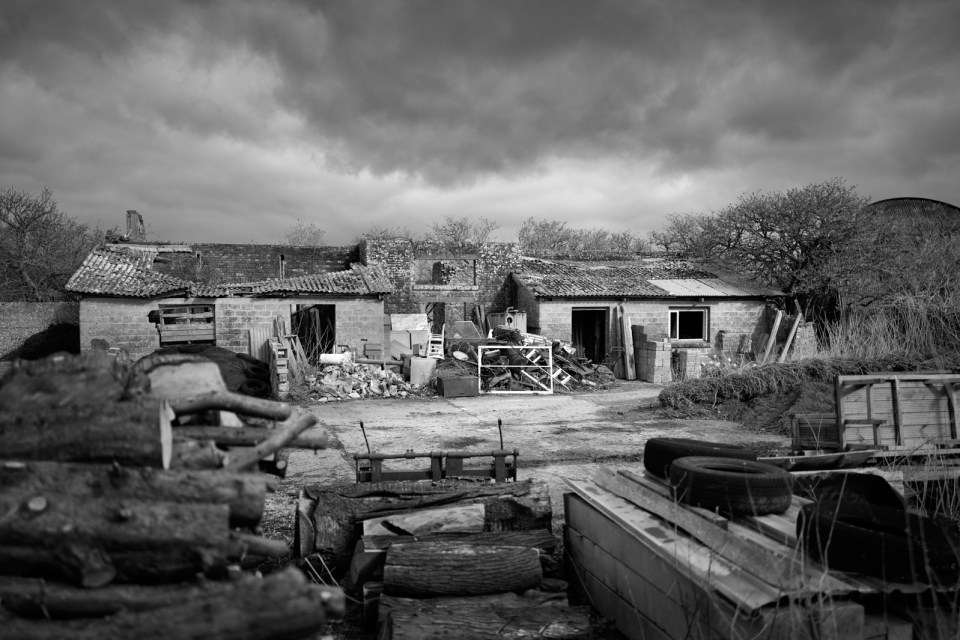
Ramshackle outbuildings at Throop

Lastly I believe that when we make new images which we like and enjoy, this very act will inspire us to try and repeat the exercise and make more pictures which we are happy with. Success breeds success you might say. These images don’t have to be liked or critically acclaimed by others; although positve feedback does help of course. It can be quite sufficient to make images which please the creator and the creator alone.

I liken this to when I used to be a regular golfer many years ago. I could have a dreadful round, spraying the ball all over the place, but if I struck one decent shot or holed a long putt then I would look forward to the next time I played. This analogy is no different to the small number of pleasing images on a memory card which is full of pictures just waiting in anticipation for the delete key to be pressed.

The river Piddle looking towards the farm at Turners Puddle

These are all forms of inspiration which I find helpful. Some are more tangible than others but they have all been of benefit to me recently or in the past.

It perhaps goes without saying that the photographers I have chosen to feature are my particular favourites and you will have own preferences but the principle remains the same. I also have no doubt that you will have your own ideas on where and how you find inspiration and any thoughts you may have would be welcomed in the comments section.

In the meantime I am inspired to make new work and I have been doing so recently.

I have included a small collection of recent images made on a walk which I call the Throop Loop. A regular circular walk which is quite close to my home. There are familiar sights aplenty but the eye soon learns to see and discover new compositions when inspired to do so.

Seek and you will find – a finger post on the Throop Loop

A countryside wander around Winterborne Kingston

Grey, cold, and damp….. a typical Winter’s day in the south of England. Despite these conditions I very much enjoy wandering around the countryside, and in particular photographing the various farm buildings I encounter. They hold a certain fascination and are often in a state of disrepair. It’s a subject I keep returning to, and I don’t imagine this ever changing. The combination of a walk in the Dorset landscape with a camera for company is always a pleasure irrespective of the weather; although warm, waterproof clothing and a good pair of walking boots are a requirement.

The walk began and ended at the church of St Nicholas in Winterborne Kingston. A fine display of snowdrops reminded me that Spring isn’t so very far away.