Posts tagged ‘Landscape’

My new camera – an iPhone 6S – a useful photographer’s sketchbook

Most photographers will be familiar with the saying – ‘The best camera is the one you have with you’. I can’t disagree with this adage but just how good are smartphones as a true photographic tool? Let me say rather swiftly that this is not intended to be a review of my recent upgrade from the iPhone5 to the iPhone 6S, but merely a selection of images and a few opinions of my own about the value of taking images with a mobile phone. I hope you will find my thoughts interesting.


IMG_1280


The iPhone 6S now boasts a 12mp sensor, so it’s no wonder that the use of smartphones have stolen a huge number of sales from the compact camera market in recent years. (Click on this link to a page on Flickr which only confirms what most of us already know about the use of camera-phones). However I am all too aware that more megapixels doesn’t necessarily equal better quality pictures. The biggest factor is always going to be the person taking the shot, not the equipment being used, but that’s a topic for another day!

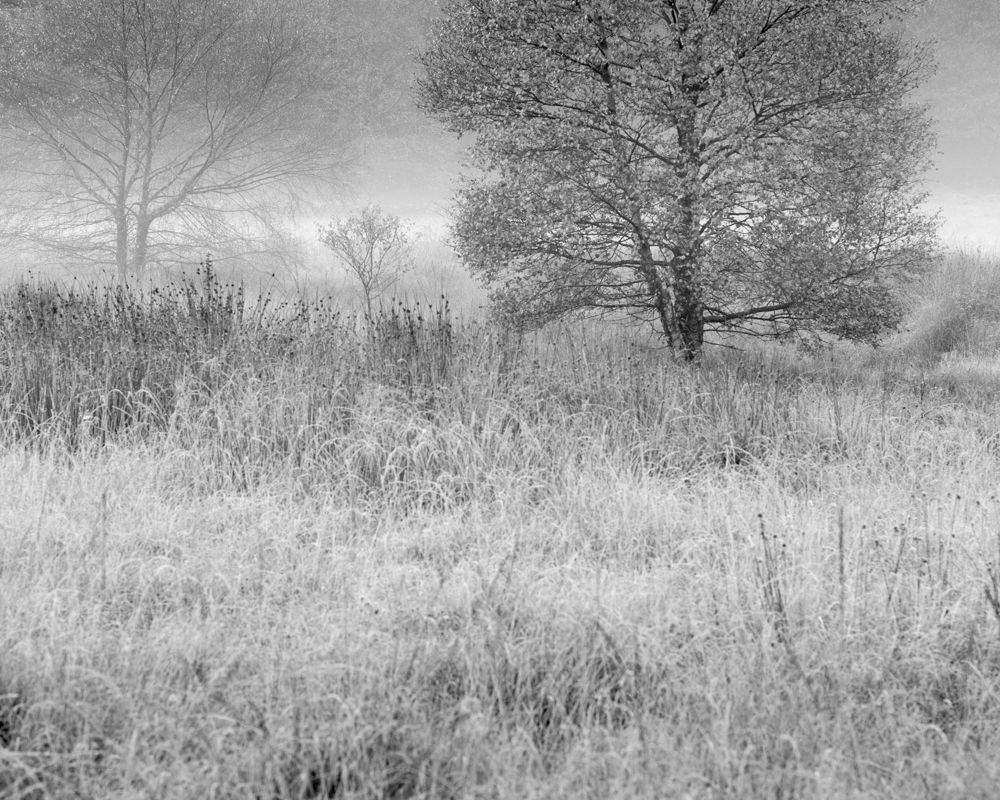
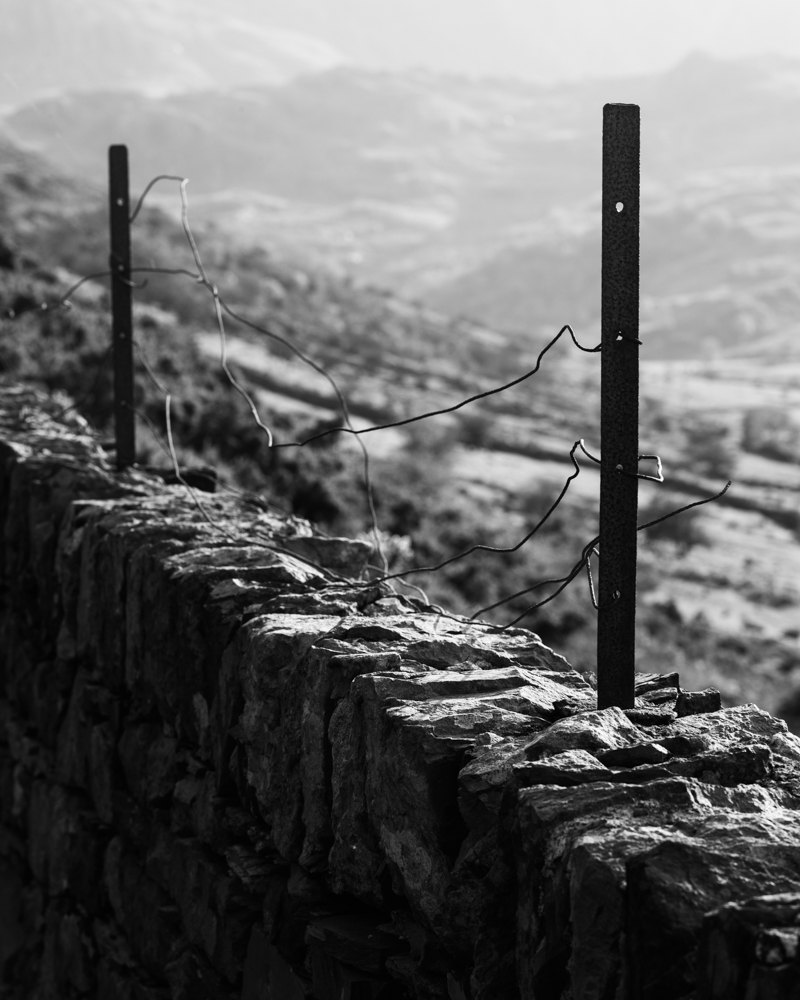
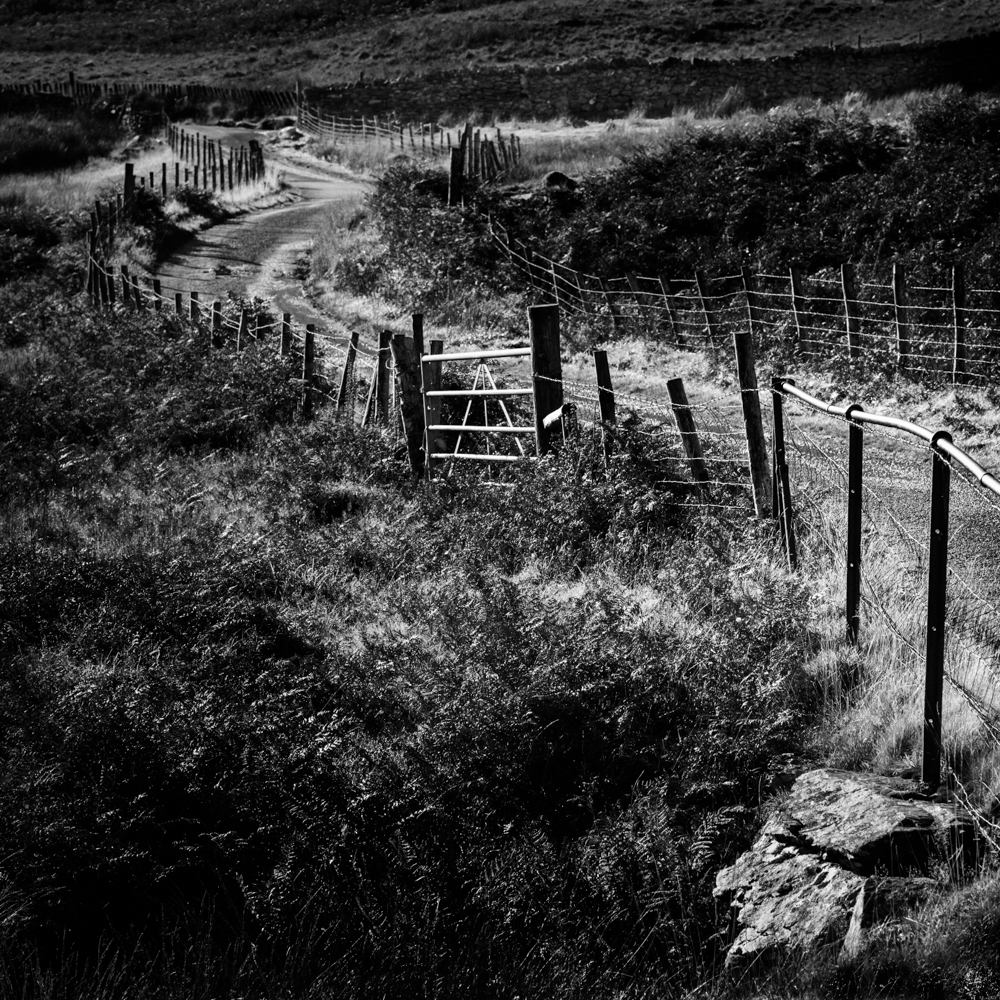
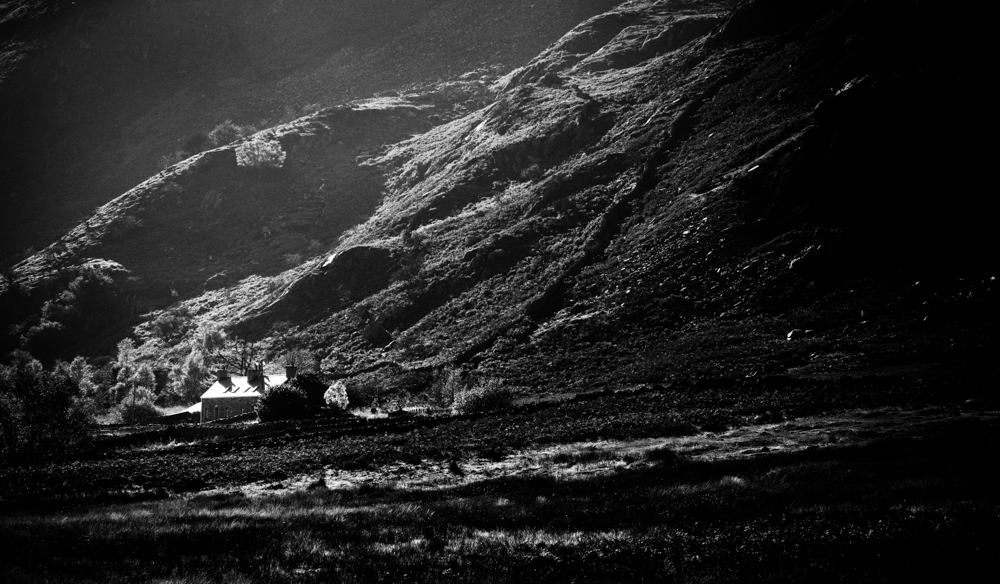
The four images in this post were all taken in the past few weeks whilst out and about walking our dog. I have never found it easy to multi task and keep one eye on the subject being photographed and the other eye on the dog, just in case he gets bored and runs off out of sight. So a quick shot is really all the time I have. The pictures have been imported into Lightroom from the iPhone 6S and then converted to black and white. Some limited post processing has been used to enhance each image if only to prove to myself what is possible with the jpeg files.


IMG_1183


So what are my thoughts? Well the results are pretty remarkable all things considered. The iPhone 6S has coped well with some high contrast conditions and to a certain extent the files are flexible in post processing. There isn’t much detail in the shadows but it’s unquestionably a better performer than the iPhone 5. They are certainly good enough for posting on the web which is where the vast majority of images now end up. What I would say is that the quality deteriorates significantly when zooming in, so it’s arguably better to take a ‘full size’ image and then crop in post. Would I want to make an A4 or even an A3 size print? – I haven’t tried, it would be an interesting exercise but I doubt I would be happy with quality, however I might be pleasantly surprised.


IMG_1200


I enjoy taking pictures on my phone but for now it will never replace any of the cameras I take so much pleasure in using. For me the camera-phone is the equivalent of an artist’s sketchbook. Something which is very portable and convenient to have with me at all times. Something I can use to make a visual record of a particular location. Something to inspire me and to think about when considering a return visit. A photographer’s sketchbook – most definitely yes, and a very good one at that. A replacement for my cameras with interchangeable lenses and the ability to shoot in RAW – no way, but still worth having with me at all times – if only to make the odd phone call!


Mist and missing Capel Curig – Happy New Year!

20151103-L1000868


This will be my last post of 2015 and hopefully it’s a fitting end to what has been a thoroughly enjoyable year of black and white photography.

The five images in this entry were all taken on the last morning of my stay in Capel Curig, Snowdonia in Wales at the beginning of November. Although the mist was very atmospheric, (isn’t it always) I had been hoping for some early morning sun to break through. Although this didn’t materialise, I am still happy with the results of an hour spent in a field immediately opposite where I had been staying, for what proved to be a great introduction to this part of Snowdonia. I don’t have any New Year resolutions but I do know that I want to return to this beautiful part of the UK in the not too distant future.

Until then may I take this opportunity to thank everyone who has visited my blog, and liked or made comments about some of the entries. I am always very grateful for the feedback, it’s much appreciated.

Have a very happy New Year and may 2016 bring you peace and good health; and if you are a photographer like me, I hope you will be inspired to take some fine images in the year ahead.


20151103-L1000843


20151103-L1000833


20151103-L1000860


20151103-L1000815


To fully appreciate each image do click on the picture to see an enlarged version which will open in a new window.


The old A5 – Nant Ffrancon valley in Snowdonia

The road from the western end of Llyn Ogwen to Bethesda in Snowdonia passes though the deeply glaciated valley of Nant Ffrancon. Now a typical ‘A’ road the original road featured in this post is a single track road with just a few passing places. It is rarely used so parking is not really a problem. You just stop in the middle of the road and hope that no vehicles come along while you jump out of the car and take a few photographs.

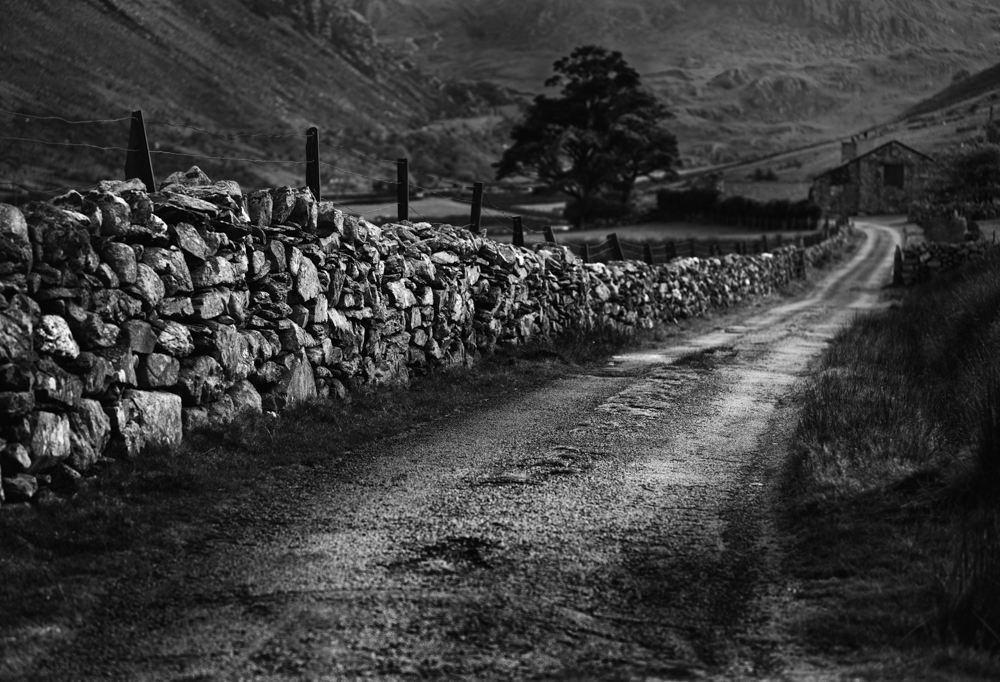
The road twists and turns with a variety of fences defining field boundaries. Wire and post fencing, stone walls, but perhaps most interesting of all are the slate fences, nestling in the grasses which lean from left to right and undulate in harmony with the lie of the land.

It’s a fascinating area to explore and really does feel like you are stepping back in time. There are very few buildings along this stretch of road. The ones that are here are isolated and when I visited this part of Snowdonia at the end of October the weather was favourable. I tried to imagine what it might be like in the depths of winter, with rain or snow being swept through the valley by a cold and strong wind. Pretty bleak I thought to myself.

The first two images below are taken from the existing A5, looking down into the valley. The line of the old road can be seen in the top right of the frame of the first shot.


Nant Ffrancon valley

Nant Ffrancon valley


Wire and stone

Wire and stone


Valley road

Valley road


Valley farmhouse

Valley farmhouse


Tree of light, Nant Ffrancon

Tree of light


Slate fence

Slate fence


Old road

Old road


Do click on any of the images to view a larger version which will open in a new window.

Early morning in Snowdonia – with or without a tripod?

Llynnau Mymbyr

Looking towards the Snowdon Horseshoe from Llynnau Mymbyr, near Plas y Brenin 


This is one of those iconic photographic locations where many tripods have stood, with cameras perched and the photographer waiting for the right light before releasing the shutter. Checking and rechecking the composition on the back of the camera, moving the tripod a little to the right or to the left, then raising or lowering the height of the legs until all the important elements of the picture fall into place. With many ‘JCBs’ or ‘Joe Cornish Boulders’ to  fill the foreground the permutations are almost limitless.

It may well be a popular location, but as a first time visitor to Snowdonia it had to be taken. However my set up is rather different to the one described above. Put simply I prefer not to use a tripod. I have observed many photographers using this piece of equipment which is considered by many to be essential to landscape photography. It’s often extended to eye level so that they can stand comfortably. Nothing wrong with that but might a lower viewpoint be more interesting? I like to move around with the camera in my hand, spontaneously reacting to what I see through the viewfinder. No live view for me on the back of my Leica Monochrom. I enjoy this freedom of movement, working a location, without a heavy tripod and its head to inhibit me. I can easily crouch or even lie down on the ground to get the picture I want.

I know some will say a tripod slows you down, makes you stop and think about what you are doing, but this just isn’t my style.  I like to change the composition of a shot by moving my body around, whilst adjusting the position of my feet and hands, until I see the picture that works for me. Perhaps I am lazy or just too impatient to take the shot and move on, but I can cover a lot more ground without a tripod. If you use one on a regular basis, can I suggest you leave it in the boot of your car one day and see what a difference it makes – you may find it quite liberating – I know I do!


The appeal of ‘light on dark’ in Snowdonia

Burning mist

Burning mist


What makes a good black and white photograph? There are of course many answers to this question, so for this post I want to concentrate on one particular aspect and that is the use of a light subject set against a dark background. Put another way it is the natural contrast between two key elements of a composition. Finding suitable subjects in the landscape is not necessarily that easy and may require side lighting or even back lighting to give the desired effect. I have chosen four images for this post all taken on my recent trip to Snowdonia.

Blessed on a number of days with lovely sunshine, the chances of capturing a ‘light on dark’ image were improved as the bright light increased the amount of contrast. Exposing in such conditions can be a challenge, as it’s vital not to blow the highlights but I still wanted some shadow detail which I could bring out later in post processing. There are though occasions when I don’t want any shadow detail and the blacks can be deep, dark and even mysterious as they provide no information to the viewer whatsoever. This technique may not always be appropriate for a landscape image but even so, the contrast between light and dark can be enhanced when required from a purely artistic point of view.

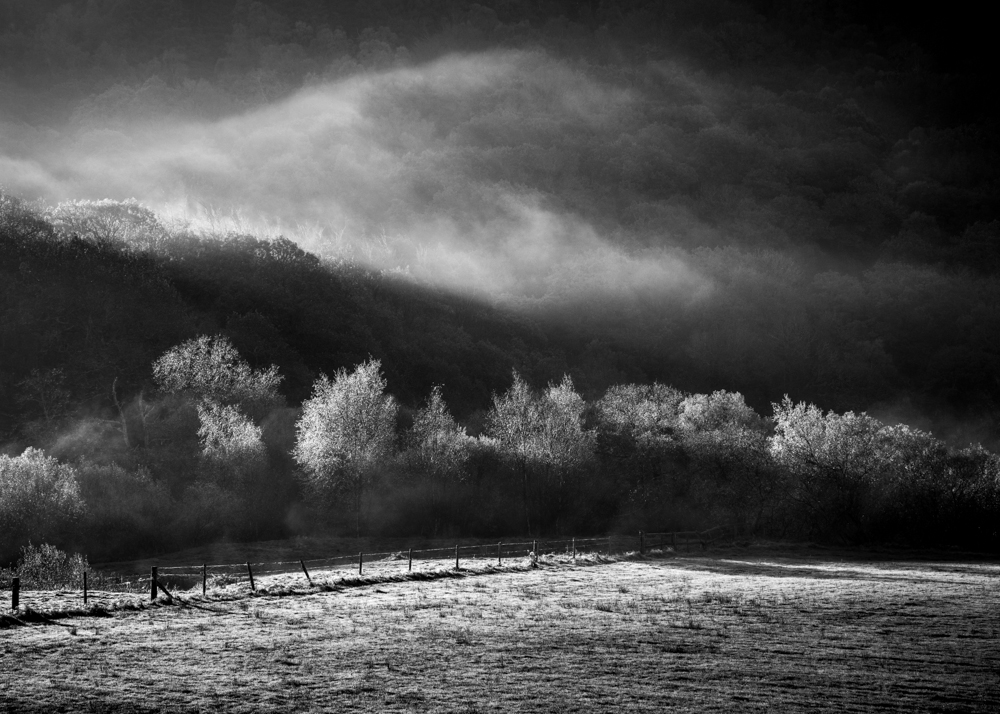
The first image at the top of this post was taken as the last of the early morning mist was being burnt off by the strengthening sunshine which was still low in the sky. The light is coming from about 10 o’clock (from where I am standing and pointing the camera), but had the sun been behind me this shot would not have worked. It totally relies upon the light coming from a certain direction to illuminate the autumn leaves on the tress, so they stand proud of their darker background. Do click on the image to view a larger version as you will see there is still detail in the back drop of trees which are shrouded in mist.


Llyn Dias

Llyn Dias reflections


In the second image the light is coming from the left. Like the first shot it was taken fairly early in the morning. The sun lights up the fence and the trees, which like the first image stand out against the dark background. The water in the foreground is reflective adding another dimension to the picture.


Tree of light, Nant Ffrancon

Tree of light, Nant Ffrancon


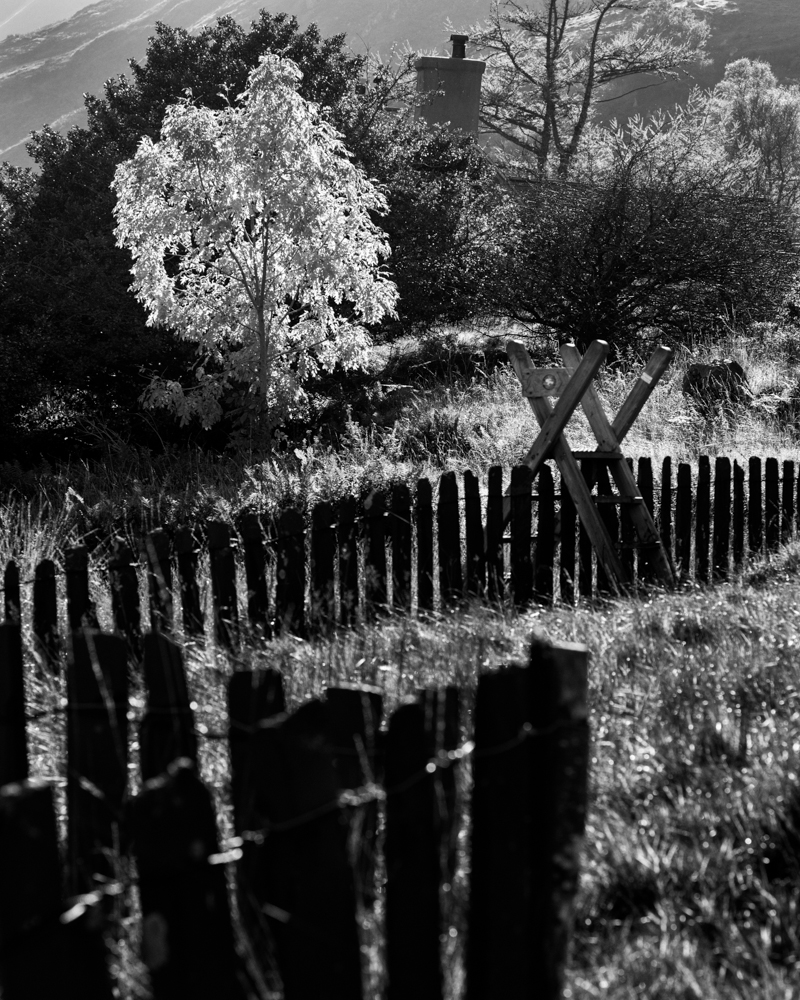
The third image, above, is I think a very good example of ‘light on dark’ and why this type of shot makes a good monochrome photograph. Here I have focused on the tree in the top left of the frame. The yellow leaves catching the bright sunlight, creating virtually a silhouette of light against the darker tree behind it. The wire and slate fence leads your eye into the picture but being out of focus and dark does not detract from the brightness of the tree. This time the light was coming from about 2 o’clock. Personally I like the chimney, it just adds another point of interest but is still secondary to the main event.

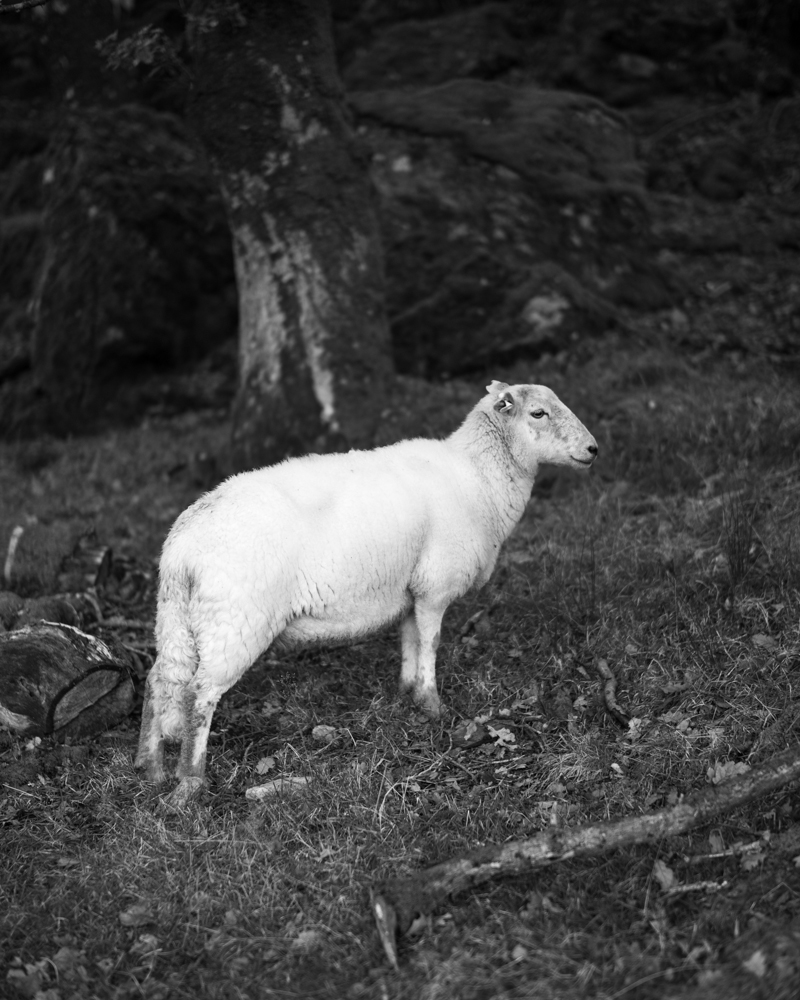
Lastly I had to include a picture a sheep. How could I visit Wales and not have a sheep shot? Not literally of course, just photographically speaking! It’s not the greatest image taken on my trip but it does once again illustrate that the natural contrast between the subject and the background works in black and white. In colour this picture really wouldn’t be very pleasing to look at. What is critical to this shot is the detail which has been retained in the highlights in the sheep’s coat. A minimal depth of field has also been used to blur the background.


Welsh sheep

Welsh sheep


As mentioned earlier, all of these images are worth viewing ‘large’, so do click on each one to see the photograph in a new window.