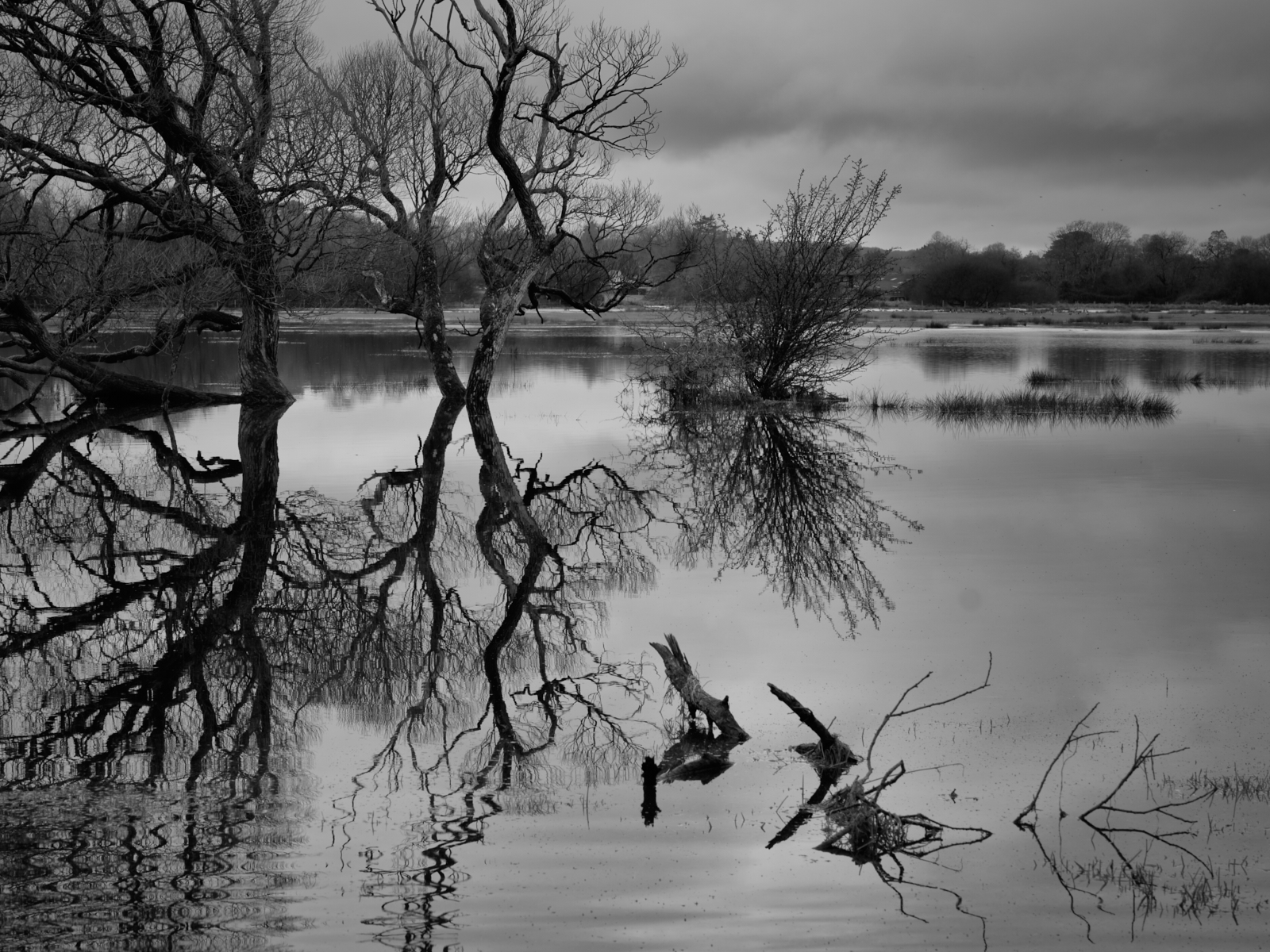
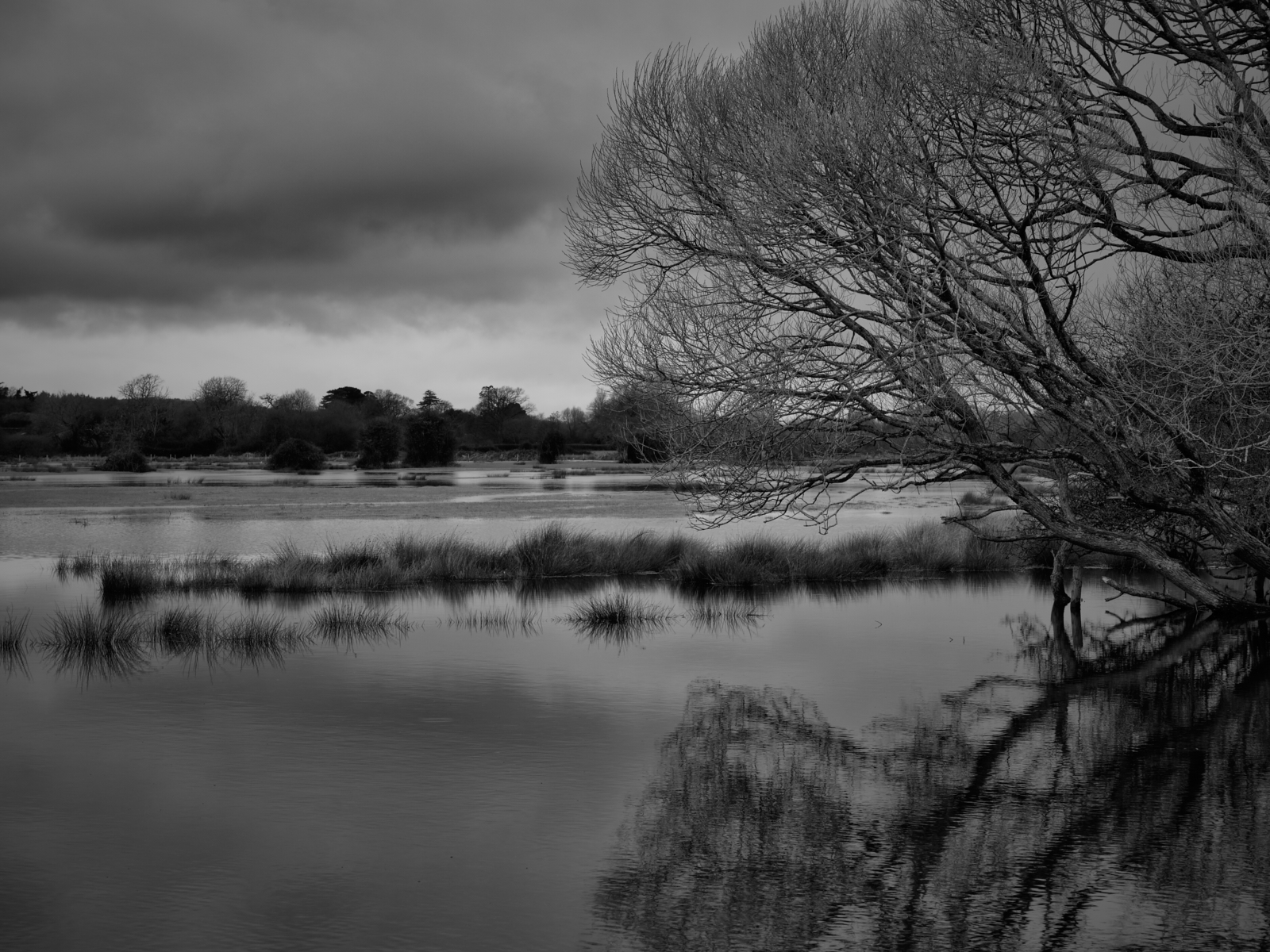
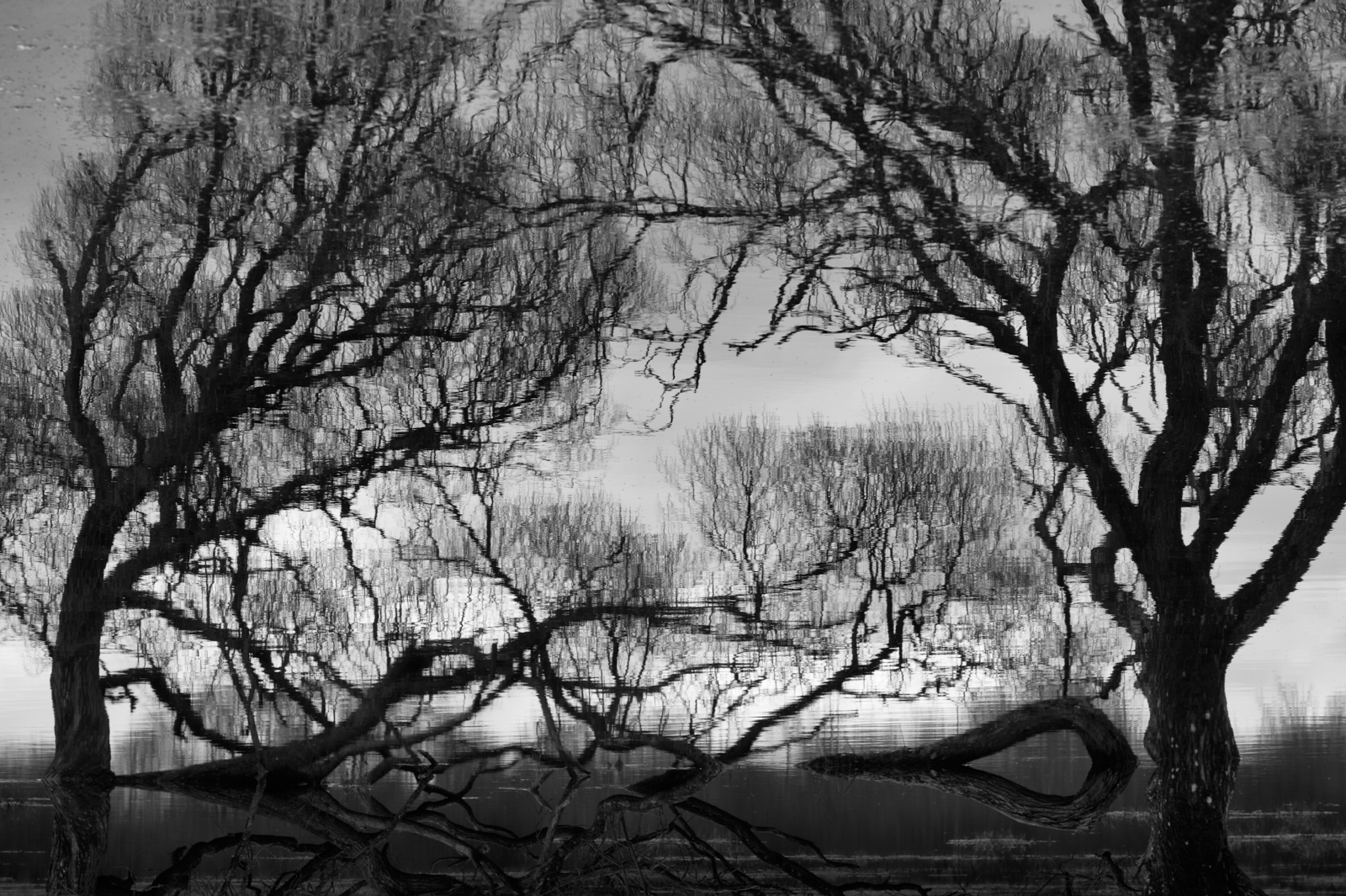
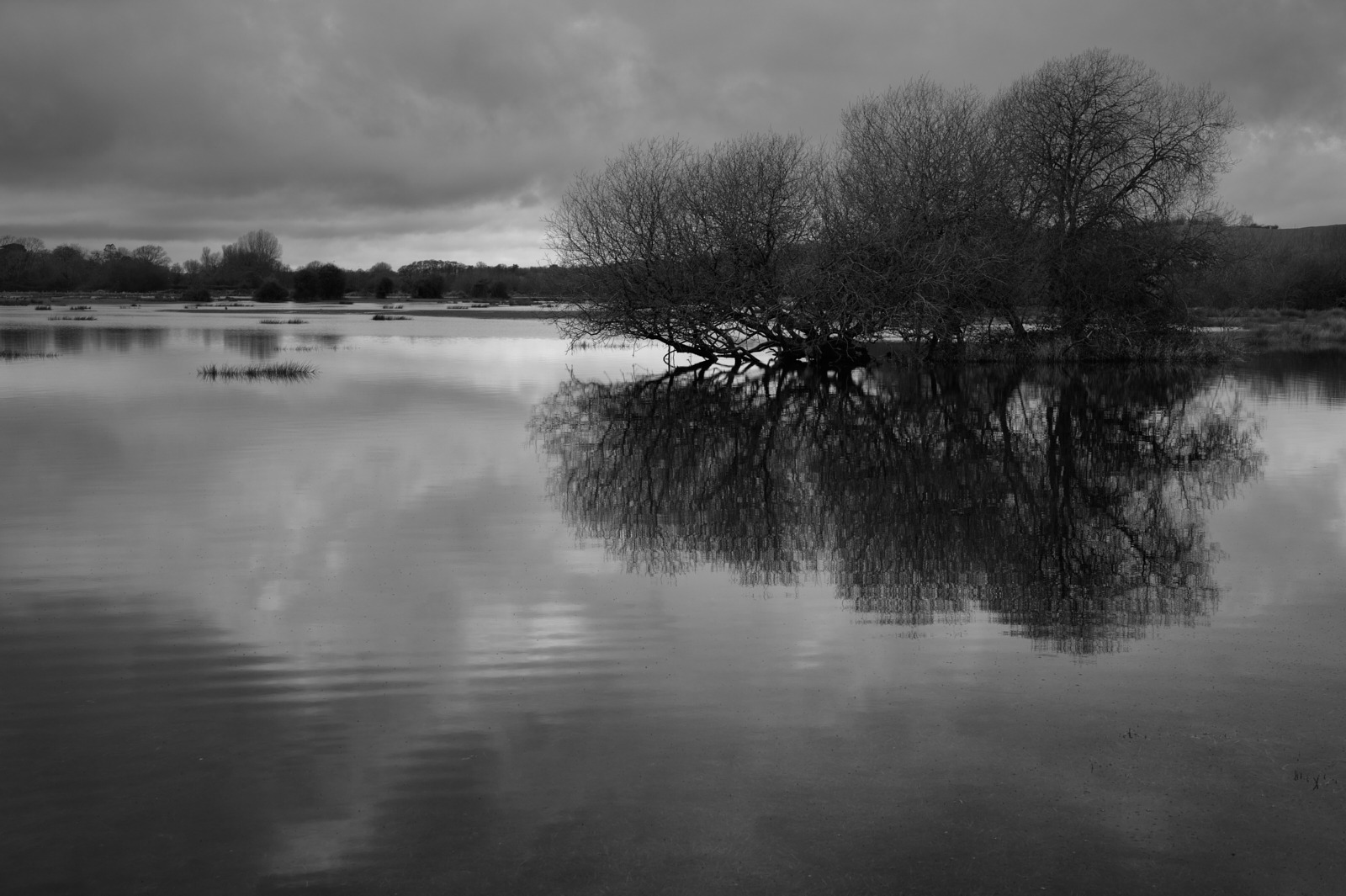
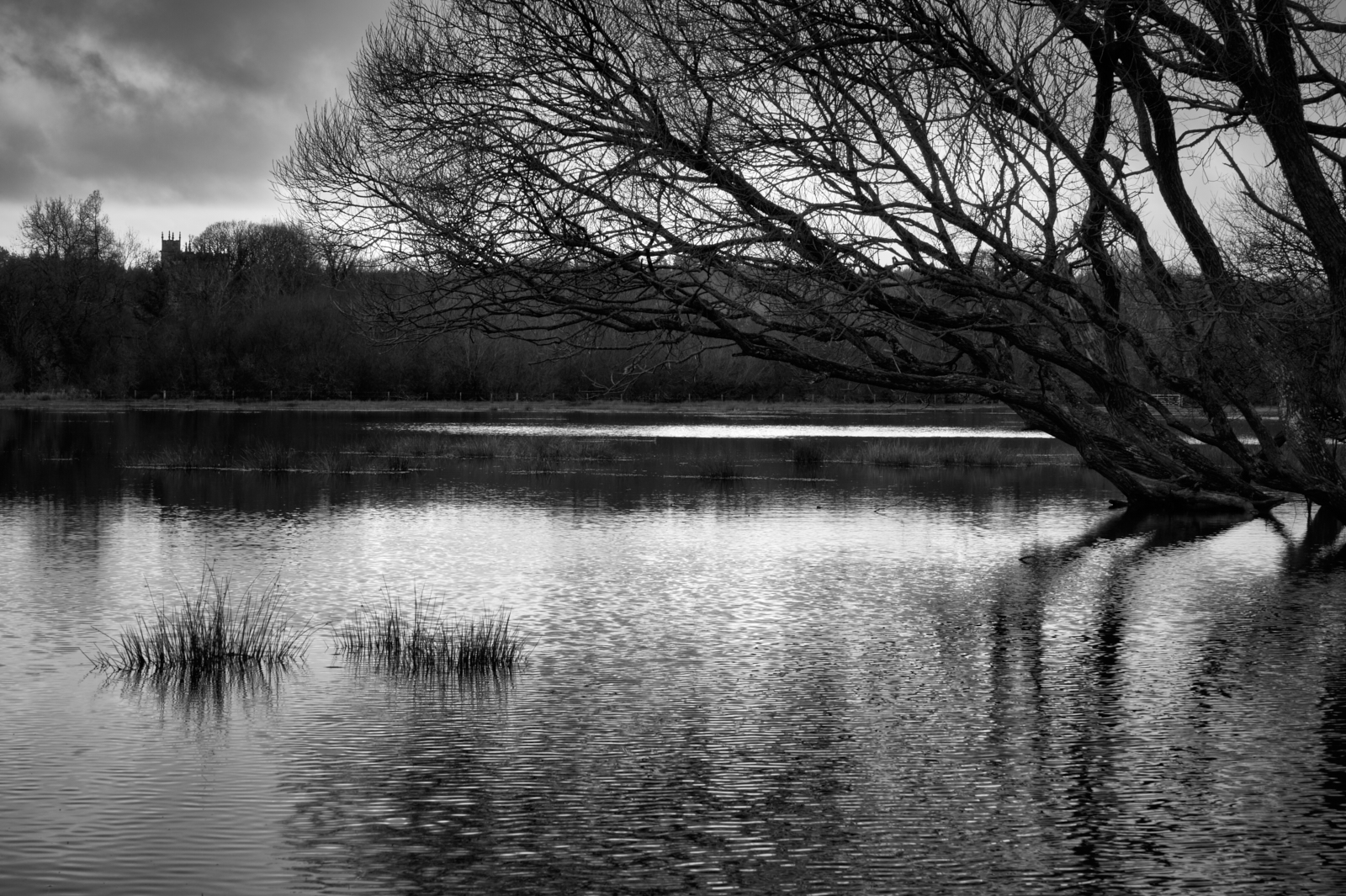
A few days ago I posted a set of images of the flooded water meadows close to where I live. You can read that post and see the images here.
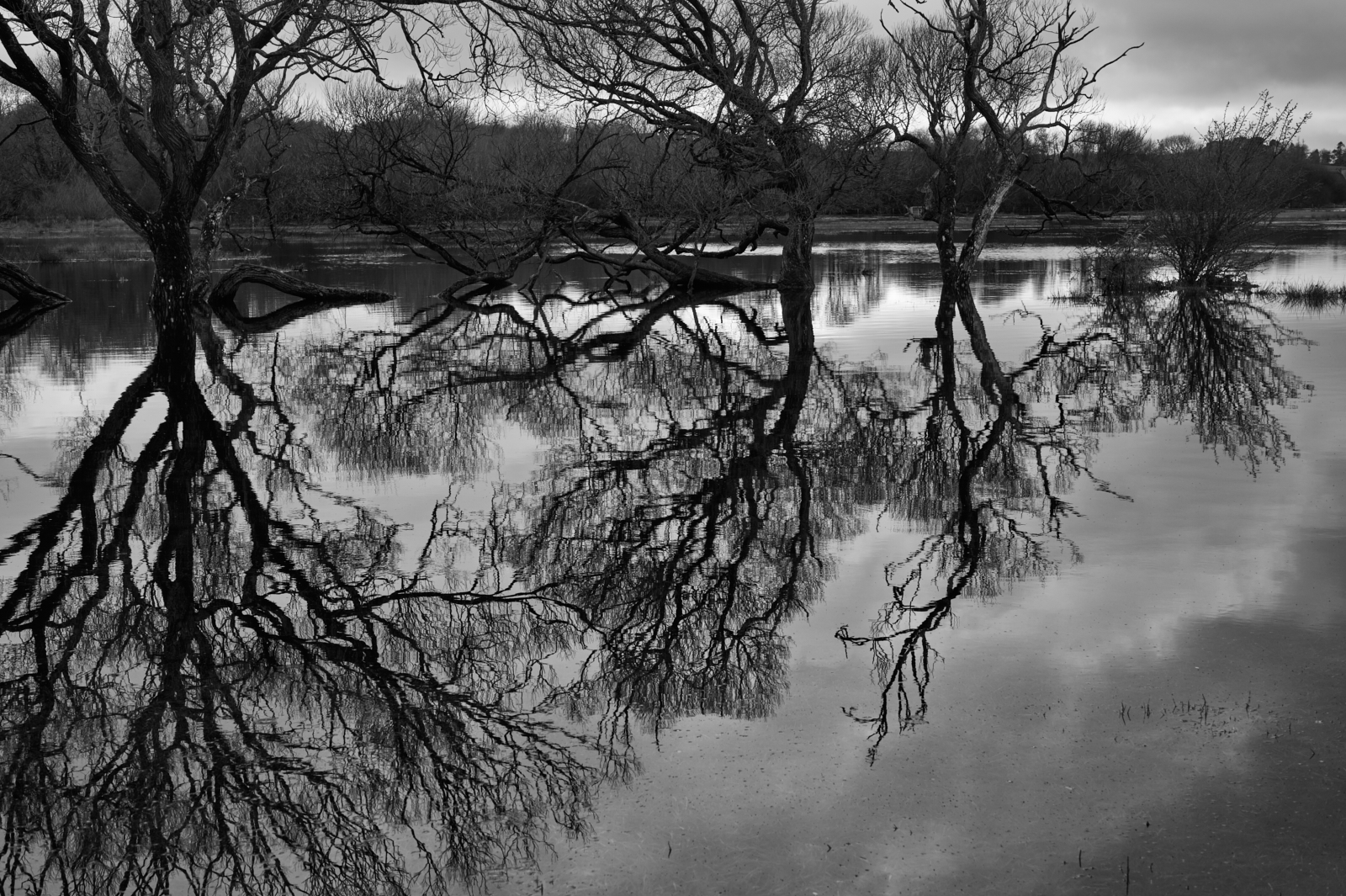
I knew there was the possibility of some different views if I accessed the meadows from the other side of the river. In particular I wanted to capture some trees which I thought would be ideal subjects providing I could pick a still day to make the most of their reflections.
When conditions were favourable I selected what camera gear I would need and put on my wellies. I took a tripod, not because I would be taking any long exposures but to slow me down. I tend to work quite quickly and the one advantage of a tripod is that I take greater care over the composition and the camera’s settings. I find the process of being in the field more immersive as a consequence.
The water levels have receded but any more rain will only fall on saturated ground, so I fully expect these scenes will persist for some time to come. I may travel a little further afield to find other areas where I know local rivers have burst their banks. I have not known flooding on this scale before so I want to make the most of these conditions while I can.
A few weeks ago I walked along a footpath, a path I had followed many times before. At the junction with another bridleway stood an old signpost. Years of weathering had caused the wood to deform and split. I suspect the post itself was rotten where it emerged from the ground. Layers of lichen and moss had partially covered the names of the nearby villages – Turners Puddle, Throop and Tolpuddle. The fingerpost had character, a patina which would only appear given the passage of time. It complemented the farmland backdrop.
This simple scene spoke to me; a reminder of all the people that had worked on the land and had walked or ridden a horse along the bridleway between these old Dorset settlements. It was more than worthy of a photograph and I am so pleased I did so.
I returned to this same location only yesterday and I was saddened to find the old sign had been removed. It had been replaced with a new post with plastic signage. To my eyes this new sign was bereft of personality. There was no inclusion now of village names. I had the feeling that it was symbolic of the urban environment encroaching on the beauty of the countryside.
I fully accept that the old sign wouldn’t have lasted forever and at some point it would need replacing. However a ‘like for like’ timber sign would in my view have been a more sympathetic choice. If only I had personally witnessed its removal. I think I would have asked the contractor if I could take it home with me and find it a new home in my garden.
This change clearly illustrates and reinforces why I choose to photograph the rural area around me. To record what I see knowing that change is inevitable. It will probably happen very slowly of course and in truth I suspect very little will actually change in my lifetime, but change it will. However given recent Government announcements, which are sure to affect the farming community here in the UK, I feel the pace of change will only accelerate.
A photograph is all about capturing a moment in time, so I need to go out with my camera and document what I see before it’s no longer there.
Outside the Post Office, Cheap Street in Sherborne
It’s a little over a week since I posted my first entry on the topic of photographing telephone boxes. Documenting them, their uses and their place in the environment. I was quite excited then and I am even more excited and motivated today.
I have already spent quite a lot of time giving consideration to how this project might evolve, and whilst I have some parameters in mind, I don’t want to restrict myself too much too soon. I want to maintain flexibility in my approach and just see where this initial concept takes me.
What I have decided is that I would like to share not only the images but also the process with you. Explaining my ideas, and providing answers to some of the questions which are raised. It helps me to write down my thoughts and it may help you if you are also considering embarking on a photographic project. I don’t consider myself to be an expert but I hope you will find it interesting and maybe useful.
Initial Planning and Research
One of the many appealing aspects of this project is the number of boxes in existence in my home county of Dorset in the UK. Not as many as there once where of course, but that’s why I want to tell their story before they all but disappear. In order to find phone boxes to photograph I could jump in my car and aimlessly drive around hoping to stumble across them, but that would be very wasteful of fuel, time and almost certainly lead to considerable frustration.
Fortunately a quick internet search coupled with Google Street View can provide me with a lot of information. Without stepping out of the door I can sit in the warmth and comfort of my home and ‘travel’ around the county, and that’s exactly what I have been doing this past week.
Google Street View of Cheap Street
When I find the site of a box I record it on My Google Maps, placing a coloured pin in the exact location. Changing the colour of the pin I can readily identify which locations I have been to and which ones I still need to visit. When I say the exact location, I mean precisely that. From a photographic perspective I need to know which side of the road the box is sited and establish the likely angle of view so that I can time my visit according to where the sun is will be in the sky . To date I have already identified 56 locations but some have much more photographic appeal than others, so I will select those which I believe have the most promise. I have used My Maps in the past and I like the fact that you can click on a pin and add notes as well as images which serve as a useful source of reference.
My Maps courtesy of Google
Street View is an extraordinary tool, but I use it with caution, as it cannot be relied upon 100% of the time. Whilst searching I found a box near the Sandbanks ferry at Studland. It stood adjacent to the sand dunes. A great subject to photograph but unfortunately when I dug a little deeper I established the box had been removed back in 2020. Arrrghh!…..but it did save me a lengthy round trip. It also served as a reminder that these boxes will not always be part of the landscape and will over time be consigned to the history of this country.
The box near the Studland Ferry prior to its removal in 2020
Two new images
My wife and I visited the town of Sherborne earlier this week so I took the opportunity to make a couple of images of the two boxes outside the Post Office in Cheap Street. The first is at the top of this page. It also appears in the Google Street View of the same location, but without all the pavement works. Although a rather chaotic scene I enjoy all the various street furniture and the disruption caused by the works taking place.
The second image (shown below) depicts the box which now houses a defibrillator. In this picture I like the inclusion of the person carrying her bag with ‘Love Books, Love Reading’. It adds another level of interest.
The second box by the Post Office in Sherborne
These two images are very different to those I included in the first post. Those were rural in nature but they do contrast well with the town locations. I am already quite clear in my mind that I want the project not to be just a collection of photographs of phone boxes – not record shots in other words – but images which incorporate the surrounding environment. If there is to be a story there needs to be context and if this includes a human element to broaden the narrative then all well and good.
I don’t need to put a definitive name to this work at such an early stage but I consider it helps to call it something. The Telephone Box Project is something of a mouthful, so I thought the Phone Box Story had more appeal and I can abbreviate this to PBS which I think has a rather nice ‘ring, ring’ to it! Apologies for this terrible joke but I’ll stick with the ‘Phone Box Story’ and it’s shortened version of ‘PBS’ for the foreseeable future.
There are plenty of thoughts and ideas running through my brain right now so I anticipate posting a further update soon.
Do comment on any aspect of this project, I would welcome your feedback.


 alan frost photography