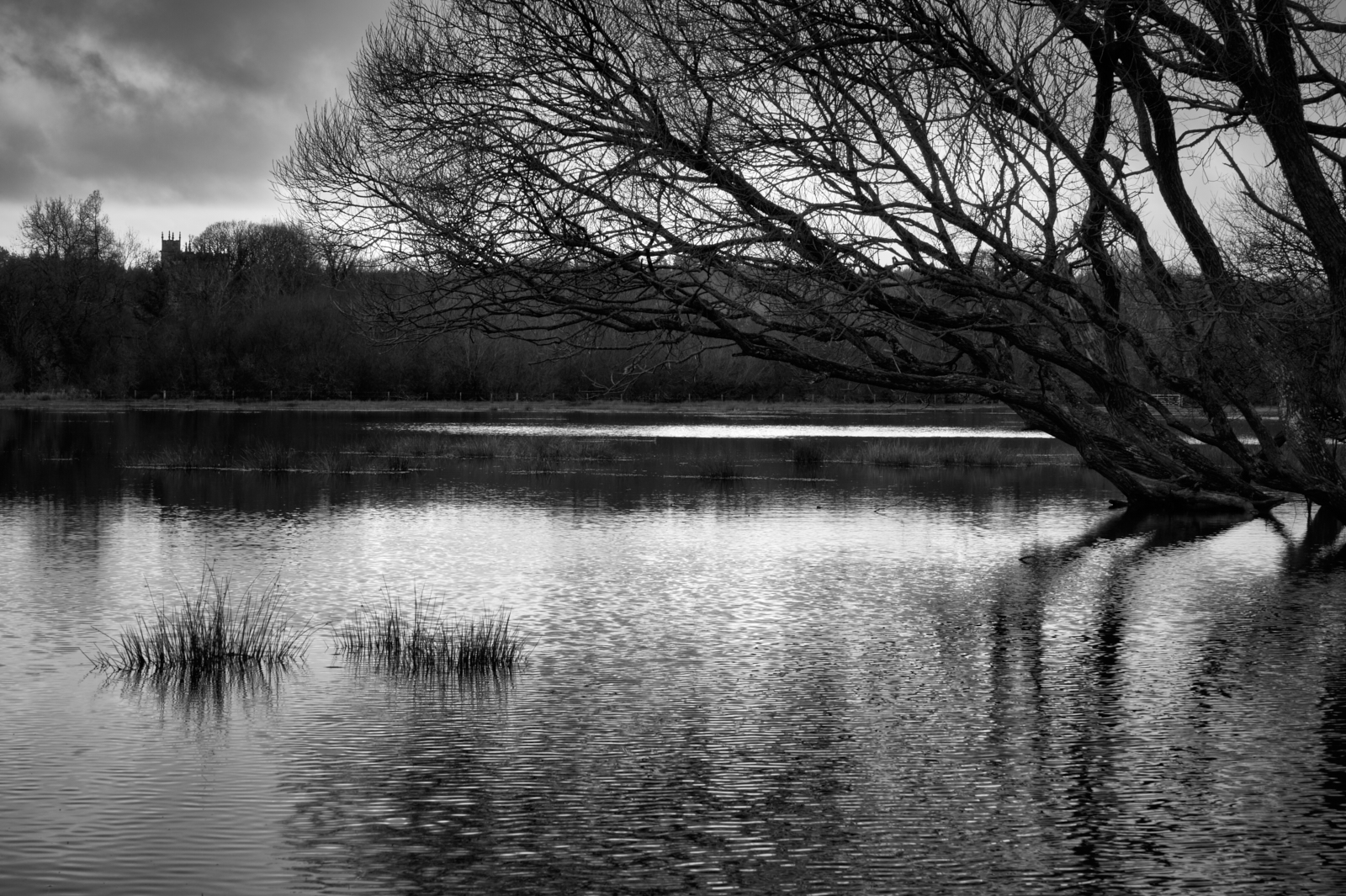
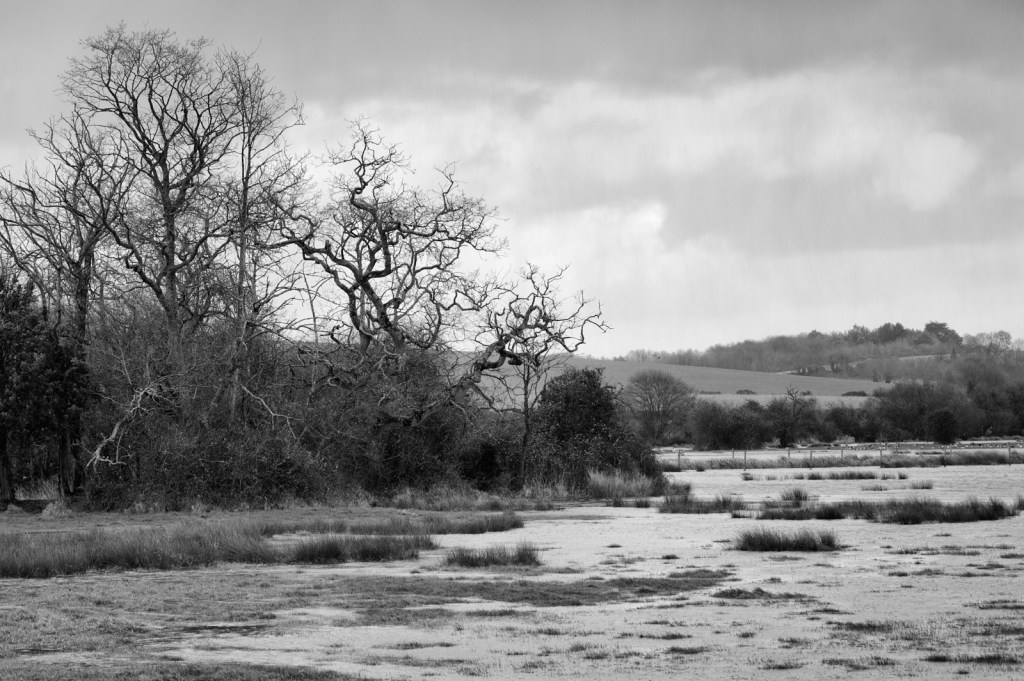
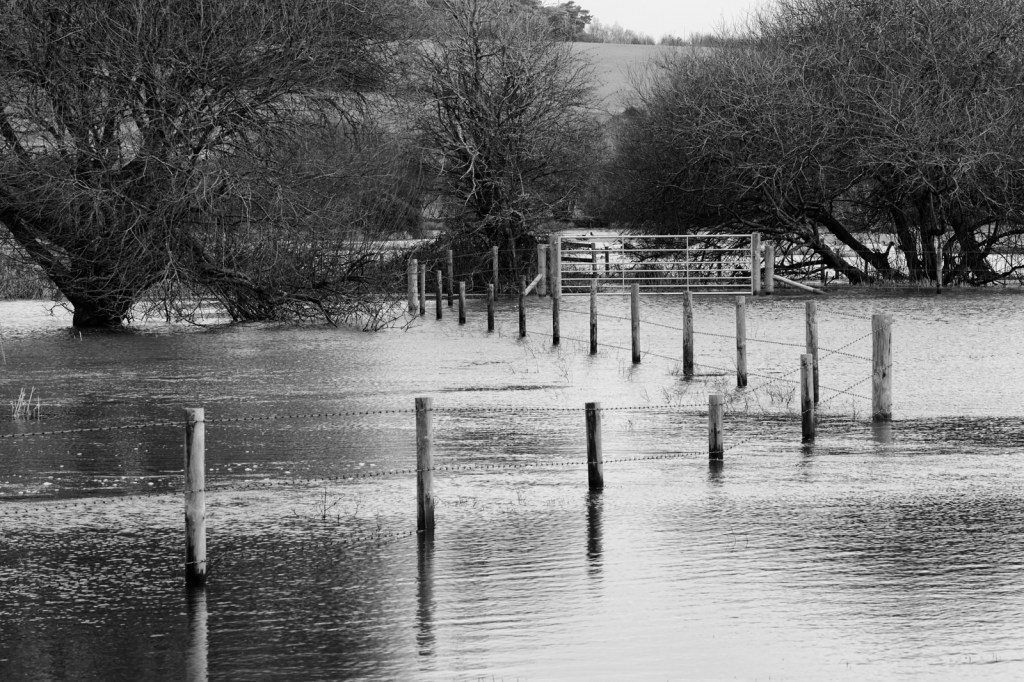
A few days ago I posted a set of images of the flooded water meadows close to where I live. You can read that post and see the images here.
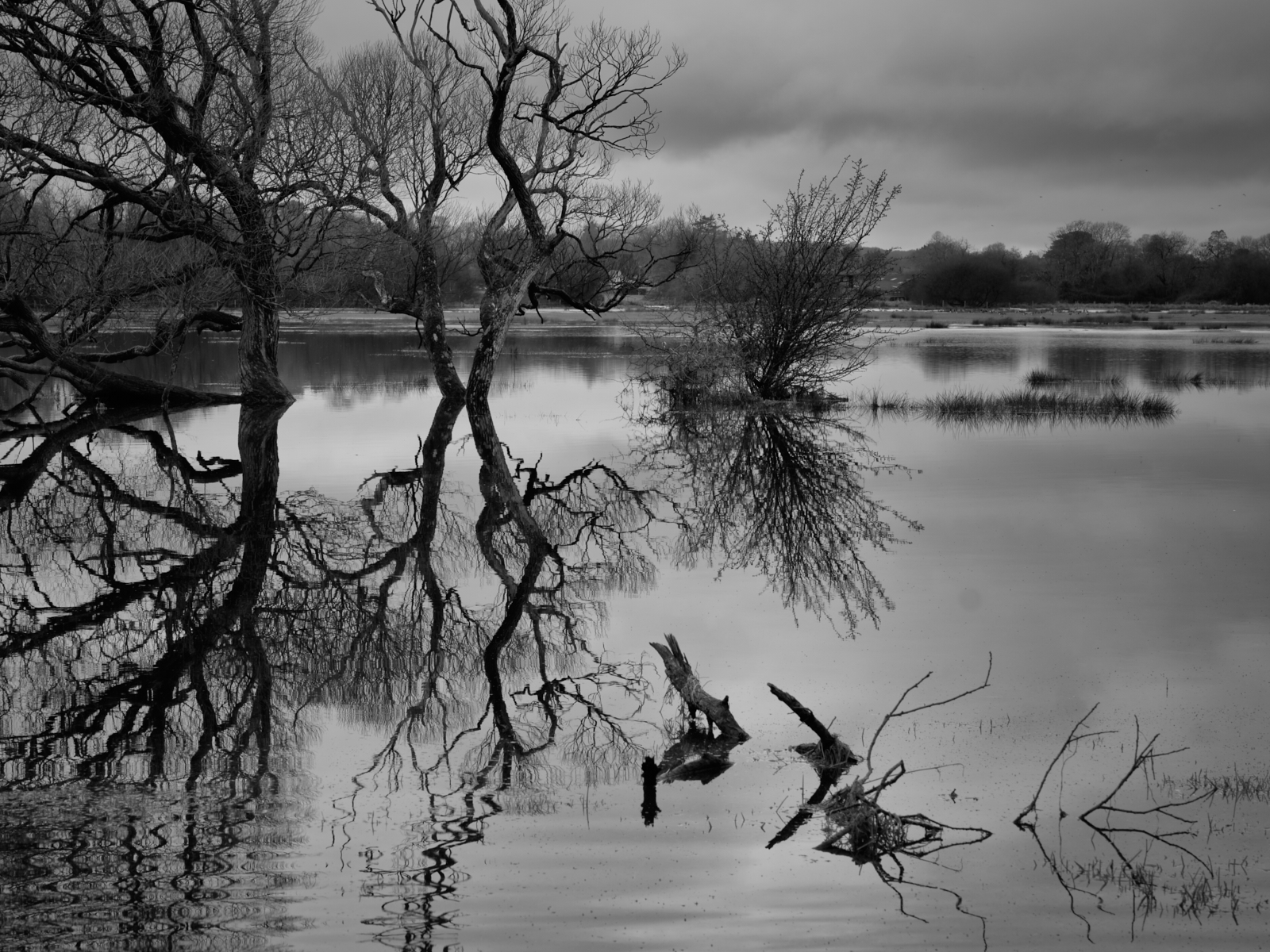
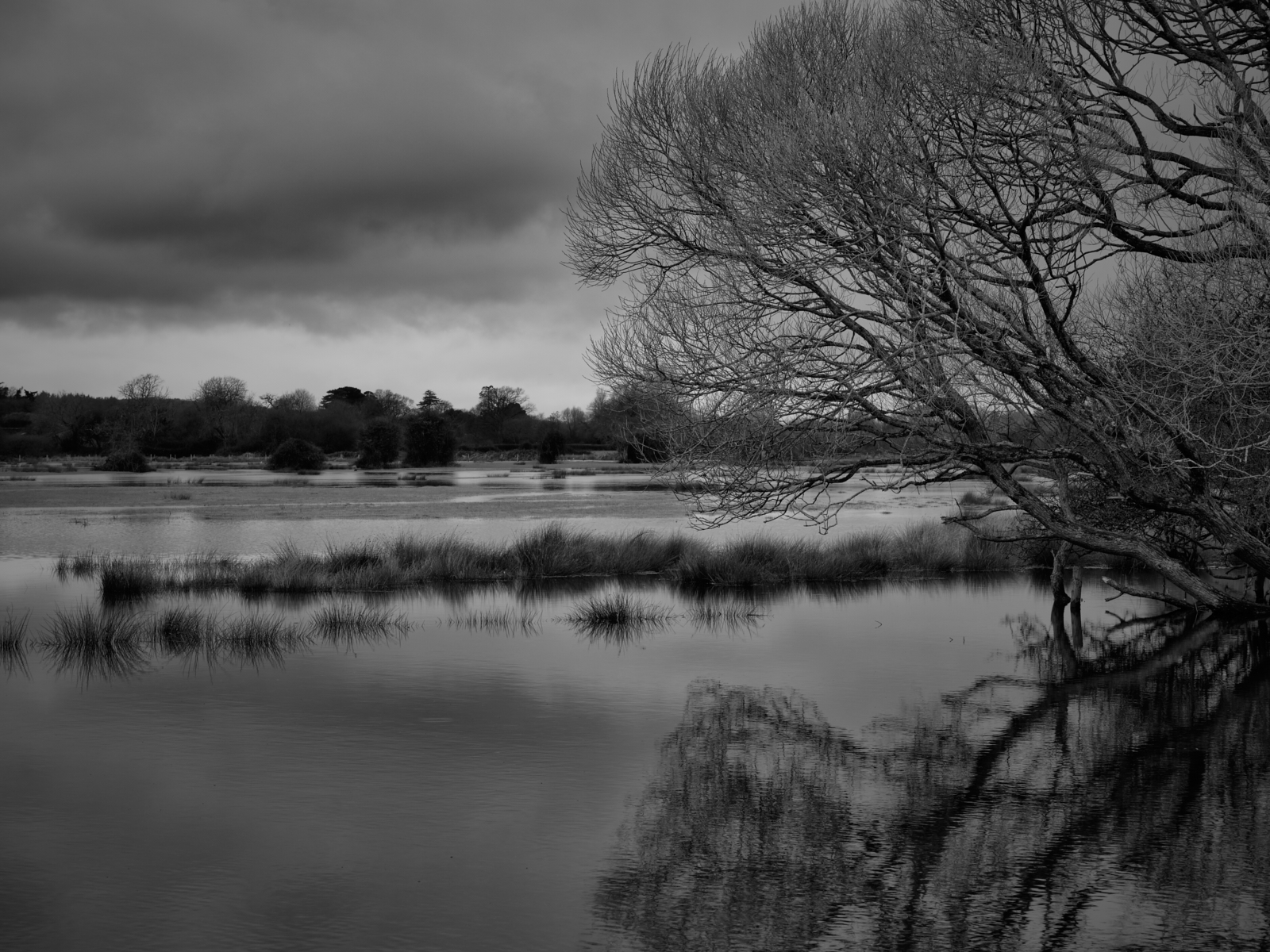
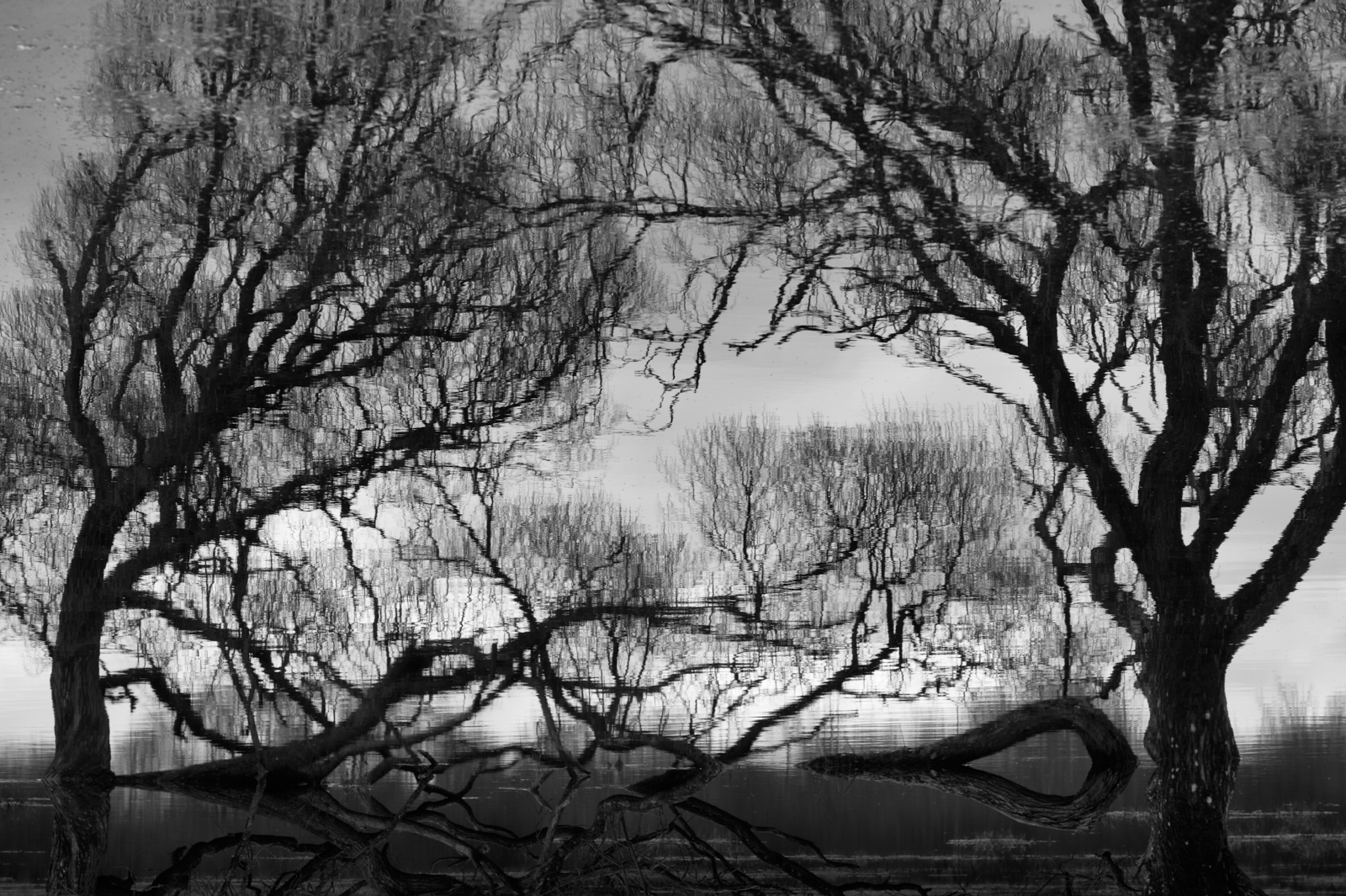
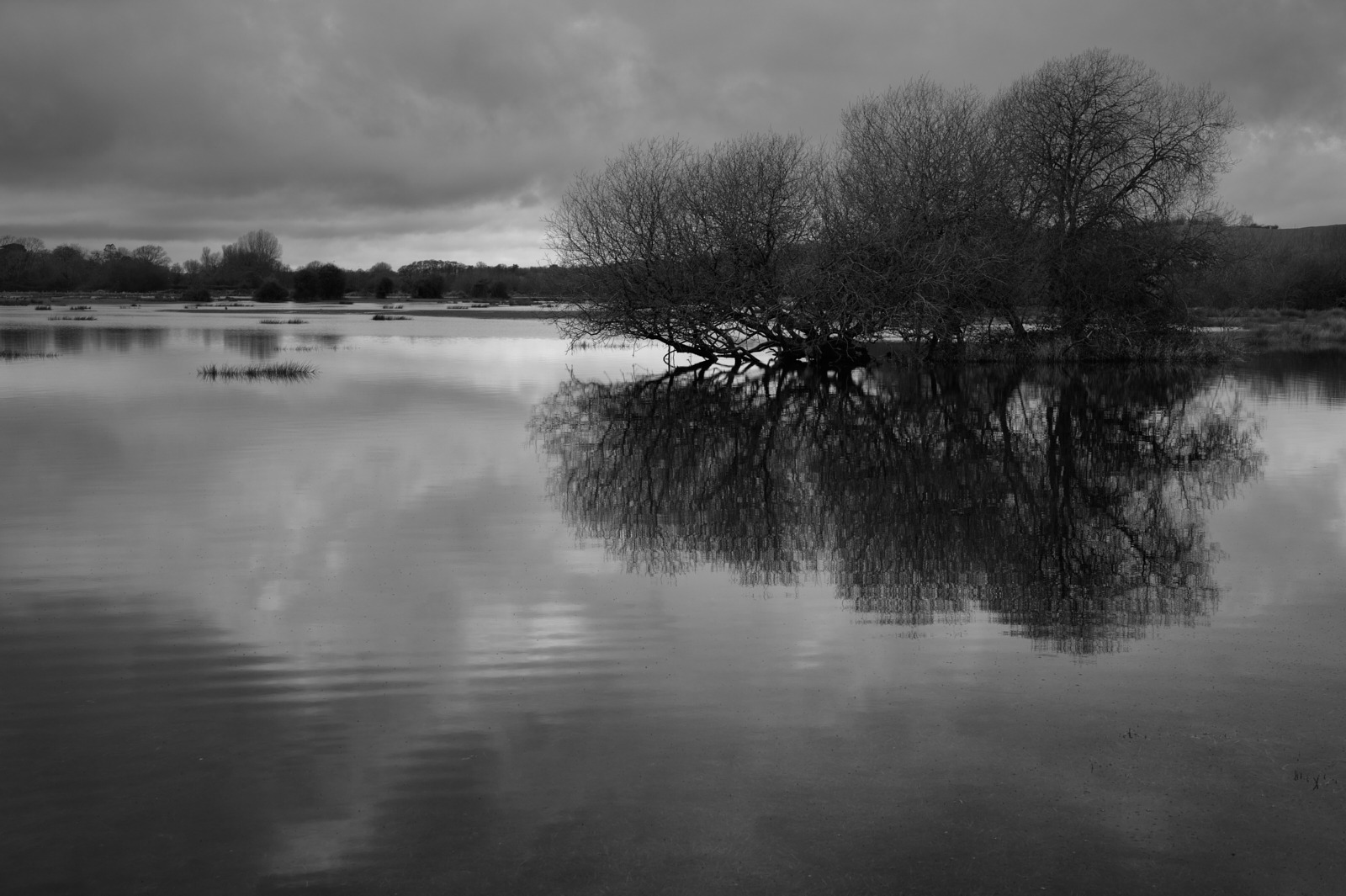
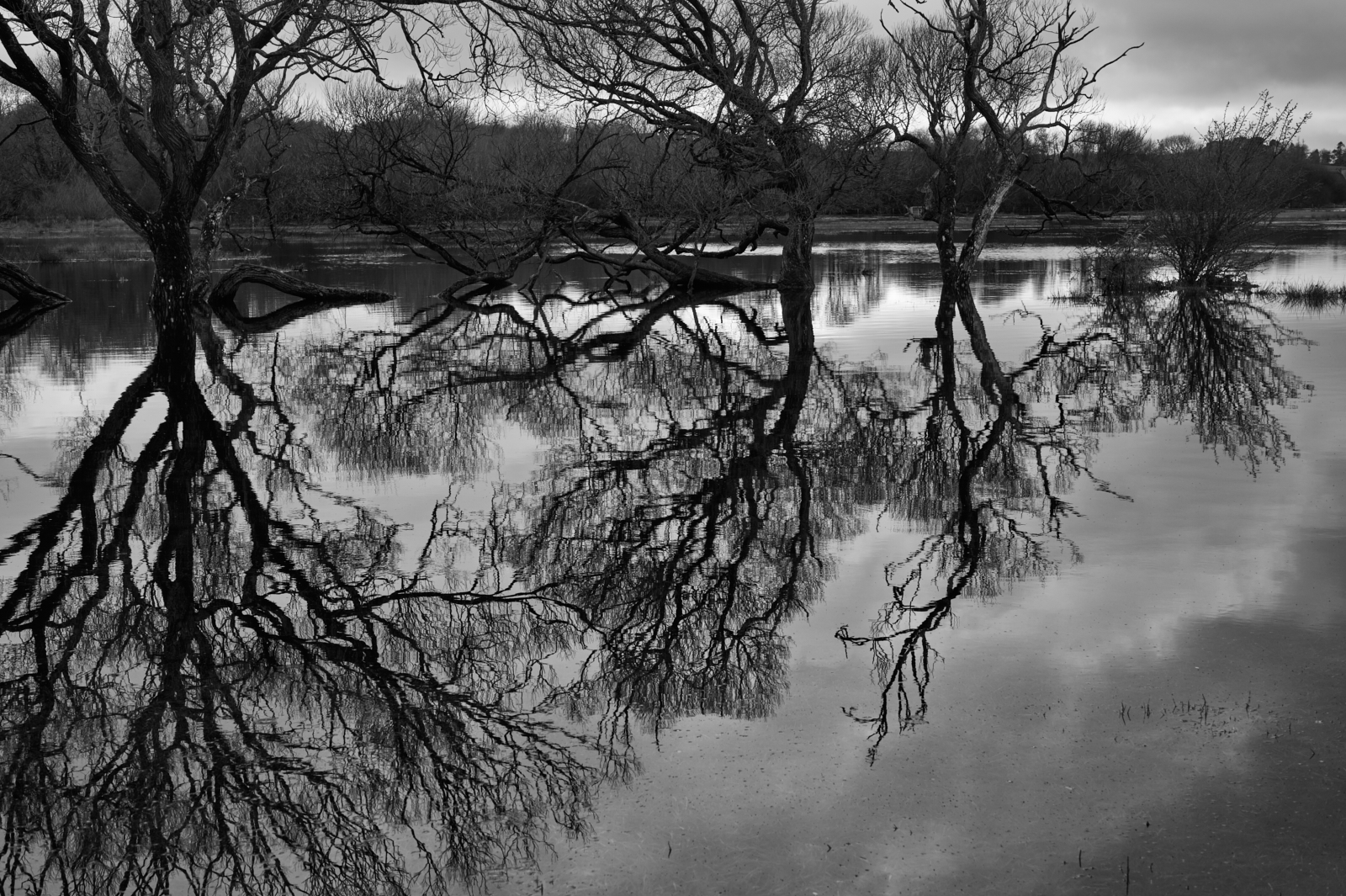
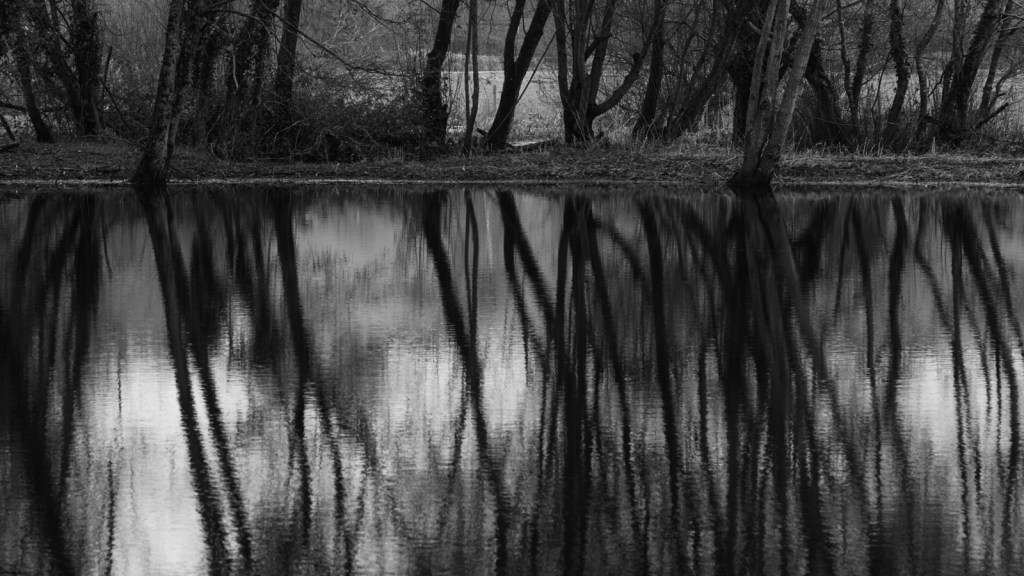
I knew there was the possibility of some different views if I accessed the meadows from the other side of the river. In particular I wanted to capture some trees which I thought would be ideal subjects providing I could pick a still day to make the most of their reflections.
When conditions were favourable I selected what camera gear I would need and put on my wellies. I took a tripod, not because I would be taking any long exposures but to slow me down. I tend to work quite quickly and the one advantage of a tripod is that I take greater care over the composition and the camera’s settings. I find the process of being in the field more immersive as a consequence.
The water levels have receded but any more rain will only fall on saturated ground, so I fully expect these scenes will persist for some time to come. I may travel a little further afield to find other areas where I know local rivers have burst their banks. I have not known flooding on this scale before so I want to make the most of these conditions while I can.
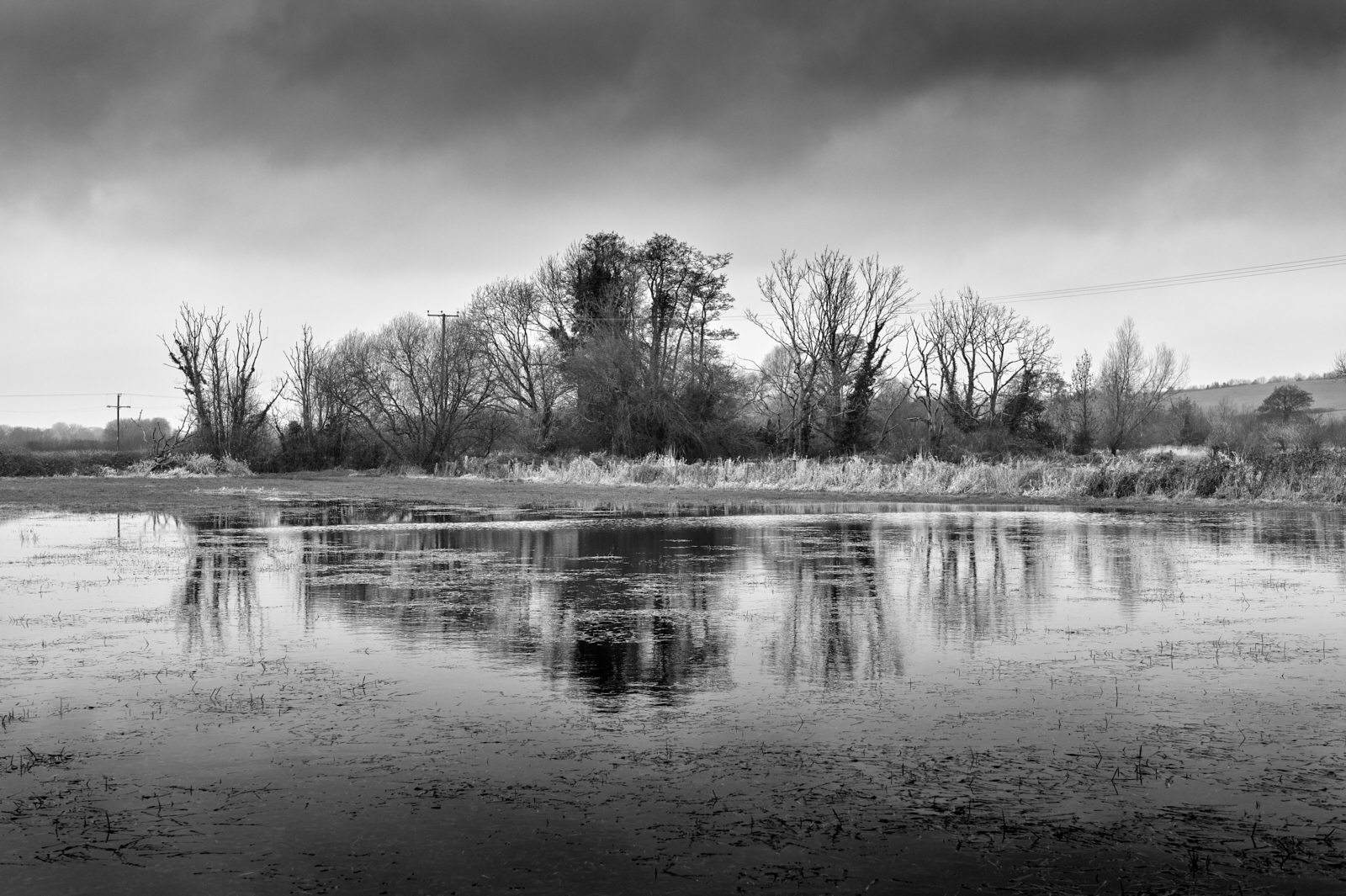
Continuing the theme of capturing scenes from my local area, or as I have written before; ‘Close to my back door’, an opportunity arose this week to photograph the water meadows adjoining the River Piddle in Dorset.
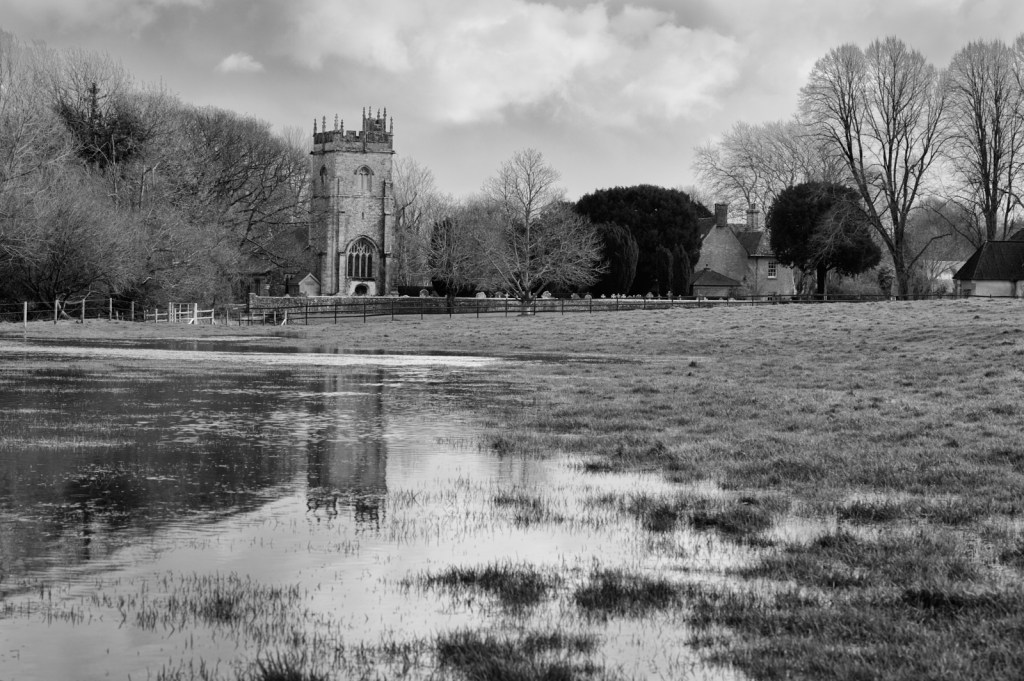
Whilst flooding is a regular occurrence at this time of year I have never seen the water levels reach this height before. With the ground well and truly saturated, more rainfall in the coming days and weeks will only bring about further flooding to the area.
I was particularly pleased to capture the last image in this set – a photograph of the church and its reflection. I am grateful to the farmer who allowed me access to his land to make these photographs possible.
Oh and by the way welly boots are an essential item for this type of photography!
At the start of a new year our thoughts inevitably turn to what we might like to achieve in the coming 12 months. Resolutions are often made but soon broken…or they are if you are anything like me. Sometimes we set ourselves targets or specific goals. All too often these are unrealistic and consequently never realised. This leads to a feeling of disappointment which is why I don’t set any for myself in the first place.
Whilst this is not a resolution I do wish to continue to document my local surroundings. I am fortunate to live in a rural part of the lovely county of Dorset. There are many honeypot locations nearby which most photographers will have visited at one time or another. Durdle Door, Corfe Castle and Kimmeridge Bay to name a few. They may be seeking ‘likes’ of course, even though the subject has been seen and captured thousands, if not millions of times before. But should that be the motivation? I think not. For me the images I wish to make are far from the atypical landscape shot from a location of this nature.
From my perspective no subject should be off limits. The composition or scene may be neither obviously beautiful or instantly recognisablebut that shouldn’t deter me or any photographer from making an image. If the picture has something to say or forms part of a wider narrative then the camera should be turned on, lens selected and focused, settings chosen and shutter pressed.
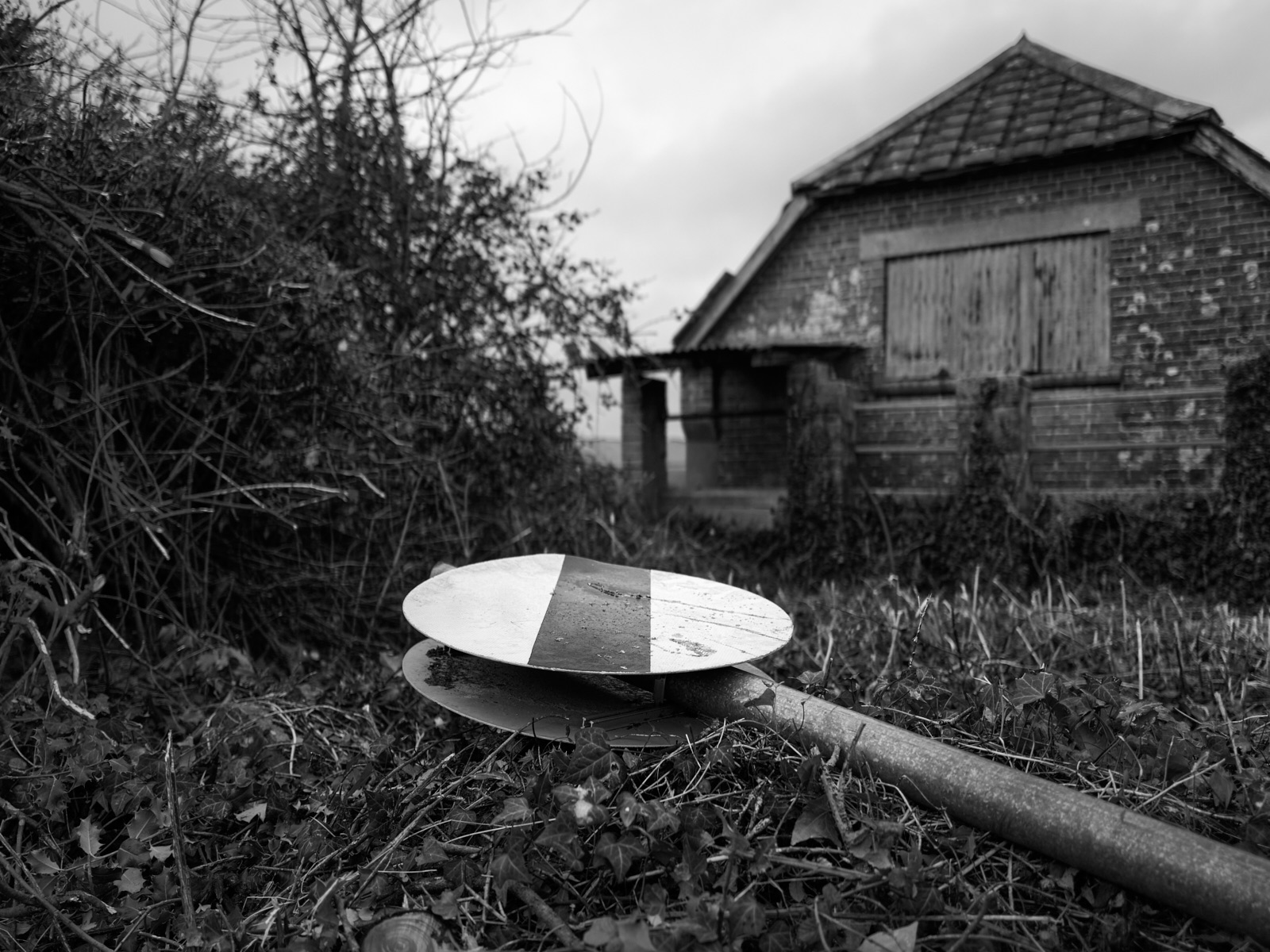
The image shown in this post neatly sums up what I am trying to say. In fact it inspired me to make this entry. The subject is a de-restricted road sign, which at some time or another has been knocked over and left in a roadside verge diminishing its effectiveness and meaning. The out of focus old farm building in the background offers some context about its surroundings. But the principal subject is the road sign.
Strictly speaking the Highway Code states that this sign denotes that the National Speed Limit applies, although why anyone would want to drive at up to 60mph along a twisty narrow country lane I do not know.
The point of this entry is simply to encourage all photographers to make images of subjects that appeal to the individual behind the camera, and not be swayed by what they think is likely to appeal to an unknown audience.
My view is that we all need to de-restrict our minds and try not to define what does or doesn’t make a good image. It’s all about being honest and true to yourself. Making images which work and appeal to you. In the process these images will serve to define who you are as a photographer. In other words photography can and should be without limits.
And finally may I wish anyone who has read this far a very happy and healthy 2026.
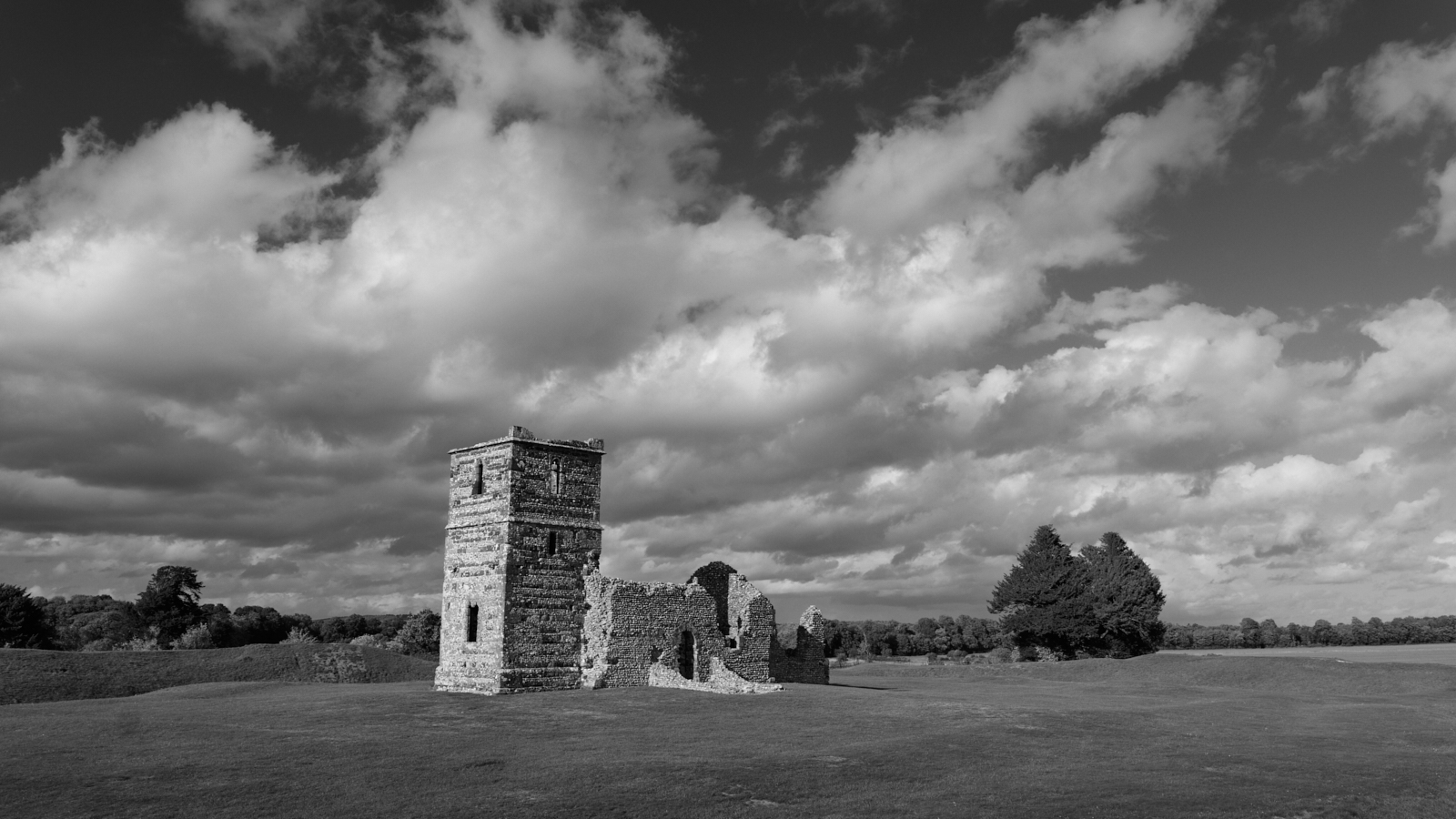
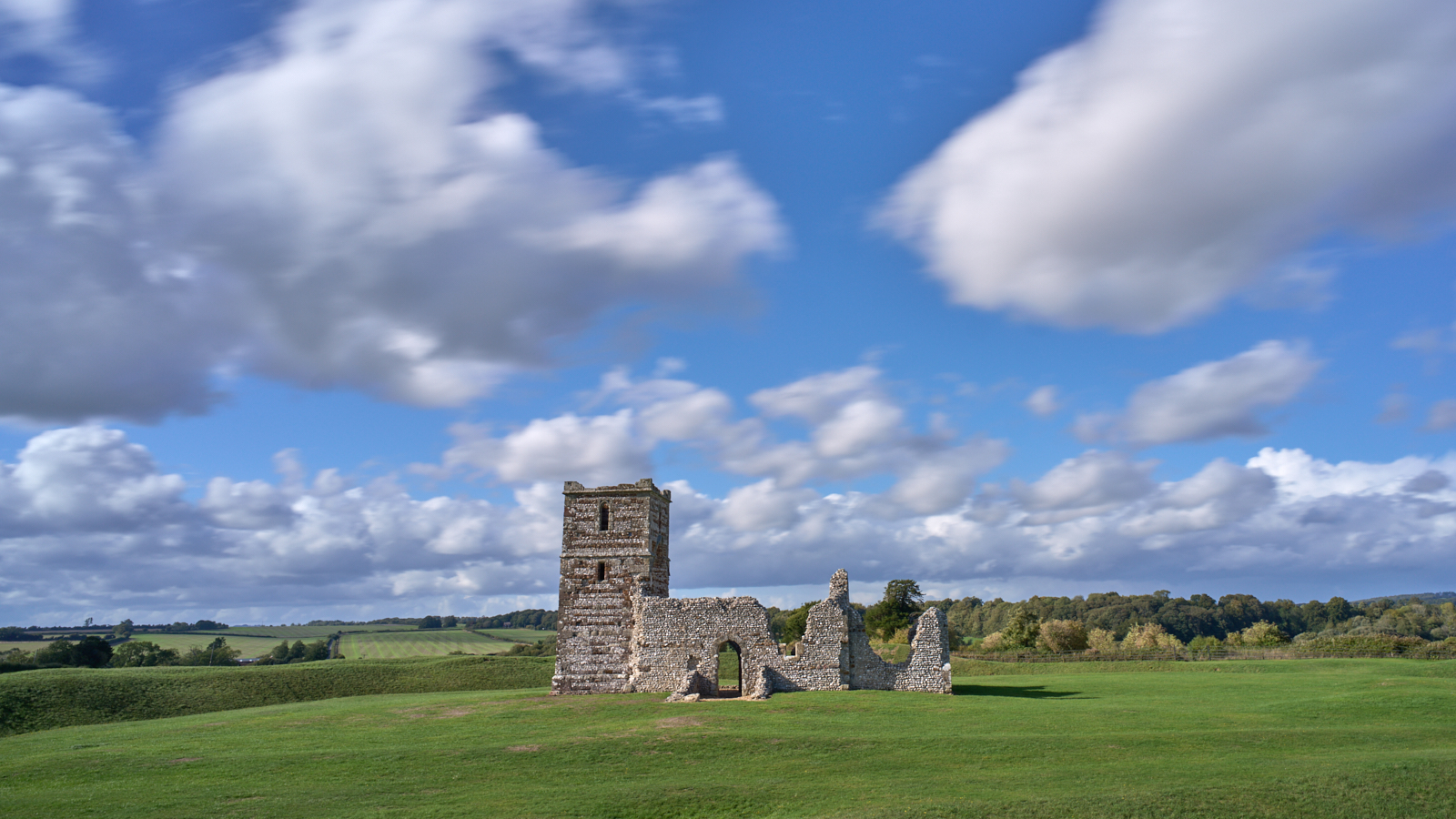
I have wanted to make an image of the derelict remains of Knowlton Church in Dorset for sometime now. I have seen plenty of images online, many taken at dawn or dusk but this wasn’t what I had in mind.
After a long dry summer the past few days have seen a return of sunshine mixed with some dark clouds and heavy showers. I had the idea of capturing the church ruin bathed in sunlight with passing storm clouds as a backdrop. I even thought a long exposure might add to the drama. The forecast looked promising so I got in my car and set off.
On arrival clear blue skies prevailed. I looked around me and the shower clouds I was hoping for were nowhere in sight. While waiting I wandered around looking for what I thought would be the best angle and composition. An hour or so later and the prospect of the conditions improving or worsening, depending upon your point of view, were dwindling fast. Don’t get me wrong it was a lovely late summer’s afternoon, but there was little drama, no atmosphere and I felt rather let down, somewhat deflated.
I did of course take a few images and the picture above is I think the best of the bunch. Perfectly acceptable but the result just didn’t match with my expectations. Had I gone out with a more open mind I would have returned home grateful that the light and clouds had been so favourable.
It’s one of the pitfalls of landscape photography. Although we can pre-visualize the image we want to make, invariably the weather and light don’t play ball. Far better not to build up your hopes for a particular photograph and simply accept the the conditions as you find them. Make the best use of the prevailing light and weather and simply enjoy the experience of being out with your camera in a glorious location.
In my last post I said that I would make the effort to make some more colour images. This picture doesn’t excite me at all but does serve to illustrate what a stunning location this is.
One day I will return to Knowlton Church and capture the image which I still have in my mind, and in the meantime I shall try and improve my ability to read the weather forecast!
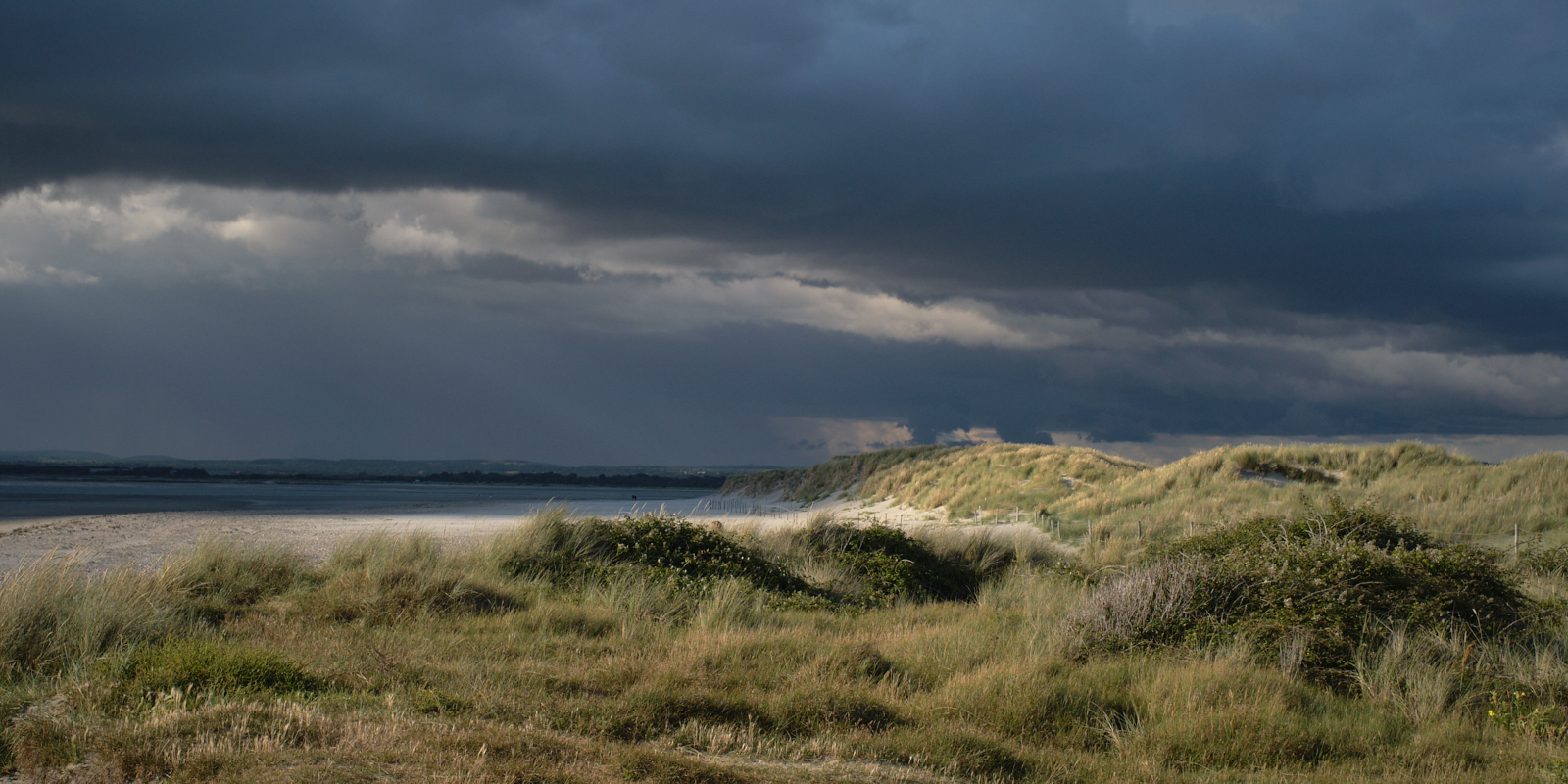
Storm approaching the dunes at East Head, West Sussex
Here on the south coast of England we have experienced a very dry and hot summer. Several months have passed with no rain whatsoever. The ground is bone dry, grass has turned to straw and I fear that some of the plants in our garden will not have survived the drought.
From a photographic point of view summer is never a good time of year for me. The sun is too high in the sky, the contrast is too great and clear blue skies maybe great for a day at the beach but there is no mood and atmosphere to capture. Plus, and being somewhat selfish, there are too many people at the places I wish to photograph.
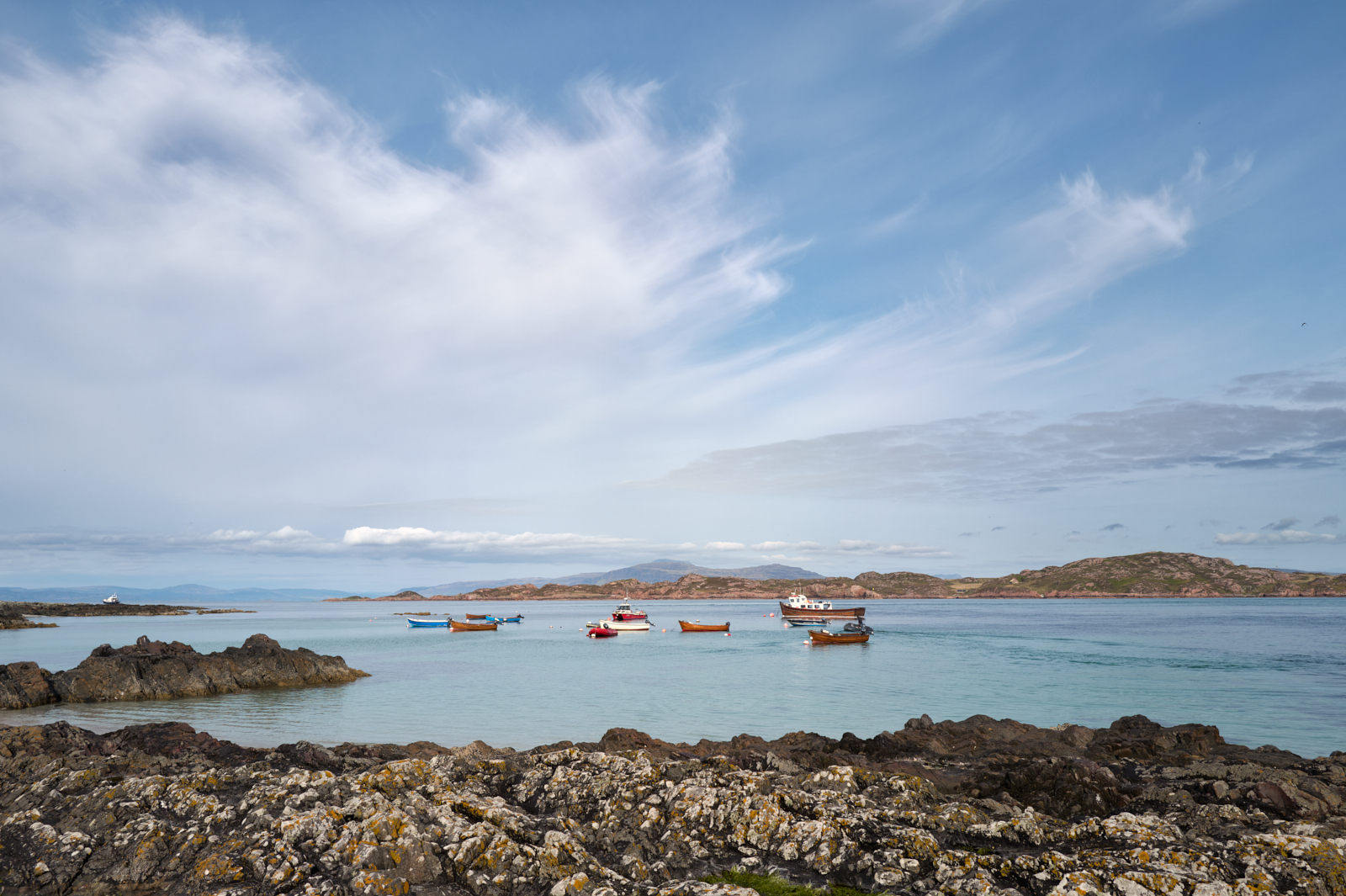
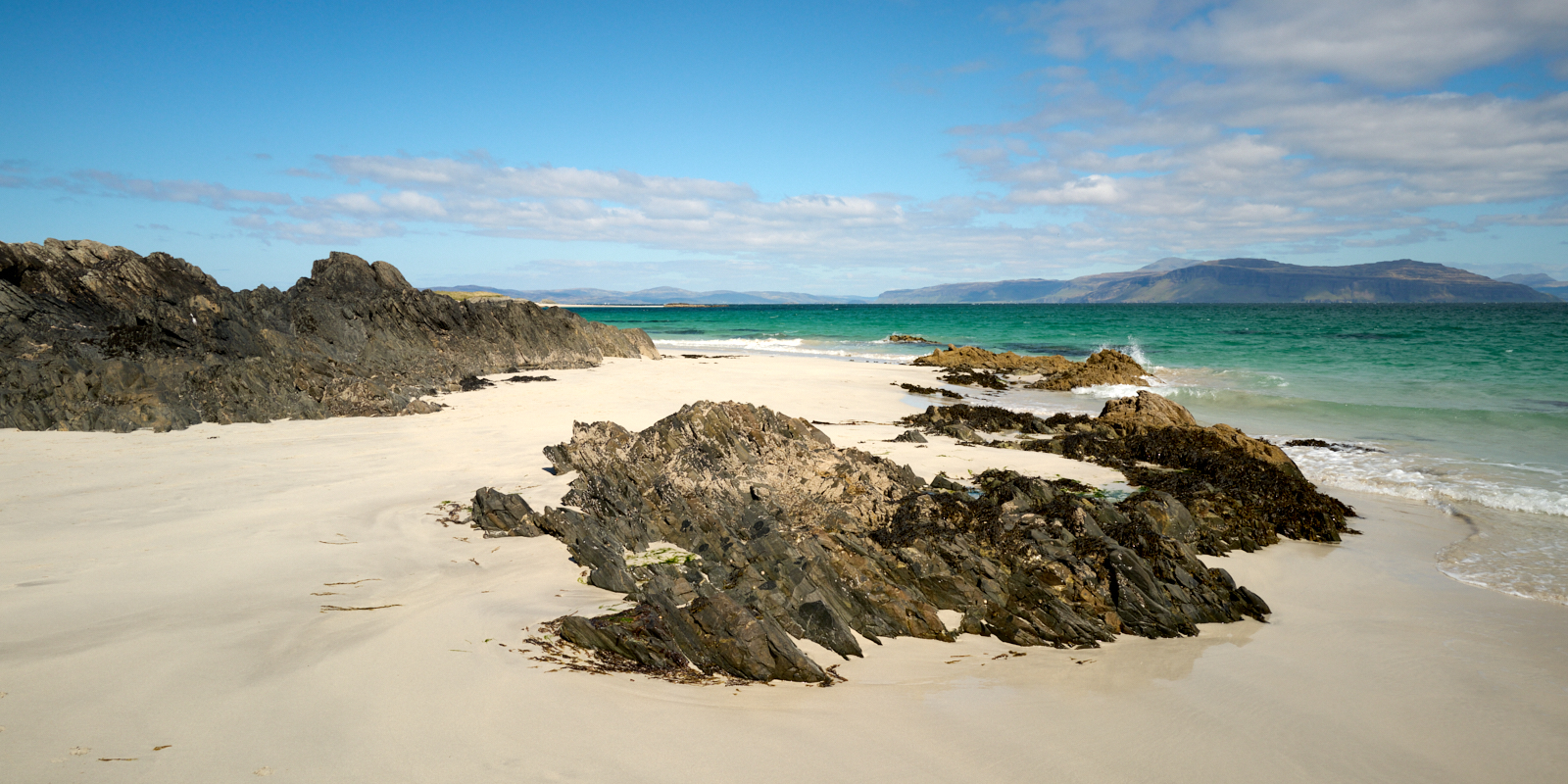
The Sound of Iona, Scotland
So apart from the occasional shoot, I have spent the last few weeks and months giving more time to reflect and think about my photography. Devising plans for when the weather changes, the days become shorter and the light is more favourable. One area of specific consideration has been whether or not I should make more images in colour.
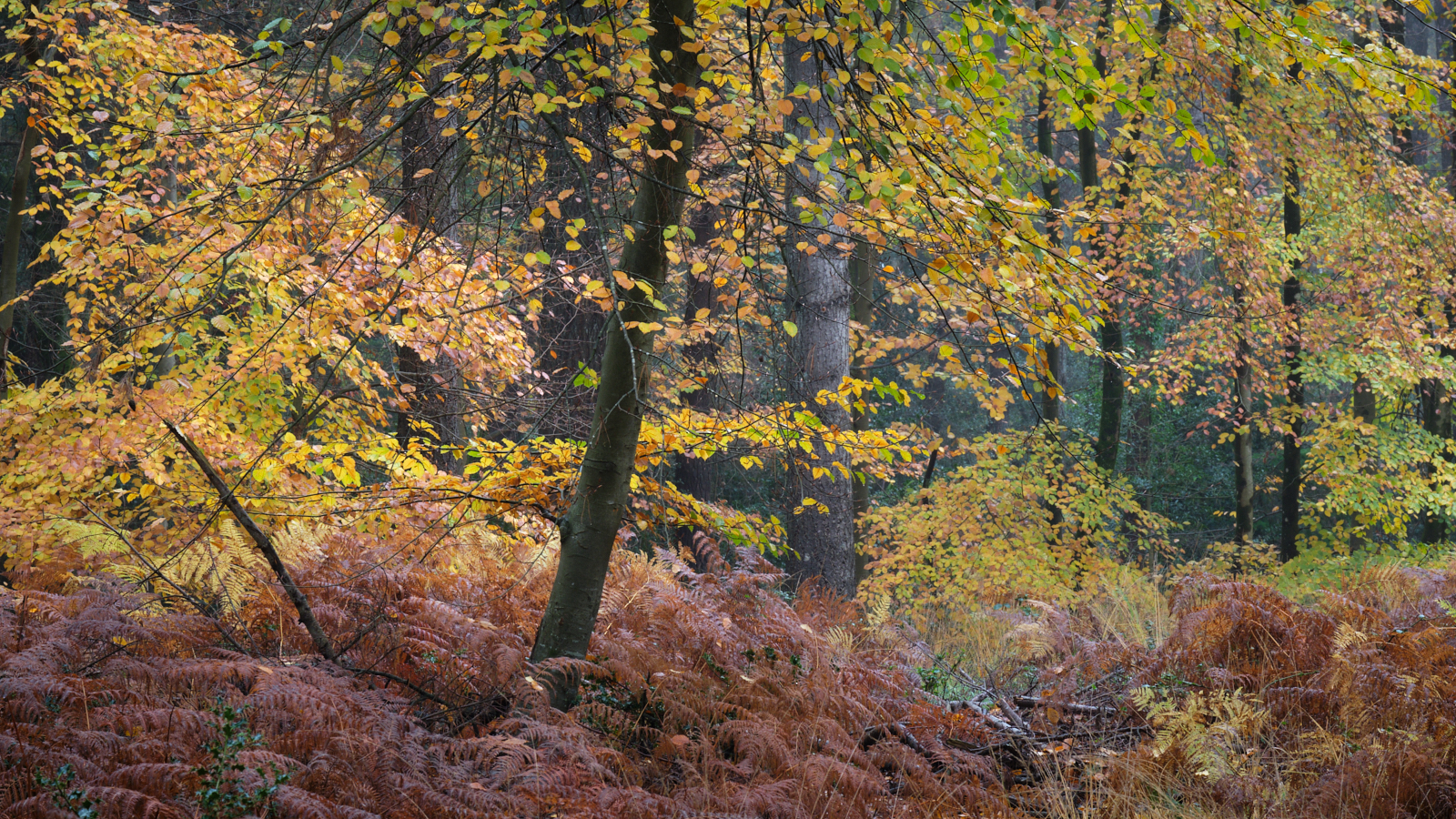
Autumn woodland, Dorset
Ever since 2012 virtually all my work has been in black and white. You only need to look through past entries or any of my galleries (apart from one) to see that black and white is ostensibly what I do. However I make images for my own pleasure. There are no rules which inhibit me from doing anything I like, and that includes switching to colour if I so wish, even if I naturally default to monochrome.
Lifeguard Station, Boscombe, Dorset
As I haven’t been out with my camera I have been trawling through my back catalogue of thousands of images and selecting a few which I have now processed in colour. Some have been captured this year others have lain idle on the hard drive for many years. I have to say that I have thoroughly enjoyed spending my time in this way. I have come across many images which I had largely forgotten. Seeing them afresh as well as opening my eyes to colour has been quite liberating.
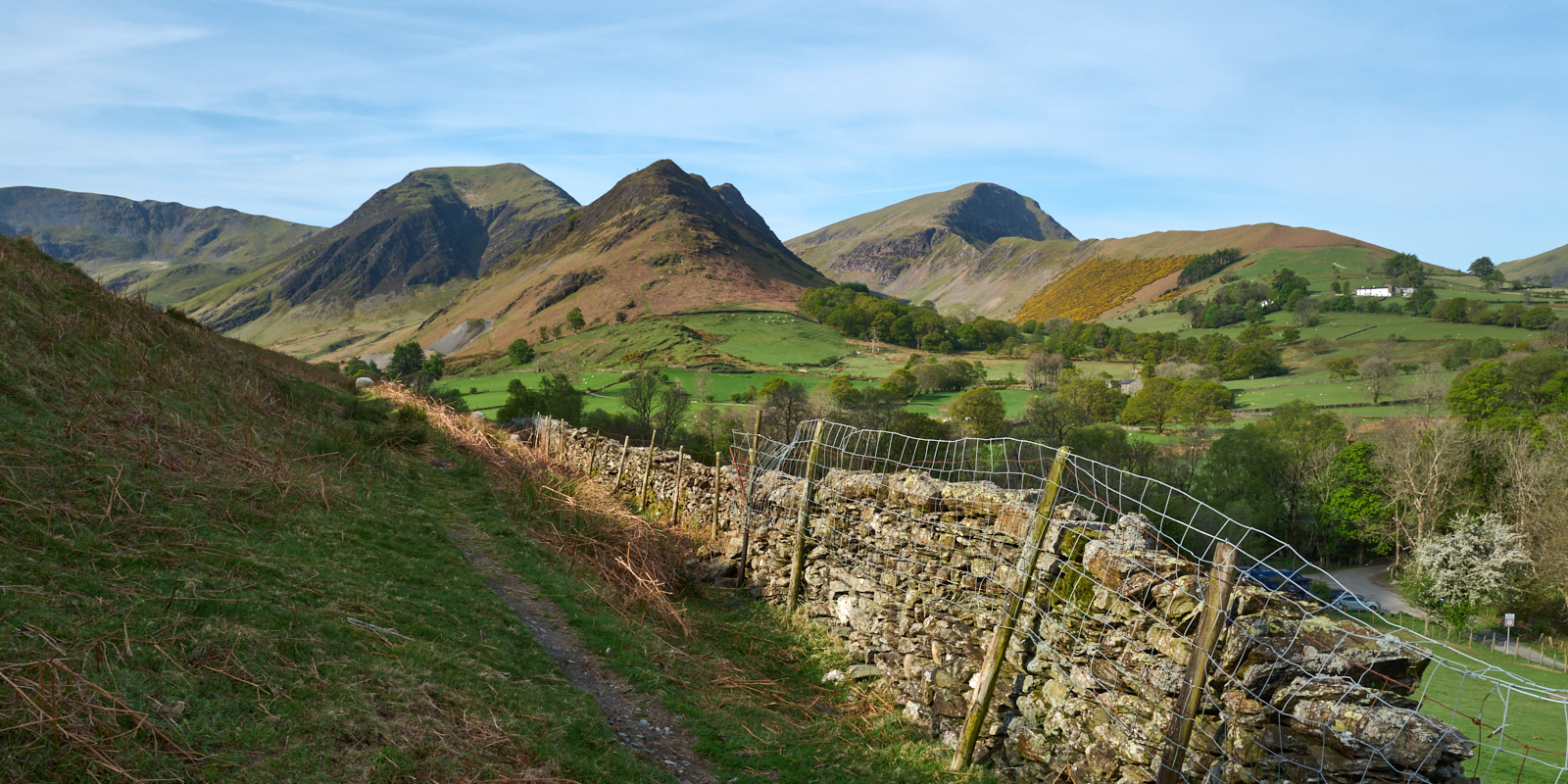
Newlands Valley, Lake District
There is no question in my mind that monochrome and colour are two very different photographic disciplines. Over time my photographic eye has learnt to see the world in black and white, helped of course by being able to preview the image on the rear screen or in the EVF. Photographs that work in mono do not always make a good colour image and vice versa. Perhaps this goes without saying but it does make me think that a fundamental decision needs to be made before the shutter is released. The decision is one of intent – is the end result going to be in black and white or colour? And how might this choice impact on the composition, exposure and any other factors which could be relevant and improve the final outcome.
Portland Harbour, Dorset
In editing this selection of images I have very quickly come to realise there are a whole new set of processing skills I need to learn and hone to make pleasing colour photographs. Well, images that I am happy with anyway. Of course I understand the fundamentals of colour editing but I need to practice much more and develop a better understanding of the tools which are available to me and which I wouldn’t have used previously to make a black and white picture. I fully recognise the workflow is not the same and I will need to make adjustments accordingly. To be frank I am looking forward to the challenge.
Late afternoon, Fishbourne Meadows, West Sussex
In editing these images I have noticed two things in particular. Firstly my choice of crop or aspect ratio. Originally these were all captured on a full frame or APSC camera with a 3×2 aspect ratio but in many cases I have cropped the image to 16×9 or even 3×1. I don’t think this has anything to do with the fact that they are colour files necessarily, but I really like how this ‘letterbox’ approach changes the overall feel and impact of the image. Fortunately the large sensors offered by most if not all camera manufacturers today provides plenty of latitude when cropping without degrading the image too much.
Sunset at West Wittering, West Sussex
Secondly colour balance or colour temperature has a big affect on the feel of the photograph. Should it be cool or warm? Any noticeable colour cast could of course render the picture unrealistic but there are creative choices to be made. I always shoot in RAW so adjusting the white balance is quite straightforward, although I did find myself revisiting this aspect of the editing process as I wasn’t always happy with my first or even my second attempt!
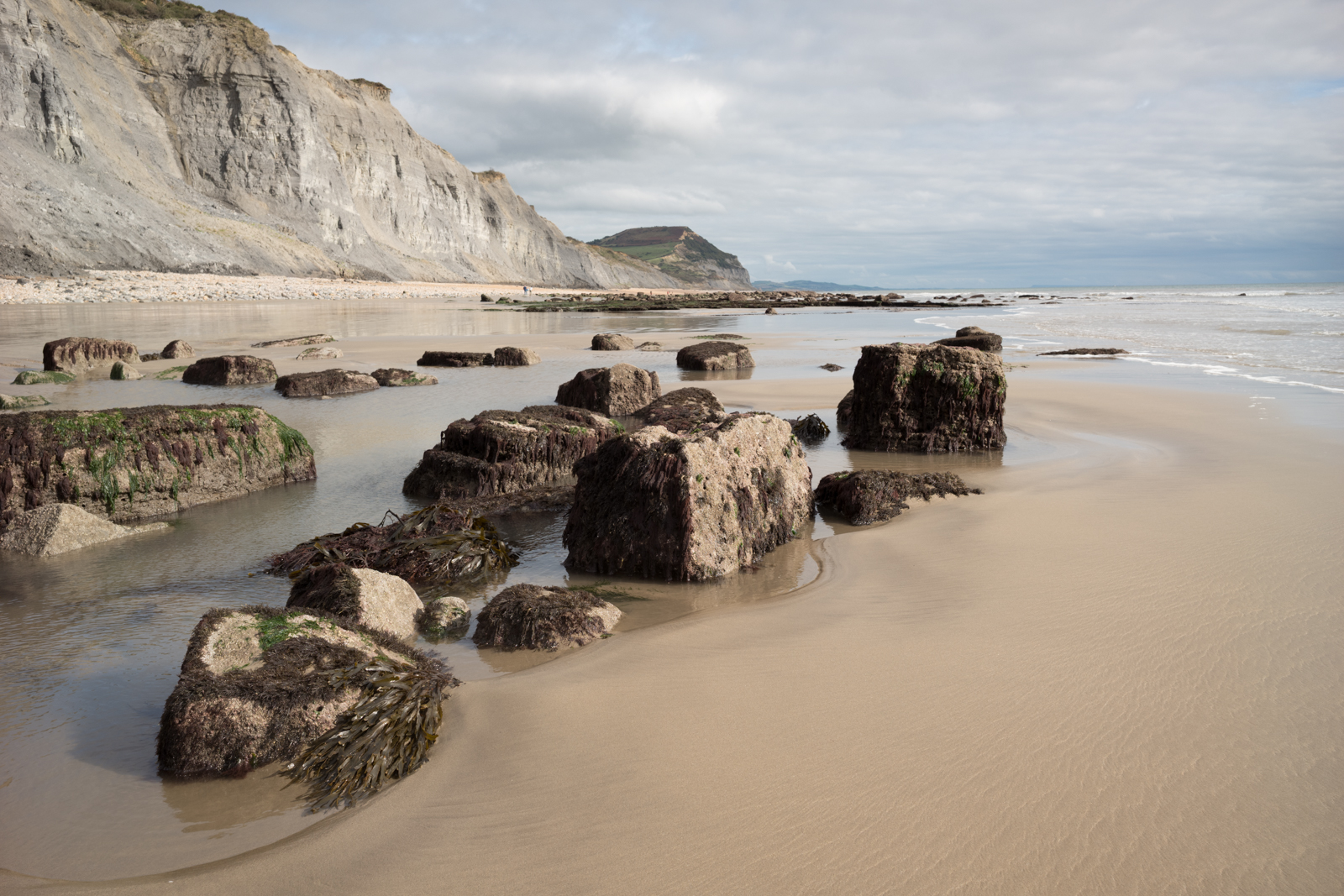
Charmouth Beach, Dorset
Being creative with colour as opposed to black and white is not the same. Black and white is far more flexible in this respect. The lack of colour means a mono image is instantly an abstraction of what we normally see as we go about our daily lives. If you applied the edits in a mono conversion to the same colour file, the result would probably be horrendous so as I said earlier the two disciplines are very different.
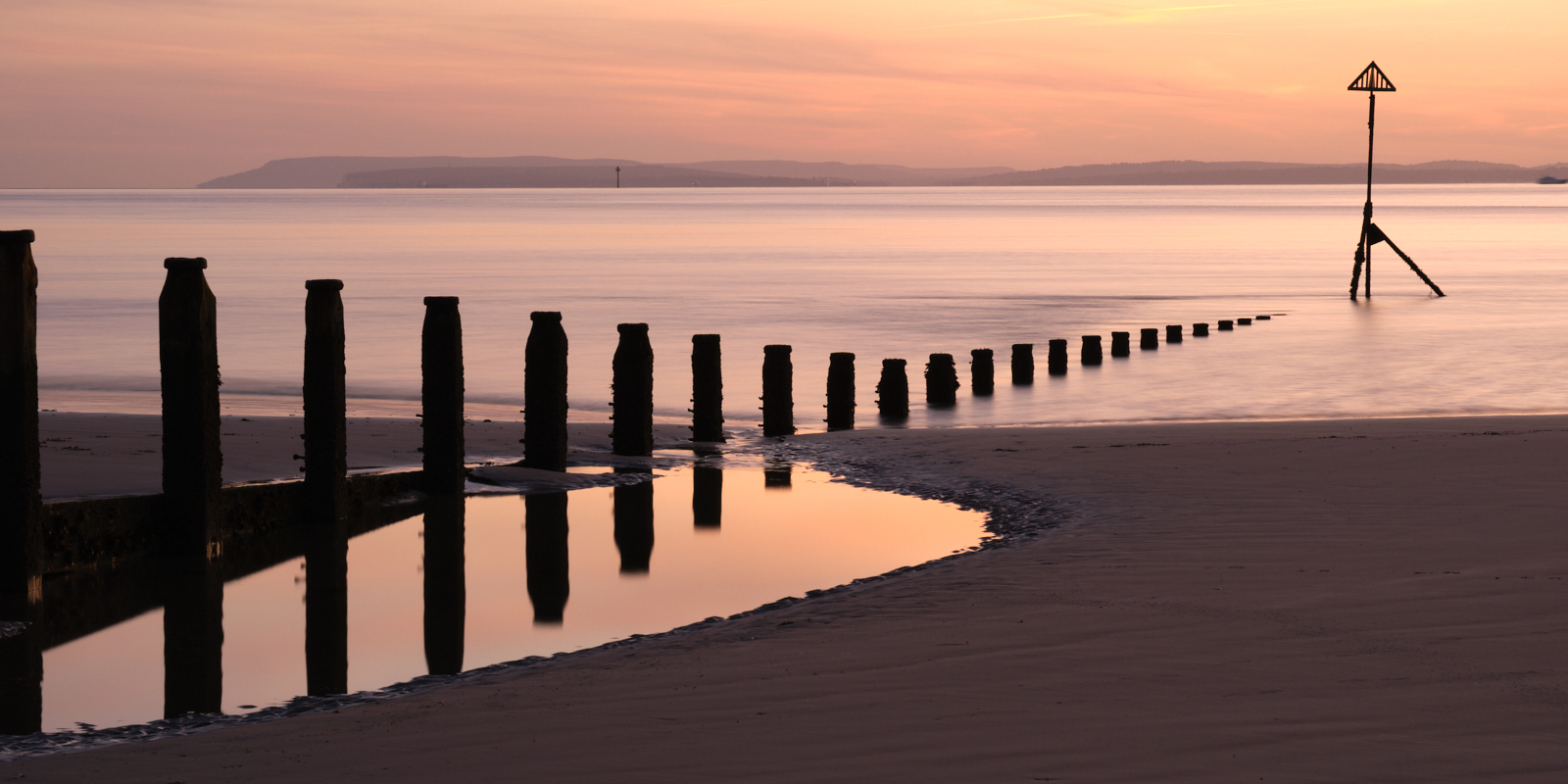
Marker Post, West Wittering, West Sussex
Looking forward it is my intention to make many more images in colour although I don’t think I will ever lose my love for black and white. How could I after so many years? But there is a place for both styles of imagery and as the old saying goes – ‘variety is the spice of life’.



 alan frost photography