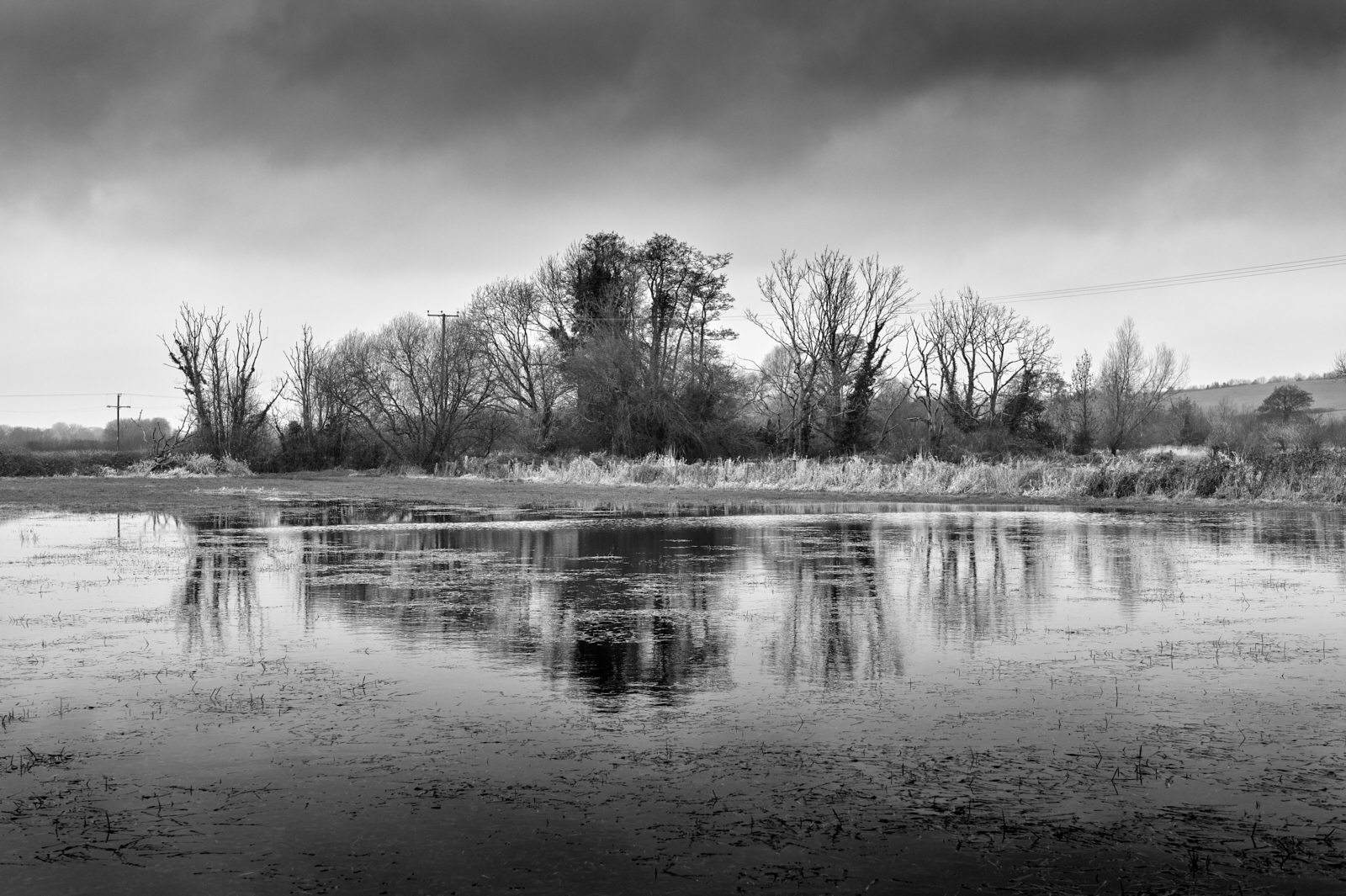
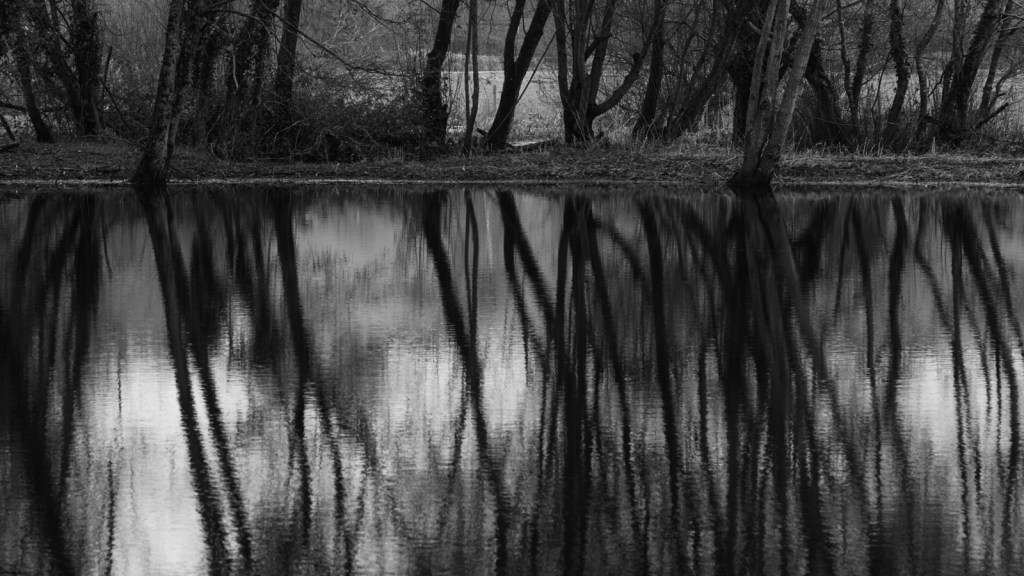
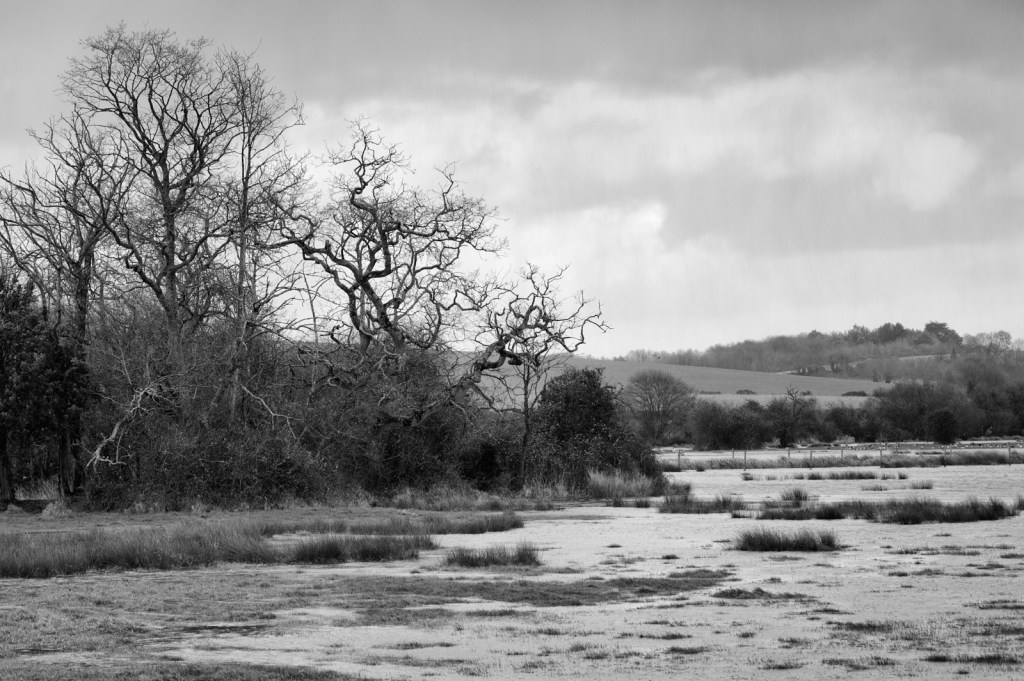
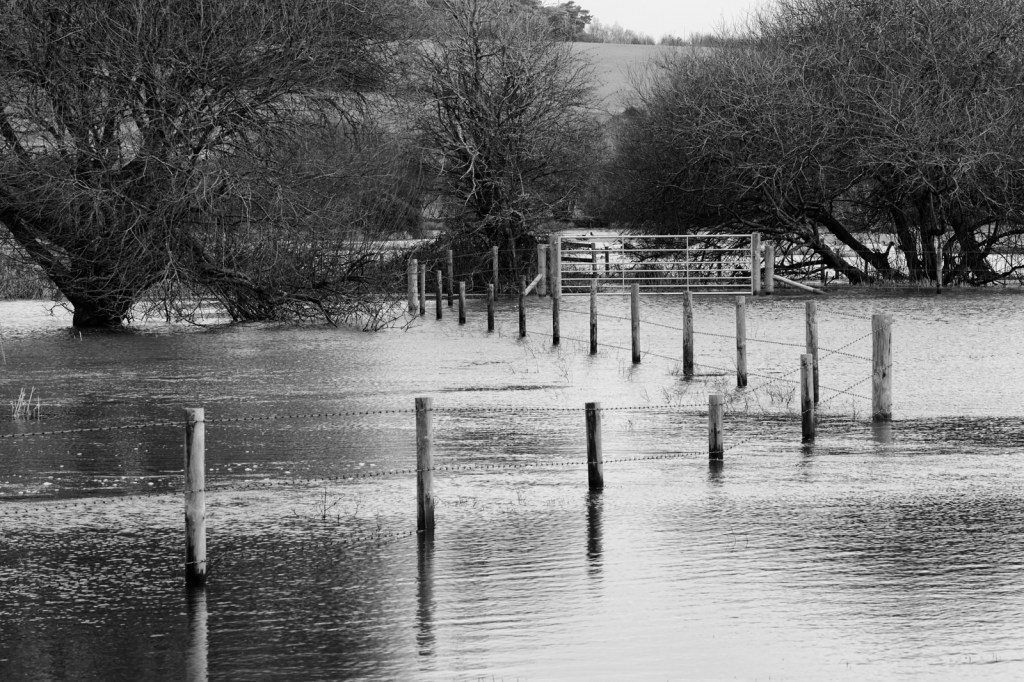
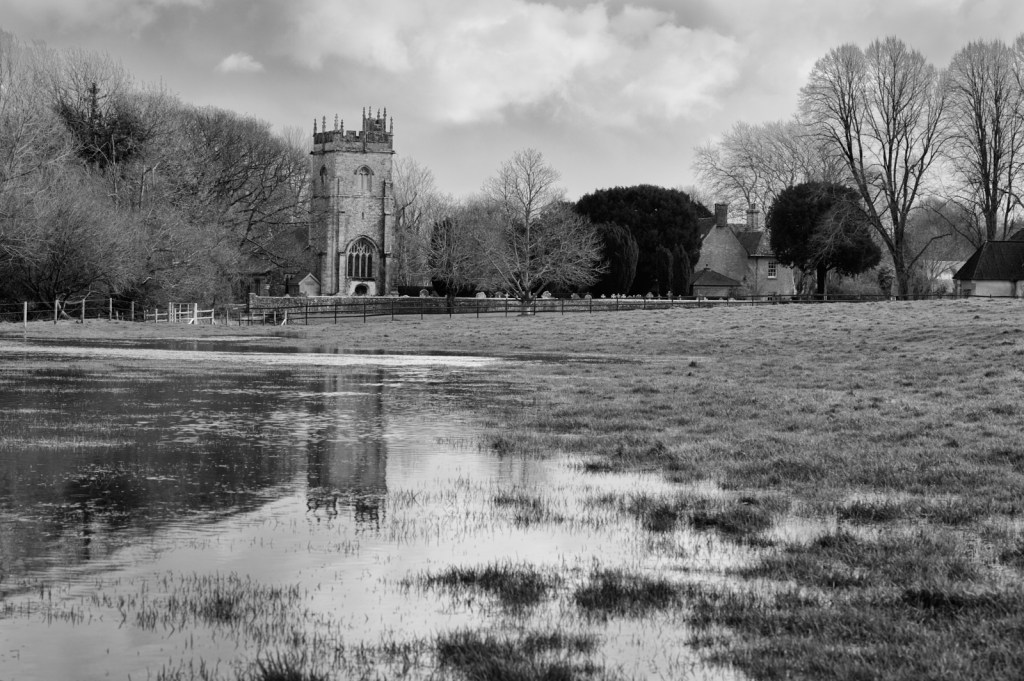
Continuing the theme of capturing scenes from my local area, or as I have written before; ‘Close to my back door’, an opportunity arose this week to photograph the water meadows adjoining the River Piddle in Dorset.
Whilst flooding is a regular occurrence at this time of year I have never seen the water levels reach this height before. With the ground well and truly saturated, more rainfall in the coming days and weeks will only bring about further flooding to the area.
I was particularly pleased to capture the last image in this set – a photograph of the church and its reflection. I am grateful to the farmer who allowed me access to his land to make these photographs possible.
Oh and by the way welly boots are an essential item for this type of photography!
At the start of a new year our thoughts inevitably turn to what we might like to achieve in the coming 12 months. Resolutions are often made but soon broken…or they are if you are anything like me. Sometimes we set ourselves targets or specific goals. All too often these are unrealistic and consequently never realised. This leads to a feeling of disappointment which is why I don’t set any for myself in the first place.
Whilst this is not a resolution I do wish to continue to document my local surroundings. I am fortunate to live in a rural part of the lovely county of Dorset. There are many honeypot locations nearby which most photographers will have visited at one time or another. Durdle Door, Corfe Castle and Kimmeridge Bay to name a few. They may be seeking ‘likes’ of course, even though the subject has been seen and captured thousands, if not millions of times before. But should that be the motivation? I think not. For me the images I wish to make are far from the atypical landscape shot from a location of this nature.
From my perspective no subject should be off limits. The composition or scene may be neither obviously beautiful or instantly recognisablebut that shouldn’t deter me or any photographer from making an image. If the picture has something to say or forms part of a wider narrative then the camera should be turned on, lens selected and focused, settings chosen and shutter pressed.
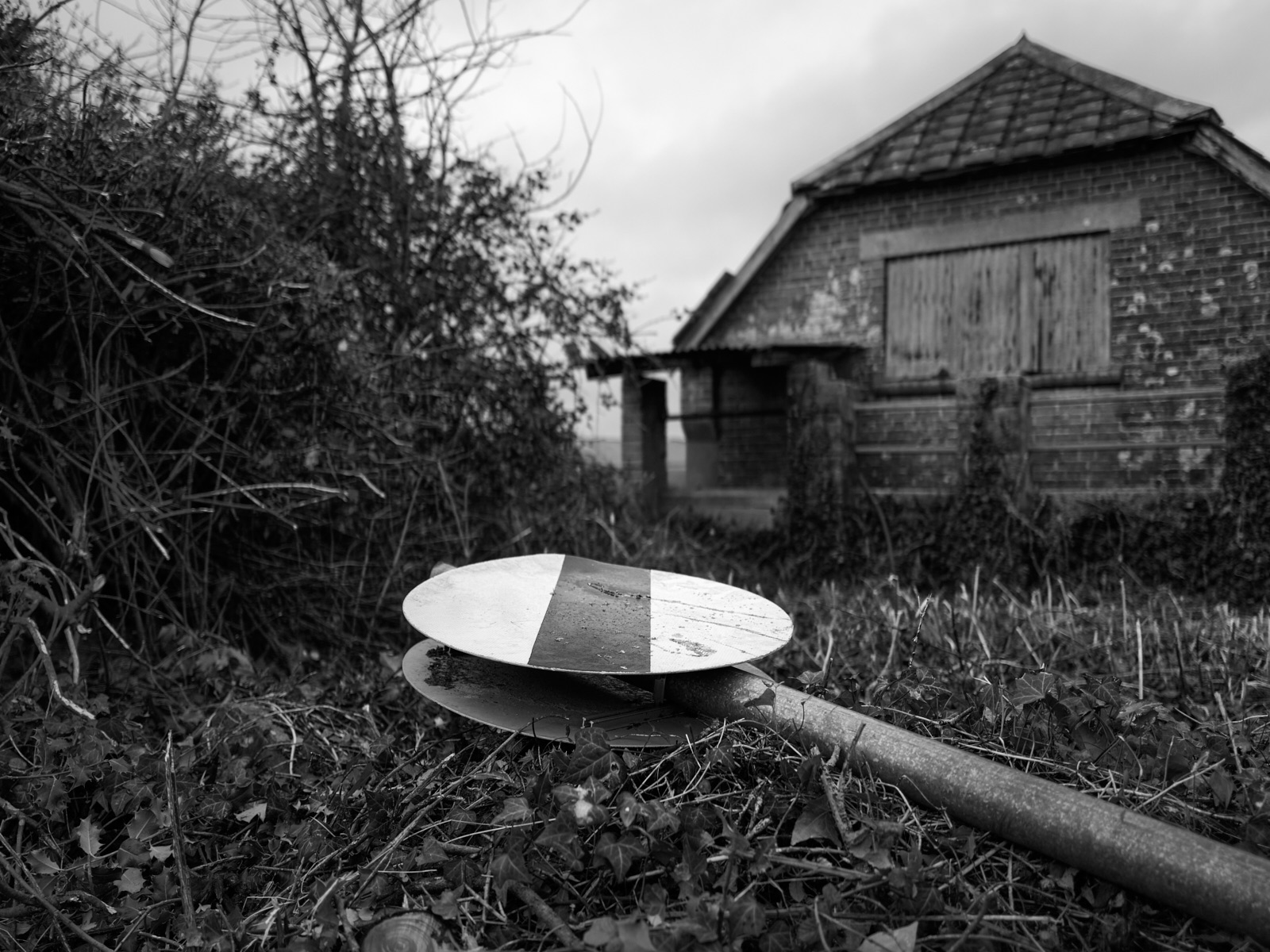
The image shown in this post neatly sums up what I am trying to say. In fact it inspired me to make this entry. The subject is a de-restricted road sign, which at some time or another has been knocked over and left in a roadside verge diminishing its effectiveness and meaning. The out of focus old farm building in the background offers some context about its surroundings. But the principal subject is the road sign.
Strictly speaking the Highway Code states that this sign denotes that the National Speed Limit applies, although why anyone would want to drive at up to 60mph along a twisty narrow country lane I do not know.
The point of this entry is simply to encourage all photographers to make images of subjects that appeal to the individual behind the camera, and not be swayed by what they think is likely to appeal to an unknown audience.
My view is that we all need to de-restrict our minds and try not to define what does or doesn’t make a good image. It’s all about being honest and true to yourself. Making images which work and appeal to you. In the process these images will serve to define who you are as a photographer. In other words photography can and should be without limits.
And finally may I wish anyone who has read this far a very happy and healthy 2026.
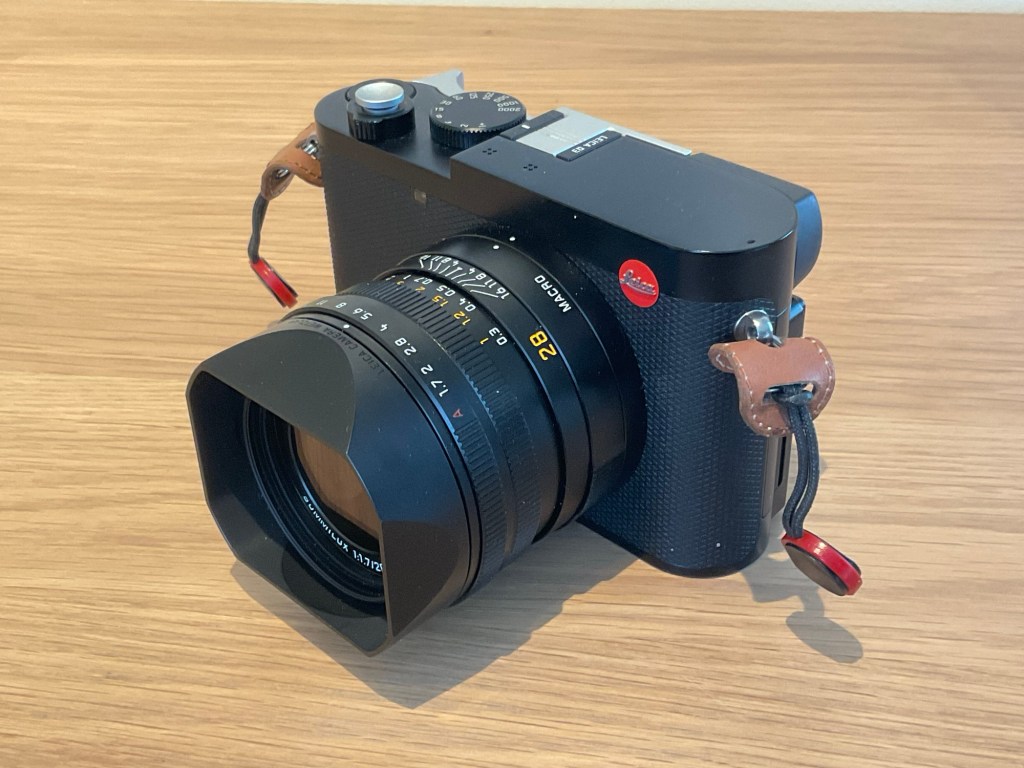
It’s only been a few weeks since I purchased my Leica Q3 and in that short period of time I have already grown to love this camera. I have become familiar with its controls and settings. I am really enjoying the 28mm field of view and my eye has quickly adapted to see potential compositions using this focal length. The addition of a hand and thumb grip plus a soft release button have improved the handling and it now feels very comfortable to hold and use. The files are simply stunning and the dynamic range of the sensor is unlike anything I have used in the past.
My collection of images of the Dorset countryside near to my home continues to grow. Here are just a few photographs I have made with the Leica Q3. Seeing these images on screen is one step away from making prints, and I am increasingly inspired to do so in the near future.
A few weeks ago I walked along a footpath, a path I had followed many times before. At the junction with another bridleway stood an old signpost. Years of weathering had caused the wood to deform and split. I suspect the post itself was rotten where it emerged from the ground. Layers of lichen and moss had partially covered the names of the nearby villages – Turners Puddle, Throop and Tolpuddle. The fingerpost had character, a patina which would only appear given the passage of time. It complemented the farmland backdrop.
This simple scene spoke to me; a reminder of all the people that had worked on the land and had walked or ridden a horse along the bridleway between these old Dorset settlements. It was more than worthy of a photograph and I am so pleased I did so.
I returned to this same location only yesterday and I was saddened to find the old sign had been removed. It had been replaced with a new post with plastic signage. To my eyes this new sign was bereft of personality. There was no inclusion now of village names. I had the feeling that it was symbolic of the urban environment encroaching on the beauty of the countryside.
I fully accept that the old sign wouldn’t have lasted forever and at some point it would need replacing. However a ‘like for like’ timber sign would in my view have been a more sympathetic choice. If only I had personally witnessed its removal. I think I would have asked the contractor if I could take it home with me and find it a new home in my garden.
This change clearly illustrates and reinforces why I choose to photograph the rural area around me. To record what I see knowing that change is inevitable. It will probably happen very slowly of course and in truth I suspect very little will actually change in my lifetime, but change it will. However given recent Government announcements, which are sure to affect the farming community here in the UK, I feel the pace of change will only accelerate.
A photograph is all about capturing a moment in time, so I need to go out with my camera and document what I see before it’s no longer there.
Former church of Holy Trinity at Turner’s Puddle – now redundant
I am sure that anyone reading this could write their own book about image capture, I know I could, so in this second entry which follows Part One – ‘Seeking Inspiration’, I shall briefly address my way of capturing a scene. This will not cover every aspect of my way of working but is more of an overview of the key methods I adopt before releasing the shutter. It might also help explain why I recently decided to buy a Leica Q3.
Principally I will be referring to my landscape photography as other genres – church interiors for example – require a different approach which I might cover at a later date.
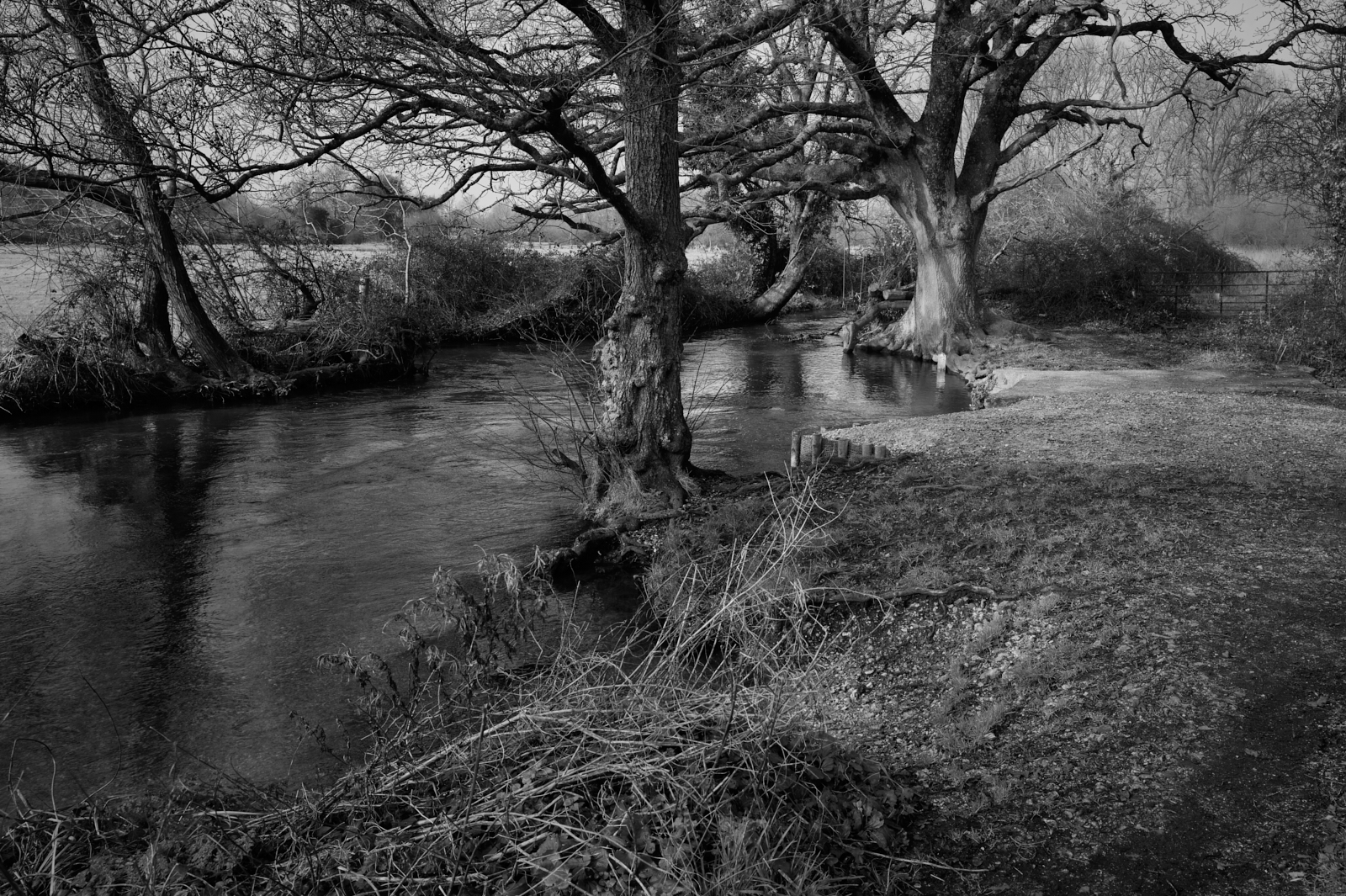
The River Piddle near Throop
First and foremost I consider myself to be quite a spontaneous photographer. Although I will go out specifically with the intention of making images I don’t often plan to capture a particular view or arrive at a location when the light will be at its most favourable. I would far rather wander around the countryside and respond to a scene, the light or a particular composition which appeals to me and draws my eye. Nor do I get up to be out before the dawn or stay out until well past the blue hour. I am a daytime photographer – which suits my lifestyle and the images I am trying to make. In summary I like to document the rural nature of the places close to my home.
Call me impatient but I won’t stay in one place for very long. In other words I won’t wait for the sun to move round or for clouds to shift in the sky. If the conditions aren’t right then I’ll simply move along and look forward to finding another scene to photograph. I do sometimes criticise myself for not slowing down but it’s how I am and it’s why I like to travel light. Always having a camera with me allows me to capture an image which might be missed.
For this reason I rarely use a tripod. In fact if I am out walking in the landscape it’s the last piece of equipment I will pack – I know it will not get used. I am not a lover of zoom lenses either. I much prefer using prime lenses but choosing which ones to take with me can be tricky. If I can choose only one lens then for years my default and arguably my favourite lens is the 50mm or ‘nifty fifty’, but it does have its limitations. So I then start to think do I need to pack something wider and or longer as well? The added weight plus the inconvenience of repeatedly changing lenses can be frustrating – but perhaps I am just being lazy!
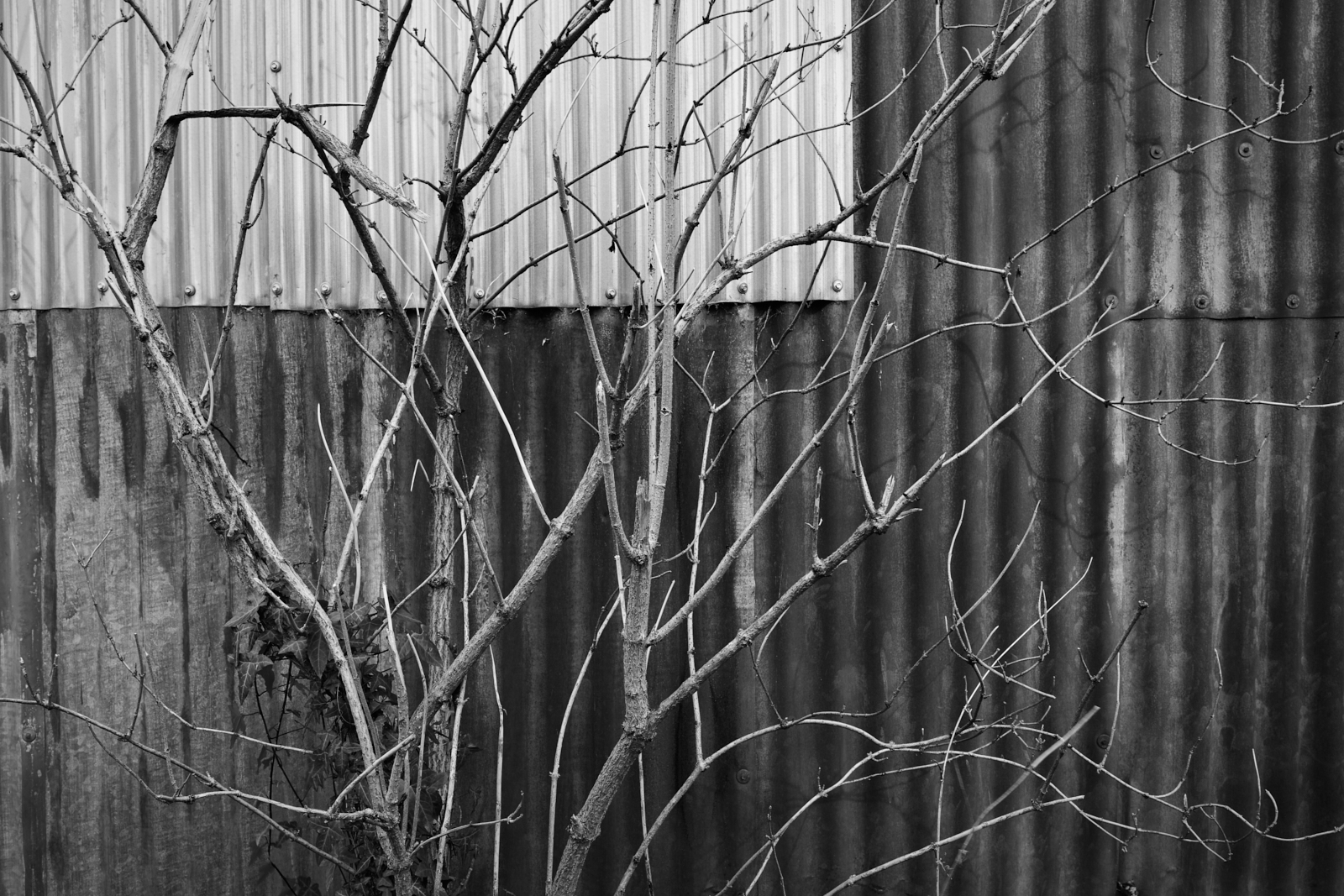
Barn detail
Ever since 2012 when I purchased a second hand Leica Monochrom, I have largely remained loyal to the Leica brand albeit with a more recent foray into the world of Fujifilm with the purchase of a Fujifilm XT3 and Fujifilm X100v. As much as I liked these excellent cameras they have never replaced my love of Leica and in particular their wonderful prime lenses, which I really enjoy shooting wide open for creative effect. Until a few weeks ago my camera of choice was the Leica SL2S.
If you are interested you might like to read these two posts –
So why Leica and what camera settings do I use? I like to remain in complete control of the exposure and focus. It’s not that I don’t trust being on auto this or auto that, but I would rather take a little more time to adjust the shutter speed, aperture and ISO myself as well as focusing manually. I appreciate that almost any camera will allow me to do this, but the Leica SL2S makes it so easy for me. Perhaps its my familiarity with the camera controls coupled with a degree of muscle memory.
Leica SL2S and 50mm prime lens
The manual focus only prime lenses are a joy to use. They have a dedicated aperture ring and a depth of field scale on the lens. The manual focus ring is not fly by wire and a quarter turn will take the focus from infinity to the closest distance. It’s mechanical and beautifully tactile and it just works. The Leica camera menu is intuitive, straightforward and far from complicated. Sorry Fuji but I have never got my head round all your menu settings.
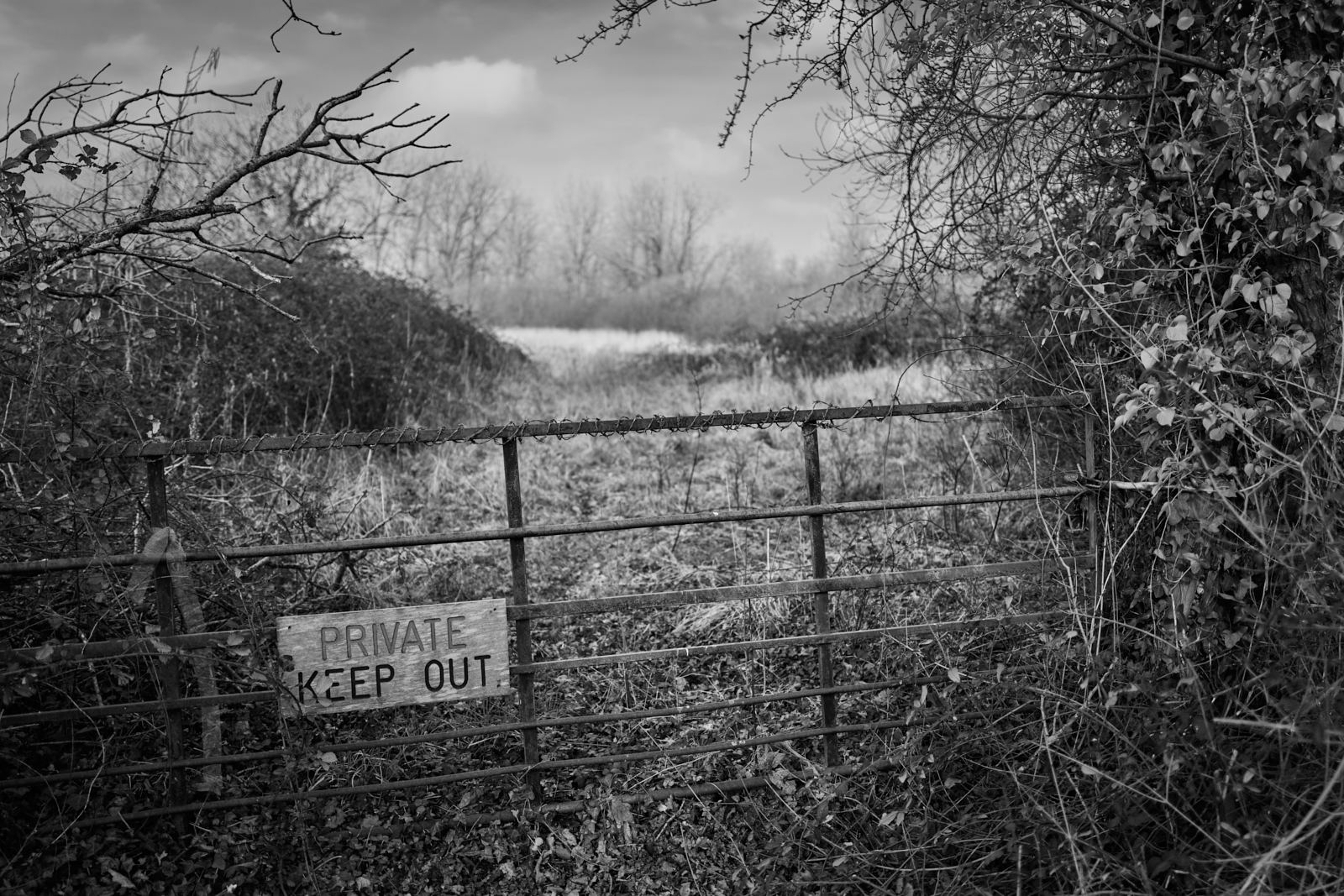
Private Keep Out
I mentioned earlier that I rarely ever use a tripod. Weight and inconvenience aside I like to compose a shot with complete freedom. Raising or lowering the camera at will, moving my feet to the left or right, or getting closer or further away from the subject to get the view I want. I check my settings, focus and press the shutter. I often shoot wide open so I am usually working with a high shutter speed so camera shake is never really an issue. The SL2S has in-body image stabilisation so shutter speed is rarely an issue to achieve a sharp image. If I do want to shoot in a semi-automatic mode then I will usually choose aperture priority, adjusting the speed or ISO to suit. Controlling the depth of field and the main point of focus is a priority once I have dialled in the exposure. I’ll use the digital zoom to double check my focus if necessary. I can use ‘focus peaking’ but the viewfinder is so sharp and clear I don’t find it’s required.
Filters and do I use them? I have a collection of filters, a polarizor, neutral density and graduated filters (hard and soft) all of which I will very occasionally use but I treat them rather as I do the tripod. They can get in the way of spontaneity. Once again if I slowed down and took more time over capturing each image then I think they would get more use. They definitely have their place in photography but not always in my camera bag. This is true only because modern sensors can now capture a broad dynamic range and the hybrid mechanical/electronic shutter negate the need for ND filters, even when shooting in bright conditions with a fast aperture.
As I am a monochrome worker I will always have the screen set to give me a black and white preview of the picture I am taking so that I can an idea of tones etc. I have to give credit to Fuji with all their in-built film styles, including many excellent options for monochrome, but I shoot RAW and will always process the image and never use the JPEG straight out of camera. I’ll cover this aspect of my workflow in Part three. I always use the histogram to make sure the highlights aren’t blown. The level gauge and something called perspective control are also very helpful if you have converging verticals which you want to correct during processing.
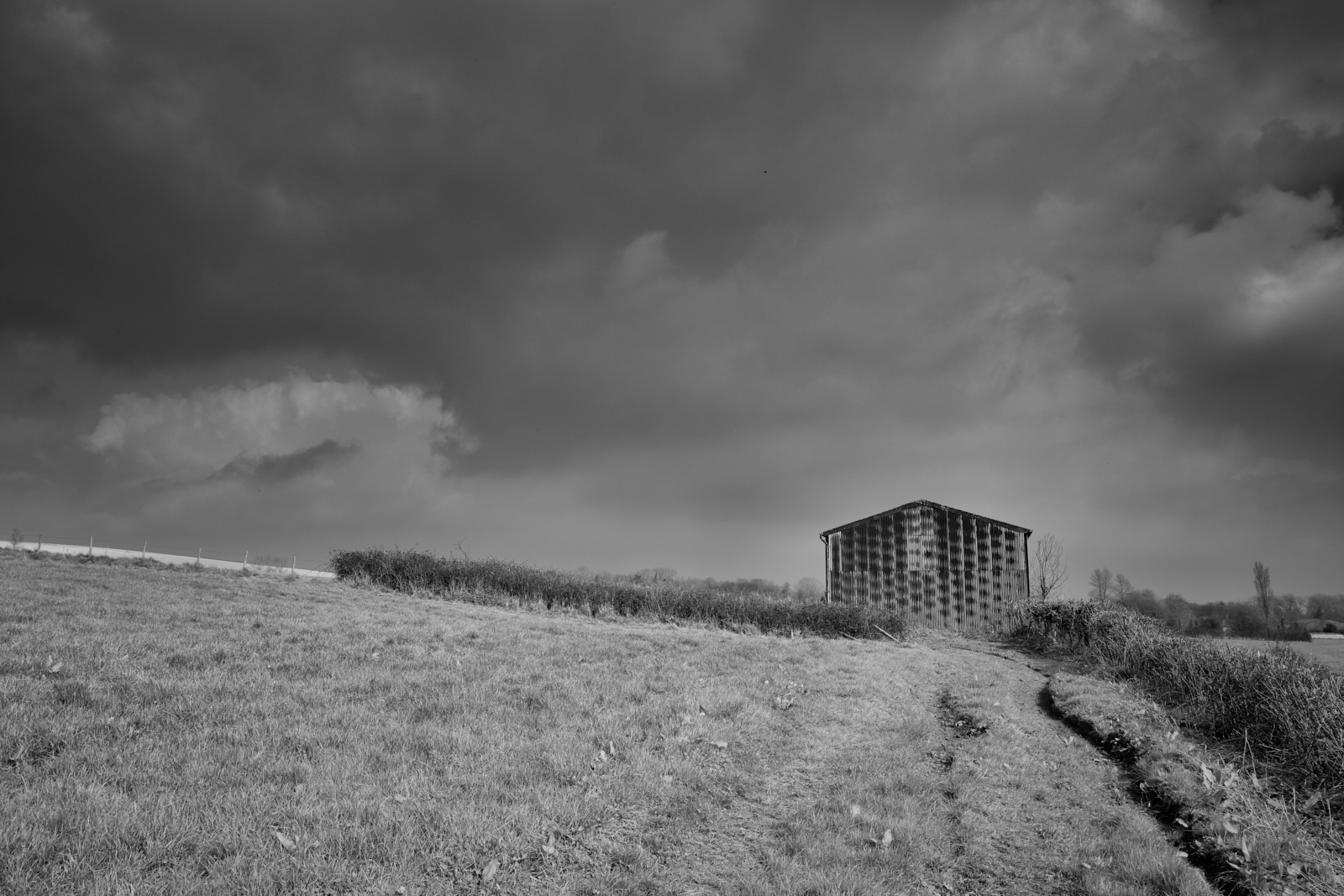
Muddy track and barn
Explaining all of the above brings me onto my recent purchase of a Leica Q3….. the version with a fixed 28mm lens, not the recently announced Q3 43, which has a fixed 43mm lens. I mentioned earlier that I had a Fuji X100v which I bought back in 2020. A highly regarded camera, but I always found the 23mm (35mm in full frame terms) to never be quite wide enough when I didn’t want to use my 50mm lens. Whilst compact and lightweight I almost found it too small to be reassuring to use. The Leica SL2S is quite a hefty beast but being quite large and very solid is to me much more comfortable to use.
So I decided I might sell my X100v and did some research into the Q3 as a replacement. I soon found a number of nearly new examples for sale at a much lower price than brand new. It’s far from being cheap to buy, as with anything made by Leica, so any saving is worthwhile. I didn’t take very long to make up my mind.
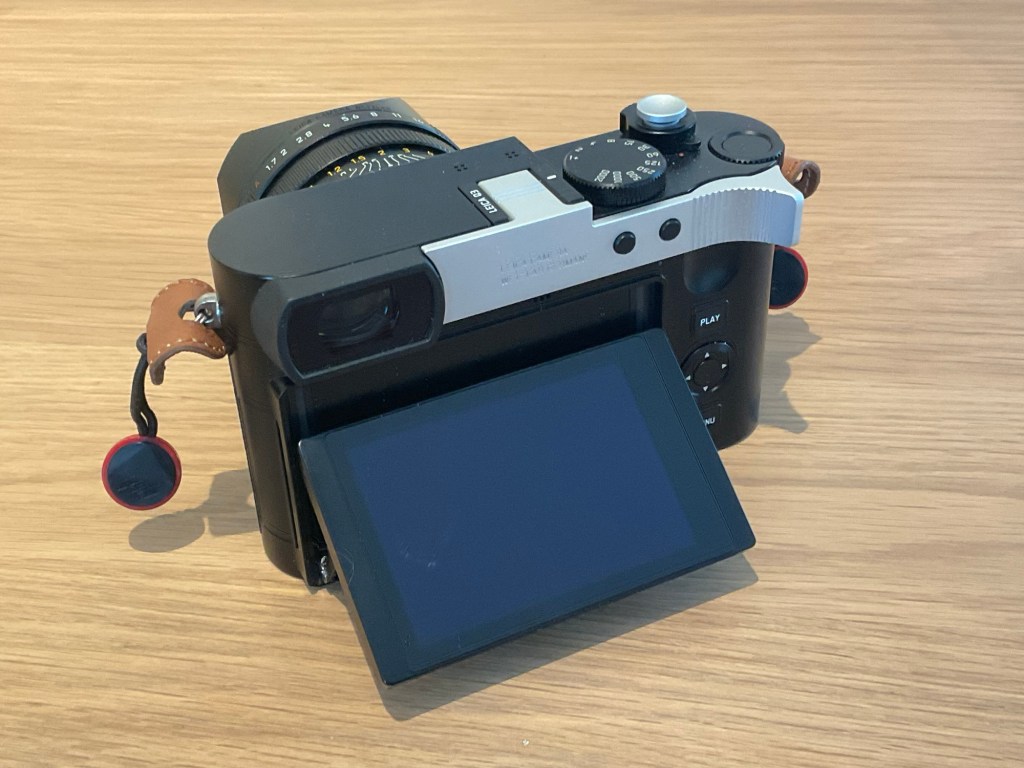
I have to say the Q3 is not really that compact, the lens is bulky, particularly when compared to the X100v which will readily fit inside a coat pocket. However it shares most if not all the things I like about the SL2S and has some other benefits which are lacking on the SL. The camera controls are very similar, the lens just feels like any other M mount prime lens. It has a maximum aperture of f1.7 which even on a 28mm lens can give me a very shallow depth of field in certain situations. It also has a macro facility which is quickly enabled by turning another ring on the lens. Like all Leica lenses the quality and sharpness is outstanding. Yes it’s larger and heavier than the X100v but to me it feels more like a scaled down version of the SL2S, so it instantly felt comfortable in the hand. Having made the switch I did add a thumb grip, soft release and I will probably add a hand grip as well, all of which I had on the Fuji.
Various images of my newly acquired Leica Q3
The menu system on the Q3 is very similar to the SL2S, so I can switch between cameras without having to think too much about what I am doing. Just like the X100v it has an articulated screen, which is something I miss on the SL. It has in-body image stabilisation, is weather proof and for the few weeks I have owned the camera it is already proving to be a delight to use.
I am greatly enjoying the challenge of using a 28mm lens as opposed to the 50mm. It’s opening up new creative compositions. Finally I should mention the 60mp sensor which is quite superb and offers the following crop modes of 35mm, 50mm, 75mm and 90mm. Even at 50mm it’s providing me with a 18.9mp file – The Leica SL2S has a 24mp sensor by way of comparison and I have never been disappointed with the images it captures. In fact I have always considered 24mp to be something of a sweet-spot. Turning the clock back my Leica M Monochrom had a 18mp sensor, so for convenience when I only want to carry one camera I feel very at ease using the crop mode on the Q3.
So in conclusion I hope this has given you an insight into my approach to image capture when I’m out in the landscape. My purchase of the Leica Q3 is a great companion for the SL2S. I can take it anywhere and given time may get more use than the SL and the ‘nifty fifty’.
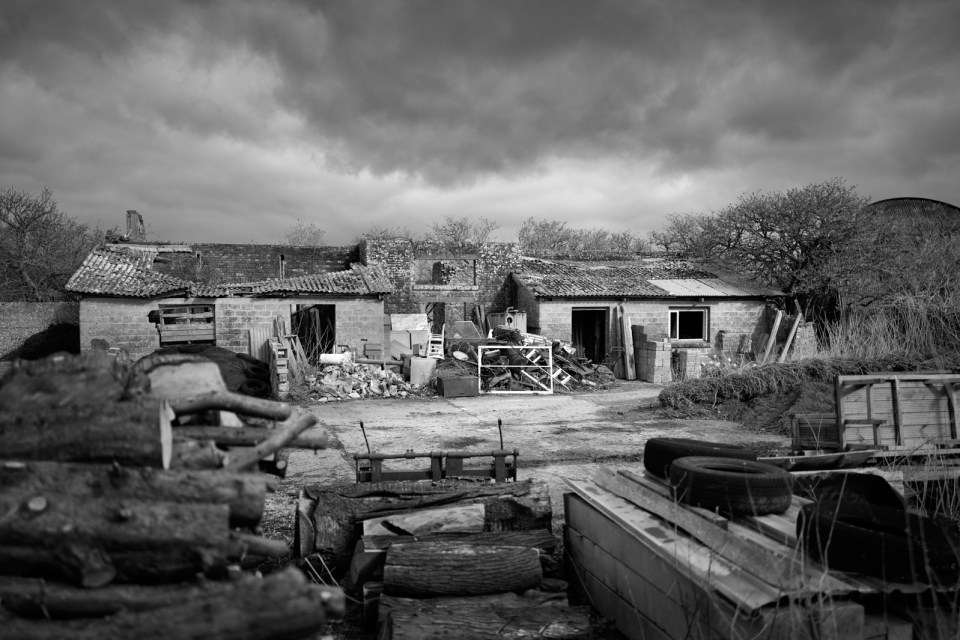
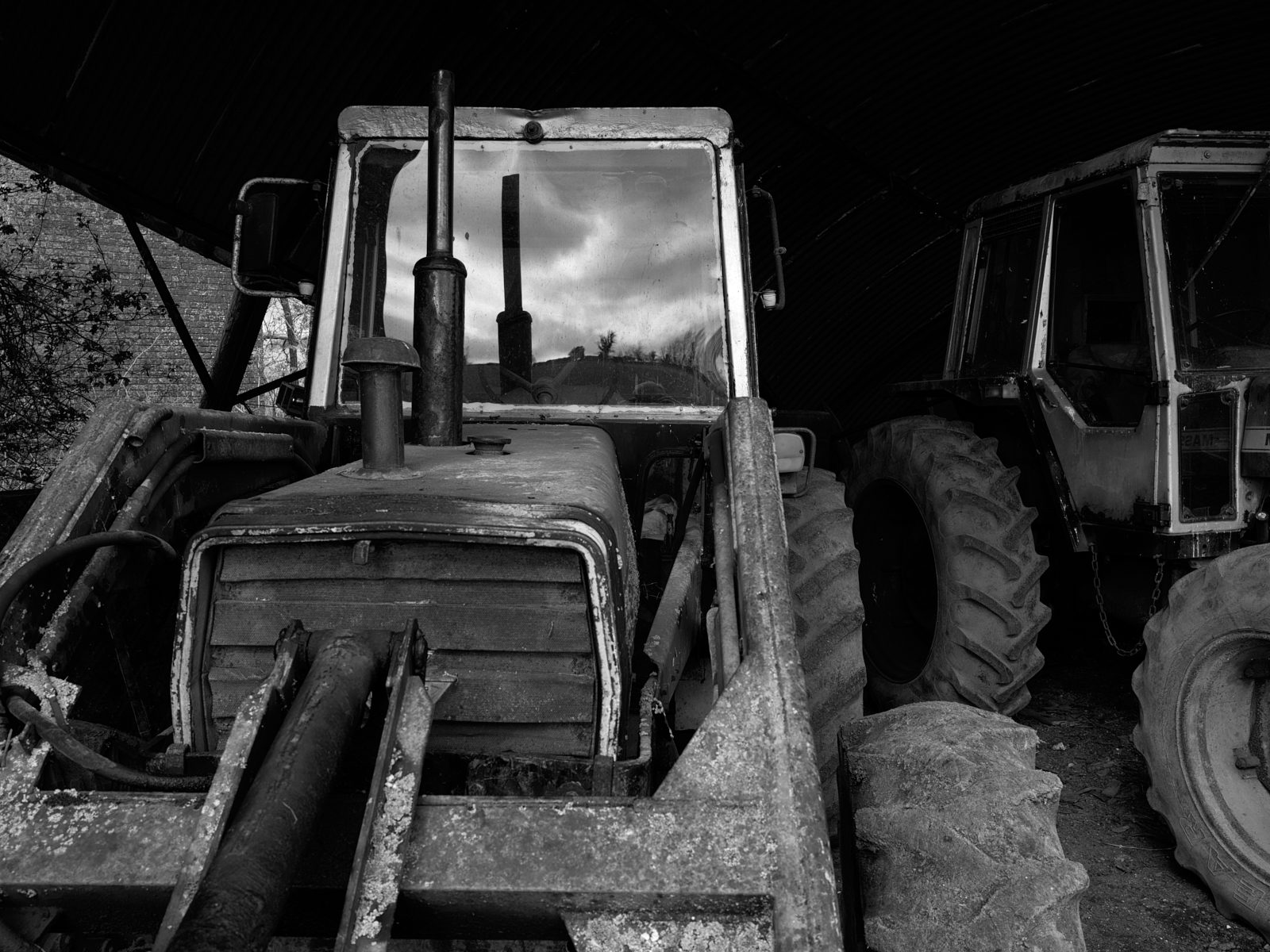
All of the monochrome images in this entry were captured with the Q3, as indeed were the images in the first post in this series. They were all captured during a single walk not far from my home.









 alan frost photography