Posts tagged ‘coast’

Bognor Rocks – a departure from black and white

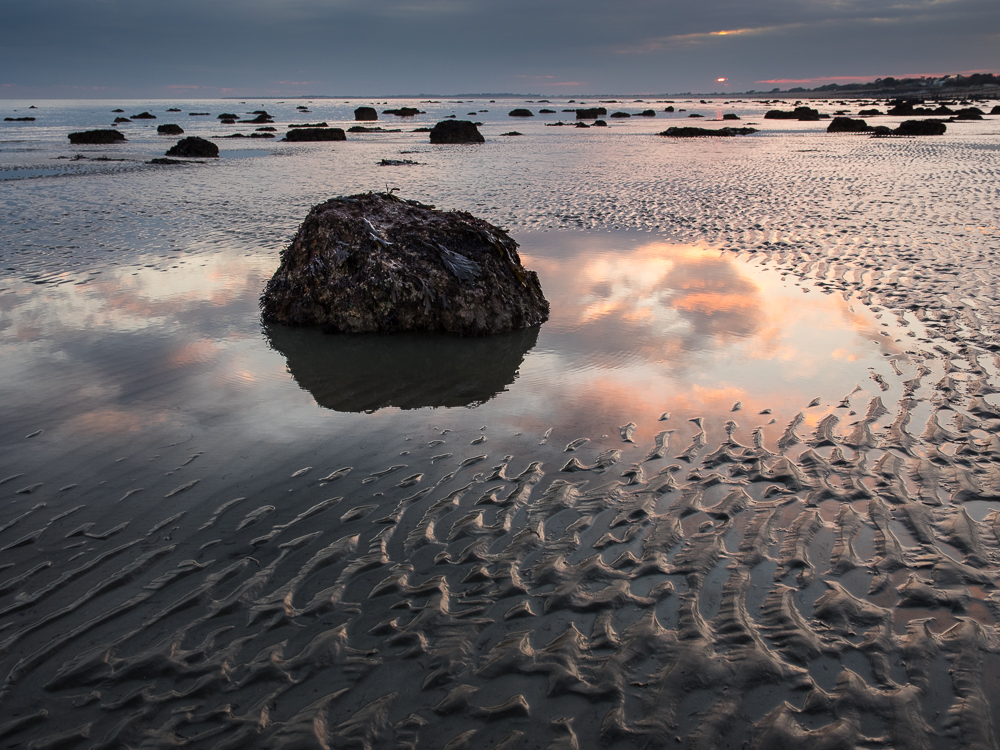
Bognor Rocks


As regular visitors to my blog will know my first love is black and white, but sometimes mono will not suffice and colour is an essential ingredient of the scene being photographed.

I don’t usually head out with the express intention of taking colour images. I normally only reach for for my Olympus EM1 when taking portraits of people who work for my firm. These images will then appear on our website or be used for PR purposes in a printed publication or on social media.

And so it was earlier this week. I had taken a few shots of a new member of staff in the morning, and as I headed home that evening the low tide and beautiful sky combined to provide me with a classical sunset seascape opportunity. I had to pull over, swap work shoes for wellies and walk out towards the shoreline. The light was fading fast so I didn’t have time to search for the best position nor did I have a tripod. A dozen quick fire shots was all I could manage before the best of the light disappeared below the horizon.

Do I want to do more colour work? Probably yes, and I have some ideas for this year which will lend themselves to colour and not black and white – so watch this space!

Thanks as always for dropping by.


Rocks in reflection

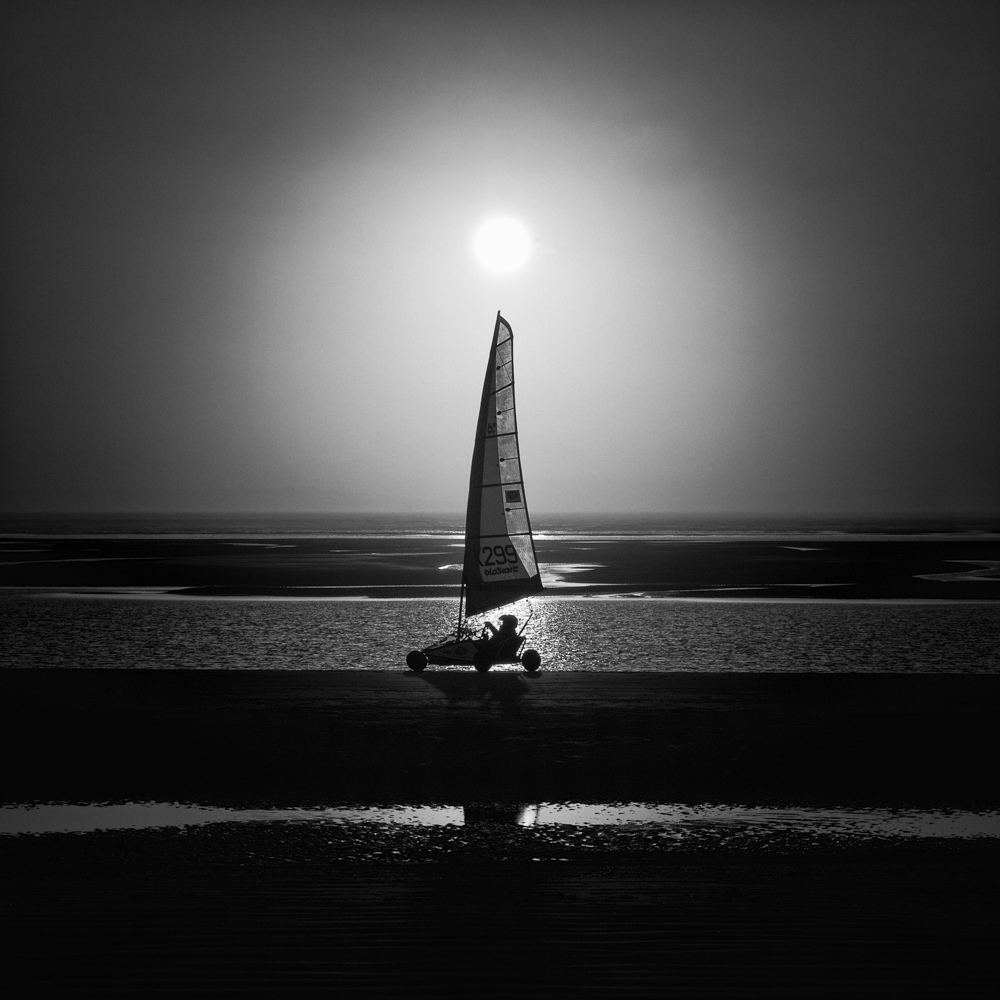
Land sailor at East Head

Land sailor


In my last post ‘Low tide at East Head’ I included a variety coastal images – I guess they were the ones I anticipated I might be taking before I left home and set off for the coast. What I didn’t envisage capturing was this shot of a land sailor backlit by the late afternoon sun. The sand flats at East Head provide large areas of beach ideal for this exhilarating sport. There wasn’t much wind, just enough to move the craft from east to west along the shoreline and back again. I had to take a number of shots to make sure that I had the sail  in line with setting sun, throwing the sailor into silhouette.

Do click on the image to view a larger and therefore more detailed version. This will open in a new window.

My new camera – an iPhone 6S – a useful photographer’s sketchbook

Most photographers will be familiar with the saying – ‘The best camera is the one you have with you’. I can’t disagree with this adage but just how good are smartphones as a true photographic tool? Let me say rather swiftly that this is not intended to be a review of my recent upgrade from the iPhone5 to the iPhone 6S, but merely a selection of images and a few opinions of my own about the value of taking images with a mobile phone. I hope you will find my thoughts interesting.


IMG_1280


The iPhone 6S now boasts a 12mp sensor, so it’s no wonder that the use of smartphones have stolen a huge number of sales from the compact camera market in recent years. (Click on this link to a page on Flickr which only confirms what most of us already know about the use of camera-phones). However I am all too aware that more megapixels doesn’t necessarily equal better quality pictures. The biggest factor is always going to be the person taking the shot, not the equipment being used, but that’s a topic for another day!

The four images in this post were all taken in the past few weeks whilst out and about walking our dog. I have never found it easy to multi task and keep one eye on the subject being photographed and the other eye on the dog, just in case he gets bored and runs off out of sight. So a quick shot is really all the time I have. The pictures have been imported into Lightroom from the iPhone 6S and then converted to black and white. Some limited post processing has been used to enhance each image if only to prove to myself what is possible with the jpeg files.


IMG_1183


So what are my thoughts? Well the results are pretty remarkable all things considered. The iPhone 6S has coped well with some high contrast conditions and to a certain extent the files are flexible in post processing. There isn’t much detail in the shadows but it’s unquestionably a better performer than the iPhone 5. They are certainly good enough for posting on the web which is where the vast majority of images now end up. What I would say is that the quality deteriorates significantly when zooming in, so it’s arguably better to take a ‘full size’ image and then crop in post. Would I want to make an A4 or even an A3 size print? – I haven’t tried, it would be an interesting exercise but I doubt I would be happy with quality, however I might be pleasantly surprised.
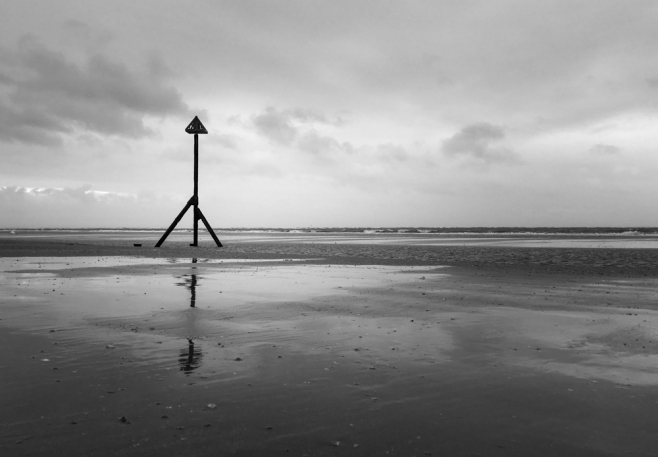
 

IMG_1200


I enjoy taking pictures on my phone but for now it will never replace any of the cameras I take so much pleasure in using. For me the camera-phone is the equivalent of an artist’s sketchbook. Something which is very portable and convenient to have with me at all times. Something I can use to make a visual record of a particular location. Something to inspire me and to think about when considering a return visit. A photographer’s sketchbook – most definitely yes, and a very good one at that. A replacement for my cameras with interchangeable lenses and the ability to shoot in RAW – no way, but still worth having with me at all times – if only to make the odd phone call!


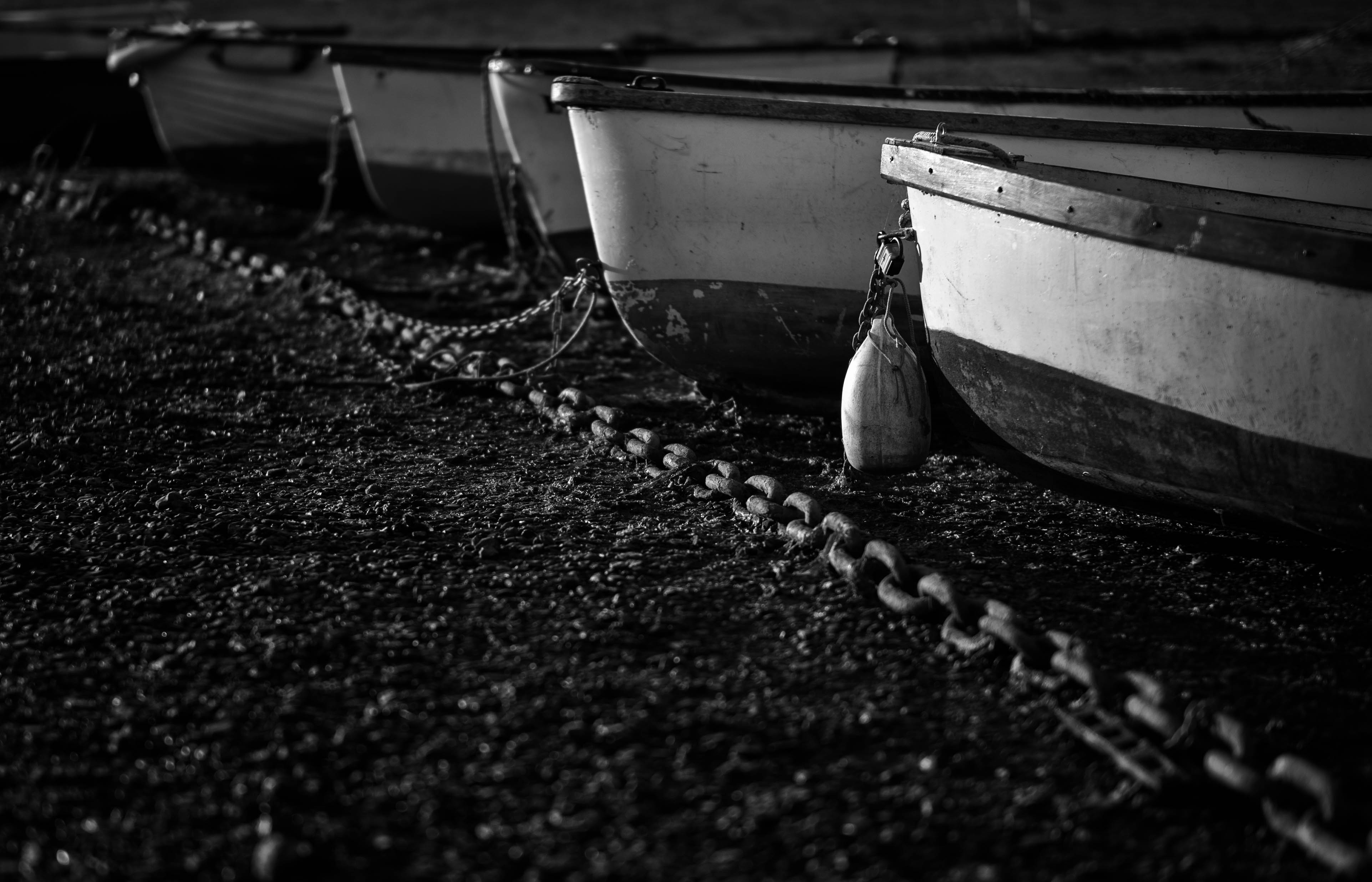
A selection of hulls at Dell Quay

L1003767-Edit


Hulls come in a huge variety of shapes and sizes, but they all have one thing in common – to keep the vessel afloat in water. When not immersed in water the true shape and size of the hull can be seen. The three images in this entry each portray a different style of hull and they were all shot as the sun started to set at Dell Quay, a small sailing club and marina which forms part of Chichester Harbour.


L1003744-Edit


L1003765-Edit


Do click on any of the images to see a larger version.

Sandymouth Bay – a broader view

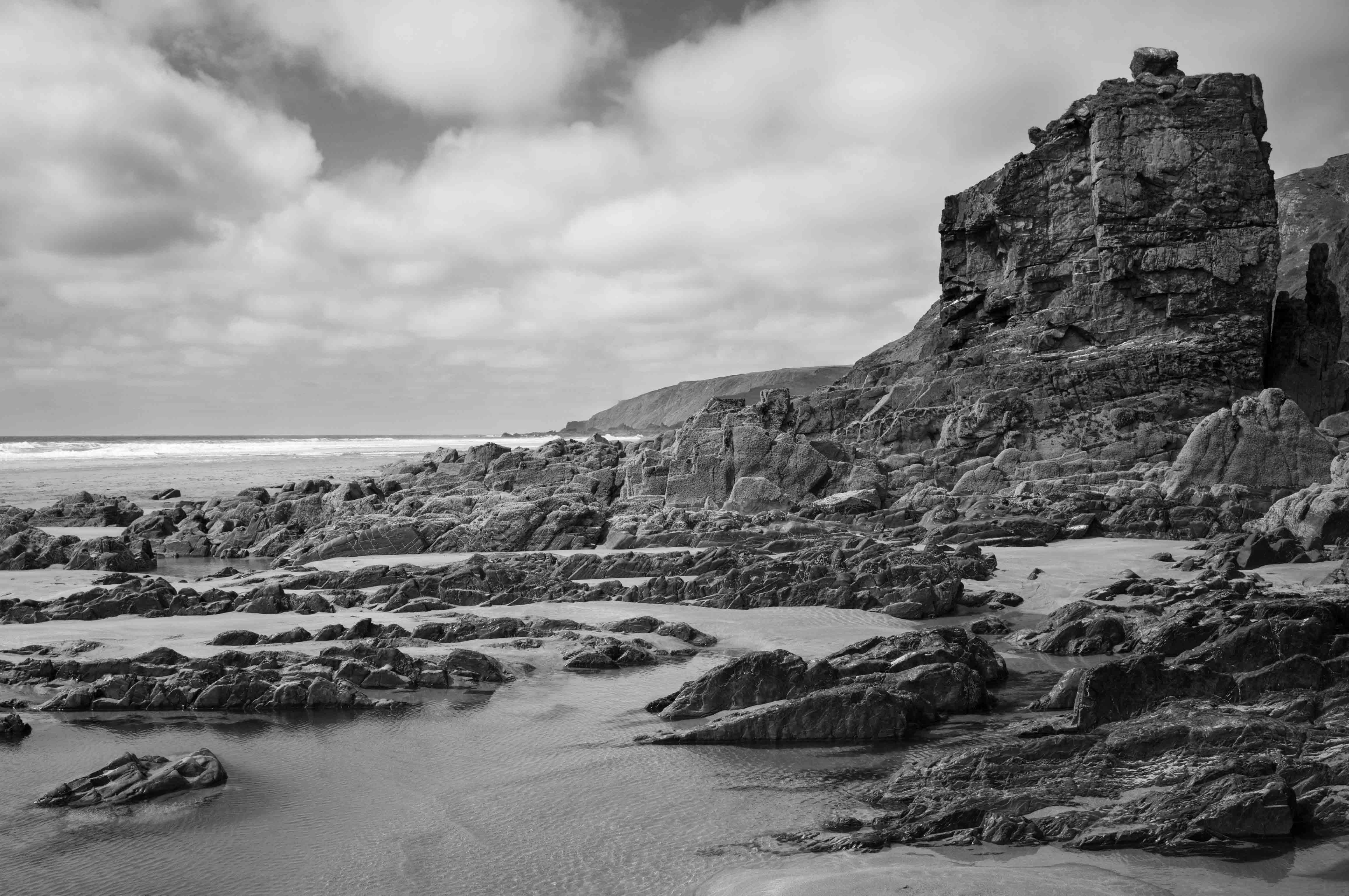
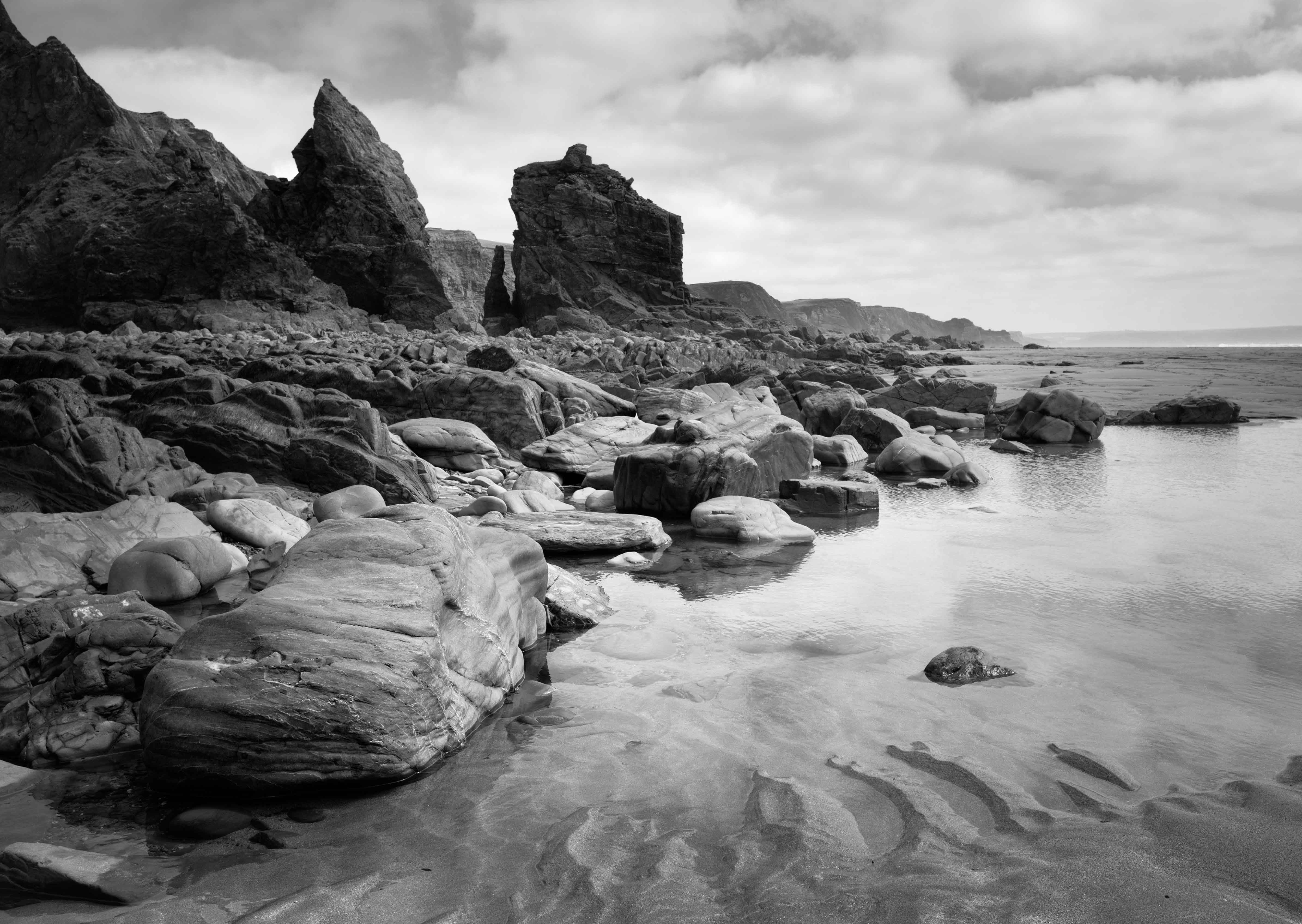
In a recent post ‘Coastal abstractions at Sandymouth Bay’, I showed a series of images which were simply abstracts of the granite rocks to be found at this picturesque bay along the coastline of North Cornwall. In this post I am showing a broader view, all taken at low tide. The cliffs and rock formations are a great sight and stretch for many miles to the north and to the south.  In fact the South West Coast Path is a National Trail covering some 630 miles, taking in the four counties of Dorset, Devon, Cornwall and Somerset. It starts in Poole Harbour in Dorset and finishes in Minehead in Somerset. For more information about this Trail click here.

Sandymouth Sands

Sandymouth Sands


Sandymouth Rocks

Sandymouth Rocks


To view a larger version in a new window please click on any of the images, including the thumbnail below of the featured image.


Sandymouth Bay

Sandymouth Bay