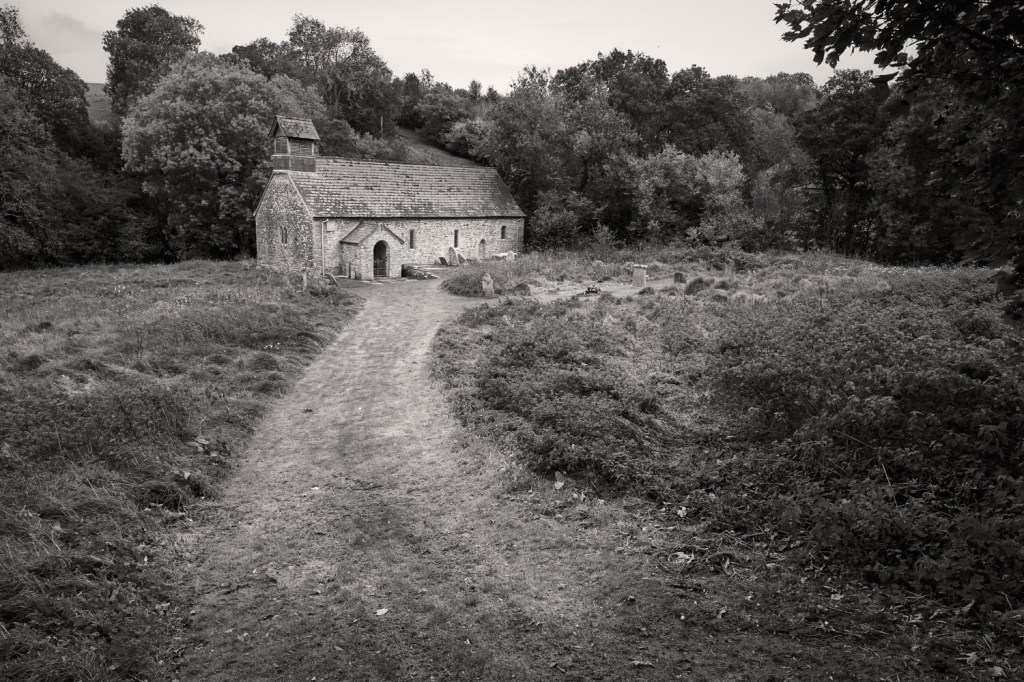
Posts tagged ‘Churches Project’

St Eloi’s, Llandeloy ….. let the story unfold

There are times during a church visit when the building or a particular object ‘speaks’ to me, and when it does I like to spend time exploring that subject. To look for different compositions but more than that to try and tell a broader message, a story which lies behind the images – or in other words the reason why I was drawn to the subject in the first place.

This is the first of a two part post on St Eloi’s, Llandeloy, Pembrokeshire in Wales. Tucked away it’s about 8 miles inland from St David’s Cathedral an altogether different and famous religious building which will attract many thousands of visitors. I doubt whether St Eloi’s will attract a couple of hundred people through its ancient doorway in a single year.

The principal subject for this entry is the book of prayer open at The Communion and sitting on an old prayer stand. Judging by the dirt it’s hard to know how long these two pages have been exposed to the light and not been turned.
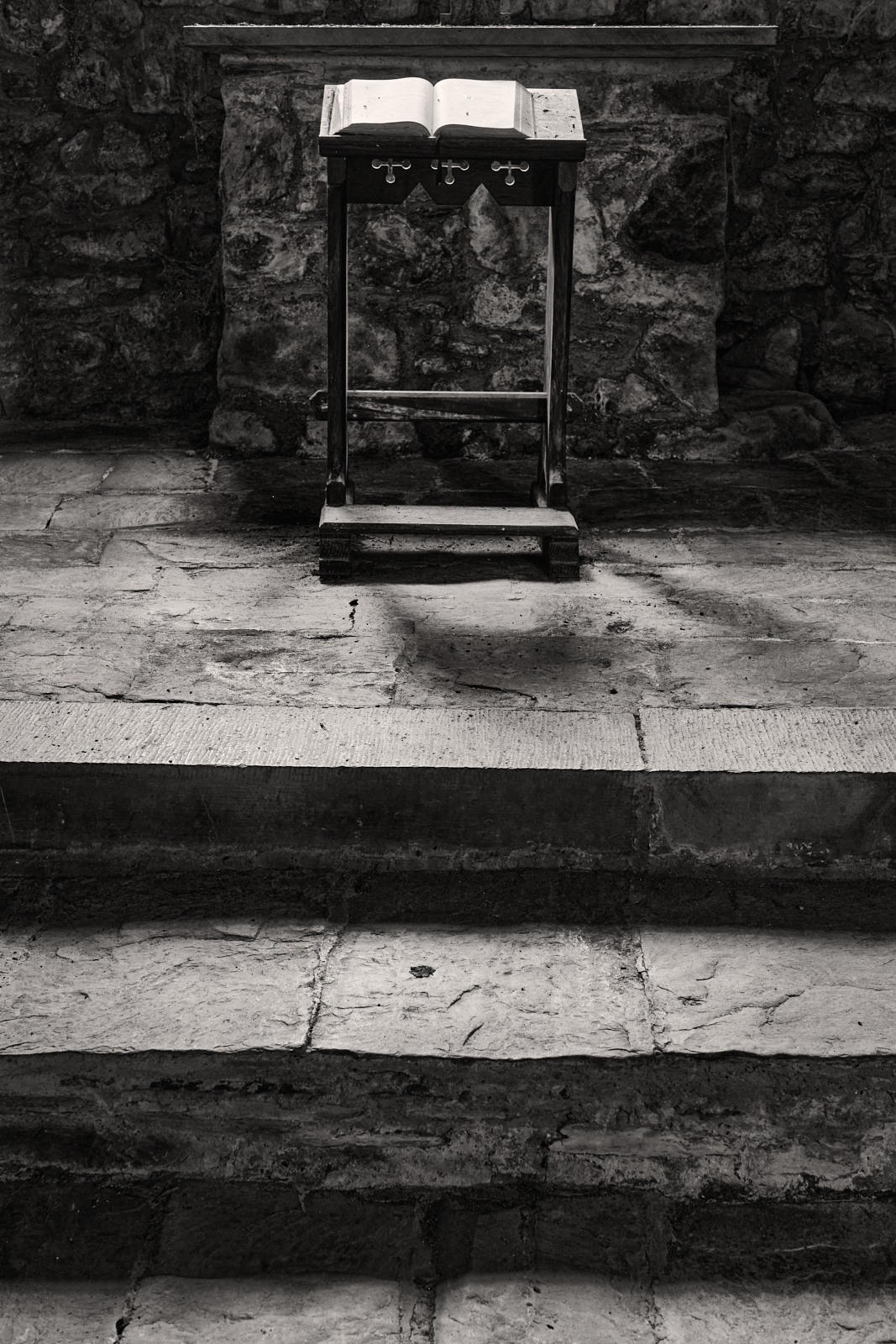
Moving back, the prayer stand itself is revealed, as well as the uneven stone floor and steps. An altar top is just visible. The light falls on the prayer book and a faint shadow of the stand on the floor suggests a window opening above.

Changing the angle of view reveals a simple pew set off to the side, room enough for two or maybe three parishioners.

The image below arguably shows the whole scene. A plain metal cross stands on the stone altar top. It is in fact a side altar or bye-altar, which is subordinate to the central or high altar to be found in another part of the church. The window reveal is shaped by the incoming light shining on roughly hewn stone. Also clearly visible are what I assume to be mice droppings. It would appear that this church isn’t used or cleaned on a regular basis.

Taken at face value each picture is purely descriptive in its nature, however there is another narrative.

I find it sad to witness but these photographs depict an ongoing and wider problem as fewer and fewer people attend church and consequently more and more churches will fail and become redundant. Places of historical and architectural merit. Spiritual places often playing host to works of religious art, and certainly places which are full of memories from centuries past.

Charitable institutions have been formed to save and care for these special buildings. One such charity is the Friends of Friendless Churches, which not only look after St Eloi’s but work to rescue and protect more than 60 other churches of all denominations across Wales and England. However they rely heavily on donations and volunteers, an uphill struggle at any time.

On the one hand I feel a sense of joy that these churches are being preserved for future generations but on the other hand I cannot ignore a feeling of melancholy, as past times are remembered but hopefully will never be forgotten. Future generations should be able to witness for themselves the important of these sacred places.

This is the first post following my recent visit to St Eloi’s in early June. You will be able to read the second post in the next few days.

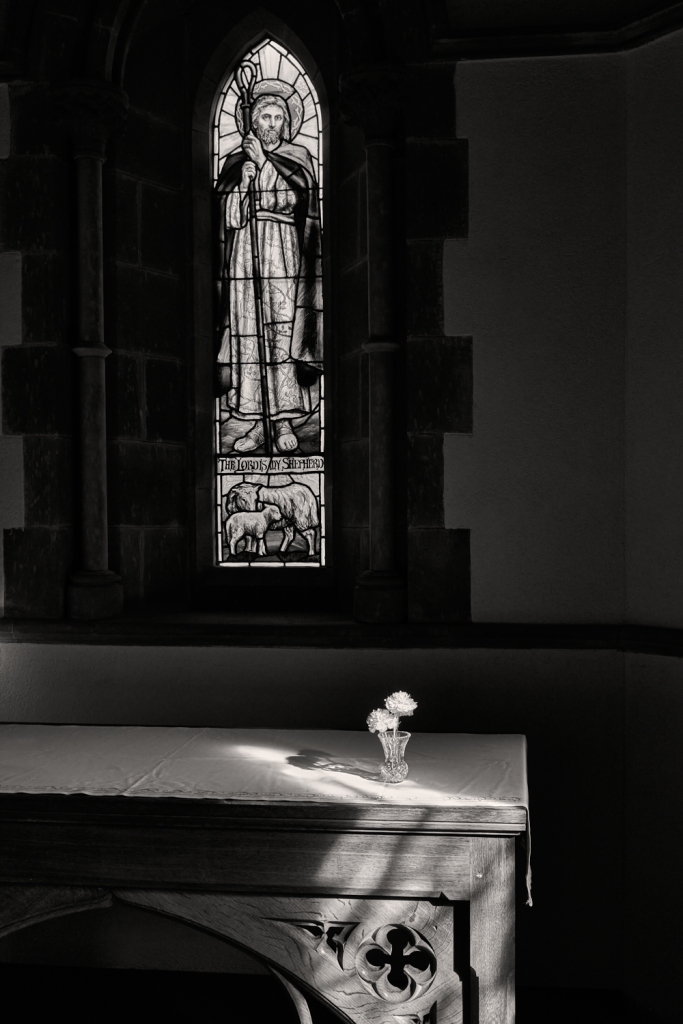
Light out of Darkness

In the past few days I have been reading ‘Steeple Chasing – Around Britain by Church’ by Peter Ross. I am now about half way through the book and I am thoroughly enjoying both the content and the well written word. I can highly recommend it.

In the first chapter titled ‘Darkness’ two short passages spoke to me and in so many ways succinctly described my own feelings when visiting churches.

The first and I quote – “And so, as I grew older, I found myself drawn back – not to pray necessarily, but to sit for a bit, to poke around, to get in out of the rain. I began to appreciate the wisdom of John Betjeman’s words: ‘Church crawling is the richest of pleasures, it leads you to the remotest and quietest country, it introduces you to the history of England in stone and wood and glass which is always truer than what you read in books’”

In the second passage the author refers a visit to the Benedictine Abbey at Pluscarden in Scotland following the recent passing of his father. He writes – “…… it brought me a peace that I hadn’t felt for many weeks. I left far lighter than I had come. Was this a religious experience? I don’t know. Perhaps it was just being forced to spend long hours sitting in quiet. ‘It kind of gets inside you / The silence I mean,’ sings Linda Perhacs in her beautiful song ‘Chimacum Rain’, and old churches are like that. You are entering a building but really it is entering you.”

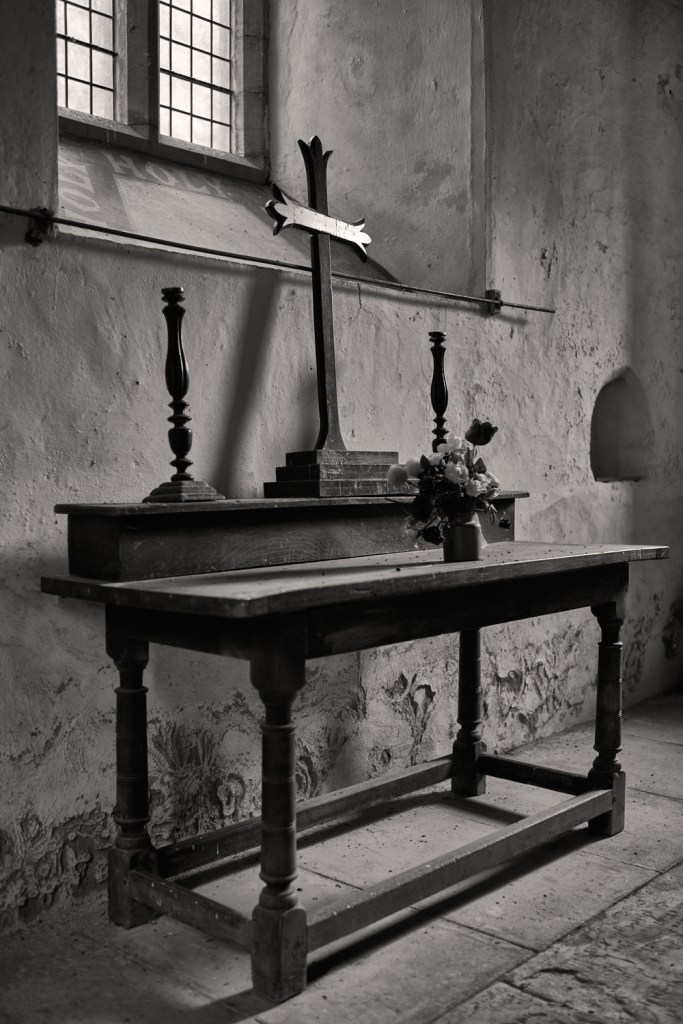
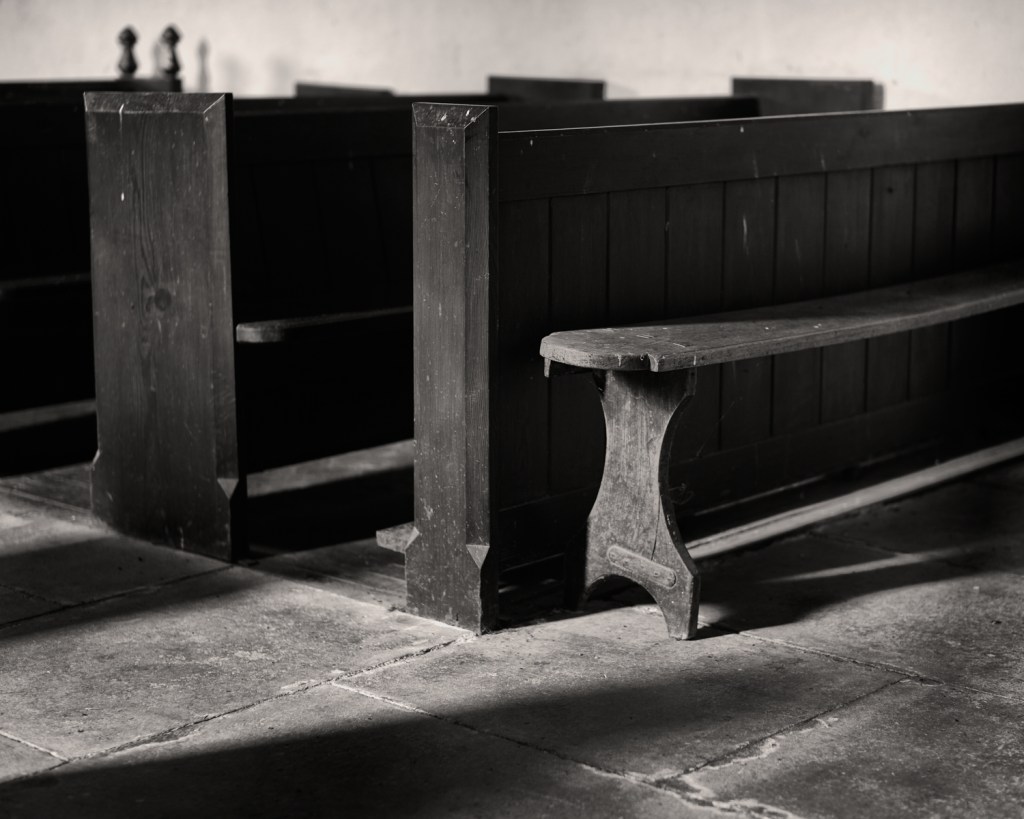
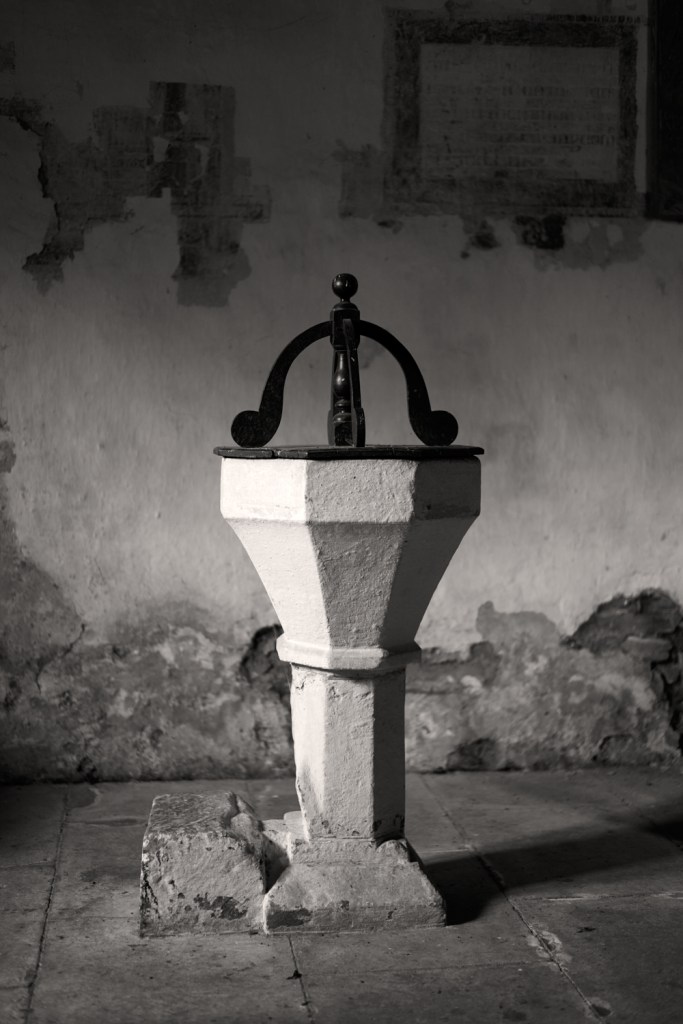
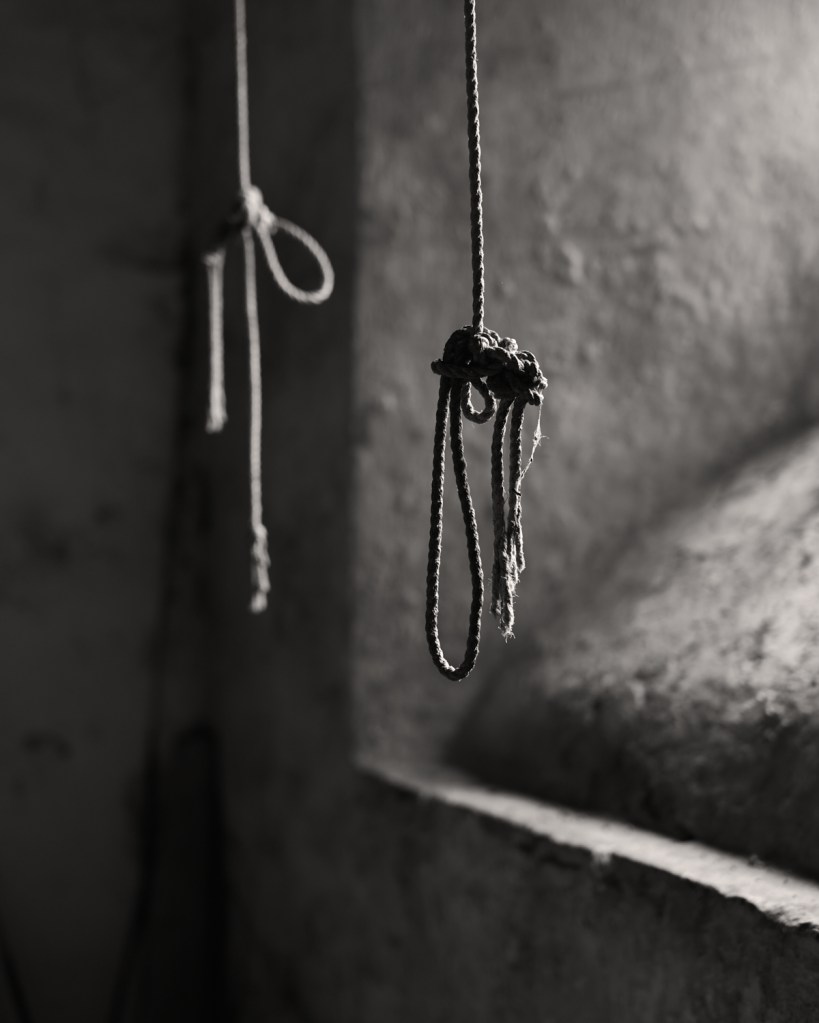
The six images shown here are a collection I have made over many years from visiting a variety of churches. I love to watch the light as it moves around, highlighting subjects which would otherwise be in virtual darkness. I endeavour to capture the feelings of stillness, of quiet and of solitude, prevalent in churches but not quite so easy to find elsewhere.

Perhaps it goes without saying that in the Bible the metaphorical meaning of light and darkness is often used to compare good and evil.

In John 1:5 “The light shines in the darkness, and the darkness has not overcome it.”

Read more

All Saints’ Church, Little Somborne, Hampshire

I have almost certainly said this before, but a visit to a small church in the countryside is good for the soul whether or not you are religious or have a faith. I can happily spend a couple of hours in a relatively confined space taking some images whilst allowing the quiet solitude and timeless quality of the interior to have an enriching affect on me. More often than not it is helped by the fact that rarely I am interrupted by other visitors. To have the place to myself is rather special and only enhances the peaceful experience.

All Saints’ in Little Somborne is another church in the care of the Churches Conservation Trust. Historically important, it was mentioned in the Domesday Book and its origins are half Saxon and half Norman. It is still consecrated but no longer used for regular worship. I suppose this adds to a feeling of melancholy…..time and circumstance has long passed it by, and with church attendance falling in this country, more and more parish churches will inevitably close as they cease to be financially viable. They can’t all be saved so those that are should be treasured, not just because of the building’s significance but as a reminder of times past and how the church played such a vital role in village life in days gone by.

For the record Sir Thomas Sopwith, a British aircraft designer whose company was responsible for the Sopwith Camel and other military aircraft which fought if the First World War was buried here in 1989.

St Ellyw’s, Llanelieu, Powys – a long overdue return to my photographic passion.

It was a dull early winter’s day as I stepped inside. I looked around and slowly my eyes began to adjust to what at first seemed a very gloomy, cold interior. Slowly the church revealed itself to me, as the light of day penetrated 13th century sandstone rubble walls through the deep arched medieval window openings. The remote setting, the ancient churchyard and the surrounding Black Mountains of the Brecon Beacons all contributed to the atmosphere of this small historical place of worship. Almost instantly I am taken back in time and can only wonder whose feet have crossed the threshold in all the centuries past?

This is the church of St Ellyw’s in Llanelieu, Powys in Wales. It is now cared for by the ‘Friends of Friendless Churches’. On their website it states that “St Ellyw was a princess martyr of the 5th century and according to legend, she was murdered close to Llanelieu by a rejected suiter who refused to accept her vow of chastity”.

A good many years ago I began a project which has no end. I started to photograph church interiors which eventually inspired me to submit a successful panel of images for my Associateship of the The Royal Photographic Society. Whilst the appeal of this project has never been lost it has been on the back burner for quite a long time. Whilst on holiday in the Brecon Beacons towards the end of last year, I made a special effort to visit and photograph this church which was of particular interest to me. It revived my love of not just photographing these places but experiencing their atmosphere and quiet solitude.

I have always been drawn to remote churches in the countryside. Small buildings which are being preserved but not necessarily used for regular worship. There are a number of other similar churches in the near vicinity of St Ellyw’s, so a short break to this part of Wales specifically to visit these churches is definitely on the cards. Until then there are others closer to home which I have listed, one of which I visited quite recently and I will be posting some images very soon.

Photographic projects – and how I have come to appreciate their importance

In recent weeks I have been considering how and why my photography has developed over the past couple of years. In doing so I have come to appreciate the importance of projects. In this post I will write about a few examples and illustrate how they have impacted on my photography and how they might help you in the future.

The age old expression that ‘every picture tells a story’ may still hold true, but with millions of photos being uploaded to the web on a daily basis, via Instagram, Flicker, Facebook, Twitter (I could go on) ….. the world is now saturated with images. Whilst I still enjoy making and sharing ‘single’ shots’, my own feeling is that there is much greater value in a body of work which includes some form of narrative; hopefully a story contained within a set of images which makes viewing the work more meaningful and dare I say it, more pleasurable for the viewer. A story behind the image is far more difficult to achieve from just a single back lit picture viewed on a screen in the space of a few milliseconds, whereas a printed body of work is likely to hold the attention of the viewer for a longer period of time. These bodies of work may take the form of a panel, a photographer’s portfolio, part of an exhibition or published in a book.

New Art of The South Downs

Yours truly at the recent ‘New Art of The South Downs’ Exhibition

Read more