Posts tagged ‘church’

The Nave

Churches Project no. 1 – St Andrew, Sutcombe, Devon

This is the very first entry of my new ‘Churches Project’ and the honour goes to The Church of St Andrew, Sutcombe in Devon. It has Norman origins but is principally a 15th Century granite structure which was restored in 1876. It forms part of a small and quite remote village about 5.5 miles north of the town of Holsworthy.

For me the church interior offers greater appeal than its exterior. As you enter the south facing entrance porch, look up and you will see the medieval wagon roof; the age and character of the building becomes immediately apparent.


Porch roof

Porch roof


Inside the church itself, one of the first things you notice are the superbly carved bench ends dating back to the early 16th Century, many of which depict heraldic devices of local families. These complement the rood screen which separates the nave and the chancel and can be seen in the first image at the top of this post. Is it any wonder St Andrew’s has a Grade II* listing.


Carved bench end

Carved bench end


In contrast to the carved bench ends, there are a collection of more modern pew chairs with a cross back, which from a photographic point of view are just as appealing.


Pew chair

Pew chair


This is certainly true when some rays of sunshine highlight one of the chairs hidden in the rear corner of the church which has a broken rear leg and woodworm is also evident.


Broken chair

Broken chair


The exterior shot of the church was captured using a 28mm lens. I could only just get far enough away to include all of the building which has made me think a wider angle, perhaps a 21mm would be useful  in the future.


Church of St Andrew, Sutcombe

Church of St Andrew, Sutcombe


To see a larger version of the featured image click on the thumbnail below, or click on any of the images and they will open in a new window.

The Nave

The Nave

More information about my ‘Churches Project’ can be found here.

Churches – an exciting new photographic project

St Nectan, Stoke in the Parish of Hartland in Devon

St Nectan, Hartland in Devon

For quite some time I have been considering undertaking a photographic project but have lacked inspiration – until now.

Some months ago I read two very good books; one called ‘On being a photographer’ by David Hurn in conversation with Bill Jay; and another entitled ‘The Essence of Photography’ by Bruce Barnbaum, both of which I can highly recommend. Each publication talked about the benefits to be derived from working on a project, whether small or large, and irrespective of the time it might take to complete.

In ‘On being a photographer’ the author writes – “The subject matter you select must; a) fire your enthusiasm and curiosity at least for the length of time it will take to produce a meaningful body of work; b) lend itself to images, as opposed to words and; c) remain continuously accessible so that you can return time and again to the same topic whenever you wish or have the time.

From the same book it reads – “The more the shooting, the greater the enthusiasm and knowledge for your subject. The greater your knowledge, the more you want to do it justice and this increases the scope and depth of the pictures. So the process feeds on itself”.

Committed to the idea that I would like to start a project, but not knowing what it might be, I was recently inspired by a famous book called ‘Betjemans Best British Churches’ to visit and photograph a number of churches listed during a recent holiday in Devon. I soon realised that I would often photograph these buildings and their locations whenever the opportunity arose, but I had never thought of it as a project.

The penny has finally dropped and whilst this work will not be at the expense of making images of other subjects, it will give me a sense of direction and purpose. There are about 2,500 churches in the guide so I will not be short of material. Some are close to home so easy to visit in a day; others I can research and look forward to visiting as travel and holidays permit. Interiors are just as important as the exterior, so I am not entirely dependent on the weather. Landscapes are my other great love, so visiting a church will take me to new areas as well.

Inspired, excited and full of enthusiasm I have created a new section on this site, not surprisingly called Churches Project . Do read  the introduction and by way of a start I am pleased to show a photograph of one of the churches I visited in Devon in this post.

The Church of St Nectan is in the hamlet of Stoke in the Parish of Hartland. It is often referred to as the Cathedral of North Devon. I like the fact that the tower, which was built as a landmark for mariners, is partially obscured by low cloud and the way the cluster of daisies in the foreground appears to be replicated by the lichen on the gravestones.


In loving memory of a Churchyard – St Thomas a’ Becket, Warblington

L1002347-Edit-2

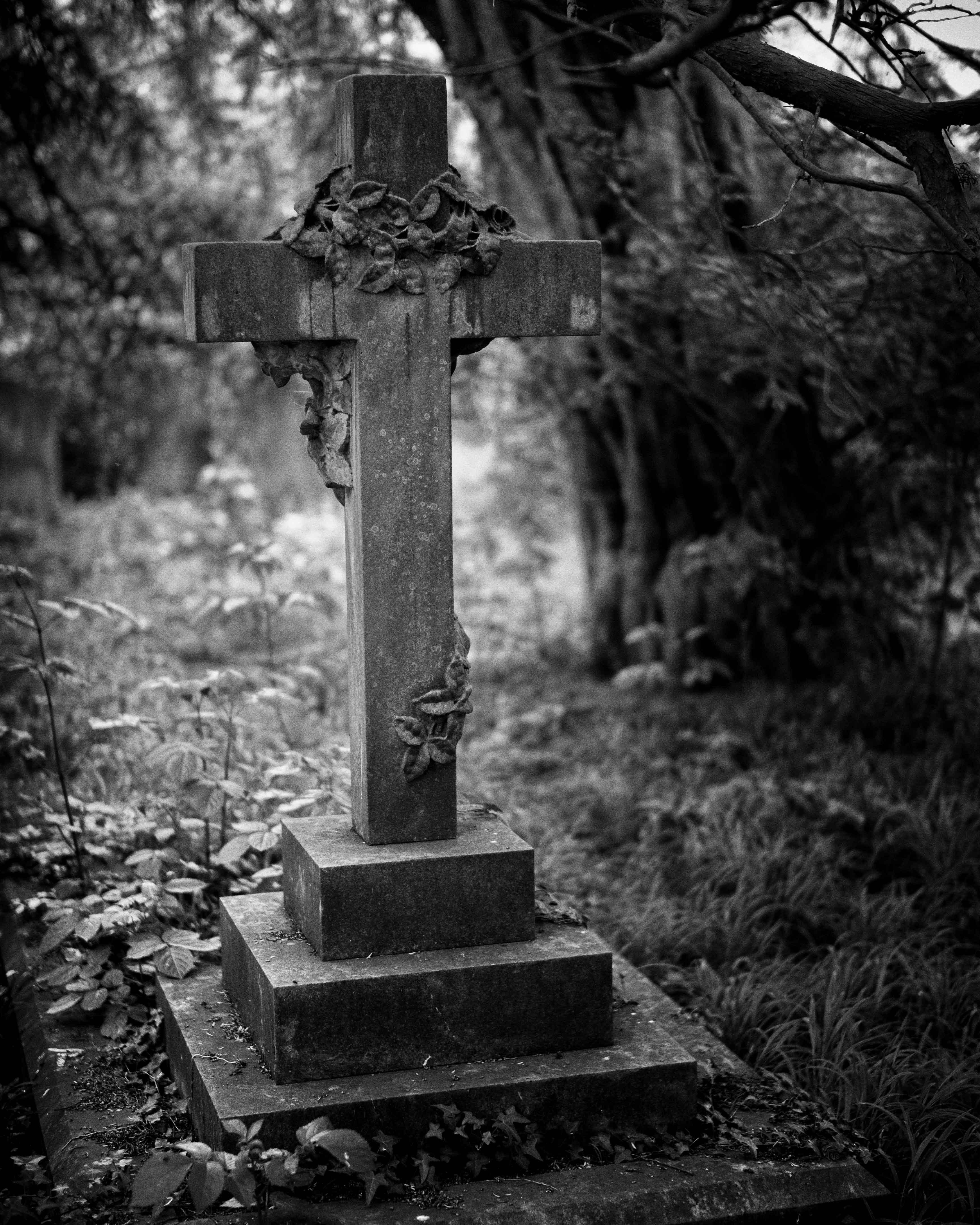
From an early age I have always been fascinated by churches and churchyards with their gravestones and crosses.  I guess this interest was instilled in me by my parents when I was a small child. My father would want to stop and visit every church we came across, particularly when we were on holiday visiting a new area. If there was time he would want to do a quick pencil drawing of the church in a sketchbook, something which he always carried with him. He would note down the colours and when he returned home he would get out his brushes and water colours to paint the scene he had sketched, but also the one he remembered in his mind’s eye.

I am no different except I paint with light, using black and white photographs instead of some paper, pencil and paints.  I will capture the scene and then in post processing apply the appropriate treatment to the image. It’s a creative but arguably selfish process, as first and foremost I want the result to please me but I always hope it may give some pleasure to the viewer as well, but primarily it’s my interpretation of a visit to a particular location.


L1002382-Edit


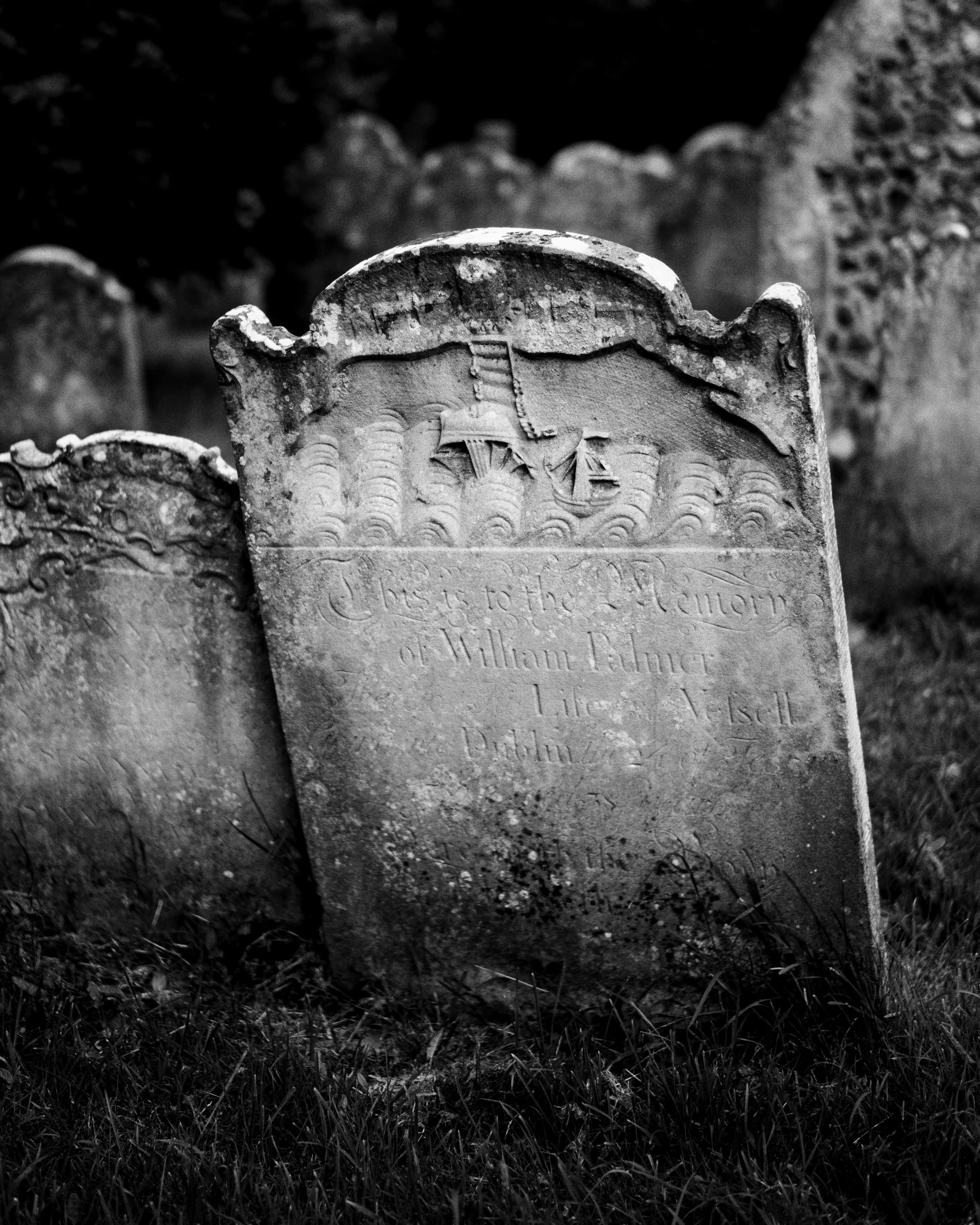
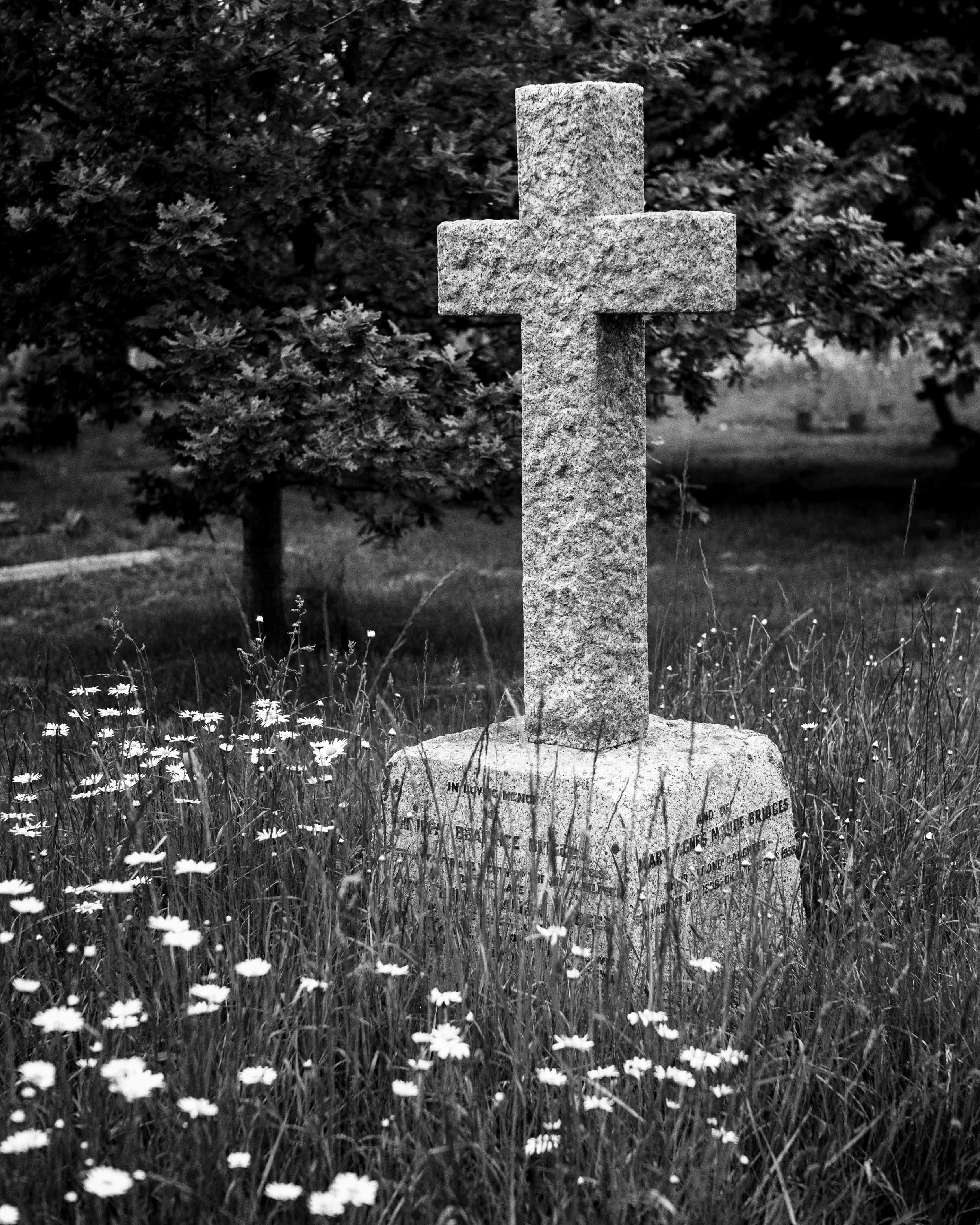
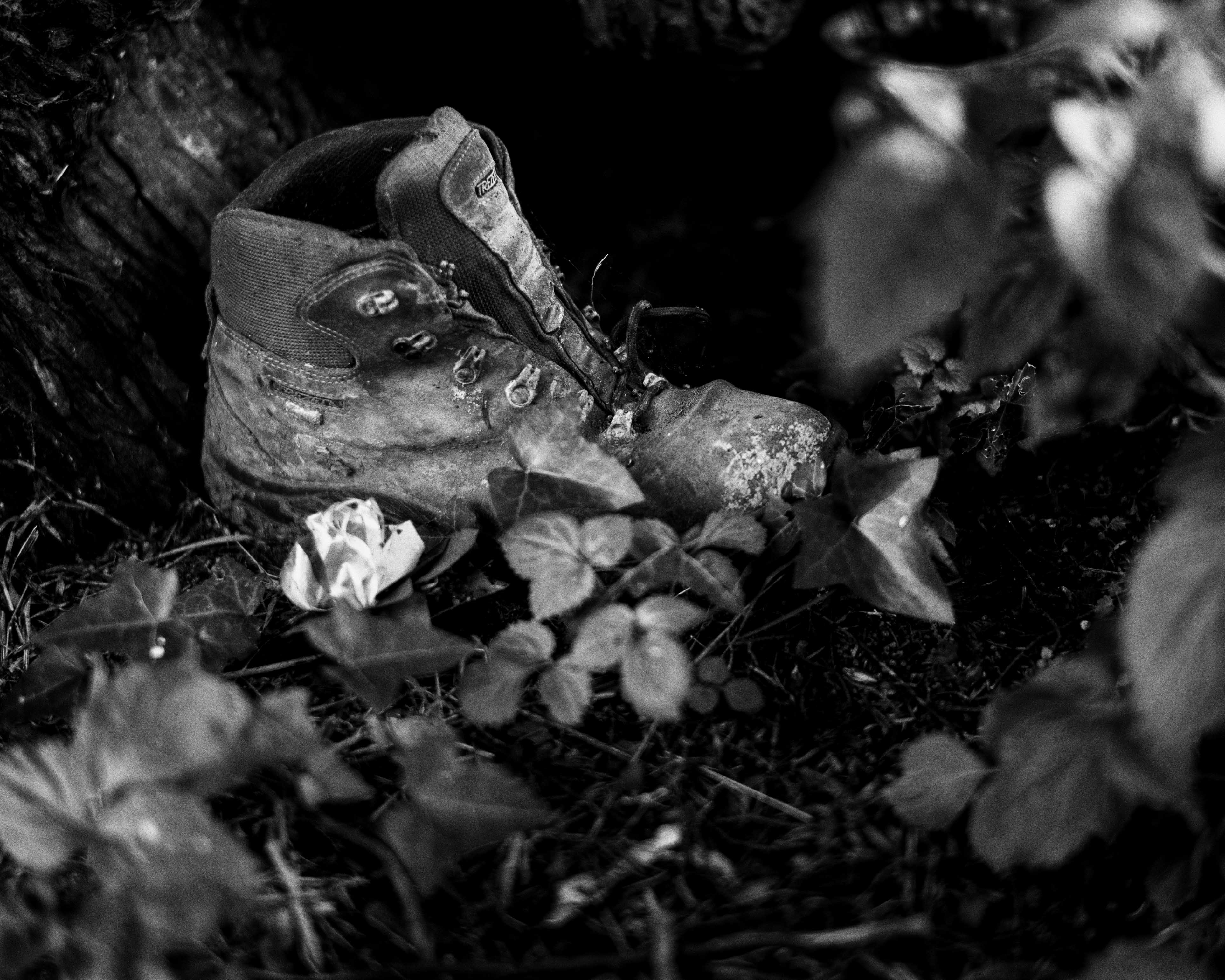
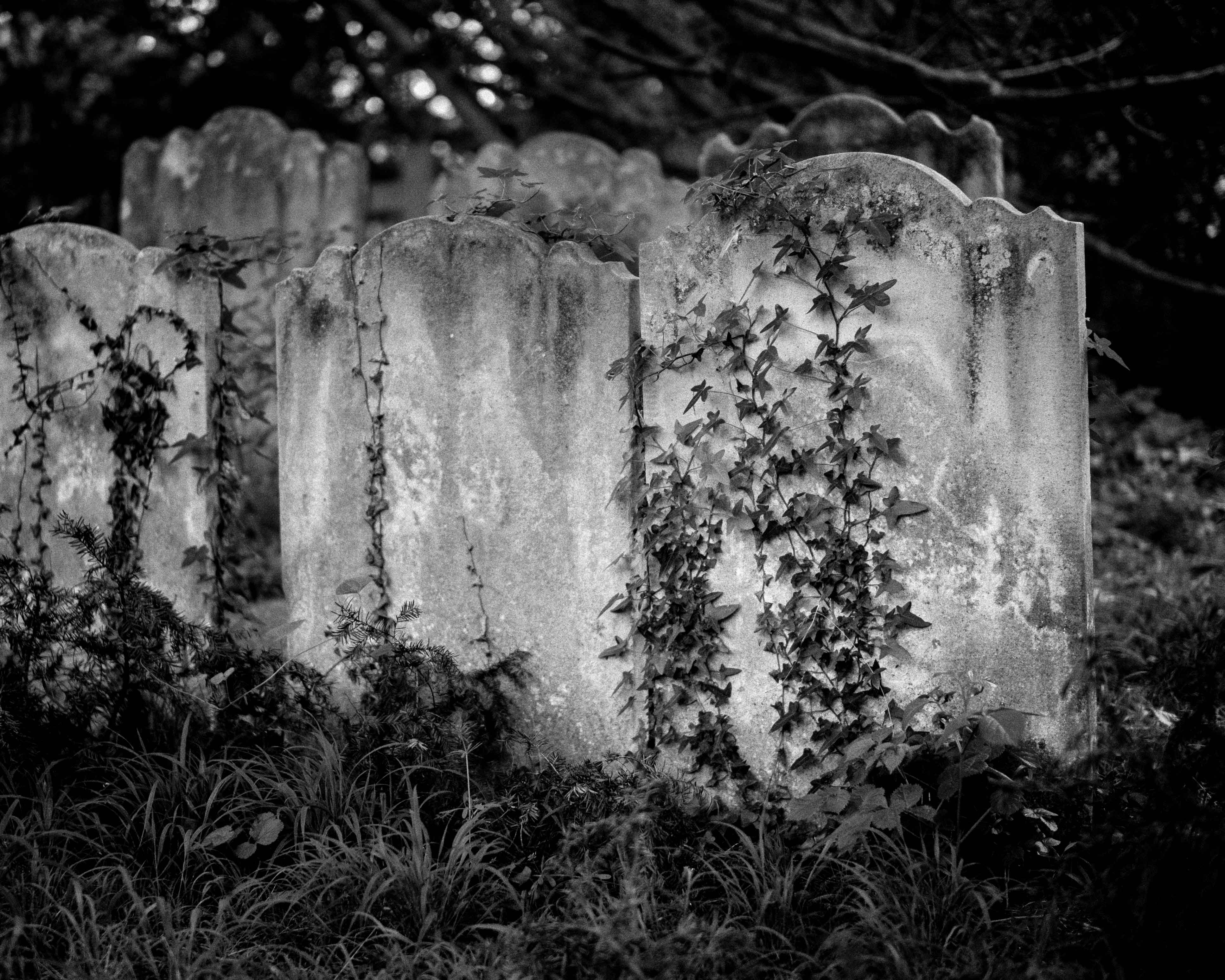
The subject of this entry is the churchyard  of St Thomas a’Beckett Church in Warblington, which dates back to Saxon times. It is situated in the Parish of Emsworth on the borders of West Sussex and Hamsphire, within just a few minutes walk of the sea,. As you might imagine the area is popular with walkers and those visiting this lovely church. The churchyard is about an acre in size and there is a much larger adjoining cemetery, so there is plenty to explore. Inevitably many of the inscriptions on the headstones have been worn away, now covered by lichen or ivy. Apparently the oldest memorial dates back to 1707. One of the most striking is the gravestone of William Palmer (above) which depicts the sinking of his ship, mast first, in Dublin Harbour in 1759.


L1002362-Edit


L1002407-Edit


I fully accept the subject of this entry will not be to everyones liking, but as I have already said these are fascinating places. They are a reminder of lives lost and the lives those people used to live many generations ago. Walk along the pathways and between the headstones and your mind starts to wander as you try and imagine what life must have been like for the people of Warblington in days gone by.

There are eight more images in this post ……… so do continue scrolling down.


L1002395-Edit


L1002403-Edit


L1002358-Edit


L1002392-Edit


L1002393-Edit


L1002398-Edit


L1002428-Edit


L1002361-Edit


All the photographs in this entry where taken with a Leica M Monochrom and 50mm Summilux lens, often shot wide open at f1.4 to give a very narrow depth of field. They were all processed in Lightroom and then imported into Silver Efex for some final treatment.

Please click on any of the images to view a larger version.

In times of darkness – let there be light

In times of darkness

In times of darkness


So many churches are closed these days for security purposes. but venture out into the countryside away from the big towns and cities and the chances are you will find a small village church with its doors open, ready to accept those who seek a liitle peace for quiet contemplation and prayer.

One such church is in the tiny hamlet of South Stoke to the north of Arundel in West Sussex. One road in and one road out, this beautifully situated church lies close to the River Arun, as it weaves its way south through Arundel and on towards Littlehampton, where its waters meet the English Channel.

Inside the church it has the appearance that very little has changed for hundreds of years. The pulpit is lit during daylight hours by a stained glass window, but in times of darkness the flame of a candle would shine its light on the The Bible which already open for the next reading.

This shot was taken with a Leica M Monochrom and 50mm Summilux lens, then processed in Lightroom and Silver Efex Pro. Being a rangefinder and given the main subject of the picture was quiet close to the camera, I encountered the parallax issue, which means that what you see through the viewfinder is not what you get, because the viewfinder is not centred on the same plane as the lens. It was important for me to make sure that the candle was in front of the dark background and not the light coming through the window on the left. I had  to adjust my position on a few occasions to get the composition I was looking for.


Last light on Salthouse Church

St Nicholas, Salthouse

St Nicholas, Salthouse
Taken late in the afternoon as the sun was setting. This must be one of the finest locations of any church in the UK.


In my last post, I wrote about the wonderful light to be found inside churches. One of the churches I mentioned was St Nicholas in Salthouse on the North Norfolk coast. A large church for such a small parish, records state that it was completed in 1503. It occupies a wonderful position on rising ground at the top of the village, overlooking the salt marshes and the sea.

The photograph was taken at the end of the day just as the sun was setting. My wife and I had been walking our dog that afternoon and as we drove back towards Weybourne, I took a detour in the hope that we might find a good viewpoint of the church. We found the right road, pulled over, and I grabbed my camera. The light on the church could not have been better, with a glorious cloudscape to match. The opportunity to take this shot lasted just a few minutes as the sun soon disappeared behind low clouds in the West. I just happened to be in the right place at the right time.

This view would not have changed for five centuries, but now wind turbines can be seen on the far horizon.