Posts tagged ‘black and white photography’

Churches Project no 18 – St Botolphs, Botolphs, West Sussex

st-botolphs-1-of-6

A gate and pathway lead up to St Botolph’s Church


The Church of St Botolph’s stands in a small hamlet to the south of Steyning, in West Sussex. It lies close to the River Adur and is virtually on the South Downs Way, so many walkers stop to take a rest and enjoy the peace and solitude of this ancient building. It’s a lovely setting with just a few houses for company, although 700 years ago it was at the heart of a bustling port and crossing place of the river. At one time it was known as St. Peter de Vetrie Ponte (St Peter of the Old Bridge). The church has its origins in Saxon times and is believed to date from 950. Large parts of the original church can still be seen today including the tall chancel arch and the south wall of the nave. This is another church maintained and cared for by The Churches Conservation Trust, so whilst still consecrated is rarely used for worship.


st-botolphs-5-of-6

A simple cross in a window in the Saxon south wall of the nave.


st-botolphs-3-of-6

Organ stops


st-botolphs-4-of-6

A large Crucifix hangs on the chancel arch which dates back to Saxon times.


st-botolphs-2-of-6

Looking up at Christ with the ancient Saxon wall as a backdrop.


A note for regular readers – I am very aware that I have not posted an entry relating to my ‘Churches Project’ for at least a couple of months. That doesn’t mean I have lost my enthusiasm; to the contrary, my desire to visit and photograph these historical and remote places of worship is just as great as it has ever been. Time though is limited and the summer months are not necessarily the best time of year to take exterior photographs, as the lighting can be very harsh. I am sure the autumn and winter will rectify the situation and normal service will soon be resumed!

As always do click on any of the images to view a larger version which will open in a new window.



Attending an Advisory Day with The Royal Photographic Society


Ever since I gained a Licentiateship (LRPS) with The Royal Photographic Society back in 2012 I have had the desire to work towards the next distinction; an Associateship. For the past year or so I have been putting together a panel of prints which I hope might achieve the required standard. My proposed panel includes the above image.

As part of this process The RPS strongly advise attending an Advisory Day, where your panel of 15 images together with a Statement of Intent can be presented to Panel Members of The RPS. They give advice on whether or not your work is ready for submission or if more work is required. If the latter, they will give an indication in their opinion as to what needs to be addressed. This can vary from major changes or just a few minor tweaks.

On Sunday I attended an Advisory Day at the headquarters of The RPS in the lovely city of Bath and presented my panel, with I have to say, a certain amount of trepidation. There are a number of other photographers in the same room and the RPS panel members can quite rightly be constructively critical of a person’s work; after all that’s the very reason for attending. Nobody likes criticism in front of others but there is little point going for an Assessment only to fail by some margin, and many do apparently.

My panel is based around my ‘Churches Project’ and was entered in the Conceptual and Contemporary Category. I am pleased to say that it was well received and considered to be a strong panel worthy of submission, subject to changing three out of the fifteen photographs. It was considered these three were slightly weaker images when compared to the others and I agreed. One picture was changed at the Advisory Day from a selection of other prints I had taken with me, so that just leaves me with the task of sourcing two other prints, which hopefully shouldn’t be too difficult. I believe the Statement of Intent, the technical quality, printing and presentation are likely to meet the required standard but you can never be sure. I have to say I was very relieved and pleased with the feedback.

I have already booked a place for my Assessment in April next year, so I have a little while to wait to find out whether or not my panel will qualify me for an Associateship. There can be no guarantees but my fingers are crossed and I will of course report on the outcome in roughly six months time.

In the meantime here is a quote taken from the RPS website regarding the standard required for an Associateship –

“ARPS (Associateship) – images of exceptional standard and a written Statement of Intent (what you hoped to achieve). This is a significant step up from the LRPS.  At this stage creative ability and personal style (what makes your work unique to you), along with complete control of the technical aspects of photography must be evident.  It is at this level that you can first choose to submit your work to a particular specialist category.”

You can see a Gallery of my LRPS Panel by clicking here.


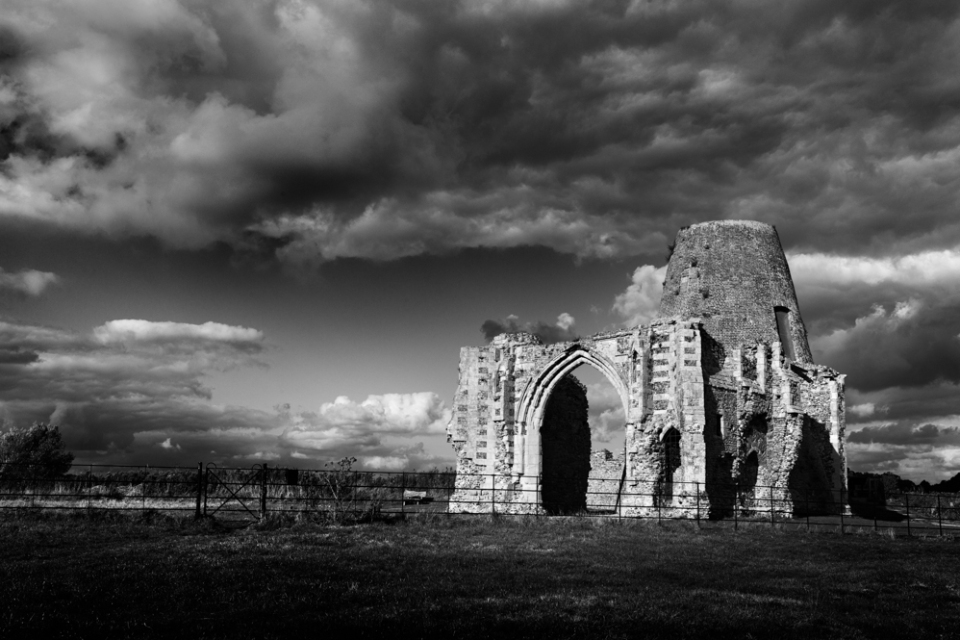
The ruins of St Benet’s Abbey in Norfolk

The ruins of St Benet’s Abbey on the banks of the River Bure within the Norfolk Broads are the best part of 1,000 years old. In 1020 King Cnut who ruled both England and Denmark, granted land and property to the hermits at St Benet’s and so the Benedictine Monastery was formed. It changed and expanded over the centuries and in the second half of the 18th Century a farmer built a windmill inside the abbey gatehouse. Some time later it was converted to a windpump but this ceased operating and now forms part of the abbey ruins.


st-benets-abbey-3-of-3


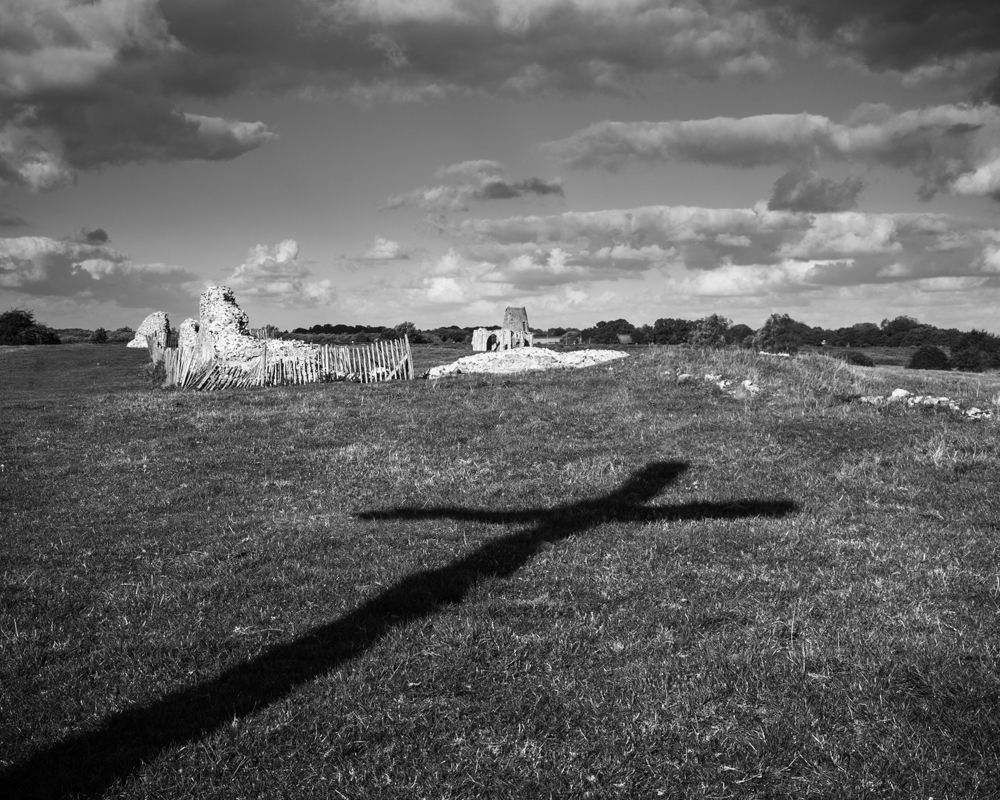
Little remains of the monastery but in 1987 a tall cross was erected on the position of the High Alter. It was made from oak from the Royal Estate at Sandringham and can be seen from miles around.


st-benets-abbey-2-of-3


st-benets-abbey-1-of-3


Happisburgh Lighthouse on the Norfolk coast

happisburgh-lighthouse

Happisburgh Lighthouse


Happisburgh Lighthouse (pronounced ‘Haze-bruh’) is the oldest working light in East Anglia and the only one in Great Britain which is independently run and maintained through voluntary contributions. Built in 1790 and originally one of a pair, the lighthouse is 85ft tall and the lantern is 134ft above sea level. It overlooks the dramatic North Sea coastline which is constantly under threat from coastal erosion, and to this day threatens many seaside homes.

Interestingly the lighthouse was painted in bands in 1884 after the second lighthouse was demolished in the previous year. This was to distinguish the Happisburgh lighthouse from the tower at Winterton, a short distance along the coast.

Having enjoyed a good late afternoon walk along the beach, I drove from the car park back towards the centre of the village before turning into the lane which leads to the lighthouse. I was keen to see whether or not there was a good view with setting sun behind me. Standing proud on the hill, with the low angled sun light illuminating the field in the foreground, I was able to capture this image. I couldn’t have been more fortunate with the cloudscape, which provides a lovely backdrop to the main event.

Turf Fen Mill on the Norfolk Broads

turf-fen-mill-1


The Norfolk Broads are a series of rivers and lakes (broads) most of which are navigable and together they form an area which has been called ‘Britain’s Magical Waterland’. The area is renowned for its big skies and windmills.

The drainage mill pictured in this post is Turf Fen Mill on the River Ant in Irstead and was taken from the river path at How Hill. Built in 1875 the mill ceased working in 1920, when cattle no longer grazed the marshes. Since 1976 the mill has been restored and maintained by the Norfolk Windmills Trust.