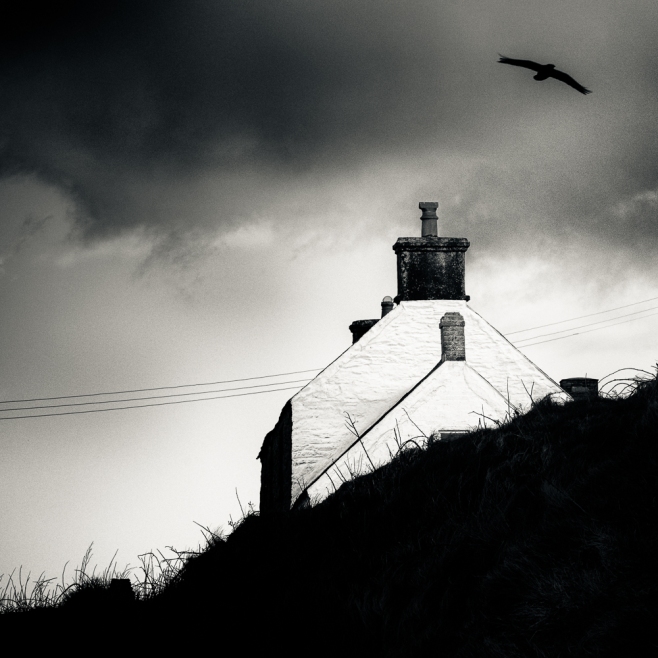
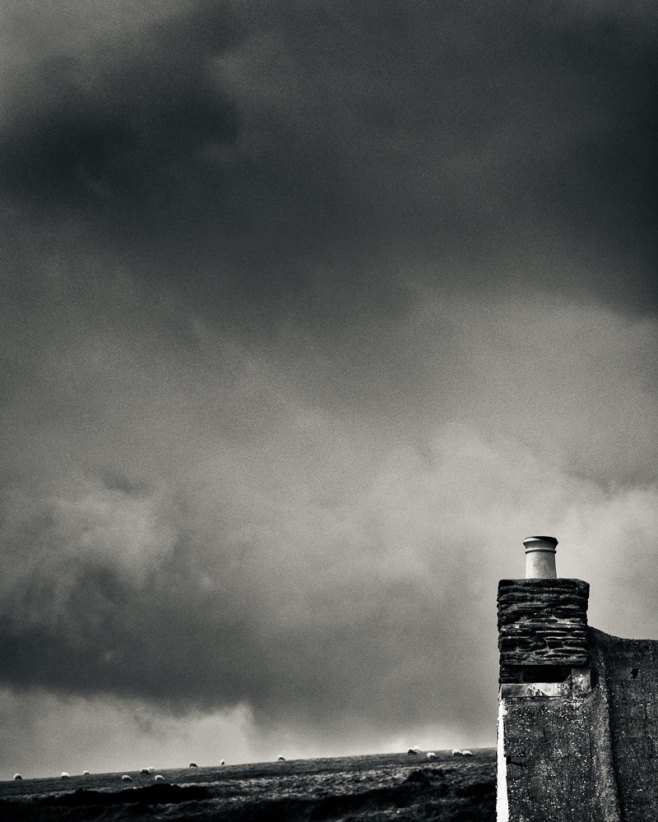
Posts tagged ‘black and white photography’

Ardalanish Weavers on the Isle of Mull
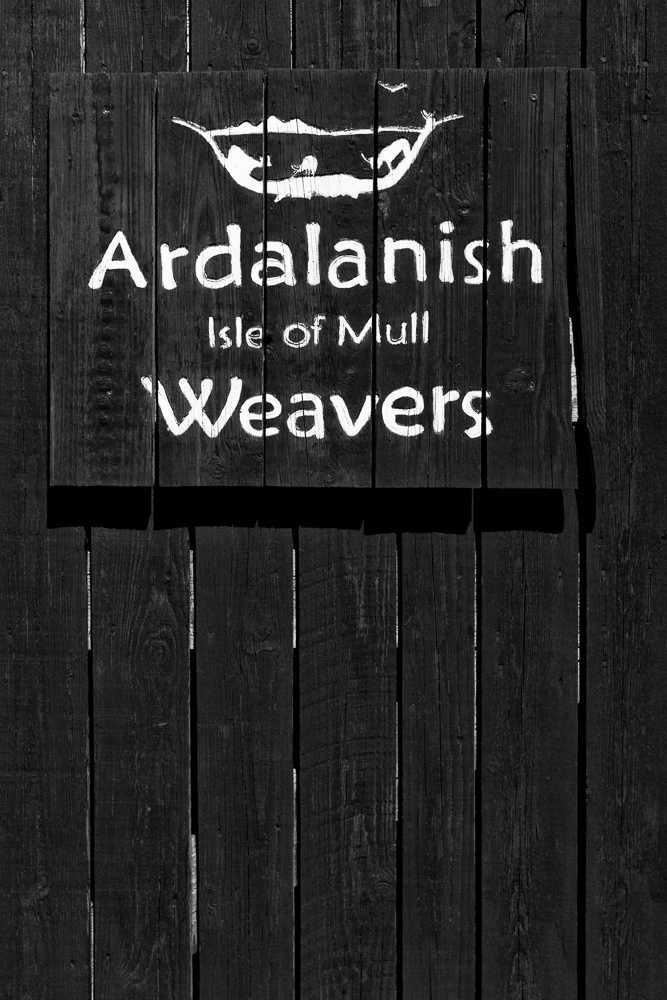
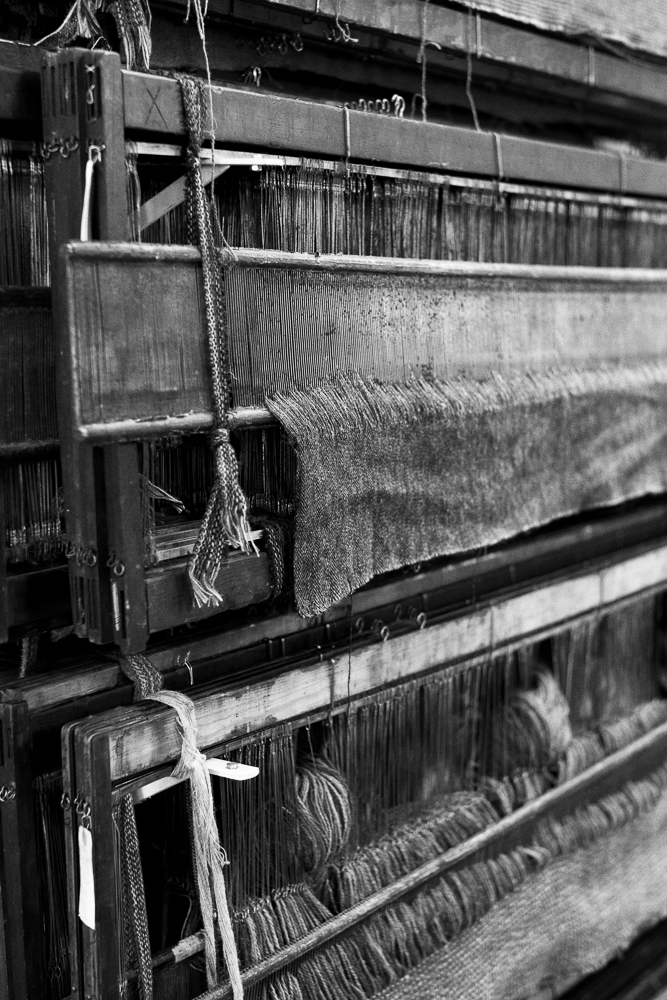
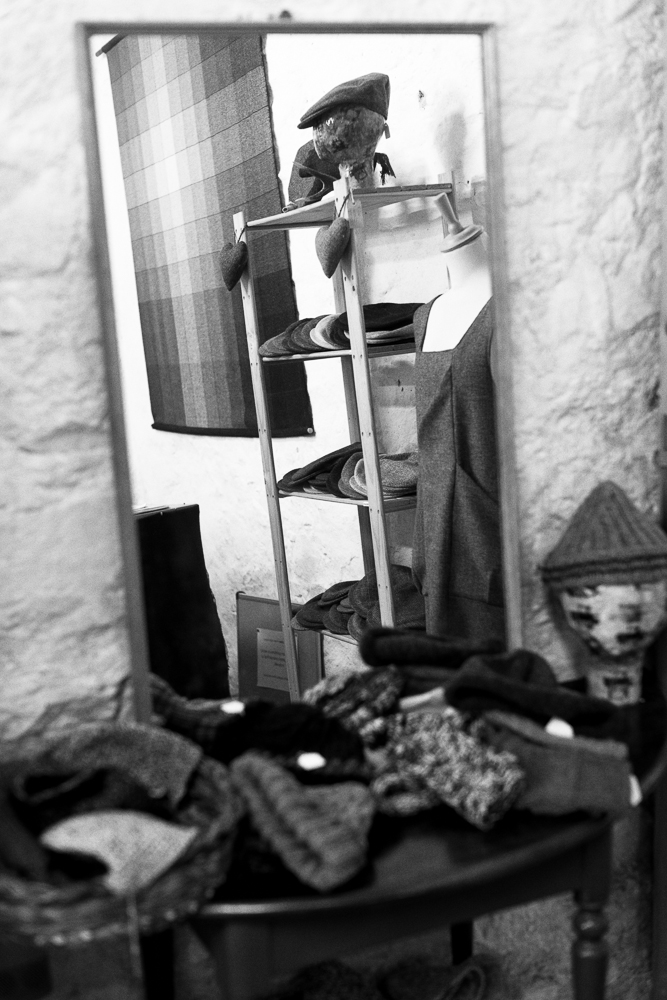
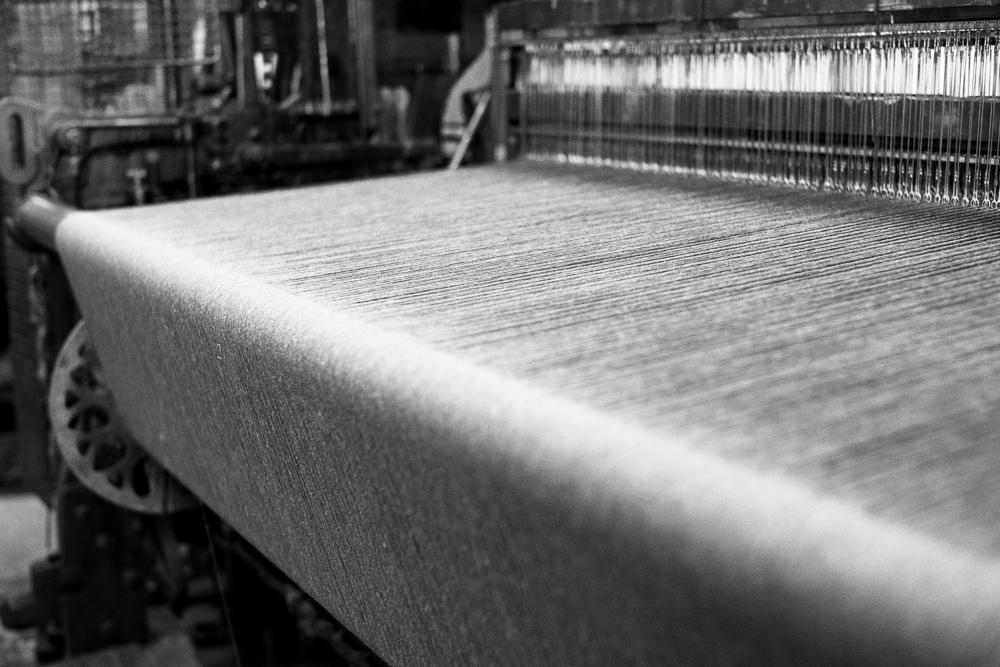
In the past couple of weeks my wife and I have enjoyed a wonderful time exploring the Isle of Mull off the west coast of Scotland. During our stay in a cottage near Bunessan on the Ross of Mull, we had the good fortune to visit the Weavers at Ardalanish farm, which overlooks a beautiful sandy bay (see the last image). We received a very warm welcome from Kathy followed by an interesting tour of the mill, prior of course to visiting and buying a couple of items in their well stocked shop. They use rich black wool from the Hebridean sheep which are kept on the farm and this is mixed with wool from Shetland and Manx Loaghtan sheep. The mill itself is powered by wind turbines also sited on the farm.
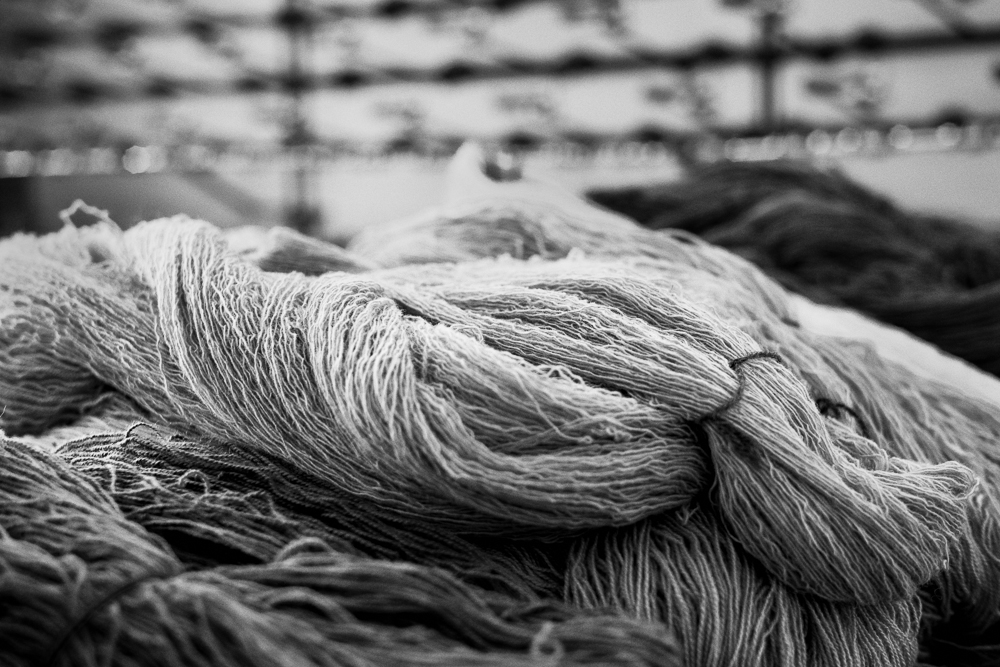
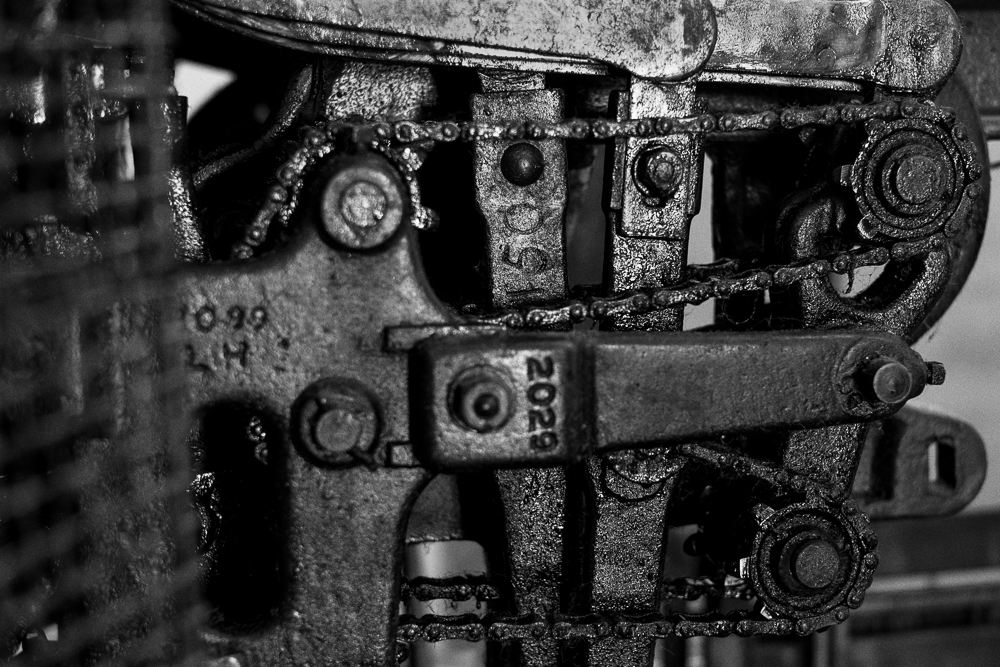
I know very little about the art of weaving but the mill was of great interest; the traditional looms and other machinery, the tools that lay around and the whole process of making such fine woolen cloth, which is then used to make a wide variety of clothing and homeware. Taken from their website I quote “Weaving is a fascinating mix of mechanics, maths, hard work, inspiration, creativity, trial and error and a little dose of magic”. Having seen them at work I can believe every word.

I asked permission to take a few images and I hope they capture something of the process and the place. If you can’t visit personally then do take a look at their website to find out more about the Weavers at Ardalanish.
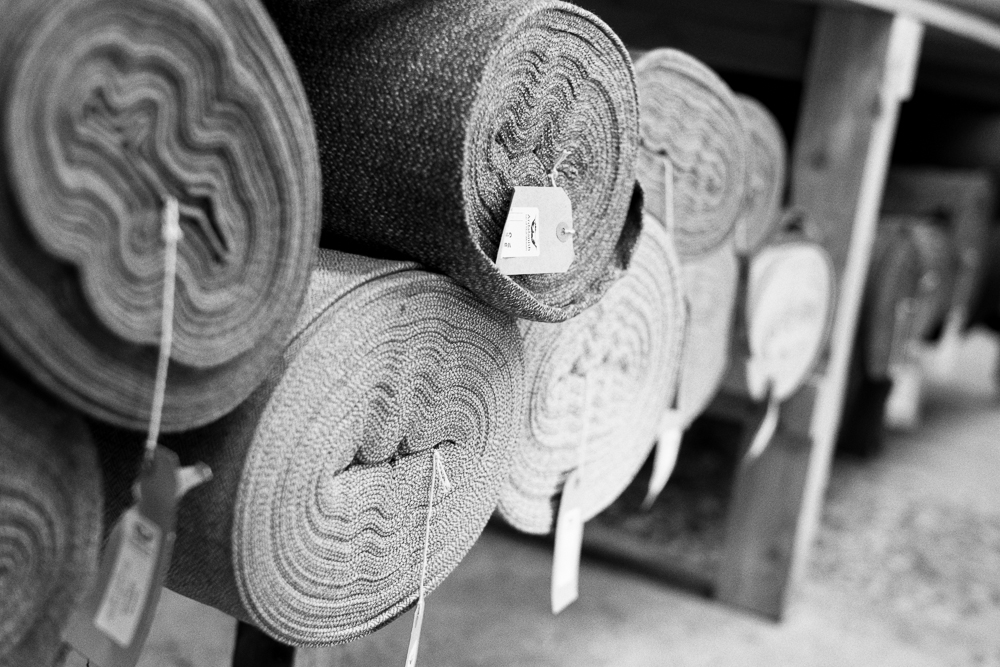
…. and here are the results of all their hard work –
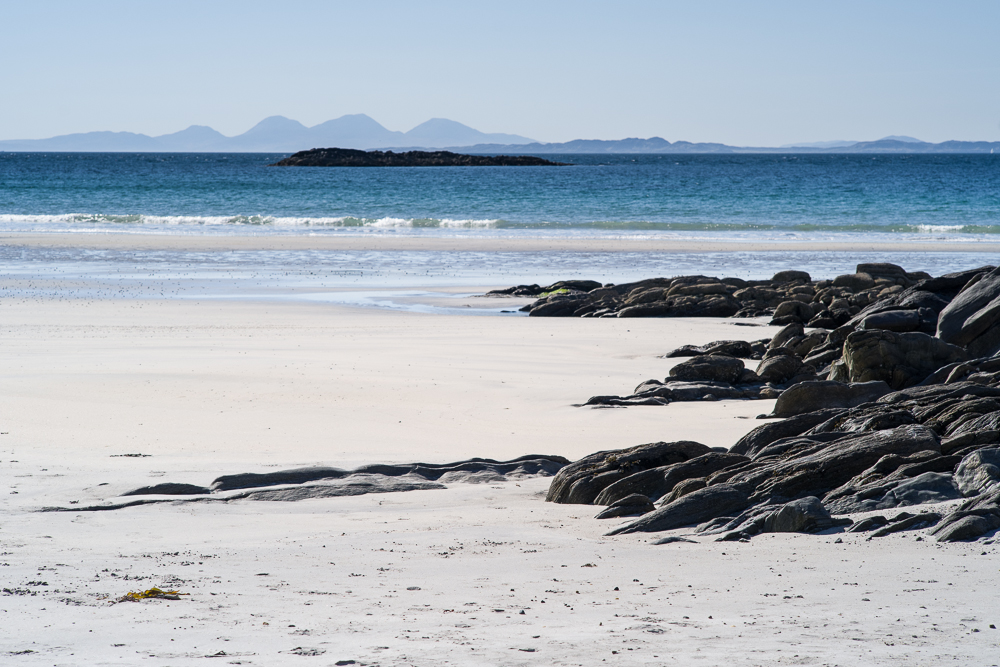
The weavers work in a glorious location (when the sun shines and the sky and sea are blue) – Ardalanish Bay on the Isle of Mull, and yes the sea really was that colour! This beautiful sandy bay looks out towards the Isle of Colonsay with the Paps of Jura in the far distance. Footprints other than our own were hard to find. I can’t think of a more peaceful, special and simply beautiful place.
Just a taster image of more photographs to come following our trip to Scotland, and in particular the Isle of Mull.
My successful Associate Distinction of the Royal Photographic Society

I have to admit that yesterday was a rather special day. I received formal confirmation from The Royal Photographic Society that I had been awarded an Associate Distinction in the Conceptual and Contemporary category for my panel of fifteen images and statement of intent. I had previously been awarded a Licentiate Distinction back in 2012.

My submission was recommended for the distinction by a panel of judges on the 19th April when I took my images to the Headquarters of the RPS in Bath for the assessment. It then takes up to 10 days for this recommendation to be ratified by the Distinctions Advisory Board before the actual certificate is awarded.

I am of course absolutely delighted to have achieved this distinction by The RPS, which was formed in 1853 and is recognized as one of the leading Photographic Societies in the world.

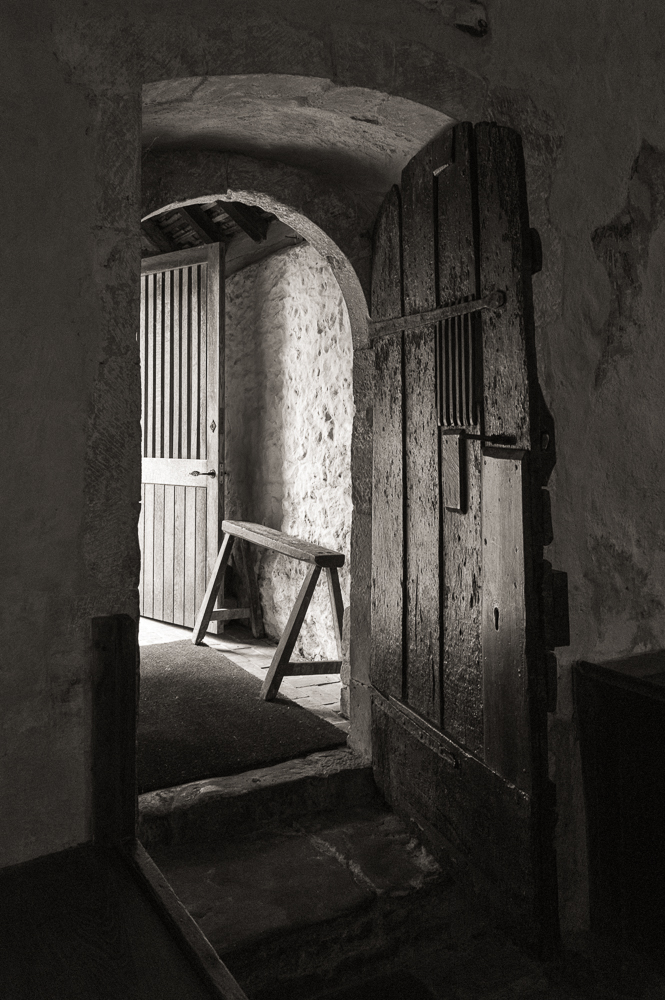
I have selected a few of the images in the panel for this entry but if you would like to see all the pictures then I have created a new gallery – simply click here.

As well as the images themselves, a written statement of intent is required for the submission and I have included the text below:-

Countryside Churches

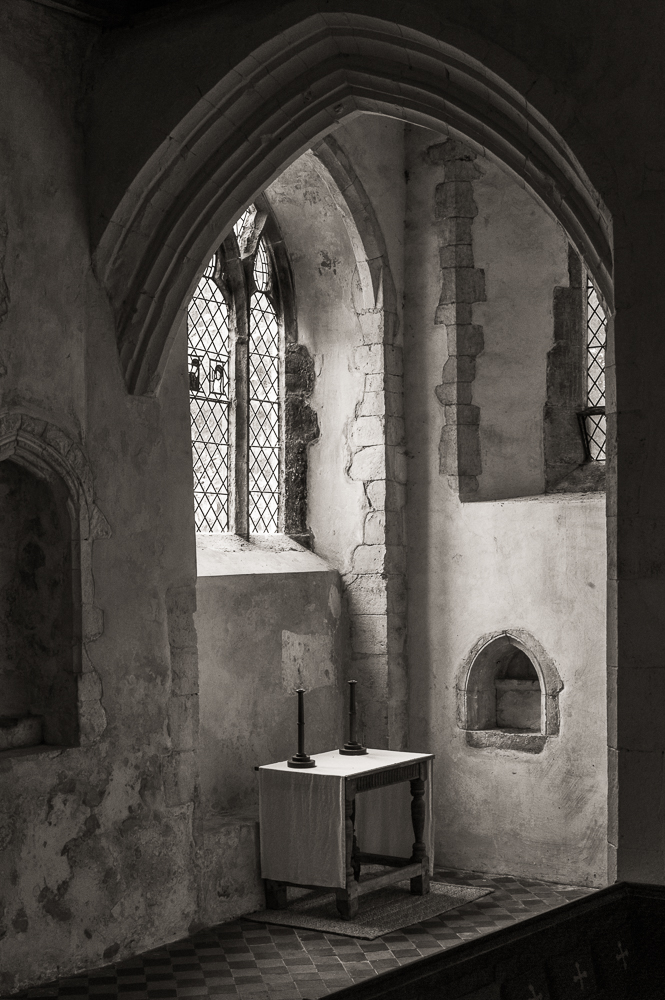
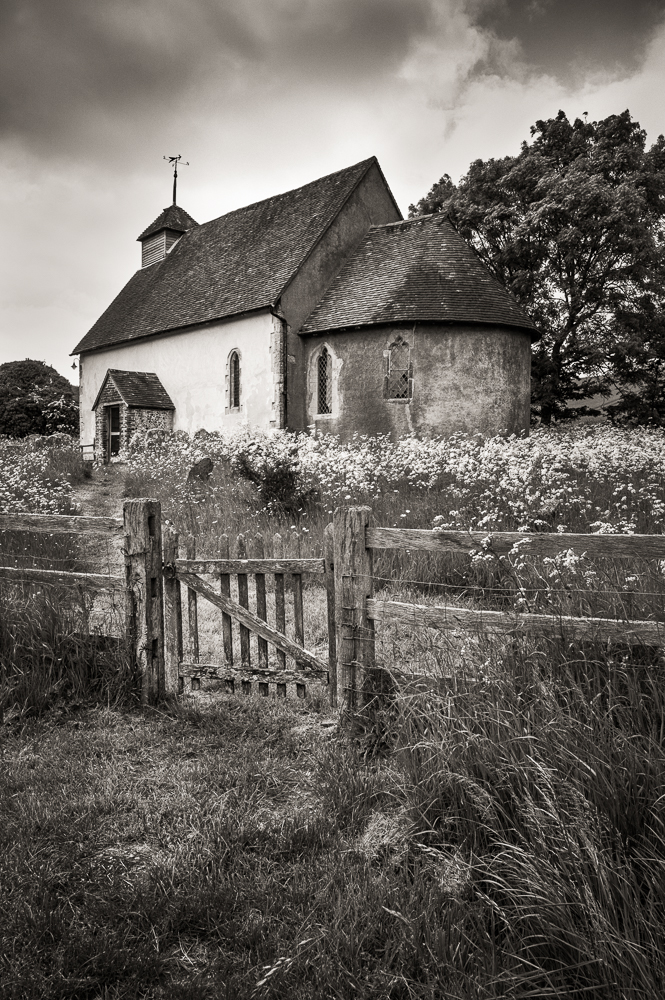
As a child growing up in London in the 1960’s, our family holidays were largely spent in Sussex or the West Country. My late parents would often take me to remote churches in the countryside for reasons I didn’t really understand.

Fifty years later and now living in West Sussex, I have come to appreciate the importance of these places of worship; partly for their historical interest and splendid rural locations, but mainly for the simple and beautiful charm of their interiors. Here I can share the same experience of peace and tranquility with the many generations that have gone before me.

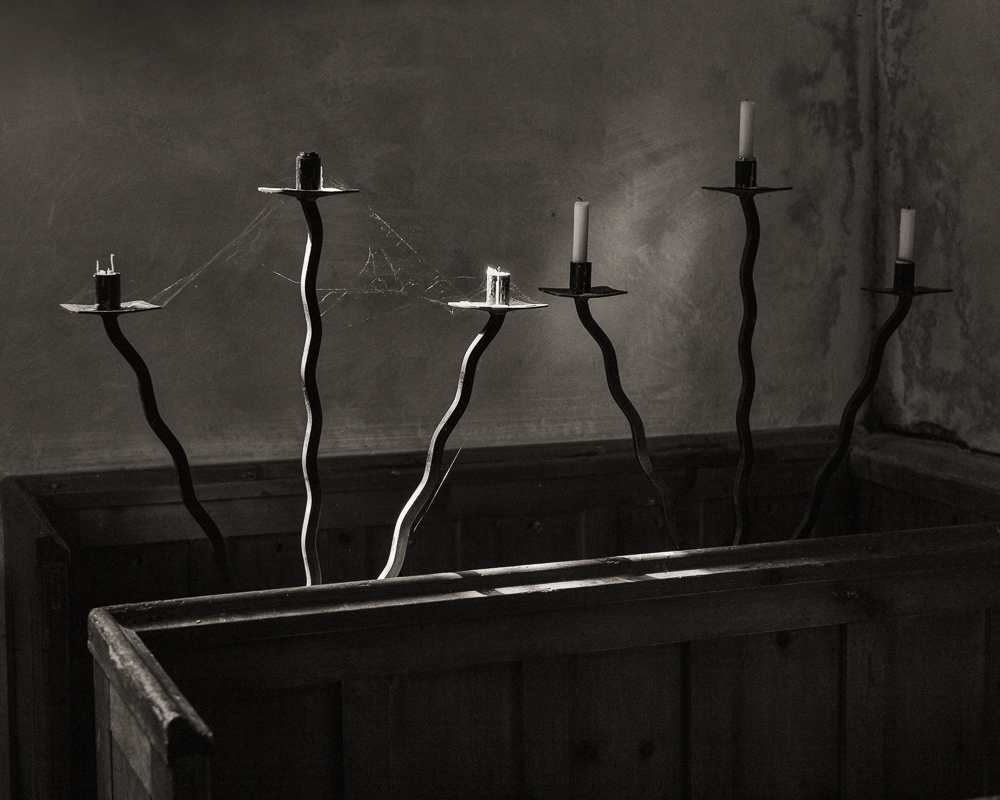
Sadly many of these churches are under threat from a general decline in religious observation. Fortunately some in my selection have been saved and are being preserved by The Churches Conservation Trust. Mainly Saxon or Norman in origin, they are still consecrated but rarely used for regular worship. They are devoid of the adornments and distractions of a fully functioning parish church, apart perhaps from an old Bible or prayer book. I am rarely disturbed by other people when I visit to contemplate and to photograph, which only heightens the feelings these rural churches evoke.

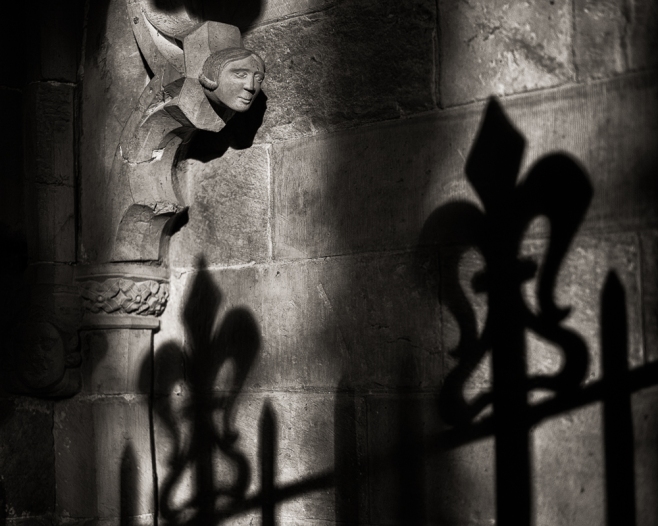
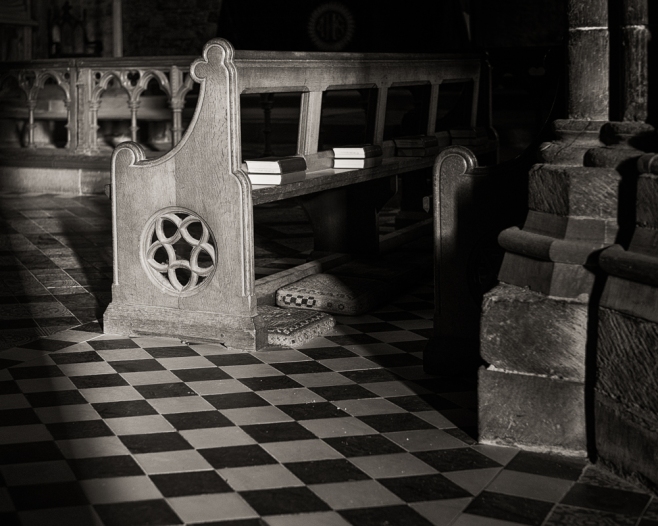
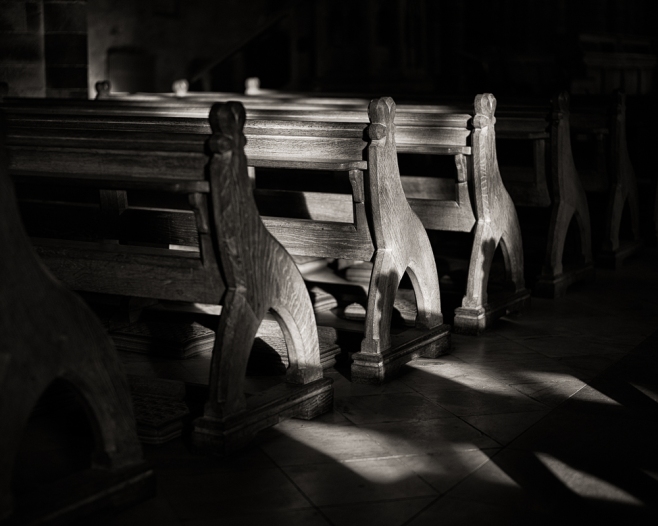
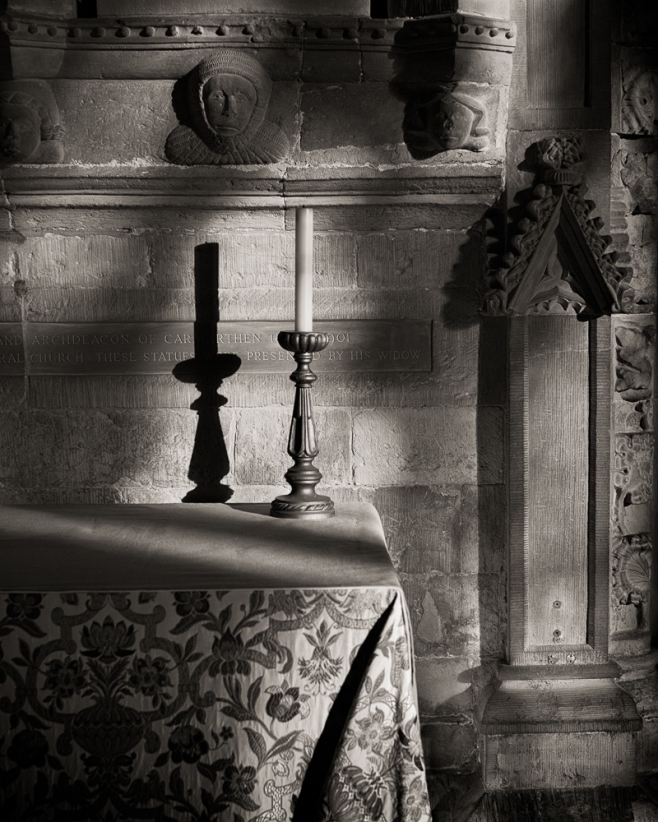
My panel is made up from a number of churches in the West Sussex and Dorset countryside. Using only the natural light available, the monochrome images depict a sense of timelessness; quiet places where solitude and sanctuary can still be found amidst our increasingly busy lives.

(244 words)

And finally here is the hanging plan of all the images.

To view the individual images in my ARPS Panel do click here.

St Davids Cathedral – capturing the light

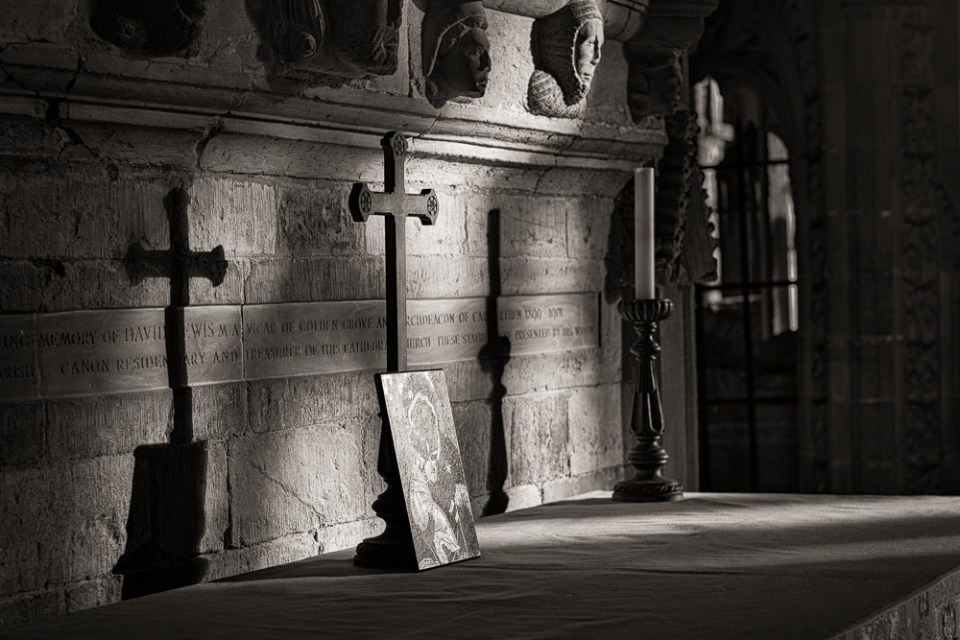
There are many reasons why I enjoy being in a church or cathedral. Making photographs which capture the light inside these special places is just one reason – it gives me a great deal of pleasure.

Regular readers of this blog will know that I can spend many an hour waiting for the right light. There are also occasions when little or no waiting is required and a sixth sense just tells me I should be inside even when the sun is shining outside. Photographing St Davids Cathedral on the first afternoon of my visit to Pembrokeshire turned out to be one such occasion.


St Davids Cathedral


I had driven the best part of 300 miles that day and had arranged to meet Andy Beel FRPS and the three other photographers in our group at 4pm. The light was good and St Davids Cathedral was only a short walk from our small hotel where we would be spending the next few days.

Bathed in the late afternoon light the Cathedral and grounds looked lovely but as soon as we arrived I instinctively knew that I should be inside and not outside. I just had a feeling that the lighting conditions could be working their magic and so it was.


St Davids Cathedral-4


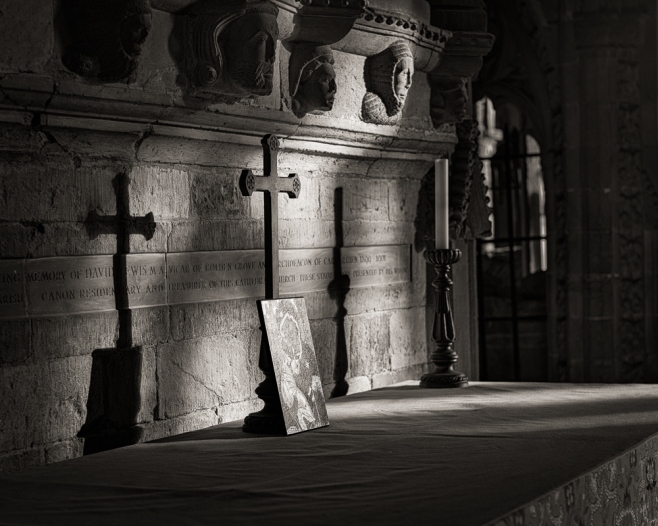
The combination of the strong low sunlight and the shadows that were being cast only lasted about half an hour but it was more than enough time for me to capture the five images that make up this post.


St Davids Cathedral-5


St Davids Cathedral-3


St Davids Cathedral-2


During the course of the week we did return to St Davids Cathedral at different times of the day, but the light was never quite as good as that brief encounter on the first afternoon. I am sure my fellow workshop participants captured some good shots outside, but I don’t regret my decision to have acted differently and I hope they have forgiven me for disappearing so quickly after our first meeting.

I will be posting more entries and photographs of this Cathedral in the near future.


Abereiddy – a study of chimneys and skies

The first thing that struck me about Abereiddy was not the beach and the waves lapping against the shore but the interesting cluster of houses that make up this tiny hamlet on the North Pembrokeshire coast.


abereiddy-2

The hamlet of Abereiddy


The more I looked around, I started to observe and enjoy the chimneys and the way in which they stood out in silhouette against the drama in the skies above. The white rendered walls and the very dark grey roofs, so typical of cottages in this part of Wales, made ideal material for black and white photography.


abereiddy

Chimneys and the rook


abereiddy-4

Chimney and the sheep on the hill


abereiddy-3

Grassy bank and chimneys in silhouette

Porthgain Harbour – before, during and after Storm Doris

My stay in Pembrokeshire last week coincided with the pending arrival of Storm Doris. The naming of severe storms in the UK has become a convention since 2015. One of the ‘tour’ locations on the itinerary was Porthgain Harbour which lies on the north west coast. A pretty little hamlet, its name translates to Chisel Port, for it was once was used for quarrying. First it was slate, then brick and later granite were all shipped from this place. Now it’s perhaps best known as a tourist attraction with a choice of excellent places to eat and a couple of fine art galleries. In calmer weather there would also be a few fishing boats but I guess these had been removed from the harbour for the winter.

We first visited Porthgain in the afternoon, a couple of days before ‘Storm Doris’ was due to hit our shores. The sea was calm and the sun was setting in the west, so there was no direct light on the old Harbour Master’s Office at the end of the quay.

the-harbour-masters-office

The Harbour Masters Office in Porthgain – ‘The calm before the storm’

A couple of days later we returned for a very stomach satisfying lunch of fish and chips (what else?!) and timed our visit to coincide with the incoming tide and the arrival of the storm. It had been very gusty in the morning so we expected some dramatic seas. However as the wind was blowing more from a south westerly to westerly direction and not from the north west, the harbour was somewhat sheltered from the brunt of ‘Storm Doris’. Nevertheless the waters were very rough and as wave after wave hit the rocks, plumes of sea spray were being blown into the air.

porthgain-harbour

Porthgain Harbour ‘During the storm’

porthgain-harbour-2

Porthgain Harbour – ‘Sea Spray’

Believing the sea would still be quite rough the next day, we returned again in the morning knowing the light would be falling on the Harbour Master’s Office. With clear skies it did, but the sea itself was surprisingly quite calm, so a wide angle view of the harbour was the best shot to be captured in the circumstances. The old brickworks are clearly visible on the left hand side.

porthgain-harbour-3

Porthgain Harbour – ‘The morning after’

As mentioned earlier The Met Office started naming storms in the UK in 2015. The idea to raise people’s awareness of forthcoming bad weather, which might cause damage, flooding or even loss of life. I do understand the need to do this if a severe storm is expected, but to my mind ‘weather warnings’ are now issued all too frequently. In the past heavy rain and high winds would have been accepted as normal and quite regular events during the winter; today though they come with yellow and amber warnings, which may or may not prove accurate anyway.

On this occasion ‘Storm Doris’ was much more severe in other parts of the country than in Pembrokeshire, which only goes to prove how difficult it is to forecast the weather even with all the technology and computer predictions available to the forecasters.