Sometimes I get hamstrung by the type of images I think I should be making. I am very aware that it can be limiting just to photograph my preferred subjects or feel I should only be working on the various photo projects I have underway. As a consequence the pure fun of just being out and about and capturing what I see, irrespective of genre or purpose, is rather liberating. Without the constraints of needing to fulfill a particular brief or objective, I am instantly reminded of why this is such a wonderful and enjoyable creative hobby.
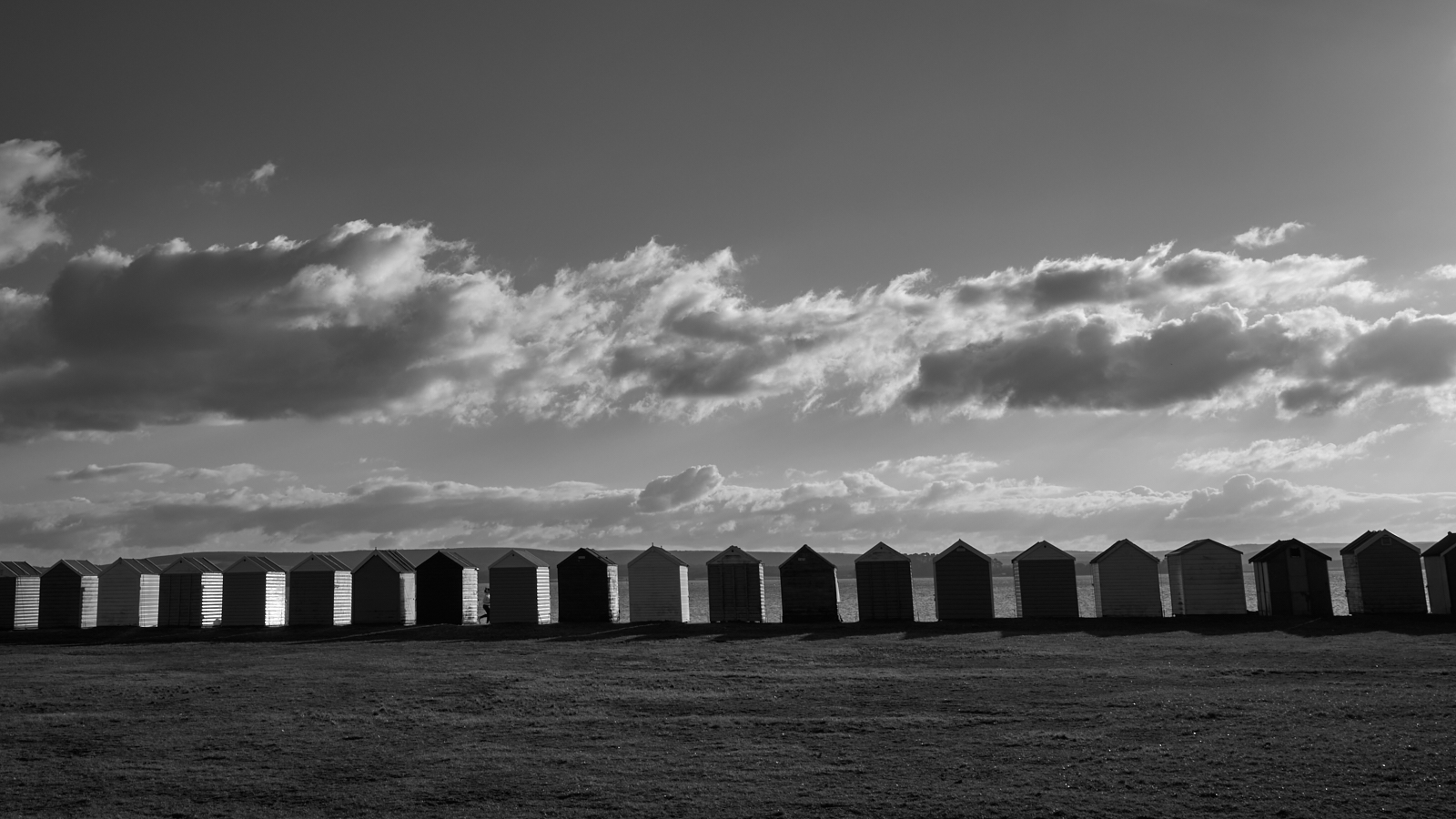
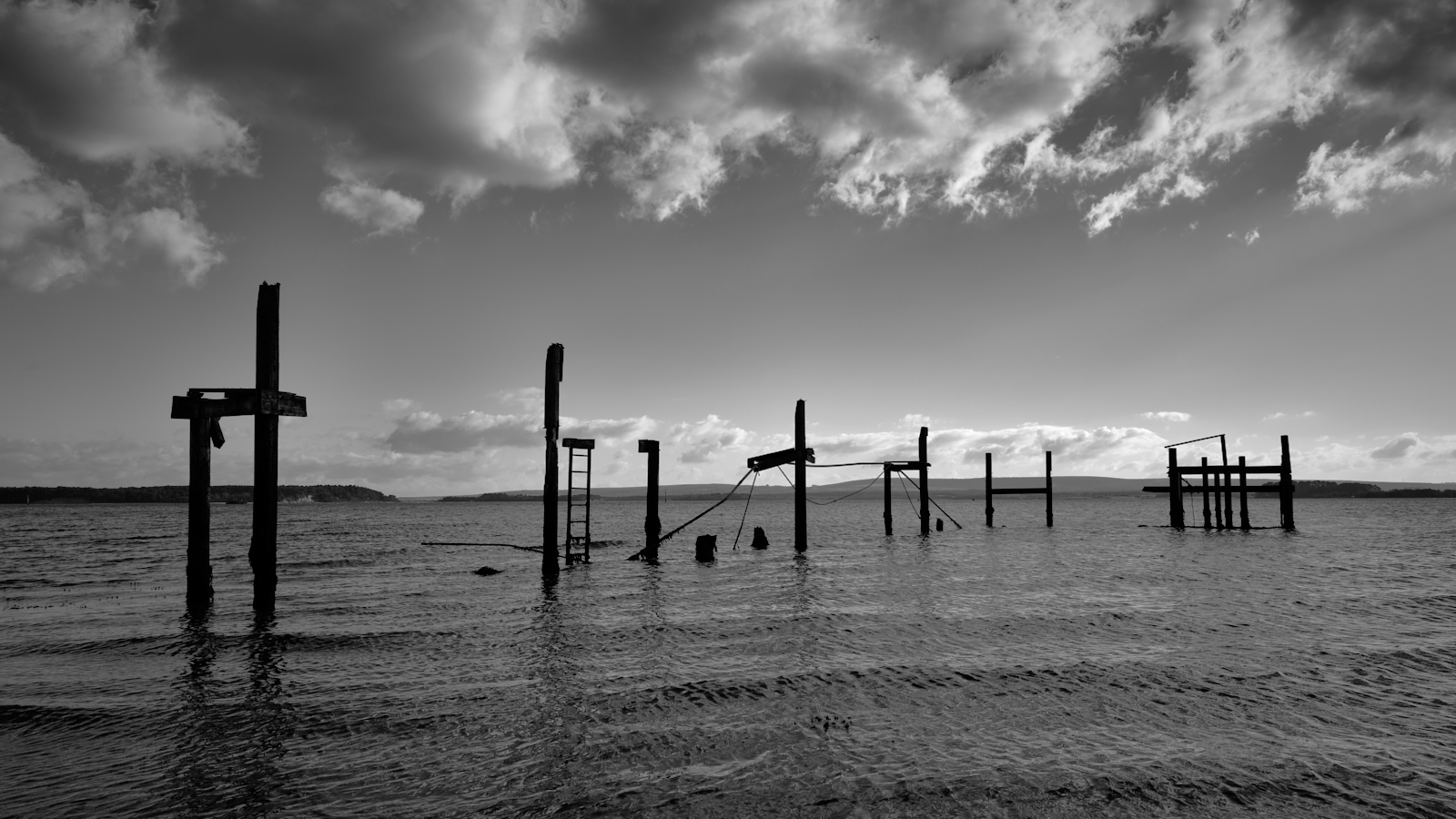
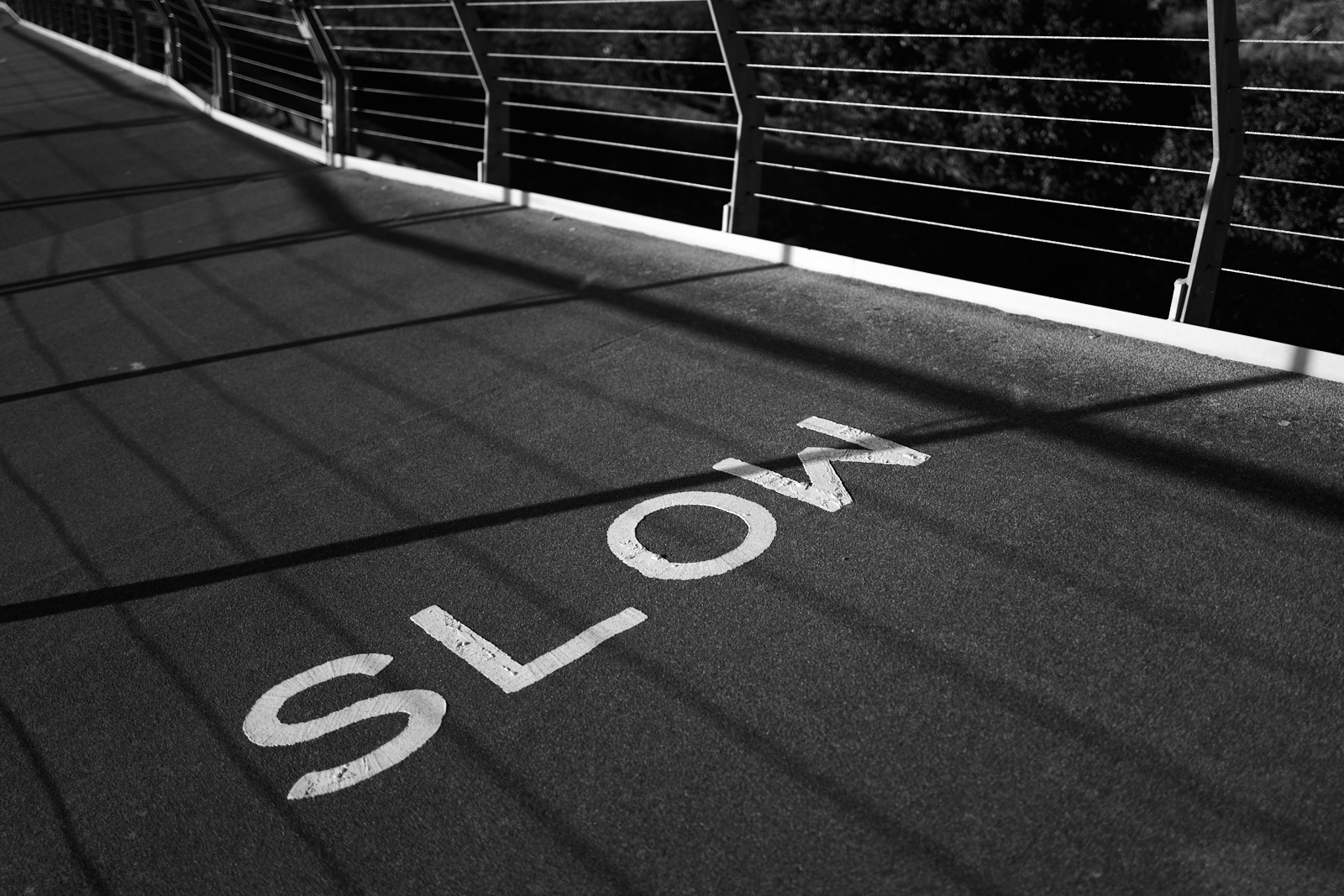
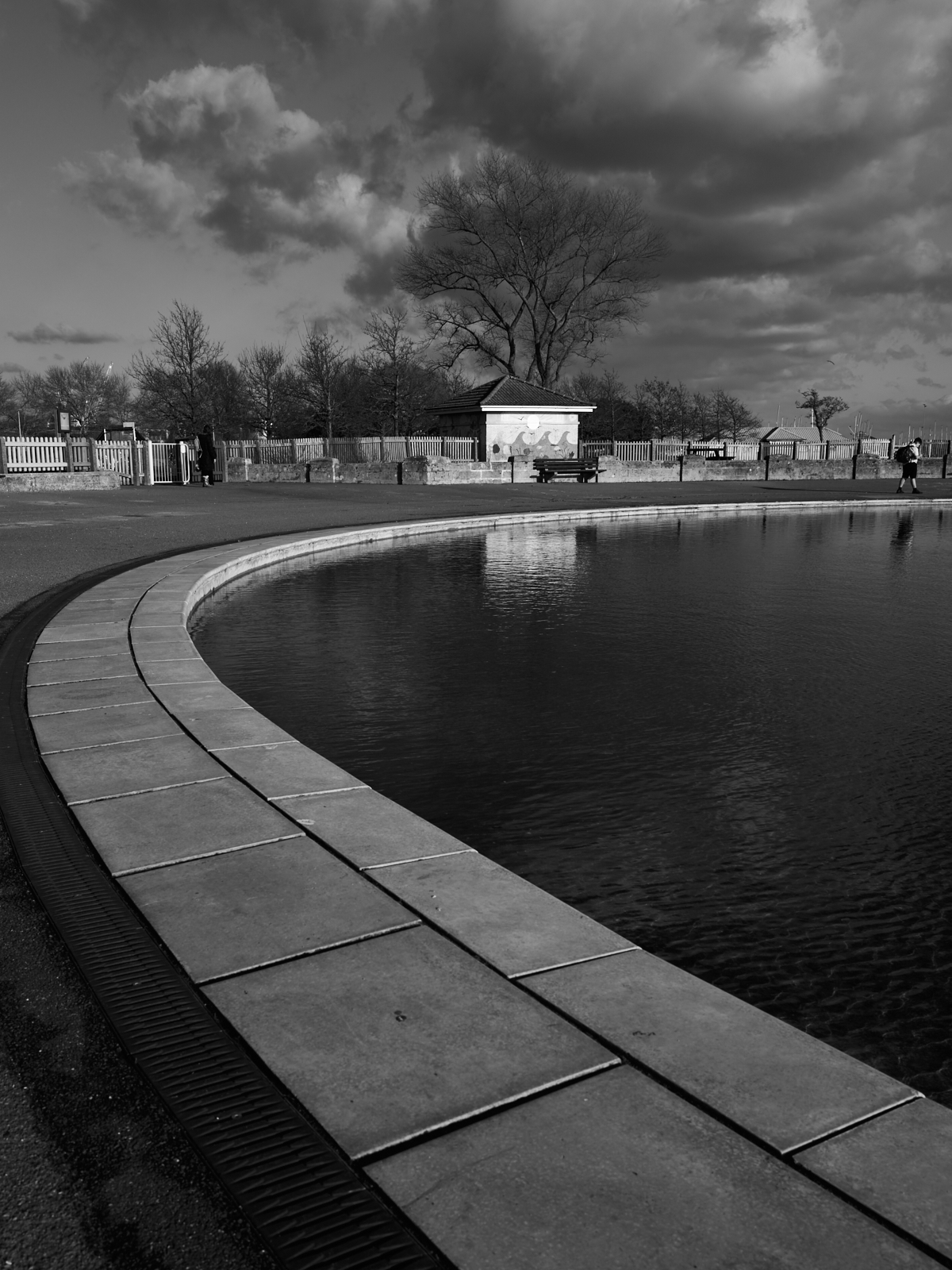
This selection of six images were all shot last week at Hamworthy in Poole on the Dorset coast. The sun and blue skies made a rare winter appearance and I simply took the opportunity of making a few images of scenes that appealed to me.
The strong light and subject matter were arguably outside my usual comfort zone. The pictures don’t form part of an ongoing project. They are purely black and white images captured and made for the pleasure of doing so.
I was having fun and isn’t that what really matters?
Grey, cold, and damp….. a typical Winter’s day in the south of England. Despite these conditions I very much enjoy wandering around the countryside, and in particular photographing the various farm buildings I encounter. They hold a certain fascination and are often in a state of disrepair. It’s a subject I keep returning to, and I don’t imagine this ever changing. The combination of a walk in the Dorset landscape with a camera for company is always a pleasure irrespective of the weather; although warm, waterproof clothing and a good pair of walking boots are a requirement.
The walk began and ended at the church of St Nicholas in Winterborne Kingston. A fine display of snowdrops reminded me that Spring isn’t so very far away.
Outside the Post Office, Cheap Street in Sherborne
It’s a little over a week since I posted my first entry on the topic of photographing telephone boxes. Documenting them, their uses and their place in the environment. I was quite excited then and I am even more excited and motivated today.
I have already spent quite a lot of time giving consideration to how this project might evolve, and whilst I have some parameters in mind, I don’t want to restrict myself too much too soon. I want to maintain flexibility in my approach and just see where this initial concept takes me.
What I have decided is that I would like to share not only the images but also the process with you. Explaining my ideas, and providing answers to some of the questions which are raised. It helps me to write down my thoughts and it may help you if you are also considering embarking on a photographic project. I don’t consider myself to be an expert but I hope you will find it interesting and maybe useful.
Initial Planning and Research
One of the many appealing aspects of this project is the number of boxes in existence in my home county of Dorset in the UK. Not as many as there once where of course, but that’s why I want to tell their story before they all but disappear. In order to find phone boxes to photograph I could jump in my car and aimlessly drive around hoping to stumble across them, but that would be very wasteful of fuel, time and almost certainly lead to considerable frustration.
Fortunately a quick internet search coupled with Google Street View can provide me with a lot of information. Without stepping out of the door I can sit in the warmth and comfort of my home and ‘travel’ around the county, and that’s exactly what I have been doing this past week.
Google Street View of Cheap Street
When I find the site of a box I record it on My Google Maps, placing a coloured pin in the exact location. Changing the colour of the pin I can readily identify which locations I have been to and which ones I still need to visit. When I say the exact location, I mean precisely that. From a photographic perspective I need to know which side of the road the box is sited and establish the likely angle of view so that I can time my visit according to where the sun is will be in the sky . To date I have already identified 56 locations but some have much more photographic appeal than others, so I will select those which I believe have the most promise. I have used My Maps in the past and I like the fact that you can click on a pin and add notes as well as images which serve as a useful source of reference.
My Maps courtesy of Google
Street View is an extraordinary tool, but I use it with caution, as it cannot be relied upon 100% of the time. Whilst searching I found a box near the Sandbanks ferry at Studland. It stood adjacent to the sand dunes. A great subject to photograph but unfortunately when I dug a little deeper I established the box had been removed back in 2020. Arrrghh!…..but it did save me a lengthy round trip. It also served as a reminder that these boxes will not always be part of the landscape and will over time be consigned to the history of this country.
The box near the Studland Ferry prior to its removal in 2020
Two new images
My wife and I visited the town of Sherborne earlier this week so I took the opportunity to make a couple of images of the two boxes outside the Post Office in Cheap Street. The first is at the top of this page. It also appears in the Google Street View of the same location, but without all the pavement works. Although a rather chaotic scene I enjoy all the various street furniture and the disruption caused by the works taking place.
The second image (shown below) depicts the box which now houses a defibrillator. In this picture I like the inclusion of the person carrying her bag with ‘Love Books, Love Reading’. It adds another level of interest.
The second box by the Post Office in Sherborne
These two images are very different to those I included in the first post. Those were rural in nature but they do contrast well with the town locations. I am already quite clear in my mind that I want the project not to be just a collection of photographs of phone boxes – not record shots in other words – but images which incorporate the surrounding environment. If there is to be a story there needs to be context and if this includes a human element to broaden the narrative then all well and good.
I don’t need to put a definitive name to this work at such an early stage but I consider it helps to call it something. The Telephone Box Project is something of a mouthful, so I thought the Phone Box Story had more appeal and I can abbreviate this to PBS which I think has a rather nice ‘ring, ring’ to it! Apologies for this terrible joke but I’ll stick with the ‘Phone Box Story’ and it’s shortened version of ‘PBS’ for the foreseeable future.
There are plenty of thoughts and ideas running through my brain right now so I anticipate posting a further update soon.
Do comment on any aspect of this project, I would welcome your feedback.
Projects, whether they be small or large, short or long term, never fail to encourage me to go out with my camera. Excuse the pun but they give me a focus, a sense of direction and a purpose to make new work.
I try not to think too hard about what the subject might be for a new project; I simply wait for an idea to inspire me. Sometimes that flash of inspiration will fade very quickly and be dismissed. At other times the initial excitement takes hold and I can see how the project might develop. I start to research the idea and ask myself a variety of questions. How practical is it? Is there sufficient material to work with? Do I have the equipment required? Do I stick to black and white or is colour an option? What is the purpose and does the project have an end objective?
Moreton
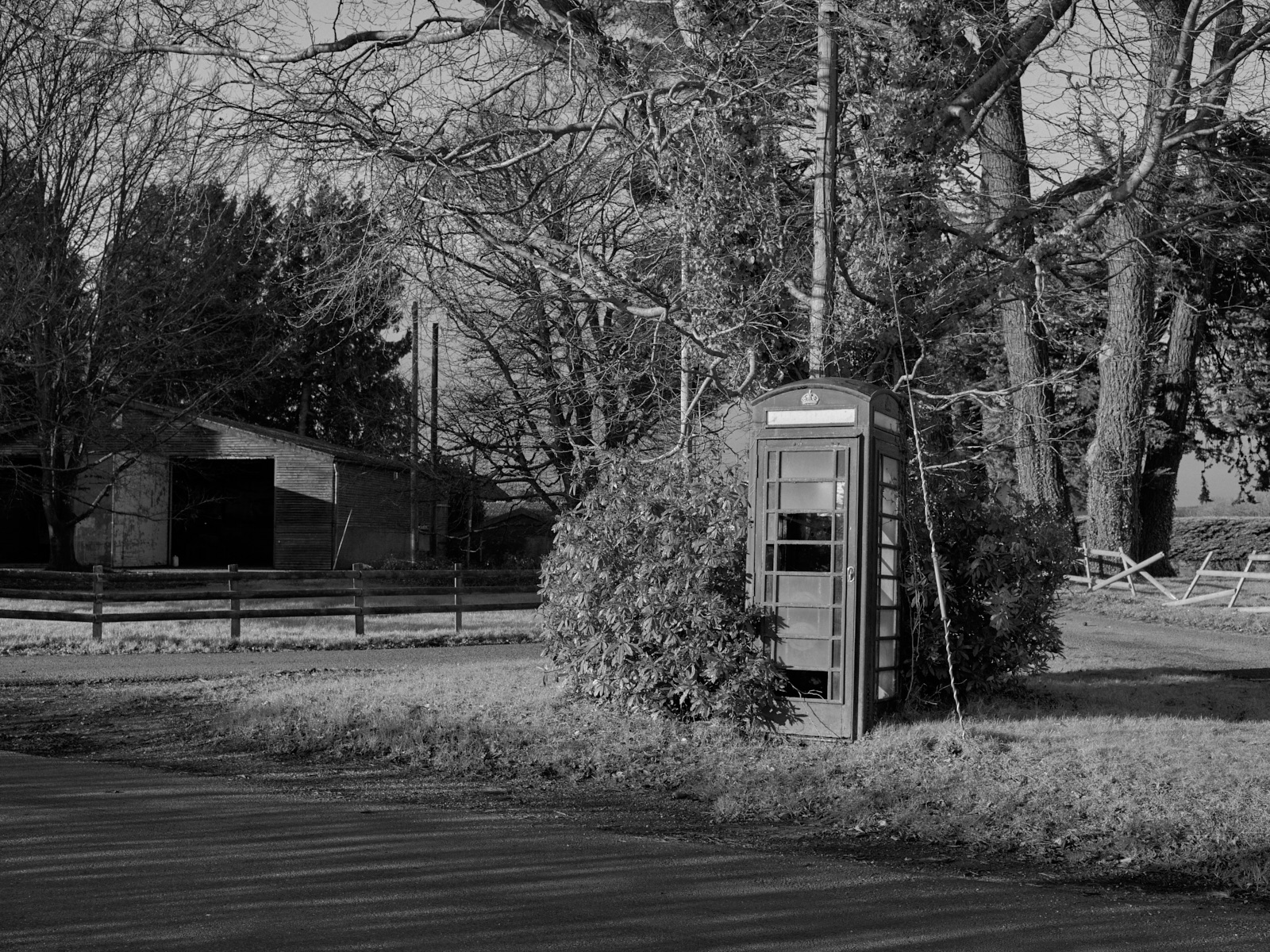
In the past few days I have latched on to the idea of photographing and documenting ‘Telephone Boxes’. We have one near where we live, although it has been repurposed, which is also true of many others. I have no idea how many still have working telephones, and in any case that number must surely be in decline. The historical aspect appeals to me and their current usage only adds to thestory. Whilst still a common site, their original purpose and heyday has passed. However their passing and reinvention is I believe worth recording.
Repurposing
Woodsford
Given this thought process has only just began I don’t have all the answers yet, and in a couple of weeks time I might have dropped the concept altogether. Conversely my enthusiasm may grow. I will know soon enough. Right now I think this project has legs and I am excited.
Affpuddle
Given this ‘flash of inspiration’ and in my desire to get started, I went out to make a few images of boxes close to our home.
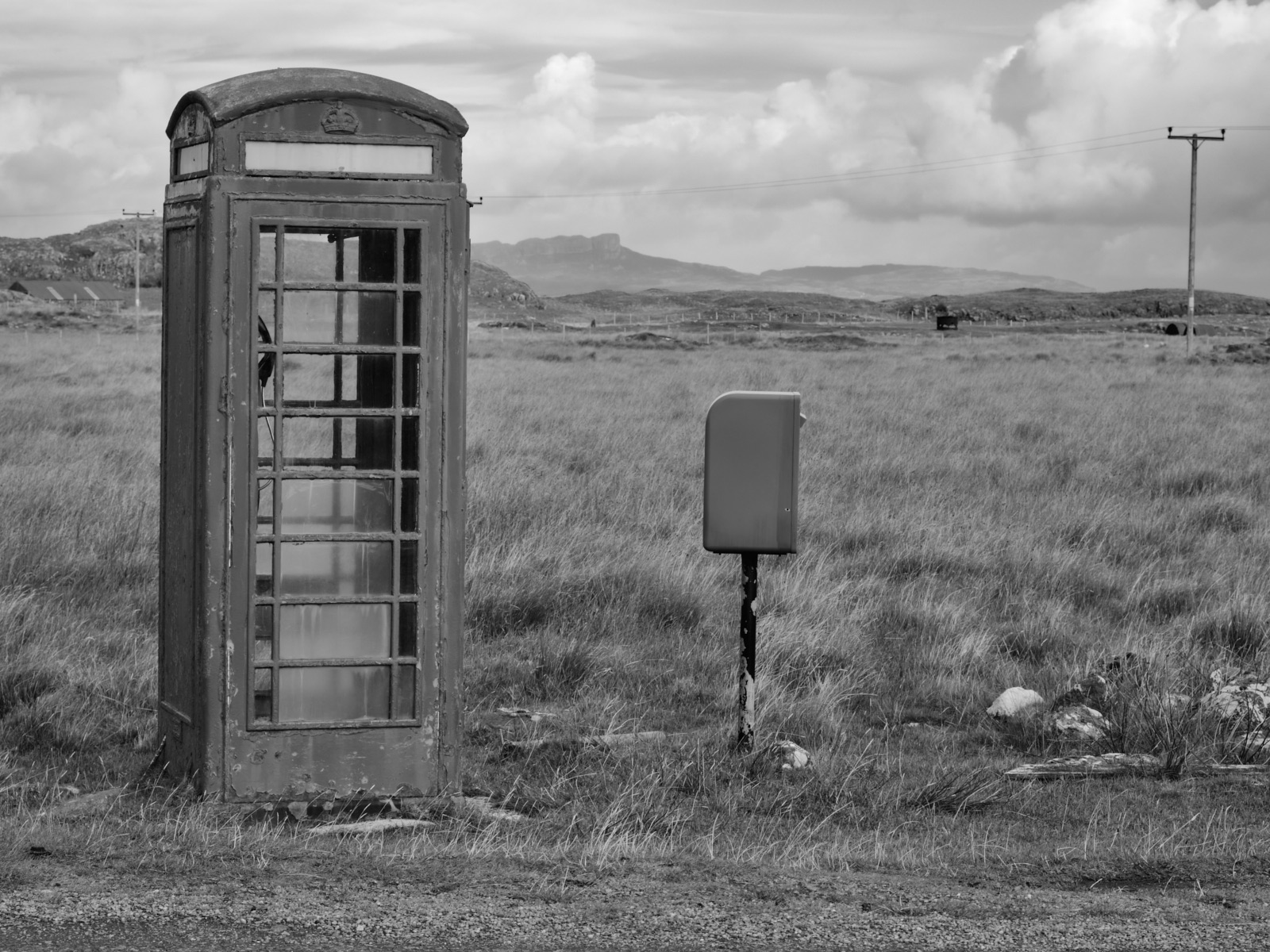
Having done so I was reminded of a photograph I made a couple of years ago of a telephone box on the Ardnamurchan peninsular in Scotland. In fact this particular box is the most westerly box on the British mainland. Perhaps the idea for this project was conceived back in 2022? It’s just taken rather a long time to come to fruition!
Ardnamurchan, Scotland
I would like to finish by thanking and making reference to a documentary photographer, Kyle McDougall, who has a truly excellent YouTube channel. I have been following his channel for some time and I enjoy his work, very much like his style of presentation and I learn a lot from him in the process. By sheer coincidence his latest video (link below) refers to the topic of photographic projects. His thoughts and suggestions resonated with me and what he had to say reinforced the very ideas which have been going through my own mind these past few days.
A few weeks ago Leica released a firmware upgrade for their SL cameras, specifically v6.1.0 for the SL2-S. One of the principal issues this update addressed was the ‘Magnification via joystick’. I had missed this very useful function, and this was re-enabled in the update. It’s a big improvement to how the camera operates, particularly when using manual focus lenses, which I do all of the time.
Installing firmware updates are something of a nuisance but I had no hesitation in immediately downloading the new version and proceeded to update the camera.
Unfortunately in my haste I forgot to save the profile for all my camera settings. Whoops – I knew straightaway that I would need to reconfigure all my favourite settings, and the configuration of the function buttons etc, etc. I couldn’t help thinking ‘What a pain…….!’
However this mistake did give me the opportunity to review how my camera was set up. As a result I configured the camera quite differently and in my view it is all the better for it. Whilst muscle memory plays a part and will have to be re-learned, the new setup will soon become familiar. It should speed up the operation and give me easy access to almost everything I need without needing to enter the main menu. ‘What a joy……!’
For reference I did spend a little time preparing an ‘idiots guide’ which I could refer to in the future should the need arise. Of course I didn’t need to label the aperture ring or on/off switch but there is a little OCD in all of us! Should I change any of the settings in I’ll update the chart.
I should add that I shoot ‘fully manual’ so my settings won’t suit everyone, but they work me and being selfish that’s all that matters.
My Set-up for the Leica SL2-S
How a camera is set-up will differ from one photographer to another and no two set-ups will be same. All I can say is that it is well worthwhile investing some time into how you want to configure your camera. After all to get the most pleasure from your photography you don’t want menus and poorly laid out controls to get in the way of making a good photograph.





 alan frost photography