Posts from the ‘Photography’ category

Churches Project no 21 – Idsworth, a church in a field.

Idsworth Church-4

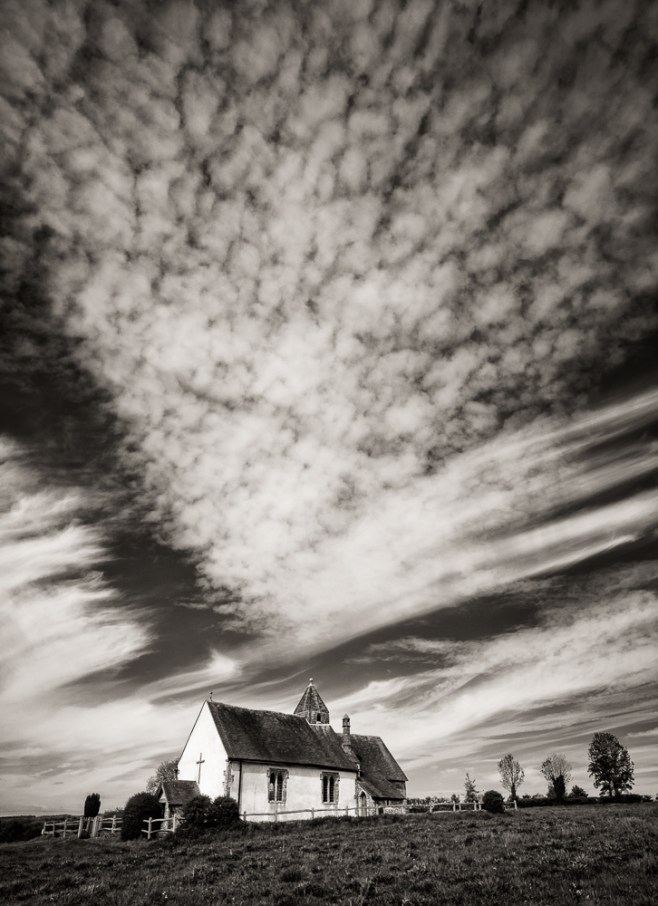
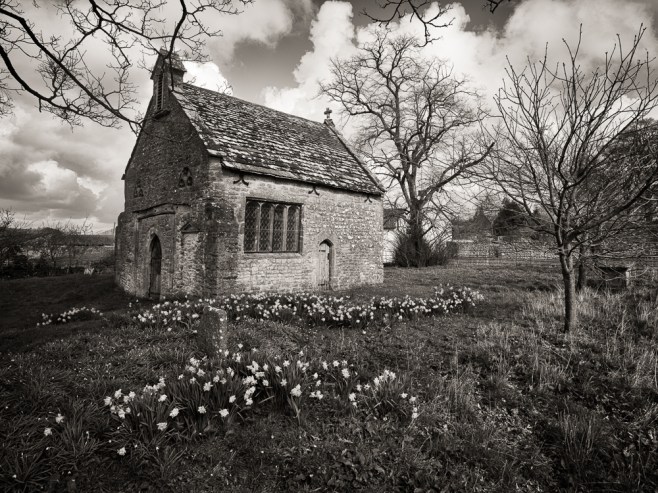
St Hubert’s Church at Idsworth in Hampshire enjoys a beautiful and isolated position not far from Rowlands Castle. Sited near the top of a slope in a field the origins of church dates back to the 11th century. Nothing remains of the village and community it once served, deserted in the 14th century probably as a consequence of the plague.

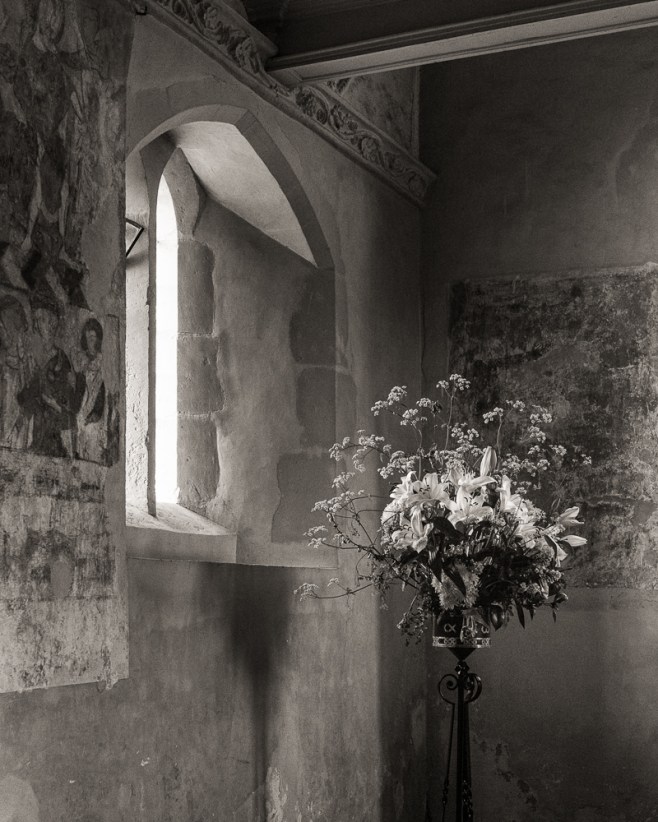
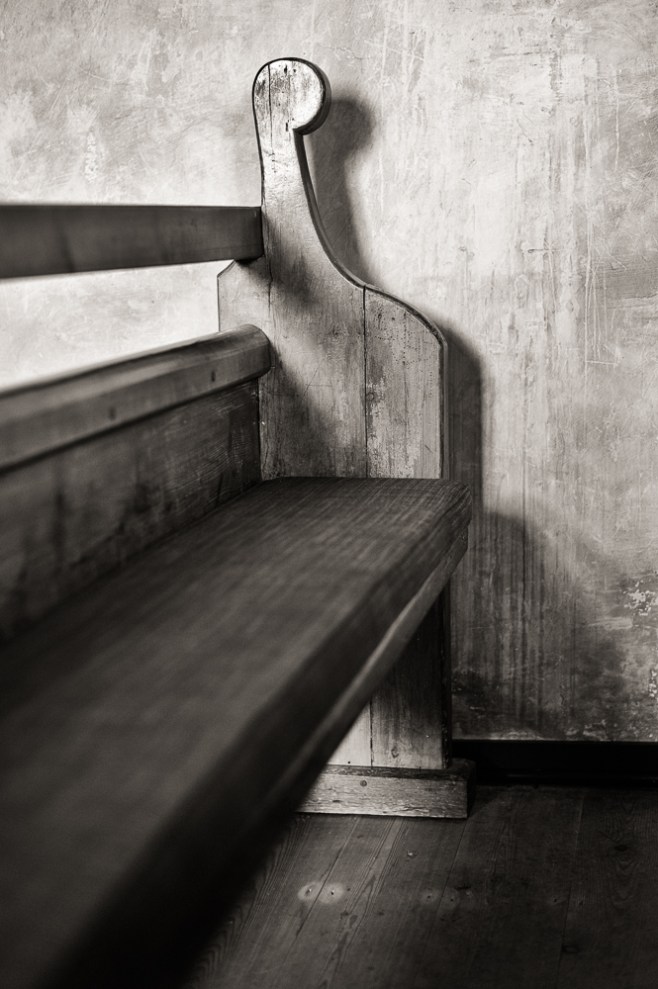
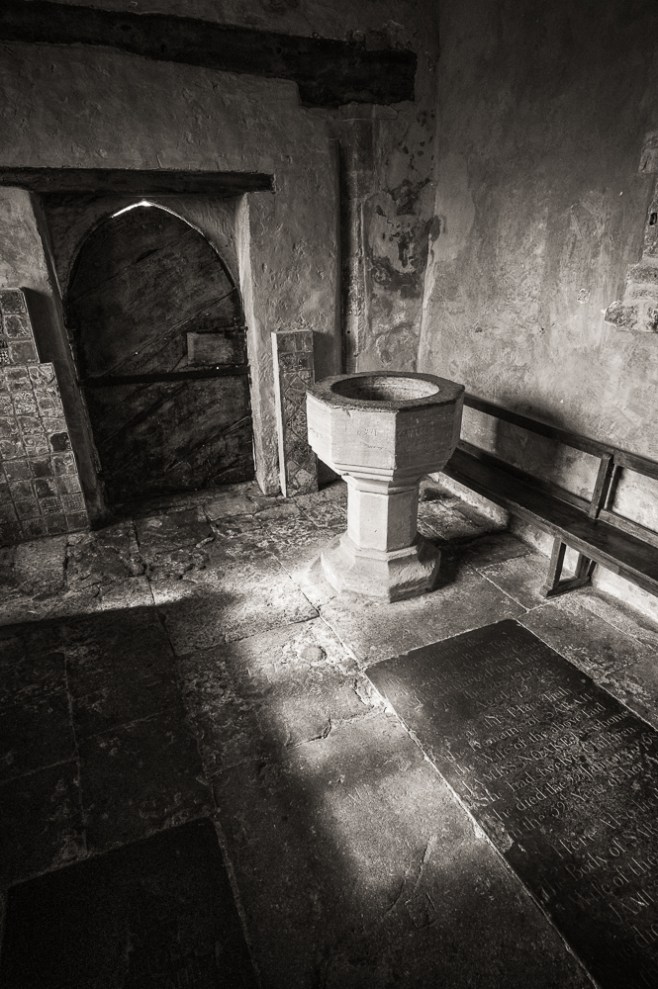
The interior is charming and I have included a few images which I hope capture something of the spirit and essence of this rural place of worship, which I am pleased to say is still in regular use.

Idsworth Church

Idsworth Church-2

Idsworth Church-3

After photographing some interior details I stepped outside and was presented with a most wonderful cloud formation. It had been a beautiful late Spring afternoon and I could hardly believe my good fortune when capturing the scene at the top of this post.

Apples and an orange – experimenting with still life

Apples and an Orange

This weekend my wife and I have been taking part in the Chichester Art Trail. This is the first time we have done so, although we have been regular visitors to the studios of other artists over the years.

Today (Sunday) has been much quieter than yesterday, largely due to the glorious weather and temperatures in the mid 20’s. After a very poor and wet spring we are guessing most people have been tempted by the beach or simply want to relax in their garden and who can blame them.

Being quieter gave me an opportunity to think and to experiment with a simple still life composition. I took a glass bowl, some cooking apples and an orange; found some black cloth and using a desk lamp for side lighting made this image.

Shot with my Leica Monochrom and a 50mm lens wide open @f1.4 very little is in sharp focus but that was the intention. I also knew I wanted the background to be completely black so that the bowl appears to be floating.

As a first attempt at a still life I am pleased with the outcome and if it’s quiet again tomorrow I shall be experimenting again with other items to be found in our home. Great fun!


Churches Project no 20 – St Cuthbert’s Old Church, Oborne

St Cuthberts's Old Church-3

This tiny church in Dorset was built in 1533 and has historical and religious connections with Sherborne Abbey, which lies to the west. The name Oborne derives from the Old English words, woh and burna, and means a crooked stream. Although the above photograph would suggest a tranquil rural setting, the church is actually sited alongside the A30, a fairly busy road between Yeovil and Shaftesbury.

St Cuthberts's Old Church

The rustic simplicity of the church and the lovely light appealed to me, which resulted in these two internal pictures.

St Cuthberts's Old Church-2

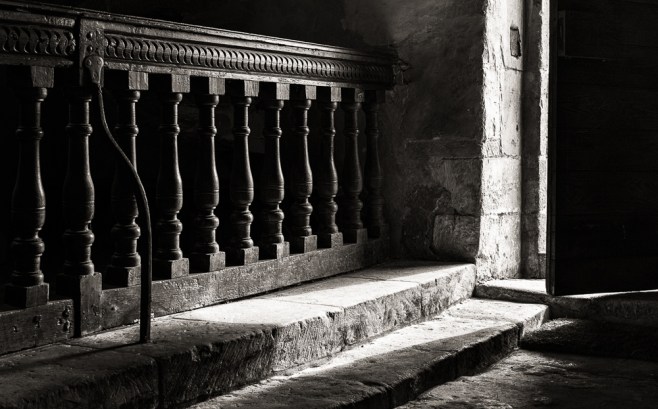
I am particularly drawn to the light but also to studies of one aspect of a church interior. I don’t wish to record or capture everything in the one frame, and for this reason the image above of the light coming in through the open door and illuminating the altar rail and step appeals to me.

Like so many of these small, rural churches it is no longer used for regular parish worship and is cared for by The Churches Conservation Trust.


Churches Project no 19 – The church harvestman at Buncton

Harvestman in the church

There are occasions when something in a photograph only reveals itself when processing the image and is not ‘seen’ at the time of pressing the shutter. This happened with this image. I was attracted to a vase of dried flowers standing on a small carved stone shelf plinth in All Saints Church, which is in the parish of Wiston with Buncton in West Sussex.

It was only when I made the image that I saw the harvestman in the top left corner of the frame. A small but I think now important detail in the shot. To see it for yourself you might want to click on the picture above to view a larger version, or for the sake of simplicity I have included a crop below.

Harvetsman detail

Interestingly a harvestman is not a spider. Although it has eight limbs and looks like a long-legged spider, it isn’t one. It is one of the Opilones, a group of arachnids closely related to spiders. Unlike the spiders, it has no silk glands so is not able to spin a web. It does not have fangs and does not produce venom.

This church had another floral display in an arched recess formed from what was previously the southern entrance doorway of the church.

L1000653-Edit

Another interesting detail  – A piscina in the south wall near the altar……

L1000667-Edit

And finally, the altar table and a small recess with three candles had all the signs of other past inhabitants.

L1000640-Edit


L1000657-Edit

The church is mainly Norman, has Saxon origins and is largely unrestored. Hidden from the road it is approached through a wooded dell and over a stream. On entering the graveyard, the church reveals itself and enjoys a picturesque setting adjoining open farmland. A quintessential rural location for an unspoilt country church in the South Downs.

An alternative to monochrome photography – drawing in charcoal

IMG_3461

I have just completed a short course at West Dean College on Landcape Drawing in Charcoal . I considered it to be entirely complementary to my photography; for whilst it is a very different medium the end result is still in monochrome. I have drawn in the past but rarely ever practice, so it made a pleasant change to do something entirely different.

The tutor and very talented artist was Kate Boucher, who demonstrated and clearly described her drawing techniques.  She was excellent and I thoroughly enjoyed the whole experience. On the last day I worked from one of my photographs taken in The Lake District back 2013, which I called ‘Three Trees’. The A2 charcoal drawing can be seen above, and below I have included the original photograph so you can compare the two.

Having made the comparison it made me realise that I would now process the orginal photograph in another way. Adding more contrast, grain and a tone would create a more dramatic and moody picture – and here it is.

OLYMPUS DIGITAL CAMERA

I still rather like the charcoal drawing although the newly processed photograph is in my opinion an improvement on the original.

Am I going to rush out and sell my camera gear? Certainly not!

However exploring different types of art brings it’s benefits and there is no reason why photography and drawing can’t work alongside one another. I can learn things from both and apply some of these ideas accordingly.  Irrespective of the medium being used, a pleasing and successful image needs to be well seen and composed; suitably processed or drawn and the direction of the light and how it falls on the subject will always play a crucial part in the overall result.

At the end of the day – observation, capture, interpretation and your vision is what art and picture making is all about – never neglecting of course that you should always try and have fun along the way.