Posts from the ‘black and white’ category

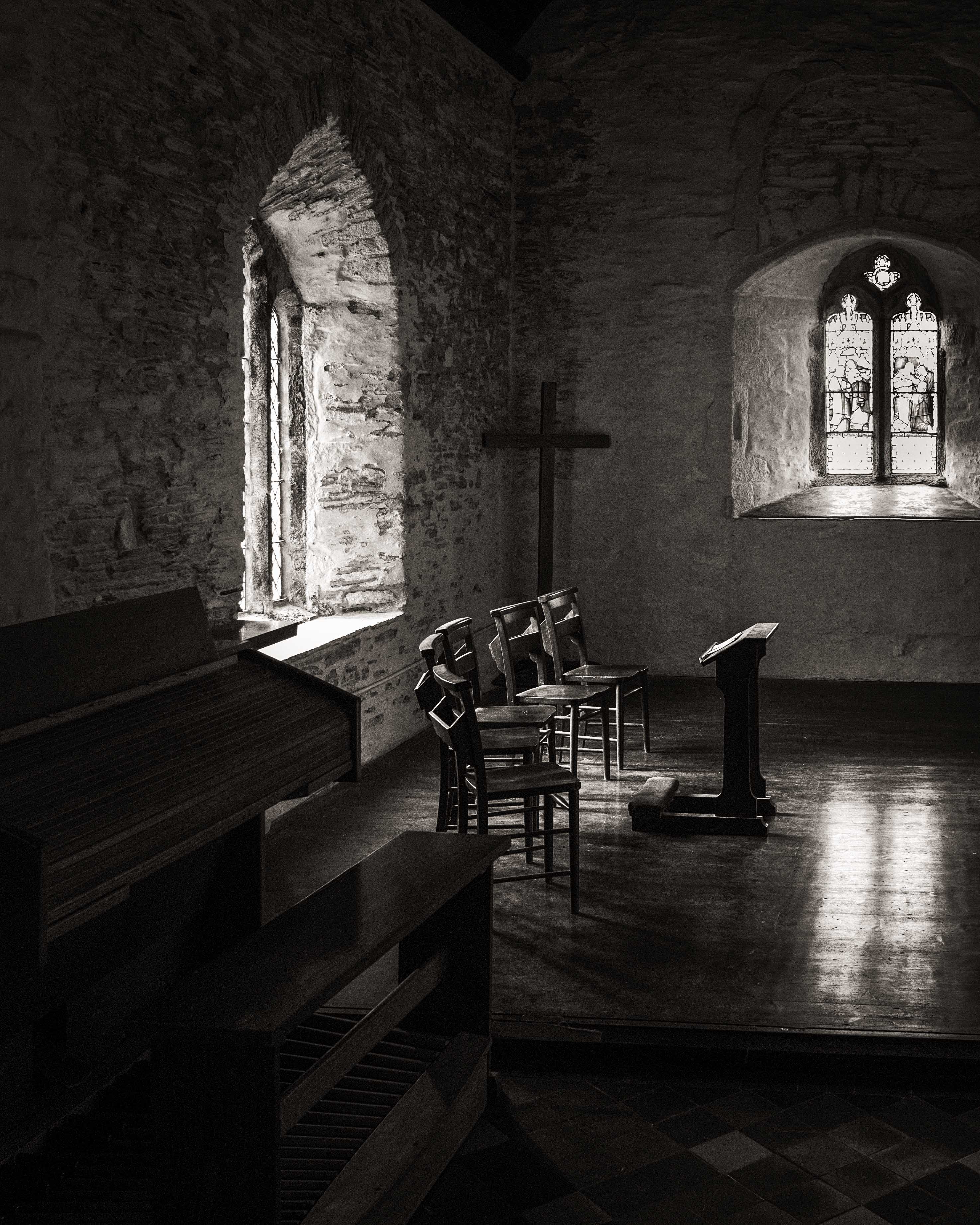
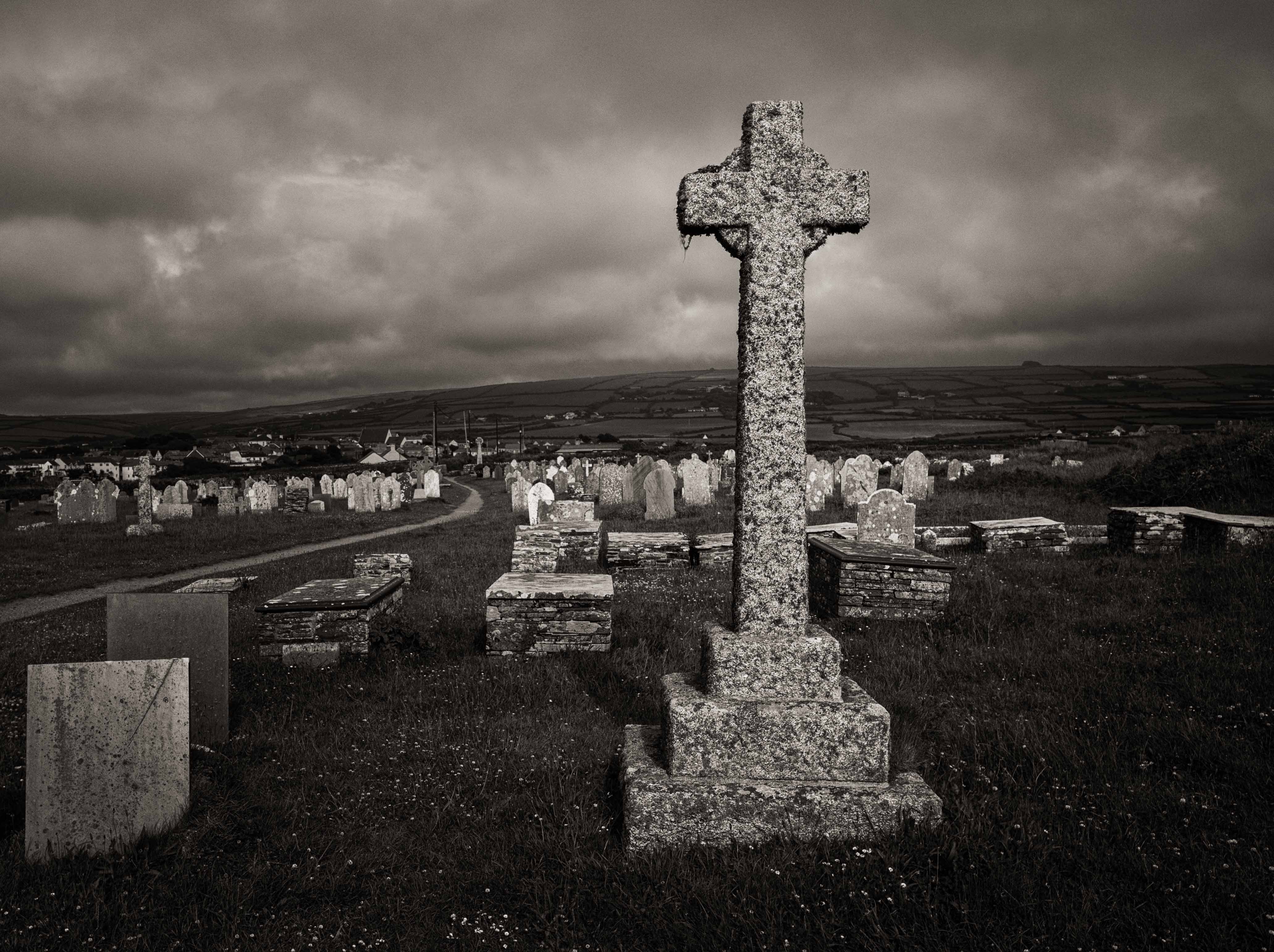
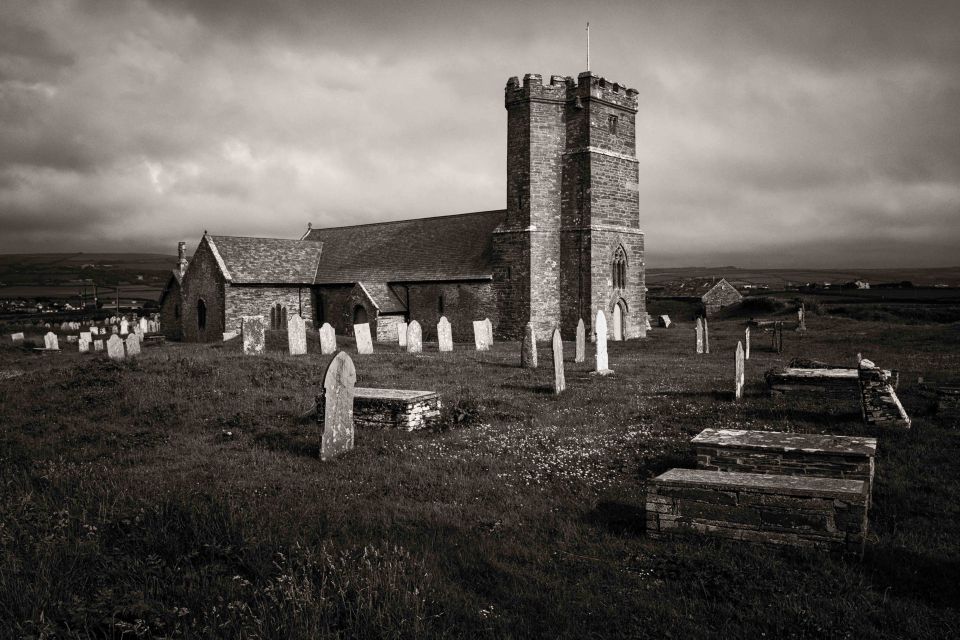
Churches Project no. 2 – St Materiana, Tintagel, Cornwall

I approached the church from Tintagel Castle along cliff tops with spectacular views out towards the Atlantic. The village of Tintagel is clearly visible in the background.

When I first arrived at St Materiana, I was greeted by a notice in the graveyard – ‘Beware Adders’. Needless to say I trod very carefully as I walked around trying to find the best position to photograph the exterior of the building.


The parish church of Tintagel is in the Anglican Diocese of Truro and county of Cornwall England. The Church was built between 1080 and 1150 and stands in an exposed position on Glebe Cliff overlooking the sea. St Materiana has been identified with St Madryn, a princess of Gwent, who, according to tradition, evangelised this area in about 500 AD. It is likely that the Church was built on the site of an oratory served in celtic days by the monks of Minster and later replaced by a Saxon style building. It appears to have been built on the site of intensive early Christian burial during the 5th to 7th centuries and the church today still retains an air of early Christianity.


The very large graveyard slopes away from the church, back towards the nearby village.


Click on any of the images to view a larger version.

To view a larger version of the featured image click on the thumbnail below.

Taken by the wind

20150616-L1002663-Edit


I love the way this tree has been shaped by the prevailing wind.

The branches appear to be reaching out, as if they are trying to grab hold of something, just anything, whilst the invisible roots grow deep and long, clinging to the earth below, preventing the tree from being torn out of the ground when the next wind blows.

To view a larger version, please click on the image which will open in a new window.

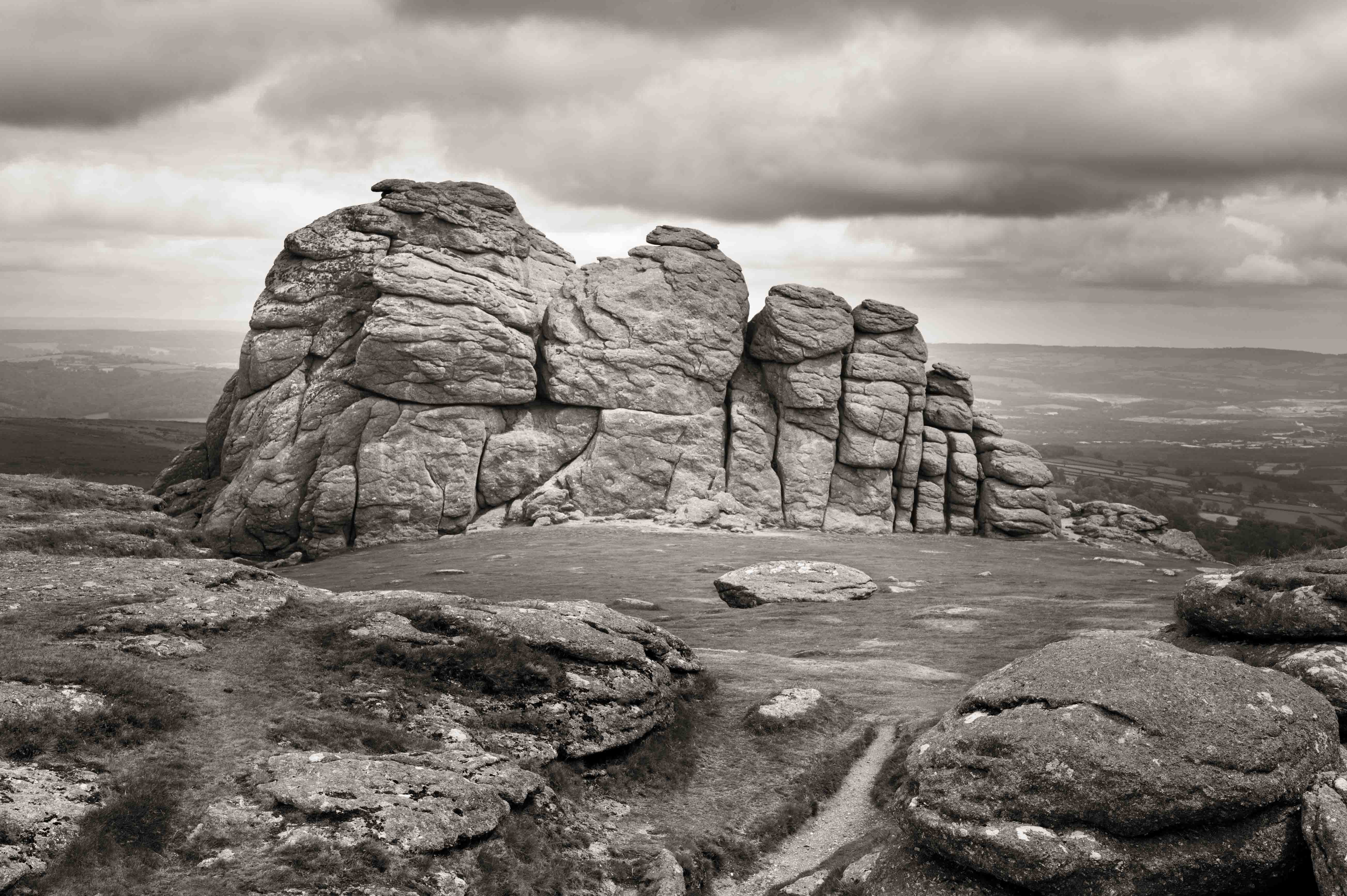
Haytor – a chance to reminisce.

Haytor

Haytor

I recently came home from a very enjoyable and relaxing family holiday on the borders of Devon and North Cornwall. On the return journey I wanted to take a small detour and visit the town of Bovey Tracey, which lies on the eastern edge of Dartmoor National Park, and more specifically to go and see the granite outcrop of Haytor. This is perhaps the most recognisable and accessible of all the Dartmoor Tors, so on arrival I was not surprised to find a visitor centre, car and coach park catering for the tourists. Fortunately the weather was inclement and the number of people clambering up the relatively easy hill to reach Haytor were few.

I wanted to return mainly for sentimental reasons. I have fond memories of family holidays in this part of Devon when I was in my mid teens, some forty plus years ago (take large gulp…… and ask how is that possible?) and had not been back since. Life moves on and sadly both my parents and my sister have all passed away in the intervening years. My wife stayed by the car to photograph the very tame Dartmoor ponies and I walked up the hill with my grown up daughter and our dog.

I was pleased that the rocks of Haytor were just as I had remembered them; exposed to the elements but to my eyes nothing had really changed. My memory of Haytor is now as it was when I was a teenager. Still proud and strong, still dramatic and still commanding spectacular views of the surrounding countryside. It felt good to be back experiencing this great location with my own family and for a few moments to stand quietly, touch the stone, and reminisce about past times.

It was also good to be reminded that some things change and some things remain the same, which is just as well, as we all need a ‘rock of stability’ in our lives.

Churches – an exciting new photographic project

St Nectan, Stoke in the Parish of Hartland in Devon

St Nectan, Hartland in Devon

For quite some time I have been considering undertaking a photographic project but have lacked inspiration – until now.

Some months ago I read two very good books; one called ‘On being a photographer’ by David Hurn in conversation with Bill Jay; and another entitled ‘The Essence of Photography’ by Bruce Barnbaum, both of which I can highly recommend. Each publication talked about the benefits to be derived from working on a project, whether small or large, and irrespective of the time it might take to complete.

In ‘On being a photographer’ the author writes – “The subject matter you select must; a) fire your enthusiasm and curiosity at least for the length of time it will take to produce a meaningful body of work; b) lend itself to images, as opposed to words and; c) remain continuously accessible so that you can return time and again to the same topic whenever you wish or have the time.

From the same book it reads – “The more the shooting, the greater the enthusiasm and knowledge for your subject. The greater your knowledge, the more you want to do it justice and this increases the scope and depth of the pictures. So the process feeds on itself”.

Committed to the idea that I would like to start a project, but not knowing what it might be, I was recently inspired by a famous book called ‘Betjemans Best British Churches’ to visit and photograph a number of churches listed during a recent holiday in Devon. I soon realised that I would often photograph these buildings and their locations whenever the opportunity arose, but I had never thought of it as a project.

The penny has finally dropped and whilst this work will not be at the expense of making images of other subjects, it will give me a sense of direction and purpose. There are about 2,500 churches in the guide so I will not be short of material. Some are close to home so easy to visit in a day; others I can research and look forward to visiting as travel and holidays permit. Interiors are just as important as the exterior, so I am not entirely dependent on the weather. Landscapes are my other great love, so visiting a church will take me to new areas as well.

Inspired, excited and full of enthusiasm I have created a new section on this site, not surprisingly called Churches Project . Do read  the introduction and by way of a start I am pleased to show a photograph of one of the churches I visited in Devon in this post.

The Church of St Nectan is in the hamlet of Stoke in the Parish of Hartland. It is often referred to as the Cathedral of North Devon. I like the fact that the tower, which was built as a landmark for mariners, is partially obscured by low cloud and the way the cluster of daisies in the foreground appears to be replicated by the lichen on the gravestones.


Highland cattle – “O ye’ll take the high road, and I’ll take the low road……..”

Highland portrait

Highland portrait


A few days ago I posted a single image of a highland cow, backlit against a dark background which gave me a ‘low key’ image. I was fortunate to be able to return to the same location a day or two later, but this time the  weather and lighting could not have been more different.

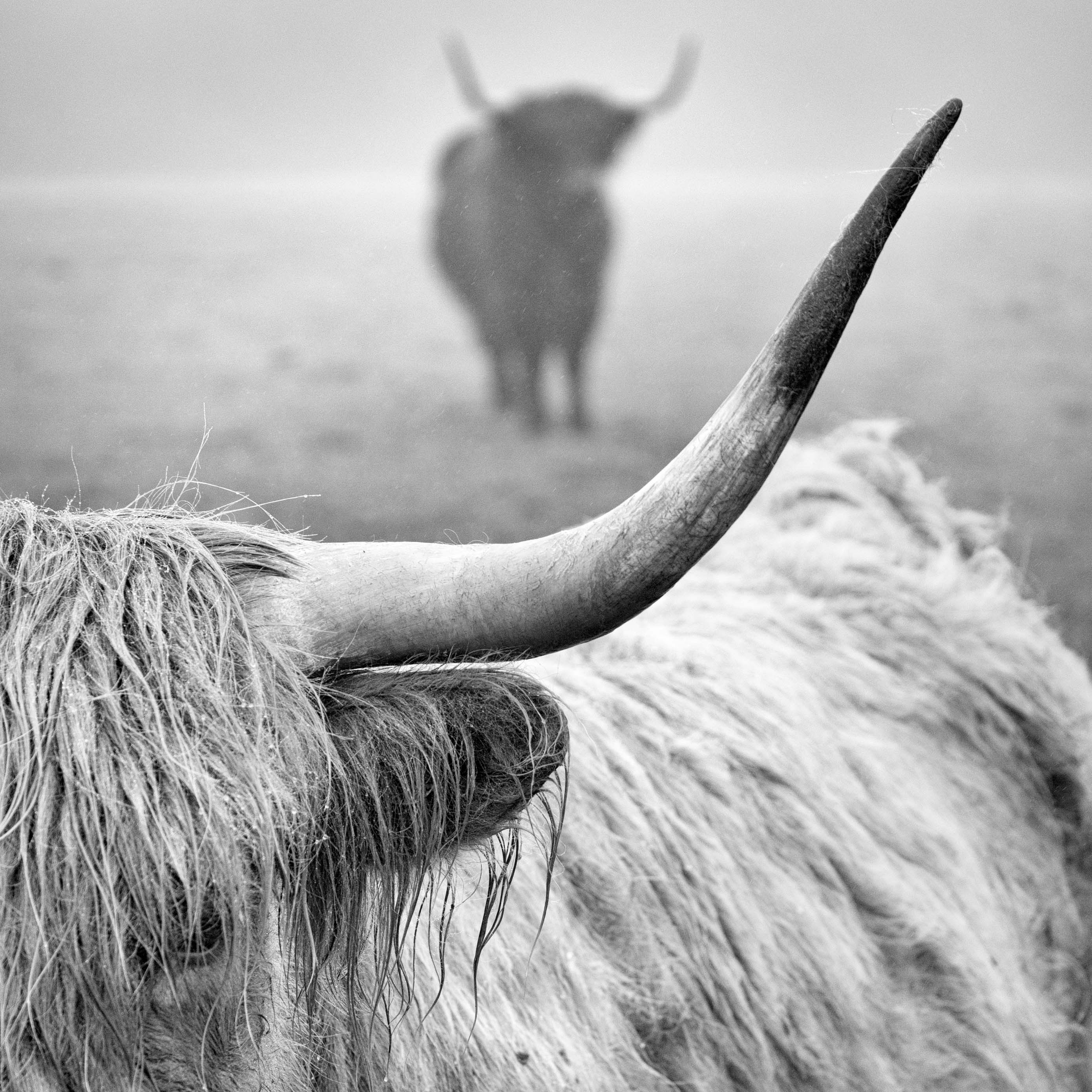
Low cloud, drizzle and soft light combined to blank out any distractions, and to all intents and purposes gave me the equivalent of a white studio back cloth with minimal background detail. As a consequence and using different processing the same cattle have now been made into a set of ‘high key’ photographs.


Highland horn

Highland horn


Highland call

Highland call


Highland stand

Highland stand


Arguably the ‘high key’ portraits are less dramatic than the ‘low key’ shot, but in my view they both have their merits. If nothing else this exercise only serves to demonstrate how the same subject can be photographed in the same location but in different weather and light to produce entirely contrasting results.

The ‘low key’ portrait can be seen by clicking in the thumbnail below.

Highland cow

Highland cow

These two alternative approaches and the subject matter reminded me of the lyrics in the song – The Bonnie Banks o’ Loch Lomond.  –  “O ye’ll take the high road, and I’ll take the low road……..”

Do you have a preference? If so please comment, as I would very much welcome your views.

Personally ‘I’ll take the low road…….”!