Exhibition success

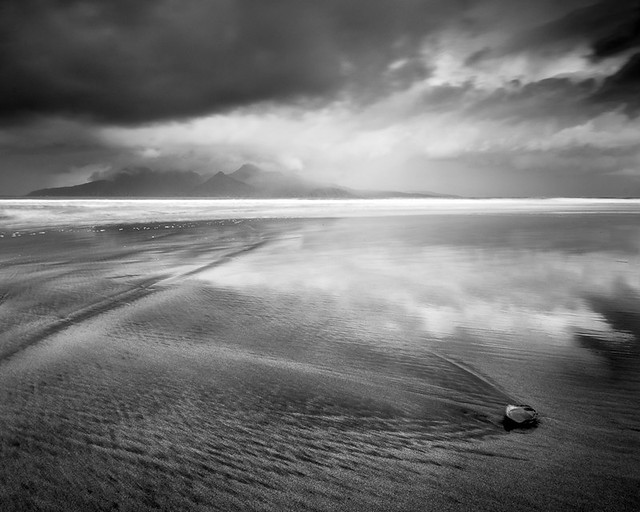
Solitary shell - looking towards Rum
Solitary Shell
Taken on the Isle of Eigg looking out towards the Isle of Rum on the West Coast of Scotland

My local camera club is currently staging it’s annual open photography exhibition, which closes this coming Sunday. I entered a number of images some weeks ago and two of the eight I submitted are on display.

‘Solitary Shell’ – was given a Judges Award in the Members Section whilst ‘Too Young to Smoke’ was selected for the National Category. There are a number of these event staged around the country during the course of the year but as this was the first time I had entered a National Exhibition, I was very pleased to have had one of my photographs accepted.

Here is one of the images on display.

20131129-HCC exhibition.jpg

and finally here is the image which was accepted for the ‘Open’ section.

Too young to smoke
Too Young to Smoke
Taken at the Goodwood Revival Meeting in 2012


100 miles along the South Downs Way and the 100th Blog Entry!

Firle Beacon
Firle Beacon, The South Downs

When I typed the words for my last entry ‘Less is more’ I realised two things. Firstly that it was time to conclude this series of entires about my walk along the South Downs Way and secondly that whatever the subject of the next entry, it would be the 100th post since I started this blog back in June 2012.

So it is rather fitting that this post should mark the conclusion of a 100 mile long distance walk alongside the fact that this is the 100th entry. When I started the walk I had a definite goal in sight. Quite simply to complete the walk in the planned period of time. The same cannot be said for this blog. What started as a whim, has turned into a regular and most enjoyable hobby. On average I post about five times a month, mainly at weekends, simply because this is when I can find the time to sit down, write the words and select the appropriate photographs having processed them beforehand.

This blog has proved to be a journal of my photography. The places or events I have been to and the images I have taken. Sometimes I will express my thoughts or write about the cameras, lenses and equipment I have used. But one thing is for sure – nothing is planned too far in advance. All the posts are a spontaneous reaction to an event, a particular photograph or series of images, or thoughts that have entered my mind which I have wanted to record and share with others – Sharing does of course assume that there are other readers, not just my wife and close family!

So back to the main reason for this 100th post. A photographic conclusion to a great experience. I shall never forget walking with my nephew Ian down the steep slope from Beachy Head and into Eastbourne, to be greeted by my family and his father. This varied selection of images were all taken on the walk and will always remind me of wonderful time enjoying the beauty of the South Downs.

Gates and posts
Gates and Posts
Gathering Storm (2).jpg
Gathering Storm. Near Birling Gap
Downland mist
Downland Mist. Near Cocking
Towards East Meon
Towards east Meon
Windswept tree
Windswept Tree. Near Ditchling Beacon
The Seven Sisters
The Seven Sisters. Looking west from above Birling Gap
20130909-_9090110.jpg
The finishing post after 100 miles.
Ian on the right and me on the left.
The other entries about our walk along the South Downs Way are as follows:-
And so to the future – Another long distance walk perhaps? That I don’t know, but I will be starting work on my 101st entry very soon.

Less is more when capturing the South Downs

Downland fence
Downland fence

It is hard to believe that two months have passed since I completed my walk along the South Downs Way and here I am still writing about the experience and the photographic lessons I learnt.

I guess that if you mention the South Downs to a bystander they will conjure up in their minds a wide expansive view of the Sussex Weald and Downland. Large vistas which are truly beautiful but incredibly difficult to capture in a photograph. It is perhaps one of the reasons so called ‘holiday snaps’ never quite do justice to the scene we witnessed. We are tempted to try and include everything we see in one photo and whilst it may be a good record of what we saw, it often fails as a photograph. It might lack a good composition, any form of focal point to draw the eye, be poorly lit or quite simply not truly capture the feelings that the photographer felt at the time.

I can’t deny that some of the images I took fell into the ‘large vista’ category but I was also mindful to look closer and try and simplify the landscape through careful composition, concentrating on just two or three key elements and in so doing try and capture the essence of the South Downs and not just the grand view.

So this entry includes a selection of images all taken from the South Downs Way, where less is hopefully more.

Field of curves
Field of curves
The straw bale
Straw bale
Lone cow
Lone cow
Downland field
Downland field
No shelter
No shelter
Dead tree
Dead tree
Gateway to the sky
Gateway to the sky

Twisted tree
Twisted Chanctonbury tree
Do these photographs capture something about the South Downs? 
Do they capture the feelings I experienced when I first saw and composed the image in the viewfinder? Do they do justice to the beauty of the area and its countryside? 
So many questions and of course I have my own answers and anyone viewing these images will have their own opinions. In the end they are the view I chose to take, my interpretation and my treatment. They give me pleasure and I hope others might just feel the same way.
Thank you for reading my ‘blog’ and do leave a comment if you have anything you would like to say.

Windmills on the Way

Jill Windmill
Windmill ‘Jill’ at Clayton

The South Downs is an Area of Outstanding Natural Beauty, but in addition to the glorious rolling downland landscape it is enhanced by man made structures, in particular the windmills which shine like beacons when the sun lights up their sails and the ‘smock’ or mill itself.

Walking the South Downs Way provides a great opportunity to see these charming buildings from near and far. At the top of this page is an image of one of a pair of windmills at Clayton to the north of Brighton. This one is fondly called ‘Jill’ and there are no prizes for guessing the other one is called ‘Jack’. Of the two ‘Jill’ is the one that stands out and is very visible from a distance. Its white smock and four sails is in stark contrast to ‘Jack’, which is painted black and has no sails. The next two images were taken from West Hill to the east of Pyecombe.

Windmill Jill
‘Jill’ in the distance
Distant windmill
Afternoon light on ‘Jill’ 

The other windmill which regularly appears in the landscape is Ashcombe Mill at Kingston, near Lewes in East Sussex. Like ‘Jill’ it has a white smock and currently only has two sails. Originally built in 1828 it was destroyed by a gale in 1916. Since 2009 work started to rebuild this windmill and when completed will have six sails. The two images below show Ashcombe Mill in its downland setting.

Towards Ashcombe Mill
Ashcombe Mill in the far distance, surrounded by the downland landscape

Ashcombe Mill
Ashcombe Mill at Kingston near Lewes

One day I will return and visit Ashcombe Mill itself, when the restoration is complete and the windmill has been returned to its former glory.

Olympus 17mm f1.8 lens at Cowdray Ruins

Cowdray Ruins
Cowdray Ruins

Faced with the choice of having just one lens what would it be? A prime lens or a zoom lens? If it had to be a prime lens then the vast majority of photographers would choose a focal length of either 35mm or 50mm. The latter is closest to the same field of vision as the naked eye, whereas a 35mm lens is a moderate wide angle. Both are very versatile but of the two my personal choice would be a 35mm lens.

I use a micro four thirds camera, the Olympus OMD EM5, which has a crop factor of x2, so the equivalent focal length for this camera format is 17.5mm. Although I can cover both 35mm and 50mm full frame focal lengths using the Panasonic 12 to 35 f2.8 zoom lens, there is nothing quite like having a compact, fast and sharp prime lens attached to the camera. Any prime lens encourages a more creative approach to photography. You have to frame your shot by moving your feet as opposed to twisting a barrel on the lens. A wide aperture can give a more limited depth of field, throwing backgrounds out of focus. In this respect it will never be a match for a full frame camera, but for my requirements this lens more than serves its purpose.

20131025-PA251656.jpg
The Olympus 17mm f1.8 prime lens

So in the past few days I decided to buy the Olympus 17mm f1.8 lens. In no way is this a review, but the all metal lens in black looks wonderful on the camera, is very fast to auto focus and has a ring which can be pulled back for manual focusing. It also reveals a distance scale which combined with the Depth of Field markings allow ‘zone focusing’, a technique often used by street photographers.

20131025-PA251646.jpg
The 17mm on the Olympus OMD EM5

Having only had the lens for a few days I have not yet had the chance to put it through its paces but I already think it could well become my default choice when I want to travel light with just the camera and a single lens.

I did though have the opportunity to take a couple of shots of Cowdray Ruins in Midhurst. I set the camera to take both RAW and JPEG (Fine). Set to f8, ISO 200 and a shutter speed of 1/250th of a second, the JPEG straight out of the camera is I think very pleasing. Sharp across the frame and good colours from the Olympus processor.

20131023-_A230168.jpg
Cowdray Ruins – JPEG straight out of the camera

The RAW version was of course just asking to be converted to black and white…….

Cowdray Ruins 1.jpg
The first mono version
20131023-Cowdray Ruins 2-2.jpg
This is the same image as the one at the top of this post
but with a ‘coffee’ tint added in Silver Efex Pro2

Of the four versions I have my own personal favourite (it’s at the top for a reason) however this post was intended to be about a superb lens which I know will give me many hours of pleasure in time to come. With luck I will get out and about in the next few days to see just how capable it is in different conditions.

As an aside the Ruins at Cowdray in Midhurst, West Sussex are truly magnificent and I will definitely be returning to explore the photographic opportunites at some point in the future.