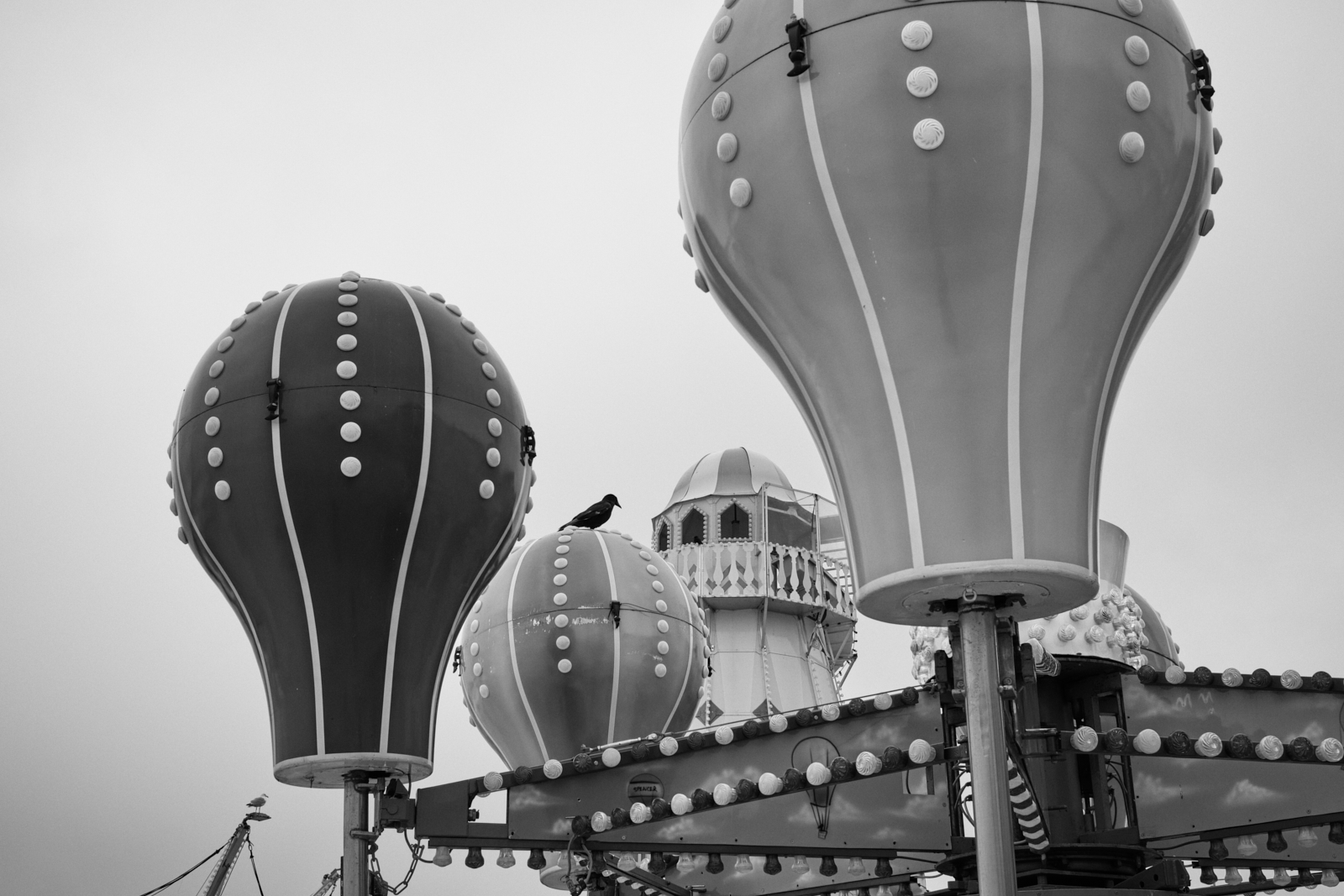
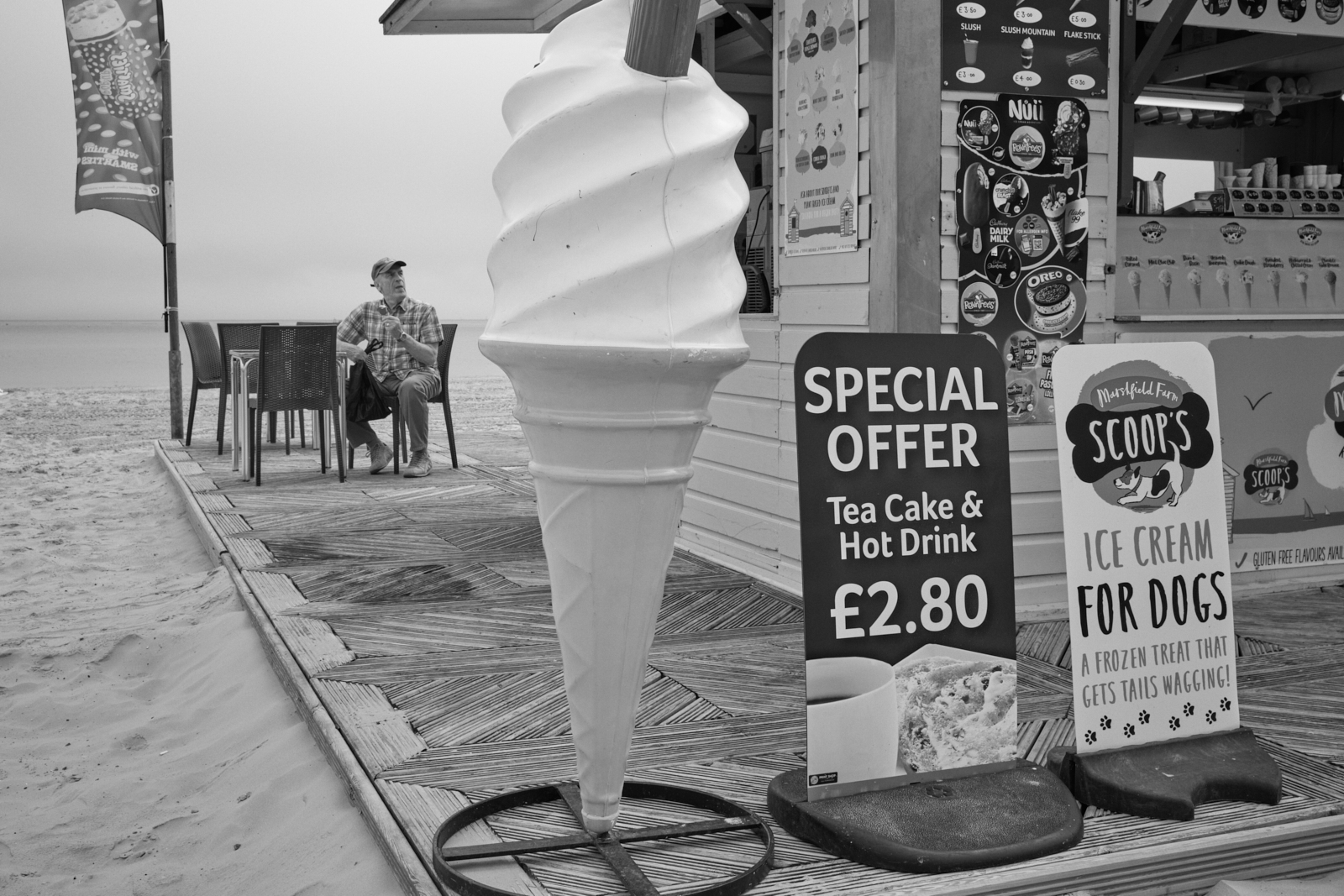
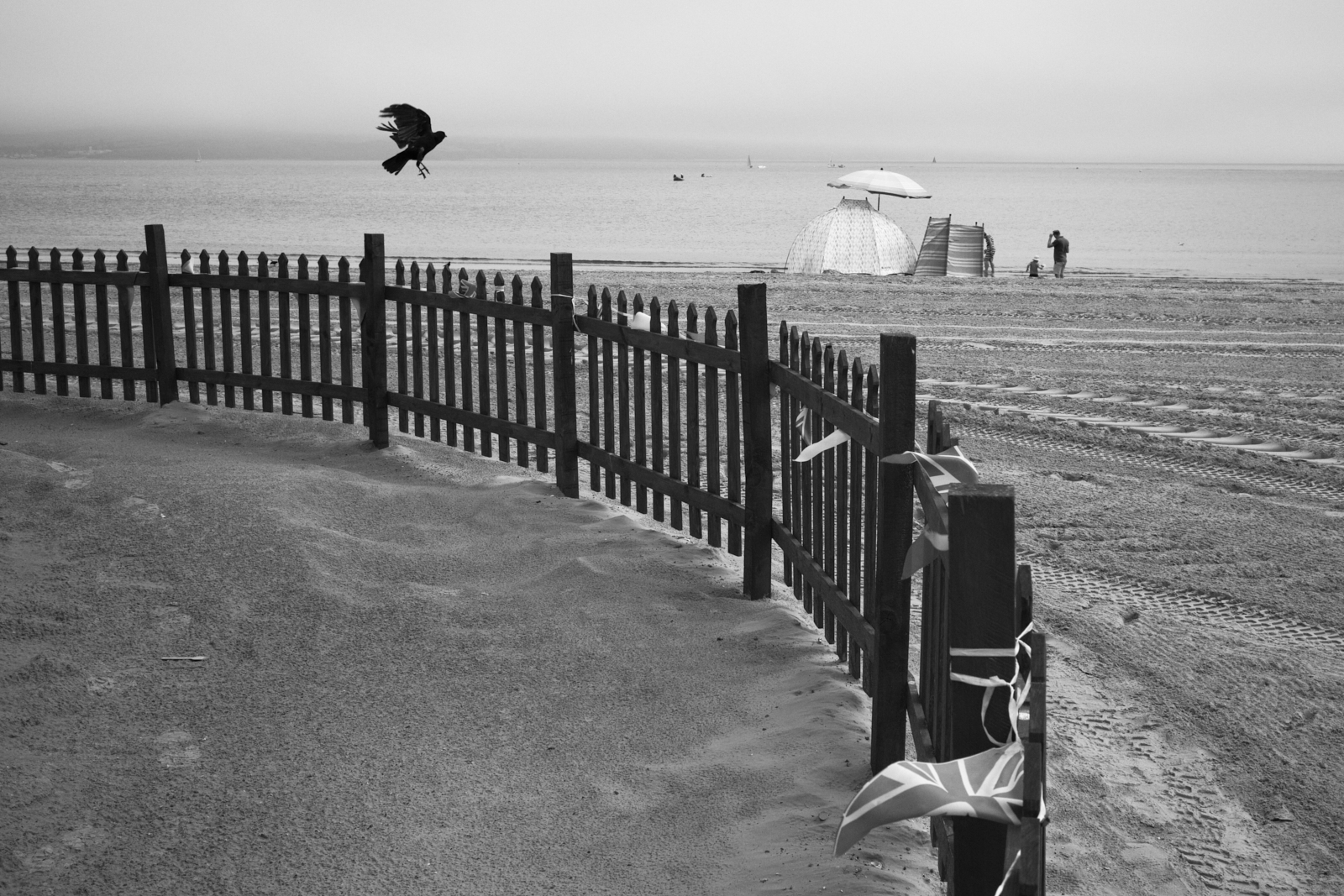
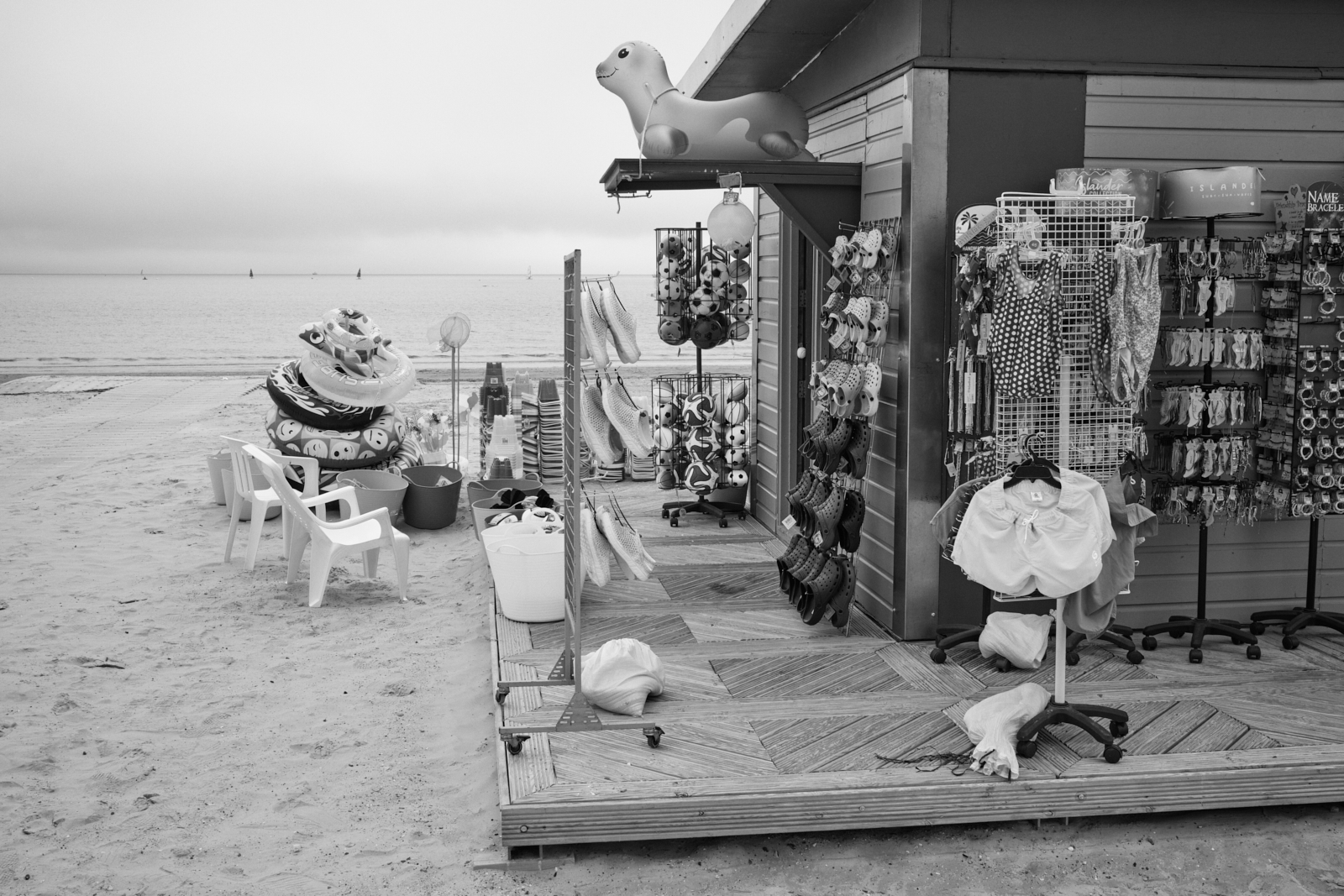
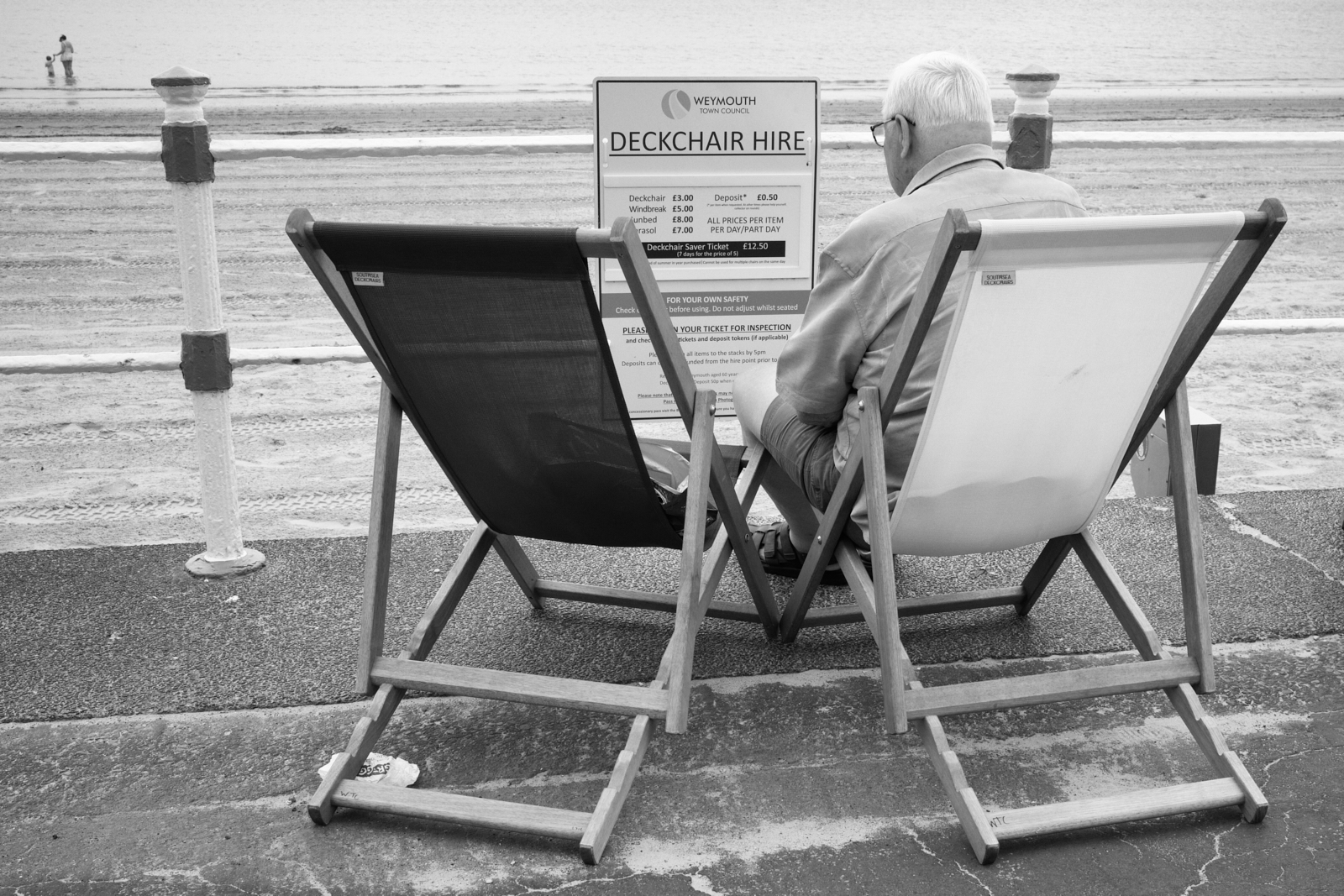
I don’t know why but I was looking through my CaptureOne catalogue a few days ago and came across some images which I had taken in the summer of last year down at Weymouth beach in Dorset. It was a dull, overcast day and without any sun the beach was almost deserted with only a few hardened holidaymakers determined to make the most of it.
I had processed the pictures but they were never included in a post. I guess this was probably because the subject matter (urban/seaside/street) is very different to my usual work. It’s always rather fun to try something new and challenge your photographic eye.
Anyone familiar with a typical seaside resort in England will recognise some of these scenes which are likely to be replicated up and down the land. There is something very British about choosing to park your deck chair right next to a huge litter bin!
All the pictures were taken on the same morning with a Fuji X100v. It’s a great little camera for this type of work. Discreet, quick and easy to use, full manual control if that’s what you want and it produces excellentimage files.
Weymouth is a very popular resort, not too far from home. With Autumn having well and truly arrived here in the UK it is my intention to head back to this location as I find these places more interesting out of season.
Until then here is a selection which makes a change from my usual landscape or church photography.
The days seem to go so quickly that I find to hard to believe that a month has passed since I took my first steps along the Jubilee Trail. You can read about Walk One here.
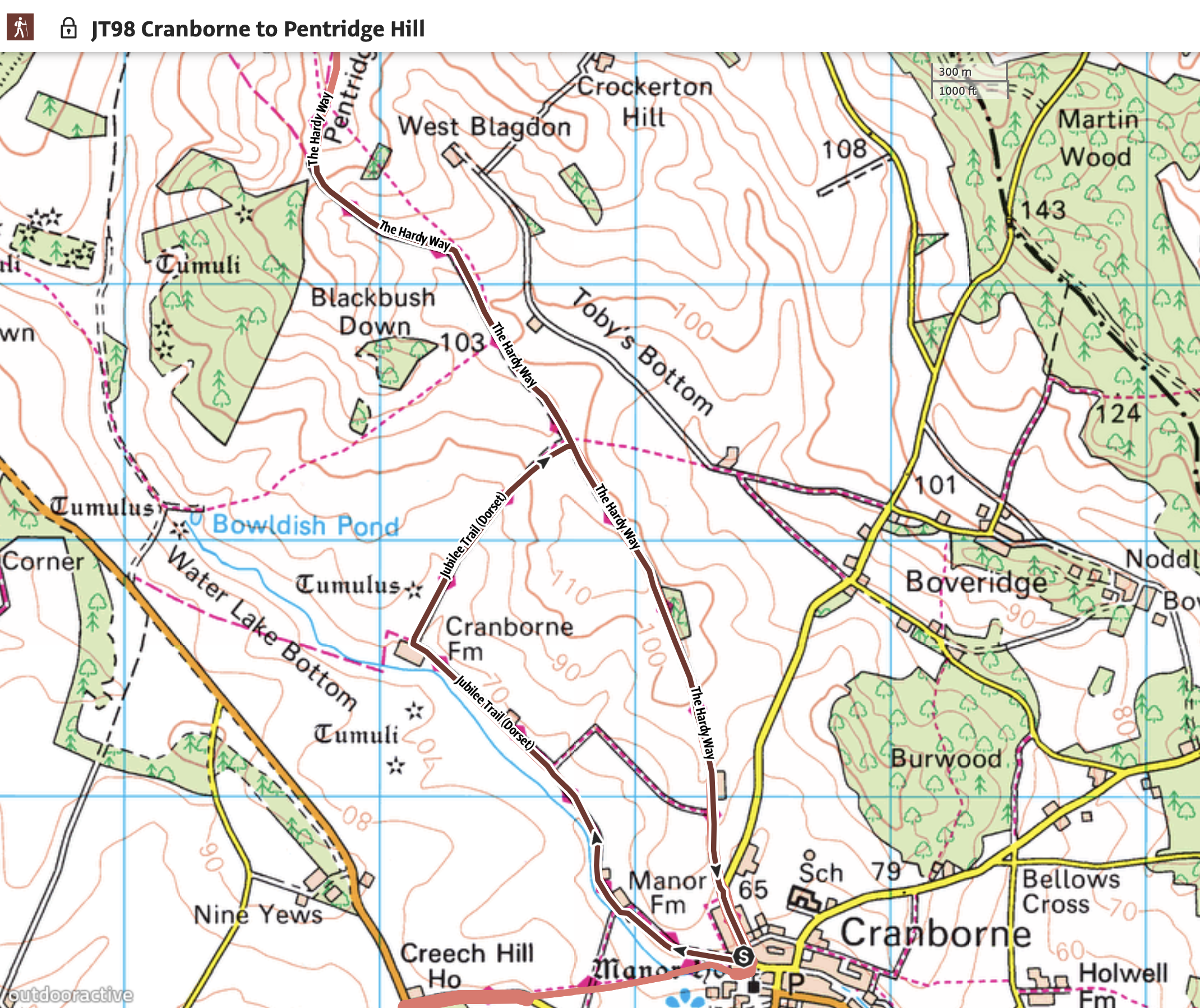
I decided for my second planned walk that I would effectively continue where I left off, albeit that I would be starting in Cranborne, walking out to Pentridge Hill and returning along the Hardy Way back to the village – a distance of 5.2 miles. I am fully aware that in walking terms this isn’t very far but as I mentioned in the first post I want to take time to absorb and appreciate the landscape as well as finding compositions and releasing the shutter to record what I see.
In many ways these posts, and there will be 32 in total, are as much a travelogue and as they are a photographic experience. Given I have only just completed the second walk it may well take me a year or more to finish the 90 mile trail!
I left the village of Cranborne at precisely 10 o’clock just as the church bells chimed on the hour, and for a short time they drowned out the bird song coming from the trees around me. The sun shone which was in stark contrast to the previous day which had been wet. After all the rain, the gravel path made for good walking but I anticipated there would be muddy sections somewhere along the route.
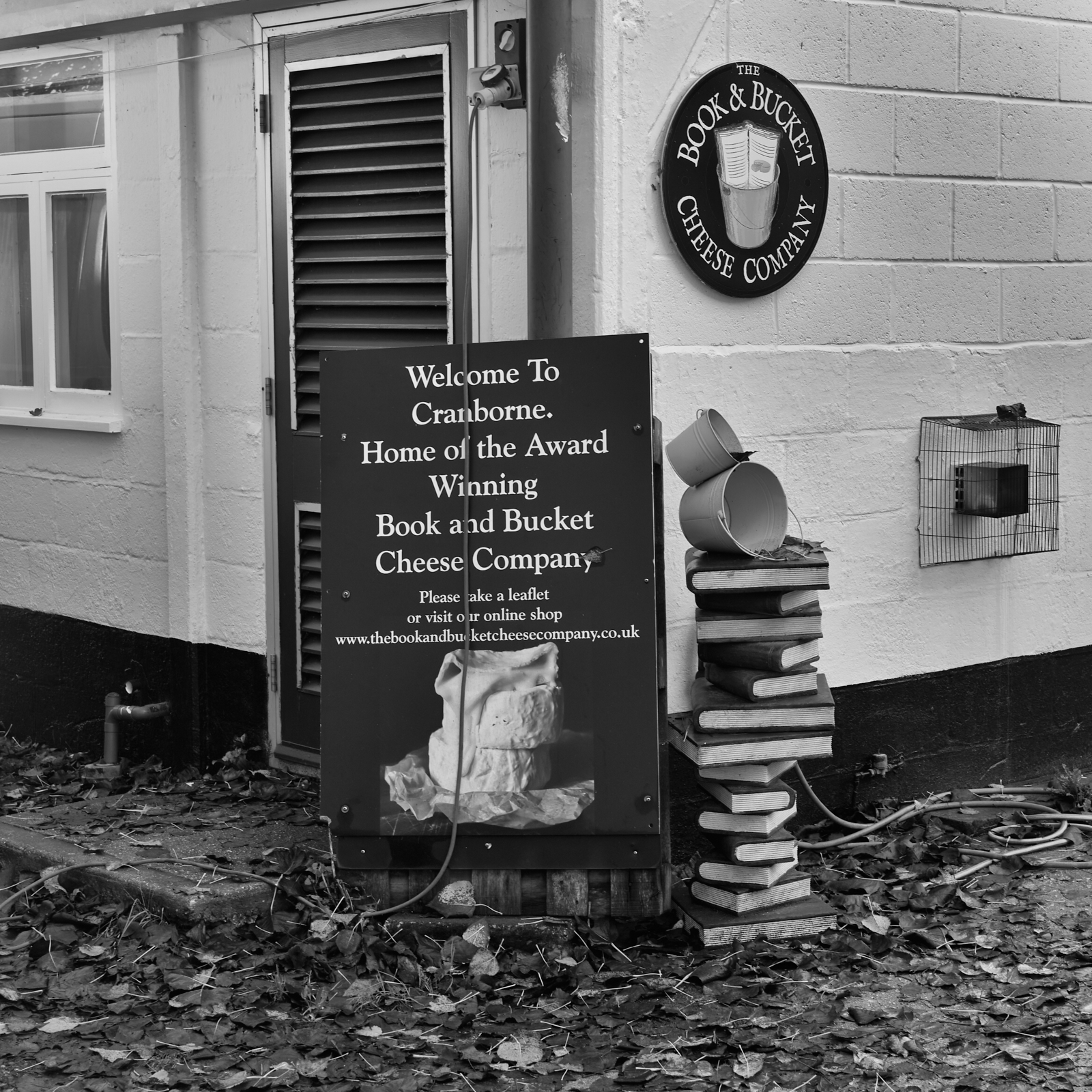
I soon reached Manor Farm and couldn’t help but notice the signage for The Boot and Bucket Cheese Company. I am a big fan of cheese and I had not come across this artisan food-maker before, so I made a mental note to go on their website when I returned home. I knew it wouldn’t be very long before one or two of their products would be on a plate with complementary biscuits and a glass of red wine.
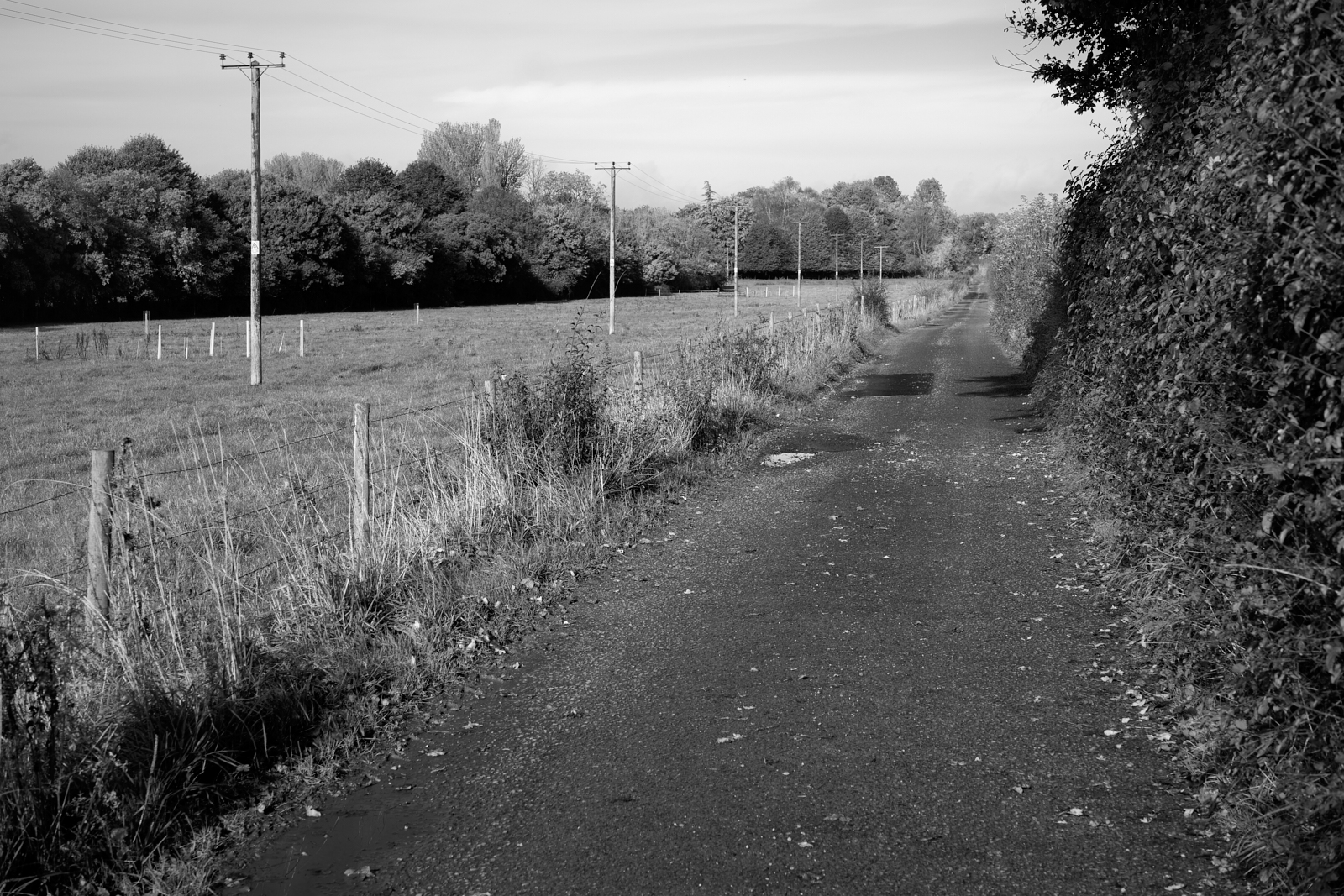
I passed Manor Farm and the gravel track gave way to tarmac. A surprisingly well maintained road given it only served Cranborne Farm ahead. Two people appeared in front of me, grey hair, one stick and the ubiquitous black labrador. I soon overtook them, said good morning as I did so, and continued along the trail. Pasture land lay to my left, a post and wire fence preventing the curious cattle escaping, telegraph poles as far as my eye could see and a flock of maybe seven or eight white wagtails for company.
Heading north west the mid morning sun was directly behind me and my long shadow led the way. I turned to see if I was still being followed but the two dog walkers must have turned around, continued putting the world to rights, as they made there was back to Cranborne.
After 35 minutes and 1.3 miles, I turned right at Cranborne farm, still on the Jubilee Trail, and began a gentle ascent. I had chosen another beautiful, dry autumnal day and the temperature was rising. I had packed a waterproof jacket, but I was convinced it wouldn’t be required. In fact it wasn’t long before my gilet joined the waterproof in my backpack and I was down to a single layer. Neither saw the light of day until the end of the walk. I couldn’t have wished for better conditions.
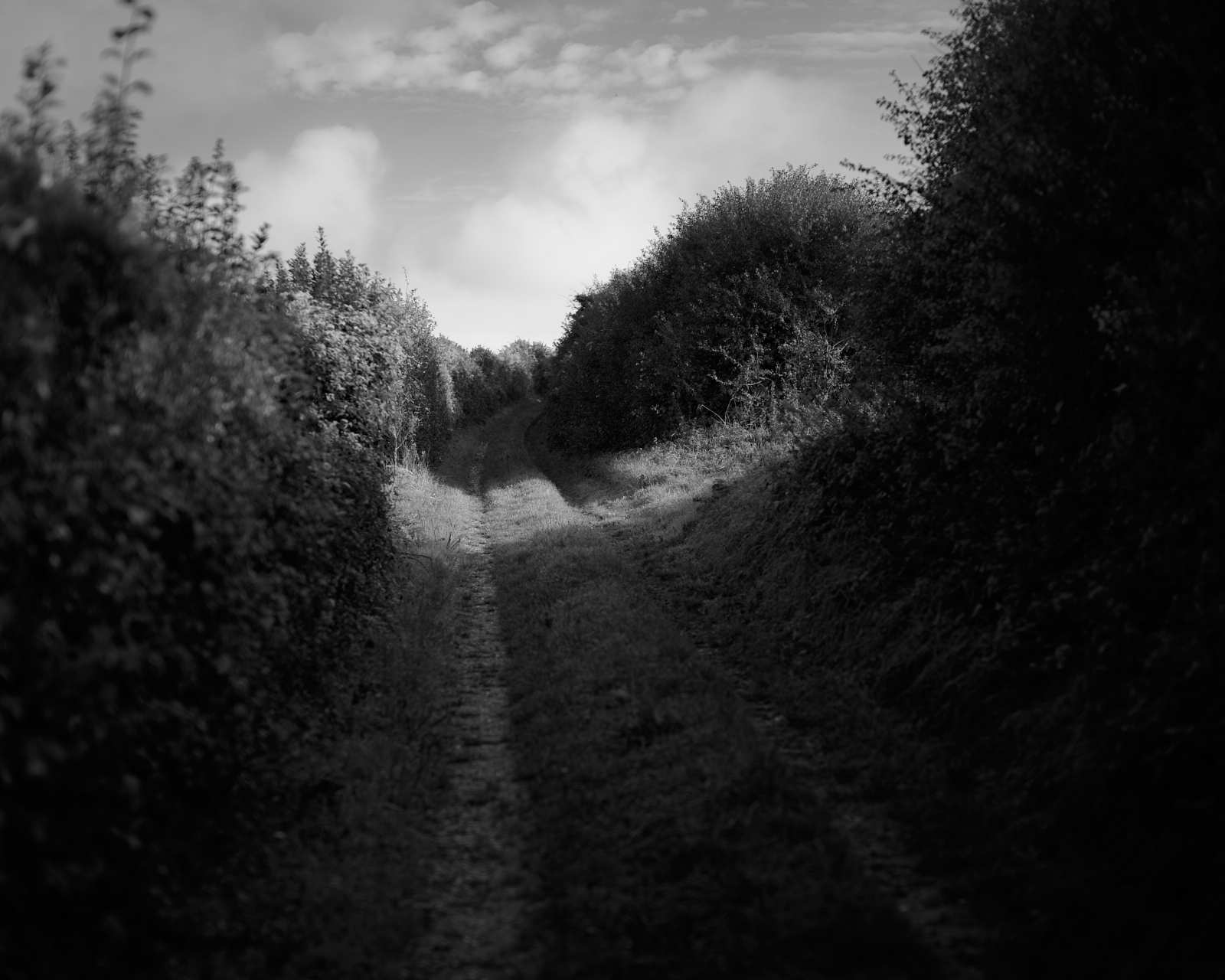
Leaving the farm behind me, tarmac had been replaced by a typical farm track, with tractor ruts either side of a wet grass central reservation. Lined by hedges which are great for wildlife but they did mean my view of the surrounding countryside was inhibited. Although there were some muddy sections, the ground was surprisingly good given how wet it had been recently. I felt for all arable farmers who must have had a very difficult time bringing in the harvest and would now be struggling to plough and cultivate the land ready for seed drilling and next year’s crop.
Every so often, the sun would give advanced notice of a gap in the hedgerow and the hidden landscape would be revealed. At one point I could see Penbury Knoll, which I had visited in ‘Walk One’ although I wouldn’t be going quite that far today. This route would take me to the lower slopes of Pentridge Hill where I would turn round and head back to Cranborne. The path was nearly all uphill from now on. The good news is that it would be all downhill on the way back.
Although I had yet to see or hear any pheasants, it was evident that sections of the farmland would be used for game shooting. Strips of land had been left for cover and there were many pheasant feeders dotted around the fields. Game shooting divides opinion but for those in favour it does generate another income stream for landowners and gamekeepers.
I arrived at my next turning point. It was marked on the map as Jack’s Hedge Corner. I enjoyed a good view of the countryside and then realised from looking at the map that I was looking down on Toby‘s Bottom. ‘Oooh Matron’ I said to myself, which will only make sense to those of you who are familiar with Kenneth Williams and the ‘Carry On’ films of the 1960’s and 70’s. Joking aside these are names which are surely linked to people from the past, in particular Jack as there were hedges in all directions.
I stopped to take a few pictures and as I made my way up the hill I thought I could hear voices. My hearing isn’t perfect but the voices got louder and it wasn’t long before I knew that my ears hadn’t been deceiving me, as a group of retired ramblers came into view. A few moments earlier I had only been thinking how this had felt like a quiet place of solitude negating any need to go to places like Scotland and the mountains. I could escape people here in my home county. The ramblers had broken the silence of nature and place, and selfishly I hoped they would be continuing their walk along a different path. I pressed on to put some distance between me and them. I make no apology but I prefer to be on my own.
The slopes of Pentridge Hill lay ahead and a buzzard flew over Blackbush Down. As it turned, the underside of its wings were caught in sunlight, revealing the beautiful pattern of its feathers. The distinctive mewing and screeching on the wing echoes the sound of a cat like call. It circled out of view, its cry falling away in volume as it did so.
Apart from the bird of prey calling there were no more voices to be heard; I assumed they must have turned right at Jack’s Hedge Corner and I rambled off in the opposite direction.
After an hour and 35 minutes I had covered 2.9 miles, and had arrived at the point which I had left the Jubilee Trail a few weeks ago. It was time to turn round and retrace my steps taking in the view across Cranborne Chase. Before doing so I reached into my bag for a drink and half a sandwich, something to refresh me. It was only 11.40am so too early for lunch and I envisaged having the rest back in the village followed by a flat white and maybe a slice of cake at the Cranborne Garden Centre by way of a treat.
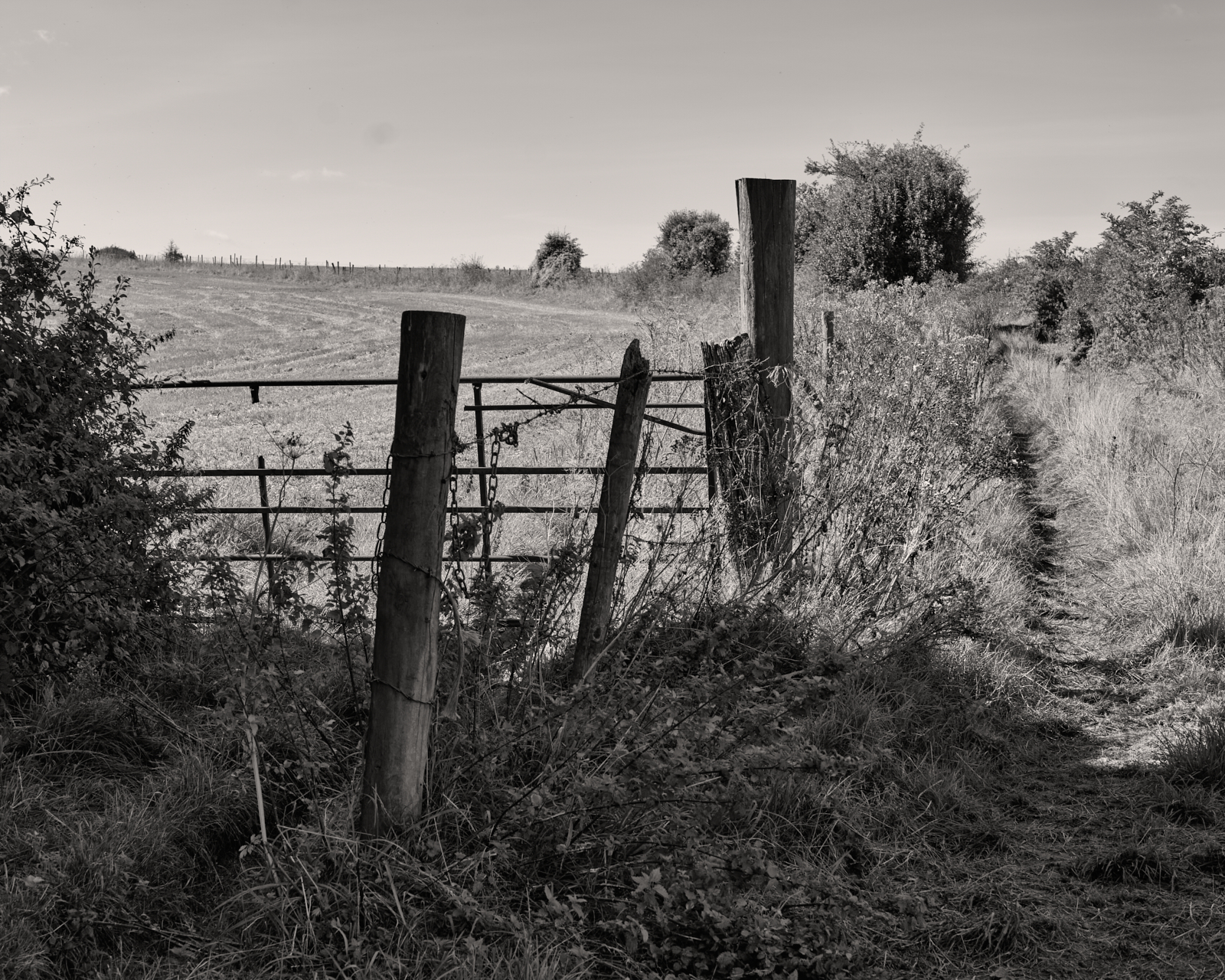
I soon arrived back at Jack’s Hedge Corner. By then the sun had moved round and was now illuminating the gate post which made for a much better composition.
This was also the junction to continue straight ahead and follow Hardy’s Way back to Cranborne. ‘Jack’ had without question been very active as the path was lined by tall hedges on both sides of the track and for long sections any view was completely obscured. However I was grateful the sun was still shining, but in some respects I was now looking forward to the end of the walk.
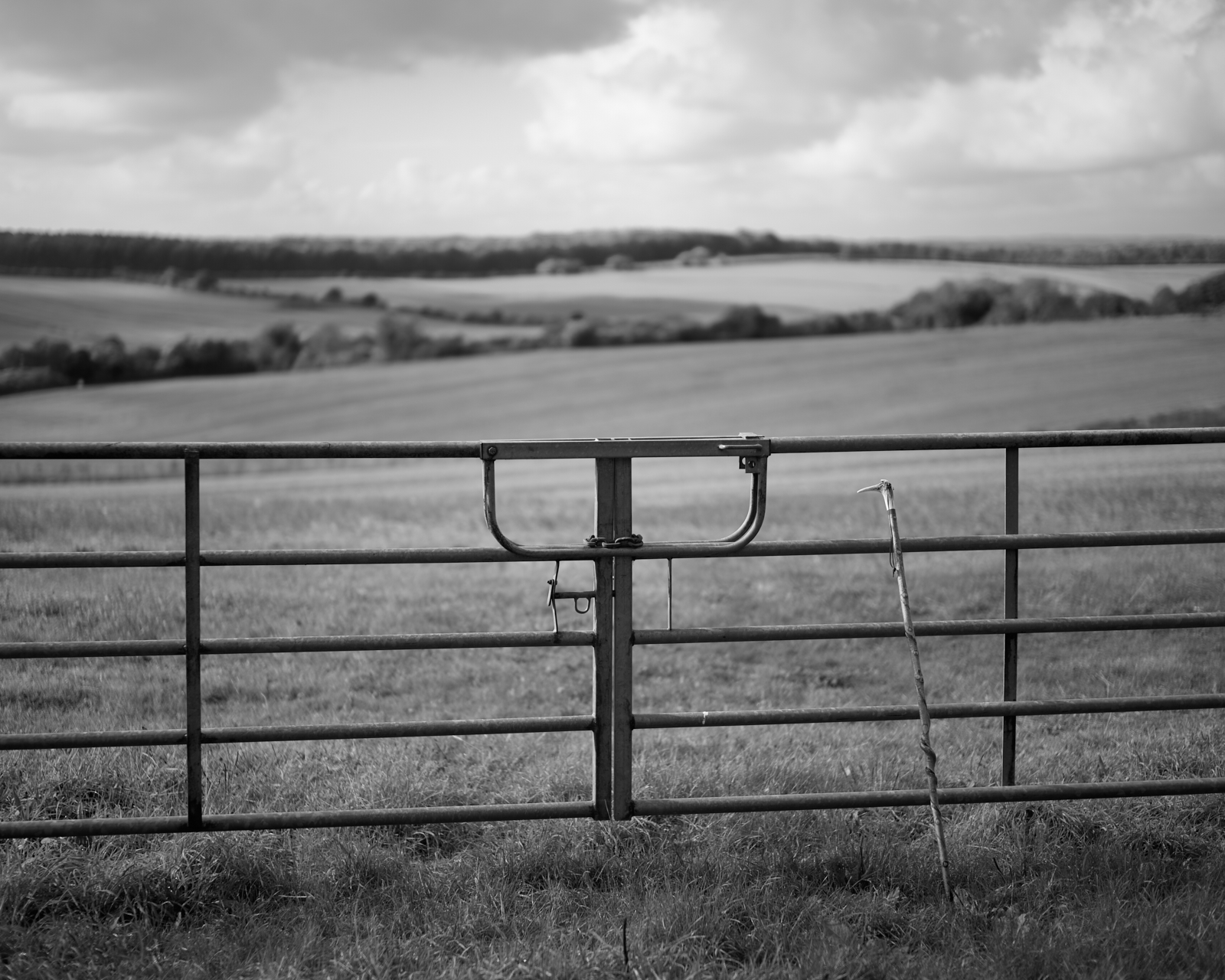
As I descended I had rather hoped there might be a view of the village, perhaps even the church tower but it was not be. Thinking the tall hedgerow would be a permanent fixture for the rest of the walk I was pleased when I came across a pair of double gates to my right and the countryside I had been missing for the past half a mile or so suddenly came into view. I stopped, rested my hiking stick against the gate and admired the scenery. I heard the buzzard again but this time it wasn’t visible, but there was no mistaking its call.
It was at this point that I gave some thought to the camera equipment I had in my bag. My Leica SL and 50mm Summilux lens was all I had used. I had three other prime lenses so why was I carrying all of them? I guess there will be times when I will resort to using them but for the majority of images 50mm is all I need. It is though something to consider for future walks.
The bridleway returned to tarmac once again so I knew the village and the end of the walk couldn’t be that far away. I reached a road and on the corner a finger post confirmed what I already knew; the car would be in sight very shortly and lunch would be my reward.
It’s just before 1 o’clock and I’m back where I started; 5.4 miles according to the App on my iPhone. Before heading to the cafe there was one more place to visit – the church of St Mary and St Bartholomew. There were only a few spaces to park outside the church and a ‘no parking’ cone immediately by the church gate reduced the number of options. A small pick up took up another space with its driver sitting behind the wheel.
I approached the church but unfortunately it was closed for the day. A notice on the door informed me that a funeral was due to take place. This made sense of the parking cone and I could only conclude the grave digger was waiting to complete his work after the service had finished.
As I drove to the cafe the vicar was walking to the church with a small black leather case in his hand. There were two mourners in traditional dark attire at the garden centre filling time over a drink and I suspect retelling tales of the dearly departed. A sombre end to the day but a reminder how grateful I am to be alive, to walk, to see and to hear the beauty of God’s creation which I had witnessed that morning.
I left the garden centre at 2pm and heard the church bells chime again.
I was very saddened to hear that the wonderful and well renowned artist and printmaker Norman Ackroyd had passed away at the age of 86 on the 16th September 2024. His beautiful and atmospheric aquatint etchings are in art collections around the world.
I first discovered his works of art many years ago and had the good fortune to both meet him and listen to a talk he gave on printmaking at Pallant House Gallery in Chichester back in January 2019. It was a most inspiring evening as he spoke about not only his approach to his art, but also the many places he loves and had visited around the shores of Great Britain and Ireland. In particular he told the audience about the west coast of Scotland, including some of the most remote islands including St Kilda, the Treshnish Isles, and Muckle Flugga, which is often named as the most northern tip of the British Isles on Shetland in Scotland, to name but a few.
Some years before that evening I had purchased a very fine book of his work titled ‘A Line in the Water’. The book also included some evocative poems by Douglas Dunn OBE. On the inside of the dust jacket it reads and I quote –
‘In his almost obsessive exploration of the farthest reaches of the British Isles, Norman Ackroyd captures the meeting of land and sea in atmospheric aquatint. His work and Dunn’s complement each other in a memorable fusion of word and image that attests to the power of the place and reflects the extraordinary diversity of Britain’s littoral margins.’
On meeting him after the talk he very kindly agreed to sign this book for me. It was an evening I shall never forget and a book I will never part with.
I love Ackroyd’s work. His unequaled technique and the places he depicts are everything I could ask from a landscape artist. He has inspired me in my own photographic work and whilst I doubt I will ever visit the far flung places he has been to, I feel that through his art he has taken me there emotionally and for that I shall always be grateful.
There have been many fine obituaries in the press over the past couple of weeks, so I do not intend to repeat what you can read online but I have included some videos below which you may care to watch.
The first two are from the series – ‘What do artists do all day?’ which were first broadcast in 2013. The third video is a talk when in the space of several minutes he recites the names of the places he has etched and painted in over four decades. Inspirational.
And finally I have included one of my own photographs looking east down Loch Sunart in Scotland, captured when sailing on the ferry from Tobermory on the Isle of Mull to Kilchoan on the Ardnamurchan peninsular in October 2022.
Thank you Norman Ackroyd and may you Rest in Peace.
I always remember a famous photographer (unfortunately I can’t remember who it was) saying –
‘Don’t buy more gear, buy more books by other photographers’.
I only have to look at my shelves and I clearly took this this advice to heart as I have quite a collection of photobooks, mainly by black and white photographers, and I very much enjoy leafing through them from cover to cover, looking and learning from the images on the pages.
Whether consciously or subconsciously it is my view that all photographers and artists are influenced by the work of others. To be in bubble and to develop your own personal style without ever have been affected by their art or imagery is nigh on an impossibility. If you are a creator then it is only natural that should be interested in the work of other creators. Whether you admire their work or not, the very act of looking at the photographs of well known photographers helps define the direction of your own style, and furthers your understanding and enjoyment of this art form.
In the early days of my photography I was akin to a sponge, soaking up ideas, techniques and learning for myself what I did and didn’t like about other photographer’s work. I have written before about the very distinctive imagery of Michael Kenna, who I have always admired although I haven’t looked through my books of his photographs for quite a long time.
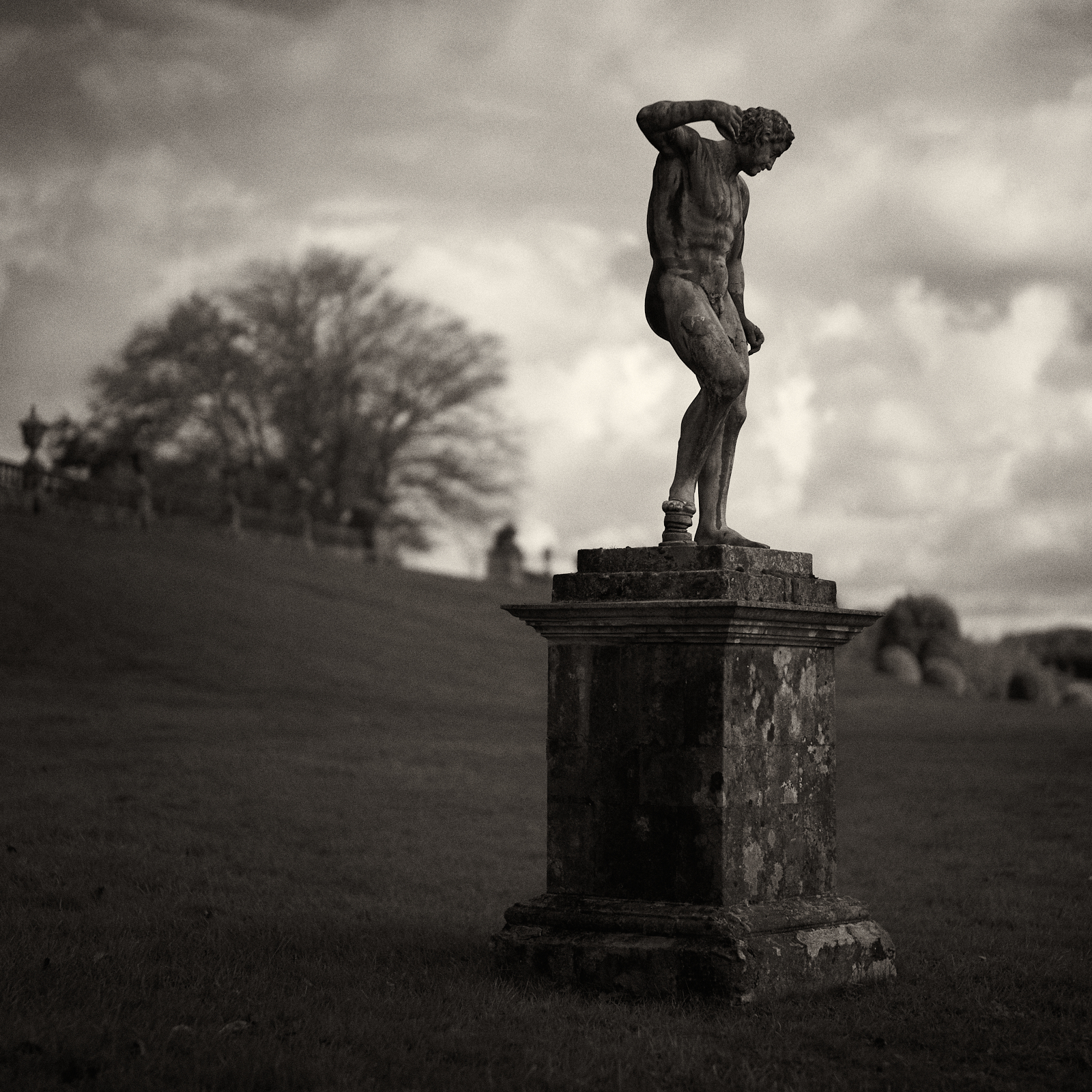
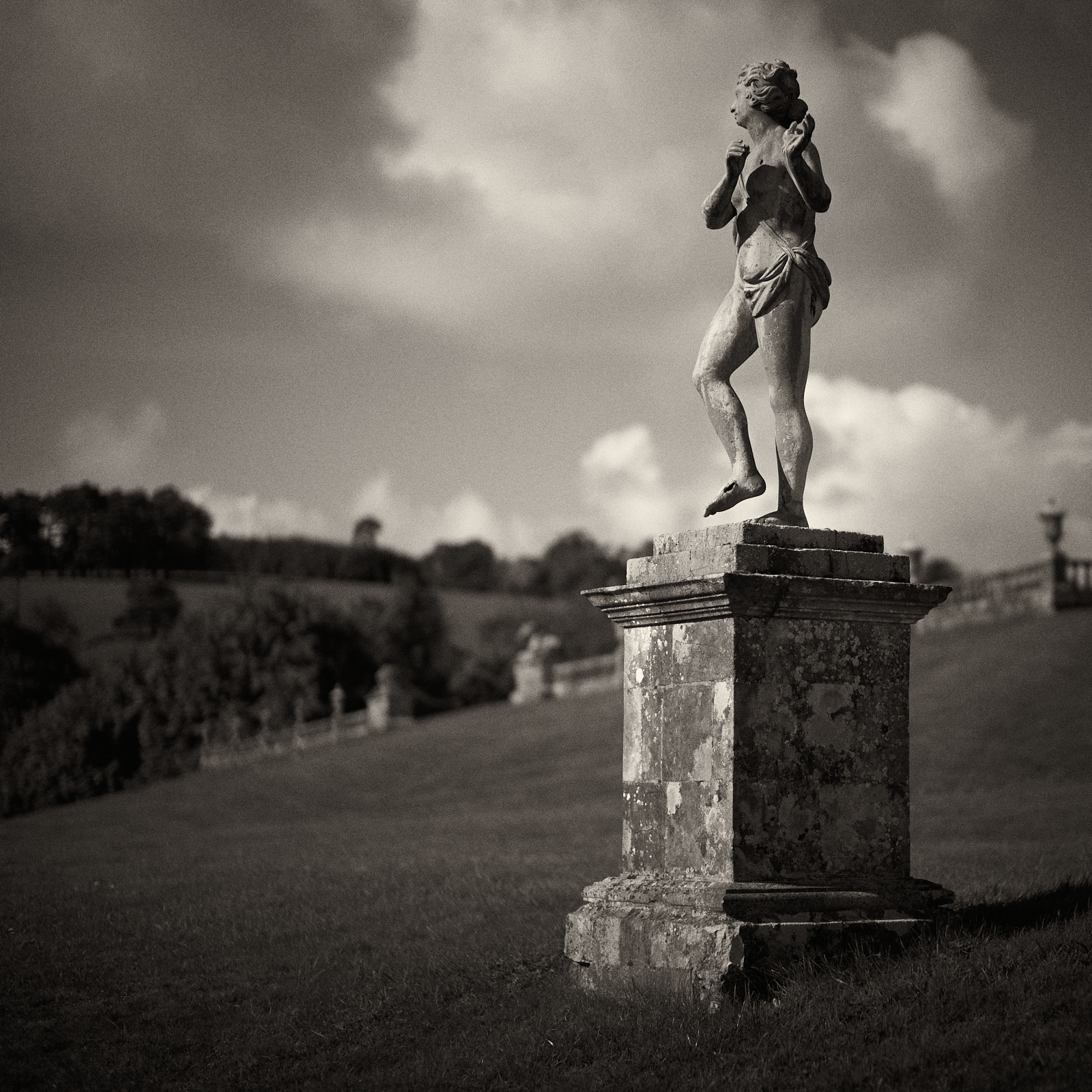
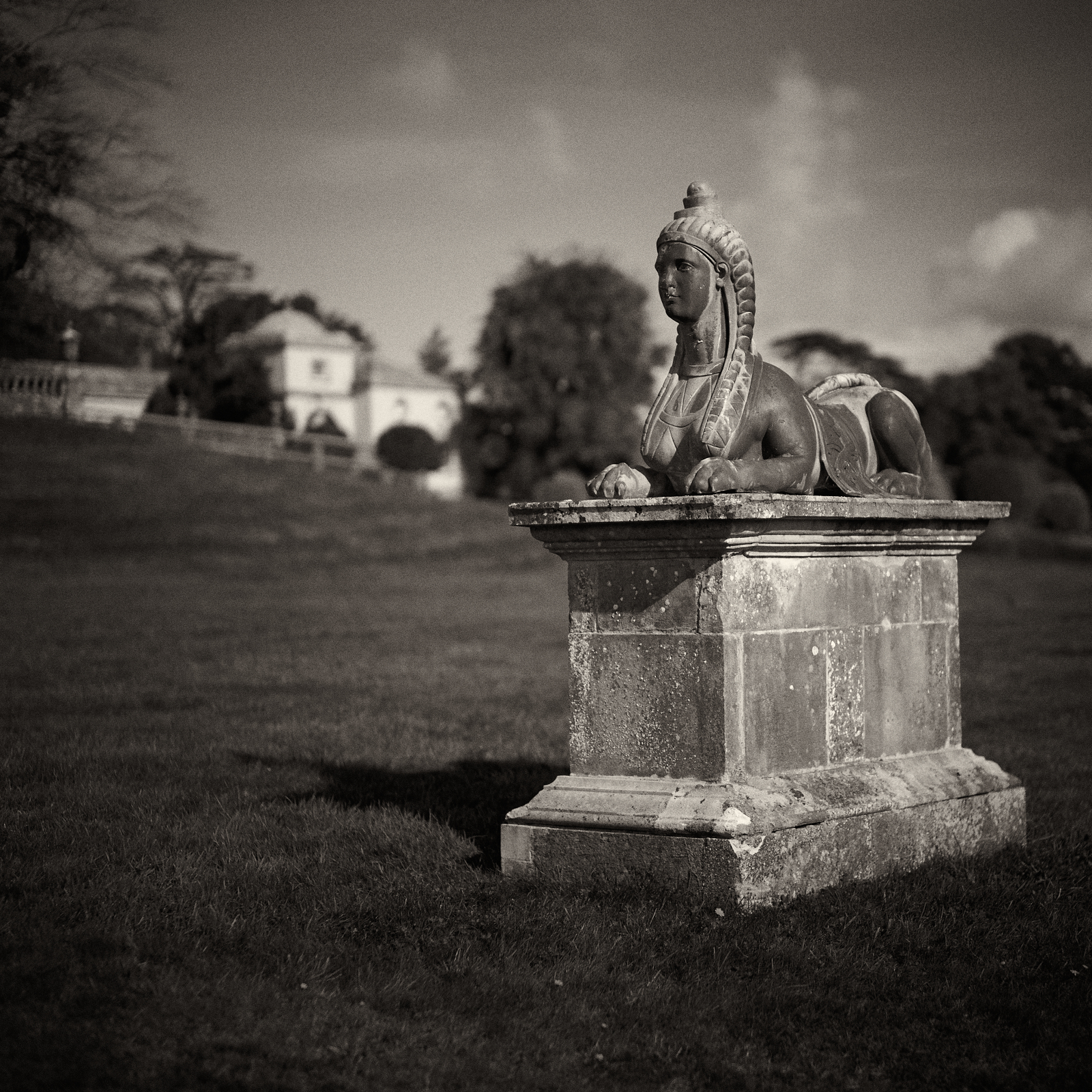
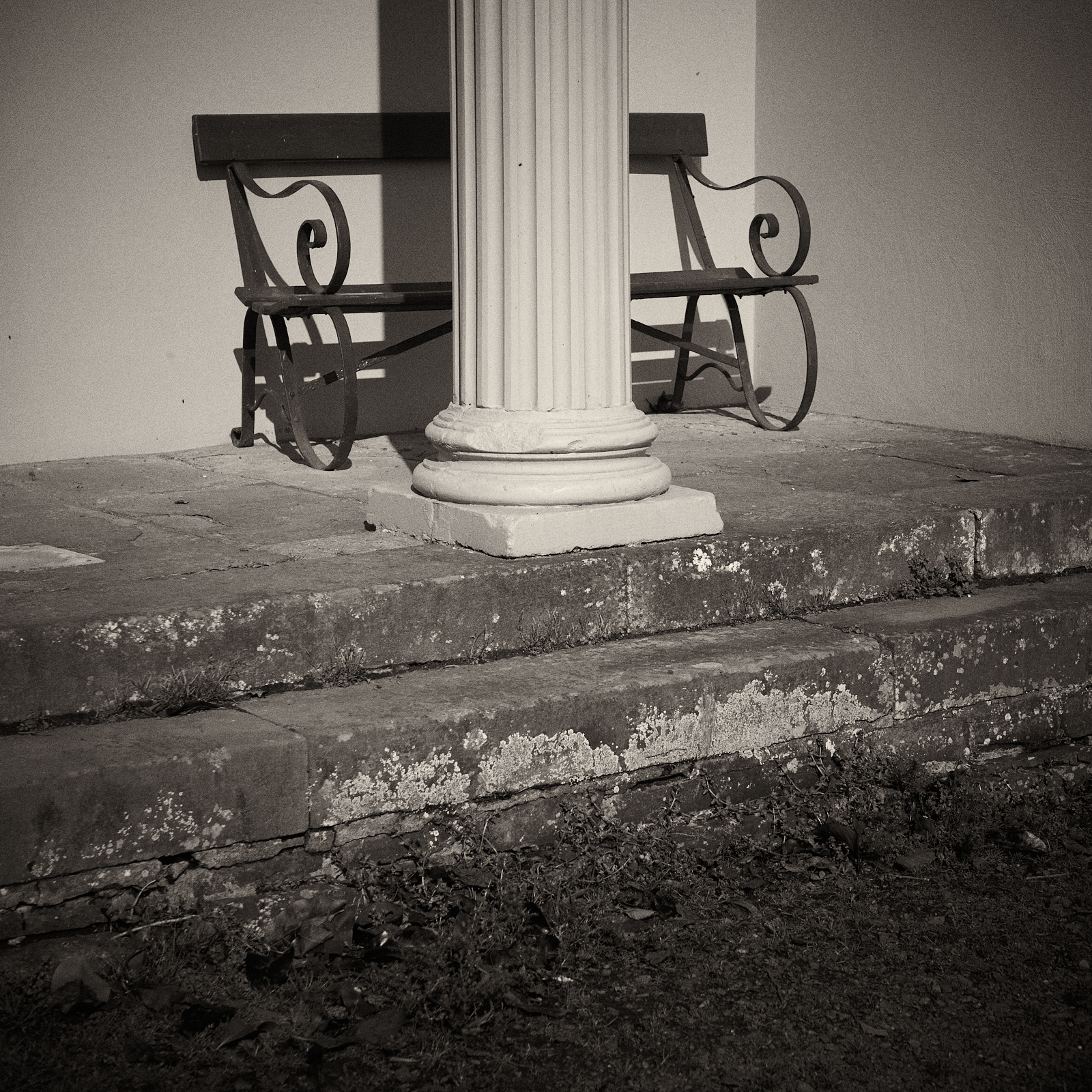
Which brings me to this set of photographs all captured at Castle Hill Gardens on a recent stay in Devon. My wife and I stumbled by chance on this wonderful home and superb parkland gardens. From the moment I got out of the car, and I saw the grounds, in particular the statuary, it instantly reminded me of some photographs by Michael Kenna which I had seen in the past. I knew immediately the approach I would take to the composition and how I would process the images I wanted to make.
The square format, the shallow depth of field, the split tone sepia like tint and the addition of a little film like grain would all feature. We walked around the gardens and I regularly dived off in a different direction to seek out some compositions. Before processing the files I made a deliberate choice not to reach for the Kenna books, so that the results would be my own even though I fully admit to being heavily influenced by the memory of Michael Kenna’s interpretation of similar subjects.
Photographer or not Castle Hill Gardens are well worth a visit. We were there in September, loved the walk around the gardens and we were told that Spring is a particularly special time of year to visit. The Palladian style Castle Hill house has been the home of the Fortescue family since 1684 and the current custodians are the 17th generation to live on the estate. The estate extends to 5,100 acres, including the 50 acres of gardens surrounded by Grade 1 Listed Parkland.
I hope you enjoyed this collection of photographs even if they do bear a passing resemblance to the work of Michael Kenna – to be honest I would be very flattered if you thought this was the case.
You might also be interested to read this entry about an interview with Michael Kenna which I posted back in 2018.
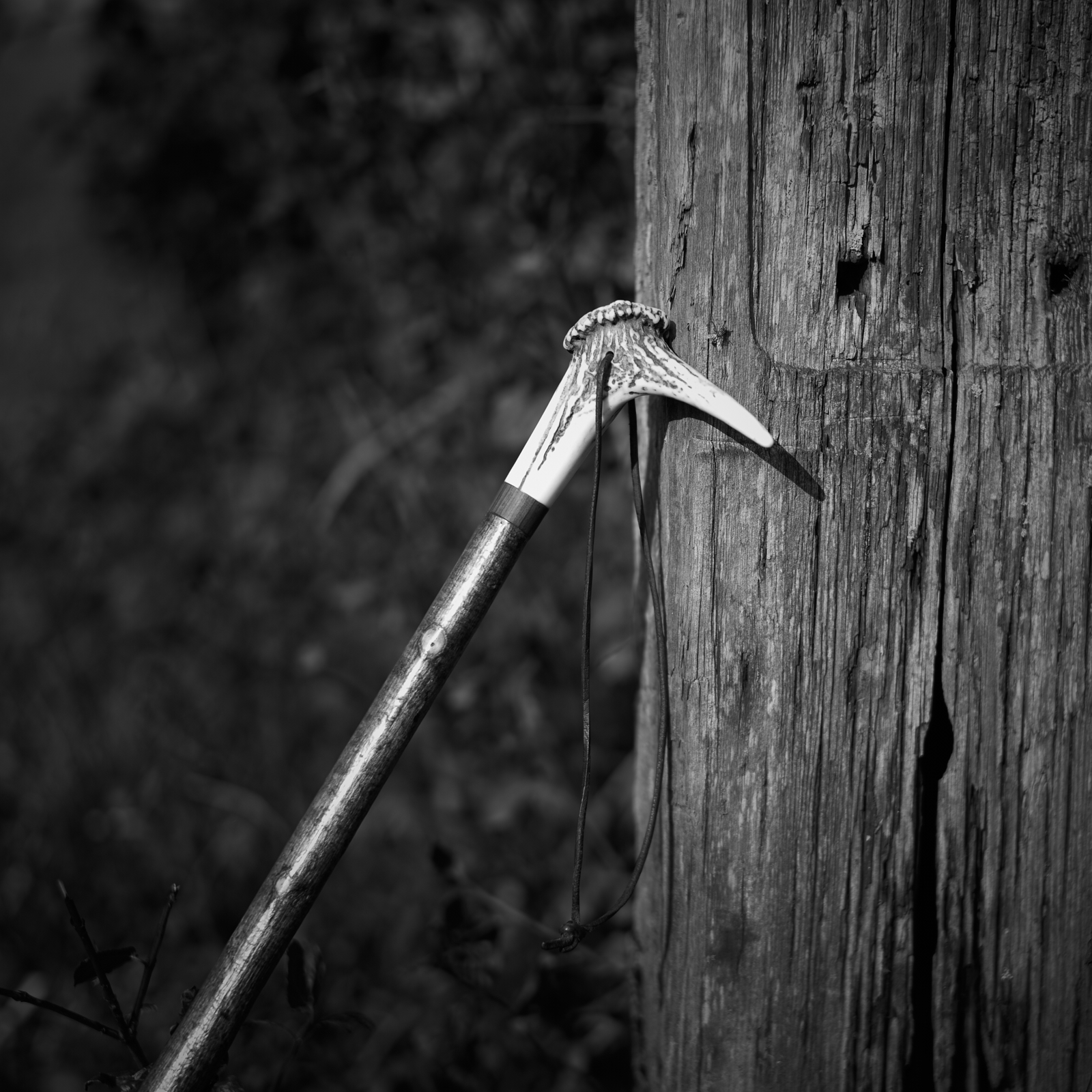
My trusted twisted hazel walking stick and stag horn handle
It’s late summer in mid September 2024 and the start of my ‘pilgrimage’. To place one foot in front of another for the entire length of the Jubilee Trail in Dorset, a total distance of 90 miles. Not all in one go I hasten to add, but in separate walks which would cover the length of the trail. The trail starts in the north west of the county near Forde Abbey on the border with Somerset, and concludes on the border with Hampshire in the north east, close to the village of Martin. Some of the routes will be circular in nature, others will be out and back along the same path, whilst those closest to home will allow my wife to drop me off and then pick me up later in the day. I don’t intend walking each section in order but rather like a jigsaw puzzle each walk will in time complete the picture.
The 90 mile Jubilee Trail
In preparation I have researched and created routes for all the walks – there are 32 in total – and they cover a distance of more than 180 miles. Some are quite short, less than 3 miles in one case, but none are more than 8 miles, as there will be detours along most of the routes. I have described this journey as something of a pilgrimage as it will give me time to contemplate, to explore, to get to know and truly appreciate the beauty of the Dorset landscape. I wish to visit all 34 churches which are either on the trail itself or are very close by, but just as importantly I want to take my time to immerse myself in the landscape, and to make photographs of each individual walk.
This is the first walk and I thought it appropriate if it was at one end of the trail, so I chose to start in the east. As well as imagery, I will include a map of the route and a description of the walk and my thoughts along the way.
So here we go!
Sillens Lane car park to Pentridge Hill and PentridgeVillage
After a flat white coffee at home I put my camera bag, walking boots and hazel hiking stick in the car and drove the 28 miles to the small car park at Sillens Lane which lies close to the village of Martin; the most westerly village in Hampshire. Much to my surprise I arrived to find a crowded car park but there was one space available although the next visitor might not be quite so lucky. ‘RingGo’, a parking app, requested a voluntary car parking fee of £3 for the day to help maintain the area. It’s a small price to pay, even if I did key in the wrong registration number on the app! I must have had other things on my mind.
A couple of signs provided information about Martin Down Nature Reserve and alongside these boards was a wooden bench in memory of Ronald Bolt 1918 – 2003. I assumed this must have been his favourite spot to admire and walk in the landscape. I very much doubted he needed the signage to tell him why he should love an area which was so special to him.
I prepared to set off and there were a couple of pathways I could choose from. Despite having the ‘Outdoor Active App’ on my smartphone I still managed to pick the wrong track, but this was easily rectified when I reached Bokerley Dyke, a scheduled monument. The earthworks are about 3.6 miles long, and are thought to have originated in the Bronze Age or early Iron Age. In its time it was an important cultural and political boundary. It marks the actual starting point for the Jubilee Trail but to my surprise there was nothing else to signify the beginning of trail, nor its end if someone had walked its length from West to East. No signage no way-marks, nothing.
I headed in a south westerly direction alongside a coppice with a field of cattle on my right. After a short time I stopped briefly to tuck my trousers into my socks to discourage any ticks that might be lurking in the vegetation awaiting their next blood thirsty meal. I also put my down jacket in my rucksack as I was already warming up. The forecast was for dry weather with sunshine, but it actually turned out to be a beautiful day and much warmer than I had anticipated.
With the coppice now behind me an old and rusty farm gate lay ahead with a well trodden track leading off to the right. At the time it seemed obvious to me that this was the path and it wasn’t necessary to open the gate into the field. There were no signs to inform me otherwise so I my instinct took charge. Later on I would find out that my instinct was incorrect and I had made the wrong choice.
Decisions, decisions
It wasn’t until I reached the track which lead from Whitey Top Farm that I realised my mistake, so I doubled back a short way until I found a wire and barbed fence which I could clamber through and rejoin the trail. After this minor navigational error the rest of the route was quite straightforward.
It was now midday and getting much warmer. I don’t much like the heat so I wouldn’t have wanted it to much hotter. I was only 1.4 miles into the walk but some liquid refreshment was needed. The first part of this walk had been a steady incline and the views of Cranborne Chase were starting to reveal their beauty. So too was some of the wildlife. Above me a kestrel hovered in the air sighting its prey on the ground below. I looked down and a few wasps emerged from a hole in the chalk track, a nest I assumed. Later and for a brief moment a hornet circled my ankles but no sooner had it arrived than it left, flying out of sight and not to be seen again. I was grateful as their bite is far from pleasant, although I am told they are not aggressive creatures, they just look that way.
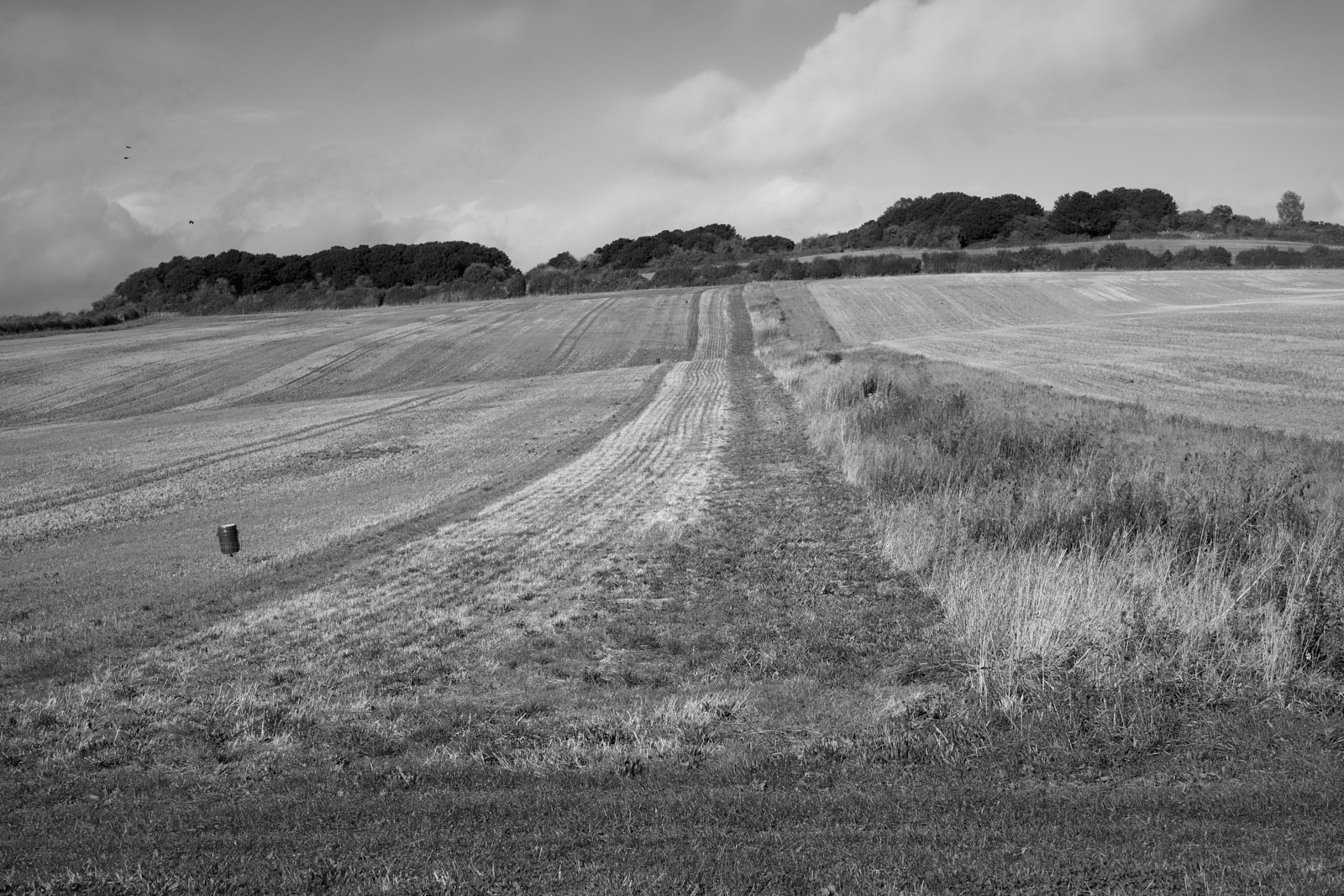
I crossed a field of wheat that had recently been harvested with many a grain still lying on the ground providing plenty of food for rooks, pigeons and other birds.
A recently harvested field with the promise of shade ahead
A few trees lay ahead offering a little shade from the sun which continued to shine brightly, as I made my way through a gate and on to Pentridge Hill, which in turn would lead me Penbury Knoll and a place to rest for a simple packed lunch. For the first time on the walk I met another person; a horse and rider to be exact. We greeted each other, said it was a beautiful day and went our separate ways.
Onwards through the gate and on to Pentridge Hill
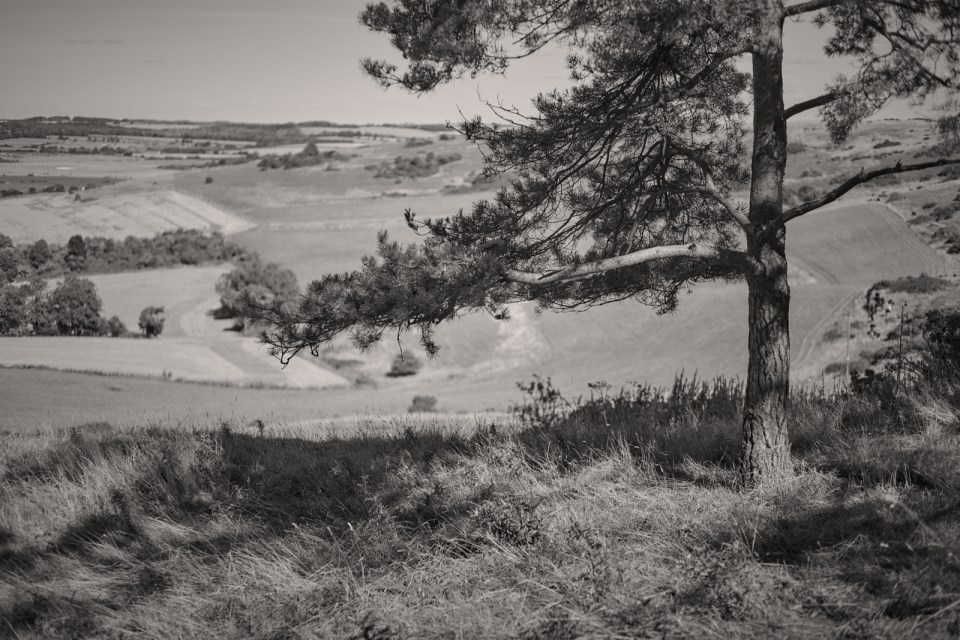
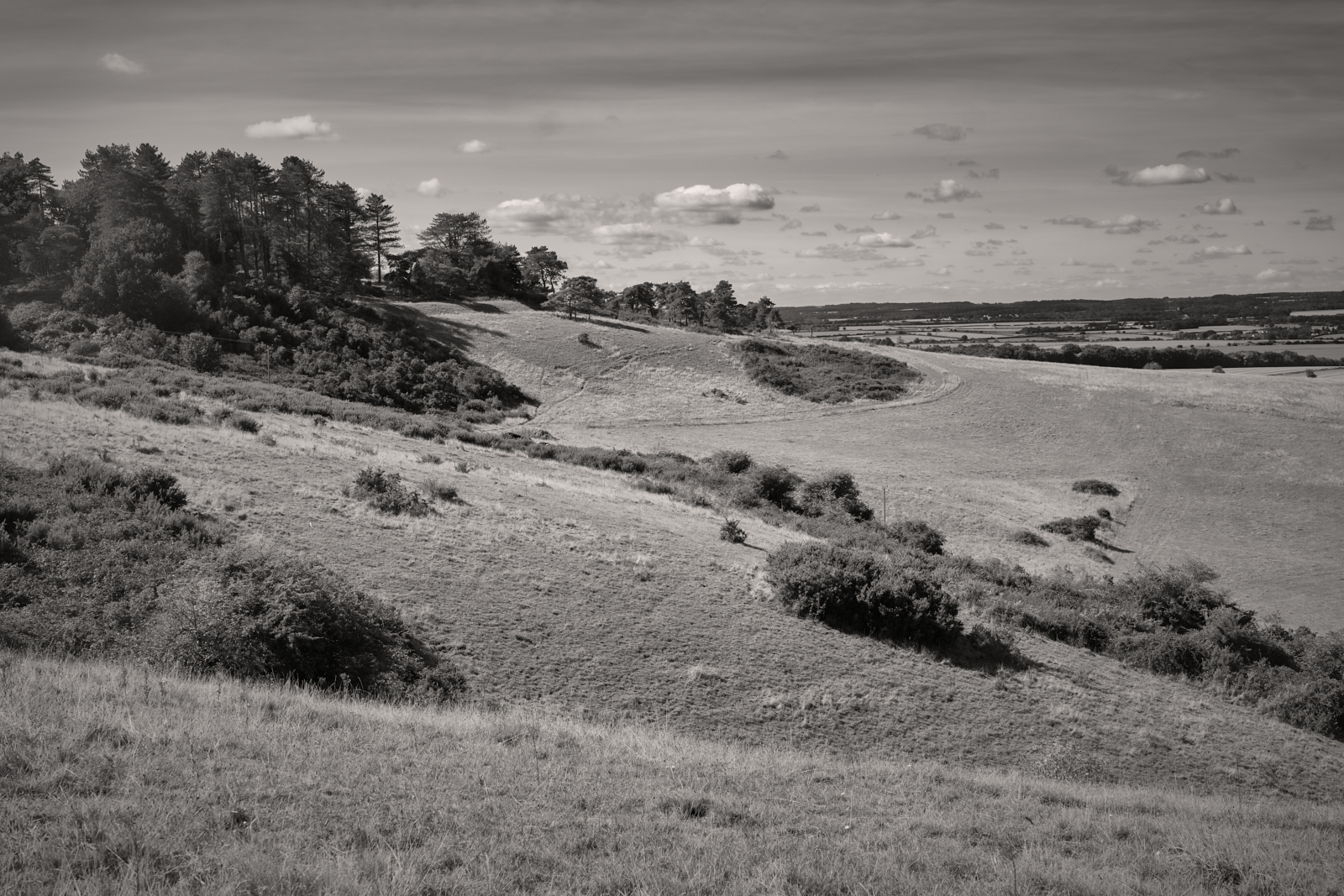
Looking towards Penbury Knoll with Cranborne Chase in the distance
The fallen
I reached the trig point at Penbury Knoll, the highest point on the walk and a very fine place to stop for a while and admire the surrounding scenery. It wasn’t difficult to find a shady spot, sit down, lean my back against a tree trunk and rest my feet and legs. I hadn’t walked that far but I am not as young as I used to be. It was exactly 1 o’clock so definitely time for some lunch and to spend time taking in the far reaching views. As I munched on my marmite and cheese baguette I saw a red kite twisting, turning and gliding on the thermals above Pentridge Down. It was a great display. As I watched this bird of prey, a gentle wind blew and in the shady setting of old oaks and tall conifers I cooled down and slowed down.
The view from Penbury Knoll
A few minutes later and the kite re-appeared from below my feet, exploring the chalk downland, then wings started beating as it stopped to retain its position in the air. The wings halt their movement and the kite quickly dives out of view, maybe it was heading towards my next stopping point – the village of Pentridge and the church of St Rumbold.
Before I leave this lovely serene spot, I swallow a single tablet prescribed to help reduce my high blood pressure. I wonder which is more effective, a drug or taking exercise and being in the landscape?
It pays to slow down and to stop, to photograph and count my blessings.
A fine place to stop and admire the landscape – Penbury Knoll
I came out of the shade to rejoin the trail and the sun, but I was now refreshed and eagerly awaiting what lay before me. The path took me south and gently downhill towards Blackbush Plantation before turning sharp right and continuing the descent across grassland and cultivated fields. I had now left the Jubilee Trail and joined the Hardy Way, another long distance path across Dorset and Wiltshire which takes in places associated with the author and poet Thomas Hardy. At over 216 miles in length I will leave that trail for another day.
The descent begins down the Hardy Way
The approach to Pentridge Village
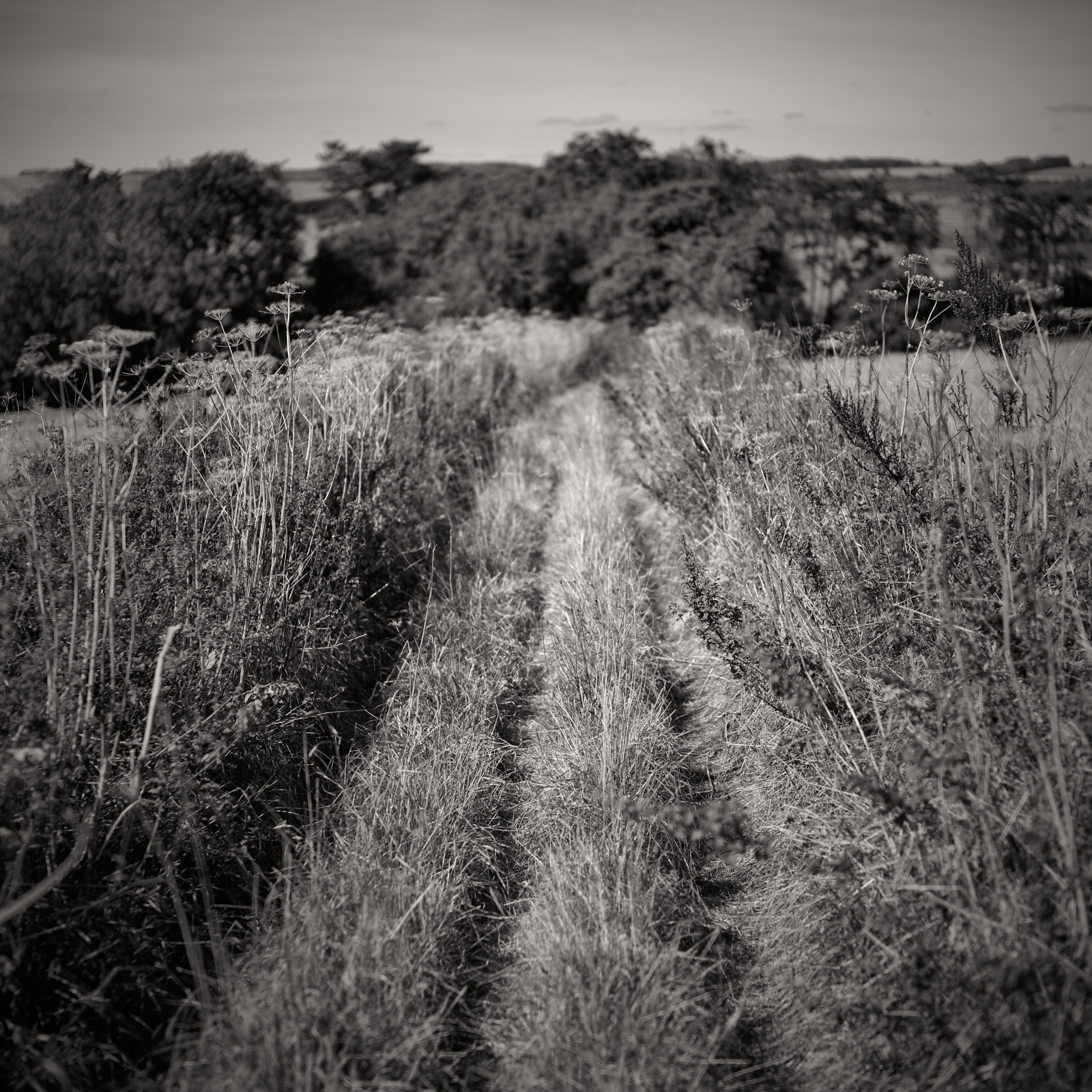
The farm track lined with dried grasses and wildflowers, almost skeletal in nature, soon led me to Pentridge, a tiny and pretty village made up of mainly detached houses with a mix of tiled roofs and thatch.
I made my way to the church, to find the churchyard like others rather untidy but that’s the way of things today. Churches are now encouraged to leave some areas left untended to encourage wildlife.
Pentridge Church of St Rumbold
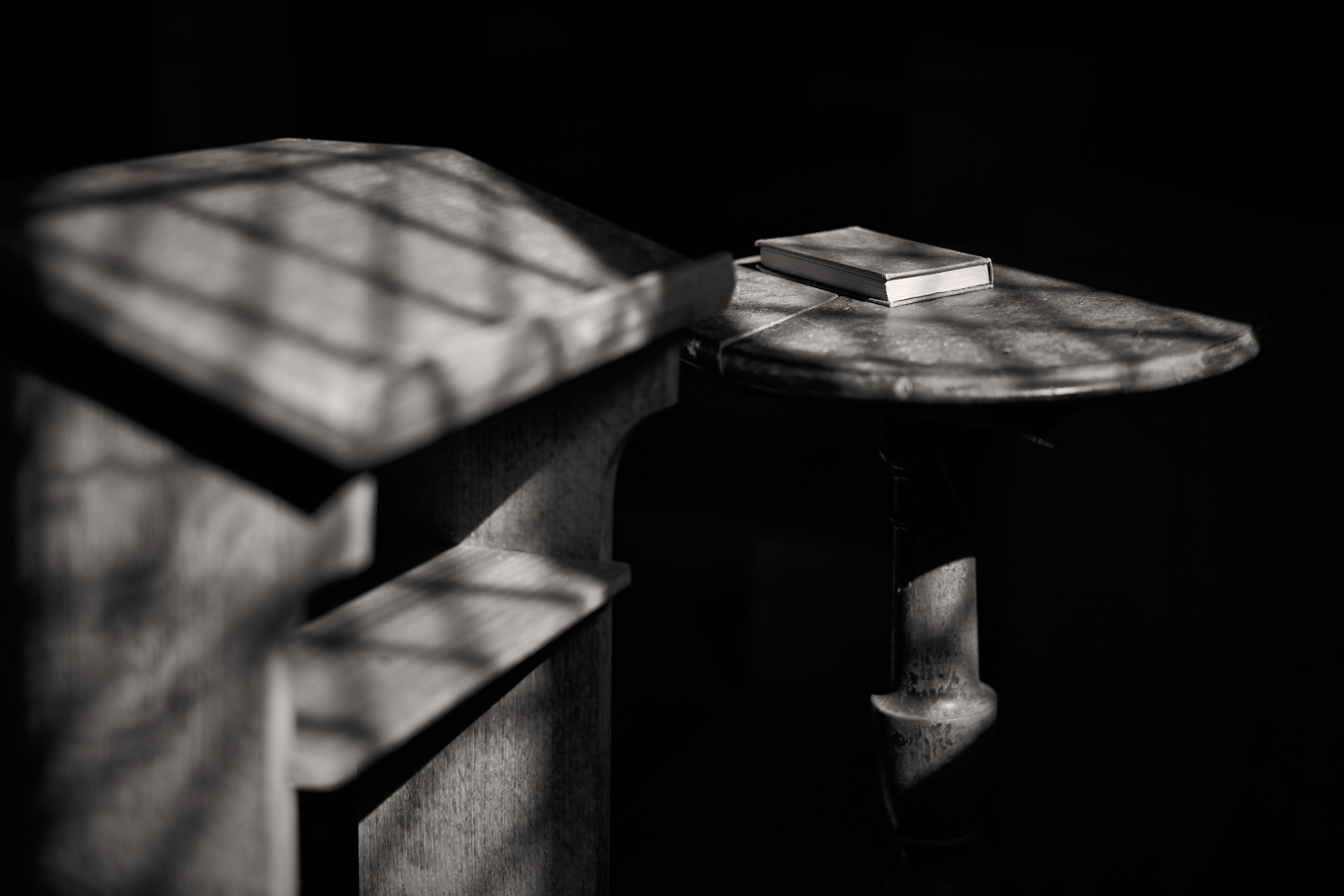
To my delight the door to the church opened and I stepped inside and was greeted by the sun working its magic through the leaded light windows. It was wonderful and I captured the light and the darkness with my camera. I always consider images of this nature to be very fortuitous as they only present themselves when the light is at a certain height and is cast in a particular direction. I just happened to be in the right place at the right time. Divine intervention possibly?
The Book of Common Prayer
The light and the shadows
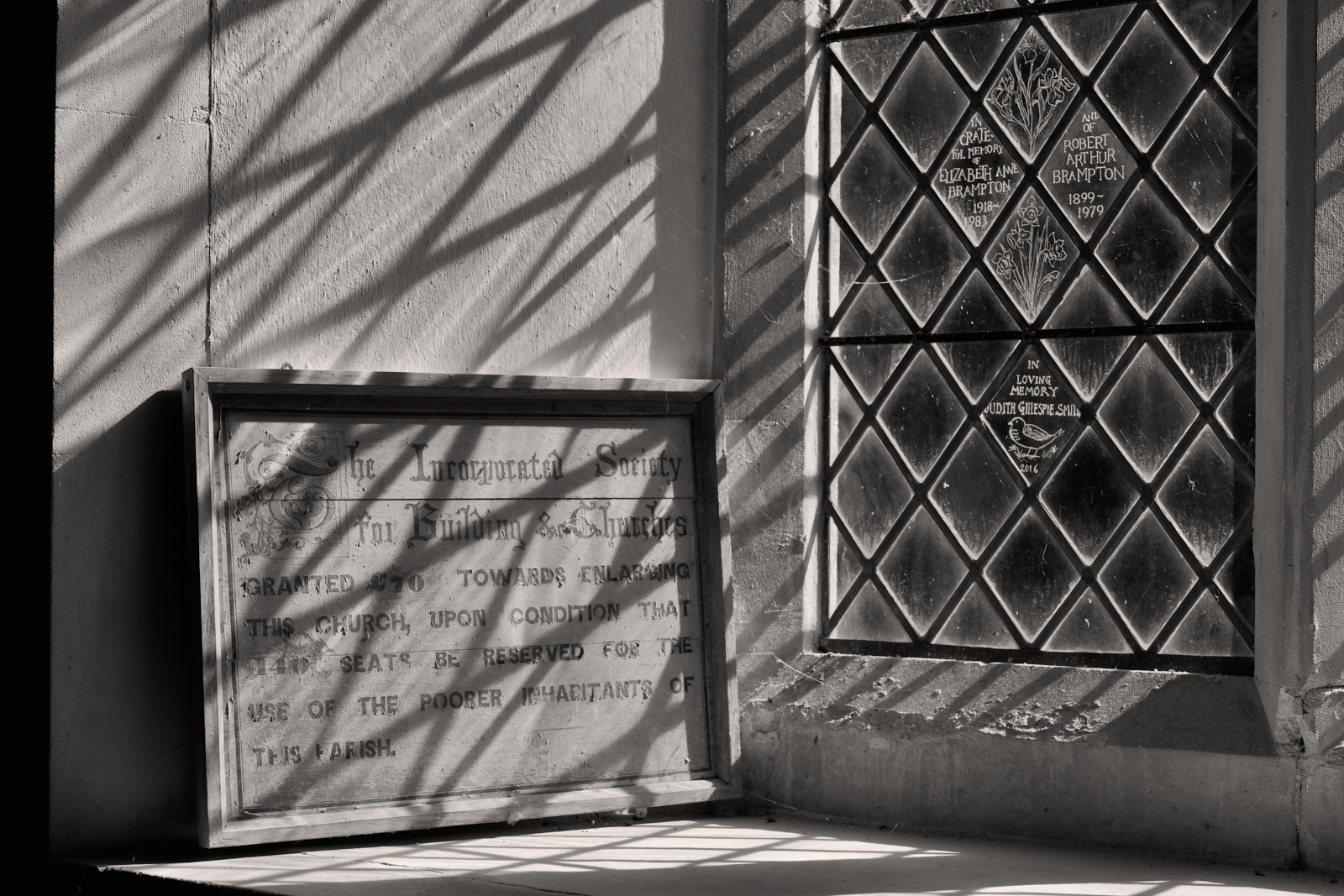
Having taken these two photographs I spotted a sign in one of the stone window reveals. Unfortunately it wasn’t dated but the notice confirmed the grant of £70 for an enlargement to the church on condition that 140 seats were reserved for the poorer inhabitants of the parish. How times have changed I thought to myself. Today a Communion service is only held once a month at St Rumbold’s and I doubt if the number of parishioners attending would break into double figures. I wondered how long ago it might have been when all the pews were packed with both the rich and the poor?
140 seats reserved for the poor
I left the church and departed the village, up a stony lane towards Whitey Top Farm and the last ascent of the day. As I approached the farm two seemingly rather aggressive dogs ran towards me, barking loudly as they did so. Fortunately there was a strong fence between them and me but nevertheless I was pleased when I had passed them by.
Back on the Jubilee Trail before returning to the car
I turned left and rejoined the Jubilee Trail and then descended back the way I had come earlier that day, through the shade of the coppice before entering open ground back to the car park. I checked my navigation app and I only had a third of a mile to walk before completing the first of thirty two walks exploring the Jubilee Trail. It had been a joyous walk of 6.2 miles and the weather could not have been better.
I only saw two other people, the lone horse rider and one other walker; a woman on her own at Penbury Knoll. By the time I noticed her, she had walked past me with her back now facing me. She hadn’t stopped to admire the view, nor say hello but I wasn’t offended, as I like it on my own. The solitary experience of just me in the countryside, alone with my thoughts, whilst enjoying nature and the beautiful landscape appeals to me.
It wasn’t long before I saw my car parked in the near distance, the number of cars had diminished considerably.
I drove home excited at the prospect of my next encounter with the Jubilee Trail.
























 alan frost photography