Transient light – the best of both worlds perhaps?

Transition blend

Transition (Blending in photoshop)

This is the third and final entry in series which only serves to highlight the array of choices when it comes processing.

The first entry (Transient light – when only colour will do) showed a relatively straight forward colour image. The second entry posted yesterday (Transient light – when mono works as well) was the black and white conversion and today I have posted this image, which is effectively a mix of the colour and black and white versions. I opened both images in Photoshop with the colour image as the background layer. I then created a separate layer using the mono version which had been previously processed in Silver Efex. I then blended the two layers and reduced the opacity to arrive at the image you see here.

Overlaying the more dramatic and contrasty B&W image has given the original colour version a little more punch in my view. The rain shower has been enhanced and there is more detail in the clouds on the horizon which has added depth. The colour which attracted me to take the shot in the first place has not been lost.

So three versions of one image. Which one is best? I don’t think there is a ‘best’ image; photography or any form of art is very subjective so everyone will have their own personal preference. For me it has been an interesting exercise and will make me stop and think a little more about processing options before I even begin.

Transient light – when mono works as well

Transition in mono

One of the joys of blogging are the comments that are made and these are of particular benefit to me when they offer constructive suggestions about an image. Yesterday I posted a colour image called ‘Transition’ in a post entitled ‘Transient light – when only colour will do’. One of the comments I received came from John Dominick, a friend and fellow photographer, who said he would like to see a mono interpretation. This came as something of a surprise to me, as it had never crossed my mind to convert the photo into black and white. Given that I have almost exclusively been working in mono for the last few years, you would have thought it would have been my default approach, and not just dismissed without consideration.

I am therefore very grateful to John for planting this idea in my mind as the mono version (converted in Silver Efex) in my opinion works just as well. It’s a very different image now, there is more drama and atmosphere in the shot but this aspect of black and white photography has always appealed to me.

Having made this second image it has made me think about combining or blending in Photoshop both the colour and black and white versions to see what can be created. This is my task for today and I shall aim to post a third version of ‘Transition’ tomorrow.

I always try and reply to comments and in this example respond to any constructive ideas put forward. Thank you as always for your feedback, it’s most welcome.

Transient light – when only colour will do.

Transition

Transition


Photography is painting with light – and that light can be very transient in the landscape. The weather and consequently the light can change in an instant, so to capture these fleeting moments there has to be an element of good fortune.

This image was taken a couple of weeks ago in the beautiful county of Dorset. We were experiencing all types of weather that week; in fact it could be said we had all four seasons in just one day. Bright sunshine followed by clouds and then hail showers, turning the ground white if only for a short time. Hopefully the last blast of winter before the summer truly arrives. At this time of year we also see fields turn yellow as the vibrant colour of the oil seed rape crops burst into life. Combining these two key ingredients is potentially a recipe for some good landscape photography which can only be enjoyed in colour.

When I took this shot I was standing in sunshine, looking back across the rolling hills to the north of the county town of Dorchester. As we returned to our cottage I could see dark shower clouds moving in quickly from the west and as the rain fell on parts of the countryside it was lit by the sun. I quickly parked the car, got out, and walked very briskly to find a suitable position to take a handful of shots. Within a few minutes the special light had gone, but I knew I had captured the transient light and colour of the scene before me.

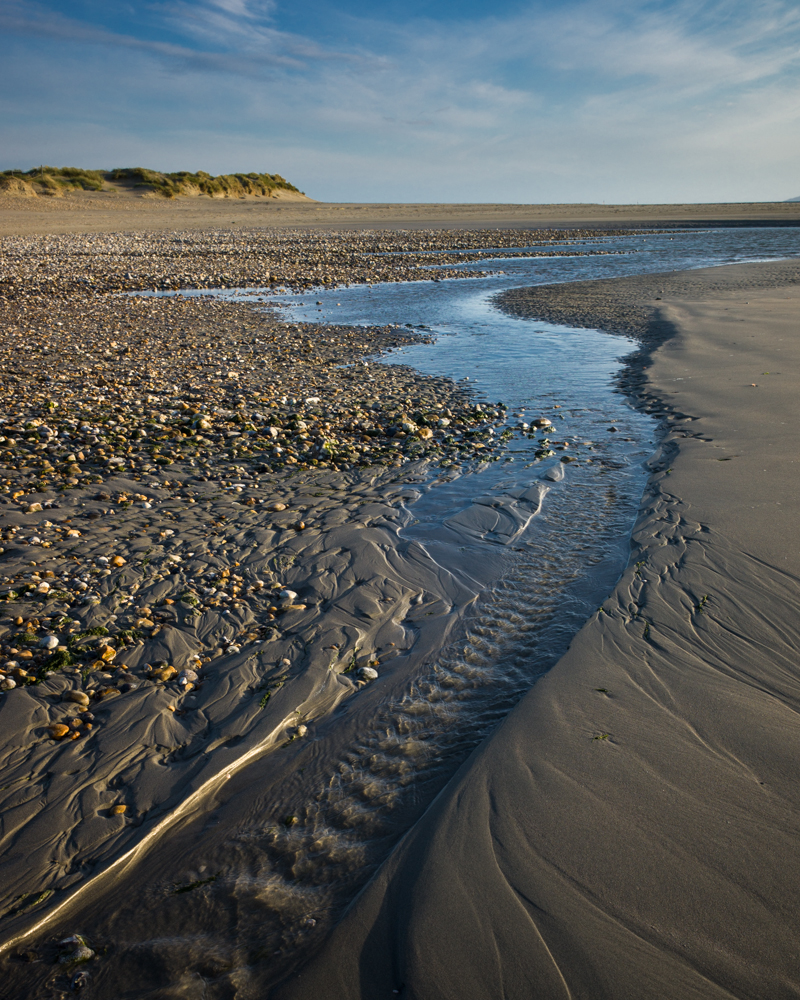
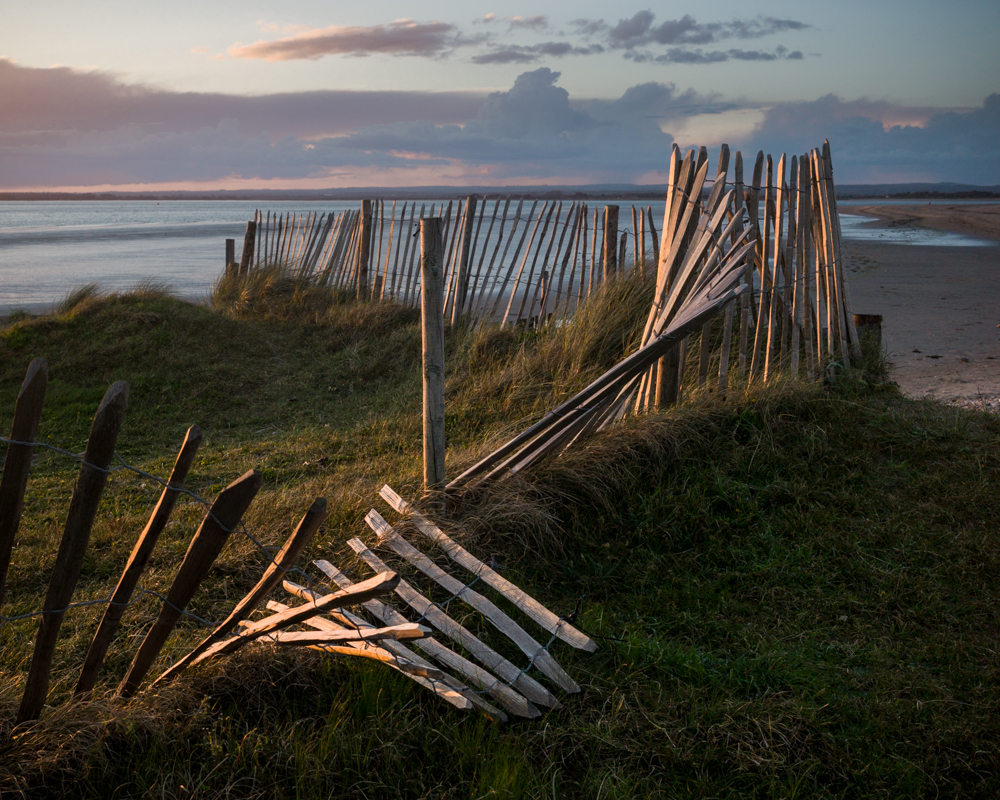
East Head – At the end of the day

At the end of last week I met up with a few fellow photographers at East Head down in West Wittering. It’s a place I seem to be visiting on quite a regular basis at the moment, although I am more likely to be there in the morning walking the dog, as opposed to the end of the day.

I had already decided that the lighting conditions would probably suit some colour work and not black and white. I could always convert to mono later if I wanted to do so. I am so used to ‘seeing’ in black and white that taking images in colour and processing them later does throw up some new challenges for me, and there are plenty of times when I feel I am having to learn a whole new set of skills. Composition, overall tone and texture are still important but colour balance and how colours work with each other, is very different to monochrome.

So here are four images taken that evening. Given that when I arrived it was pouring with rain, I consider myself fortunate to have come back home with anything at all! The four of us had a lot of fun and we will have all photographed this location in a different way. The day ended up in an excellent pub with food and drink and a commitment to repeat a most enjoyable evening somewhere else in the not too distant future. Can’t wait!


Do click on any of the images to view a larger version which will open in a new window.

Alone on The Cobb

Alone on The Cobb

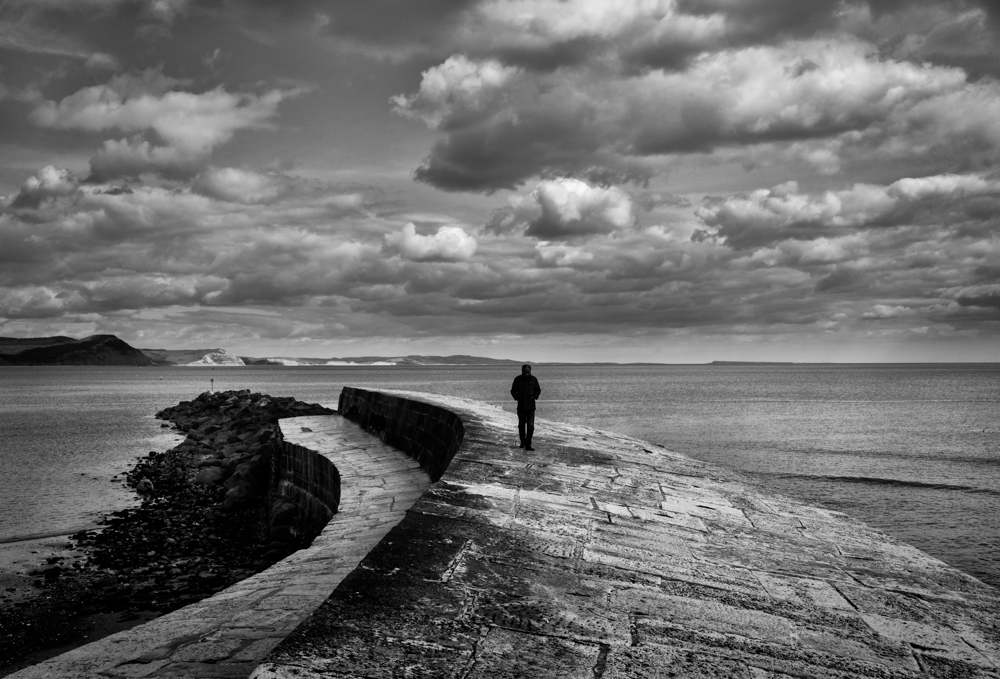
The Cobb at Lyme Regis in Dorset is an old stone curved pier forming a large harbour. Some 870ft in length there is an appreciable slope to the upper section with a sheer drop on one side into the sea. The lower promenade on the harbour side is better protected from the elements, but far less spectacular.  On the horizon are the dramatic cliffs of the Jurassic Coast but I would advise stopping to take in the view. There is a notice informing anyone who wishes to walk along The Cobb not to do so in high winds. It’s easy to see why. Even on a clam day walking along the slope of The Cobb can be a little unnerving. This location was of course made famous in the 1981 film ‘ A French Lieutenant’s Woman’ featuring Meryl Streep.

A popular and much photographed scene, the inclusion of a lone figure walking on The Cobb not only adds human interest but also raises questions in my mind. It’s an image of solitude, coupled with the drama of truly spectacular location. The Cobb’s slope is clearly visible and the sea is clam. What are the thoughts going through the mind of the person in the picture? Is he enjoying an inner calm and peace or are his feelings of a very different nature? Perhaps he is simply enjoying the wonderful view on a beautiful Spring day? Questions but no answers, but hopefully an image which can be appreciated for a variety of different reasons.